


Description
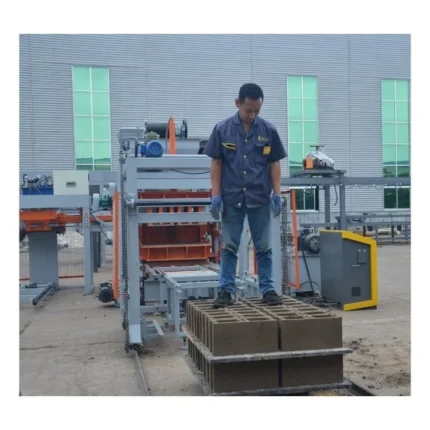
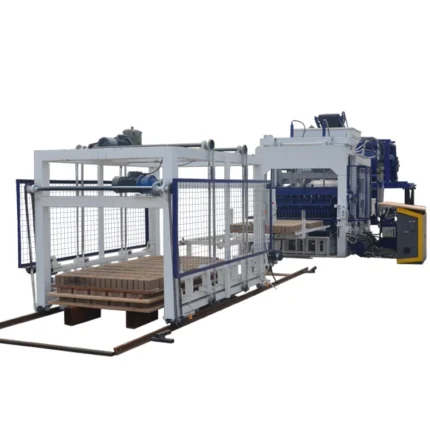
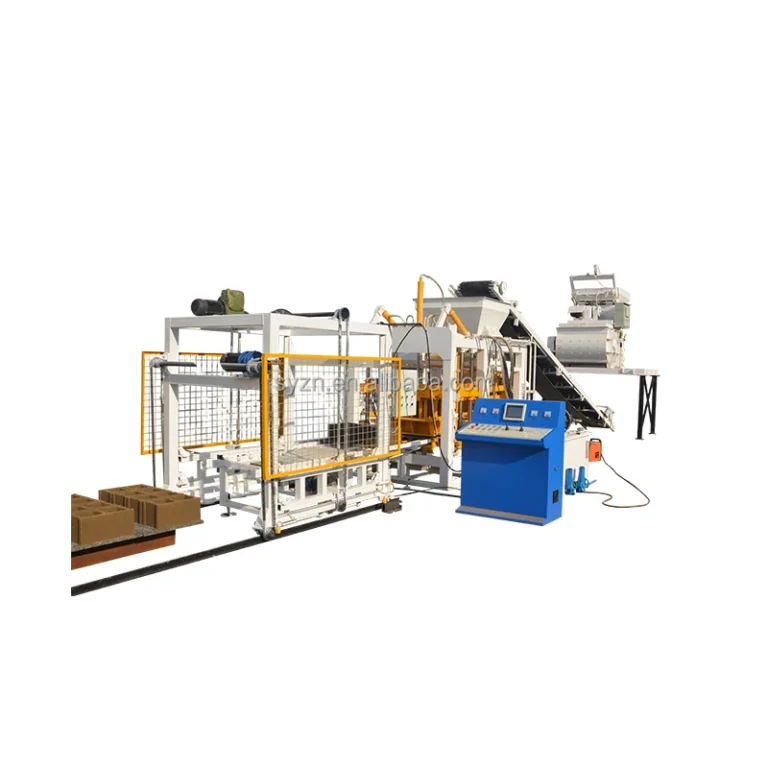
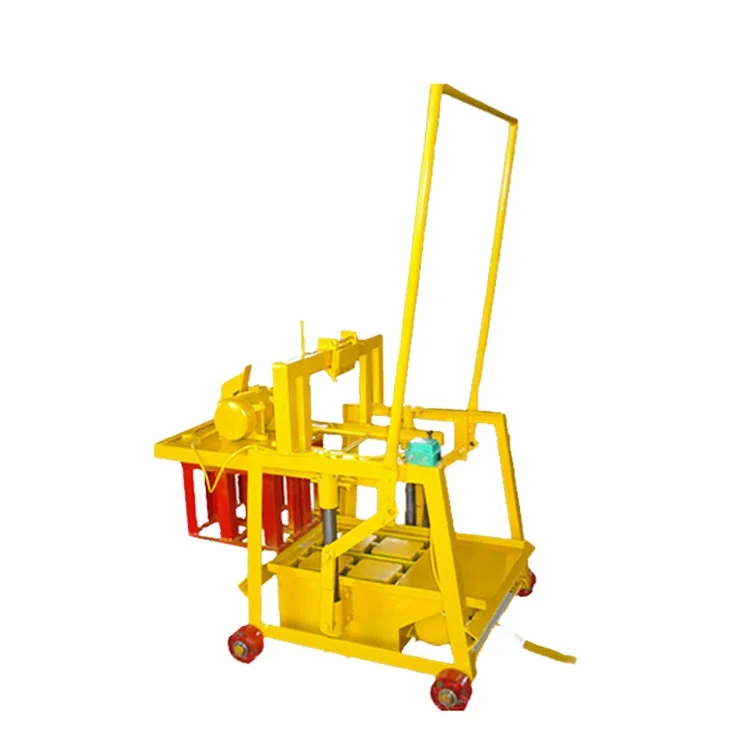
Matched System Logic — the Qt4-25a automatic block making machine PLC controlled aligns vibration, hydraulic pressure, and pallet dimensions as a single calibrated unit rather than sourcing components from separate suppliers.
Technical Specifications
| Parameter | Value |
|---|---|
| Model | Qt4-25a |
| Product Type | Automatic Concrete Block Making Machine |
| Overall Dimensions (L×W×H) | 7100×1600×2610 mm |
| Net Weight | 5800 kg |
| Rated Power | 27.5 kW |
| Voltage & Frequency | 380V (frequency to be confirmed: 50/60 Hz) |
| Control System | PLC (brand and display language configurable) |
| Vibration Force (Exciting Force) | 60 kN |
| Pallet Size | 1020×850×40 mm |
| Hydraulic Pressure | System included (MPa value to be confirmed) |
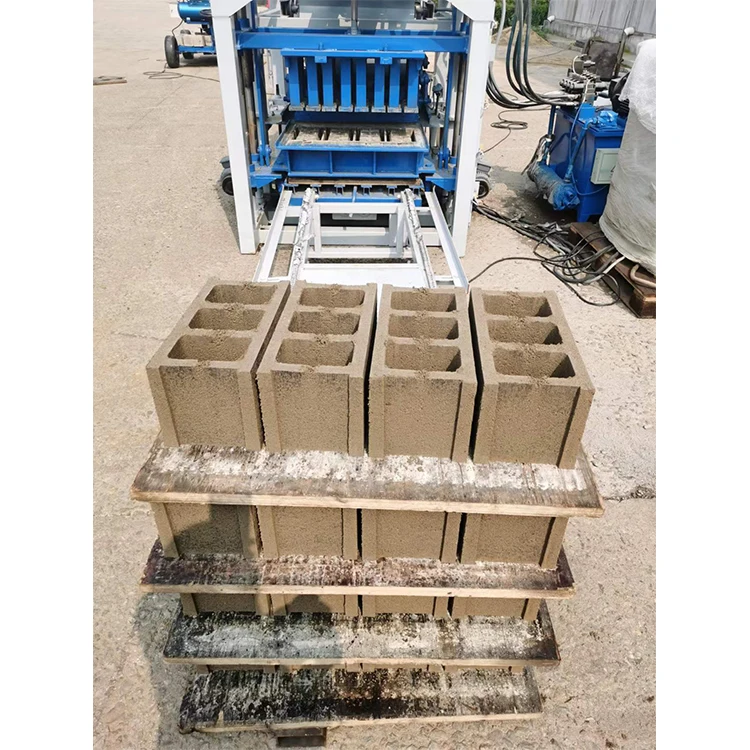
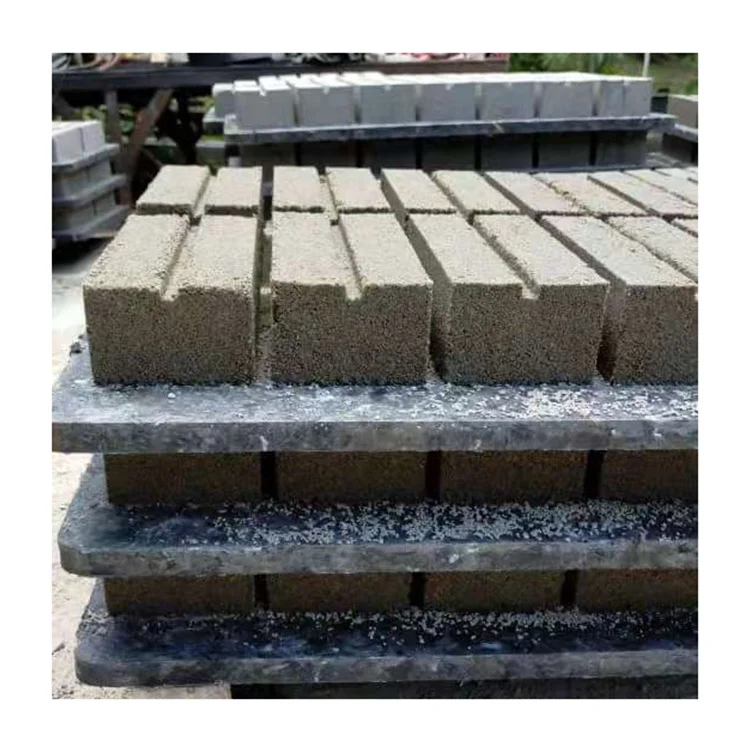
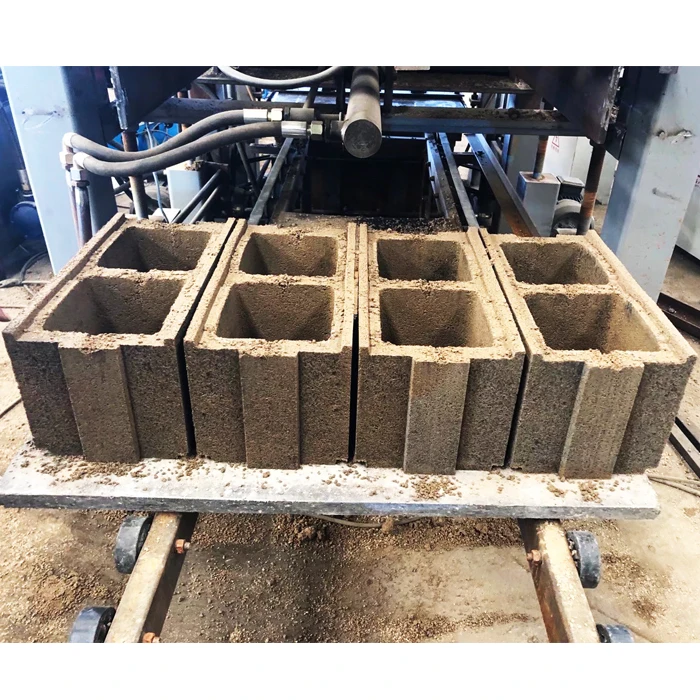
| Mould Format & Capacity | 400×200×200 mm hollow block — 4 pcs/mould, 960 pcs/hour, 7680 pcs/day |
| Mould Format & Capacity | 400×150×200 mm block — 6 pcs/mould, 1440 pcs/hour, 11520 pcs/day |
| Mould Format & Capacity | 225×112.5×53 mm solid brick — 16 pcs/mould, 3840 pcs/hour, 30720 pcs/day |
| Cycle Time | 25 seconds per cycle |
| Automation Level | Automatic (PLC controlled) |
| Color Options | According to buyer request |
| Warranty | 1 year |
| Standards | ISO 9001:2008, CE |
Application Suitability
| Application | Material or Output |
|---|---|
| Standard concrete hollow block production | Crushed stone, sand, cement, and water mix designs |
| Solid brick production for load-bearing walls | Fine aggregate and cement blends requiring high compaction |
| Construction site block manufacturing | On-site aggregate and cement adapted to local sourcing |
| Small-to-medium block and paver plants | Multiple format output from a single PLC-controlled line |
Why the Voltage Question Should Come Before the Price
An automatic block making machine PLC controlled cannot run its control logic correctly if the frequency and voltage are wrong for the destination grid.
I have seen buyers lose an entire commissioning week because the PLC display language was set to one script and the local electricians could not read fault codes. The motor winding and frequency converter must match the site supply exactly. When voltage dips occur during the press cycle, the vibration force drops mid-stroke and block density suffers [NEED_CITE: voltage and frequency standards by export market]. Confirming 50 or 60 Hz before production begins prevents rewinding the motor after arrival.
What the Control System Actually Removes from the Operator
The PLC in the Qt4-25a governs cycle timing, vibration duration, and press sequence so that each block receives identical treatment regardless of which operator is on shift. An automatic block making machine PLC controlled eliminates the variability that comes from manual timing judgments. The 25-second cycle is enforced by logic, not by the operator watching a clock. This matters most when the mix design changes between formats — the control adjusts vibration and press timing to match.
Batch-to-Batch Consistency Across Format Changes
When a plant switches from hollow block to solid brick, the mould change is mechanical but the cycle parameters must change too. The PLC stores the profile for each format so the vibration force of 60 kN is applied for the correct duration against the correct pallet area. Without this, operators guess at settings and block strength drifts across the production day [NEED_CITE: concrete block compressive strength testing standards]. Consistency is what lets a plant sell to contractors who test every delivery.
Reading the Numbers That Matter
The rated power of 27.5 kW covers the main motor, hydraulic pump, and vibration system running together — a figure that tells you the electrical supply must be sized for continuous draw, not just starting current. The pallet size of 1020×850×40 mm determines what your curing racks must accept and what forklift tine spacing works. The vibration force of 60 kN must be matched against the hydraulic pressure value, which should be confirmed against your specific mix design and local aggregate. A high-clay aggregate absorbs vibration differently than clean crushed stone, and the PLC profile should reflect that difference. Net weight of 5800 kg means the machine requires a concrete foundation slab rated for dynamic loading, not just static weight [NEED_CITE: CE machinery directive requirements for industrial equipment].
What Happens When Automation Scope Is Assumed
The Qt4-25a is specified as automatic with PLC control, but pallet feeding method and stacking method are not detailed in the baseline specification. A buyer who assumes automatic stacking is included may arrive on site to find blocks accumulating at the press exit with nowhere to go. Hand-stacking 7680 hollow blocks per day requires multiple workers and introduces the very inconsistency the PLC was meant to prevent. Pallet handling, stacking, and curing must be confirmed as part of the line or planned as separate stations before the machine ships.
Why Source from a Single-Focus Supplier
Block machinery is the sole focus here, meaning the Qt4-25a press, mould, pallet, and handling equipment are specified as one matched system. The configuration is set against your actual mix design and local aggregate, not a catalogue default. Mould design covers the formats your market actually sells, with custom drawings available. The automation level can start at the Qt4-25a baseline and add stacking or cubing modules later. Installation support includes operator training so the PLC profiles are understood, not just switched on.
Documentation & Verification
- Line layout and capacity calculation stating the block format assumed for each output figure
- Machine specification sheet with voltage, frequency, and PLC display language confirmed before production
- Mould drawing and format list matching the block dimensions your market requires
- Pallet specification confirming compatibility with your existing curing racks and forklift equipment
- Factory test record on your specific block format and mix design before dispatch
- Hydraulic and electrical schematic for local maintenance teams
Installation, Commissioning & Support
- Concrete foundation slab designed for 5800 kg dynamic load from vibration and hydraulic press cycles
- Dedicated electrical circuit sized for 27.5 kW continuous draw at confirmed 380V and 50 or 60 Hz
- Machine arrives with PLC pre-loaded; commissioning includes cycle profile calibration to your local aggregate
- Operator training covers PLC fault codes, mould change procedure, and daily maintenance checkpoints
- Wear parts list provided with hydraulic seal and vibration motor brush replacement intervals
- Mould and spare parts supply confirmed for first replacement order after commissioning
Before You Request a Quotation
Share your target block format, local aggregate type and source, and daily output requirement so the capacity calculation can be stated honestly per format. Confirm your site voltage, frequency, and the language your operators need on the PLC display. Specify whether pallet feeding, stacking, and cubing are expected within the quotation or will be handled separately on site.
Frequently Asked Questions
Q: How is capacity verified per block format, and what cycle time does each format require?
A: Each output figure is calculated at 25 seconds per cycle based on a specific block dimension. The 400×200×200 mm hollow block yields 960 pieces per hour, while the 225×112.5×53 mm solid brick yields 3840 pieces per hour. A capacity document states the format assumed so there is no gap between quoted and actual daily output.
Q: What PLC brand is used, and can the display language be set to the operator’s language?
A: The PLC brand and display language are confirmed during the quotation stage to match your maintenance team’s capability and operator language. Remote diagnostics availability is also confirmed at this point so you know what support is possible after commissioning.
Q: What is the upgrade path from this automatic baseline to full stacking and cubing?
A: The Qt4-25a can start with manual or semi-automatic pallet handling and add automatic stacking and cubing modules later. The PLC architecture supports these additions without replacing the core control system, allowing a phased investment as production volume grows.
Q: How does the control system ensure vibration force and hydraulic pressure stay matched to the mix design?
A: The PLC stores cycle profiles that set vibration duration and press timing for each block format. When your local aggregate or cement ratio changes, the profile is adjusted so the 60 kN vibration force is applied correctly against the specific pallet area and mould cavity.
Q: Which voltage and frequency configurations are available, and how is this confirmed before shipment?
A: The standard configuration is 380V, with frequency confirmed as either 50 Hz or 60 Hz depending on your destination market. Voltage and frequency are written into the order confirmation and verified during the factory test before the machine is crated for shipment.