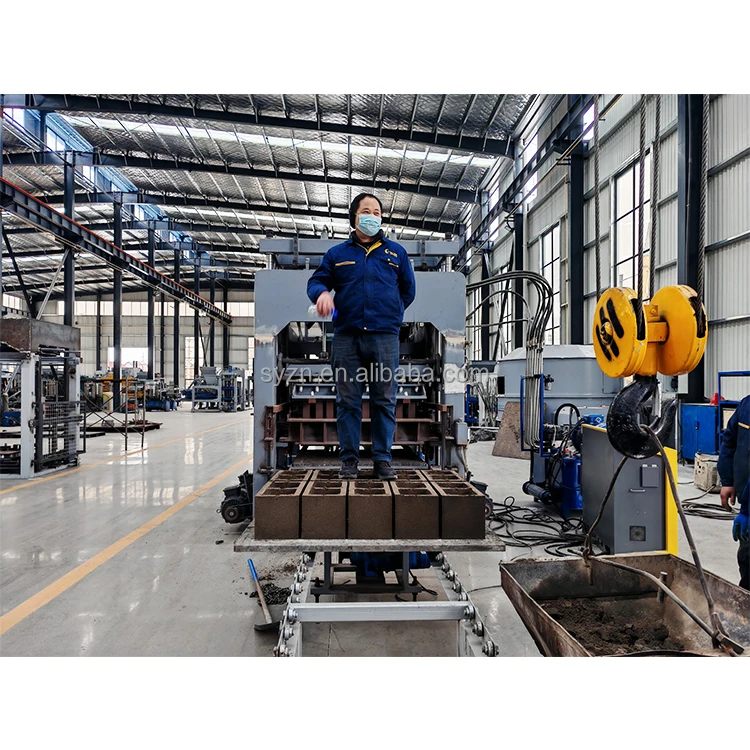
Description
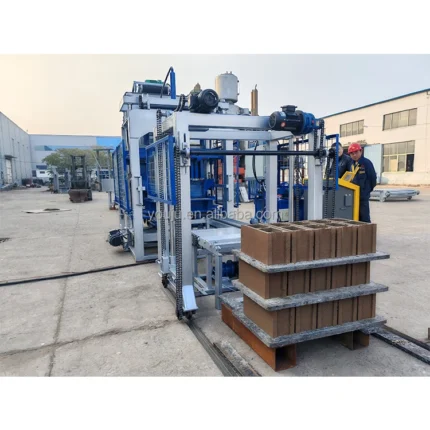
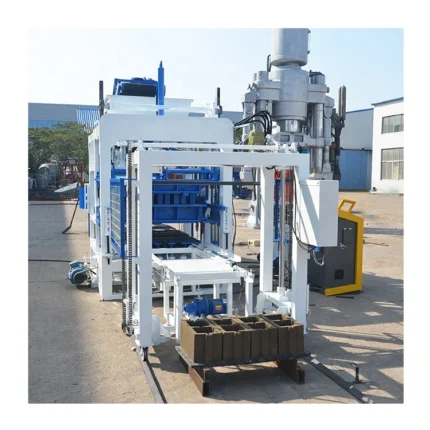
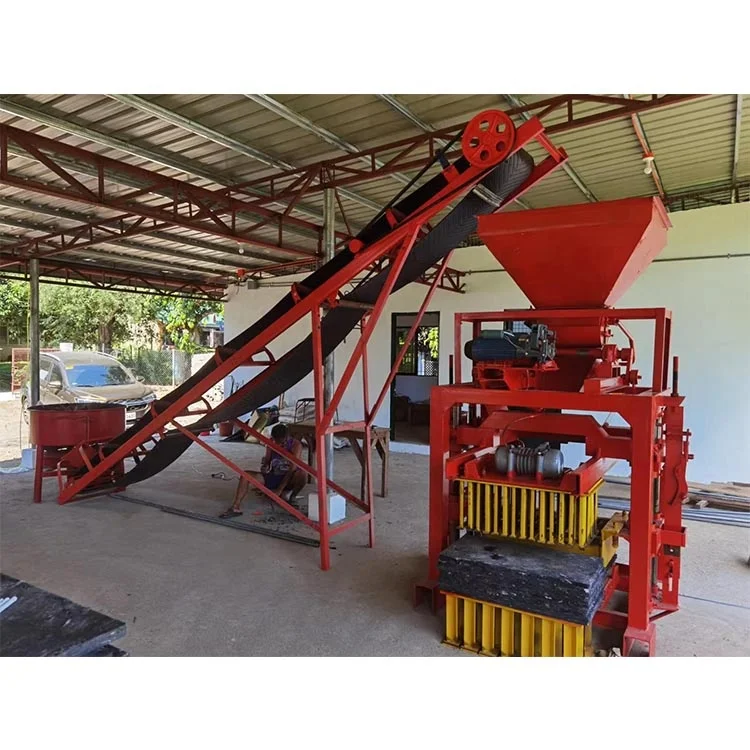
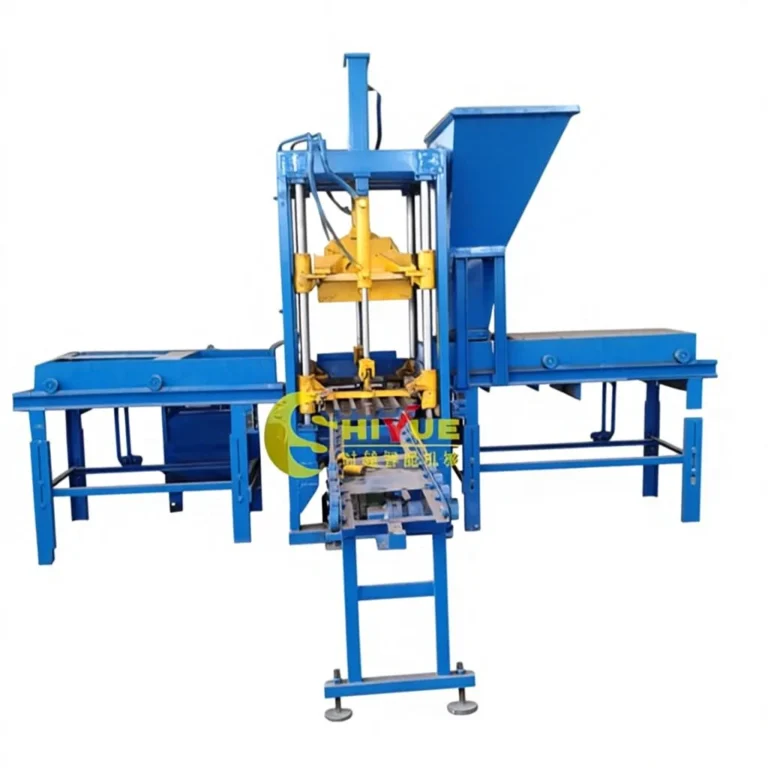
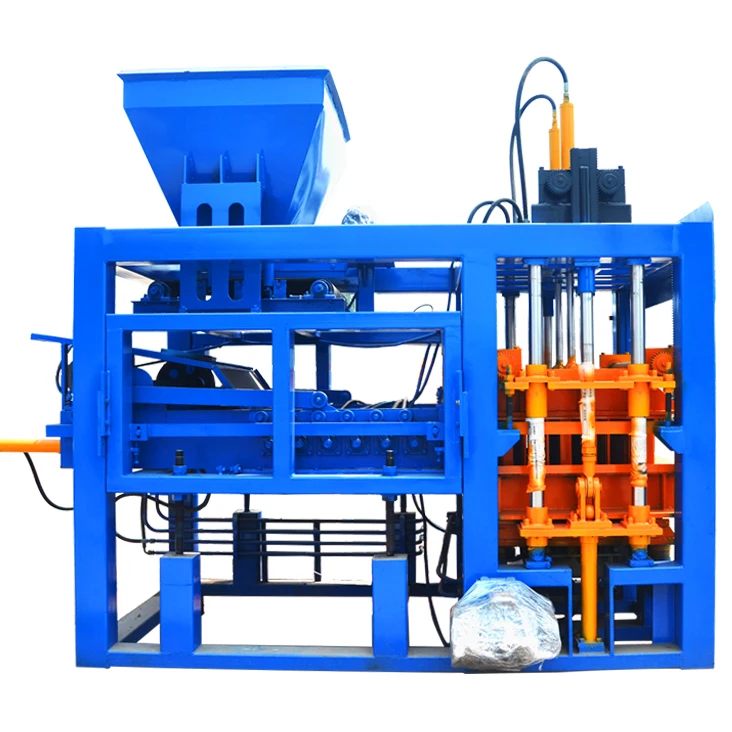
Single focus on block machinery — machine, mould, pallet and handling are specified as one matched system for the QT5-15, eliminating the integration gaps that occur when sourcing the press, control and stacking stations from separate suppliers.
Technical Specifications
| Parameter | Value |
|---|---|
| Model | QT5-15 |
| Product Type | Automatic Hydraulic Concrete Block Making Machine |
| Overall Dimensions (L×W×H) | 7400×1950×2800mm |
| Rated Power | 26.5 kW |
| Rated Hydraulic Pressure | 21 MPa |
| Main Vibration Form | Platform Vibration |
| Vibration Frequency | 2800–4500 r/min |
| Pallet Size | 1100×550 mm |
| Molding Cycle | 15–25 s |
| Demolding Method | Hydraulic |
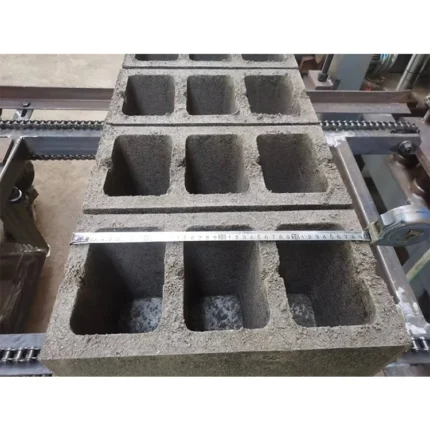
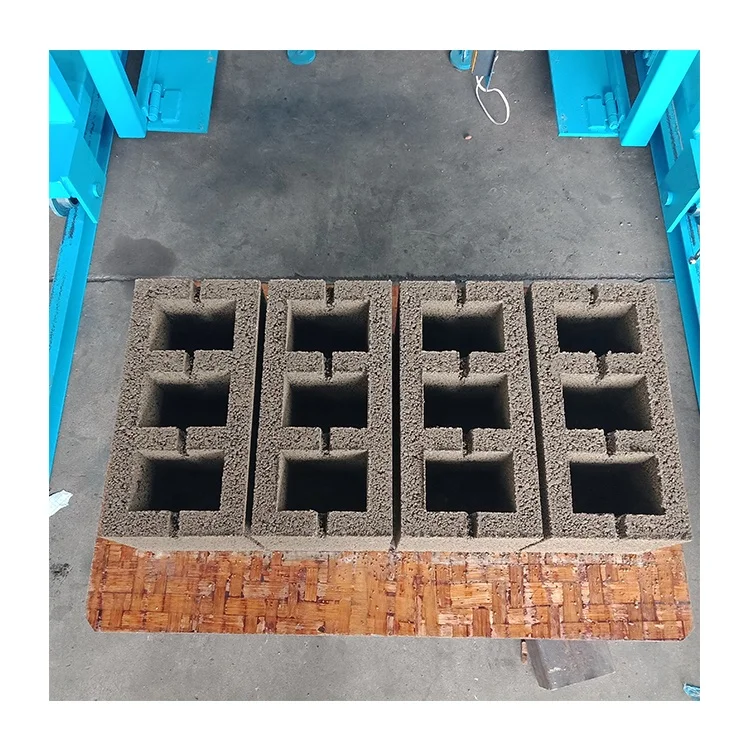
| Output — Hollow Brick 400×200×200 mm | 5 pcs/mould, 1800 pcs/h (basis: 16–20 s cycle) |
| Output — Hollow Block 400×150×200 mm | 6 pcs/mould, 1300 pcs/h (basis: 15–20 s cycle) |
| Output — S Paver 225×112.5×60 mm | 16 pcs/mould, 3700 pcs/h (basis: 15–17 s cycle) |
| Control System | PLC |
| Voltage & Frequency | Configurable to target market requirements |
| Mould Formats | Hollow/solid blocks, pavers, interlocking bricks, curbstone, colored pavers |
| Certification | CE declaration where applicable |
| Warranty | One year |
Application Suitability
| Application | Material or Output |
|---|---|
| Hollow block production for load-bearing walls | Crushed stone, sand, cement blends |
| Solid block manufacturing for partition walls | Fly ash, gravel, cement mixes |
| Interlocking paver runs for driveways and walkways | Fine aggregate, cement, pigment |
| Curbstone pressing for road and kerb projects | Coarse aggregate, cement |
| Colored paver production for landscaping | Pigmented concrete, sand, cement |
Why Cycle Time and Output Numbers Can Mislead Buyers
Every output figure on the QT5-15 is stated against a named block format and a specific cycle range — not a single headline number.
When an automatic concrete block making machine PLC controlled is quoted as "up to X blocks per hour" without naming the format, the buyer’s actual daily throughput often falls well short of expectation. I have watched commissioning stall for days while the crew realises the catalogue figure assumed a small paver cycle, not the 400×200×200 mm hollow block they sell every day [NEED_CITE: capacity calculation transparency in block machinery quotations]. The QT5-15 spec sheet breaks output per format — 1800 pcs/h on 400×200×200 mm hollow brick at a 16–20 s cycle, 1300 pcs/h on 400×150×200 mm hollow block, and 3700 pcs/h on S paver at 15–17 s — so the buyer can verify real daily throughput before the machine ships.
How PLC Control Removes Guesswork from Each Cycle
The QT5-15 places cycle timing, vibration frequency and hydraulic demoulding under PLC governance, so every press stroke follows the same sequence regardless of operator fatigue or shift change. The operator selects the block format on the HMI, and the automatic concrete block making machine PLC controlled system loads the matching vibration profile and cycle duration. This repeatability is what separates consistent block density from the variation that shows up as failed compressive-strength tests.
Matching Vibration and Pressure to Local Aggregate
Platform vibration across the 2800–4500 r/min range, paired with 21 MPa rated hydraulic pressure, compacts the mix uniformly across the pallet surface. If the buyer’s local aggregate is heavier or more angular than the factory test material, the vibration profile and pressure settings must be adjusted accordingly [NEED_CITE: hydraulic pressure and vibration matching for concrete block density]. Running a default programme on unfamiliar aggregate produces blocks that look correct on the outside but crumble at the edges during demoulding or curing transport.
Reading the Specs That Actually Shape Daily Output
The 1100×550 mm pallet size determines how many blocks press per cycle and must match the curing racks and forklift the buyer already operates. The 15–25 s moulding cycle window means format changes shift throughput in ways a single hourly number cannot capture — a curbstone cycle runs longer than a paver cycle, directly affecting daily tonnage. Rated power of 26.5 kW dictates the electrical supply requirement at the plant, so confirming voltage, frequency and phase before production avoids the three-week commissioning stalls I have personally coordinated over late-night calls. The PLC display language is another easy item to overlook until the operator cannot read the alarm screen on day one.
The Hidden Cost of Skipping Electrical Confirmation
Arriving at a site to find the local three-phase supply does not match the machine’s wiring is a delay no project schedule can absorb. Rewiring a control cabinet on-site, sourcing replacement transformers and waiting for a specialist electrician pushes commissioning by weeks, not hours [NEED_CITE: voltage and frequency standards by export market]. Confirming voltage, frequency, PLC language and even the HMI label set before the QT5-15 enters production eliminates the most preventable cause of on-site standstill.
Why Buyers Source This Machine Here
Block machinery is the single focus of the operation, so the QT5-15 press, mould, pallet and handling equipment are specified as one matched system rather than assembled from separate suppliers. Configuration is set against the buyer’s actual mix design, local aggregate and target block format — not a catalogue default. Mould design covers the formats the buyer’s market sells, with custom drawings accepted. Automation level is selectable, allowing a plant to start with the press and pallet feeder and add stacking or cubing later. Installation and commissioning support includes operator training so the crew is productive from the first shift.
Documentation & Verification
- Line layout and capacity calculation stating the block format assumed for the QT5-15
- Machine specification sheet with per-format cycle and output data
- Mould drawing and format list matching the buyer’s product range
- Voltage, frequency and PLC display language confirmation before production
- Factory test record on the buyer’s specified aggregate and block format
- Hydraulic and electrical schematic for on-site maintenance reference
Installation, Commissioning & Support
- Foundation plan matched to the QT5-15 footprint of 7400×1950 mm and vibration load
- Dedicated power circuit sized for 26.5 kW rated draw at confirmed voltage and frequency
- Machine dismantled for container loading, reassembled and aligned on-site before first run
- PLC parameters, vibration frequency and hydraulic pressure calibrated to the buyer’s mix during commissioning
- Operator training covering format change, mould swap and HMI alarm response
- Wear parts and mould list provided so replacements are ordered before the first change-out is due
What to Prepare Before Requesting a Quote
To size the QT5-15 accurately, share the block formats your market demands, the target daily output per format, and your local aggregate type and source. Confirm your plant’s voltage, frequency and phase, the PLC display language your operators need, and whether your existing curing racks and forklift match the 1100×550 mm pallet. If you are upgrading from semi-automatic operation, note which stations you currently handle manually so the automation scope can be defined station by station.
Frequently Asked Questions
Q: What does the PLC actually control on the QT5-15, and what does the operator still handle?
A: The PLC governs cycle timing, vibration frequency, hydraulic demoulding sequence and pallet indexing. The operator loads raw materials, monitors output quality, selects the format on the HMI and performs mould changes. Pallet feeding is automatic; stacking and cubing scope depends on the configuration selected at order.
Q: Can the PLC display language be set to my local language before the machine ships?
A: Yes. The HMI language is confirmed during the order stage along with voltage and frequency. The PLC screen labels, alarm messages and parameter menus are set before factory testing so operators can read every prompt on commissioning day.
Q: What is the upgrade path from semi-automatic to full line automation?
A: The QT5-15 platform allows the buyer to start with automatic press and pallet feeding, then add automatic stacking, curing rack handling and cubing as separate modules. Each station integrates with the existing PLC, so the control system grows with the line without replacing the press.
Q: How do I confirm voltage and frequency for my country before the machine ships?
A: During the quotation stage, provide your plant’s supply voltage, phase and frequency. The electrical cabinet is built and labelled to those values, and the factory test runs on a matching supply to verify motor rotation and PLC operation before dispatch.
Q: How is output verified per block format during factory testing?
A: Each format ordered is run on the QT5-15 with the buyer’s specified aggregate and mix. Cycle time and block count are recorded, and sample blocks are measured for dimensions and weight. The test record is shared with the buyer before the machine is dismantled for shipment.