Description
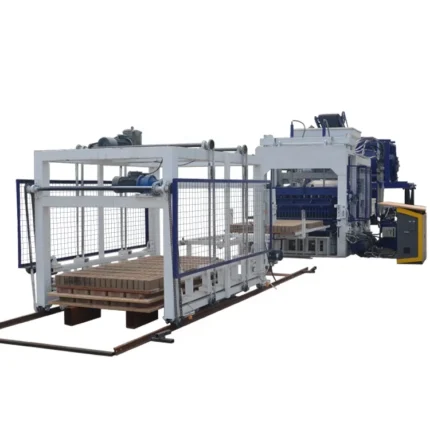
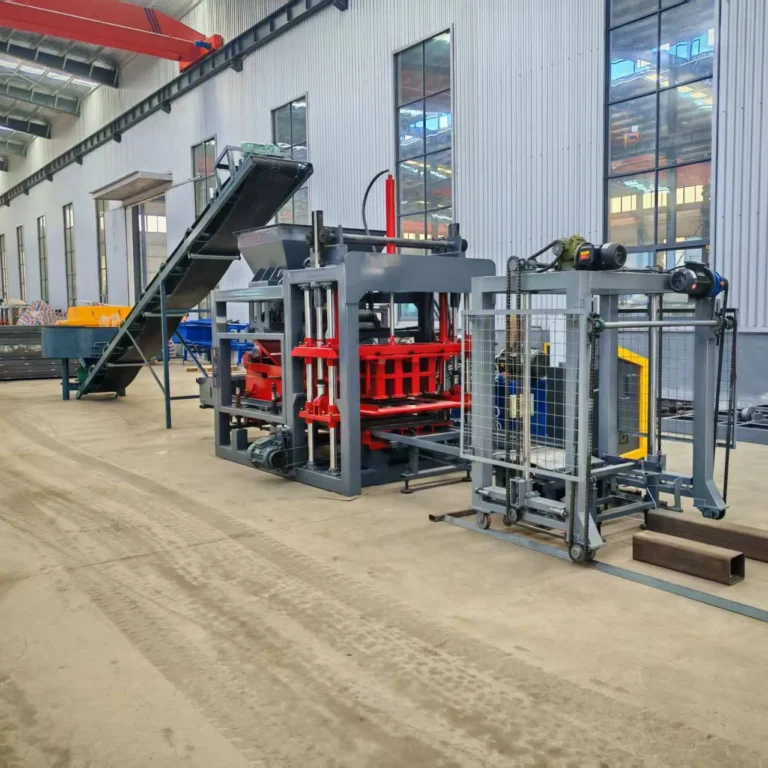
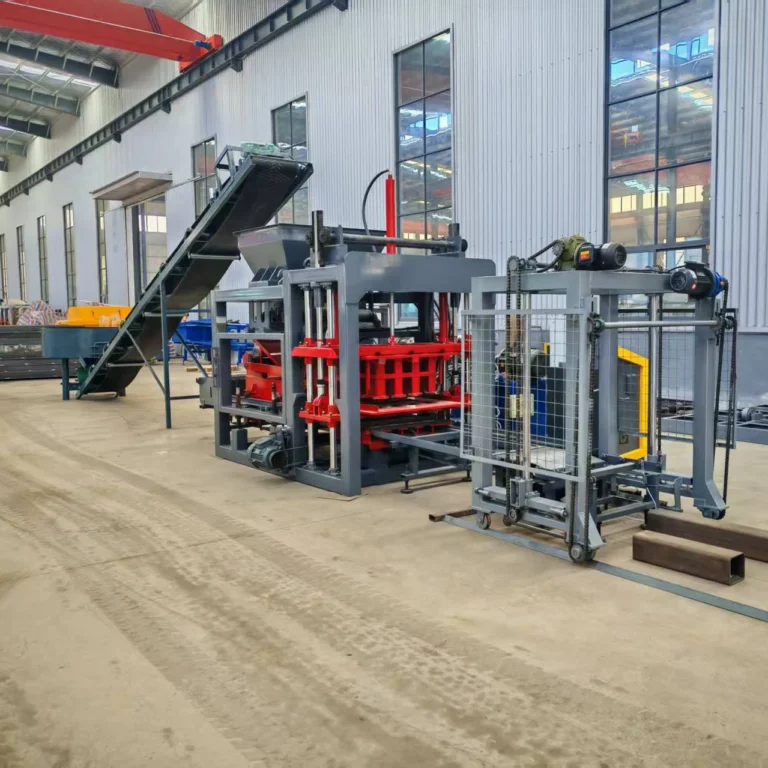
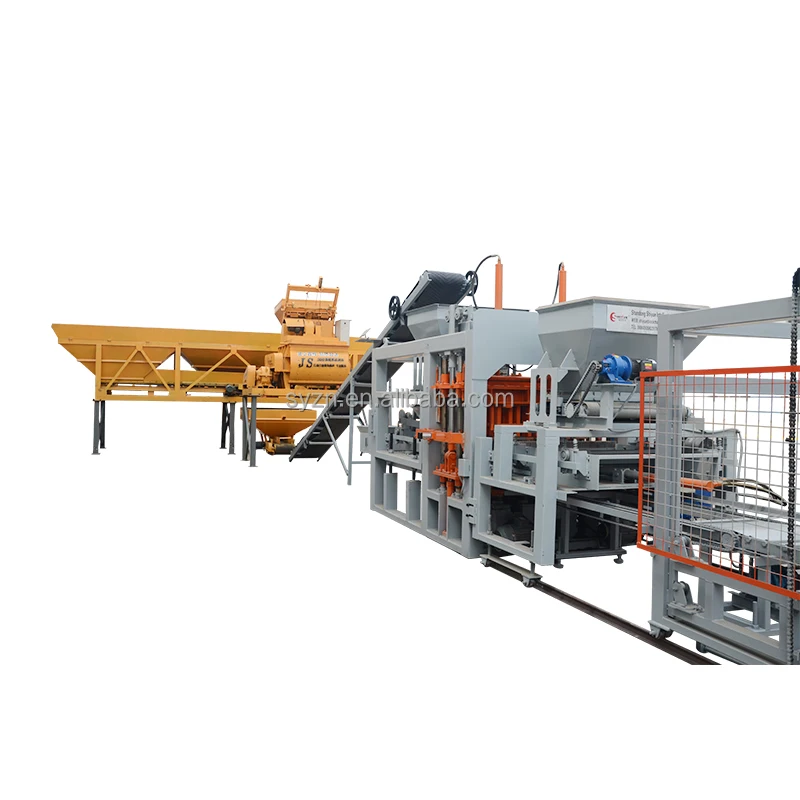
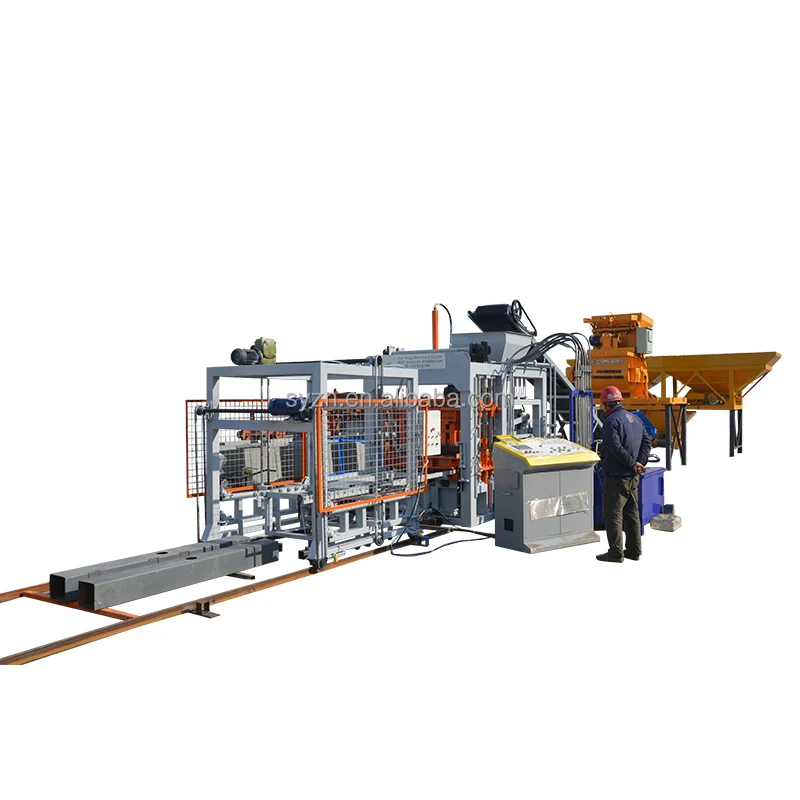
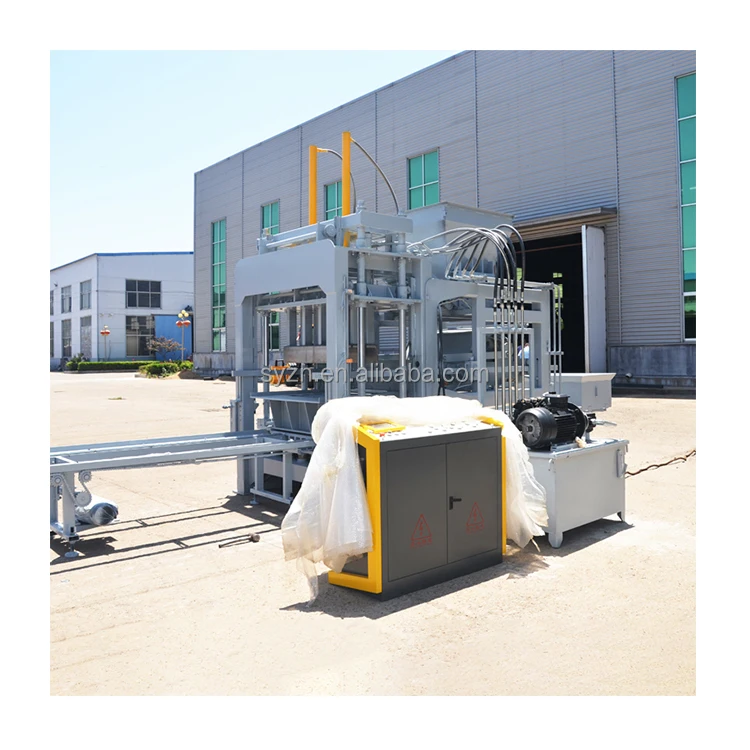
Intelligent Control Architecture — The QT7-15 coordinates batching, pallet feeding, and hydraulic demolding through a unified PLC system, removing manual variables from the production cycle and ensuring consistent output across every shift.
Technical Specifications
| Parameter | Value |
|---|---|
| Model | QT7-15 |
| Product Type | Automatic Concrete Block Making Machine |
| Pallet Size | 1150×700 mm |
| Molding Cycle | 15–20 s |
| Overall Power | 45 kW |
| Vibration Force | 100 kN |
| Vibration Frequency | 0–60 Hz |
| Vibration Form | Platform Vibration |
| Total Mass | 8 T |
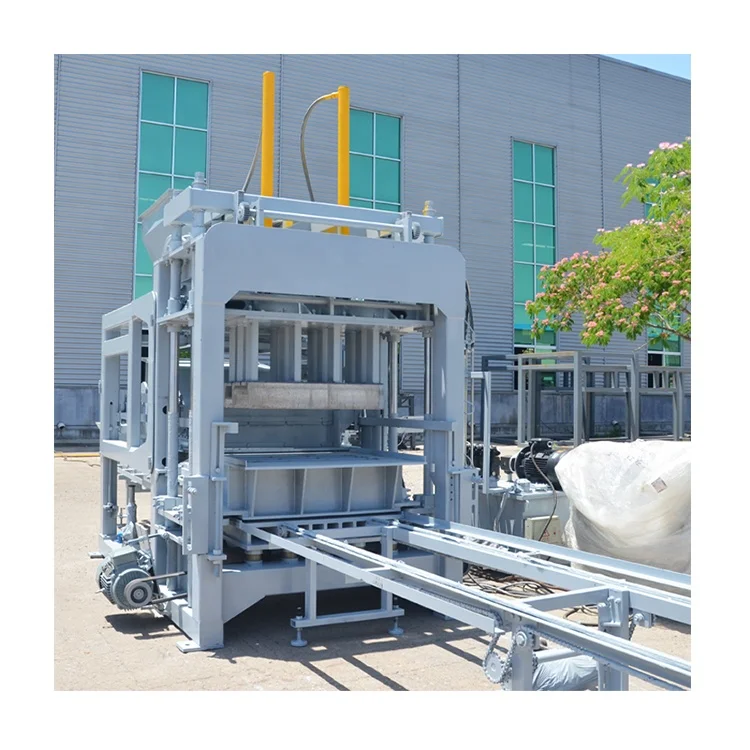
| Demolding Method | Hydraulic |
| Control System | PLC with touch screen interface, remote diagnostics supported |
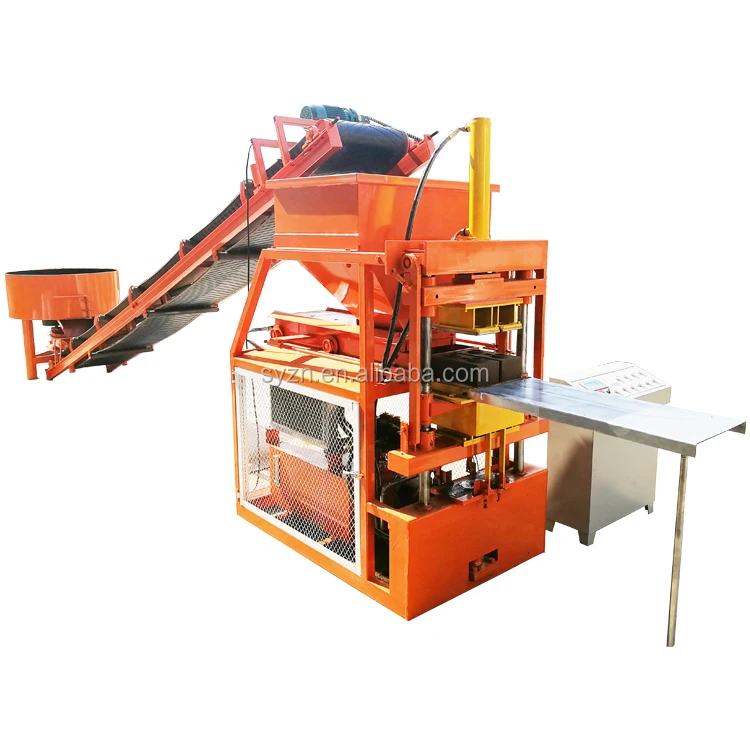
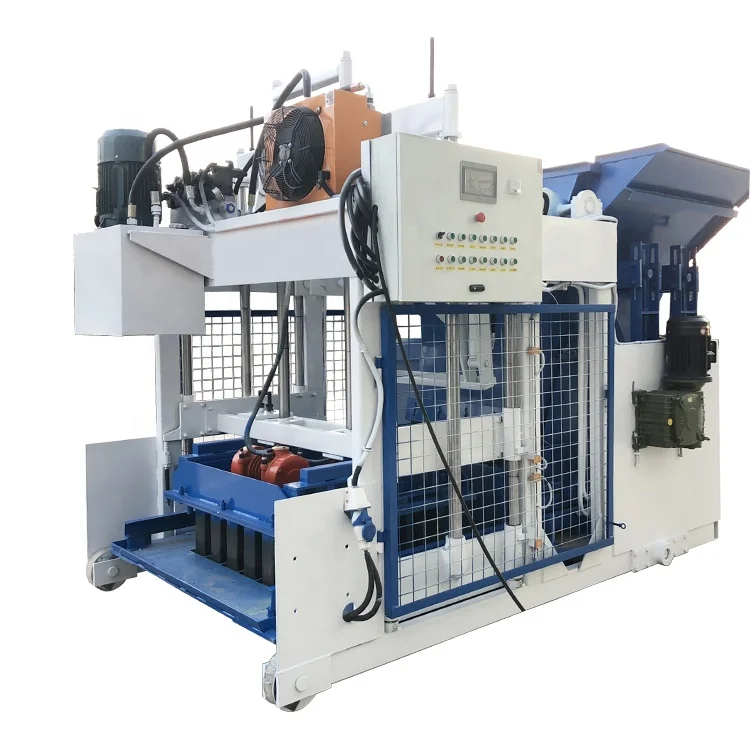
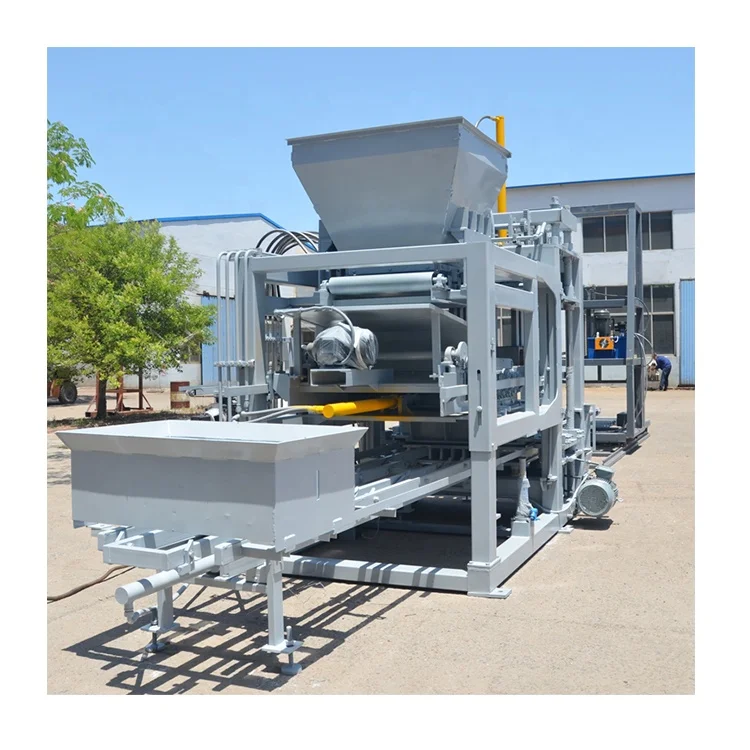
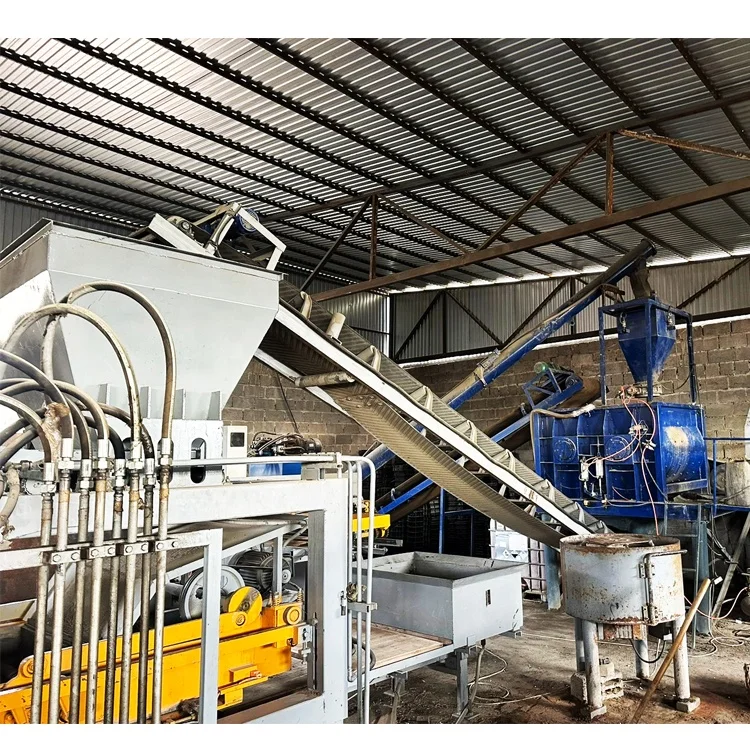
| Key Features | Quick mould change, automatic pallet feed, integrated storage hopper and conveyor |
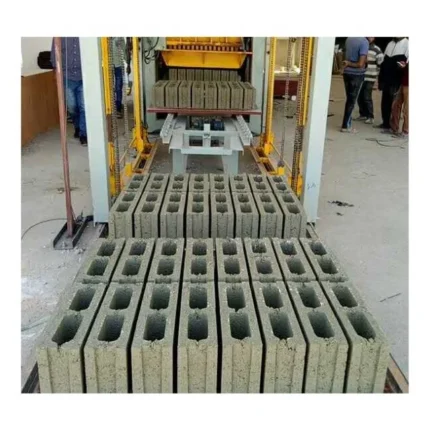
| Output (Hollow Block 400×200×200 mm) | 1260–1680 pcs/h, 10080–13440 pcs/8 hr |
| Output (Hollow Block 400×150×200 mm) | 1440–1920 pcs/h, 11520–15360 pcs/8 hr |
| Output (Rectangular Paver 200×100×60 mm) | 3888–4860 pcs/h, 31104–38880 pcs/8 hr |
Application Suitability
| Application | Material or Output |
|---|---|
| Hollow Block Production | Crushed stone, cement, and sand mixes for load-bearing and non-load-bearing walls |
| Rectangular Paver Manufacturing | High-density concrete mixes for pedestrian and vehicular paving surfaces |
| Multi-Format Concrete Products | Interchanging moulds for solid blocks, porous bricks, and kerbstones on a single line |
| On-Site Construction Supply | Continuous production for housing developments and infrastructure projects |
What "1200 Blocks per Hour" Actually Means for Your Plant
Capacity figures are meaningless unless tied to a specific block format and local mix design.
The QT7-15 is rated at 1260–1680 pieces per hour based on a 400×200×200mm hollow block. If your market demands 150mm hollow blocks or 60mm pavers, the cycle time and output will shift significantly. Many quotations list peak capacity without the format assumption, leaving buyers to discover the shortfall only after the machine is installed. [NEED_CITE: concrete block production cycle times by format] An automatic concrete block making machine PLC controlled setup ensures the press isn’t waiting on manual pallet handling, but the physical molding cycle is still bound by the mould geometry and vibration requirements.
The Logic of Automated Cycle Synchronization
In a manual or semi-automatic setup, the press cycle is dictated by the slowest operator. This automatic concrete block making machine PLC controlled unit removes that variable. The system manages the storage hopper feed, pallet indexing, and hydraulic pressure application in a locked sequence. This prevents the press from firing before the mould is fully charged, which is a common cause of density variation in manually operated lines.
Diagnostics Beyond the Control Panel
The touch screen interface does more than run the cycle; it stores product process data and supports remote fault diagnosis. When a sensor fails or a hydraulic pressure drop occurs, the system logs the event. This allows technicians to identify whether a fault stems from a mechanical component or an electrical input, rather than guessing on the shop floor. [NEED_CITE: PLC remote diagnostics in industrial block presses]
Interpreting the Vibration and Pressure Data
The 100 kN vibration force paired with a 0–60 Hz adjustable frequency is critical for block density. Low-frequency, high-amplitude vibration is typically used for hollow blocks to consolidate the coarse aggregate, while higher frequencies are required for pavers to achieve a smooth face. The QT7-15 allows the operator to input these parameters via the PLC, ensuring that a switch from hollow blocks to pavers doesn’t just involve a mould change, but a complete recalibration of the energy applied to the mix.
The Cost of Ignoring the Electrical Grid
A PLC system is sensitive to voltage fluctuations and frequency mismatches. If the local grid operates at 50 Hz but the machine is wired for 60 Hz, the vibration motors will not reach their rated RPM, resulting in under-compacted blocks. This is why the QT7-15 requires a confirmed voltage and frequency specification before production begins. [NEED_CITE: electrical grid standards for industrial machinery exports]
Why Source from Shiyue Intelligent Machinery
We focus exclusively on block machinery, meaning the QT7-15 is configured against your specific mix design and local aggregate, not a catalogue default. The pallet handling and stacking are integrated into the line logic rather than sourced separately. Every machine undergoes a factory test using the buyer’s target block format to verify the cycle time and output before shipment. The control language and voltage are confirmed in writing, ensuring the machine is operable from day one.
Documentation & Verification
- Line layout and capacity calculation stating the specific block format and mix design assumed.
- Factory test record on your requested hollow block or paver dimensions before dispatch.
- Voltage, frequency, and PLC display language confirmation sheet signed prior to production.
- Operation manual covering touch screen navigation, fault codes, and hydraulic maintenance schedules.
- CE declaration and electrical schematic matching the exported control cabinet configuration.
Installation, Commissioning & Support
- Foundation plan based on the 8 T total mass and 100 kN dynamic vibration force.
- Electrical verification of the 45 kW overall power requirement against local three-phase supply.
- Commissioning of the PLC touch screen, including operator training on data input and storage.
- Calibration of the platform vibration frequency and hydraulic demolding pressure for local aggregate.
- Supply of hydraulic seals and vibration motor brushes as part of the initial wear parts package.
Preparing Your Technical Inquiry
To ensure the QT7-15 matches your production goals, please provide your target block formats, the specific dimensions you intend to produce, and your daily output requirement based on an 8-hour shift. We also need your local voltage and frequency, the preferred language for the PLC interface, and details on your existing curing area and pallet handling equipment to ensure the automation level integrates with your site layout.
Frequently Asked Questions
Q: How is the output capacity of the QT7-15 calculated and verified?
A: Capacity is calculated based on the molding cycle time for a specific block format. The figures provided, such as 1260–1680 pcs/h for 400×200×200mm hollow blocks, assume a standard mix and continuous pallet feed. We verify these numbers during the factory test using the buyer’s exact mould requirements before the machine is cleared for shipment.
Q: What specific PLC functions are included in the control system?
A: The system includes product process data storage, batching accuracy monitoring, and remote fault diagnosis. The touch screen allows operators to adjust vibration frequency and hydraulic pressure parameters for different block types, ensuring consistency without manual intervention.
Q: Can the QT7-15 be upgraded to full automation if I start with basic control?
A: The machine is designed as a fully automatic unit where pallet feeding and stacking are integrated. While you can operate it with manual pallet handling initially, the PLC architecture supports the addition of automatic stackers and curing rack handling systems as your plant’s throughput requirements increase.
Q: What voltage and control language options are available?
A: Voltage and frequency are configured to match your local grid, such as 380V/50Hz or 440V/60Hz. The PLC display language is selected during the order confirmation stage to ensure your operators can navigate the interface and fault codes immediately upon installation.
Q: How long does it take to change moulds on the QT7-15?
A: The QT7-15 features a quick replacement system designed to minimize downtime between formats. The PLC stores the specific vibration and pressure settings for each mould, allowing the operator to recall the correct production parameters instantly after the physical mould change is complete.