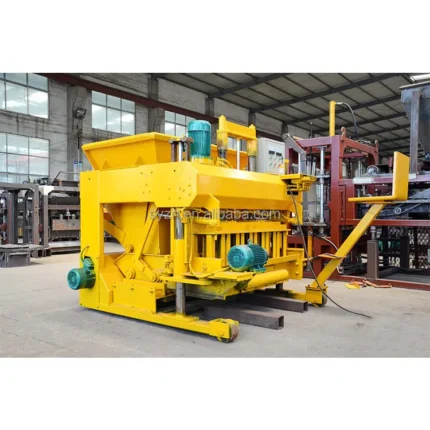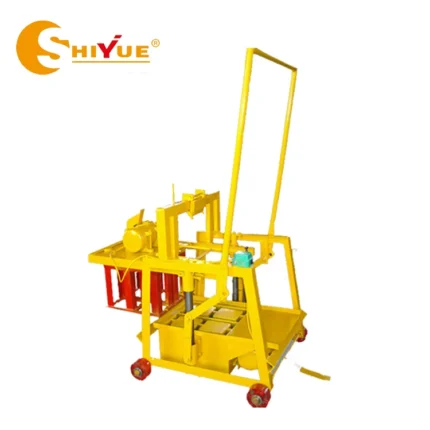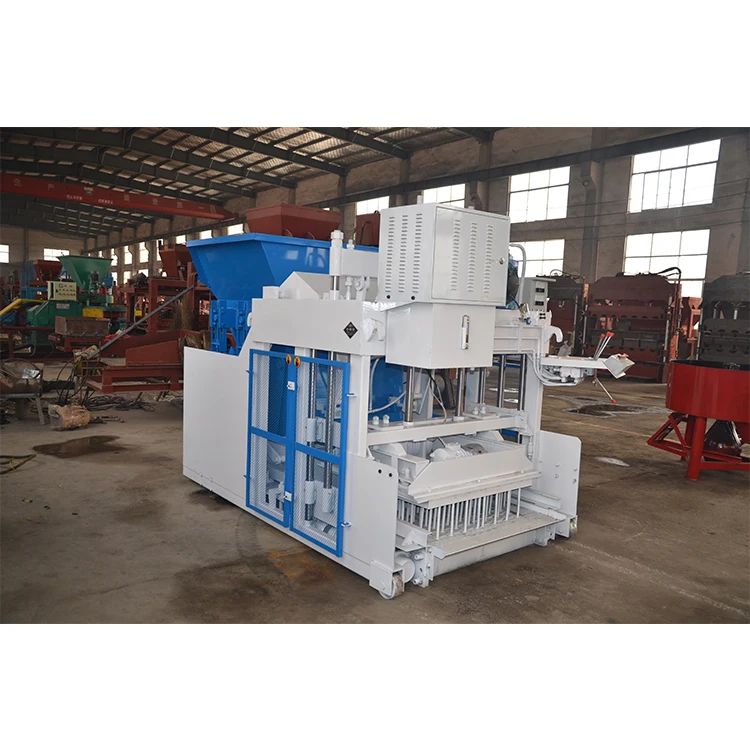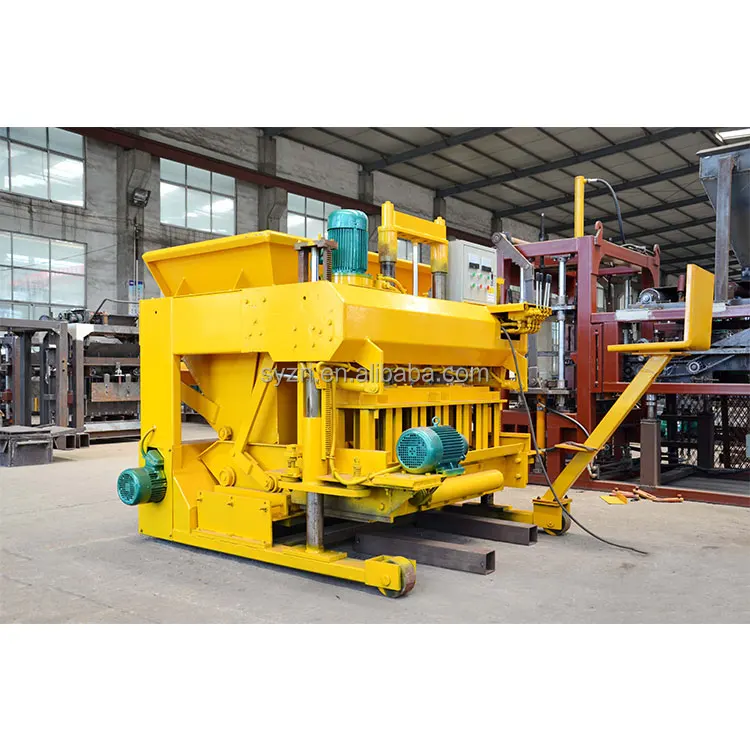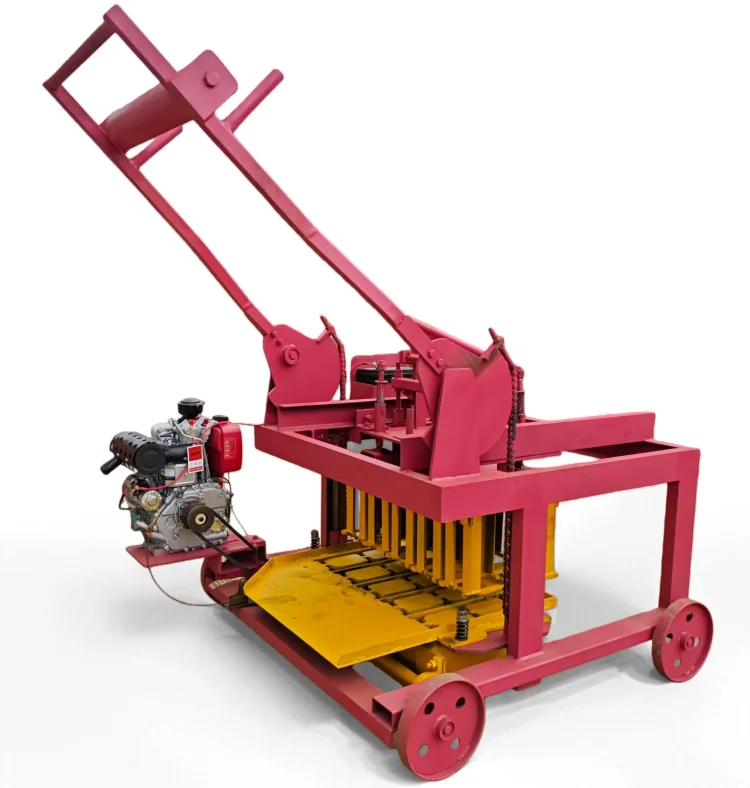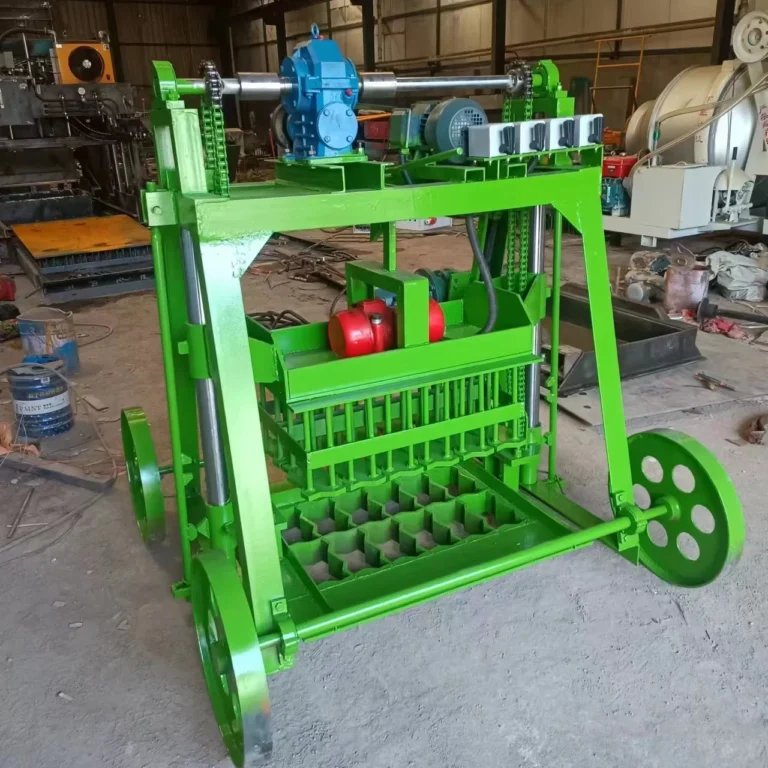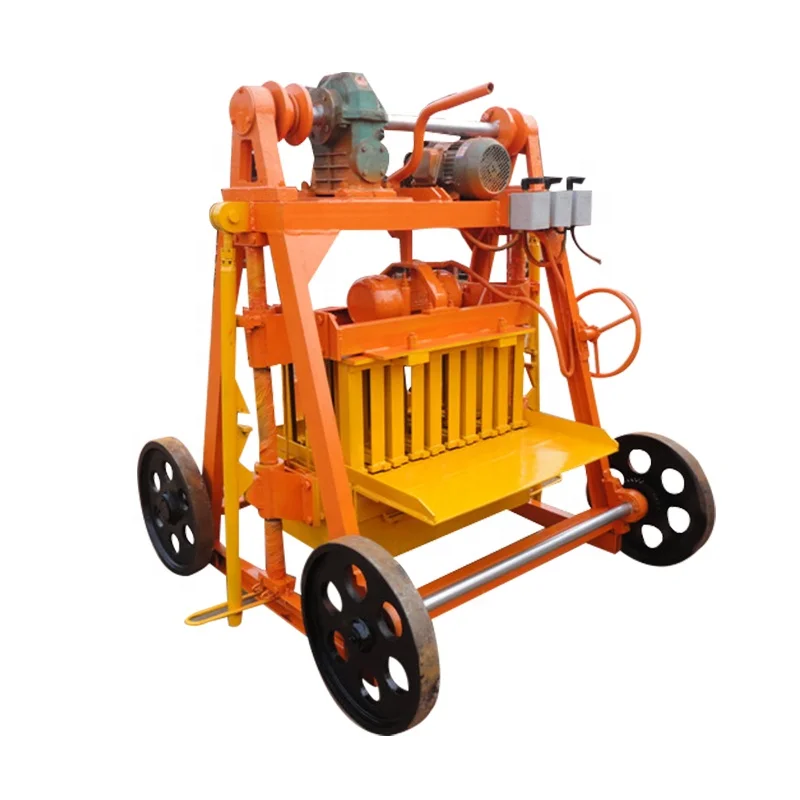
Description
Configuration set against the buyer’s actual mix design, local aggregate and target block format — the QMJ4-45 manual egg-laying block machine is specified here as a baseline that shows exactly where labour ends and an automatic manual block machine upgrade path begins.
Technical Specifications
| Parameter | Value |
|---|---|
| Model | QMJ4-45 |
| Product Type | Manual Egg-Laying Block Making Machine |
| Molding Capacity | 4 pcs/mould (basis: 400×200×200mm hollow block) |
| Vibration Frequency | 2400 r/min |
| Vibration Method | Mould vibration (twice-vibration of molding core) |
| Molding Cycle | 40–45 s |
| Productivity (400×200×200mm hollow block) | 3000 pcs/day (8-hour shift, 4 pcs/mould) |
| Productivity (400×150×200mm hollow block) | 3500 pcs/day (8-hour shift, 5 pcs/mould) |
| Productivity (400×120×200mm hollow block) | 4500 pcs/day (8-hour shift, 6 pcs/mould) |
| Total Power | 6 kW |
| Power Source | Diesel / Petrol engine |
| Demold Method | Manual |
| Turning Method | Manual |
| Pallet Requirement | No pallets required (egg-laying design) |
| Control System | Manual operation (no PLC) |
| Automation Level | Manual (egg-laying / mobile) |
| Warranty | One year for whole machine |
| Standards | CE |
Application Suitability
| Application | Material or Output |
|---|---|
| On-site hollow block production | Crushed stone, sand, cement and water without a fixed batching plant |
| Small-scale block yard start-up | Multiple hollow block formats on existing concrete working floor |
| Contractor self-supply for masonry | Hollow blocks produced directly at the construction site |
| Remote or off-grid block making | Sites without stable three-phase grid using diesel or petrol engine |
What the 3000 Pieces per Day Figure Actually Assumes
The headline output only holds when the operator maintains a 40–45 second cycle on a specific block size, with no pallet handling delay absorbed into the shift.
Every mobile block machine I have supported on a humid southern job site eventually reveals the gap between quoted capacity and what actually leaves the curing area before dark. The QMJ4-45 produces 3000 pieces of 400×200×200mm hollow blocks in an eight-hour shift, 3500 pieces of 400×150×200mm blocks, and 4500 pieces of 400×120×200mm blocks — each figure tied to its own mould count per cycle [NEED_CITE: block format capacity calculation methodology for egg-laying machines]. When a buyer compares these numbers to a catalogue that quotes a single daily figure without naming the block format, the mismatch becomes visible only after the first week of production. That is precisely the moment an automatic manual block machine upgrade path starts to matter, because the press itself is rarely the bottleneck — it is the stacking, curing logistics and format changeover that consume the rest of the shift.
Where Manual Operation Ends and Automation Begins
The QMJ4-45 operates without pallets and without a PLC, meaning the operator controls every variable: mix consistency fed to the hopper, vibration duration, demoulding timing and machine repositioning. This gives the machine a low entry cost and off-grid capability through its diesel or petrol engine, but it also means batch-to-batch consistency rests entirely on one person’s rhythm across an eight-hour shift. Buyers evaluating an automatic manual block machine upgrade path need to understand that the upgrade is not just adding a screen — it is transferring those timing decisions from the operator to a programmable controller.
What No-Pallet Operation Means for Your Curing Floor
Egg-laying design eliminates the recurring cost and handling weight of pallets, but it shifts the curing logistics entirely onto the available floor area. Each block is deposited directly on the ground and must remain undisturbed through the initial set, so the curing zone must be large enough to hold a full day’s output before any piece can be moved [NEED_CITE: curing area layout requirements for egg-laying block machines]. The 6 kW power draw keeps energy costs low, yet the floor space required to support 3000 to 4500 blocks per day depending on format is a planning variable that buyers frequently underestimate until the forklift cannot reach the far end of the curing yard.
Vibration, Cycle Time and Block Density in Practice
The twice-vibration molding core at 2400 r/min delivers two compaction pulses per cycle, which affects how the concrete mix settles around the mould walls compared to single-vibration legacy designs. A 40–45 second cycle is short enough to sustain the stated productivity figures, yet long enough for the vibration to consolidate the mix across all three supported hollow block formats. When vibration frequency and molding cycle are matched to the buyer’s actual aggregate gradation and cement ratio, block density stays consistent from the first mould of the morning to the last [NEED_CITE: relationship between vibration frequency and concrete block compressive strength]. If the mix design changes — say, a local quarry switches from river sand to manufactured sand — the operator on a manual machine must adjust by feel, whereas a PLC-controlled system would hold the vibration duration constant and flag the deviation.
When the Wrong Configuration Costs More Than the Machine
I once took a call from a contractor whose crew spent an entire afternoon waiting on a replacement vibration belt because the original shipment included no spare wear parts — the block format was correct, but the spare parts list had been left blank on the order. On a manual machine like the QMJ4-45, the consequences of an incomplete configuration are immediate: a fatigued mould spring or a worn drive belt stops production entirely, and there is no PLC diagnostic to isolate the fault [NEED_CITE: common field failures on mobile egg-laying block machines]. The cost is not the part itself but the idle crew, the delayed pour schedule and the phone calls that could have been avoided with a confirmed wear parts list before the crate was sealed.
Why This Machine Is Configured Here, Not Assembled from Catalogue Pages
The QMJ4-45 is treated as a single matched system rather than a press separated from its mould and power source. The mould design covers the specific hollow block formats the buyer’s market actually sells, confirmed by drawing before production rather than assumed from a default list. Capacity is stated per format so the buyer can match the machine to a known order book. The power source is confirmed as diesel or petrol engine before shipment, avoiding a voltage mismatch that would stall commissioning. An upgrade path to PLC-controlled pallet feeding and stacking is documented so a buyer who starts manual can plan the next step without replacing the frame. Every shipment leaves with a factory test record specific to the ordered block format.
Documentation & Verification
- Factory test record running your specified hollow block format before dispatch
- Mould drawing and format list confirming each supported block size
- Voltage or engine power source confirmation sheet signed before shipment
- Operation and maintenance manual covering manual demould and vibration adjustment
- Wear parts and mould list detailing every consumable shipped with the machine
- CE declaration included where applicable to the destination market
Installation, Commissioning & Support
- Flat concrete curing area sized to hold a full day’s QMJ4-45 output before blocks are moved
- Power source confirmed as diesel, petrol or 6 kW electric before the machine ships
- Machine arrives fully assembled; operator training covers manual cycle timing and mix adjustment
- Spare vibration belts and mould springs included based on a confirmed wear parts list
- Mould change procedure documented so format flexibility is usable from day one
- Upgrade path assessment for adding PLC control and automatic stacking to the existing frame
What to Send with Your Inquiry
Share the hollow block formats your market sells, the daily volume you need to sustain, and whether your site has reliable three-phase power or requires the diesel or petrol engine option. Let us know the aggregate type available locally so the vibration and cycle parameters can be checked against your mix. If you are evaluating an automatic manual block machine upgrade path, tell us which automation modules you want to plan for so the frame preparation can be included from the start.
Frequently Asked Questions
Q: How do I verify the daily output figures against the block format my market sells?
A: Each productivity figure is tied to a specific block size and mould count: 3000 pieces for 400×200×200mm, 3500 for 400×150×200mm, and 4500 for 400×120×200mm, all based on an eight-hour shift at a 40–45 second cycle. Send your target block dimensions so the calculation can be restated for your exact format rather than relying on a generic catalogue number.
Q: Should I stay manual, go semi-automatic, or plan for full PLC control from the beginning?
A: The QMJ4-45 starts as a fully manual machine with no PLC, keeping initial investment low and off-grid operation possible. The decision depends on your daily volume and how much consistency risk your market tolerates. Buyers who plan to scale typically confirm which automation modules — pallet feeder, stacker, PLC — the frame can accept later, so the upgrade does not require a full machine replacement.
Q: Can the QMJ4-45 be upgraded later with automatic pallet feeding and stacking?
A: The machine frame can be assessed for retrofitting automatic pallet feeding and stacking modules, but this depends on the original mechanical preparation. Confirming the upgrade path at the quotation stage ensures the frame is built to accept those modules, avoiding costly structural modifications when you decide to move beyond manual operation.
Q: What does no-pallet egg-laying operation really mean for my curing area?
A: Blocks are deposited directly on the ground and must remain in place until initial set, so your curing floor must hold an entire day’s production. This eliminates pallet purchase and handling costs but increases the floor area required and influences how your forklift or manual crew moves cured blocks to the dispatch area.
Q: How do I confirm the power source before the machine ships?
A: The QMJ4-45 can run on a diesel or petrol engine for off-grid sites or a 6 kW electric motor where three-phase power is available. The power source is confirmed on a signed specification sheet before production begins, so the machine arrives ready to run without a voltage or fuel mismatch that would delay commissioning.