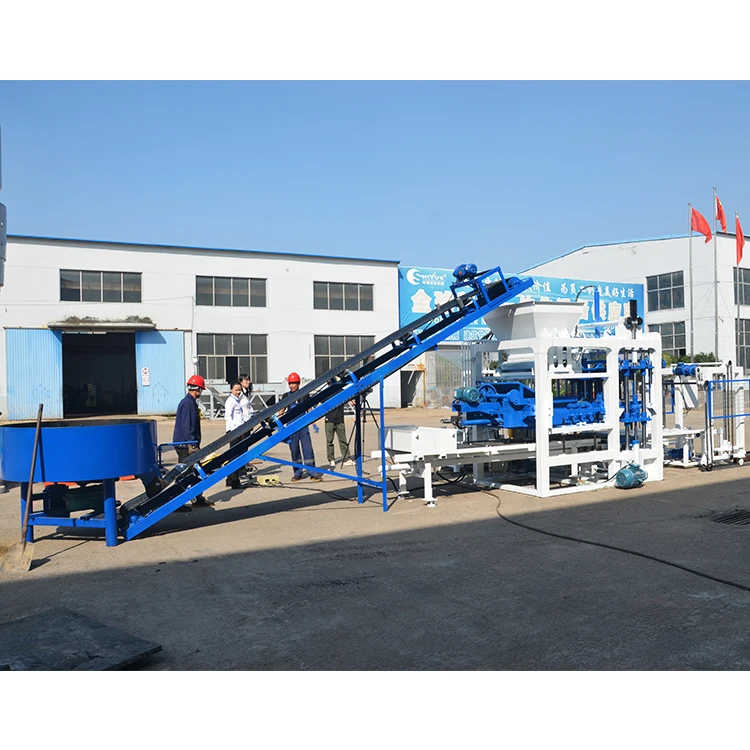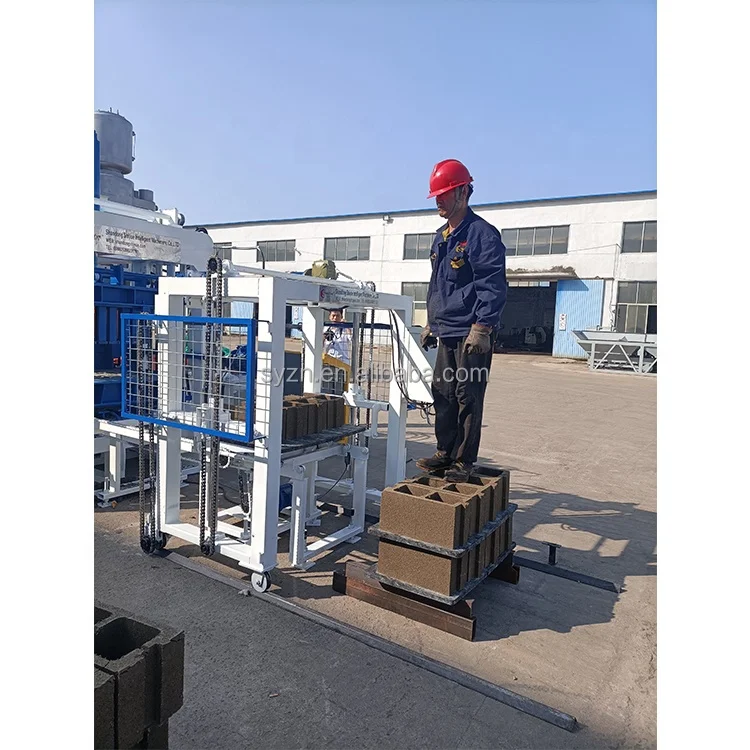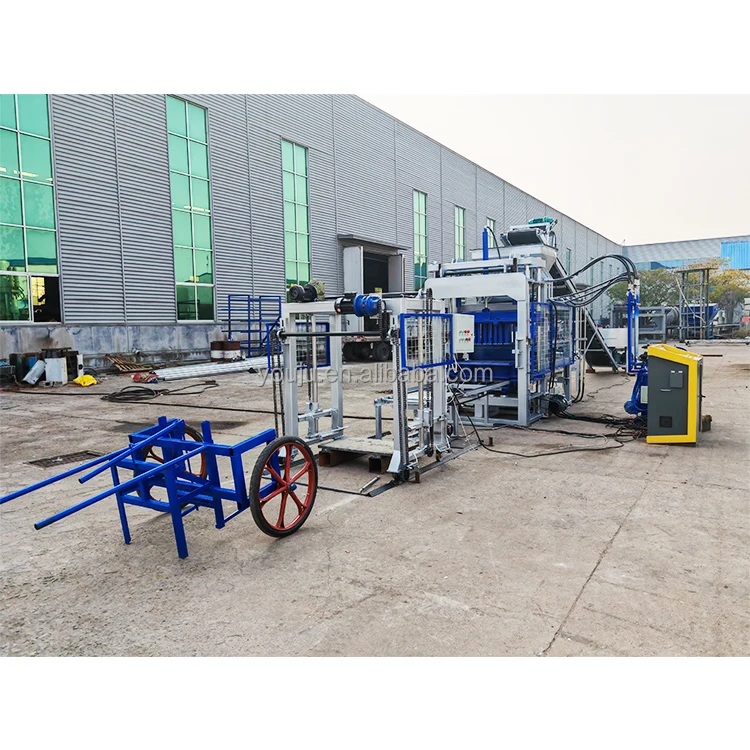


Description
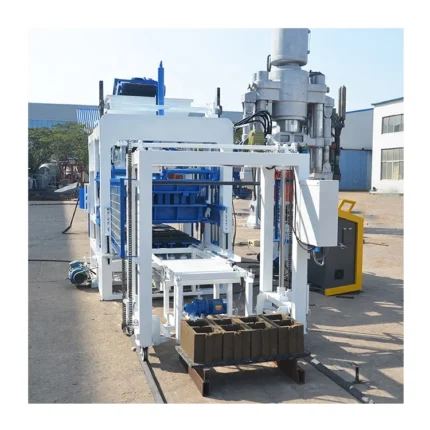
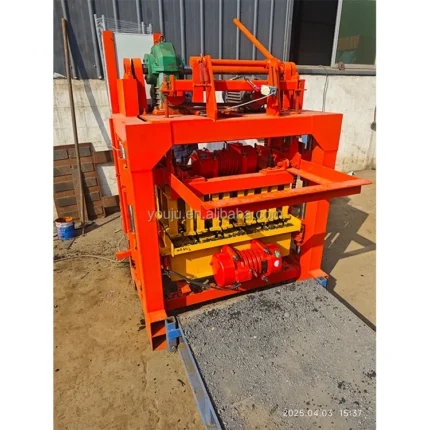
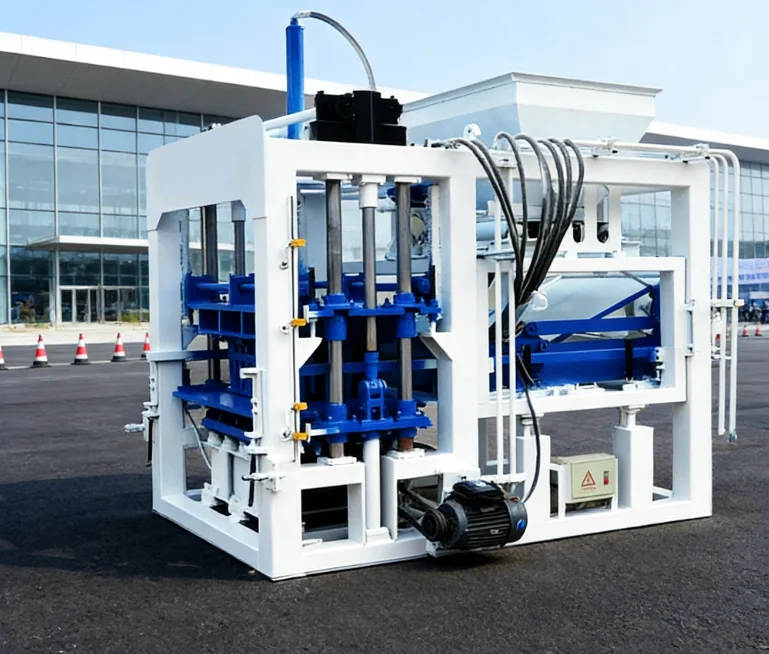
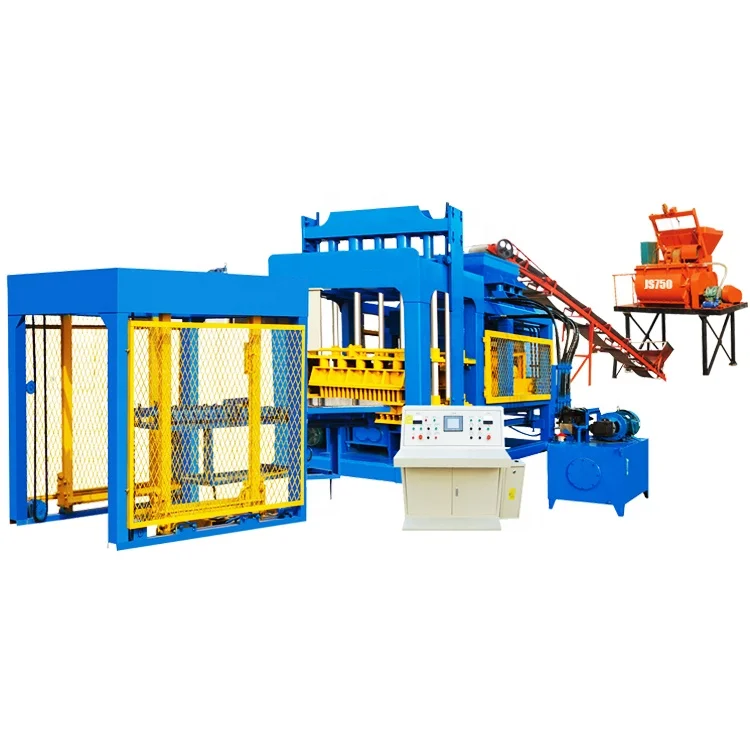
Automation That Removes the Operator from the Cycle — The QT4-15 handles pallet feeding, material dosing, vibration, and hydraulic demoulding through a PLC sequence, so consistency depends on the program rather than the shift worker.
Technical Specifications
| Parameter | Value |
|---|---|
| Model | QT4-15 |
| Product Type | Hydraulic Block Making Machine |
| Molding Cycle | 15–30 s |
| Pallet Size | 900 × 500 mm |
| Vibration Type | Platform vibration |
| Vibration Frequency | 50–70 Hz |
| Product Height Range | 50–220 mm |
| Overall Power | 24.5 kW |
| Demolding Method | Hydraulic |
| Control System | PLC controlled |
| Automation Level | Automatic (pallet feeding, material feeding, vibrating, demoulding) |
| Output — Hollow Block 400×200×200 mm | 900–1,200 pcs/h, 7,200–9,600 pcs/8 h shift |
| Output — Hollow Block 400×150×200 mm | 1,080–1,440 pcs/h, 8,640–11,520 pcs/8 h shift |
| Output — Hollow Block 400×100×200 mm | 1,440–1,920 pcs/h, 11,520–15,360 pcs/8 h shift |
| Output — Paver 200×100×60 mm | 2,880–3,840 pcs/h, 23,040–30,720 pcs/8 h shift |
| Output — Solid Brick 240×115×53 mm | 5,930–6,720 pcs/h, 47,400–53,700 pcs/8 h shift |
| Mould Format | Hollow block, paver brick, solid brick (interchangeable) |
| Raw Materials | Fly ash, slag, gangue, sand, crushed stone, cement, water |
| Block Compressive Strength | > 15 MPa |
| Electrical & Hydraulic Components | Original imported or China well-known brand (source value — verify against manufacturer catalog) |
| Standards | CE declaration where applicable (source value — verify against manufacturer catalog) |
Application Suitability
| Application | Material or Output |
|---|---|
| Medium-capacity hollow block plant | Fly ash, slag, or crushed stone mixed with cement — 7,200–9,600 hollow blocks (400×200×200 mm) per 8-hour shift |
| Paving brick production line | Sand and crushed stone with cement binder — 23,040–30,720 pavers (200×100×60 mm) per 8-hour shift |
| Solid brick manufacturing | Gangue or fly ash blends — 47,400–53,700 solid bricks (240×115×53 mm) per 8-hour shift |
| Format-diverse concrete product plant | Interchangeable moulds for hollow blocks, pavers, and solid bricks on a single press |
What "Automatic" Actually Means for Your Shift Schedule
The automatic QT4-15 block making machine takes pallet feeding, material dosing, vibration, and demoulding out of the operator’s hands — but the PLC only controls what it is told to control.
Buyers often read "automatic" on a spec sheet and assume the entire production flow runs itself. In practice, the PLC governs the press cycle. Raw material batching accuracy, pallet condition, and curing-area logistics still depend on how the rest of your line is set up. I have walked into plants where the press was cycling perfectly while two workers scrambled to pull cured blocks off racks by hand, because nobody scoped the downstream handling. [NEED_CITE: automation scope boundaries in block plant design] When the automatic QT4-15 block making machine is quoted, make sure the automation boundary is drawn explicitly — which stations are inside the PLC loop and which remain manual.
What the PLC Actually Controls on This Press
The PLC on the QT4-15 sequences four actions per cycle: pallet indexing into the press, material feed into the mould box, platform vibration at 50–70 Hz, and hydraulic demoulding. The operator’s role shifts from running each step to monitoring the cycle counter and clearing faults. Batch-to-batch consistency improves because the vibration duration and hydraulic pressure hold constant regardless of who is on shift. The automatic QT4-15 block making machine stores cycle parameters per mould, so switching from hollow block to paver does not require the operator to re-dial settings from memory.
Where Automation Stops and Your Line Design Takes Over
The PLC does not manage raw material batching, pallet return conveyors, or stacking after demoulding. Those stations must be specified separately and timed so the press is never waiting for a pallet or a mix delivery. If your curing area uses 900 × 500 mm pallets on standard racks, the pallet circulation loop must match that footprint. A mismatch between press cycle time and pallet return speed is the most common cause of idle time on an otherwise automatic line. [NEED_CITE: block plant pallet circulation and press idle time] Specifying the full line — not just the press — is where most capacity gaps originate.
Reading the Numbers Behind Vibration, Pressure, and Cycle Time
Platform vibration at 50–70 Hz works together with hydraulic demoulding to compact the mix and release the block without cracking. The frequency range matters because lower frequencies move larger aggregate particles while higher frequencies densify fine sand and fly ash blends. If your local aggregate is coarse crushed stone, the press needs time at the lower end of that range; if you run mostly fly ash and fine sand, the higher end produces a denser block. The 15–30 second moulding cycle reflects this variation — a paver at 60 mm height cycles faster than a 200 mm hollow block that requires longer vibration to consolidate. The 900 × 500 mm pallet size determines how many blocks fit per cycle and must match the rack spacing in your curing area. Overall power of 24.5 kW covers the vibration motor, hydraulic pump, and feed system running simultaneously during peak draw, so your electrical supply needs headroom above that figure.
The Cost of Configuring the PLC After the Machine Arrives
Voltage, frequency, and PLC display language are easy to confirm before production and expensive to fix after arrival. A press wired for 380 V / 50 Hz arriving at a site running 440 V / 60 Hz will not commission until transformers or motors are swapped. A PLC interface in a language the operator cannot read turns automatic fault recovery into a guessing game, extending every breakdown from minutes to hours. [NEED_CITE: voltage and frequency standards by export market] These are not engineering problems — they are paperwork problems that only exist because nobody checked a checklist before the machine left the factory floor.
Why Sourcing the Press and the Line from One Supplier Matters
Block machinery is our single focus, so the QT4-15 is specified alongside its moulds, pallets, and handling equipment as a matched set rather than assembled from separate vendors. Configuration starts from your actual mix design and local aggregate, not a catalogue default — I have seen too many plants where the vibration parameters had to be completely re-tuned because the original quote assumed clean river sand and the buyer only had high-clay quarry dust. Mould design covers the formats your market actually buys, and custom drawings are available when standard formats do not fit. Automation level is selectable, so you can start with semi-automatic pallet handling and add automatic stacking later without replacing the press. Installation includes on-site commissioning and operator training, because the PLC parameters need fine-tuning against your real material once the line is running.
Documentation & Verification
- Line layout showing cycle time matched to each block format on your mould list
- Machine specification sheet with voltage, frequency, and PLC language confirmed for your site
- Mould drawing and format list covering every block type in your product range
- Hydraulic and electrical schematic for local maintenance teams
- Factory test record run on your target block format before dispatch
- Packing photographs and customs documentation for shipment tracking
Installation, Commissioning & Support
- Foundation pad leveled for the QT4-15 footprint with anchor bolt positions marked per layout drawing
- Dedicated electrical circuit rated above the 24.5 kW overall power draw with correct voltage and frequency
- Machine assembled on-site from shipping configuration with hydraulic and PLC connections verified
- First-run commissioning with your raw material to set vibration frequency and cycle time per block format
- Operator training covering PLC fault codes, mould change procedure, and daily lubrication points
- Wear parts and mould inventory list matched to your production volume and local supply chain
What to Include in Your Inquiry
Tell us which block formats your market sells and the daily volume you need per format. Share your local aggregate type — sand source, stone size, whether you plan to use fly ash or slag — and your available curing area dimensions. Confirm your site voltage, frequency, and preferred PLC display language so the automatic QT4-15 block making machine arrives ready to commission.
Frequently Asked Questions
Q: How is the output capacity calculated, and which block format does each figure assume?
A: Every capacity figure on this page is tied to a specific block dimension and an 8-hour shift. For example, 7,200–9,600 pieces assumes 400×200×200 mm hollow blocks. Paver and solid brick outputs differ because mould cavity count and cycle time change with format. We provide a capacity table per mould during the quotation stage.
Q: What automation functions does the PLC control, and what still requires operator input?
A: The PLC sequences pallet feeding, material dosing, vibration, and hydraulic demoulding automatically. The operator monitors the cycle, clears faults, and manages raw material supply and cured block removal. Upstream batching and downstream stacking are outside the PLC scope unless added as separate stations.
Q: Can the QT4-15 be configured for my local voltage, frequency, and PLC language before shipment?
A: Yes. Voltage, frequency, and PLC display language are confirmed during the quotation stage and set before factory testing. This avoids transformer swaps or motor replacements after arrival and ensures the operator can read fault messages on day one of commissioning.
Q: What is the mould change procedure, and how long does a format switch take?
A: Moulds are interchangeable on the QT4-15 and secured with standard fasteners. The PLC stores cycle parameters per mould, so once the physical swap is complete the operator recalls the matching program. Actual swap time depends on whether you use a trolley or overhead crane for mould handling.
Q: What is the upgrade path if I start with semi-automatic pallet handling and add stacking later?
A: The press and PLC are designed to accept automatic pallet feeding and stacking modules as add-on stations. The upgrade does not require replacing the main machine — the additional stations are wired into the existing PLC and commissioned against your line speed.