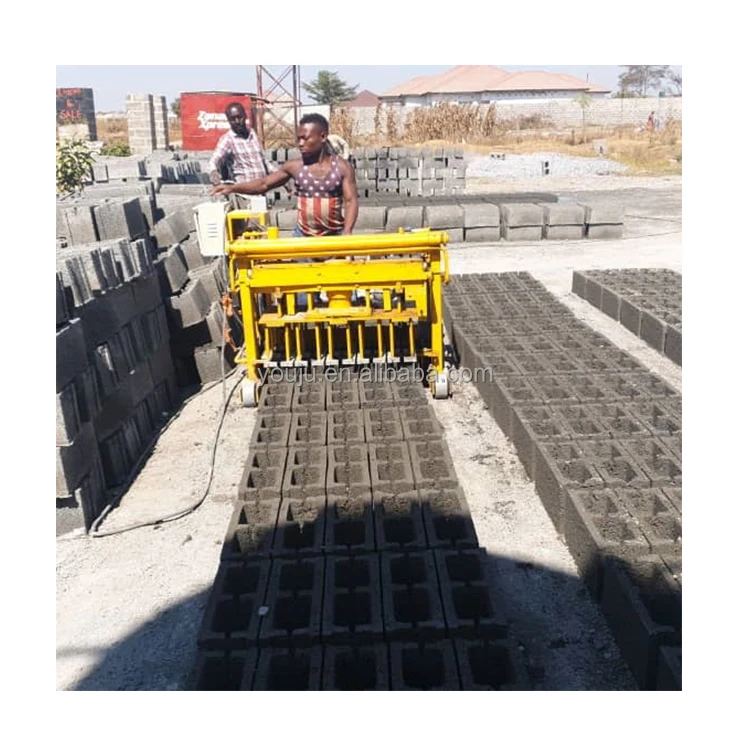
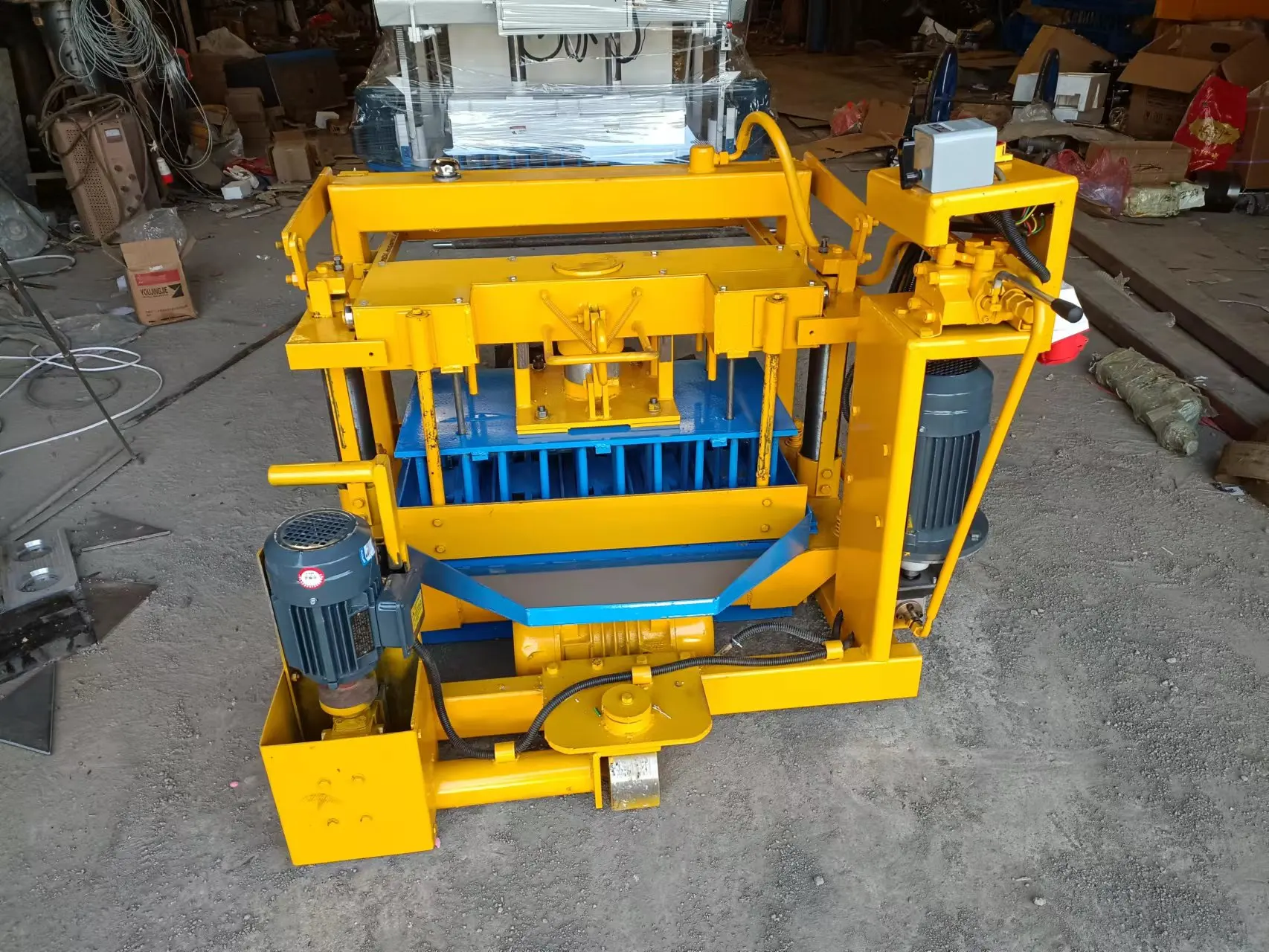
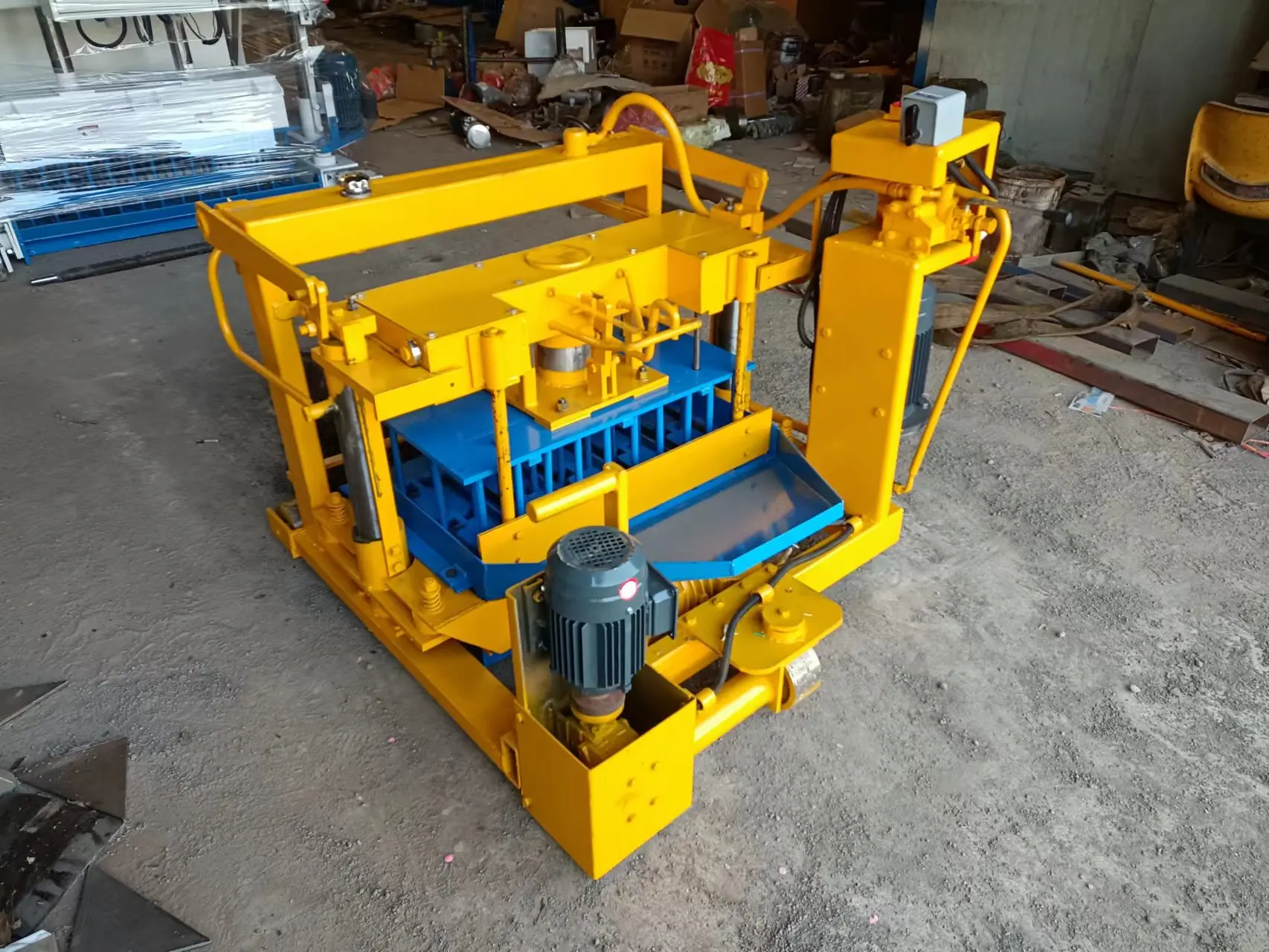
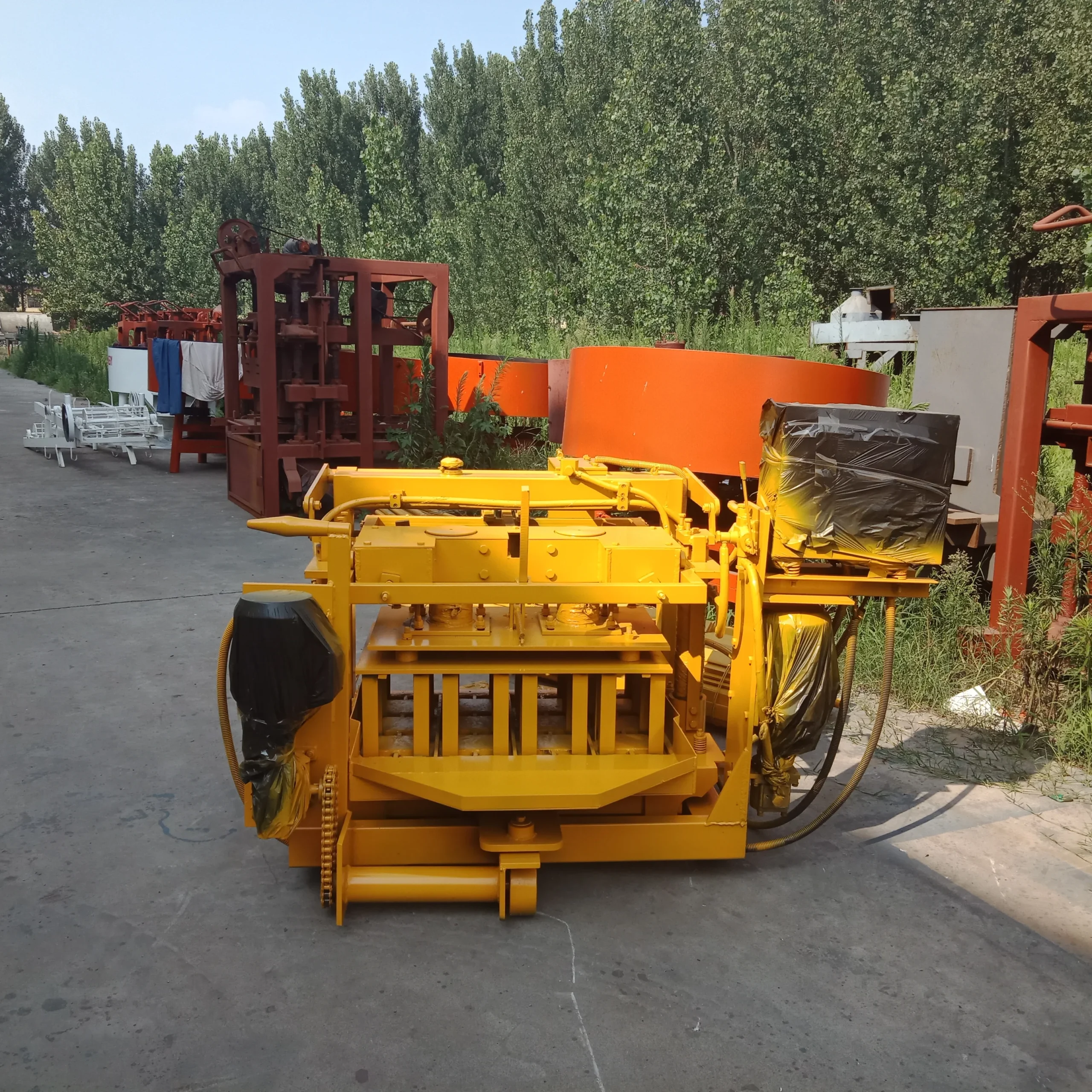
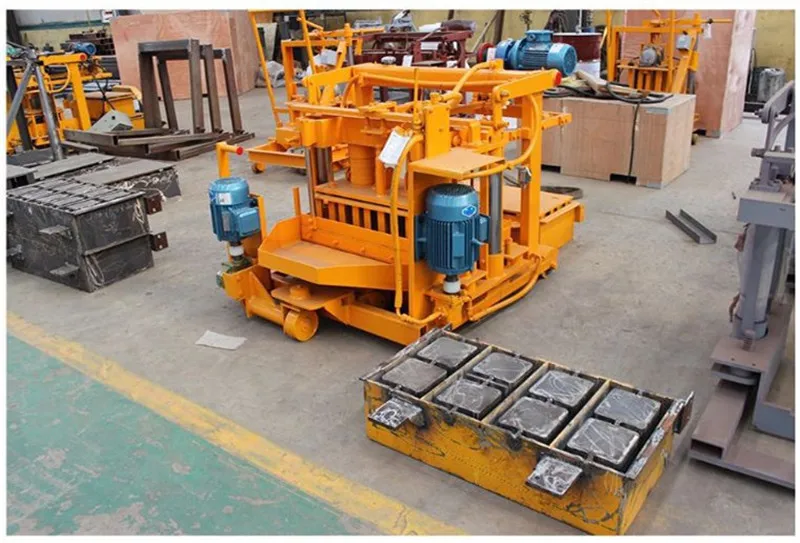
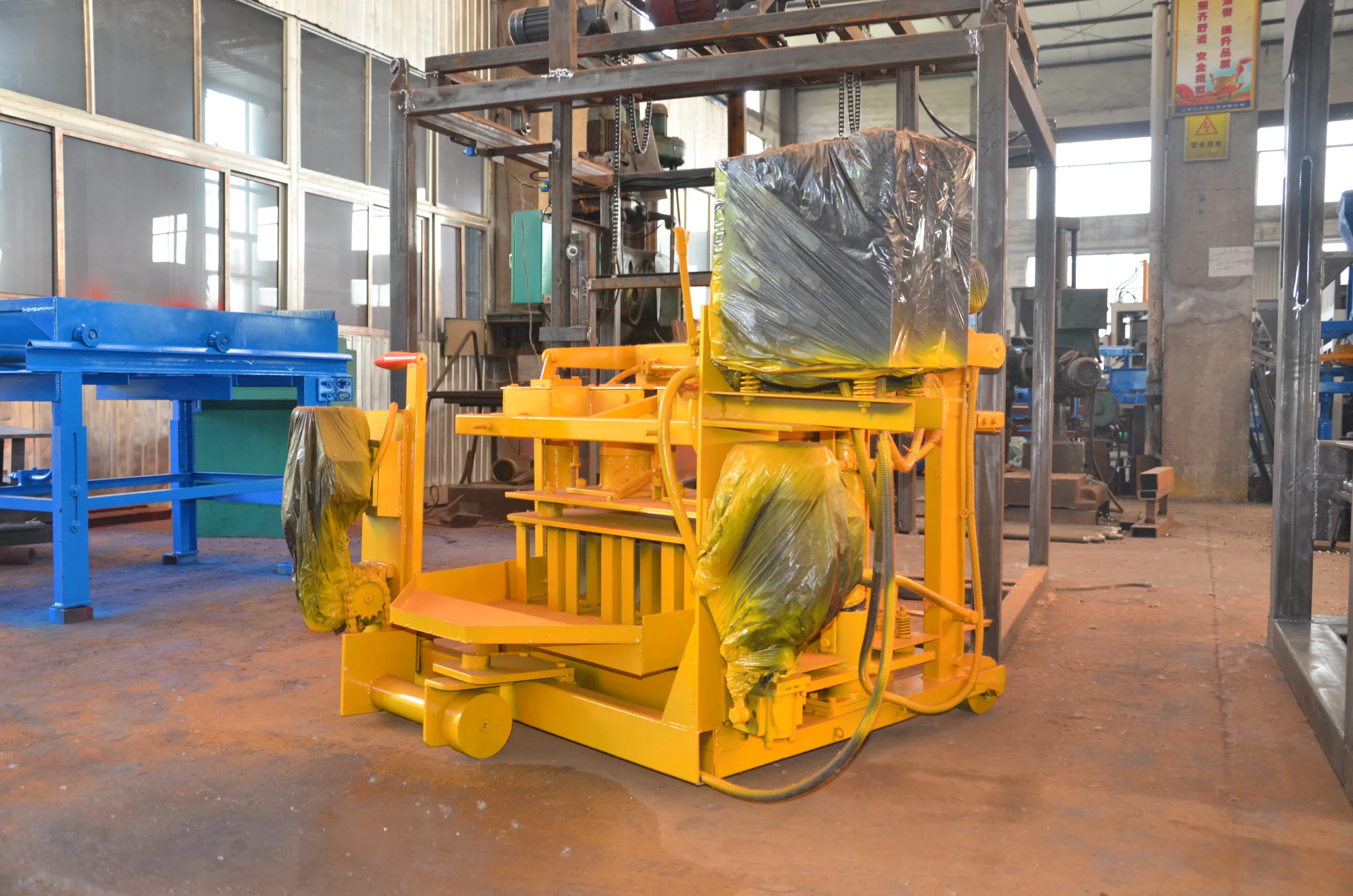
Description
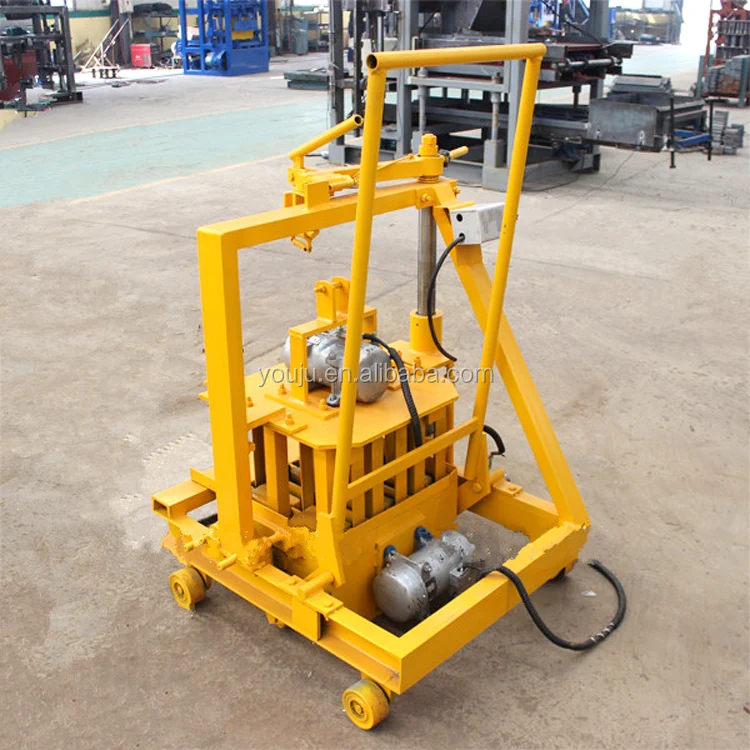
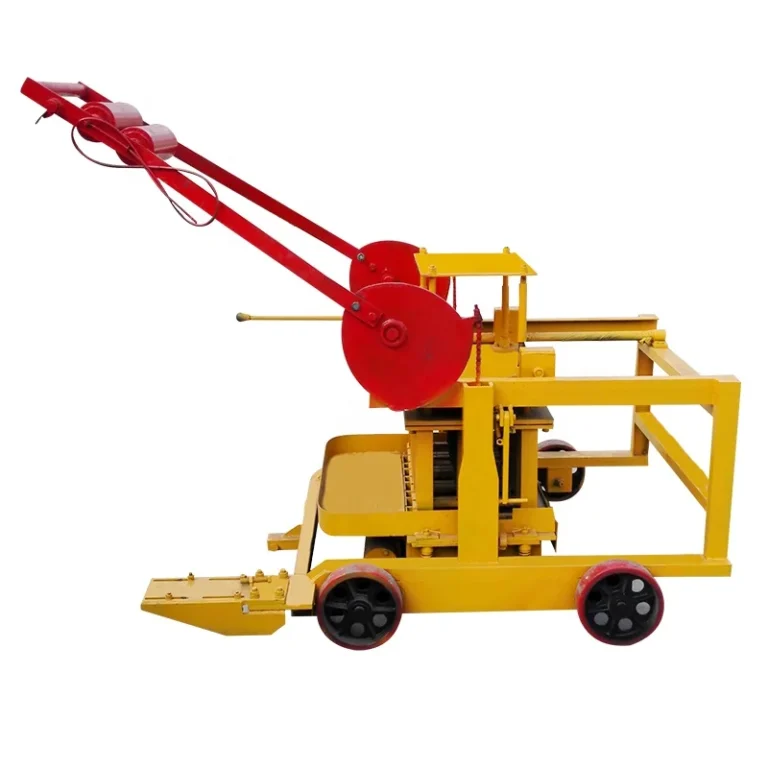
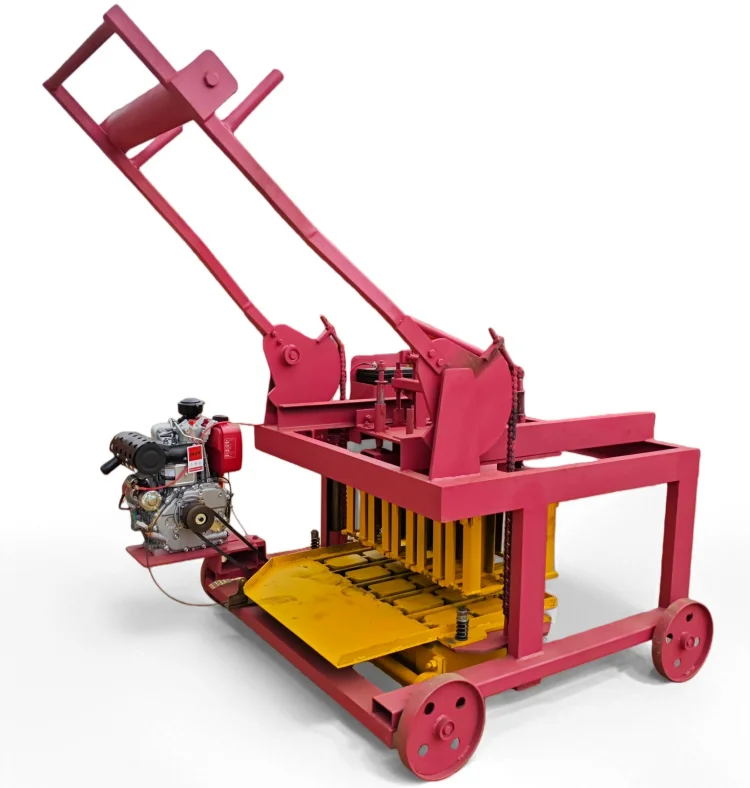
Configuration matched to your mix — The QMY4-30 mobile block machine is specified against the buyer’s actual raw material and target block format before production begins, preventing the costly on-site rework that occurs when machines ship with catalogue-default settings.
Technical Specifications
| Parameter | Value |
|---|---|
| Model | QMY4-30 |
| Product Type | Mobile Concrete Block Making Machine |
| Rated Power | 5 kW |
| Molding Cycle Time | 30 seconds |
| Overall Dimensions (L×W×H) | 1200 × 1200 × 1100 mm |
| Net Weight | 950 kg |
| Raw Materials | Cement, sand, crushed stones, slag |
| Output (400×200×200 mm hollow block, 4 pcs/mould) | 480 pcs/hour, 3,840 pcs per 8-hour shift |
| Output (400×150×200 mm hollow block, 5 pcs/mould) | 600 pcs/hour, 4,800 pcs per 8-hour shift |
| Output (400×100×200 mm hollow block, 7 pcs/mould) | 840 pcs/hour, 6,720 pcs per 8-hour shift |
| Automation Level | Mobile egg-laying type, manual operation |
| Mould Format | Changeable for hollow block and solid brick |
| Pallet Requirement | Not applicable (egg-laying operation) |
| Assembly State | Fully assembled single-unit machine |
| Voltage & Frequency | Configurable to buyer’s local supply (basis to be confirmed) |
| Control System | Selectable, from manual to PLC-controlled batching integration (basis to be confirmed) |
Application Suitability
| Application | Material or Output |
|---|---|
| Small-scale hollow block production on construction sites | Cement, sand, and crushed stone mixes for 400×200×200 mm blocks |
| On-site solid brick manufacturing for housing projects | Local aggregate blends with varying cement ratios |
| Start-up block plants with minimal infrastructure | Slag and sand blends for lightweight block formats |
| Entrepreneur-led first block plants | Low-investment entry using locally sourced raw materials |
| Development contractors producing blocks locally | Site-specific mixes validated before machine dispatch |
What "30-Second Cycle" Actually Means for Your Output
Every capacity figure here is tied to a specific block dimension and mould cavity count.
The automatic mobile block making machine label on many supplier pages often omits the block format behind the headline number. A buyer expecting 6,720 pieces per shift may find their market only buys 400×200×200 mm hollow blocks, cutting realistic daily output to 3,840 pieces. I have watched projects stall because the machine arrived configured for a block size the contractor never intended to sell. The QMY4-30 ships with mould cavities matched to your confirmed format, and the cycle time is stated against that exact cavity load [NEED_CITE: common discrepancies in block machine output claims versus field performance].
Upgrading from Manual to Controlled Material Feeding
The QMY4-30 starts as a manual egg-laying press, but the automation conversation does not end at the machine frame. When you add PLC-controlled batching upstream, the operator no longer hand-measures cement and aggregate ratios. This keeps the mix consistent across every shift, which matters when you run different block formats back to back. The PLC controlled mobile block machine configuration pairs well with small batching stations that fit the same compact footprint.
Where the Automation Decision Actually Gets Made
The choice between staying manual and adding controlled batching usually comes down to labour cost and block strength requirements. Markets with strict compressive strength standards cannot tolerate hand-mixed inconsistencies from one batch to the next. When you integrate an automatic mobile block making machine with a batching station, the cement-to-aggregate ratio stays fixed regardless of who is operating the line [NEED_CITE: effect of mix consistency on concrete block compressive strength]. This is where the upgrade path from the base QMY4-30 configuration pays off most.
Vibration, Cycle Time, and Why Mix Design Comes First
The 30-second moulding cycle holds across all three hollow block formats, but only when the vibration force matches your local aggregate. Volcanic ash, crusher dust, and river sand each demand different vibration amplitudes to achieve full compaction. If the machine arrives tuned for standard silica sand and your site uses pumice, the blocks will crumble before curing completes. The rated power of 5 kW is sufficient for the vibration motor and hydraulic press in combination, but the parameter settings behind that power must be validated against your material before dispatch. The 950 kg net weight also matters — a lighter machine can shift during vibration cycles on uneven ground, affecting block dimensional accuracy. Mould changeability between hollow block and solid brick gives you format flexibility, but each format change requires a cycle time recheck against the new cavity depth.
What Happens When Control Language Is an Afterthought
A PLC-controlled mobile block machine sitting idle for weeks because the HMI displays in a language the operator cannot read is a recurring commissioning problem. When the control interface arrives in the wrong language, reprogramming adds delays that push project timelines back. The QMY4-30 control configuration should be locked to your operator’s working language before production begins, not after arrival [NEED_CITE: PLC interface language requirements in international machinery exports]. Skipping this step turns an automatic mobile block making machine into a manual one until the display issue is resolved.
Why the Line Starts and Stops at Configuration
Block machinery is the single focus here, which means the QMY4-30 is not bundled with mismatched pallets or a batching station from a different supplier. The machine, mould, and any upstream automation are specified as one system. Configuration is set against your actual mix design and local aggregate, not a default catalogue setting. Mould design covers the formats your market sells, with custom drawings available when standard cavities do not match. The automation level is selectable — start manual and add batching control as volume grows. Installation and commissioning include operator training so the crew can run mould changes and daily maintenance without outside support.
Documentation & Verification
- Machine specification sheet with capacity stated per confirmed block format
- Mould drawing and format list matching your target block dimensions
- Voltage, frequency, and control language confirmation before production
- Factory test record on your specified raw material mix before dispatch
- Hydraulic and electrical schematic for on-site maintenance reference
- Operation and maintenance manual with mould change procedure
Installation, Commissioning & Support
- Fully assembled 1200×1200×1100 mm unit arrives ready to operate with minimal site preparation
- 5 kW rated power requires a dedicated circuit matched to your confirmed voltage and frequency
- Vibration base must sit on level compacted ground to maintain block dimensional accuracy
- First-run commissioning includes cycle time validation against your local aggregate mix
- Operator training covers mould changeover between hollow block and solid brick formats
- Wear parts list and mould replacement schedule documented before machine ships
What We Need to Move Forward
Share your target block dimensions, the specific aggregate available at your site, and your local voltage and frequency standards. If you already run a batching station or plan to add one, let us know the model so the control integration can be scoped. We will return a configuration proposal with capacity calculated against your confirmed block format, not a generic figure.
Frequently Asked Questions
Q: How is output capacity verified, and which block format does each figure assume?
A: Every capacity number listed for the QMY4-30 is tied to a specific block dimension and mould cavity count. The 480 pieces per hour figure applies only to 400×200×200 mm hollow blocks with four cavities per mould, while 840 pieces per hour assumes 400×100×200 mm blocks with seven cavities. We state output per format so buyers can plan realistically.
Q: Can this mobile machine be upgraded with automatic batching or PLC control later?
A: The QMY4-30 can be paired with an upstream batching station that automates cement and aggregate measurement. PLC-controlled material feeding is available as an add-on, keeping the mobile press footprint while improving mix consistency. The upgrade does not require replacing the base machine.
Q: What voltage, frequency, and control language options are available?
A: Voltage and frequency are configured to match your local power supply, and the control interface language is confirmed before production. This prevents commissioning delays caused by incompatible electrical standards or unreadable operator displays on arrival.
Q: How does mould change work, and can I order custom moulds to my drawings?
A: Moulds on the QMY4-30 are interchangeable between hollow block and solid brick formats using the standard mounting system. Custom moulds can be manufactured to buyer-supplied drawings when local block dimensions differ from standard cavity sizes, maintaining format flexibility as market demands shift.