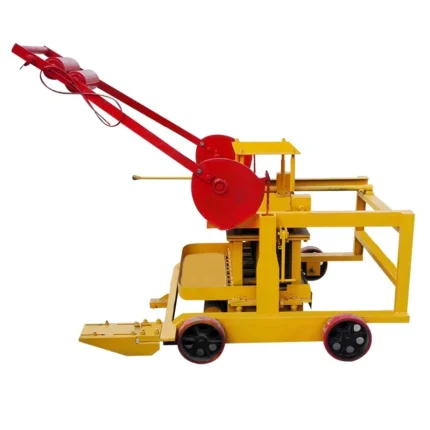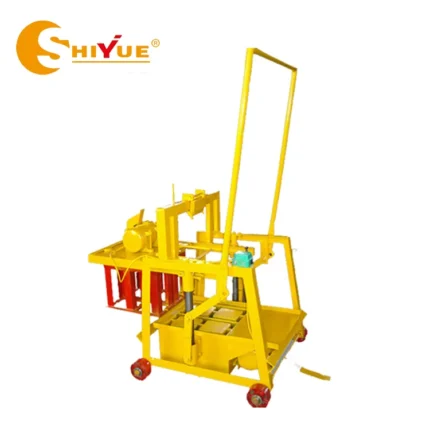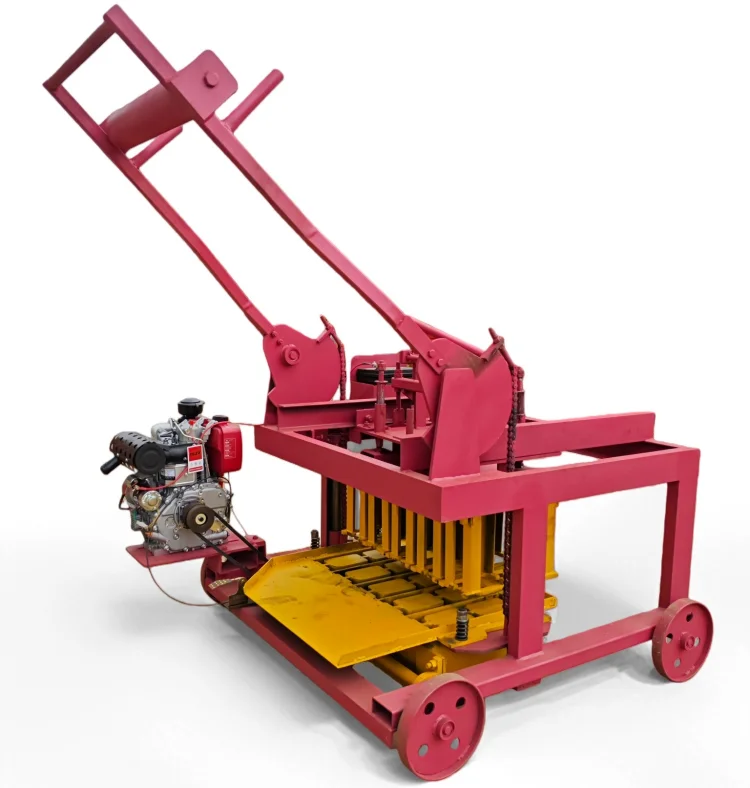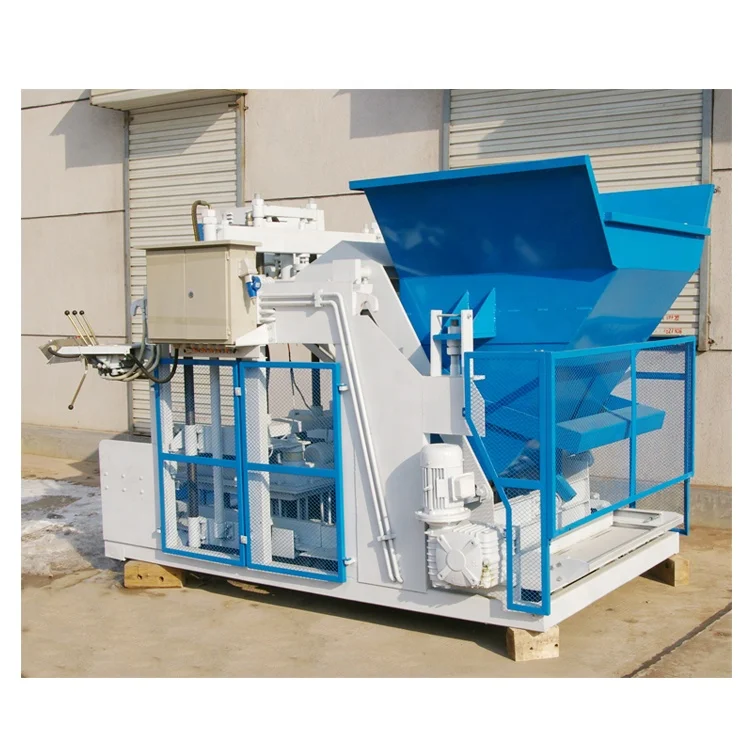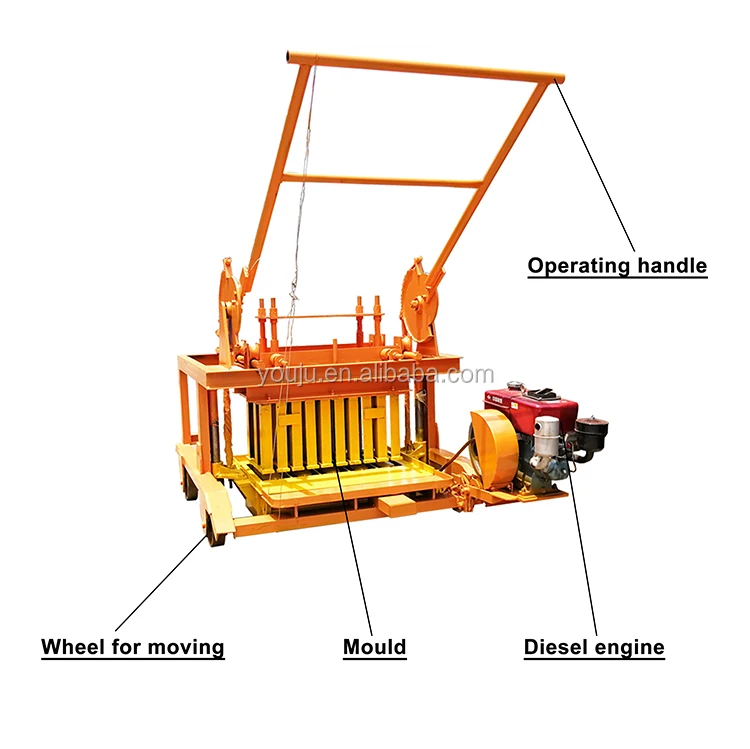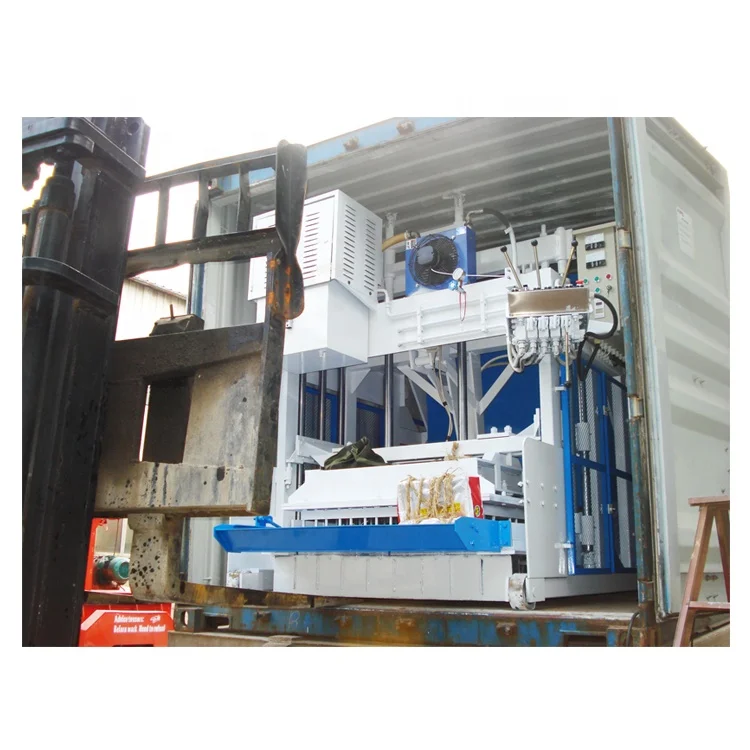
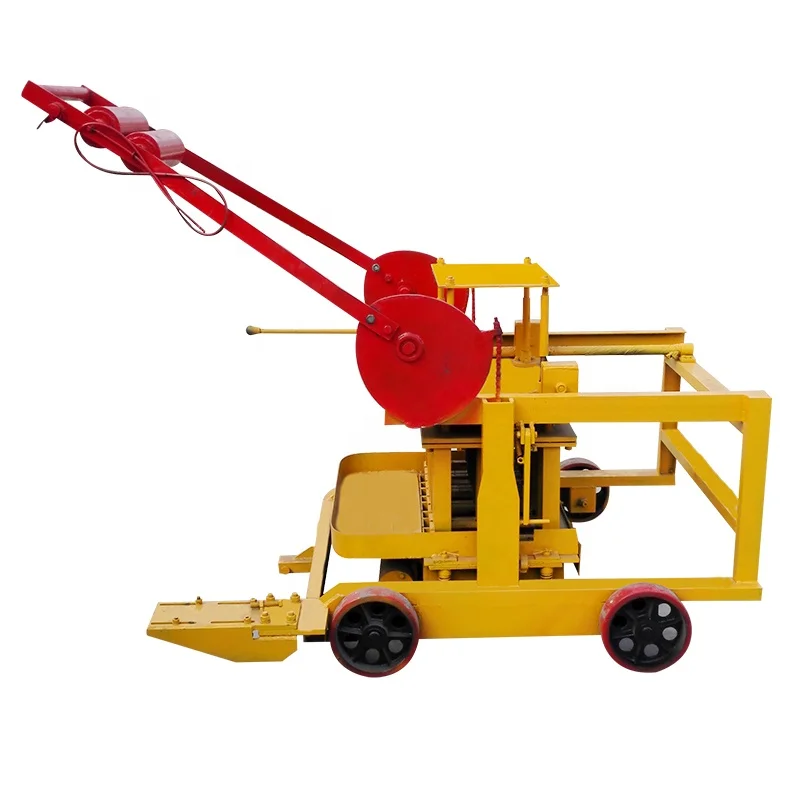
Description
Upgradable Automation Path — QMR4-45 mobile block machine starts at manual operation and scales toward PLC-controlled batching and stacking, letting you invest in intelligence only when your output justifies it.
Technical Specifications
| Parameter | Value |
|---|---|
| Model | QMR4-45 |
| Product Type | Mobile Concrete Block Making Machine |
| Overall Dimensions (L×W×H) | 1100 × 950 × 2100 mm |
| Net Weight | 810 kgs |
| Molding Cycle | 30–45 s |
| Power Source Options | Diesel engine / Petrol engine / Electric motor |
| Output Capacity | 2,560 pcs/day (basis not stated in source — confirm block format and material) |
| Pallet Requirement | None — pallet-free egg-laying operation |
| Compatible Formats | Hollow block, solid brick, paver brick, fly ash brick, concrete block |
| Included Equipment | JZC350 or JQ350 diesel concrete mixer, trolley |
| Mobility | Movable / egg-laying type |
| Automation Level | Manual base; semi-automatic and PLC-controlled upgrades available |
| Stacking Method | Manual — blocks cured directly on ground |
| Warranty | 1 Year |
Application Suitability
| Application | Material or Output |
|---|---|
| On-site housing project block production | Concrete and fly ash hollow blocks laid directly on prepared ground |
| Small-scale paver manufacturing | Interlocking and solid paver bricks from crushed stone aggregate |
| Remote infrastructure sites without grid power | Diesel-powered solid and hollow blocks for culverts, retaining walls and boundary fences |
| First-time entrepreneur block plant | Low-investment hollow and solid block runs with room to automate later |
| Fly ash brick production near thermal plants | Fly ash, lime and gypsum mixes formed into solid bricks |
What "2,560 Pieces per Day" Actually Means on a Job Site
Capacity figures only matter when you know which block format they assume.
I have watched contractors order a mobile machine based on a single daily output number, then discover on site that the figure was measured on a small solid brick — not the 200 mm hollow block their project actually requires. The molding cycle stretches, the mixer cannot keep pace, and the real daily count falls well short. With the QMR4-45, the 2,560 pcs/day figure must be verified against your specific block format, wall thickness and mix design before it becomes a reliable planning number [NEED_CITE: block format impact on mobile machine cycle time]. This is why our quotation always states capacity per format, never as a blanket daily total. When you are running a PLC controlled mobile block making machine, the control system can log actual cycle counts so you can reconcile planned versus real output shift by shift.
From Manual Laying to Consistent Batching
The QMR4-45 ships as a manual egg-laying machine by default. The operator feeds the hopper, pulls the lever, and walks the unit forward after each cycle. That works for low-volume site work, but consistency depends entirely on the operator’s rhythm and the mix arriving on time. When you add an automatic mobile block machine upgrade package, a PLC takes over the vibration timing, hopper feed interval and travel distance — removing the three variables that cause the most block-to-block density variation on manually operated units.
Control Language and Frequency Matching
On a project in West Africa, I once spent three days on a muddy site because a generator’s frequency drifted outside the PLC’s tolerance and the HMI was locked in English. The operator could not read the fault codes. For every QMR4-45 that leaves the factory with a PLC-controlled mobile block making machine configuration, we lock in voltage, frequency and display language before crating. The control panel speaks the language your crew reads, and the VFD is rated for the frequency tolerance your local generator or grid actually delivers [NEED_CITE: generator frequency drift tolerance for PLC systems].
Why Weight, Cycle Time and Power Source Matter Together
The 810 kg net weight of the QMR4-45 is light enough for two workers to reposition but heavy enough that the vibration energy transfers into the mould cavity rather than shaking the frame itself. The 30–45 second molding cycle sits in the range where a JZC350 diesel mixer can keep a continuous supply of fresh concrete arriving without the machine standing idle. Power source selection — diesel, petrol or electric — determines whether you are tethered to a grid connection or free to lay blocks anywhere on a sprawling site. Each choice changes the supporting equipment you need and the daily fuel or electricity cost, even if the block format stays the same.
The Hidden Cost of Skipping the Automation Conversation
Buyers often treat the base manual price as the ceiling, then discover halfway through the project that labour costs and block rejection rates are climbing. Without PLC-controlled vibration timing, two operators on consecutive shifts produce blocks with noticeably different compressive strength. Without automated hopper feeding, the mix sits in the mould at inconsistent fill heights [NEED_CITE: operator-dependent variation in manual block production]. These problems do not appear in the first week — they show up when the crew is tired, the ambient temperature has shifted, or a new batch of aggregate arrives with a different moisture content. Configuring the right automation level at the inquiry stage avoids a costly mid-project retrofit.
Why Procure the QMR4-45 Through This Channel
Block machinery is our single product focus, so the machine, mixer, mould and trolley are specified as one matched set rather than assembled from separate suppliers. We configure vibration force and cycle timing against your actual mix design and local aggregate, not a catalogue default. Moulds are designed and supplied for the formats your market sells, and custom mould drawings are accepted when your project calls for a non-standard format. Automation level is selectable, meaning you can start with the manual QMR4-45 and add PLC-controlled batching and stacking later without replacing the press. Voltage, frequency and PLC display language are confirmed in writing before production begins, not guessed at the packing stage.
Documentation & Verification
- Capacity calculation sheet stating output per block format, not a single unqualified daily figure
- Mould drawing and compatible format list including custom drawing acceptance
- Voltage, frequency and PLC language confirmation record signed before production
- Factory test record with cycle count and block sample photographs before crating
- Operation and maintenance manual with wear parts list specific to the QMR4-45
Installation, Commissioning & Support
- 1100 × 950 mm footprint requires only a level, compacted ground surface — no fixed foundation bolts needed
- Diesel engine option eliminates the need for a dedicated electrical circuit on remote sites
- Machine ships partially assembled; trolley, mixer and power unit bolt on at site within one shift
- First-run commissioning includes vibration timing calibration against your local aggregate and mix moisture
- Operator training covers mould change sequence, hopper feed rhythm and daily grease-point schedule
- Wear parts list identifies high-wear mould liners and vibration mounts with reorder part numbers
What to Include in Your Inquiry
Tell us the block format you sell most — dimensions, wall thickness and target compressive strength. Share your local aggregate type and whether grid power is available or you need the diesel configuration. Let us know the language your operators read so the control panel can be set before the QMR4-45 leaves the factory.
Frequently Asked Questions
Q: How is the 2,560 pcs/day capacity verified and which block format does it assume?
A: That figure must be tied to a specific block format, wall thickness and mix. We provide a capacity calculation sheet that states output per format — hollow, solid, paver or fly ash — so you can plan against the product you actually produce, not a best-case number measured on a smaller brick.
Q: What automation upgrades are available from the base manual configuration?
A: The QMR4-45 can be fitted with PLC-controlled vibration timing, automated hopper feeding and semi-automatic travel. Each upgrade reduces operator-dependent variation and is available as a factory-installed package or a field retrofit kit depending on your timeline.
Q: Can the PLC control system be configured for my local voltage, frequency and language?
A: Yes. Voltage, frequency and HMI display language are confirmed in writing during the order stage. The control system is then set and tested at the factory against those parameters before dispatch, so the machine powers up correctly on your site.
Q: How do I match vibration and pressure to my local aggregate and mix design?
A: We ask for a sample of your aggregate and your proposed mix ratio. Vibration duration and cycle timing are then calibrated during the factory test to produce blocks at your target strength, and those settings are recorded in your commissioning documentation.
Q: What mould formats are available and how long does a mould change take on site?
A: The QMR4-45 accepts moulds for hollow blocks, solid bricks, pavers and fly ash bricks. Mould change involves unbolting the current mould box and seating the replacement — typically completed within a single shift once the crew is familiar with the sequence.