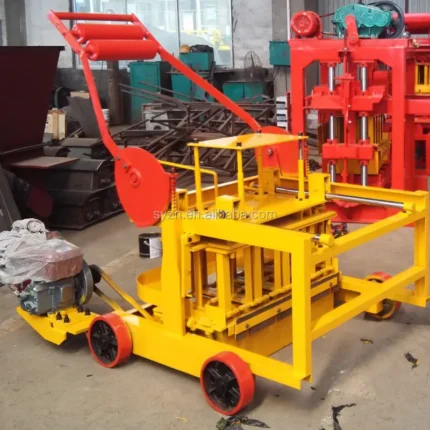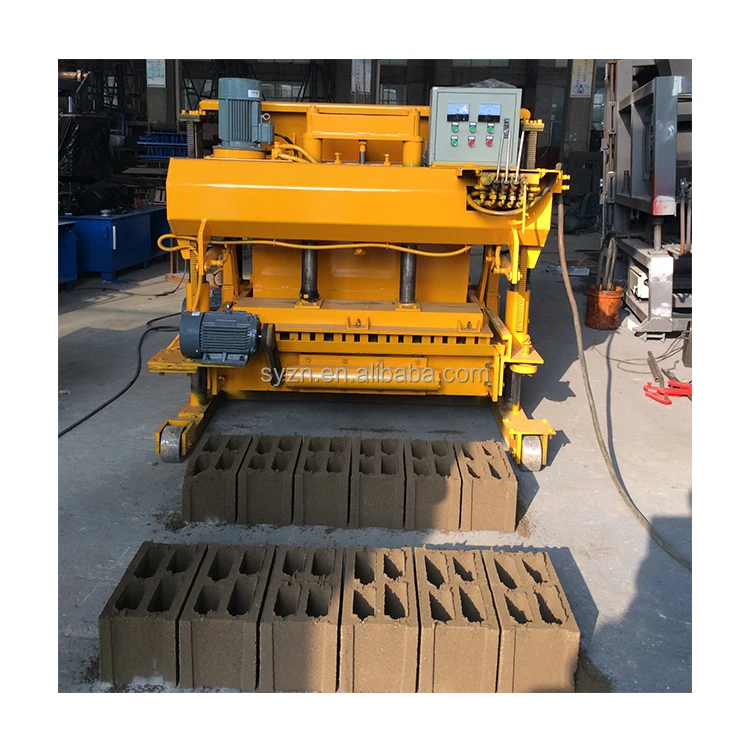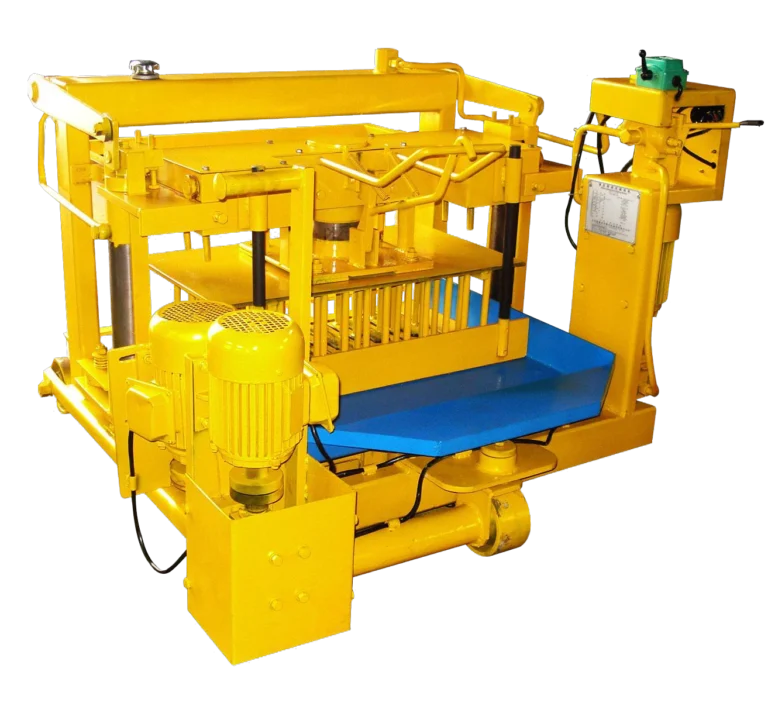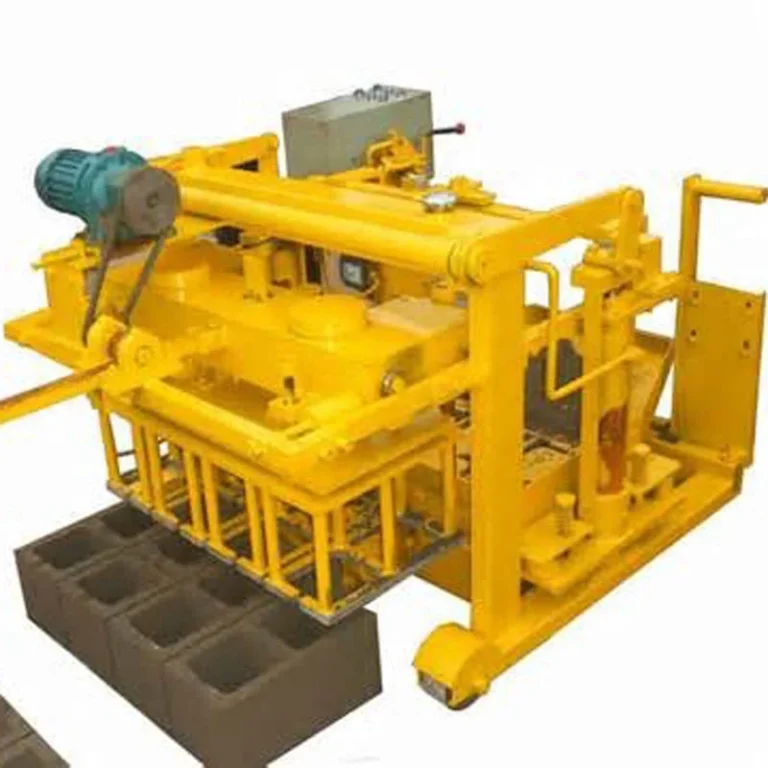
Description
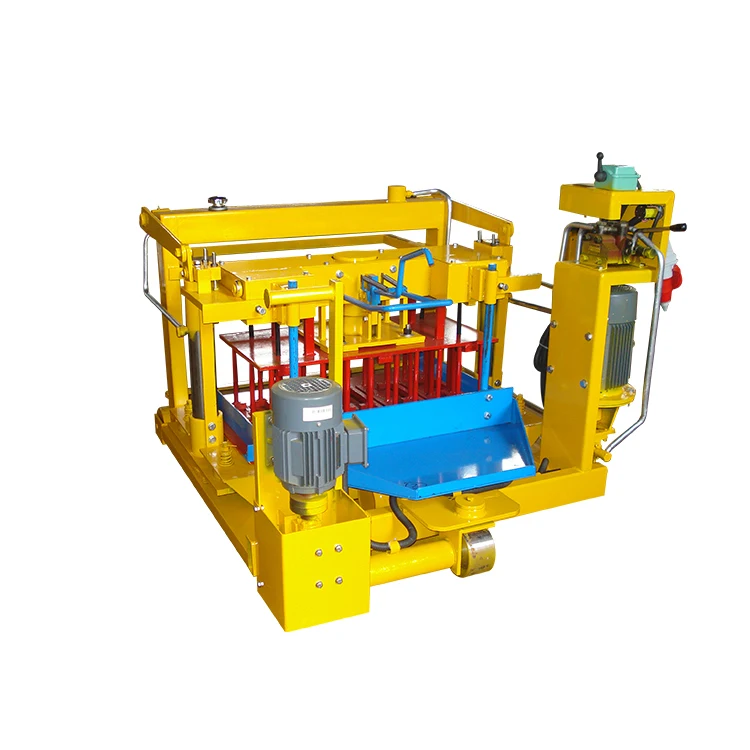
Matched System Integrity — the QMY10-15 mobile block machine ships with its mixer, hydraulic circuit, and PLC configured as one verified unit rather than assembled from separate component suppliers.
Technical Specifications
| Parameter | Value |
|---|---|
| Model | QMY10-15 |
| Product Type | Mobile Hydraulic Block Making Machine |
| Molding Capacity | 10 pcs/mold |
| Molding Cycle | 10s–15s (basis not stated in source — confirm block format / material / thickness) |
| Total Power | 16 kW |
| Daily Output Capacity | 11,000 pcs/day based on 8-hour operation (basis not stated in source — confirm block format) |
| Vibration System | Dual vibration motor configuration |
| Hydraulic System | Controls upper and lower demoulding |
| Movement System | Electric walking, hydraulic steering |
| Heat Dissipation | Hydraulic oil heat dissipator equipped |
| Pallet Requirement | No pallets needed (egg-laying / mobile type) |
| Control System | PLC (programmable logic controller) |
| Automation Level | Semi-automatic with hydraulic assist |
| Mould Format | Interchangeable molds for multiple brick types |
| Basic Equipment Package | QMY10-15 Host Machine, JS7500 Concrete Mixer, Dump Truck |
| Optional Equipment | PL1200 Batching Machine, Cement Silo, Screw Conveyor, Loader |
Application Suitability
| Application | Material or Output |
|---|---|
| On-site hollow block production | Crushed stone, cement, sand mix at construction locations |
| Solid block manufacturing for local supply | Aggregate and cement blends without fixed plant infrastructure |
| Paving block production via mold change | Fine aggregate and pigment mixes for walkway and driveway formats |
| Remote project block supply | Locally sourced raw materials where transport of finished blocks is cost-prohibitive |
Why the PLC Language Must Be Locked Before the Crate Is Nailed
An operator who cannot read the control screen cannot run an automatic mobile block making machine PLC controlled system safely or consistently.
I learned this the hard way. Last year we shipped a mobile hollow block maker to a Middle East job site. The PLC interface defaulted to English. The local crew only read Arabic. Commissioning stalled on day one. We scrambled to push a language pack remotely while the entire crew stood around a silent machine. That delay cost the contractor real money and damaged trust before the first block was even produced. Now I personally verify the PLC display language against the buyer’s operator roster before the control panel leaves our bench [NEED_CITE: PLC interface language requirements for exported industrial machinery]. The automatic mobile block making machine PLC controlled configuration must match the people who will actually touch the buttons every morning.
Control Logic That Removes Operator Guesswork
The PLC on the QMY10-15 governs the entire molding sequence: vibration timing, hydraulic pressure application, demoulding stroke, and travel cycle. Each parameter is stored as a recipe, so switching from hollow blocks to solid blocks becomes a screen selection rather than a manual recalibration. This level of repeatability matters most when different shifts operate the same automatic mobile block making machine PLC controlled unit across a long project timeline.
Mobility Without Sacrificing Cycle Consistency
Electric walking and hydraulic steering let the QMY10-15 reposition across a curing yard or job site without crane support. The machine lays blocks directly on the ground surface — no pallets, no pallet return conveyor, no pallet inventory to manage. The hydraulic oil heat dissipator keeps fluid temperature stable during continuous summer operation, which protects seals and maintains consistent demoulding pressure throughout the shift [NEED_CITE: hydraulic fluid temperature effects on seal wear in mobile construction equipment].
Reading the Numbers That Actually Matter
The dual vibration motor configuration delivers force across the full mold width, which is what produces uniform density from one side of the block to the other. Without synchronized dual motors, the side closest to a single vibration source compacts harder while the far side remains porous. The 16 kW total power rating covers both vibration motors and the hydraulic pump simultaneously — it is not a peak-only figure. The 10-second to 15-second molding cycle range reflects different block formats; a thin paving block cycles faster than a deep-cavity hollow block. The JS7500 concrete mixer in the basic package must keep pace with this cycle rate, and its drum capacity is matched to feed roughly two to three mold charges per batch.
What Happens When the Pallet Question Gets Skipped
Buyers sometimes assume a mobile egg-laying machine eliminates all supporting logistics. The ground surface still needs to be level and cured properly. If the yard is uneven, blocks settle at angles and crack before they reach handling strength. If no one accounts for the curing footprint the QMY10-15 covers in a full shift, fresh blocks end up stacked against yesterday’s output and both batches suffer [NEED_CITE: concrete block curing space planning for mobile egg-laying production]. These problems are invisible in the quotation stage and expensive once production starts.
Why Buyers Source This Machine Through Our Configuration Process
Block machinery is our single manufacturing focus, so the QMY10-15 host, its mold set, and the JS7500 mixer are specified together and tested as a matched production cell. We configure the machine against the buyer’s actual local aggregate and target block format instead of shipping a catalog default. Molds are designed and built in-house for the formats the buyer’s market actually sells, with custom drawings available. Automation level is selectable — a buyer can start with the standard semi-automatic hydraulic assist and add batching and feeding automation later. Installation support includes on-site commissioning and operator training so the crew knows the PLC recipes before the technician leaves.
Documentation & Verification
- Line layout showing QMY10-15 travel path and curing yard space calculation per block format
- Machine specification sheet confirming hydraulic pressure and vibration force ratings
- Mold drawing and format list with exact cavity dimensions and changeover steps
- PLC display language and voltage confirmation signed before production release
- Factory test record on buyer’s specified block format before dispatch
- Operation and maintenance manual with hydraulic circuit and electrical schematic
Installation, Commissioning & Support
- Level concrete yard required; QMY10-15 electric walking system needs firm, flat ground for consistent block laying
- Dedicated power circuit sized for 16 kW total draw; voltage and frequency confirmed per site supply
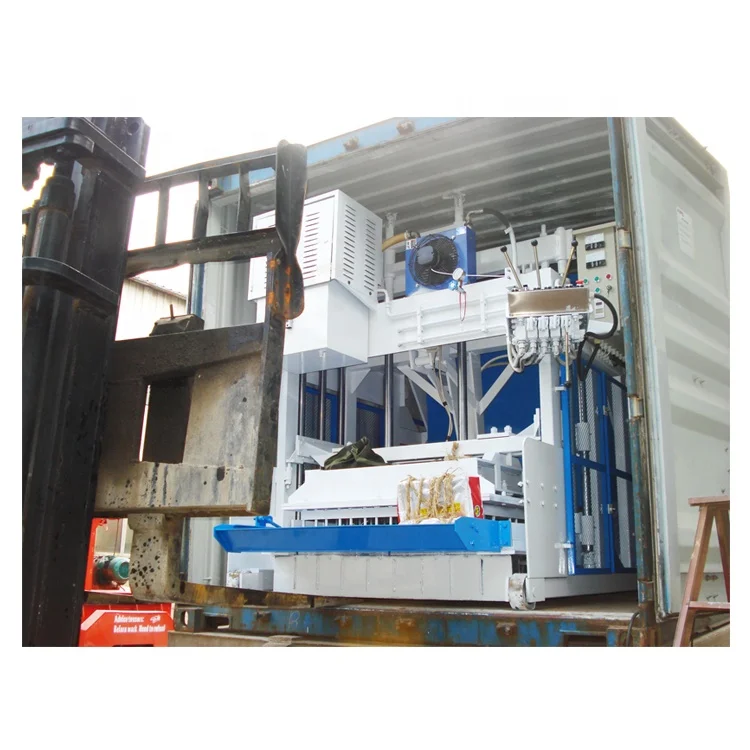
- Machine ships assembled with hydraulic steering tested; on-site setup focuses on mixer positioning and material flow
- PLC recipes programmed during commissioning for each block format the buyer will produce
- Operator training covers mold changeover procedure, hydraulic pressure checks, and daily vibration motor inspection
- Wear parts list and mold inventory provided with recommended replacement intervals for local aggregate conditions
Before You Request a Quote
To size the QMY10-15 correctly, we need your target block format and dimensions, the local aggregate type you plan to use, and your available yard space for curing. Confirm your site voltage and frequency, the language your operators read, and whether you already have a mixer or loader on site. With these details we can return a configuration proposal with capacity stated per your actual block format.
Frequently Asked Questions
Q: How is the daily output figure verified, and which block format does it assume?
A: The 11,000 pieces per day figure is based on an 8-hour operating shift, but the source does not state which block format, mix design, or block thickness it assumes. We provide a capacity calculation that names the exact format — for example, a 400×200×200mm hollow block — so the output number matches what you will actually produce on your site.
Q: What PLC control language options are available for local operators?
A: The PLC display language is configurable and must be confirmed before production begins. We verify the language against your operator roster, not against a default setting. This prevents the commissioning stall we experienced on a Middle East project where the screen language did not match the crew.
Q: Which block formats can the QMY10-15 produce, and how long does a mold change take?
A: The machine accepts interchangeable molds for hollow blocks, solid blocks, and paving blocks. Specific mold dimensions and changeover times depend on the format set you select. We provide mold drawings and a step-by-step changeover procedure for every format included in your order.
Q: What voltage and frequency configurations does the machine support?
A: Voltage and frequency are configured to match your site supply and must be confirmed before the electrical panel is wired. We document the exact voltage, phase, and frequency on the production release form so there is no mismatch when the machine arrives and your electrician connects it.
Q: How does the hydraulic heat dissipation system perform in hot climates?
A: The integrated hydraulic oil heat dissipator maintains fluid temperature during extended operation cycles in high-ambient-temperature environments. This protects hydraulic seals from premature hardening and keeps demoulding pressure consistent across the full shift without requiring mid-day cool-down pauses.