

Description
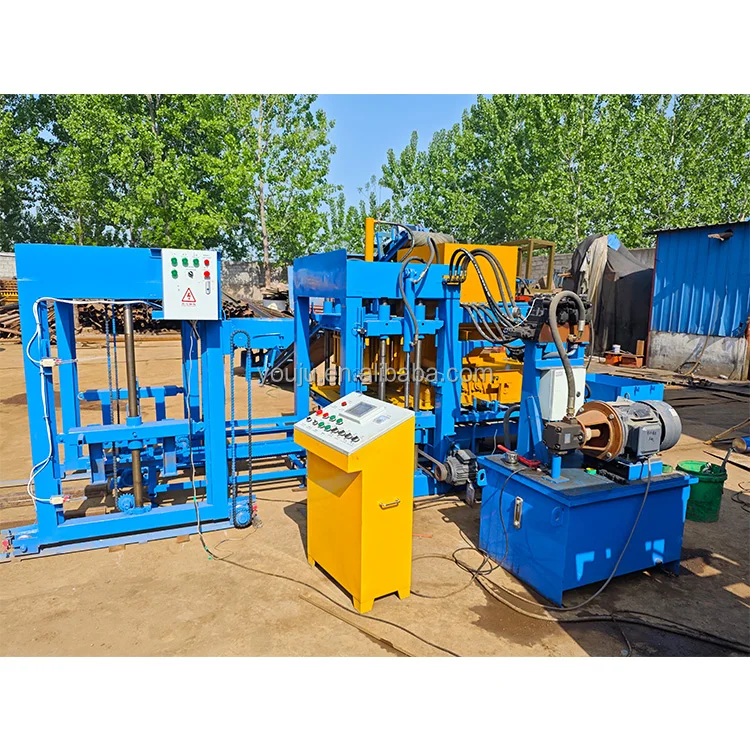
Control Language Locked Down — Every QTJ4-24 leaves the factory with PLC display language and voltage pre-confirmed against the buyer’s site, so the first shift is spent pressing blocks, not translating screens.
Technical Specifications
| Parameter | Value |
|---|---|
| Model | QTJ4-24 |
| Product Type | Semi-Automatic Concrete Block Making Machine |
| Molding Type | Platform Vibration |
| Pallet Size | 850mm × 450mm |
| Overall Power | 14.25 kW |
| Overall Dimension (Working State) | 3600mm × 1700mm × 2560mm |
| Total Mass | 1750 kg |
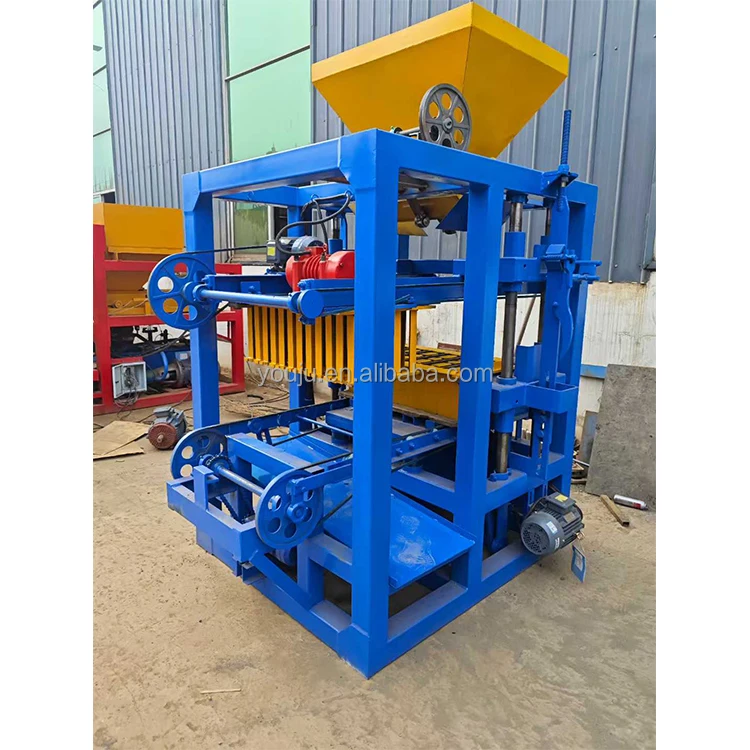
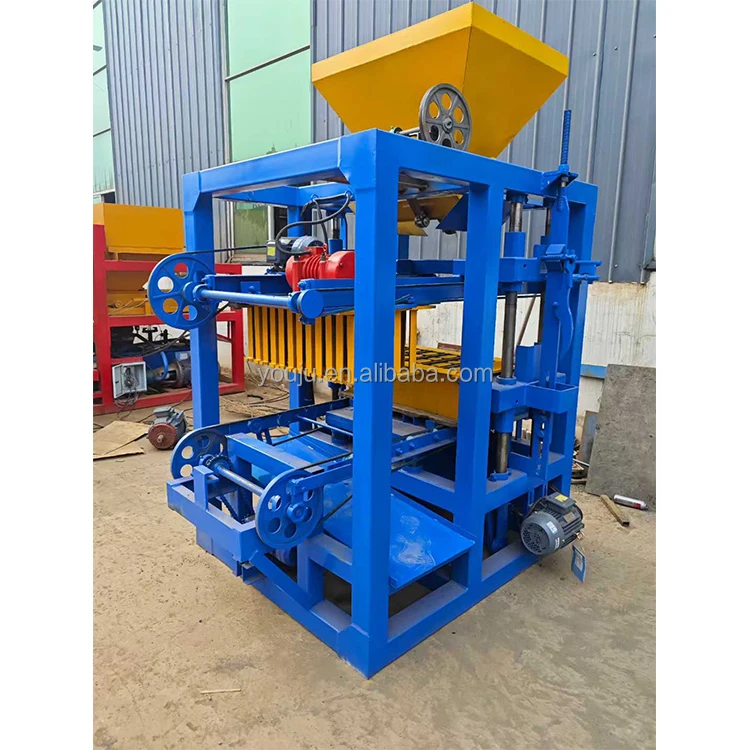
| Vibration System | Lower platform (2 × 3 kW high-speed motors, vertical excitation) + upper platform (1.5 kW attached vibrator) |
| Elevating System | Cone-shape motor with JZQ250 speed reducer, V-belt drive, elevating arm with sliding sleeve and position pin |
| Delivery Device | Cycloidal pin wheel speed reducer with chain and V-belt drive |
| Machine Frame | Dragon gate style, super steel construction, four wear-resisting vertical shafts |
| Material System | Top releasing hopper + lower storing hopper, bolted to frame |
| Control System | Electronic controlling part (PLC language and voltage to be confirmed before dispatch) |
| Included Supporting Equipment | JQ350 pan mixer, 6 m belt conveyor, pallet trolley |
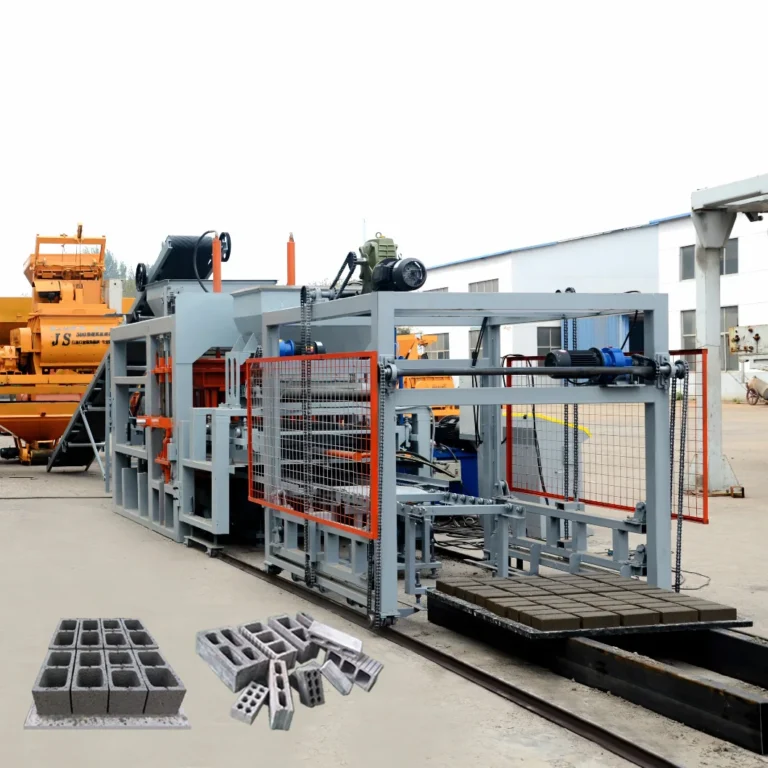
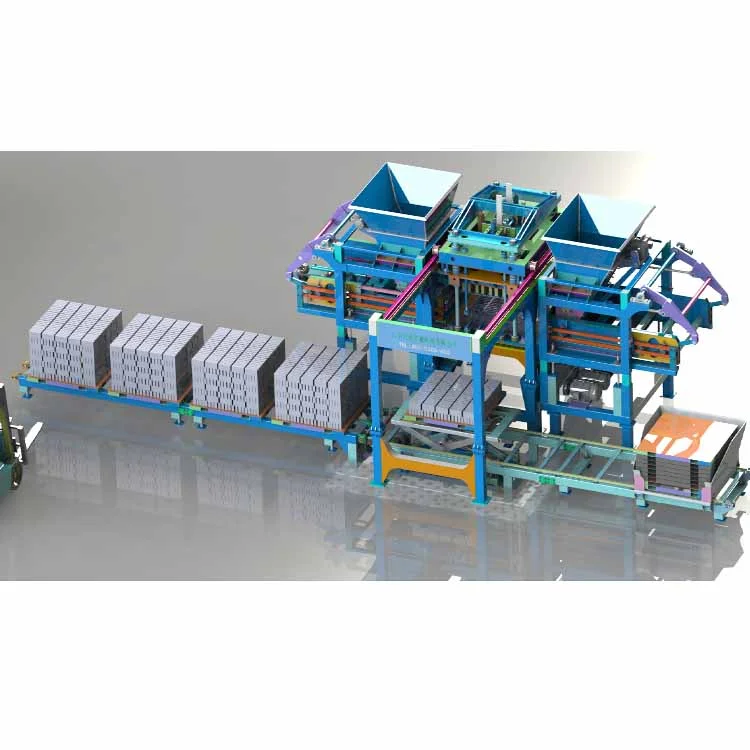
| Optional Equipment | Auto stacker (3–6 layers depending on block height) |
Application Suitability
| Application | Material or Output |
|---|---|
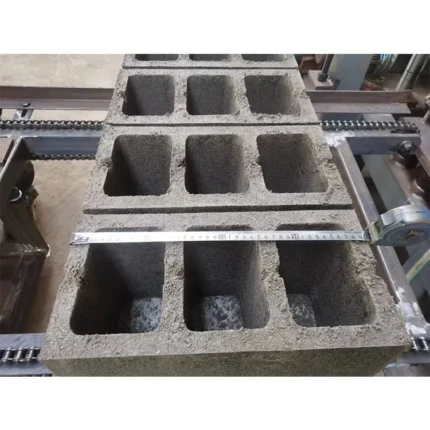
| Small-scale hollow block plants | Crushed stone, sand, cement, producing 390 × 190 × 190 mm blocks (4 pcs/mold) |
| Solid brick production for housing projects | Local aggregate and cement, producing 240 × 115 × 53 mm bricks (21 pcs/mold) |
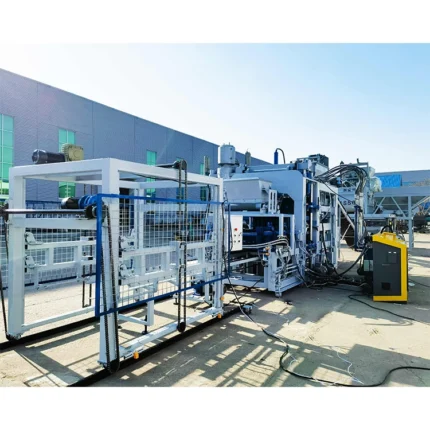
| On-site contractor block making | Locally sourced mix with JQ350 pan mixer forming a compact batching line |
| First-time entrepreneur plants | Semi-automatic press operation with optional auto stacker as volume grows |
Why Voltage Confirmation Matters Before the Machine Ships
A PLC controlled semi-automatic block machine that arrives with the wrong voltage or unreadable screen language is a pallet of steel until someone rewrites the parameters.
I have watched commissioning day stall across three African job sites because the control panel shipped with factory-default language settings. The crew could not read the prompts, the local electrician could not verify the phase sequence, and the first press cycle was delayed while we remotely reconfigured the HMI. For the QTJ4-24, voltage and frequency vary by export market and the electronic controlling part must match local supply before the machine is crated. [NEED_CITE: voltage and frequency standards by export market] When these details are left to arrival, the cost is not the rewiring — it is the idle crew and the missed project milestone.
How the Electronic Sequence Coordinates Each Press Cycle
The QTJ4-24 is a PLC controlled semi-automatic block machine where the electronic controlling part ties together three mechanical actions into one timed sequence. The cone-shape motor lifts the mold head through the JZQ250 speed reducer, the cycloidal pin wheel reducer drives the delivery frame forward, and the dual vibration system fires at the correct point in the descent. The operator loads the pallet and initiates the cycle; the electronics handle the timing between material release, vibration onset, and head withdrawal.
Building an Upgrade Path From Semi-Automatic Operation
Semi-automatic means the press cycle is electronically coordinated but pallet handling still requires manual labor. The standard QTJ4-24 ships with a trolley for moving loaded pallets to the curing yard, which works for lower-volume starts. When daily output demands increase, an optional auto stacker (3–6 layers depending on block height) can be added to remove the operator from the stacking station entirely. This staged approach lets a plant owner invest in automation only where the bottleneck actually sits. [NEED_CITE: automation upgrade paths in small-scale block production]
What the Vibration Architecture Means for Block Density
The lower platform carries two 3 kW high-speed motors driving a vibration box with vertical excitation, while the upper platform adds a 1.5 kW attached vibrator. This dual-vibration layout applies compaction force from both the base and the mold head simultaneously. On a 390 × 190 × 190 mm hollow block, the vibration must penetrate the full mold depth to achieve consistent wall density. If only the lower platform vibrates, the top of the block remains under-compacted and the unit cracks during demolding or transport. The four wear-resisting vertical shafts in the dragon gate frame keep the mold aligned through thousands of cycles, preventing the dimensional drift that causes interlocking blocks to stop fitting together on site.
The Real Cost of Skipping the Automation Audit
When a plant owner orders a block machine without confirming which actions are automated and which still require hands, the result is an operator count that does not match the line speed. The pallets stack up faster than the crew can move them, or the press sits idle waiting for the next pallet to be placed. I have seen buyers assume the auto stacker was included, then budget an extra full-time worker to stand at the end of the line stacking by hand — a cost they did not forecast in their business plan. [NEED_CITE: labor planning for semi-automatic block production lines] The QTJ4-24 quotation must explicitly state whether the auto stacker is included or optional, and whether pallet feeding is manual or automated, so the buyer’s labor model matches the machine they receive.
What Sets This Configuration Apart
The machine, mold, pallet, and handling equipment are specified as a matched system from a single source focused solely on block machinery, not assembled from separate suppliers. The QTJ4-24 configuration is set against the buyer’s actual mix design and target block format rather than pulled from a catalogue default. Control language, voltage, and HMI layout are confirmed before production begins, which eliminates the day-one commissioning delay that stalls so many export installations. Mould design covers the formats the buyer’s market actually sells, including custom drawings for non-standard block profiles. The automation level is selectable at order and upgradeable later, so a first-time plant owner does not overpay for features that their current volume does not justify.
Documentation & Verification
- Machine specification sheet with pallet size, vibration motor ratings, and overall power confirmed
- Electrical schematic showing electronic controlling part coordination of elevating and vibration timing
- Voltage and frequency confirmation document signed before dispatch
- Mould drawing and format list covering hollow block and solid brick dimensions
- Factory test record run on buyer-specified block format before crating
Installation, Commissioning & Support
- Foundation pad leveled for 3600 × 1700 mm footprint with anchor bolt layout provided
- Dedicated 14.25 kW power circuit with voltage and phase confirmed before connection
- Machine arrives stationary and assembled; vibration box and hoppers bolted to frame
- First-cycle parameter setup covers vibration timing, elevating speed, and delivery frame position
- Operator training on electronic controlling part sequence and emergency stop procedures
- Wear parts list covering vertical shafts, V-belts, and vibration motor bearings
What to Prepare Before Requesting a Quote
To size the QTJ4-24 correctly for your plant, provide the block formats your market sells, your available aggregate type and maximum particle size, and your site’s voltage, frequency, and preferred PLC display language. If you already operate a mixer or conveyor, share the specifications so the JQ350 pan mixer and 6 m belt conveyor can be matched or replaced in the line layout. Stating your target daily output and curing yard area helps determine whether the optional auto stacker and trolley configuration fits your workflow.
Frequently Asked Questions
Q: What automation level does the QTJ4-24 deliver, and what is the upgrade path?
A: The QTJ4-24 is a semi-automatic press where the electronic controlling part coordinates vibration, elevating, and delivery as one sequence. Pallet handling and stacking remain manual by default. The optional auto stacker adds 3–6 layer stacking depending on block height, removing the operator from the end of the line. Further automation upgrades to pallet feeding and batching are available as plant volume grows.
Q: How do I verify real daily output for my block format?
A: Request a capacity calculation that states which block format the cycle time assumes. A generic cycles-per-hour figure without a format reference is not a reliable planning number. The QTJ4-24 produces 4 hollow blocks or 21 solid bricks per mold cycle, and actual daily output depends on your mix design, curing logistics, and whether stacking is manual or automated.
Q: What voltage, frequency, and PLC language must be confirmed before shipment?
A: Provide your site supply voltage and frequency along with the preferred PLC display language during the quotation stage. The QTJ4-24 electronic controlling part is configured at the factory to match these parameters. Confirming them before production avoids commissioning delays caused by unreadable screens or incompatible power supply on arrival.
Q: How long does a mould change take on this machine?
A: Mould change time depends on the specific format change and operator familiarity. The four wear-resisting vertical shafts maintain mold alignment, which reduces adjustment after a swap. Request the supplier’s documented mould change procedure and format-specific cycle times for the block types your market sells, rather than relying on a catalogue default estimate.
Q: How does the JQ350 pan mixer match the press cycle?
A: The JQ350 pan mixer and 6 m belt conveyor are included as standard supporting equipment, sized to feed the QTJ4-24 continuously. Batching accuracy depends on your material proportions and aggregate grading. Confirm your mix design with the supplier so the mixer charge weight and discharge rate align with the press cycle without leaving the mold waiting for material.