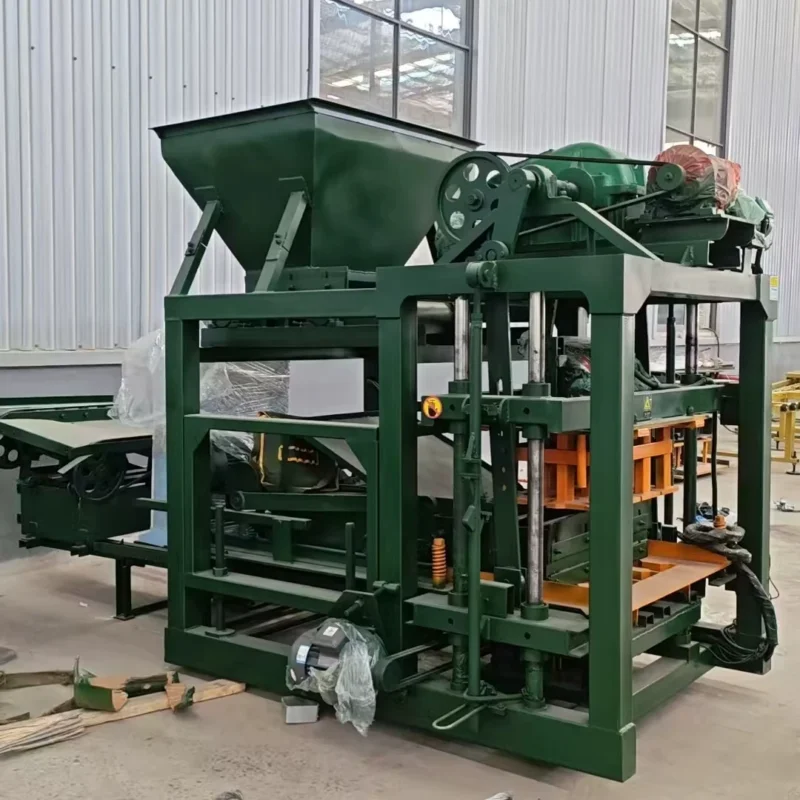


Description
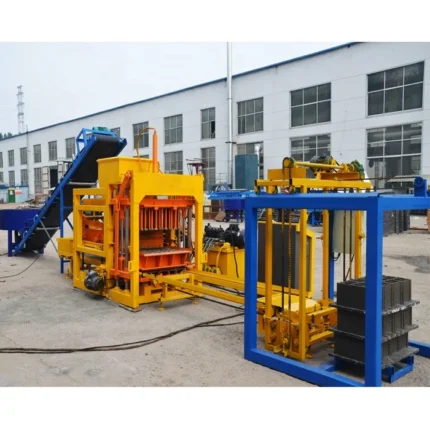
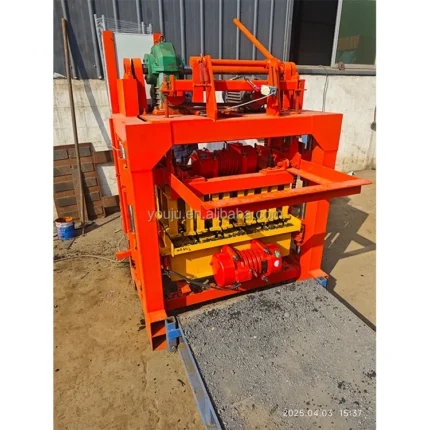
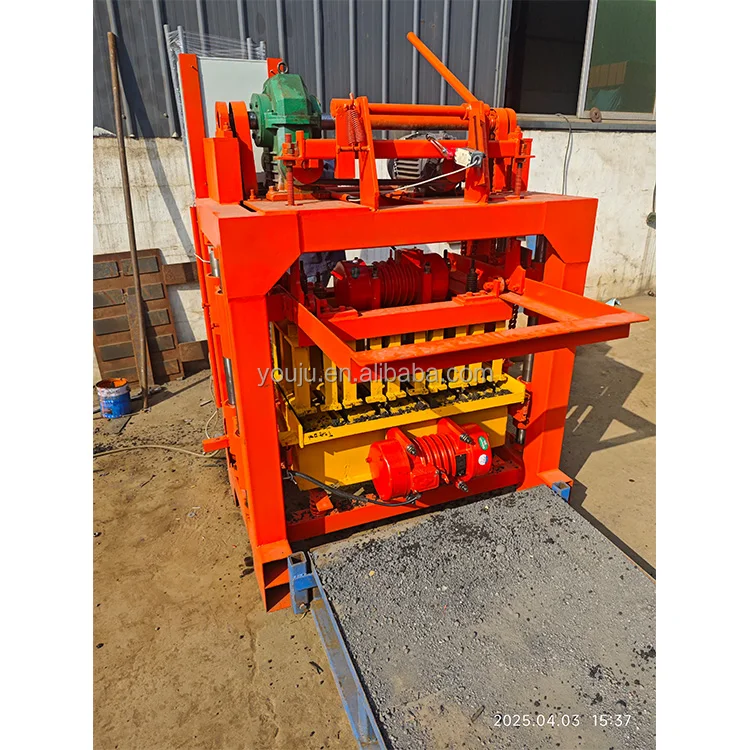
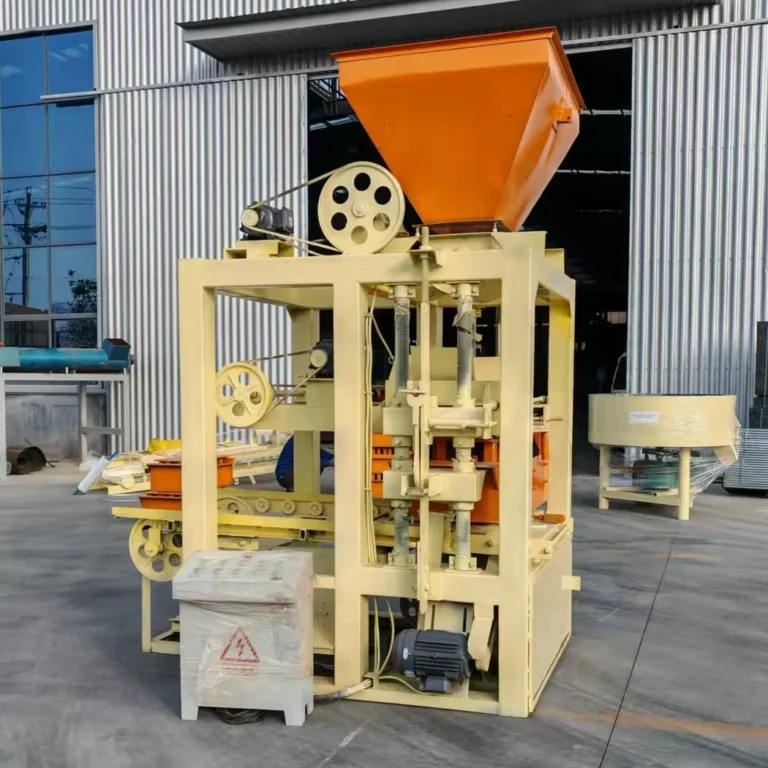
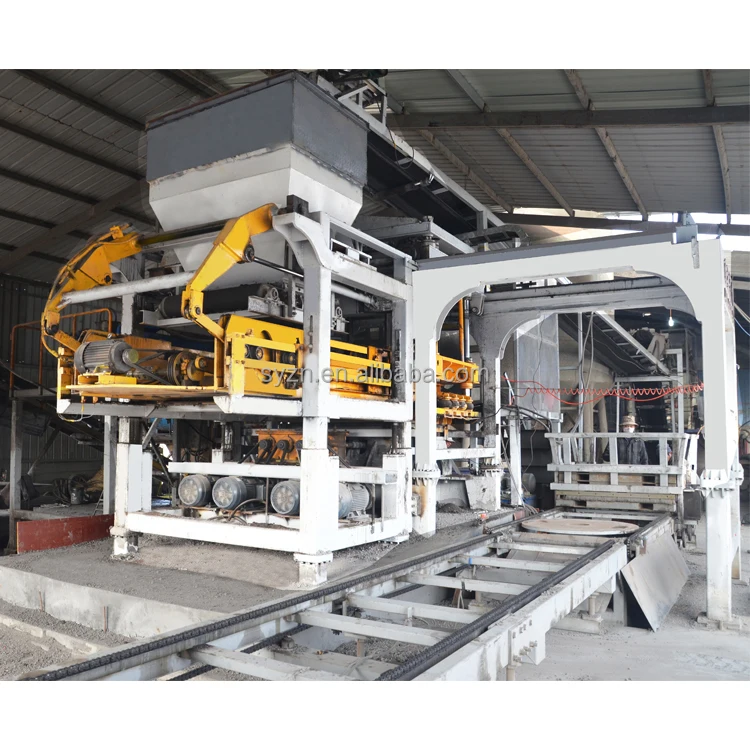
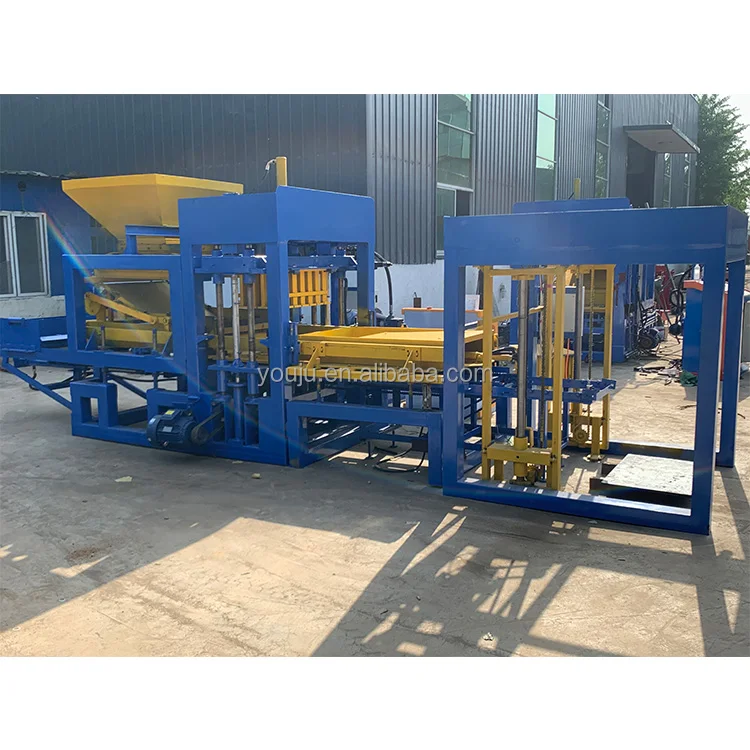
Integrated Line Control — The QTJ4-25 is configured as one matched press-pallet-mould system, so cycle time, vibration, and hydraulic pressure are set against your actual block format before dispatch.
Technical Specifications
| Parameter | Value |
|---|---|
| Model | QTJ4-25 |
| Product Type | Stationary Concrete Block Making Machine |
| Rated Power | 17.9 kW |
| Voltage & Frequency | Configurable to buyer’s market (to be confirmed before production) |
| Control System | PLC |
| Overall Dimensions (L×W×H) | 6400 × 1500 × 2700 mm |
| Net Weight | 2500 kg |
| Output Capacity | 960 pcs/h, 7680 pcs/day (basis: 400×200×200 mm hollow block, 4 pcs/mould) |
| Cycle Time | 25 s (basis: 400×200×200 mm hollow block) |
| Vibration Force | 60 kN |
| Vibration Frequency | 2800 r/min |
| Pallet Size | 850 × 550 × 20 mm |
| Mould Compatibility | Hollow, solid, paver, curbstone (specific formats require mould selection) |
| Automation Level | Semi-automatic |
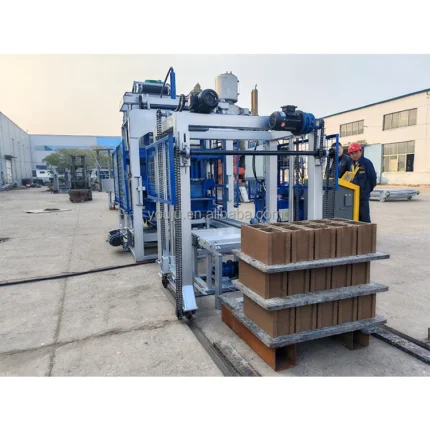
| Stacking Method | Manual with trolley |
| Hydraulic Station | Equipped |
| Standard Configuration | Host machine 1 set, block mould 1 set, JQ350 mixer |
Application Suitability
| Application | Material or Output |
|---|---|
| Hollow block production | Crushed stone, sand, cement, and water mix for load-bearing and partition walls |
| Solid block manufacturing | Dense aggregate blends for foundation and structural masonry |
| Paving block output | Fine aggregate and cement for pedestrian and light-traffic surfaces |
| Curbstone forming | Coarse aggregate mixes for road-edge and landscaping applications |
What "960 Pieces per Hour" Actually Means on the Shop Floor
A headline cycle time is only honest when the block format behind it is stated in plain sight.
I have walked into workshops where the owner pointed at a whiteboard showing a theoretical daily output, then admitted the real number was half that by lunchtime. The gap is almost never the machine itself — it is the mix design, the local aggregate moisture, or a pallet size that does not match the curing racks already bolted to the floor. The automatic QTJ4-25 block making machine PLC controlled quotes its 25-second cycle and 960-piece hour against a specific 400×200×200 mm hollow block, four cavities per mould. Switch to a thinner paver and the cycle changes; switch to an interlocking format and the number of cavities drops [NEED_CITE: block format impact on cycle time across stationary presses]. That is why we hand you a capacity sheet broken down per format, not a single number you have to reverse-engineer.
How PLC Control Changes Operator Dependence
Batch-to-batch consistency in block density hinges on how reliably the press repeats the same vibration duration and hydraulic pressure stroke after stroke. On purely manual machines, a tired operator short-cycles the vibration and the top layer of blocks comes out soft. The PLC on the automatic QTJ4-25 block making machine PLC controlled locks the timing sequence, so cycle parameters stay fixed across shifts. You still set the recipe, but the machine executes it without drift.
Where Semi-Automatic Meets a Future Upgrade Path
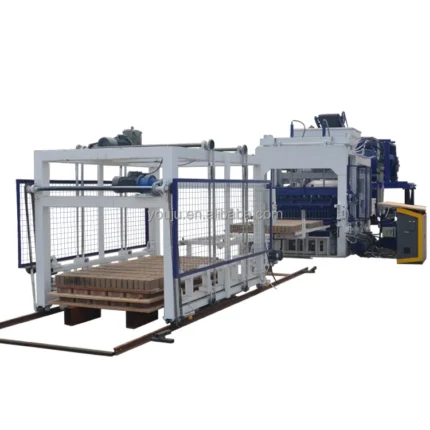
Buying a fully automatic line on day one makes sense only when the daily volume justifies the stacker, cuber, and pallet return conveyor from the start. For a first block plant or a contractor producing on-site, the semi-automatic configuration of this press keeps capital outlay contained while leaving room to add stations later. The pallet size, frame dimensions, and electrical cabinet are sized so that a pallet feeder or an automatic stacker can be bolted on when the curing yard catches up with press output [NEED_CITE: typical automation upgrade sequence for stationary block plants].
Reading the Specs That Actually Move the Needle
The 60 kN vibration force working through the bed mould, combined with upper-mould compression vibration at 2800 r/min, is what compacts the concrete mix into a green block dense enough to survive the trolley ride to the curing area without slumping. Hydraulic pressure behind that vibration holds the mould box rigid so the exciting force transfers into the mix rather than shaking the frame apart. The 850 × 550 × 20 mm pallet is the physical link between press and curing yard: if your existing forklift forks are 1000 mm wide and your racks are built for 900 × 700 pallets, this size will not drop straight in. Verifying pallet fit before production avoids a curing-area rebuild after arrival.
The Hidden Cost of Skipping the Voltage Conversation
Commissioning delays eat into the first month of production more often than mechanical faults do. A press wired for 380 V / 50 Hz landing in a market running 440 V / 60 Hz will either trip the breaker on start-up or run the vibration motor at a speed that shifts the frequency off the design point. The block comes out under-vibrated, the mould box wears prematurely, and the buyer blames the machine. Confirming voltage, frequency, and PLC display language at order stage — not after the container is loaded — removes this entire failure mode [NEED_CITE: voltage and frequency standards by export market].
Why Buyers Come Back to the Same Line
Block machinery is our single focus, which means the press, mould, pallet, and handling equipment are specified as one system rather than assembled from separate catalogues. The QTJ4-25 configuration is set against your actual mix design and local aggregate, not a default table. Mould design covers the formats your market sells, with custom drawings available for non-standard profiles. The automation level is selectable: you can start semi-automatic and add pallet feeding or stacking when output volume demands it. Installation includes operator training so the crew knows the PLC menu structure and the mould change procedure before the engineer leaves site.
Documentation & Verification
- Line layout and capacity calculation stating the block format assumed for each output figure
- Machine specification sheet with confirmed voltage, frequency, and PLC language
- Mould drawing and format list covering all block profiles in your quotation
- Hydraulic and electrical schematic for local maintenance teams
- Factory test record run on your specified pallet size before dispatch
Installation, Commissioning & Support
- 6400 × 1500 mm footprint requires a level concrete slab with anchor-bolt pockets to match the frame
- 17.9 kW rated power demands a dedicated circuit with correct breaker rating for local voltage
- Host machine ships with mixer and one mould set; on-site assembly and belt alignment included
- PLC parameters set to your mix during commissioning, with test blocks measured for dimensional tolerance
- Operator training covers mould change procedure, daily greasing points, and hydraulic hose inspection
- Wear parts and mould list supplied at handover for your first reorder cycle
Before You Request a Quote
Tell us the block formats your market actually moves and the daily volume you need per format, not just the headline number. Share your local aggregate source and any existing pallet or curing rack dimensions so the 850 × 550 mm pallet can be checked against your layout. Finally, confirm your site voltage, frequency, and preferred PLC display language so the electrical cabinet matches the grid the day the container opens.
Frequently Asked Questions
Q: What is the real daily output for block formats other than the 400×200×200 mm hollow block?
A: The 7680-piece day is calculated on that specific hollow block at four cavities per mould and a 25-second cycle. Smaller solid blocks increase cavity count and shorten the cycle; larger pavers reduce both. We supply a format-by-format capacity sheet so you see the number for every block you plan to produce, not a single average.
Q: What automation level does the machine ship with, and what can be added later?
A: The press ships semi-automatic with manual pallet handling via trolley. The frame and electrical cabinet are sized so that an automatic pallet feeder, stacker, or cuber can be integrated when your curing area and daily volume justify the next automation station.
Q: How do you confirm PLC language and voltage before shipment?
A: We lock voltage, frequency, and PLC display language at order confirmation and print them on the electrical schematic. The factory test runs the PLC in your chosen language, and photographs of the panel are shared with you before the machine is crated.
Q: How does the vibration force and hydraulic pressure match my local aggregate?
A: We request a sample of your aggregate and your proposed mix design, then run test blocks on our bench to verify that 60 kN at 2800 r/min produces the target density. If the local material demands a different exciting force, we adjust the vibration motor or hydraulic pressure setting before the machine leaves the factory.