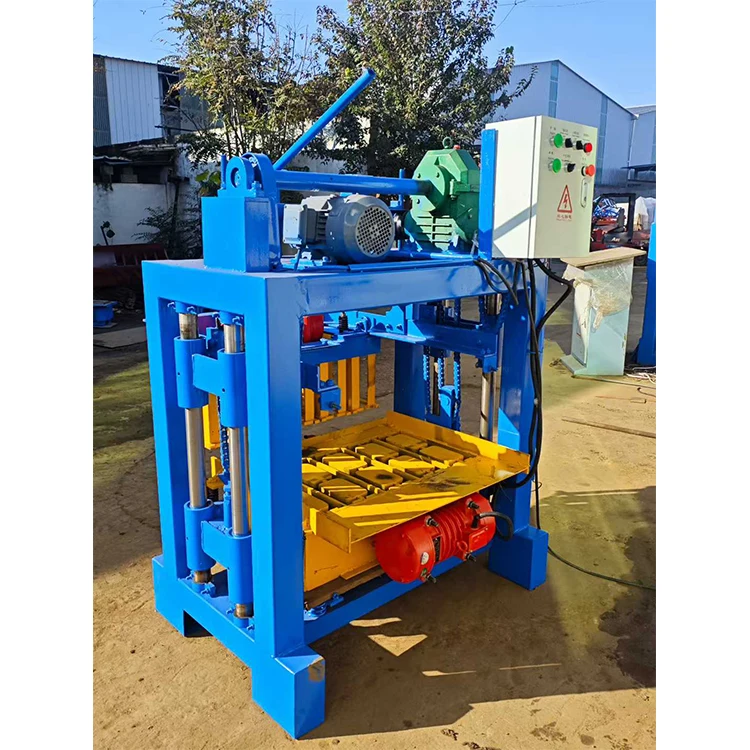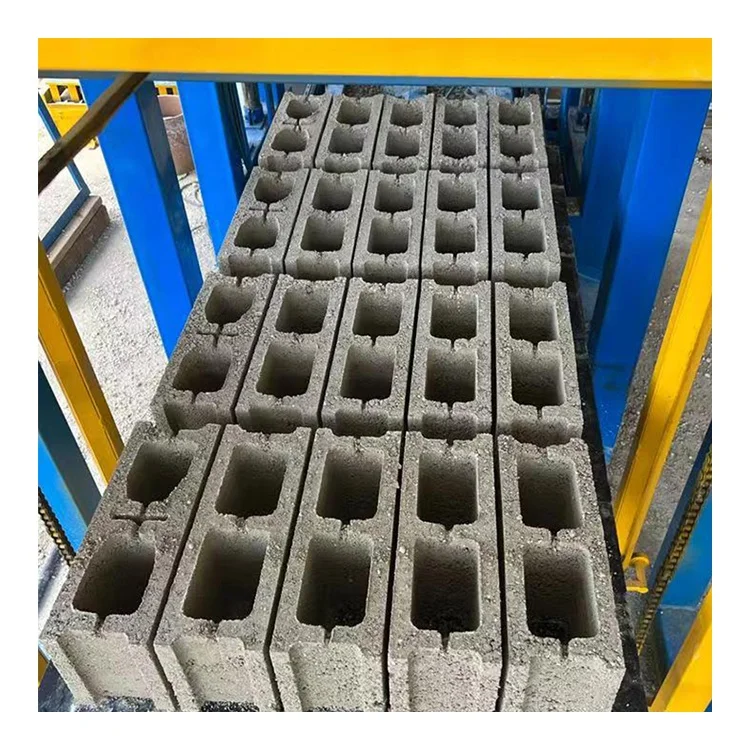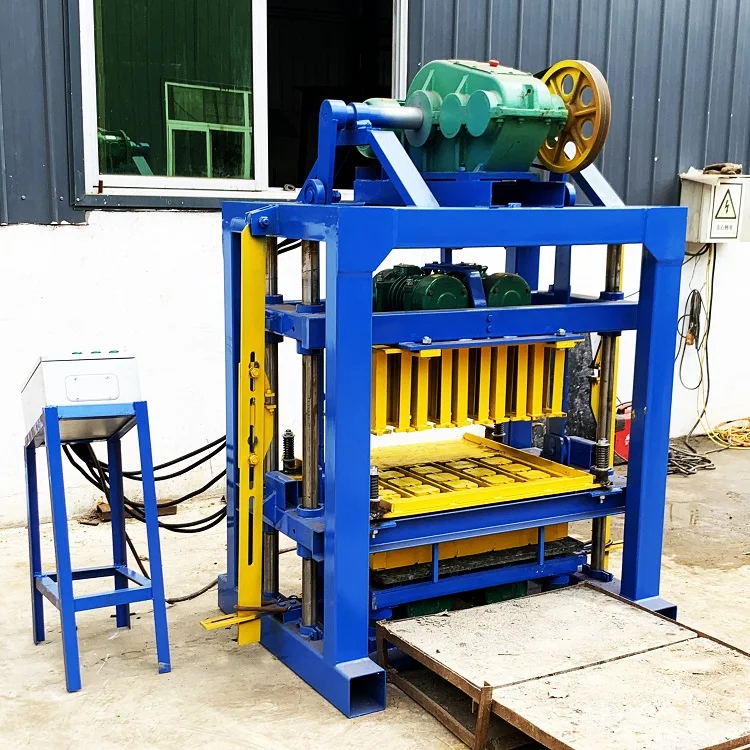
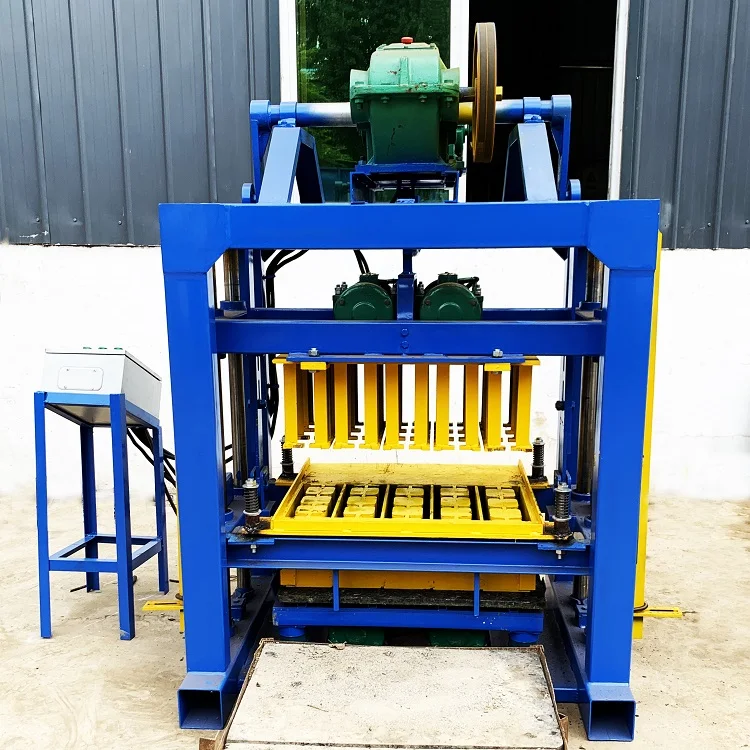
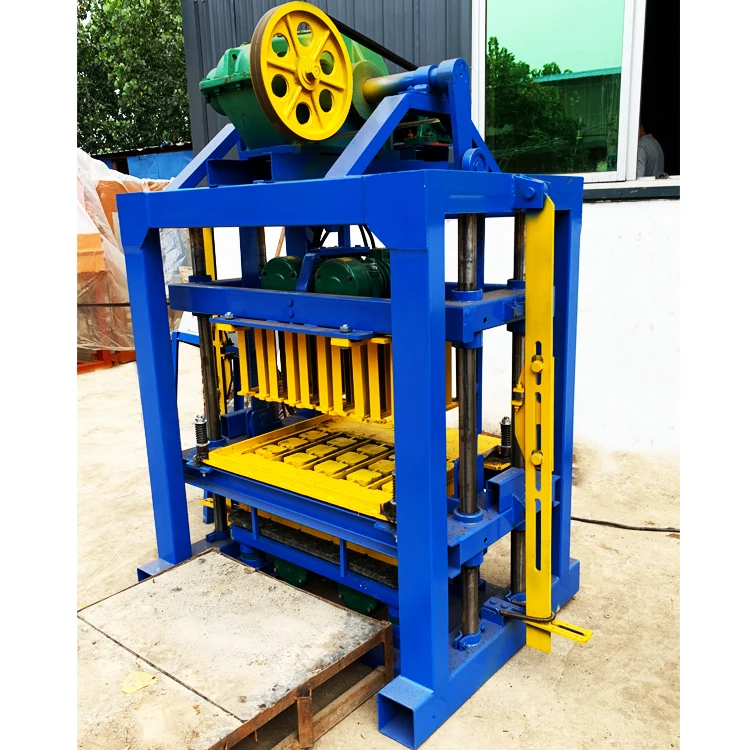
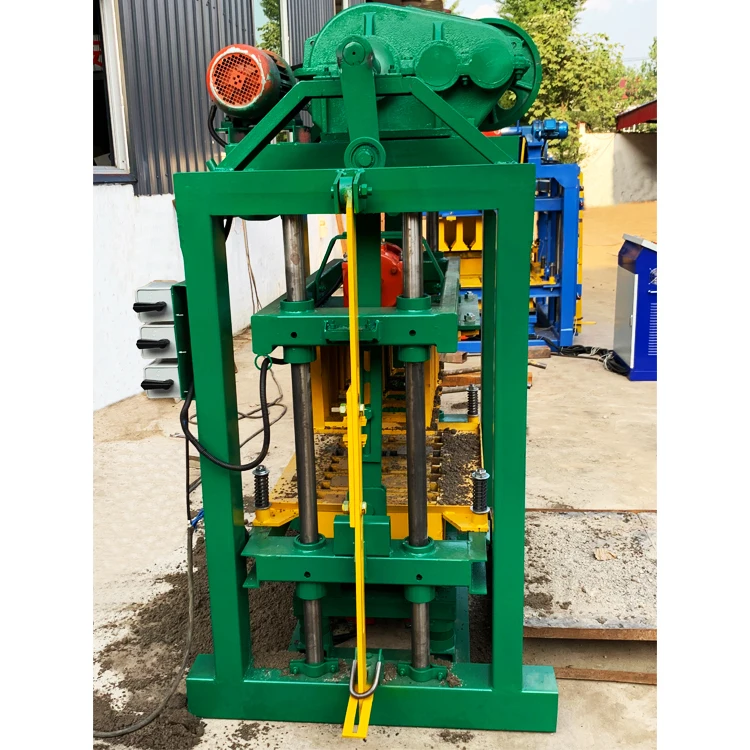
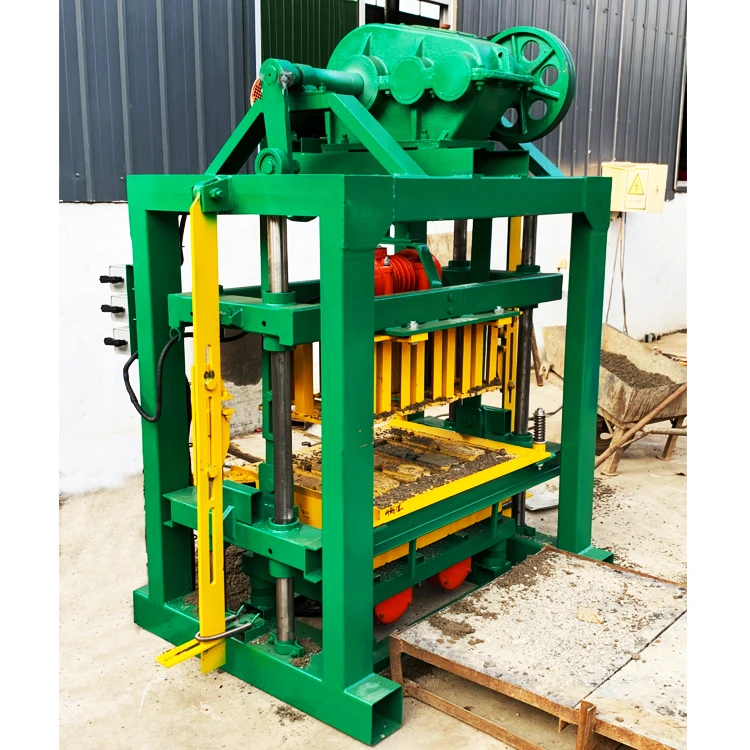
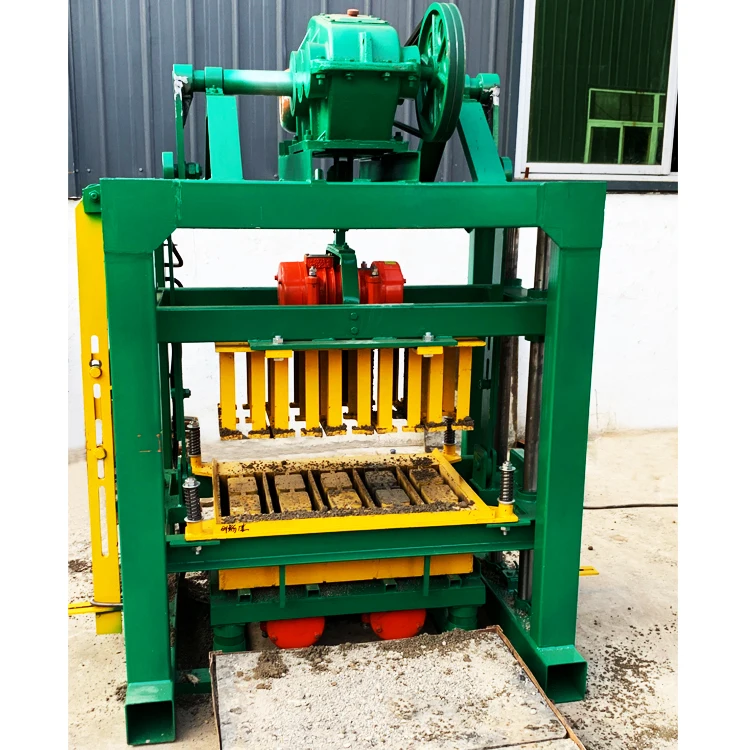
Description
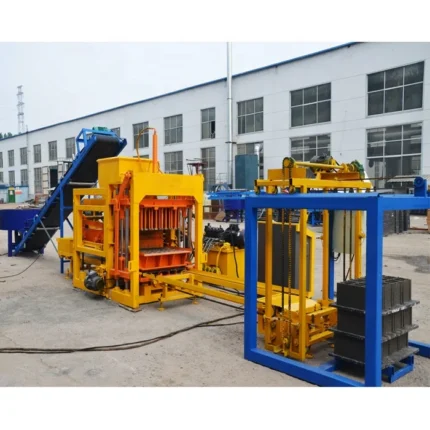
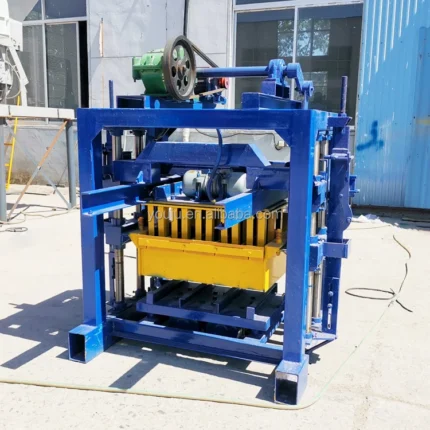
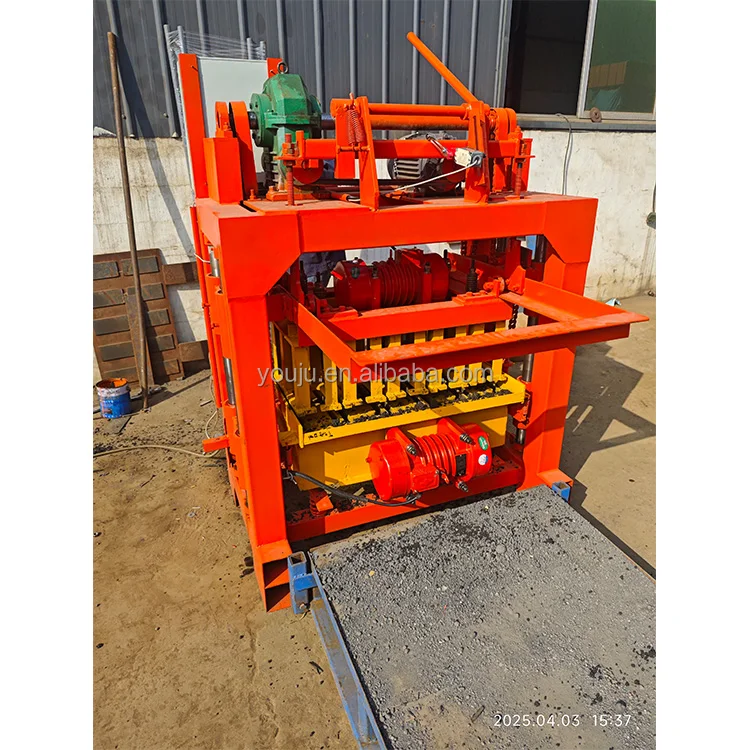
Vibration and cycle logic integrated at the press level — the QTJ4-40 manual block machine is designed so platform vibration, scraper action, and pallet sizing are specified as a matched set, removing the guesswork when you later add PLC control or automatic pallet feeding.
Technical Specifications
| Parameter | Value |
|---|---|
| Model | QTJ4-40 |
| Product Type | Manual Cement Block Making Machine |
| Capacity (400×200×200mm hollow block) | 360 pcs/h, 2880 pcs/day (4 pcs per mould) |
| Capacity (400×150×200mm hollow block) | 500 pcs/h, 4000 pcs/day (5 pcs per mould) |
| Capacity (225×112.5×60mm interlocking paver) | 900 pcs/h, 7200 pcs/day (9 pcs per mould) |
| Main Vibration Form | Platform Vibration |
| Vibration Frequency | 2800 r/min |
| Pallet Size | 850×450mm |
| Overall Dimensions (L×W×H) | 1350×1460×1800mm |
| Machine Weight | 1T |
| Worker Requirement | 1-3 people |
| Control System | Manual operation with top die push/pull and automatic scraper |
| Motor Option | Diesel and Electric Motor (dual option) |
| Automation Level | Semi-automatic (manual pallet handling, automatic scraper) |
| Raw Material | Concrete, cement, fly ash, crushed stone, sand, dust, gravel, slag |
| Standards | CE |
Application Suitability
| Application | Material or Output |
|---|---|
| Small-scale block production plants | Hollow and solid blocks from crushed stone, sand, and cement |
| On-site construction block production | Interlocking pavers and curbstones using local aggregate |
| Entrepreneur first block plant | Colored pavers and standard hollow blocks with fly ash or gravel mixes |
| Distributors adding block formats | Multiple mould formats on a single 850×450mm pallet size |
Why "Pieces per Hour" Means Nothing Without the Block Format
An automatic QTJ4-40 block machine quotation that omits the assumed block format is a quotation you cannot plan a shift around.
I once reviewed a line where the supplier quoted a single headline output figure. The buyer assumed it applied to the 200mm hollow block his market demanded. When the machine arrived, the actual cycle for that format was nearly double the pace assumed in the quote, and his daily revenue target collapsed before the first week ended. The gap between a headline number and a shift plan is where most first-time block plant owners lose money [NEED_CITE: block machine capacity calculation methods]. That gap is entirely avoidable when the capacity is stated per format, per mould cavity count, and per shift length.
PLC Control Turns Operator Pace Into Repeatable Cycle Timing
On a manual press, the operator decides when to pull the top die, when to scrape, and when to feed the next pallet. That decision drifts across a shift — faster in the first hour, slower after lunch, rushed near the end. A PLC controlled block machine replaces that drift with a fixed cycle: vibration duration, scraper stroke, and pallet advance all lock to the same sequence every time. The QTJ4-40 platform already carries an automatic scraper, which means the control logic has a physical starting point to build from when you add full PLC integration.
Where the Upgrade Path Actually Begins
The value of this press is not that it starts manual. The value is that the mechanical platform, pallet size, and vibration system are specified to accept automation without a structural rebuild. Pallet feeding can be added once volume justifies the investment. Stacking follows. The 850×450mm pallet size stays constant through every upgrade stage, which means your curing racks and forklift do not need to change when the press does. This is the distinction between a machine that grows with your plant and one that forces a full line replacement [NEED_CITE: block production line automation stages].
Reading the Specs That Actually Matter on Site
The 2800 r/min vibration frequency is a compaction force indicator, not a speed claim. Higher frequency drives denser blocks, but only if the hydraulic pressure and mix design hold their side of the equation — a wet mix at high vibration produces slumped blocks, not stronger ones. The 850×450mm pallet size governs your curing area layout: measure your rack spacing and forklift tine width before confirming the order, not after. The dual diesel and electric motor option matters most in regions where grid stability is unreliable; a diesel backup keeps the press running during outages, but the fuel cost per block is noticeably higher than grid electric [NEED_CITE: voltage and frequency standards by export market]. The 1T machine weight and 1350×1460×1800mm footprint place this press within a 200m² factory area, which is a realistic first-plant footprint for an entrepreneur.
What Happens When Control Language Is Assumed Instead of Confirmed
I have seen a block press arrive at a West African site with a Chinese-language PLC display. The local operator could not read a single menu item. Commissioning stalled on day one, the buyer sent frustrated video messages, and the machine sat idle while a new HMI was shipped. That delay is not a quality failure — it is a specification failure. The automatic QTJ4-40 block machine must have its control language, voltage, and frequency confirmed in writing before production starts, because retrofitting a display or rewinding a motor on site is weeks of lost output, not hours of adjustment.
Why Buyers Source This Machine Here
Block machinery is our single focus, so the press, mould, pallet, and handling equipment are specified as one system rather than assembled from separate suppliers. Configuration is set against your actual mix design and local aggregate, not a catalogue default. Moulds are designed for the formats your market sells, including custom drawings to your specifications. Automation level is selectable, so you can start with the base manual QTJ4-40 and upgrade pallet feeding and stacking as volume justifies the investment. Installation and commissioning support includes operator training so the machine is producing saleable blocks before the team leaves site.
Documentation & Verification
- Line layout and capacity calculation stating the block format and mould cavity count assumed
- Machine specification sheet with voltage, frequency, and PLC display language confirmed
- Mould drawing and format list for every block type included in the quotation
- Pallet specification matching the 850×450mm size to your curing rack and forklift
- Factory test record on your target block format before dispatch
- Operation and maintenance manual in the confirmed control language
Installation, Commissioning & Support
- 200m² factory area with level concrete floor rated for the 1T machine weight
- Dedicated electrical circuit matching confirmed voltage and frequency before the machine arrives
- Motor type confirmed as diesel or electric based on local grid reliability
- First commissioning run on your local aggregate mix with operator present for parameter setting
- Mould change procedure trained on site so format switching does not consume a full shift
- Wear parts list provided with first replacement intervals for vibration components and scraper blades
What to Send With Your Inquiry
Share your target block format with dimensions, the daily output you need to hit, and the raw materials available locally — including aggregate type and cement source. Confirm your site voltage, frequency, and the language your operators read. Tell us the pallet size and forklift you already have so the 850×450mm pallet can be verified against your existing curing layout.
Frequently Asked Questions
Q: How is the QTJ4-40 capacity calculated, and which block format is assumed?
A: Capacity is stated per block format with the mould cavity count specified. For example, 360 pcs/h for a 400×200×200mm hollow block assumes 4 cavities per mould. A single headline number without the format is not a basis for planning. Always request the calculation per format you intend to produce.
Q: What automation upgrades are available beyond the base manual configuration?
A: The QTJ4-40 accepts PLC control, automatic pallet feeding, and stacking as staged upgrades. The automatic scraper is already present on the base machine. Each upgrade stage is designed to fit the existing 850×450mm pallet size without requiring changes to your curing area or forklift.
Q: How do I confirm voltage, frequency, and PLC display language for my market?
A: These three items must be confirmed in writing before production begins. Voltage and frequency vary by country, and PLC language must match your operator’s reading ability. Delay in any one of these items is the most common cause of commissioning hold-ups after the machine arrives on site.
Q: Can I start with the manual QTJ4-40 and upgrade pallet feeding later?
A: Yes. The mechanical platform and pallet size are specified to accept automation additions without a structural rebuild. You can begin with manual pallet handling and add automatic feeding when your daily volume justifies the investment, keeping the same 850×450mm pallet throughout.
Q: What pallet size does the QTJ4-40 use, and does it fit my existing setup?
A: The QTJ4-40 uses an 850×450mm pallet. Before confirming your order, measure your curing rack spacing and forklift tine width to verify compatibility. A mismatch here means either new racks or new pallets, both of which add cost and delay that are entirely preventable.