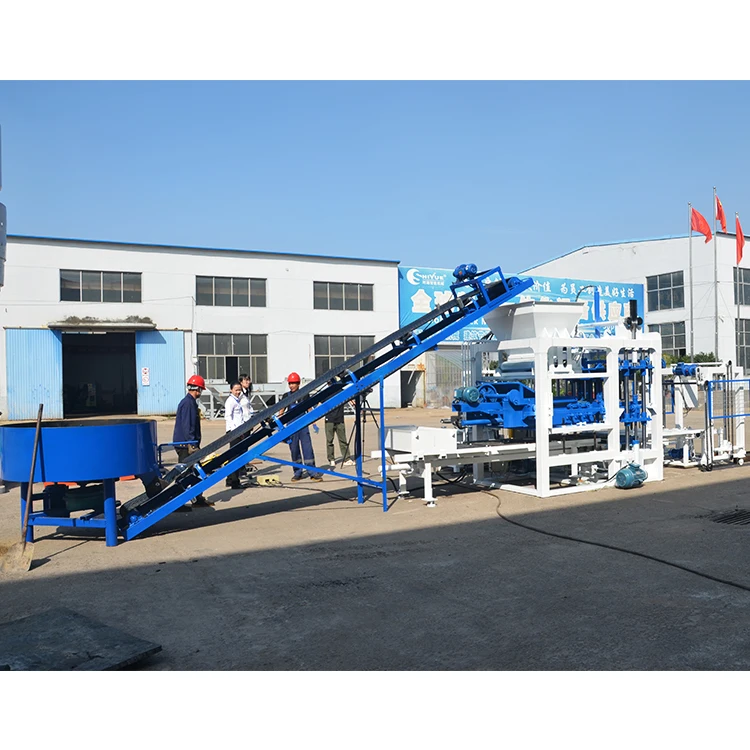
Description
PLC Parameter Tuning — Every procedure action on the QT4-18 is interlocked and tuned to your mix design before commissioning, removing operator guesswork from block consistency.
Technical Specifications
| Parameter | Value |
|---|---|
| Model | QT4-18 |
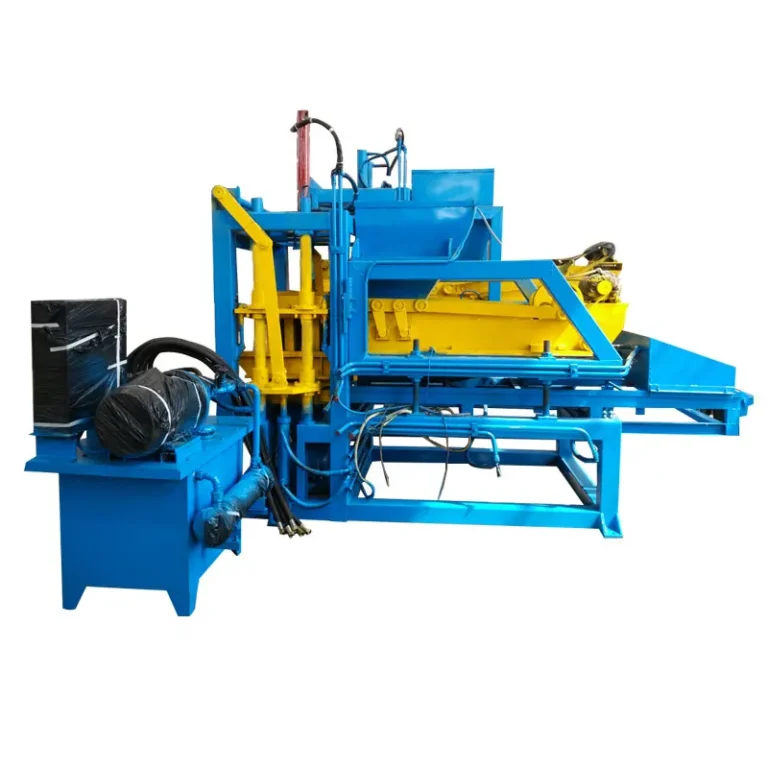
| Product Type | Hydraulic Automatic Concrete Block Making Machine |
| Vibration Frequency | 0-60 Hz (adjustable) |
| Vibration Form | Platform Vibration |
| Pallet Size | 900 x 500 mm |
| Molding Cycle | 18-25 s (format dependent) |
| Vibration Force | 45 kN |
| Demolding Method | Hydraulic |
| Output Capacity (Hollow Block 400x200x200mm) | 799 pcs/hour (based on 18s cycle, 4 pcs/mould) |
| Output Capacity (Hollow Block 400x150x200mm) | 999 pcs/hour (based on 18s cycle, 5 pcs/mould) |
| Output Capacity (Solid Brick 240x115x52mm) | 5199 pcs/hour (based on 18s cycle, 26 pcs/mould) |
| Control System | PLC with shaft operation and out-and-in date device (basis to be confirmed) |
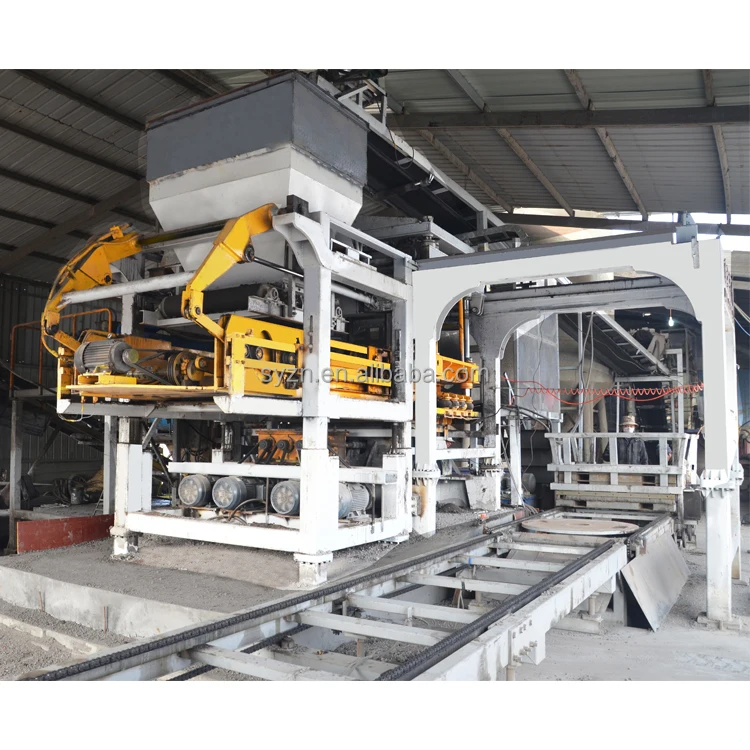
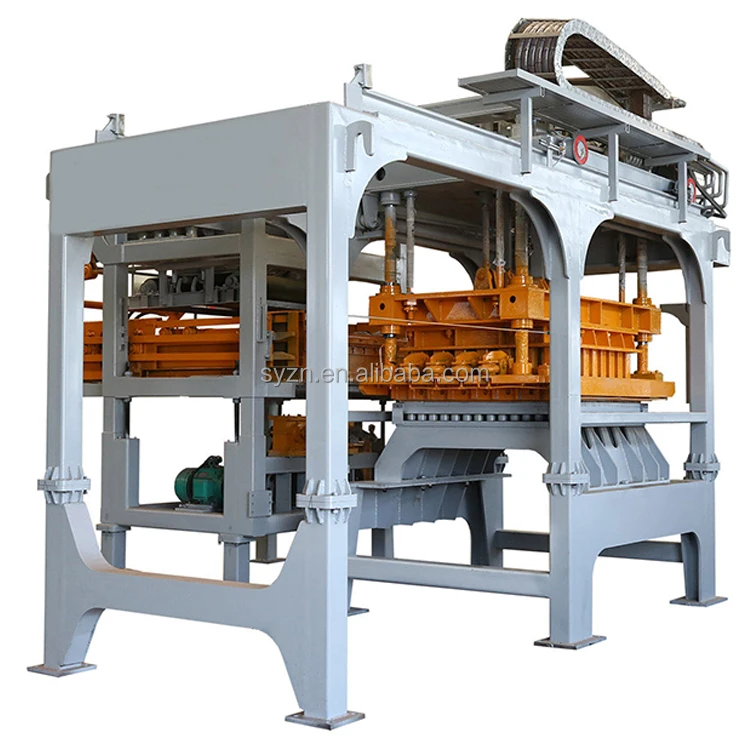
| Assembly State | Compact machine with electric and hydraulic system integrated |
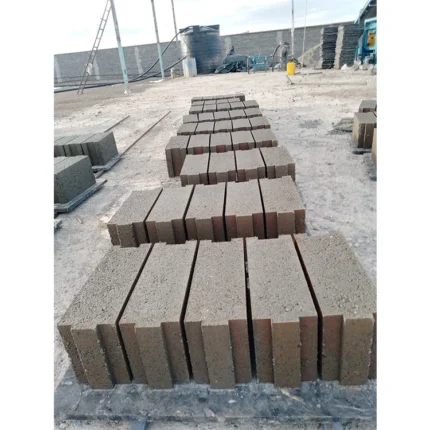
| Block Formats Supported | Color face bricks, through-body environmental protection bricks, road curb rocks, hydraulic blocks, sod bricks, hollow blocks, multicellular bricks, paving bricks, standard bricks |
| Warranty | 1 year (excluding spare parts) |
Application Suitability
| Application | Material or Output |
|---|---|
| Commercial block plant | Hollow blocks and solid bricks from crushed stone, sand, and cement |
| Paving and kerb production | Interlocking pavers and road curb rocks with color face or through-body pigment |
| On-site contractor production | Standard and multicellular bricks using locally sourced aggregate |
| Environmental brick line | Porous and sod bricks for permeable surface projects |
| Format expansion for existing plant | Specialty formats added via mould change without replacing the press |
Why the PLC Language Question Must Come Before the Price
A PLC controlled automatic block making machine that speaks the wrong language on its display is a manual machine in practice.
I have watched a fully automated line sit idle for two weeks because the HMI defaulted to a language the local operators could not read. The electrician had to fly in, reload the firmware, and re-map every interlock before production restarted. Voltage and frequency mismatches cause similar delays, except they can also burn out contactors on the first shift. Confirming these details at order stage costs nothing; correcting them after the container arrives costs weeks. [NEED_CITE: common commissioning delays from unconfirmed control language and voltage]
How Interlocked Cycle Logic Removes Operator Variance
On a semi-automatic press, the operator decides when to vibrate, when to press, and when to strip the mould. Three people on three shifts means three different block densities. The PLC on this PLC controlled automatic block making machine sequences every step — feed, vibrate, press, demold, return — so the cycle repeats identically whether it is the morning shift or the night crew.
What the 0-60 Hz Vibration Range Actually Does
Different mix designs absorb vibration differently. A dry mix with coarse aggregate needs a higher frequency to consolidate around the mould walls, while a wetter mix with fine sand consolidates faster and can crack if over-vibrated. The adjustable platform vibration lets you dial the frequency to match the material arriving from the mixer today, not the material the factory assumed you would use. This tunability is what keeps block strength consistent when your aggregate source changes between wet and dry seasons. [NEED_CITE: vibration frequency impact on concrete block compressive strength]
Reading the Specs That Matter for Daily Output
The 45 kN vibration force works together with hydraulic pressure to compact the mix into the mould cavity. If either value is too low for your aggregate’s particle size, blocks leave the press weak and crumble before curing. The 900 x 500 mm pallet size determines how many blocks per mould and how those pallets move through your curing area — specify a pallet that does not match your existing forklift or rack spacing and you will be re-handling every block by hand. The 18-25 second cycle range reflects real mould-change scenarios: a simple hollow block runs at the fast end, while a complex interlocking paver with face mix takes longer. Capacity numbers only hold meaning when the block format is named alongside them.
What Happens When Automation Is Skipped to Save Budget
A buyer who chooses manual pallet handling to lower the invoice price often discovers that the press finishes a cycle faster than two workers can pull and replace a loaded pallet. The press then sits idle, and the quoted cycle time becomes irrelevant. Another common gap is stacking: blocks piled by hand onto curing racks end up tilted or chipped, and the breakage rate quietly erodes margin. These hidden costs only appear once production starts, and they are far more expensive to fix than specifying the right automation level at the beginning. [NEED_CITE: labour and breakage costs in manual pallet handling operations]
Why Sourcing the Machine, Mould, and Line Together Matters
The QT4-18 is configured as part of a matched system rather than a standalone press. The mould is designed around the pallet size and the target block format, so changeover time stays within a single shift instead of consuming half of it. The hydraulic pressure and vibration parameters are set against your actual mix design and local aggregate before the machine leaves the factory, which prevents the output drop I have seen when catalogue defaults meet unfamiliar volcanic ash or recycled concrete dust. Electrical voltage, frequency, and PLC display language are confirmed in writing during production, so commissioning does not stall over a mismatched contactor or an unreadable screen. The automation level is selectable — you can begin with semi-automatic pallet handling and add stacking or cubing later without replacing the press. Installation support includes operator training on the exact mould formats you ordered, plus a documented wear parts list so replacements are available when the first set needs changing.
Documentation & Verification
- Line layout with capacity calculation stating the block format assumed for each figure
- PLC program backup with confirmed display language and interlock logic
- Factory test record showing actual cycle time per your specified mould format
- Hydraulic and electrical schematic matching your confirmed voltage and frequency
- Mould drawing and format list covering every block type you intend to produce
Installation, Commissioning & Support
- Foundation plan matched to the QT4-18 footprint and hydraulic station weight
- Dedicated circuit sized for the integrated electric and hydraulic system
- Compact assembly allows container loading and rapid on-site reconnection
- First-run parameter tuning against your local aggregate and mix proportions
- Operator training covering mould change procedure and PLC fault reading
- Wear parts list with part numbers for hydraulic seals and mould liners
What to Include in Your First Enquiry
Send your target block format, the daily output you need for that specific format, and a sample or description of your local aggregate and cement source. Confirm your site voltage, frequency, and preferred PLC display language. If you already have pallets, forklifts, or curing racks, share their dimensions so the line is configured around what you have, not what the catalogue assumes.
Frequently Asked Questions
Q: How is PLC cycle time verified per block format before shipment?
A: The factory runs a production test using the exact mould you ordered and records the cycle time for that format. The test report is included in your documentation package so you can compare the verified number against the capacity calculation in your line layout.
Q: What voltage and control language options are confirmed at order stage?
A: Voltage, frequency, and PLC display language are all confirmed in writing before production begins. The electrical schematic and PLC program backup are then built to those confirmed values, preventing mismatches when the machine arrives at your site.
Q: How does the automation level affect labour count on the block line?
A: With full PLC-controlled cycling, the press itself needs only supervision. Labour on the line is driven more by pallet handling, stacking, and curing rack movement. Adding automatic stacking and cubing reduces manual positions, while starting semi-automatic lets you add those modules later.
Q: What is the upgrade path from this model to full automatic stacking and cubing?
A: The QT4-18 is designed to accept add-on modules for automatic pallet feeding, stacking, and cubing. The PLC program can be expanded to control these stations without replacing the main press, so you can grow the line as demand increases.
Q: How are hydraulic pressure and vibration force matched to my local aggregate?
A: Before the machine ships, the hydraulic pressure and vibration frequency are tuned to your mix design and aggregate sample. This prevents the output and strength drop that occurs when catalogue default settings meet an unfamiliar local material.