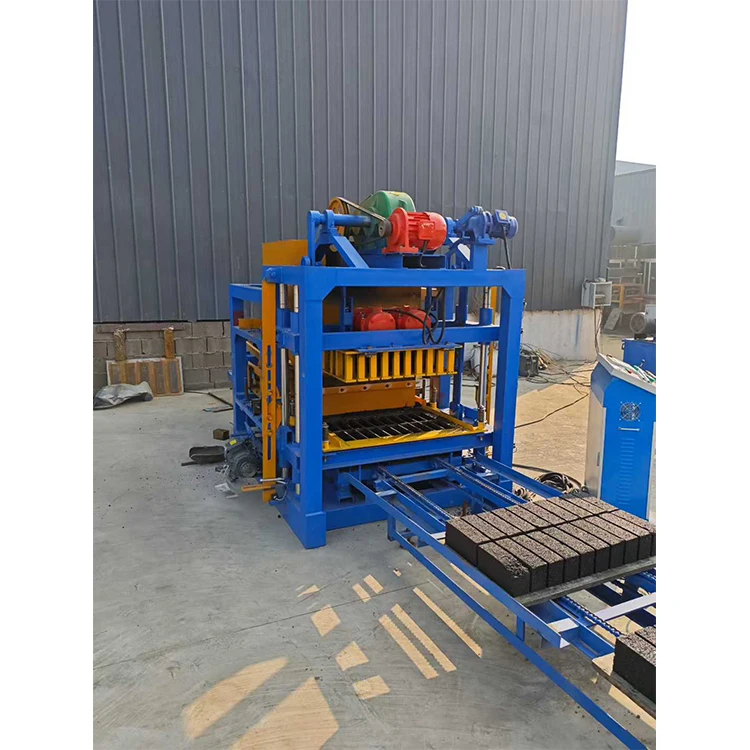


Description
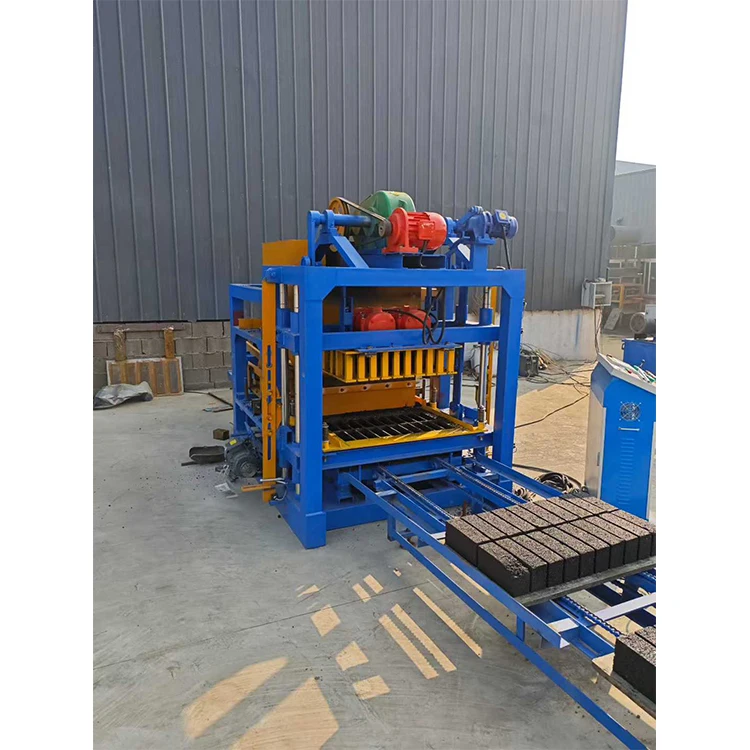
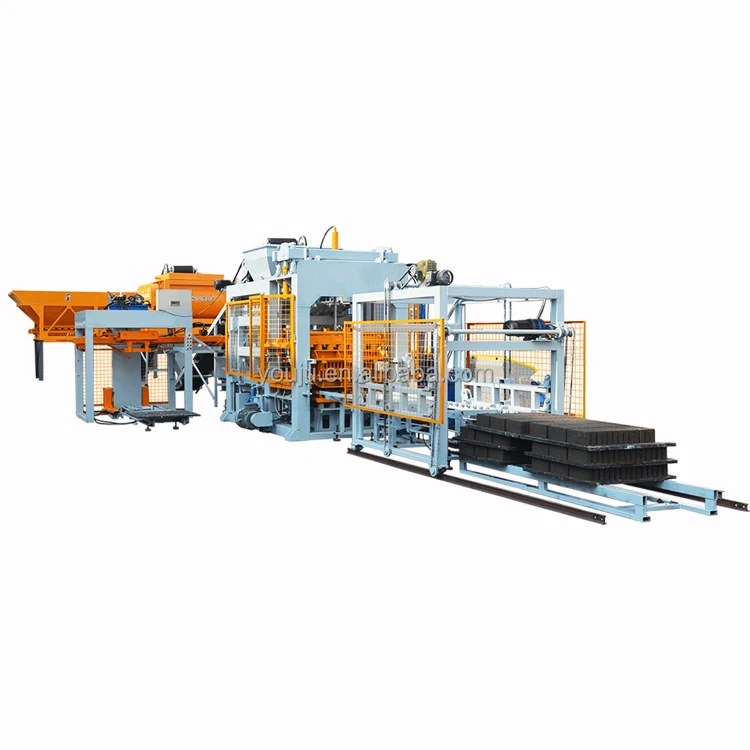
Integrated automation control — the QT4-25 manages pallet feeding, material dosing and block stacking through a single PLC sequence, so cycle consistency depends on the controller rather than operator attention.
Technical Specifications
| Parameter | Value |
|---|---|
| Model | QT4-25 (also designated QTJ4-25) |
| Product Type | Automatic Concrete Block Making Machine |
| Control System | PLC controlled, fully automatic |
| Machine Power | 16.58 kW |
| Molding Cycle | 25 seconds |
| Capacity | 4600 pcs / 8 hours (basis not stated in source — confirm block format and material before quoting) |
| Machine Weight | 5000 KGS |
| Overall Dimensions | 6400 × 1500 × 2700 mm |
| Pallet Size | 850 × 480 mm |
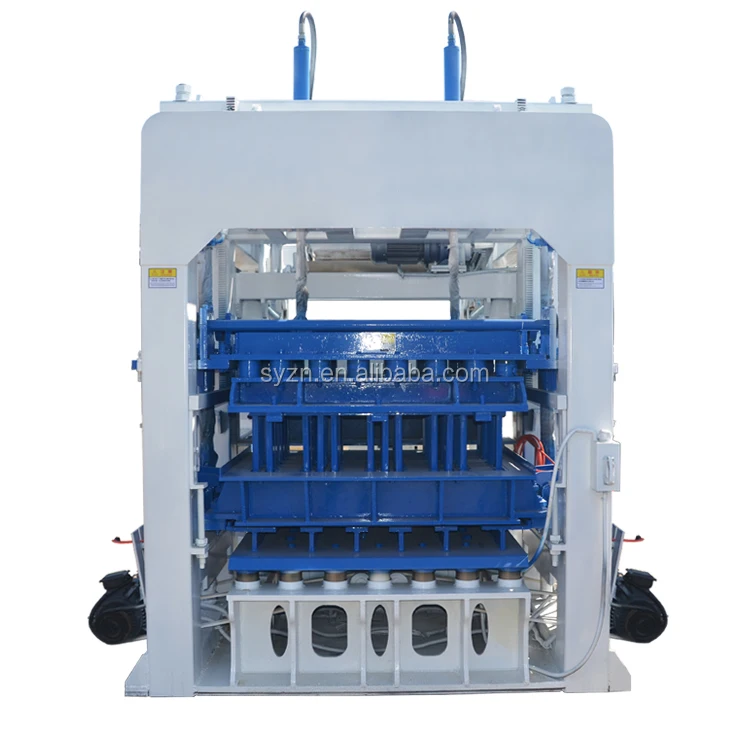
| Vibration System | Vibration motor with large vibration box |
| Motor Brand | Siemens motor |
| Stacking Method | Automatic block stacker |
| Frame Construction | Thick steel frame |
| Voltage | Configurable to local grid standard (verify frequency and phase before production) |
| Warranty | One year, free parts supply during warranty period |
Application Suitability
| Application | Material or Output |
|---|---|
| Hollow block production | Crushed stone, sand, cement, water |
| Solid brick and paver manufacturing | Fly ash, lime, sand, cement blends |
| On-site block production for contractors | Locally available aggregate and cement |
| First plant setup by entrepreneurs | Standard concrete mix with regional sand sources |
Why the PLC Language Question Must Come Before Shipment
A PLC-controlled automatic concrete block making machine only reduces operator error if the operator can actually read the screen.
I have watched a brand-new automatic line sit idle for days in a Southeast Asian block yard because the HMI defaulted to a language none of the shift crew could follow. The foreman was pressing buttons based on memory of the training session, not on what the screen was telling him. When the alarm log finally showed a sensor fault, half a day’s pallets had already gone through with incomplete material fill. This is not a rare edge case — [NEED_CITE: HMI language mismatch as a commissioning delay factor in exported machinery] — and it is entirely preventable if the display language is locked into the purchase contract before the machine enters production.
What the PLC Actually Takes Over from the Operator
On a manual or semi-automatic block press, the operator decides when to feed material, when to drop the pallet and when to pull the fresh block off the line. Every one of those decisions introduces variation. The PLC controlled automatic concrete block making machine removes that variation by running pallet feeding, material dosing, scraping and block stacking as a single timed sequence. The operator’s role shifts from driving the cycle to watching for faults and feeding raw material into the hopper.
Where Consistency Comes From on Every Shift
Block density depends on vibration force applied for a consistent duration against a consistent material volume. When the PLC holds the molding cycle at 25 seconds and triggers the Siemens vibration motor for the same interval every time, the compaction energy per block stays within a narrow band. Shift changes no longer mean a drop in block strength because the new operator has a different rhythm. The automatic block stacker then removes the pallet from the press zone at the same speed, preventing the fresh block from being jolted before initial set begins — [NEED_CITE: effect of handling vibration on green block integrity before curing].
Reading the Specs That Actually Affect Block Quality
The 16.58 kW total machine power must cover the vibration motor, the hydraulic pack (if fitted for upper pressure), the conveyor drives and the stacker. Buyers comparing this to smaller machines should check what share of that power goes to vibration, since vibration force is what compacts the mix into the mould cavity. The 850 × 480 mm pallet size determines how many blocks fit per cycle and must match the curing rack spacing and forklift tine width already in use at the plant. A pallet size chosen without that check forces the buyer to rebuild the curing area or buy new handling equipment. The 25-second molding cycle is achievable only when the material feed keeps up and the pallet queue never runs empty; if the upstream mixer or pallet return conveyor is slower, the press will idle between cycles and the rated cycle time becomes theoretical.
What Happens When Automation Is Specified Without the Line Around It
A fully automatic press that stacks blocks neatly is only valuable if the pallet return loop keeps pace. I have seen a plant owner invest in an automatic stacker and then discover that the curing racks could not accept pallets at the rate the stacker delivered them, leaving pallets queued on the floor and blocking the press exit. The bottleneck simply moved from the operator’s hands to the curing yard. [NEED_CITE: line balance between press output and curing capacity in block plants] Before confirming the automation level, the buyer needs to walk through every station from raw material hopper to stacked and cured block and verify that each one can handle the cycle rate the PLC will sustain.
Why Buyers Source the Automation Package Here
Block machinery is the single focus of this operation, so the press, mould, pallet and stacker are specified as one matched system rather than assembled from unrelated suppliers. The configuration is set against the buyer’s actual mix design and local aggregate, not a catalogue default, which matters because vibration force that works for clean river sand may not compact high-clay local stone dust. Mould design covers the formats the buyer’s market actually sells, with custom drawings available for non-standard shapes. Voltage, frequency and PLC display language are confirmed before production begins, removing the most common commissioning delays. The automation level is selectable, allowing a buyer to start with automatic pallet feeding and stacking and add cubing or curing rack handling later as the plant grows.
Documentation & Verification
- Line layout showing pallet flow from press through stacker to curing rack
- PLC program sheet listing every timed step in the 25-second cycle
- Voltage and HMI language confirmation signed before production
- Factory test record run on buyer’s specified block format
- Wear parts list covering vibration motor mounts and mould liners
Installation, Commissioning & Support
- Foundation must support 5000 KGS static load plus dynamic vibration forces
- Dedicated electrical circuit sized for 16.58 kW continuous draw at confirmed voltage
- PLC display language and alarm messages verified on-site during first power-up
- Vibration motor amperage checked against Siemens motor data sheet at commissioning
- Operator training covers alarm response, mould change sequence and daily greasing points
- Spare vibration motor mounts and proximity sensors included in first shipment
What to Prepare Before Requesting a Quotation
Tell us the exact block format you sell most — hollow, solid or paver — and the daily volume your market absorbs, because the PLC cycle count only matters when matched to a specific mould. Confirm your local voltage, frequency and the language your shift operators read, so the HMI arrives configured correctly. Share the pallet size and curing rack layout you already use, so the automatic stacker and pallet return conveyor are dimensioned to fit your existing yard rather than forcing a rebuild.
Frequently Asked Questions
Q: What does the PLC actually control on this machine, and what still needs an operator?
A: The PLC manages pallet feeding, material dosing, scraping, press cycling and block stacking as one continuous sequence. The operator monitors the HMI for alarms, refills the hopper with mixed material and removes finished stacks from the curing area. Manual intervention is only needed for mould changes, maintenance and fault clearing.
Q: How is the control language and HMI display configured for my market?
A: The display language and alarm text are confirmed during the order process and loaded before the PLC leaves the factory. Buyers must state the required language and confirm it on the pre-production checklist, because changing the HMI language after shipment typically requires a site visit or remote session to reconfigure.
Q: What is the realistic daily output per block format?
A: The quoted 4600 pieces per 8-hour shift is a baseline figure whose block format and wall thickness are not stated in the source documentation. Realistic output differs substantially between a thin paver and a large hollow block because mould fill time and vibration duration change. Ask for a capacity calculation that names the exact block format you intend to produce.
Q: Can I start semi-automatic and add full stacking later?
A: Yes. The machine frame and PLC architecture allow the automatic block stacker to be added after initial installation. Buyers who want this upgrade path should confirm the stacker mounting points and PLC I/O reserve at the time of the original order, so the later addition does not require rewiring the main cabinet.
Q: How does the pallet feeding system stay synchronized with the press cycle?
A: A proximity sensor at the pallet magazine triggers the next pallet release only after the press has completed its cycle and the finished pallet has cleared the exit zone. If the downstream stacker or pallet return conveyor is delayed, the PLC holds the press until the path is clear, preventing pallet jams at the press exit.