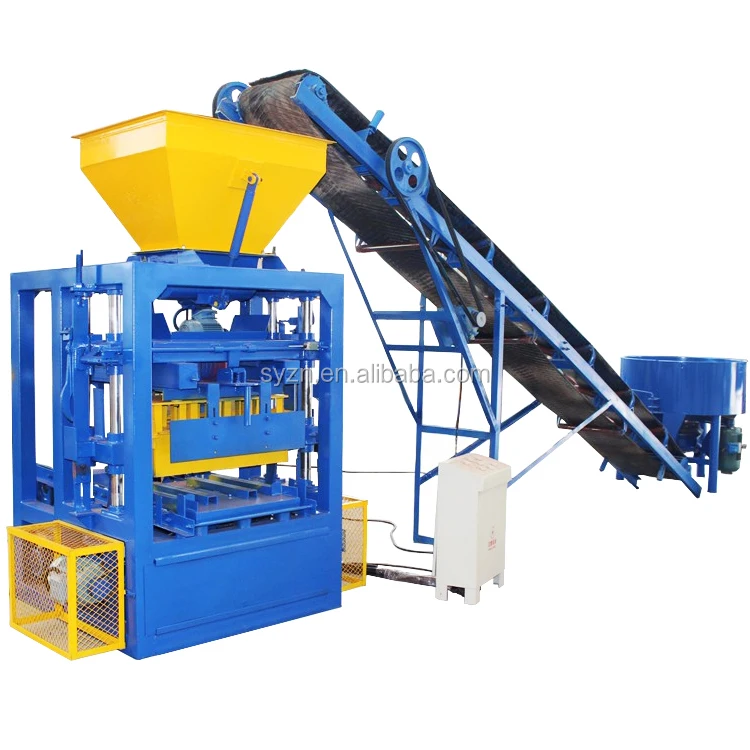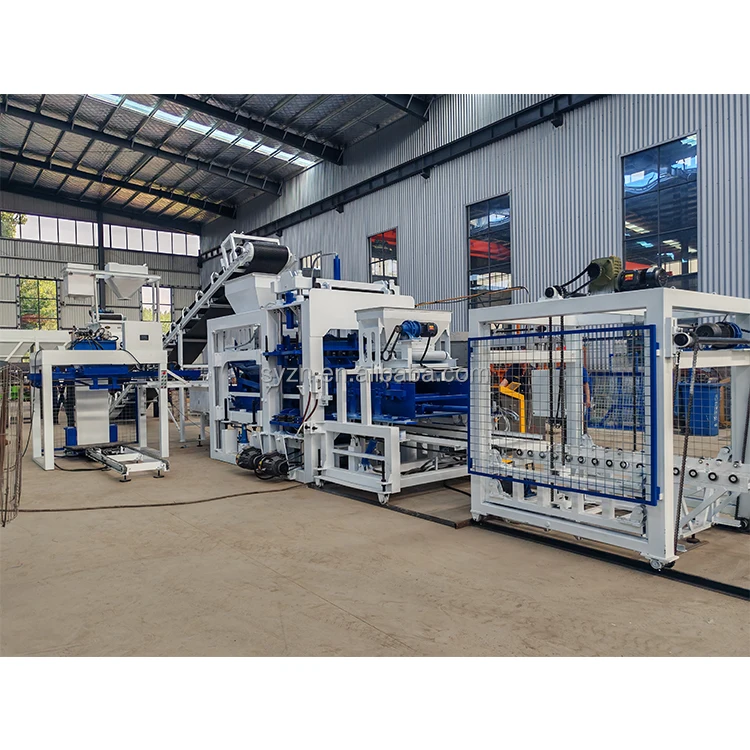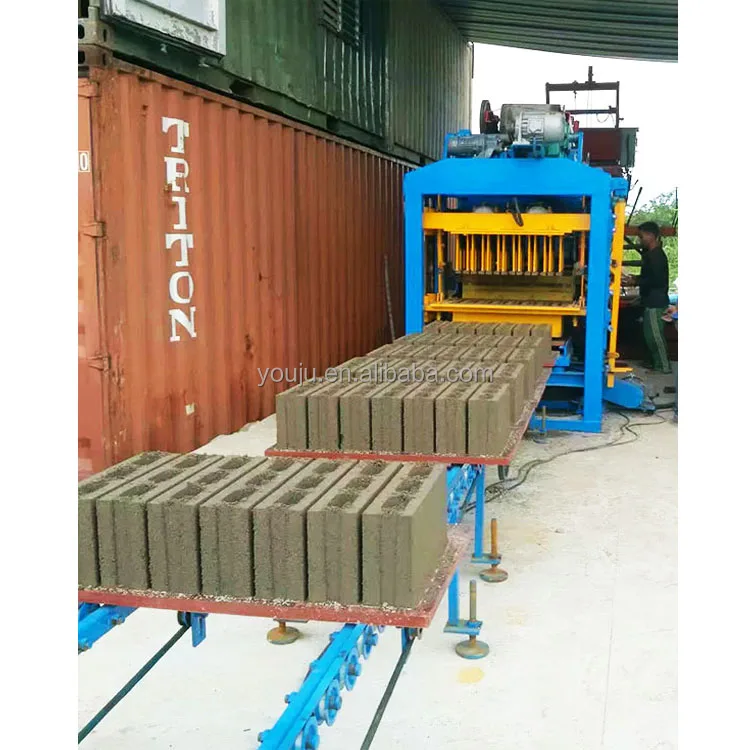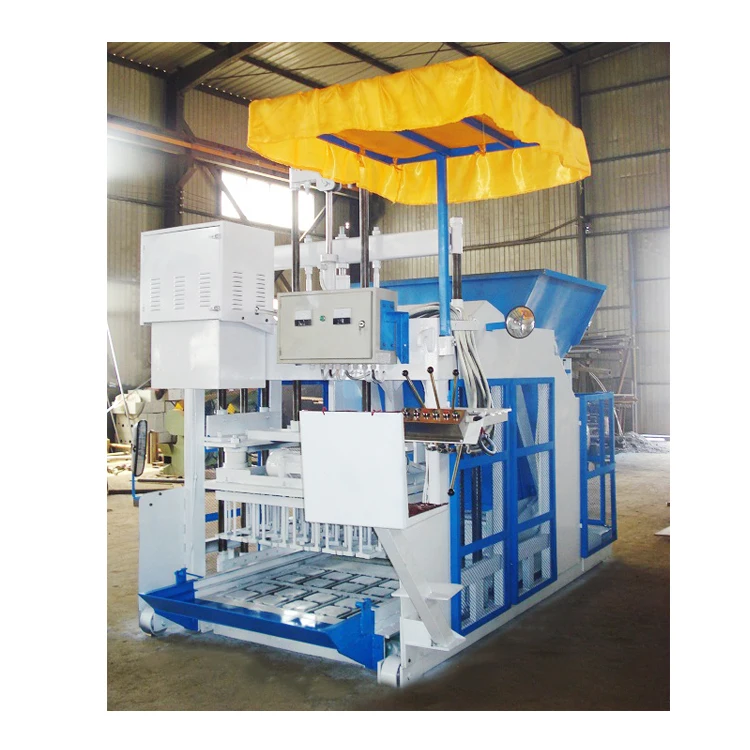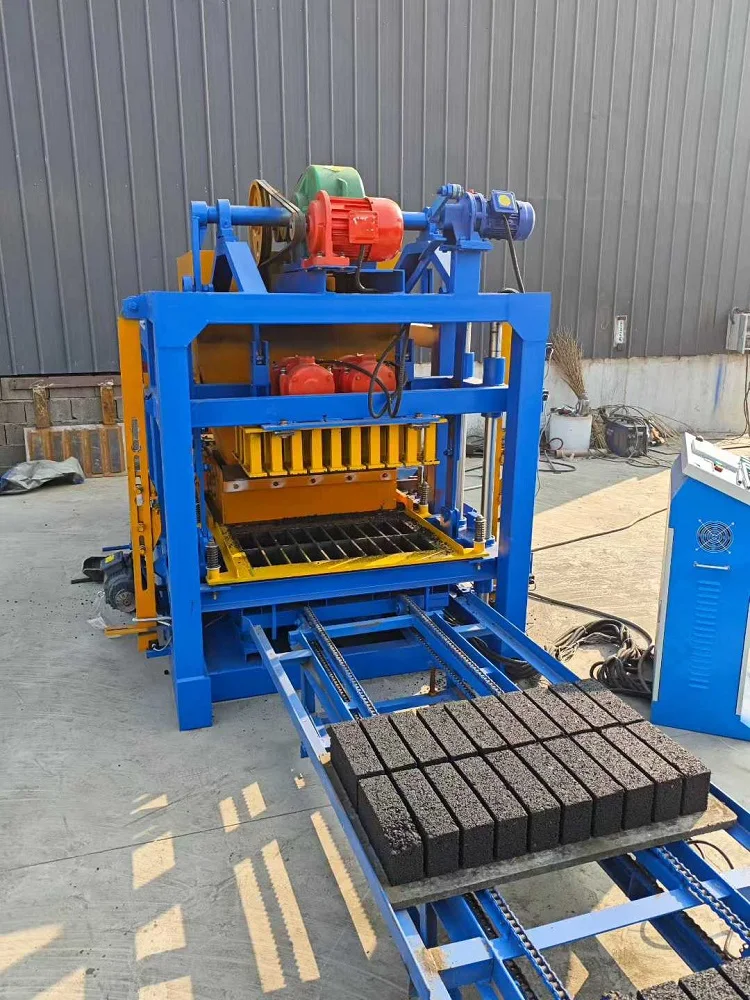


Description
Single Focus Machinery Configuration — we design the PLC control logic around your specific pallet size and stacking pattern, ensuring the Qt4-25 operates as a complete automated cell rather than an isolated press.
Technical Specifications
| Parameter | Value |
|---|---|
| Model | Qt4-25 |
| Product Type | Automatic Concrete Block Making Machine |
| Control System | PLC controlled, fully automatic |
| Automation Level | Fully automatic — pallet feeding, material feeding/scraping, block stacking |
| Molding Cycle | 25 seconds |
| Rated Power | 16.58 kW |
| Voltage & Frequency | Configurable to local supply (confirm exact V/Hz before production) |
| Overall Dimensions (L×W×H) | 6400 × 1500 × 2700 mm |
| Net Weight | 5000 kg |
| Pallet Size | 850 × 480 mm |
| Vibration System | Vibration motor with large vibration box (hydraulic pressure not included) |
| Motor Brand | Siemens motor |
| Frame Construction | Thickened steel frame |
| Block Formats Supported | Hollow blocks, solid blocks/bricks, paver stone bricks |
| Output Capacity | 4600 pcs/8 hours (basis not stated in source — confirm block format / material / thickness) |
Application Suitability
| Application | Material or Output |
|---|---|
| Medium-sized block factories | Mass production of hollow and solid blocks using local crushed stone and cement |
| On-site construction production | Solid bricks and paver stones manufactured directly at the project location |
| New block plant startups | Automated production lines for entrepreneurs requiring minimal manual labor |
| Paver stone manufacturing | Interlocking and paving formats using fine aggregates and fly ash |
What "Fully Automatic" Actually Removes from Your Operator
The automatic concrete block making machine PLC controlled system eliminates the three most labor-intensive tasks on the line: feeding pallets into the press, scraping excess material from the mould, and stacking finished blocks onto curing racks.
I have seen plants purchase what they believed was an automatic line, only to discover the quotation covered the press alone, leaving operators to manually load pallets and stack heavy blocks for an entire shift. This creates a bottleneck that negates the speed advantage of a 25-second molding cycle [NEED_CITE: common misconceptions in block machinery procurement]. The Qt4-25 includes automatic pallet feeding, material scraping, and block stacking as standard configuration, meaning the operator’s role shifts from heavy lifting to monitoring the PLC interface and managing raw material flow.
PLC Logic That Matches Your Production Rhythm
This automatic concrete block making machine PLC controlled interface coordinates pallet movement, material distribution, vibration timing, and stacking sequence in a single program. The system ensures each pallet receives consistent material volume before the vibration cycle begins, which is critical for maintaining block density across the entire batch. When the press completes a cycle, the stacker automatically removes the loaded pallet and places it onto the curing rack or transport system without operator intervention.
Automation Upgrades and Future Expansion
The control architecture supports adding remote diagnostics and cubing systems as production volume grows. Starting with this PLC-controlled tier establishes the foundation for fully unmanned operation later, allowing plant owners to stage their investment while maintaining consistent output quality from day one [NEED_CITE: automation upgrade paths in block production].
Vibration Force, Cycle Time, and Real Output
The 25-second molding cycle assumes optimal material flow and vibration parameters matched to your specific block format. The large vibration box delivers consistent compaction force across the 850 × 480 mm pallet area, but actual daily output depends on mould change frequency, material moisture content, and pallet handling speed between press and curing area. The Siemens motor provides reliable power delivery under continuous operation, while the thickened steel frame absorbs vibration energy without structural fatigue over years of production.
The Hidden Cost of Underspecified Automation
Purchasing a semi-automatic press to save initial investment often results in higher long-term labor costs and inconsistent block quality. Manual pallet feeding introduces timing variations that force the press to idle between cycles, while hand-stacking creates physical fatigue that slows production in the afternoon shift. These inefficiencies compound over months, making the effective cost per block higher than a fully automated system [NEED_CITE: labor cost impact on block production economics].
Why Configuration Matters More Than Catalog Specifications
Our machinery focus means we specify the Qt4-25 as a complete system — press, pallet handling, stacking, and PLC logic configured together rather than sourced separately. We confirm voltage, frequency, and control language in writing before production begins, preventing commissioning delays when the machine arrives at your facility. The mould selection matches your local market demand, and the automation level is documented item-by-item so you know exactly which functions are automatic and which require operator attention.
Documentation & Verification
- Factory test record demonstrating the 25-second cycle time with your specific block format
- PLC program backup and parameter sheet showing vibration timing and material feed settings
- Electrical schematic with voltage and frequency confirmed for your local power supply
- Pallet specification matching the 850 × 480 mm size to your existing curing rack system
- Operation manual in your preferred language covering start-up, mould change, and troubleshooting procedures
Installation, Commissioning & Support
- 6400 × 1500 mm footprint requires level concrete foundation with anchor bolt provisions
- 16.58 kW rated power demands dedicated circuit with proper breaker sizing for startup surge
- Assembled shipping state requires overhead crane access for unloading and positioning
- On-site commissioning includes PLC parameter verification against your local voltage supply
- Operator training covers mould change procedures, stacking pattern adjustment, and daily maintenance checkpoints
- Wear parts list identifies vibration motor bearings and scraping blades for planned replacement inventory
What We Need to Configure Your Machine
Provide your target block format dimensions, required daily output, and local raw material characteristics including aggregate type and cement ratio. Confirm your facility voltage and frequency, preferred PLC display language, and whether your existing curing system requires specific pallet dimensions. If you have downstream equipment like cubing machines or conveyor systems, share interface requirements so we can match the stacking output to your material flow.
Frequently Asked Questions
Q: How is the 4,600 pieces per 8-hour capacity calculated, and what block format does it assume?
A: This figure requires confirmation of the specific block format, material mix, and pallet pattern used during testing. A 25-second cycle does not directly translate to this number without knowing mould cavity count and block thickness. We provide capacity calculations stated per your actual product format before order confirmation, not a single headline figure.
Q: What automation functions are included, and what does the operator still do manually?
A: The Qt4-25 includes automatic pallet feeding into the press, automatic material distribution and scraping, and automatic block stacking onto curing racks. The operator monitors the PLC interface, manages raw material supply to the hopper, performs mould changes when switching formats, and conducts quality checks on finished blocks.
Q: Can the PLC language and voltage be set to my local standard before shipment?
A: Yes, we confirm voltage, frequency, and PLC display language in writing during the order process and configure these parameters before the machine leaves our facility. This prevents commissioning delays and ensures operators can read fault messages and adjust parameters in their working language from the first day of production.
Q: What is the upgrade path from this PLC-controlled tier to full automatic stacking and cubing?
A: The control system supports adding automatic cubing and remote diagnostics as separate modules after initial installation. The PLC architecture allows these functions to integrate without replacing the base controller, though some mechanical additions to the stacking area will be required. We document the upgrade path during initial configuration so you can plan future expansion.
Q: How does the 25-second cycle time translate to real daily output with mould changes and pallet handling factored in?
A: Actual output depends on mould change frequency, pallet circulation speed between press and curing area, and material consistency. A single format running continuously approaches the theoretical cycle rate, while plants producing multiple formats daily must account for changeover time and the learning curve associated with each block type.