

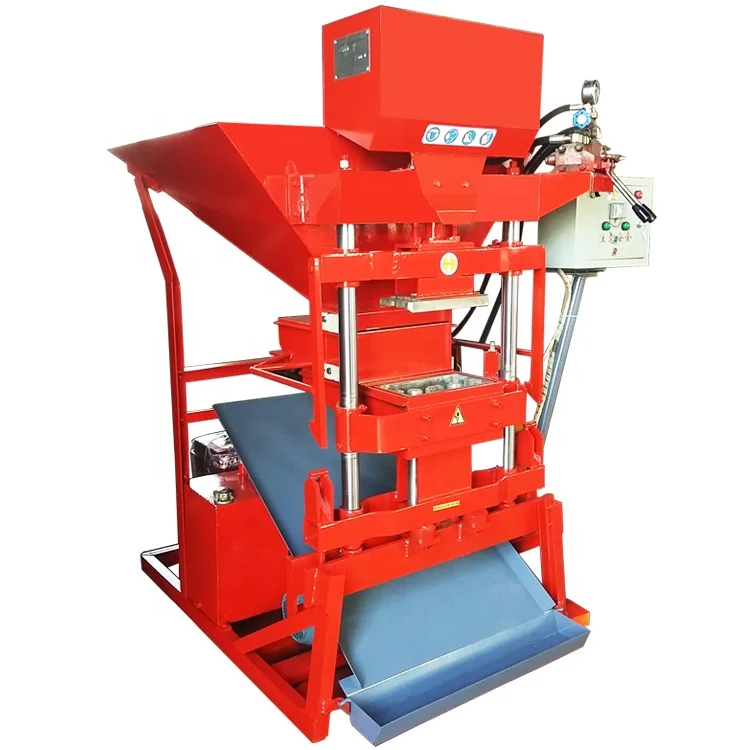


Description
Matched Control to Mix — hydraulic pressure and PLC interface confirmed against your local clay and site language before dispatch, eliminating on-site adjustment delays.
Technical Specifications
| Parameter | Value |
|---|---|
| Model | ECO 2700 |
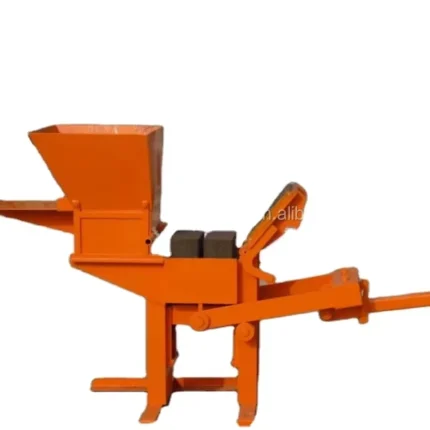
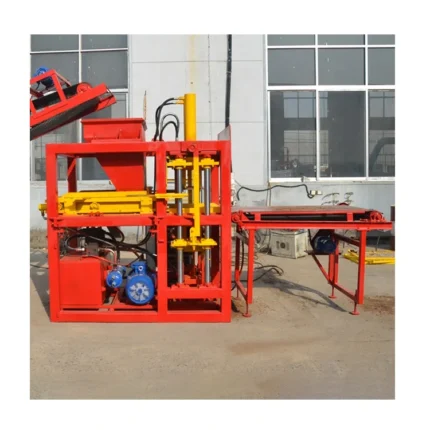
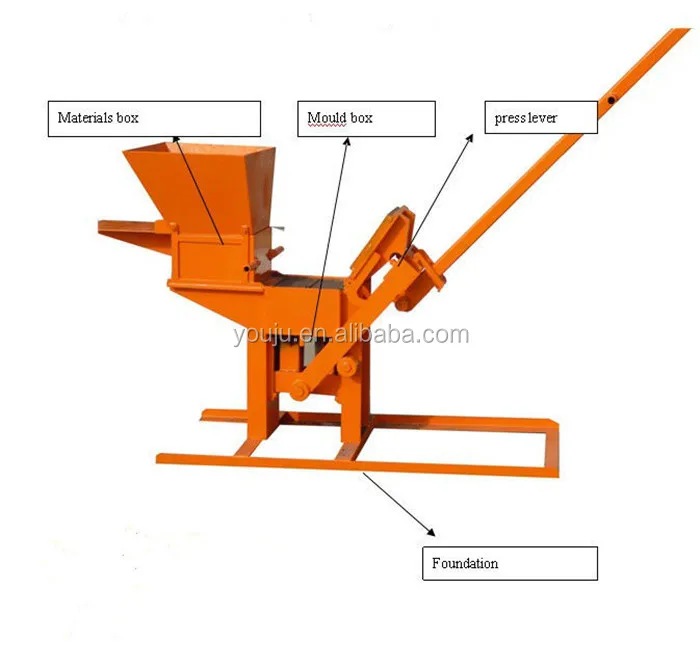
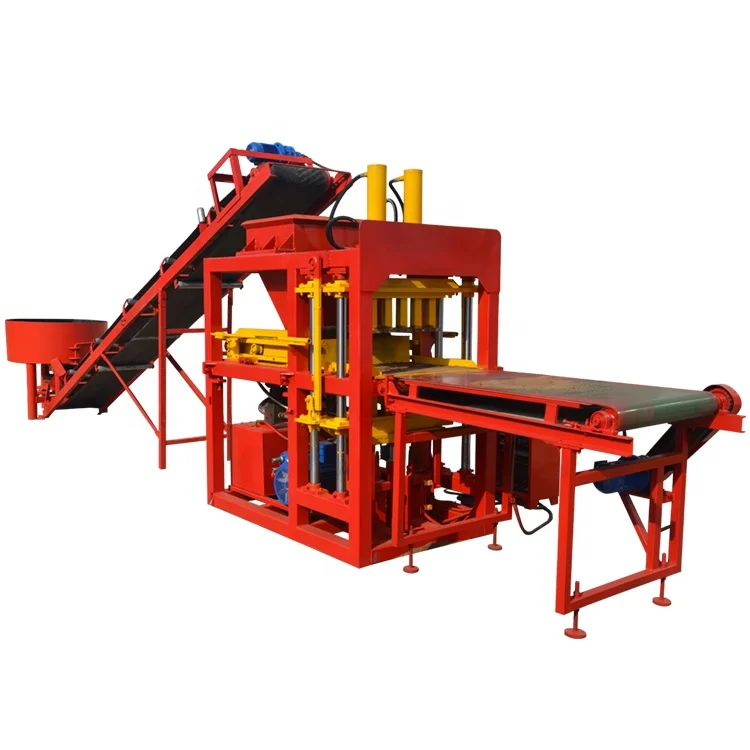
| Product Type | Hydraulic Clay Interlocking Brick Machine |
| Rated Power | 7.5 kW electric motor or 12 hp diesel engine |
| Hydraulic Pressure | 16 MPa |
| Moulding Cycle | 10 s (basis not stated in source — confirm block format and material) |
| Output Capacity | 2800 pcs / 8 hours (based on 300×150×100 mm or 250×125×75 mm interlocking brick, 1 pc per mould) |
| Pcs per Mould | 1 |
| Overall Dimensions (L×W×H) | 1600 × 1300 × 2330 mm |
| Net Weight | 900 kg |
| Raw Materials | Clay, soil, earth, mud, concrete, sand, cement, fly ash |
| Water Consumption | 4 T / day |
| Required Workers | 1–3 (verify with specific automation setup) |
| Workshop Area | 150 m² |
| Assembly State | Skid-mounted single unit |
| Control System | Automatic operation with hydraulic pressing (PLC or relay logic options) |
| Certification | CE declaration (certificate detail to be verified) |
| Warranty | 1 year on whole machine |
Application Suitability
| Application | Material or Output |
|---|---|
| Rural housing projects | Stabilised clay and soil interlocking bricks |
| Contractor on-site production | Mud, earth and cement mixes for immediate wall construction |
| Small-plant interlocking brick supply | Sand and cement dry-press interlocking bricks |
| Community building initiatives | Fly ash blended with local soil for load-bearing interlocking units |
| Remote development sites | Diesel-powered clay brick pressing without grid dependence |
What the PLC Language Question Costs When It Is Asked Too Late
Confirming the control display language and parameter labels before production prevents a machine from sitting idle on arrival.
I spent three days on a site in Cambodia watching a fully functional hydraulic press sit silent because every screen prompt was in English and the operators read only Khmer. No one could adjust the hydraulic pressure set-points or reset a fault code. The automatic ECO 2700 clay interlocking brick machine PLC controlled interface should match the people who touch it every shift, not the language of the export contract. When the HMI language is treated as an afterthought, commissioning stretches from hours into days, and the consistency the control system was meant to deliver is lost before the first batch cures [NEED_CITE: HMI language standards for exported industrial machinery].
How the Control Loop Removes the Operator from the Press Cycle
On a manual clay brick press, every cycle depends on one person timing the feed, the press stroke and the mould lift. The automatic ECO 2700 clay interlocking brick machine PLC controlled sequence takes over that timing. The PLC reads the hydraulic pressure sensor, holds the press stroke until the target 16 MPa is reached, and only then triggers mould retraction. This means brick density no longer varies with how quickly an operator pulls the lever. Batch-to-batch consistency becomes a function of the program, not of the shift.
Where Automation Stops and Manual Work Still Begins
The ECO 2700 automates the pressing cycle, but pallet handling and stacking remain manual tasks at this tier. Operators feed the raw mix, the machine presses and lifts the mould, and workers carry the finished interlocking brick to the curing area. Understanding this boundary matters because a buyer expecting full-line automation from a single skid-mounted unit will find a bottleneck at the stacking end. Planning the labour around the press cycle keeps the workflow balanced without over-promising what one machine station can cover [NEED_CITE: typical labour allocation for semi-automatic brick production lines].
Reading the Specs That Actually Shape Your Daily Output
The 16 MPa hydraulic pressure rating is the number that determines whether your interlocking brick reaches the density needed for load-bearing walls. Pressure alone does not guarantee strength — it must match the clay or soil mix you actually source. The 10-second moulding cycle sounds fast, but that figure assumes a specific brick format and material consistency; a wetter clay mix or a thicker interlocking brick will lengthen each cycle. The dual power option — 7.5 kW electric motor or 12 hp diesel engine — lets the machine run on sites where grid voltage is unreliable or absent entirely. Choosing between electric and diesel at the ordering stage avoids a costly generator rental later. Workshop area of 150 m² includes space for raw material storage, the press itself and a short curing buffer; sites tighter than this will constrain pallet movement around the skid-mounted unit.
The Cost of Skipping the Voltage and Language Check
A machine wired for 380 V / 50 Hz arriving at a 440 V / 60 Hz site will run the hydraulic pump at the wrong speed, altering press cycle timing and potentially damaging the motor within weeks. Similarly, a PLC display in the wrong language does not just slow training — it makes fault diagnosis impossible during a breakdown, turning a minor sensor error into a multi-day stoppage while a translator is found. These are not warranty issues; they are ordering-stage oversights that shift the cost entirely onto the buyer [NEED_CITE: voltage and frequency compatibility for industrial equipment exports].
Why Buyers Source This Machine Through a Control-Focused Supplier
Block machinery is the single focus here, so the ECO 2700 hydraulic press, mould and control system are specified together rather than assembled from unrelated vendors. The configuration is set against your actual clay mix and local aggregate, not pulled from a catalogue default. PLC display language and parameter labels are confirmed in writing before production begins, so the screen reads correctly on day one. Voltage and frequency are matched to your site supply, with documentation issued before the machine is wired. Factory testing runs on your selected mould and brick format, producing a test record with actual cycle times and dimension tolerances — not a generic pass stamp.
Documentation & Verification
- Machine specification sheet stating output per your exact interlocking brick format and clay mix
- Voltage, frequency and PLC display language confirmation issued before production
- Hydraulic and electrical schematic showing control architecture for future serviceability
- Factory test record with actual cycle time and dimension tolerance on your selected mould
- Operation and maintenance manual translated to match your operator language
Installation, Commissioning & Support
- Skid-mounted 900 kg unit placed on level concrete pad within 150 m² workshop area
- Power connection matched to confirmed voltage and frequency before wiring begins
- PLC display language and hydraulic pressure set-points verified on first power-up
- Operator training covers the automatic press cycle, mould change and fault code reading
- Wear parts list identifies hydraulic seals and sensors by part number for local sourcing
- 7.5 kW motor circuit requires dedicated breaker sized to confirmed starting current
What We Need to Configure Your Machine
To set up the ECO 2700 for your site, share your target interlocking brick dimensions, the clay or soil type you plan to use, and your local voltage and frequency. Let us know the preferred PLC display language for your operators and whether electric or diesel power suits your site conditions. If you have an existing curing area or pallet size, include those details so the press cycle and manual handling workflow align from the first production run.
Frequently Asked Questions
Q: How is the ECO 2700 cycle time verified for my specific interlocking brick format?
A: The factory test runs your exact mould with your chosen clay or soil mix before dispatch. We record actual cycle time and brick dimension tolerance, and include that test record in your documentation so the capacity figure you plan around reflects your real format, not a catalogue assumption.
Q: What PLC and HMI language options can I confirm before shipment?
A: The PLC display language is confirmed in writing during the ordering stage. We provide a screen sample showing parameter labels and fault codes in your chosen language so you can verify readability before the control panel is wired and the machine ships.
Q: How does the machine handle different site voltage and frequency conditions?
A: Voltage and frequency are confirmed against your site supply before production. The motor and control components are sourced to match that specification, and the confirmation document is issued with your machine so the electrical installation on arrival is straightforward.
Q: What is the upgrade path if I later want automatic pallet handling?
A: The ECO 2700 is a standalone skid-mounted press, so adding automatic pallet feeding and stacking later requires matching the conveyor and stacker cycle times to your existing press cycle. We discuss this layout at the initial inquiry stage so the control system is prepared for future integration.
Q: Which hydraulic and control parts should I stock from the first day?
A: The wear parts list included in your manual identifies hydraulic seals, pressure sensors and PLC fuses by part number. We recommend stocking these items locally or ordering them with the machine so replacements are available before the first scheduled maintenance interval.