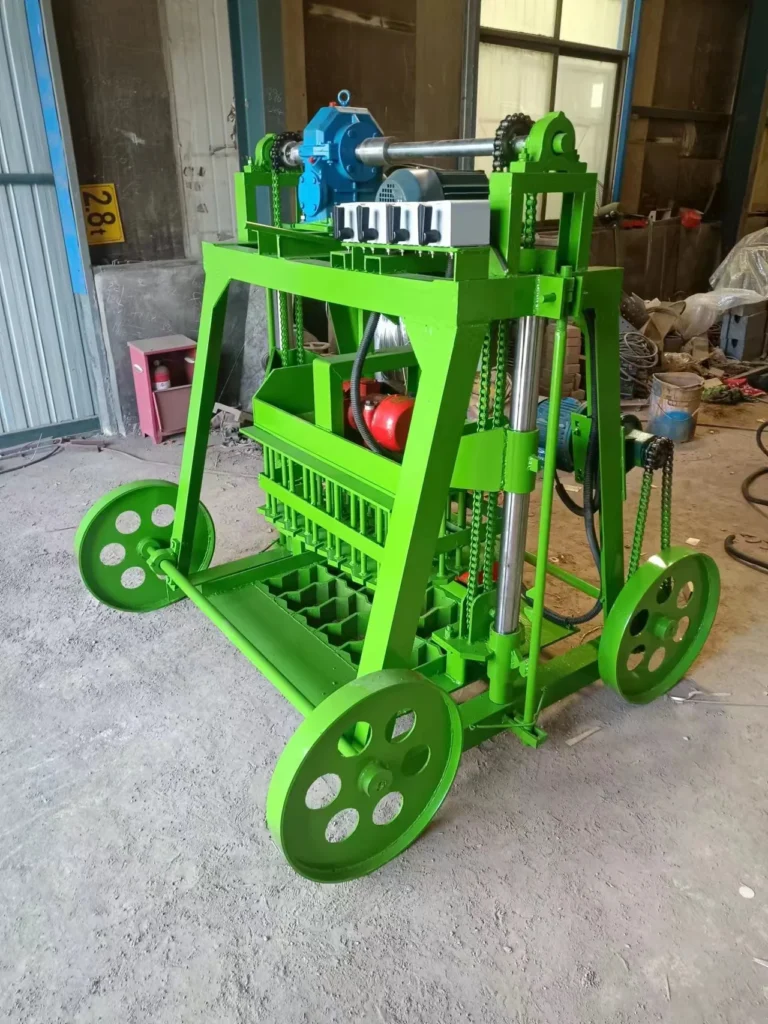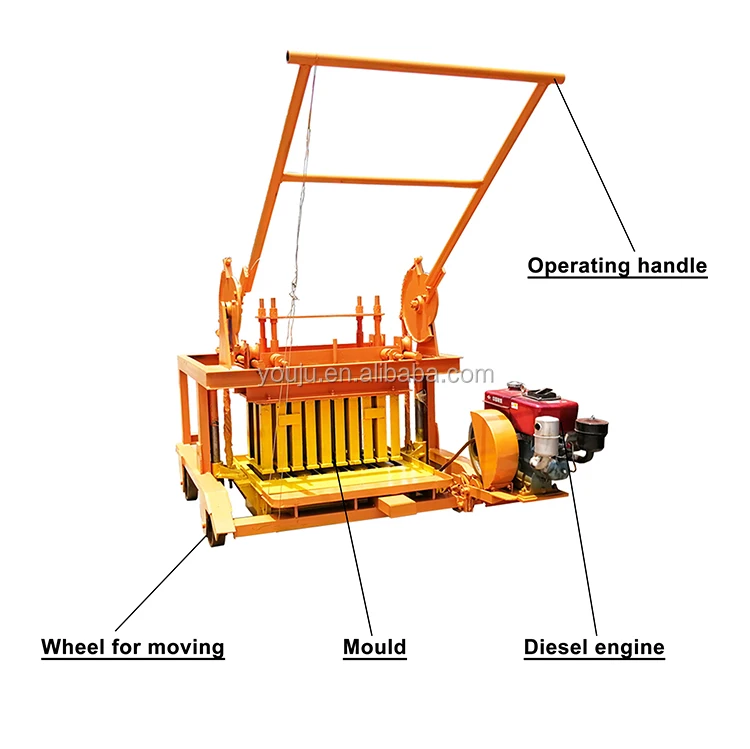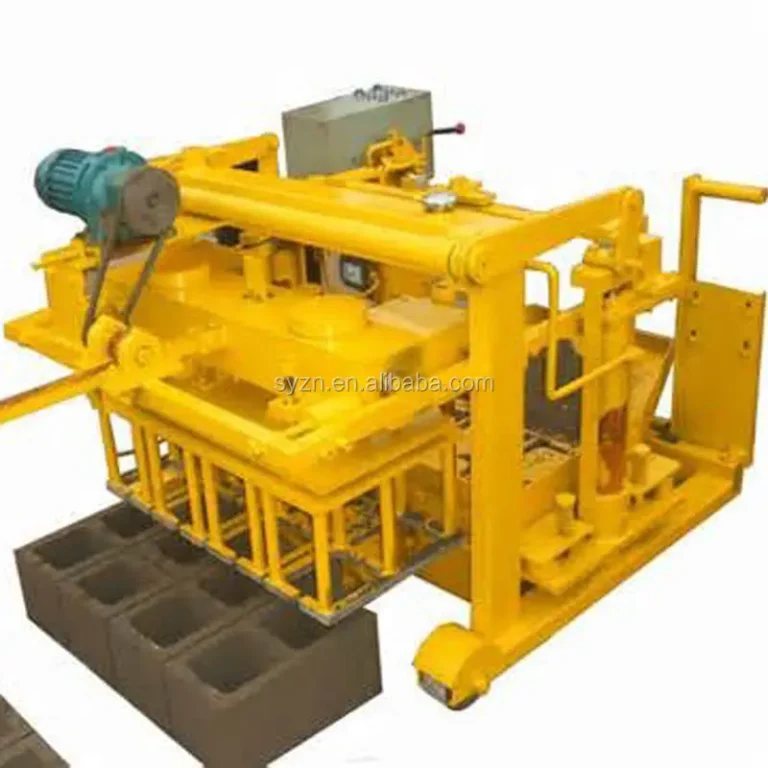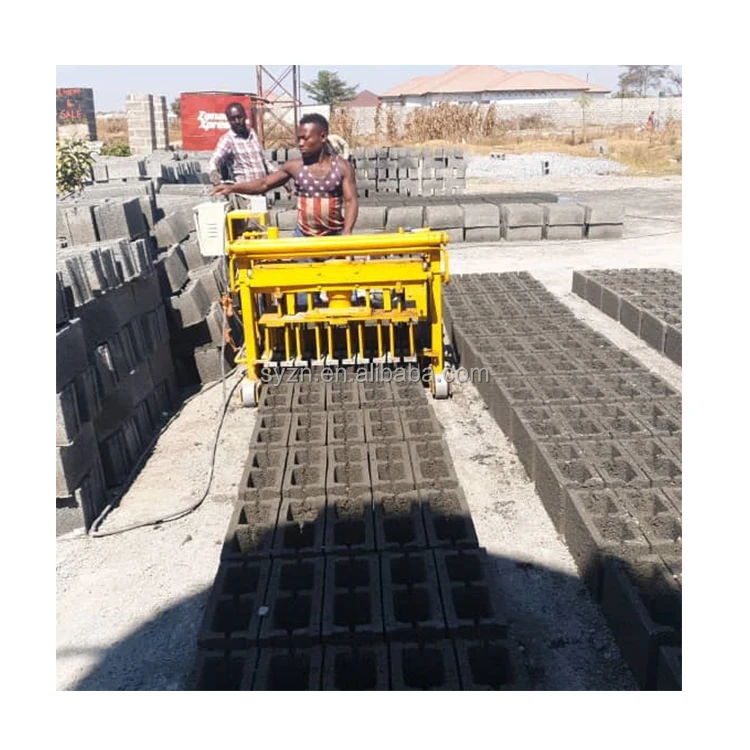
Description
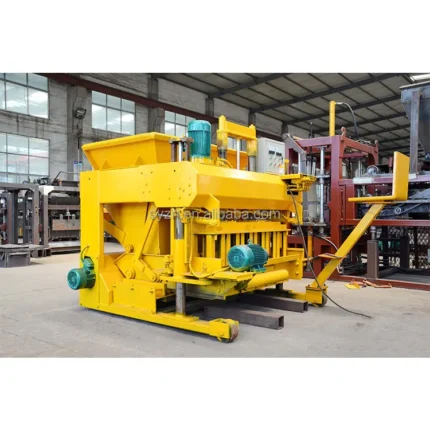
Single-Focus Machinery Engineering — the QMY4-30 mobile block machine is specified as a complete egg-laying system where hydraulic demolding, mould vibration and control logic are matched to the buyer’s local voltage and block format, not assembled from disconnected component suppliers.
Technical Specifications
| Parameter | Value |
|---|---|
| Model | QMY4-30 |
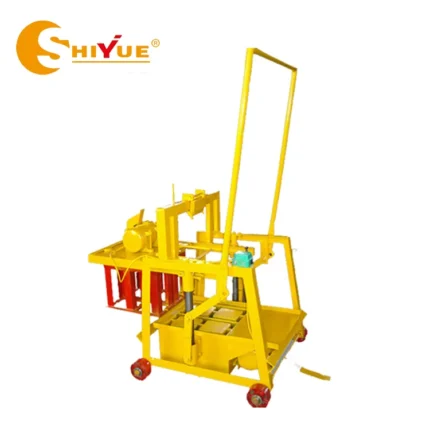
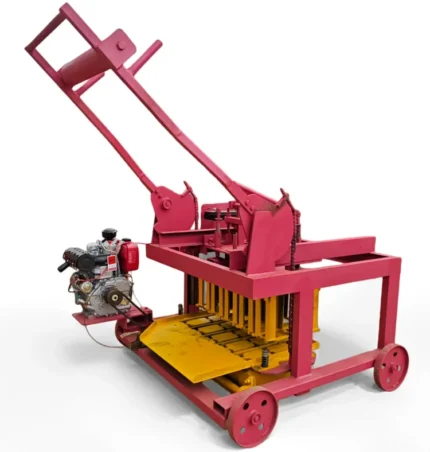
| Product Type | Mobile Hydraulic Block Making Machine |
| Hydraulic Method | Mould vibration |
| Demold Method | Hydraulic |
| Molding Cycle | 30 seconds |
| Total Power | 5.95 kW |
| Pallet Requirement | Palletless (egg-laying / mobile type) |
| Output Capacity | 480 pcs/h (basis: 400×200×200mm hollow block) |
| Output Capacity | 600 pcs/h (basis: 400×150×200mm hollow block) |
| Output Capacity | 840 pcs/h (basis: 400×100×200mm hollow block) |
| Daily Output (8hr) | 3,840 pcs (basis: 400×200×200mm hollow block) |
| Daily Output (8hr) | 4,800 pcs (basis: 400×150×200mm hollow block) |
| Daily Output (8hr) | 6,720 pcs (basis: 400×100×200mm hollow block) |
| Moulds per Cycle | 4 pcs (400×200×200mm) / 5 pcs (400×150×200mm) / 7 pcs (400×100×200mm) |
| Voltage & Frequency | Configurable — confirm before order (basis to be confirmed) |
| Control System | PLC or relay logic — confirm before order (basis to be confirmed) |
| Standards | ISO 9001:2000, CE |
Application Suitability
| Application | Material or Output |
|---|---|
| On-site hollow block production without a fixed plant | Crushed stone, sand, cement and water mix laid directly on prepared ground |
| Remote or difficult-terrain construction projects | Mountainous, hilly, desert and coastal site conditions |
| Contractors producing blocks directly at the build location | 400×200×200mm, 400×150×200mm and 400×100×200mm hollow block formats |
| First block operation with minimal infrastructure | Palletless egg-laying production requiring no curing rack system |
| Semi-manual operations upgrading to hydraulic demolding | Improved batch-to-batch density consistency through mould vibration |
Why Voltage Confirmation Must Happen Before the Quotation
An automatic mobile block machine that cannot start on arrival is not a machine — it is a crate of steel sitting on a job site.
I once spent three weeks on the phone with a customer whose QMY4-30 arrived with a 380V motor wired for a 415V supply. The local electrician refused to energize it. Every day the machine sat idle, the contractor’s crew was still on payroll and the project schedule slipped. That PLC controlled mobile block making machine could have been running on day one if a single form had been completed before production started. The electrical mismatch is one of the most common commissioning delays reported across export markets [NEED_CITE: common causes of commissioning delays in exported construction machinery], and it is entirely preventable with a pre-order confirmation step.
What Automation Actually Removes from the Operator
The QMY4-30 replaces the manual pallet cycle that defines basic egg-laying machines. On a fully manual unit, an operator bends to place a pallet, waits for vibration, then pulls the pallet and wet block off the machine by hand — repeating that sequence hundreds of times per shift. With hydraulic demolding, the mould lifts under controlled pressure while vibration holds the block together, releasing it directly onto the ground. The automatic mobile block machine therefore shifts the operator’s role from repetitive lifting to mix consistency monitoring and format changeover supervision.
Where Consistency Comes from in a Mobile Format
Mould vibration transmits excitation directly into the cavity rather than through a vibrating table and pallet stack. This means compaction energy reaches the mix regardless of ground surface flatness — an important variable when a PLC controlled mobile block making machine is working across an unprepared site. Hydraulic pressure then holds the mould box stable during the release stroke, preventing the block edges from crumbling. Together, these two mechanisms produce a density that remains repeatable across the shift, which is what buyers actually mean when they ask about "consistent quality" [NEED_CITE: vibration and hydraulic pressure interaction in concrete block compaction].
Reading the Cycle Time and Output Figures Correctly
The 30-second molding cycle applies across all three standard hollow block formats, but the blocks produced per cycle differ. At 400×200×200mm the mould yields 4 pieces, while at 400×100×200mm it yields 7. That difference drives the daily output spread from 3,840 to 6,720 pieces over an 8-hour shift. Buyers who compare machines on cycle time alone miss this multiplier effect — a machine with a 25-second cycle but only 3 cavities per mould may produce fewer blocks per hour than the QMY4-30 running the narrower format. The 5.95 kW total power is modest for a hydraulic mobile unit, which matters on sites running from a diesel generator where every kilowatt of draw counts against fuel cost and alternator capacity.
The Cost of Skipping the Control and Language Check
A PLC controlled mobile block making machine shipped with a Chinese-language HMI and a 50 Hz motor to a 60 Hz market will run — but the operator cannot read fault codes, and the motor will overheat within weeks. The hydraulic valve timing calibrated at the factory will drift as the motor speed shifts, shortening the effective cycle and reducing compaction pressure. Buyers discover this not during acceptance testing but two months into production when block breakage rates climb and no one on site can interpret the alarm log [NEED_CITE: motor frequency mismatch effects on hydraulic timing in industrial machinery]. The repair is not a software update — it often requires a motor swap and a full valve recalibration.
Why Buyers Choose This Configuration
Block machinery is the single product focus, so the QMY4-30 is not a catalogue item repurposed from a stationary line. The machine, mould, and hydraulic circuit are specified together against the buyer’s target block format and local aggregate. Mould design supports the hollow block dimensions the buyer’s market actually sells, with custom drawings accepted for non-standard formats. Automation level is selectable — a buyer can start with relay logic and move to PLC control later without replacing the hydraulic platform. Every unit ships with a voltage, frequency and control-language confirmation recorded before production begins, and the factory test runs the exact block format the buyer will produce on site.
Documentation & Verification
- Capacity calculation sheet stating the block format and cavity count assumed
- Machine specification with confirmed voltage, frequency and control language
- Mould drawing and format list for each included cavity configuration
- Hydraulic and electrical schematic matching the shipped control system
- Factory test record run on the buyer’s target hollow block format
- Operation and maintenance manual in the confirmed display language
Installation, Commissioning & Support
- Ground preparation guidance for the 5.95 kW mobile unit on unlevelled sites
- Voltage and frequency verification against the confirmed order specification before energizing
- Hydraulic demolding stroke and vibration timing calibrated to the buyer’s block format on site
- Operator training covering mould change procedure across the three standard cavity layouts
- Wear parts list with reorder part numbers for hydraulic seals and vibration mounts
- First-shift production support to confirm cycle time holds at 30 seconds under actual mix conditions
Before You Request a Quote
To size this automatic mobile block machine correctly, we need to know the hollow block format your market sells, the daily volume you plan to sustain, and the local power supply voltage and frequency at your site. Tell us which control language your operators read and whether your current site runs on grid power or a generator. If you already have a mix design or local aggregate source, share the gradation so we can match vibration force to your material.
Frequently Asked Questions
Q: How is output capacity verified per block format, and what cycle time does each format assume?
A: The QMY4-30 runs a 30-second molding cycle across all formats, but cavity count changes the per-cycle yield. At 400×200×200mm you get 4 pieces per cycle, at 400×150×200mm you get 5, and at 400×100×200mm you get 7. Daily output is calculated from these cavity counts over an 8-hour shift. We provide a written capacity calculation with every quotation so the figure matches the format you will actually produce.
Q: What voltage, frequency and control-language options are confirmed before shipment?
A: Voltage and frequency are confirmed against your site supply before production begins — we do not ship a standard configuration and hope it fits. The control panel language is set to match your operators’ working language. This confirmation is documented in writing and referenced on the factory test record, so there is no ambiguity when the machine arrives and the electrician connects power for the first time.
Q: How does the automation level compare to fully manual egg-laying machines, and what is the upgrade path?
A: The QMY4-30 adds hydraulic demolding to the egg-laying cycle, which removes the manual pallet pull and block release that defines fully manual operation. The buyer can start with relay logic and later move to PLC control without replacing the hydraulic system. This lets a first-time operator learn the machine mechanically before taking on programmable logic, and it keeps the upgrade cost confined to the control cabinet rather than the entire press.
Q: What mould formats are included, and can custom moulds be designed to buyer drawings?
A: The standard offering covers three hollow block dimensions commonly traded across export markets. If your local construction code requires a wall thickness or block length outside these three sizes, we accept custom mould drawings and engineer the cavity plate and core pins to match. The mould drawing is submitted for approval before machining, and the finished mould is test-run on the machine before shipment.
Q: How are hydraulic wear parts and mould replacements supplied after the first service interval?
A: Every QMY4-30 ships with a wear parts list that includes part numbers for hydraulic seals, vibration springs and mould liner plates. These parts are stocked and can be dispatched by express courier so a replacement reaches the site within days rather than waiting for a consolidated sea shipment. The operation manual includes the service interval schedule and the step-by-step procedure for each replacement task.