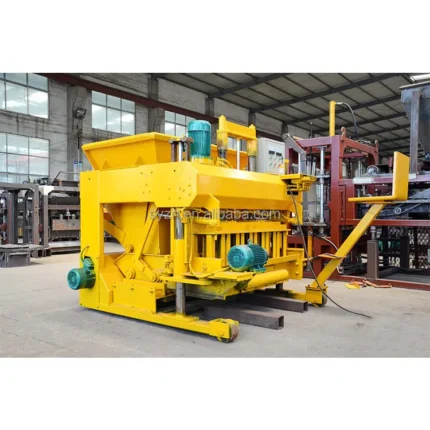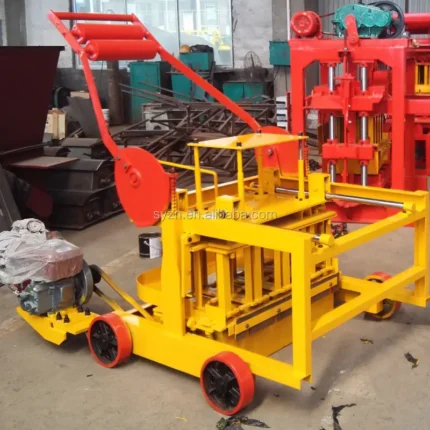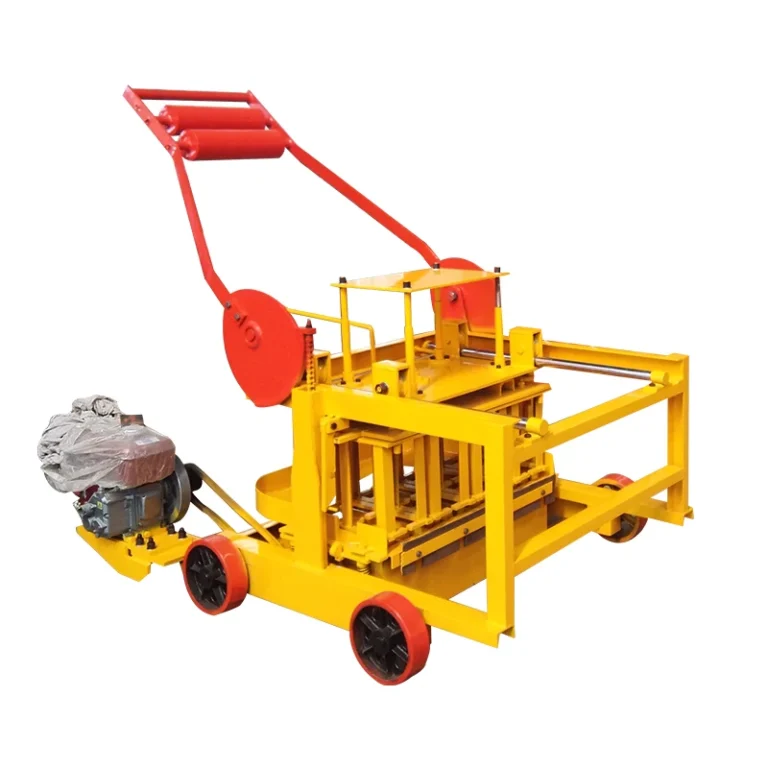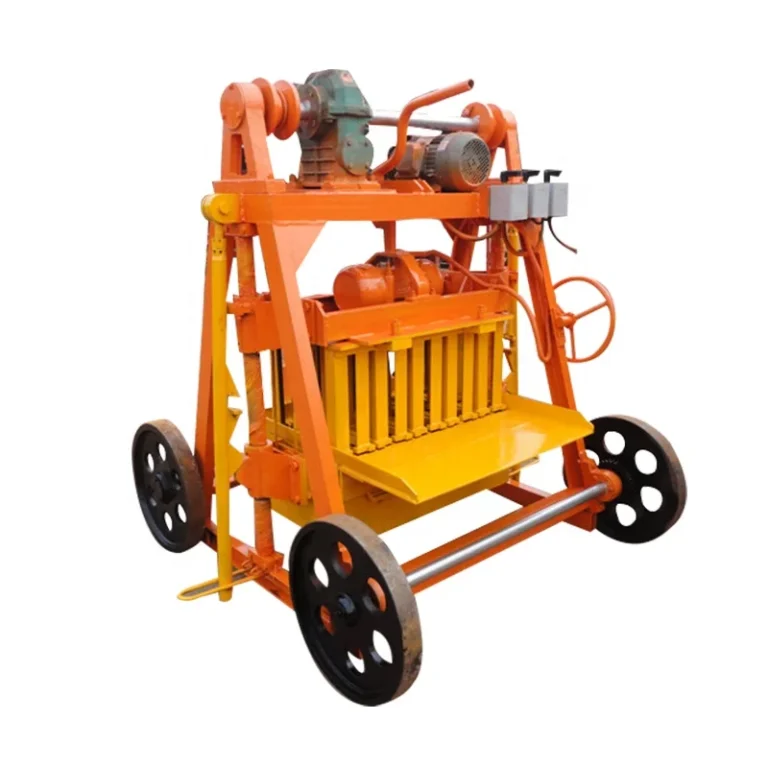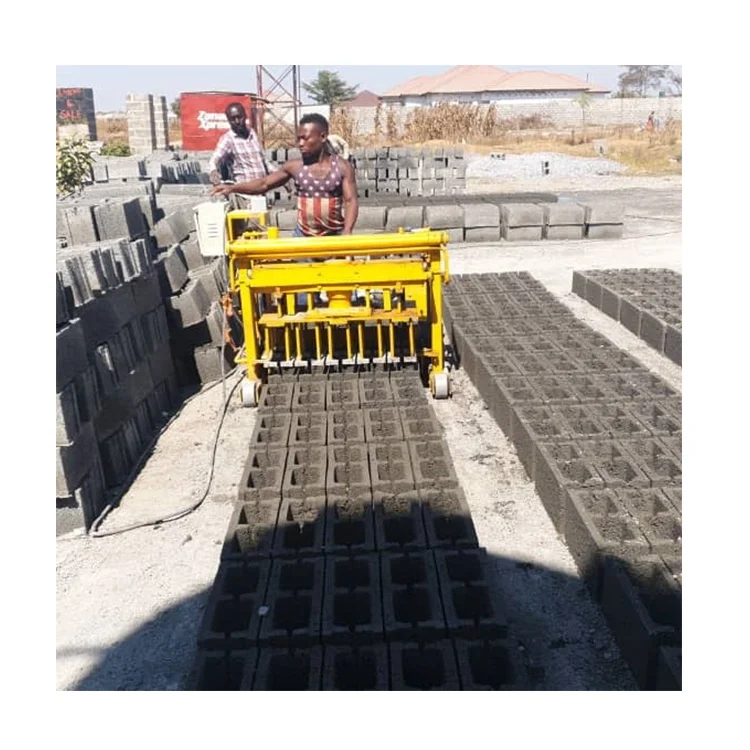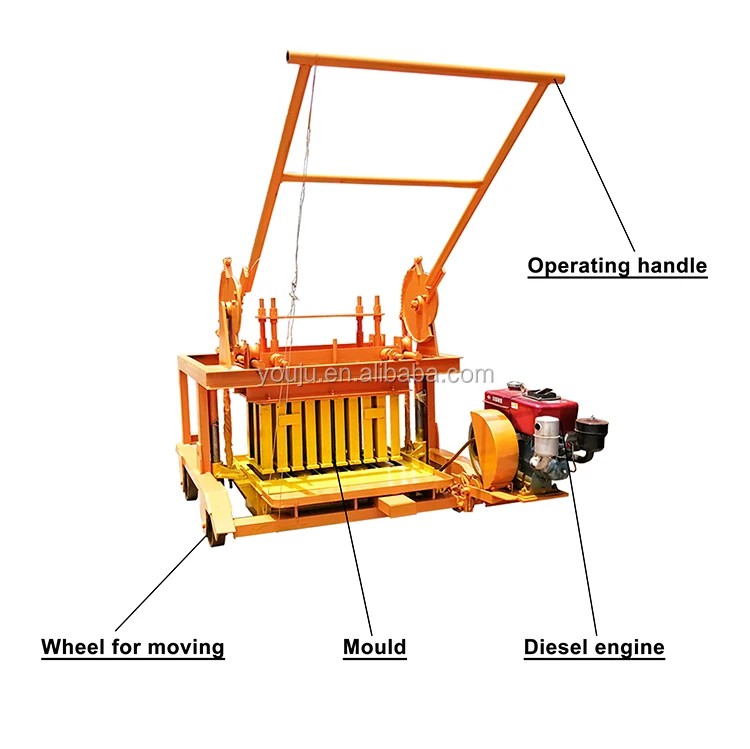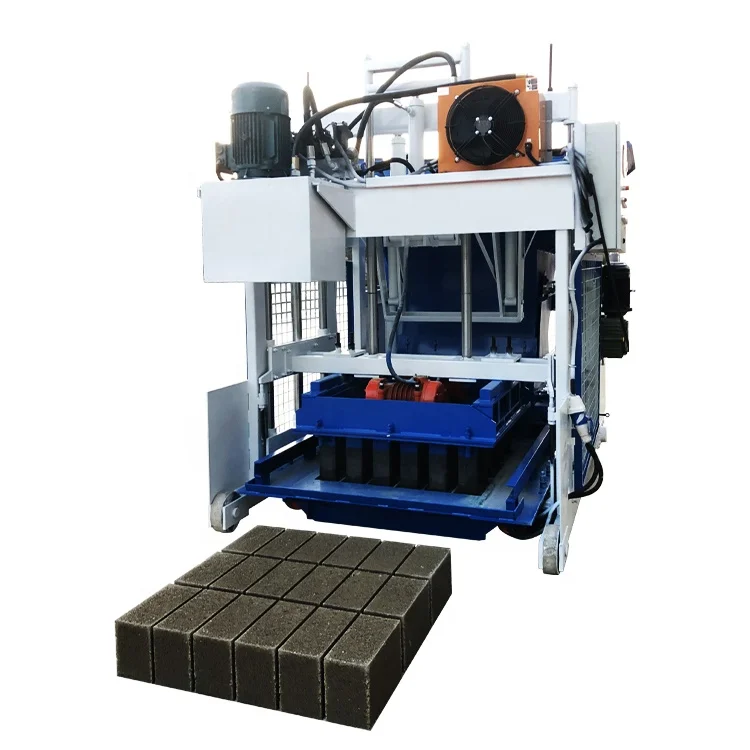
Description
Intelligent Control Integration — PLC automation matched to the operator’s language and local voltage eliminates the guesswork between unpacking and first production run.
Technical Specifications
| Parameter | Value |
|---|---|
| Model | QMY18-15 |
| Product Type | Automatic Mobile Egg Laying Block Making Machine |
| Rated Power | 24 kW |
| Voltage & Frequency | Configurable to buyer’s local industrial supply (basis to be confirmed) |
| Control System | PLC |
| Working Method | Hydraulic pressure station |
| Output Capacity | Approx. 34,000 pcs per shift based on 400×200×200 mm hollow block format |
| Pallet Requirement | None — egg-laying type, blocks produced directly on ground |
| Mould Format | Customizable to buyer’s required block types (basis to be confirmed) |
| Automation Level | Automatic with PLC control |
Application Suitability
| Application | Material or Output |
|---|---|
| On-site hollow block production for housing projects | Crushed stone, sand, cement, and water |
| Paving block manufacturing at construction yards | Aggregate blends with fine sand and cement |
| Solid block output for perimeter walls and foundations | Coarse aggregate and cement mix designs |
| Interlocking brick production for landscaping | Crusher dust, sand, and cement combinations |
Why "34,000 Blocks per Shift" Rarely Matches Reality on Site
Cycle time and output shift the moment the aggregate, moisture content, and block format change from the factory test conditions.
I once stood at a trade show in Johannesburg while a contractor showed me photos of his egg layer sitting idle. He had ordered based on a shift capacity figure that assumed a clean, well-graded crushed stone. His local quarry supplied stone dust with high clay content, and the mix would not release from the mould cleanly at the standard cycle speed. The automatic mobile egg laying block machine PLC controlled unit was mechanically sound, but the output never approached the brochure number because the configuration conversation had skipped the material question entirely. [NEED_CITE: Impact of aggregate clay content on block cycle time and release]
When a mobile unit arrives on a housing project without a confirmed mix design review, the crew spends the first weeks adjusting water ratios by feel rather than following a tested formula. That trial-and-error period consumes cement, wastes time, and produces blocks of inconsistent density that may fail a compression test later.
How PLC Automation Reshapes the On-Site Workforce
A mobile egg layer without PLC control relies entirely on the operator’s timing for vibration duration, hydraulic pressure hold, and lifting speed. One distracted worker or one shift change can introduce variation that shows up as uneven block height across a single batch. The QMY18-15 places those timing decisions inside the PLC, so the automatic mobile egg laying block machine PLC controlled sequence repeats identically whether the operator is experienced or on their third day.
This matters most on remote project sites where skilled block machine operators are scarce. The PLC stores the cycle parameters for each mould, meaning a format change does not require the crew to relearn the rhythm of the machine from scratch.
Voltage and Language: The Two Details That Stall Commissioning
I have watched containers get unloaded in West Africa only for the electrician to discover the control panel was wired for a voltage and frequency that did not match the site generator. [NEED_CITE: Common voltage and frequency mismatches in industrial equipment exports] The result is weeks of delay while a transformer is sourced locally, and the contractor absorbs idle labour costs every day the machine sits still.
Equally disruptive is a PLC display in a language the operators cannot read. Error codes become meaningless, routine adjustments require a phone call, and small faults escalate into shutdowns because nobody on site could interpret the diagnostic screen. Confirming both the electrical specification and the interface language before the QMY18-15 enters production prevents these avoidable delays.
Reading the Specs That Actually Govern Block Density
Hydraulic pressure and vibration force work together to compact the mix into the mould cavity. Insufficient pressure on a low-cement mix leaves voids inside the block wall, while excessive vibration on a wet mix causes segregation where fines migrate to the surface. The hydraulic pressure station on the QMY18-15 must therefore be calibrated against the specific aggregate and cement ratio the buyer intends to use.
The 24 kW rated power covers the hydraulic pump, vibration motors, and PLC system simultaneously. On a site running from a diesel generator, that total draw determines the minimum generator capacity needed to avoid voltage sag during the vibration phase, which would otherwise produce under-compacted blocks. [NEED_CITE: Generator sizing guidelines for hydraulic block machines]
Mould changeability on a mobile unit determines how many block formats one machine can produce across a project lifecycle. The time required to swap a mould in field conditions — without an overhead crane — directly affects whether the flexibility is practical or theoretical.
The Hidden Cost of Skipping the Configuration Conversation
When a mobile egg layer is ordered from a catalogue page without discussing the buyer’s ground conditions, the machine may arrive with tyres and a chassis rated for hard-packed soil while the actual site is soft clay after rain. Relocating the unit between production zones becomes a two-person job with a loader instead of a simple push.
When the quotation does not clarify which block format the stated capacity assumes, the buyer plans a project timeline around a daily output that was never achievable with their chosen solid block or paver format. The schedule slips, penalties accumulate, and the machine gets blamed for a specification gap. [NEED_CITE: Project delays caused by equipment capacity misalignment]
What Sets This Supply Approach Apart
Block machinery is the single focus here, which means the QMY18-15 is not bundled with unrelated equipment from separate factories. The machine, mould, and PLC parameters are specified as a matched set against the buyer’s actual production requirements.
Configuration is set against the buyer’s local aggregate and target block format rather than a default catalogue setting. This avoids the situation where a machine arrives optimised for a raw material the buyer cannot source within a reasonable transport distance.
Mould design covers the formats the buyer’s market actually sells, including custom drawings when standard options do not match local building conventions.
Automation level is selectable, so a buyer can begin with PLC-controlled semi-manual operation and add handling equipment later without replacing the press.
Documentation & Verification
- Capacity calculation document stating the exact block format behind the 34,000 pcs figure
- Voltage and frequency confirmation sheet signed before production begins
- PLC display language confirmation matching the operator crew’s working language
- Mould drawing and format list with dimensions and cycle time per block type
- Factory test record showing the QMY18-15 running the buyer’s confirmed mould
Installation, Commissioning & Support
- Ground preparation for egg-laying operation requires a level, compacted surface across the production zone
- Electrical supply must match the confirmed voltage and frequency with a dedicated 24 kW circuit
- Machine arrives assembled; on-site setup focuses on mould fitting and PLC parameter loading
- First production run includes cycle adjustment to the buyer’s specific mix design and aggregate
- Operator training covers PLC navigation, mould change procedure, and daily hydraulic checks
- Wear parts list identifies hydraulic seals and vibration components with replacement intervals
What We Need to Quote Accurately
Provide the block formats your market demands along with target daily output for each, so the capacity calculation reflects reality rather than a standard test format. Share your local aggregate type, typical mix proportions, and the voltage and frequency available at the project site. If the PLC interface needs to display in a specific language, state that early so the control panel is configured before dispatch.
Frequently Asked Questions
Q: How is the 34,000 pcs per shift capacity verified for my specific block format?
A: That figure assumes a 400×200×200 mm hollow block. When you share your actual target format, a revised capacity calculation is produced showing the realistic cycle time and shift output for that specific mould, accounting for the dimensions and compaction requirements of your chosen block type.
Q: What voltage and frequency options are confirmed before the machine ships?
A: The buyer’s local industrial supply specification is confirmed in writing before production begins. This covers the exact voltage, phase, and frequency at the project site, whether supplied by grid or generator, so the QMY18-15 electrical system matches on arrival without needing a local transformer.
Q: How does PLC automation reduce the number of workers needed on site?
A: The PLC stores cycle parameters for vibration, hydraulic hold, and lifting speed, removing the need for an experienced operator to time each phase manually. This allows a smaller crew to maintain consistent block quality across shifts, particularly on remote housing project sites where skilled labour is limited.
Q: What is the mould change procedure and how long does it take in field conditions?
A: The mould is secured with a bolt pattern accessible without an overhead crane. The PLC stores the cycle settings for each supplied mould, so after the physical swap the operator selects the corresponding programme and the machine resumes production with the correct parameters already loaded.
Q: How is the machine configured to match my local aggregate and mix design?
A: Before final configuration, the buyer shares the local aggregate type, grading, and typical cement ratio. The hydraulic pressure and vibration duration are then calibrated to that specific mix, ensuring block density and release characteristics are appropriate for the materials actually available at the project site.