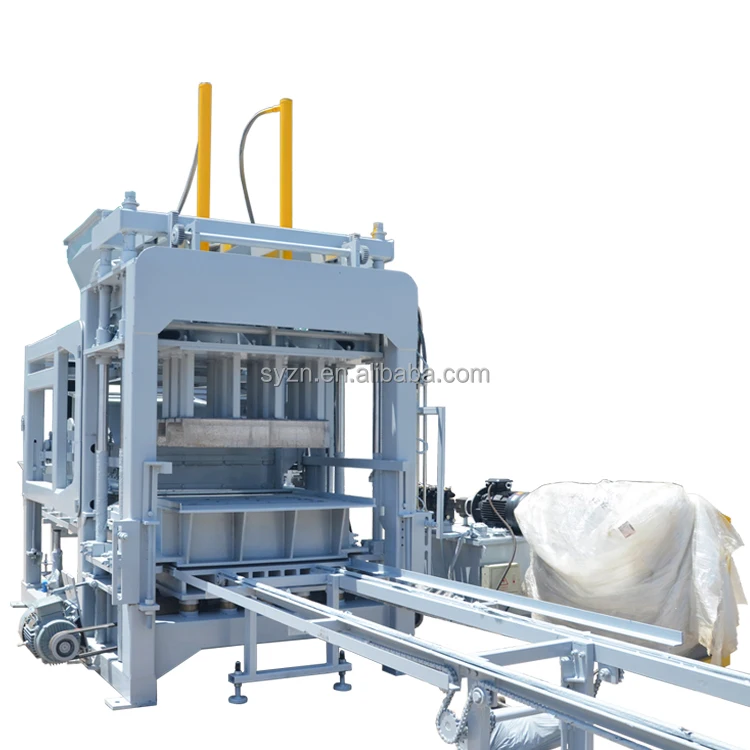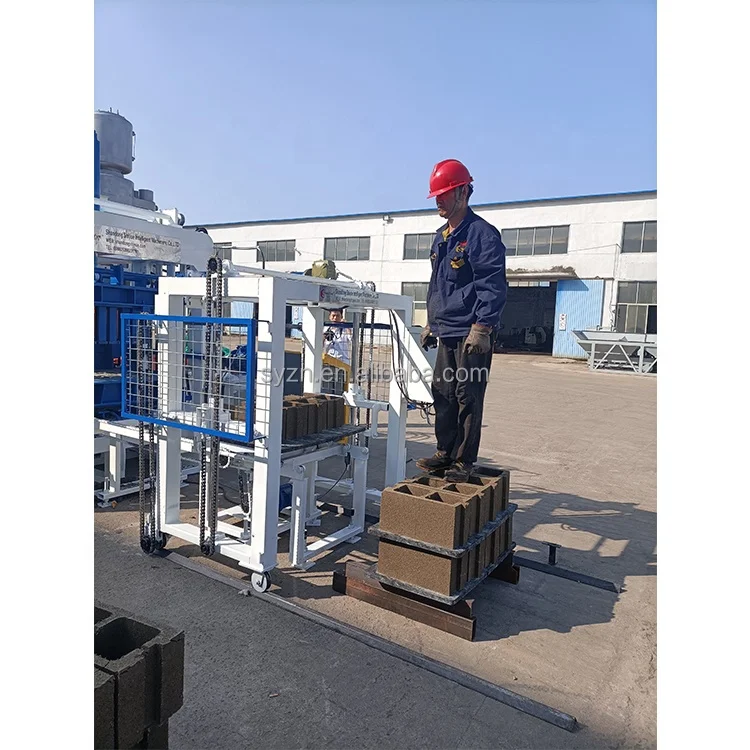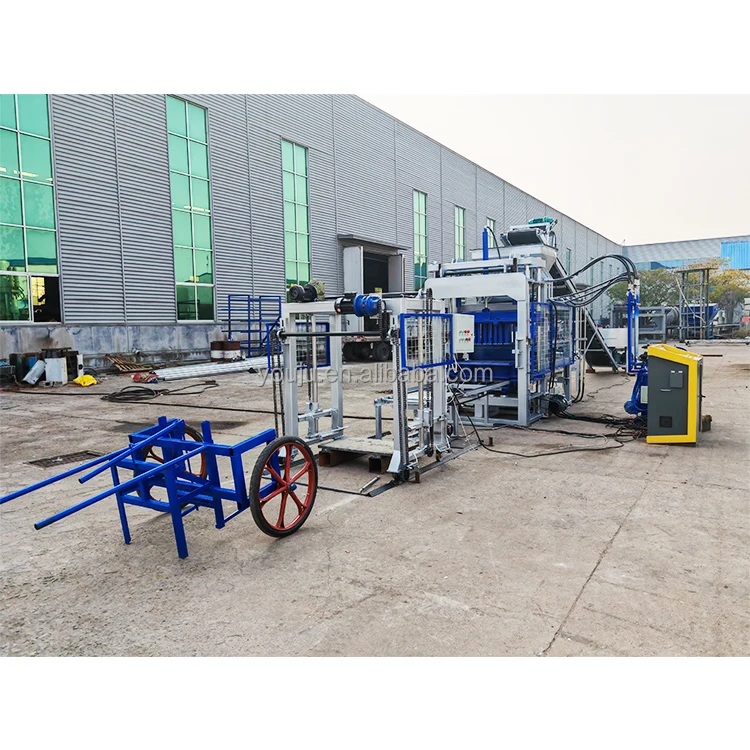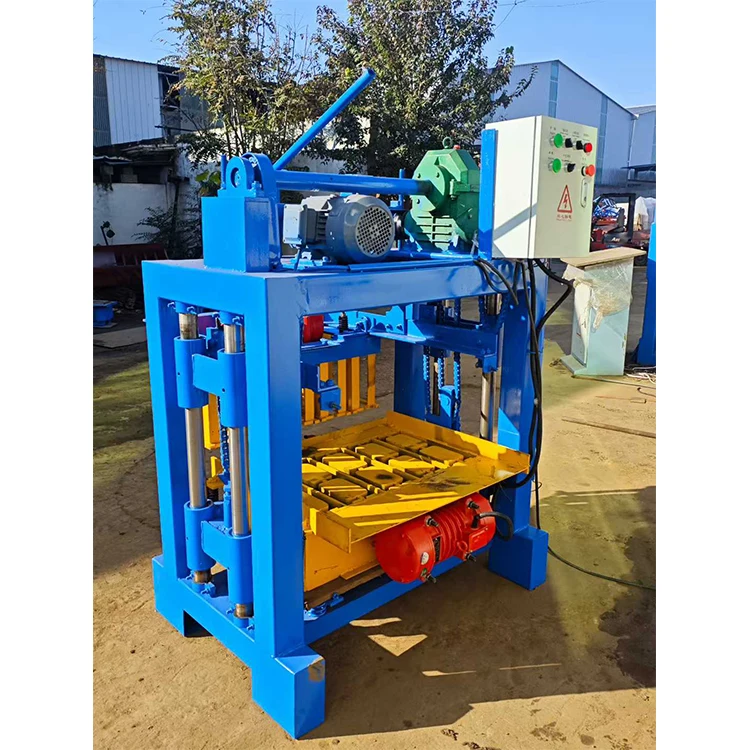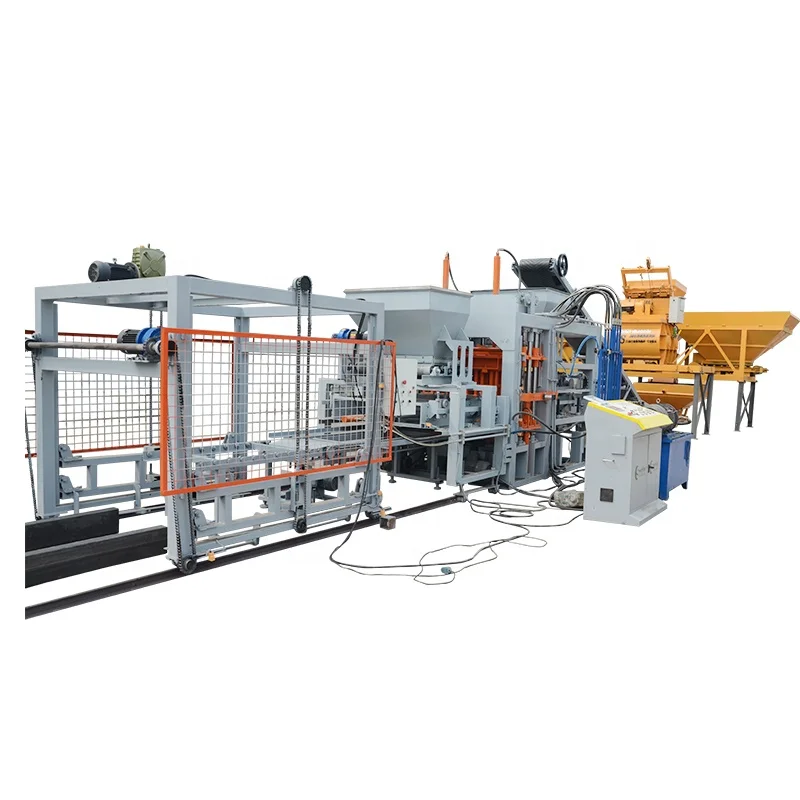


Description
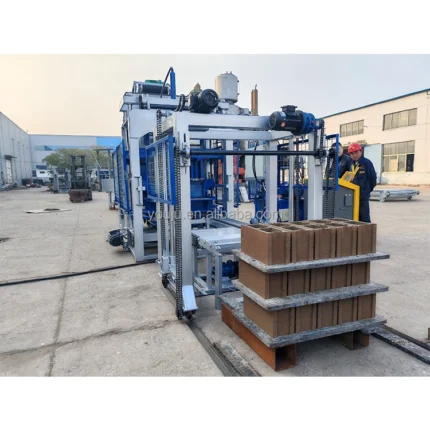
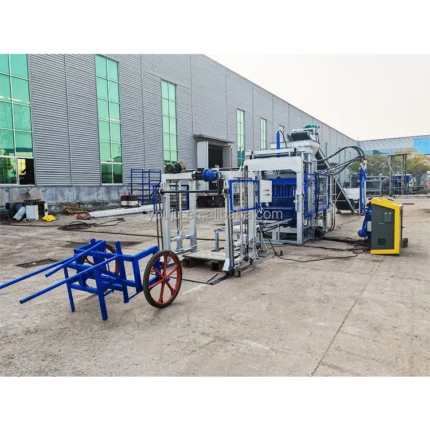
Synchronized Line Logic — The QT7-15 integrates press, pallet feeder, and stacker under one PLC program so cycle timing holds steady from the first block to the last.
Technical Specifications
| Parameter | Value |
|---|---|
| Product Type | Automatic Hydraulic Hollow Block Making Machine |
| Model | QT7-15 |
| Dimension of Host Machine | 3200×2300×2750 mm |
| Weight of Host Machine | 6 Tons |
| Molding Area | 1150×700 mm |
| Workshop Area | 200 m² |
| Host Machine Power | 45 kW |
| Vibration Force | 100 kN |
| Vibration Method | Hydraulic + Platform Vibration |
| Vibration Frequency | 2800–4500 Times/Minute |
| Molding Period | 15 Seconds |
| Pallet Size | 1150×700×25 mm |
| Voltage | 220/380/415/440V (Customized) |
| Control System | Siemens PLC with independently developed control program |
| Motor | Germany SIEMENS brand or CE standard brand |
| Travel Switch | France Schneider and Japan Omron |
| Mould Heat Treatment | Carburizing treatment, 54–58 HRC, lifespan over 100,000 cycles |
| Welding Method | Carbon dioxide protection welding |
| Batching Machine | PLD1200, theoretical productivity 56 m³/h, ingredient precision ±2% |
| Concrete Mixer | JS500, discharging volume 500L, production capacity 25 m³/h |
| Block Stacker | SY-4 mobile pallet stack, power 3 kW |
| Automation Level | Automatic (pallet feeder, brick receiver, hydraulic station, hydraulic trolley included) |
| Color Paver Option | Add color feeding system |
| Standards | CE (declaration where applicable) |
| Output Capacity | Common blocks capacity (basis not stated in source) |
Application Suitability
| Application | Material or Output |
|---|---|
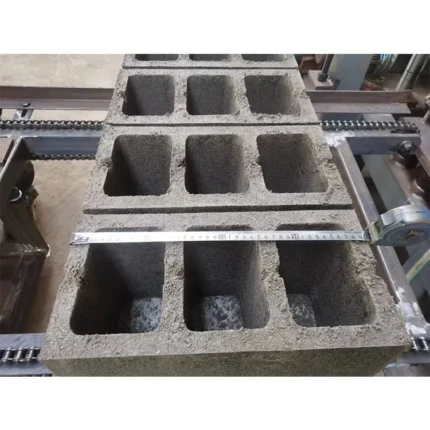
| Hollow block production for masonry walls | Cement, crushed stone, sand, fly ash, water |
| Solid block production for load-bearing structures | Cement, graded aggregate, sand |
| Paving block production for driveways and walkways | Cement, fine aggregate, coarse aggregate |
| Color paver production for architectural finishes | Cement, pigments, aggregate with optional color feeding system |
Why Cycle Timing Drives the Real Output Number
The automatic QT7-15 block making machine PLC controlled cycle logic keeps the press, feeder, and stacker locked to a single sequence clock. When one station drifts, the whole line waits.
Buyers often receive a quotation stating cycles per hour, only to find daily output falls short once the line is running. The gap rarely comes from the press itself — it comes from pallet handling, batching delays, or a stacker that cannot keep up. On this line, the Siemens PLC coordinates the pallet feeder, brick receiver, and SY-4 stacker so the press never idles waiting for a downstream station to clear [NEED_CITE: typical causes of block line throughput loss in field operations]. Voltage fluctuations at the site can also throw off cycle repeatability, which is why the QT7-15 confirms voltage and frequency in writing before production begins rather than at commissioning.
How the PLC Removes Operator Guesswork
The Siemens PLC runs an independently developed control program that sequences every movement in the QT7-15 line — from pallet indexing to vibration ramp-up to brick ejection. Operators set the moulding period and vibration frequency once, and the system repeats that recipe across every cycle. This removes the manual timing judgment that causes density variation between morning and afternoon batches.
Where the Stacker and Feeder Meet the Press
The SY-4 mobile stacker and automatic pallet feeder are not add-ons bolted to the press — they are programmed into the same PLC loop. When the press completes a moulding cycle, the brick receiver transfers the loaded pallet while the feeder indexes the next empty pallet into position. The press cycle restarts only when both stations confirm ready status. If the stacker rail is full, the PLC holds the press and logs the pause, giving the operator a clear signal rather than an unexplained stop [NEED_CITE: PLC synchronization methods in automatic block production lines].
Reading the Vibration and Pressure Numbers Correctly
The 100 kN vibration force and hydraulic pressure work together — vibration consolidates the mix into the mould cavity while pressure compacts it from above. On hollow blocks with thin webs, the adjustable frequency range of 2800–4500 times per minute lets the operator find the point where the mix settles without collapsing the internal voids. The carburized mould surfaces at 54–58 HRC resist the abrasive wear that gradually changes block dimensions over tens of thousands of cycles. The JS500 mixer discharges 500L batches at a rate that keeps the press hopper replenished, and the PLD1200 batching machine holds ingredient precision within ±2%, so the mix entering the mould stays consistent from batch to batch.
What Happens When Automation Is Left Incomplete
A press running without an integrated stacker means every loaded pallet is pulled off by hand, and the operator becomes the bottleneck the moment output rises. Pallets left on the curing floor in uneven rows slow down forklift access and extend curing time unpredictably. On sites where the voltage was never confirmed before shipment, commissioning stalls while transformers are sourced locally — a delay that has nothing to do with the machine itself [NEED_CITE: commissioning delays caused by unconfirmed voltage and frequency specifications]. These gaps are not machine failures; they are specification failures that surface only after the container arrives.
What This Supplier Brings to the Table
Block machinery is the single focus here, which means the QT7-15 press, mould, pallet, and handling equipment are specified as one matched system rather than assembled from separate vendors. The configuration is set against your actual mix design and local aggregate, not a catalogue default. Mould design covers the formats your market sells, with custom drawings available when standard formats do not match. The automation level is selectable, so a buyer can begin with semi-automatic handling and add the SY-4 stacker and full pallet circulation later as volume grows. Installation includes on-site commissioning with operator training so the crew running the line on day one understands the PLC interface and mould change procedure.
Documentation & Verification
- Line layout and capacity calculation stating the block format assumed for each cycle time
- Hydraulic and electrical schematic matching the as-built QT7-15 configuration
- Mould drawing and format list for every block type included in the order
- Pallet specification confirming size, material, and load rating against the curing rack system
- Voltage, frequency, and PLC display language confirmed in writing before production
- Factory test record on the buyer’s target block format before dispatch
Installation, Commissioning & Support
- Workshop area of 200 m² with level concrete foundation to support the 6-ton host machine
- Dedicated power circuit for 45 kW host machine plus batching and mixer loads at confirmed voltage
- Machine shipped in dismantled modules for container loading with reassembly on site
- First-run commissioning includes PLC parameter tuning to the buyer’s mix and mould format
- Operator training covers mould change procedure, vibration frequency adjustment, and stacker operation
- Wear parts and hydraulic seal list provided at delivery so first replacement does not halt production
- Mould heat treatment rated over 100,000 cycles before reconditioning is needed
What We Need to Size Your Line
Provide the block formats your market moves in volume — hollow, solid, paver, or a combination — along with target daily output per format. Include your local aggregate type and whether fly ash or other supplementary materials are in the mix. Confirm the site voltage, frequency, and the language your operators will use on the PLC display. If you have existing pallets or curing racks, share the dimensions so the pallet feeder and stacker are matched to what is already on the floor.
Frequently Asked Questions
Q: What does the automatic configuration remove from the operator that semi-automatic still requires?
A: In the semi-automatic setup, the operator manually transfers pallets between the press and curing area. The automatic QT7-15 configuration integrates the pallet feeder, brick receiver, and SY-4 stacker under PLC control, so the operator monitors the line from the control panel rather than handling loaded pallets through the shift.
Q: How are PLC language and voltage confirmed before shipment?
A: The buyer specifies the target site voltage, frequency, and preferred PLC display language during the quotation stage. These are confirmed in writing and locked into the build specification. The Siemens PLC and electrical components are then sourced and wired to that exact configuration before the factory test.
Q: How does the pallet feeder synchronize with the press cycle?
A: The Siemens PLC monitors station readiness across the entire line. The pallet feeder indexes the next empty pallet only after the brick receiver clears the previous one. The press cycle restarts when both stations confirm position, preventing jams and ensuring a consistent 15-second moulding period.
Q: What is the upgrade path from semi-automatic to full automatic stacking?
A: The QT7-15 platform supports adding the SY-4 mobile stacker and automatic pallet circulation as modular stations. A buyer starting with manual pallet handling can install the stacker and feeder later without replacing the press or reprogramming the PLC from scratch.
Q: How is vibration frequency matched to a specific block format?
A: Thin-web hollow blocks require a different vibration profile than dense paving blocks. The QT7-15 adjusts vibration frequency between 2800 and 4500 times per minute. The operator sets the frequency and hydraulic pressure based on the block format and local mix design, then the PLC repeats that setting across every cycle.