Description
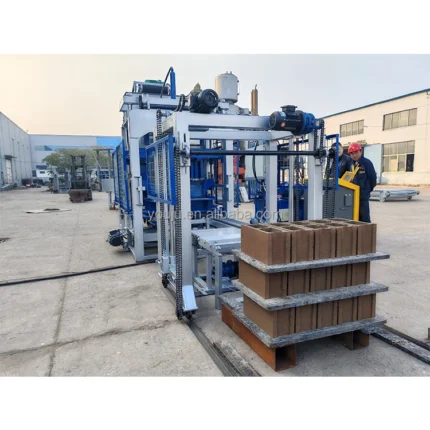
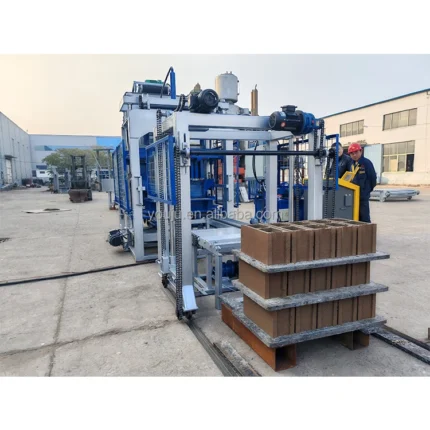
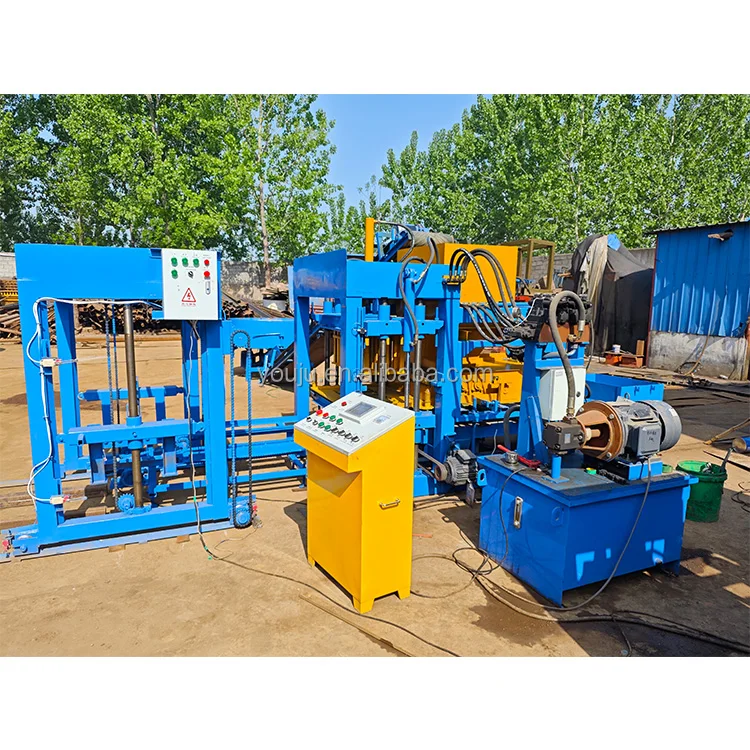
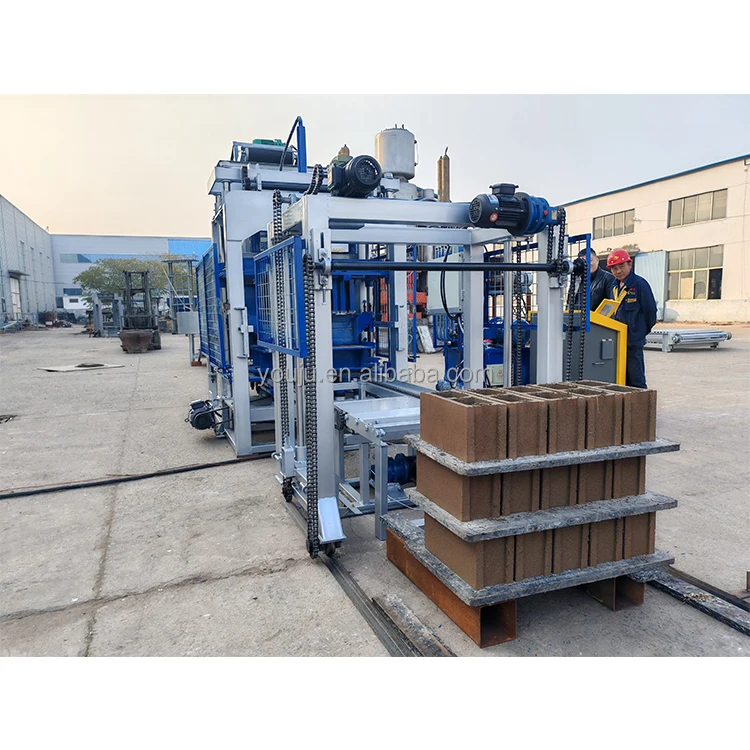
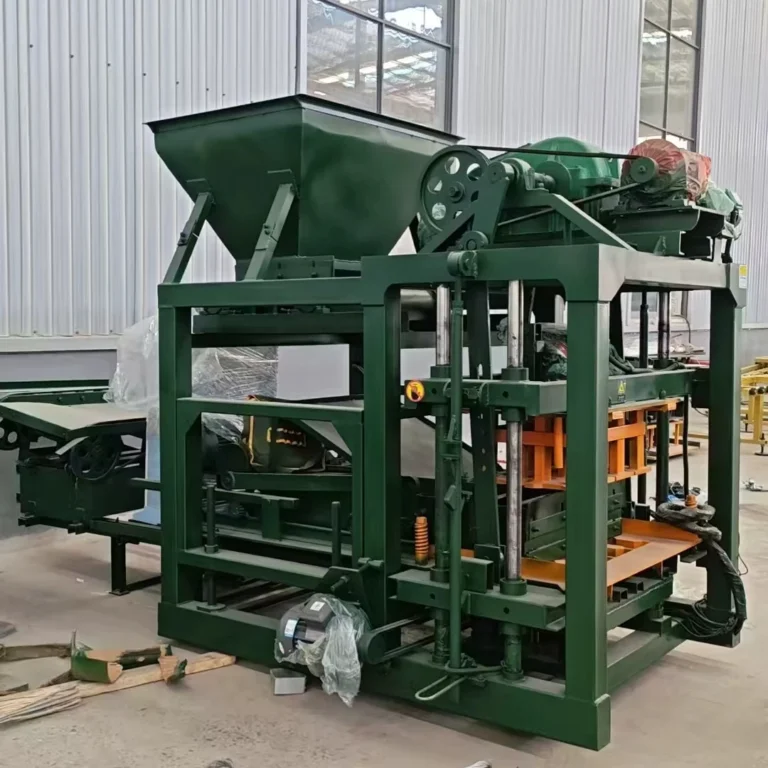
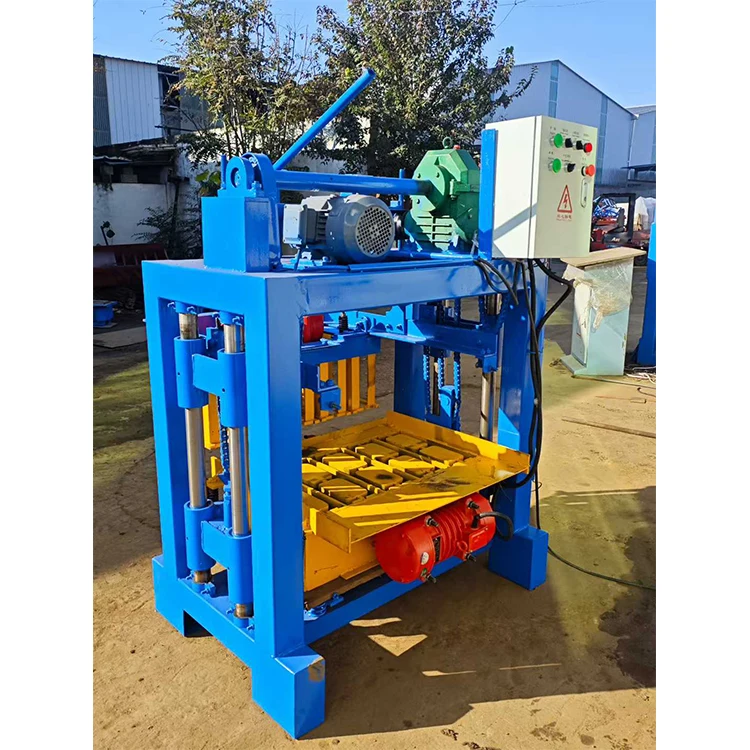
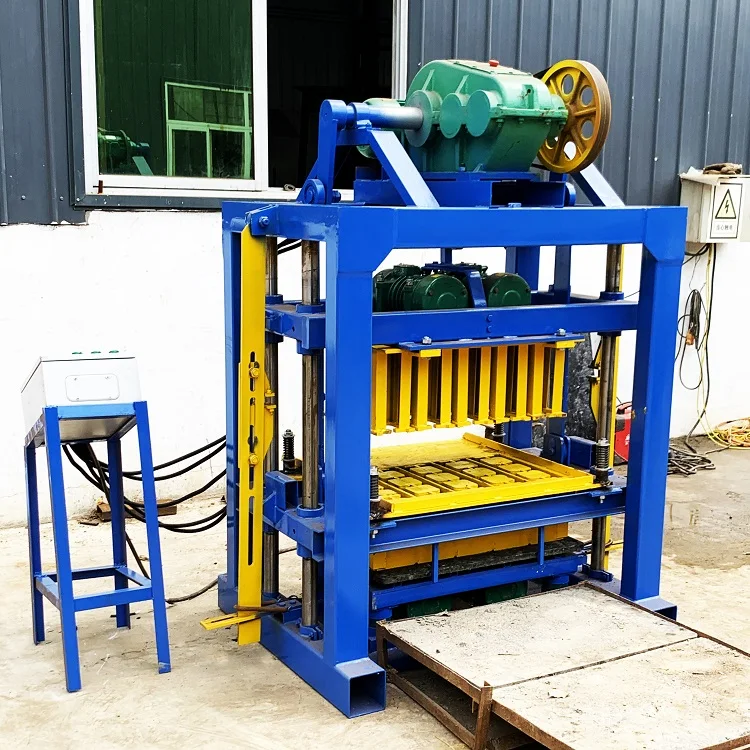
Motorized Compaction Consistency — the QTJ4-40 replaces operator-dependent manual tamping with a fixed 2800 r/min platform vibration cycle, giving every block the same density regardless of who runs the shift.
Technical Specifications
| Parameter | Value |
|---|---|
| Model | QTJ4-40 |
| Product Type | Manual & Motor Cement Block Making Machine with Hydraulic Pressure |
| Vibration Form | Platform Vibration |
| Vibration Frequency | 2800 r/min |
| Pallet Size | 850 × 450 mm |
| Mould Formats | 400×200×200 mm (4 pcs/mould), 400×150×200 mm (5 pcs/mould), 225×112.5×60 mm (9 pcs/mould) |
| Capacity per Format | 400×200×200 mm: 360 pcs/h, 2880 pcs/8h; 400×150×200 mm: 500 pcs/h, 4000 pcs/8h; 225×112.5×60 mm: 900 pcs/h, 7200 pcs/8h |
| Raw Materials | Concrete, cement, fly ash, crushed stone, sand, gravel, slag |
| Mix Ratio | Cement 8–10%, sand 30–40%, stone 50–60% |
| Top Die Mechanism | Push and pull with automatic scraper |
| Machine Weight | 1 T |
| Overall Dimensions | 1350 × 1460 × 1800 mm |
| Workers Required | 1–3 people |
| Control System | Manual with motor operation |
| Voltage & Frequency | Configurable to buyer market (basis to be confirmed before production) |
| Certification | CE |
Application Suitability
| Application | Material or Output |
|---|---|
| Small-scale hollow block plant | Crushed stone, sand, and cement producing 400×200×200 mm hollow blocks |
| On-site contractor production | Local aggregate and cement for 400×150×200 mm solid blocks at housing project sites |
| Paver and interlocking brick supply | Fine sand, fly ash, and cement forming 225×112.5×60 mm paving units |
| First-time block entrepreneur | Mixed aggregate with 8–10% cement content in a 200 m² workshop footprint |
Why "2800 Pieces a Day" Means Nothing Without the Format Attached
The automatic QTJ4-40 block machine PLC controlled configuration discussion always starts with capacity — but a single daily output figure hides which block format it assumes, what mix ratio was used, and whether the vibration force matches the buyer’s aggregate.
When a buyer receives a quotation that says "2800 pcs/8 hours" without naming the block size, the real production day often disappoints. I once saw a buyer in West Africa plan a delivery schedule based on an aggregate number, only to find that switching from solid blocks to hollow blocks cut his actual output nearly in half. The vibration cycle, mould cavity count, and demoulding time all change with format. Confirming capacity per format — not as a blended average — prevents scheduling gaps and contract penalties on the construction side. [NEED_CITE: block output variation across hollow, solid, and paver formats]
Motorised Vibration Removes the Largest Variable
Manual block machines leave compaction density to the operator’s judgement and physical effort. The QTJ4-40 locks vibration at 2800 r/min through a motor-driven platform, so every pallet receives the same force profile regardless of shift length or worker fatigue. This is where batch-to-batch strength consistency starts. The automatic QTJ4-40 block machine PLC controlled approach builds on this base by removing variability at the press before automation stations are added downstream.
Adding Automation Stations Without Replacing the Press
The machine’s semi-manual design means pallet handling and stacking are done by hand at entry level. But the 850 × 450 mm pallet dimension aligns with standard curing rack spacing and common forklift tine widths, so adding an automatic pallet feeder or a stacking station later does not require changing the press or the curing infrastructure. Each automation layer — batching accuracy, pallet feeding, cubing — addresses a specific labour bottleneck and can be introduced in sequence as production volume justifies it. [NEED_CITE: incremental automation upgrade path for stationary block machines]
Vibration, Pressure, and Aggregate Matching
Platform vibration at 2800 r/min compacts the mix from below, while the top die push-and-pull mechanism with an automatic scraper levels and compresses from above. The combined effect determines the green strength of the block as it leaves the mould. But this balance only works if the hydraulic pressure and vibration frequency are set for the buyer’s actual mix. A high-clay aggregate absorbs water differently than clean crushed stone, changing how the mix flows into the mould cavity and how it responds to vibration. Factory settings based on standard quartz sand may not transfer to a laterite-rich local source. The mix ratio guideline of cement 8–10%, sand 30–40%, and stone 50–60% is a starting point that must be verified against local material.
What Happens When Pallet and Curing Are an Afterthought
A mismatched pallet size means blocks are stacked by hand onto whatever surface is available, introducing handling damage and uneven curing. If the curing rack spacing was designed for a different pallet dimension, the entire output area needs reworking before the first production run. Pallet material matters too — timber pallets warp in humid climates and change the block’s bottom surface flatness, while composite pallets maintain dimensional stability but cost more upfront. Buyers who skip this specification at the quotation stage often discover the gap only when the machine arrives and the curing area does not fit. [NEED_CITE: pallet material selection for block curing in varying humidity]
Why Buyers Source This Machine Here
Block machinery is our single focus, so the QTJ4-40 press, moulds, pallets, and handling equipment are specified as one matched system rather than assembled from separate suppliers. Mould design covers the formats the buyer’s market actually sells, and custom drawings are accommodated when standard formats do not match local building codes. The automation level is selectable — a buyer can start with motor-driven vibration and manual pallet handling, then add automatic pallet feeding and stacking stations without replacing the press. Installation support includes operator training on the specific mix and aggregate the buyer will use, not a generic commissioning script. Voltage, frequency, and control language are confirmed before production begins, so the machine is ready to run on arrival rather than waiting for an electrician to sort out a mismatch. [NEED_CITE: CE machinery directive requirements for industrial block equipment]
Documentation & Verification
- Line layout showing QTJ4-40 footprint within a 200 m² workshop allocation
- Capacity calculation sheet stating output per block format with mix ratio assumed
- Mould drawing pack listing all three standard formats with cavity dimensions
- Hydraulic and electrical schematic matched to confirmed voltage and frequency
- Factory test record using the buyer’s specified block format before dispatch
- Pallet specification sheet confirming 850 × 450 mm dimensions and material grade
Installation, Commissioning & Support
- 200 m² minimum workshop area with level concrete floor for the 1350 × 1460 mm machine footprint
- Dedicated electrical circuit sized to confirmed voltage and frequency before connection
- Machine arrives as a single 1 T unit requiring forklift unloading and pallet alignment check
- First-run commissioning includes vibration frequency verification against the buyer’s local aggregate
- Operator training covers the push-and-pull top die cycle and manual pallet change sequence
- Wear parts list supplied with mould and hydraulic component replacement intervals
What to Include in Your Inquiry
Tell us the block formats your market sells most, the local aggregate type you plan to use, and your target daily output per format. Include your site’s voltage and frequency standard, the pallet handling method you prefer today, and whether you plan to add automatic stacking later. This information lets us configure the QTJ4-40 and its mould set to your actual production conditions rather than a catalogue default.
Frequently Asked Questions
Q: How is the QTJ4-40 capacity verified per block format, and what mix design was assumed?
A: Each format — 400×200×200 mm, 400×150×200 mm, and 225×112.5×60 mm — has its own cycle time and cavity count, producing different hourly outputs. We state capacity per format, not a blended figure, and base calculations on the mix ratio of cement 8–10%, sand 30–40%, stone 50–60%. If your local aggregate differs, we adjust the vibration and pressure settings during factory testing before shipment.
Q: What automation stations can be added later without replacing the press?
A: The QTJ4-40 supports sequential upgrades: automatic pallet feeding, stacking, and cubing can each be added as production volume grows. The 850 × 450 mm pallet size remains constant across all automation levels, so existing curing racks and forklifts stay compatible. The motor-driven vibration and top die mechanism require no modification when downstream stations are connected.
Q: How do voltage, frequency, and control language get confirmed before shipment?
A: We request the buyer’s local electrical standard and preferred operator language during the quotation stage. These details are locked into the production order so the motor winding, control panel, and display labels match the destination market. Confirming this before production avoids commissioning delays that occur when voltage or frequency mismatches are discovered after arrival.
Q: What mould change time should a buyer expect on this machine?
A: The push-and-pull top die with automatic scraper simplifies demoulding, but physical mould change still requires manual bolt removal and alignment. Buyers should plan for a portion of a shift when switching between the three standard formats. The per-format capacity figures already account for the cycle time of each mould, not the changeover time between them.