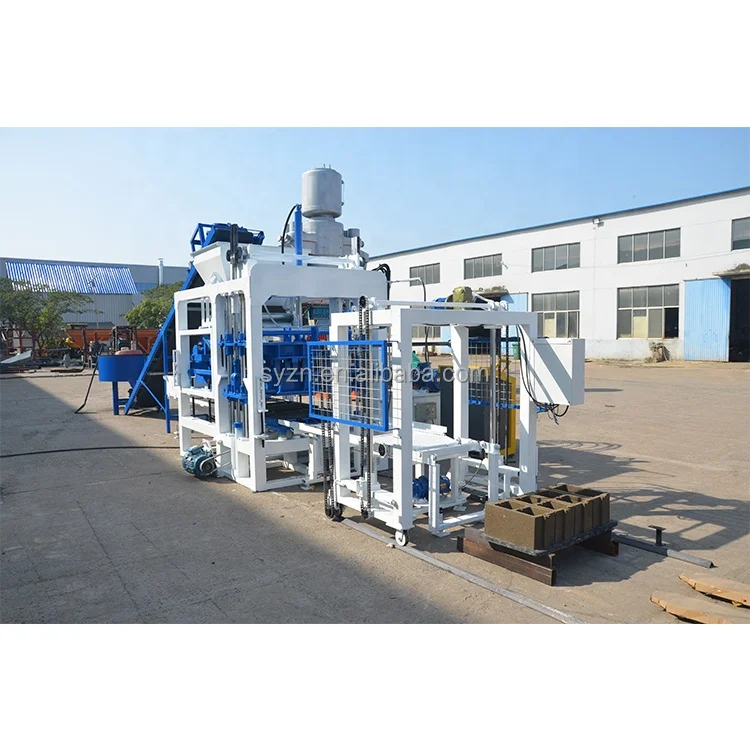
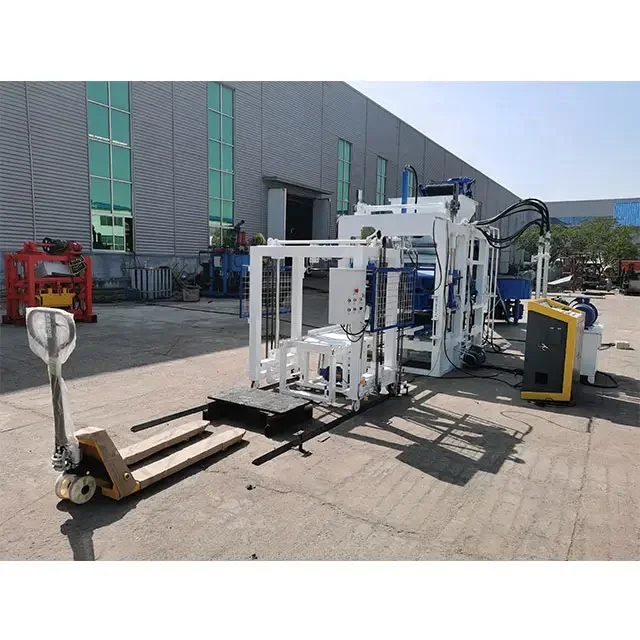


Description
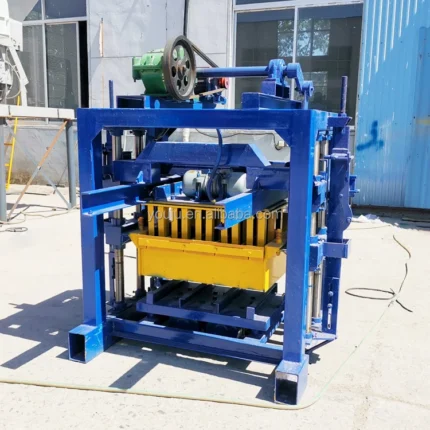
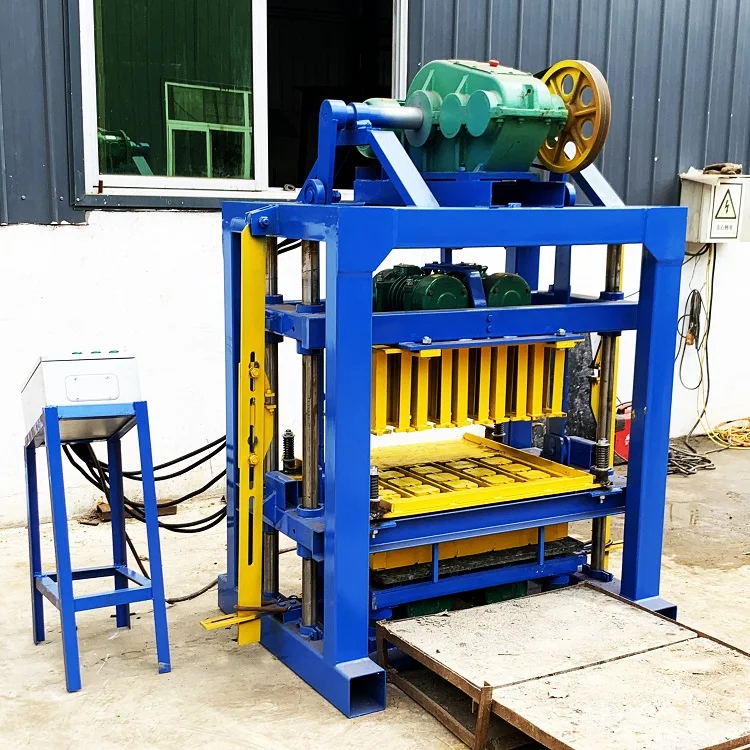
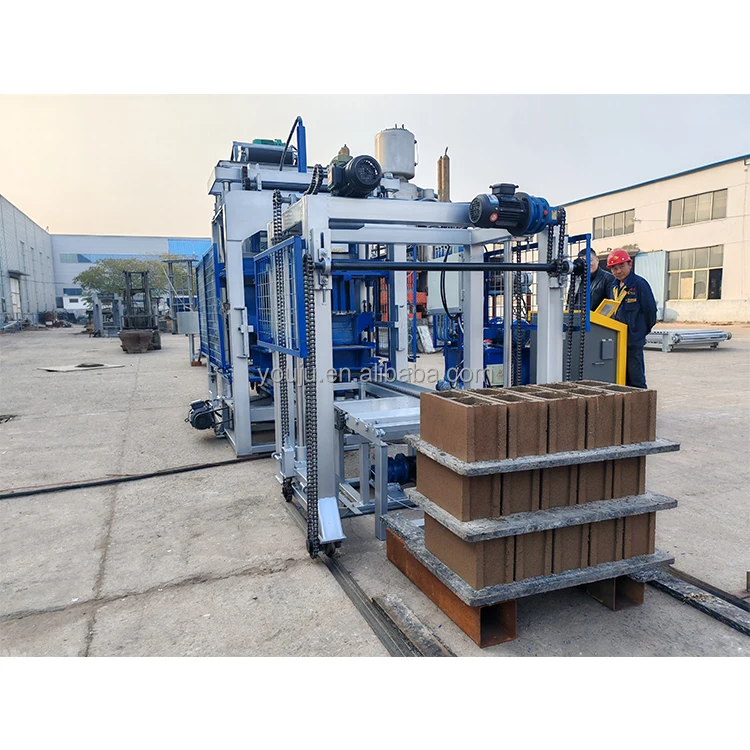
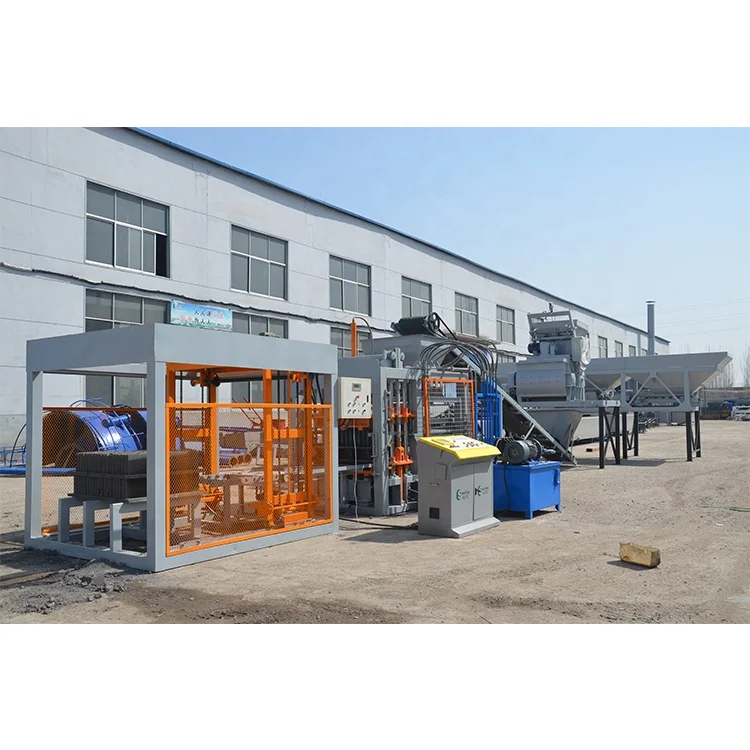
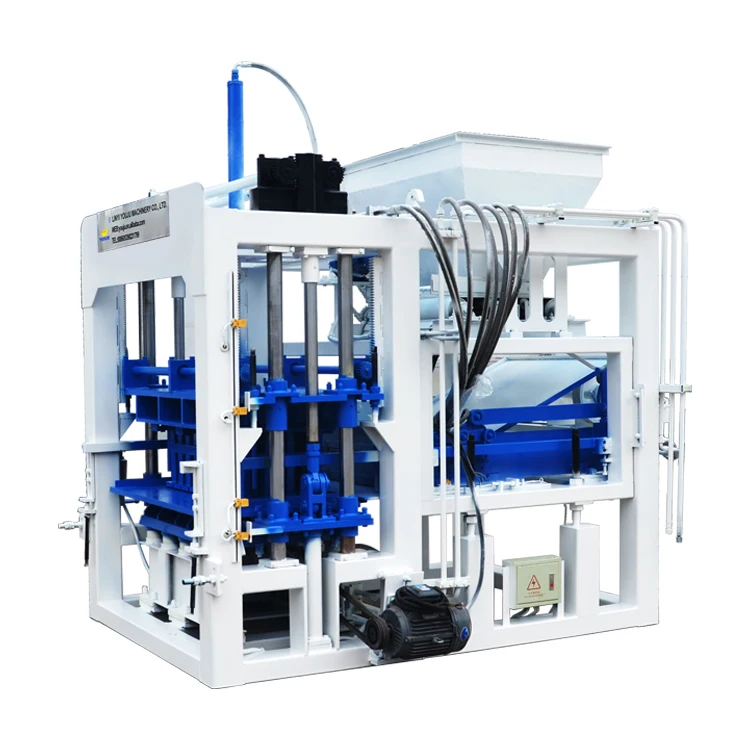
Integrated Automation System — the QT4-18 PLC control removes manual pallet handling from the operator and ensures batch-to-batch consistency across block formats, configured against your actual grid frequency before dispatch.
Technical Specifications
| Parameter | Value |
|---|---|
| Product Type | Stationary Concrete Block Making Machine |
| Model | QT4-18 |
| Overall Dimensions (L×W×H) | 3900×1600×2300 mm |
| Net Weight | 3T |
| Rated Power | 24KW |
| Vibration Force | 40-50KN |
| Vibration Type | Bed mould vertical vibration + upper mould compression vibration |
| Molding Cycle | 15-25s per cycle |
| Mixer Model | JQ350 |
| Pallet Size | 850×550×25 mm |
| Hydraulic Station | Adopted for high pressure and stable running |
| Control System | PLC (voltage and display language configurable) |
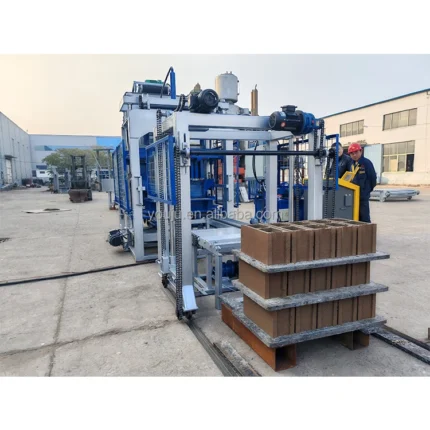
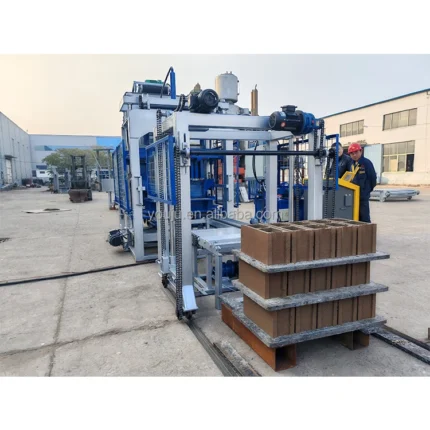
| Automation Level | Semi-automatic (upgradable with automatic stacker and pallet feeder) |
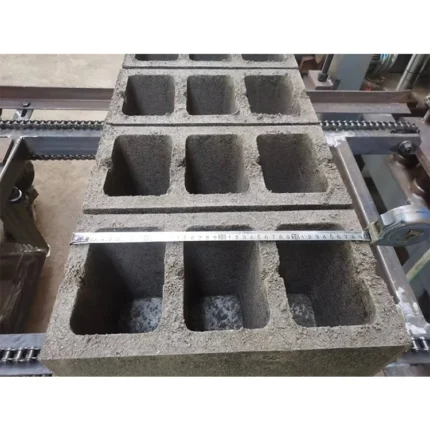
| Applied Products | Paver, solid block, hollow block, curbstone |
| Raw Materials | Crushed stones, sand, cement, dust, fly ash |
| Output – Hollow Block 400×200×200mm | 1200-1680 pcs/hr at 15-20s cycle |
| Output – Hollow Block 400×150×200mm | 1800-2400 pcs/hr at 15-20s cycle |
| Output – Solid Brick 240×115×53mm | 3240 pcs/hr at 15-20s cycle |
| Daily Output – Hollow Block 400×200×200mm | 9600-13440 pcs per 8-hour shift |
| Daily Output – Hollow Block 400×150×200mm | 14400-19200 pcs per 8-hour shift |
| Daily Output – Solid Brick 240×115×53mm | 16200-19440 pcs per 8-hour shift |
Application Suitability
| Application | Material or Output |
|---|---|
| Hollow block production for building walls | Crushed stone, sand, cement, fly ash mix at 400×200×200mm or 400×150×200mm |
| Solid brick manufacturing for masonry | Cement and aggregate blend at 240×115×53mm format |
| Interlocking paver production for driveways and walkways | Fine aggregate and cement with colour pigment option |
| Curbstone and kerb production for road infrastructure | High-density concrete mix with extended vibration cycle |
| On-site block production for housing projects | Local aggregate and cement adapted to regional availability |
What "15-25 Seconds Per Cycle" Actually Means for Your Daily Tally
Cycle time only matters when tied to the block format you will actually sell.
An automatic QT4-18 concrete block making machine may quote a cycle between 15 and 25 seconds, but a 400×200×200mm hollow block and a 240×115×53mm solid brick sit at opposite ends of that range. If the supplier lists a single cycle figure without naming the format, your real daily output on the format your market demands can fall noticeably short of the headline number [NEED_CITE: block format effect on cycle time in stationary presses]. I have watched plant owners in Southeast Asia discover this gap on their second day of production, standing in front of a curing rack that is only half full.
PLC Language and Grid Frequency Before the Machine Leaves the Floor
A PLC controlled stationary block machine is only intelligent if the operator can read it and the electrical system can power it. The QT4-18 control cabinet ships with display language matched to your operator team and voltage matched to your site grid. Frequency mismatch between a 50Hz motor and a 60Hz supply will trip the inverter on the first day — a problem that once held up a Vietnamese housing project for three weeks while a replacement transformer crossed the border. Every unit now waits for a photograph of the buyer’s on-site distribution board nameplate before the production schedule is signed.
How Automation Removes the Operator from the Pallet Loop
In semi-automatic mode, the operator feeds pallets and clears stacked blocks by hand. The automatic QT4-18 concrete block making machine changes this by adding automatic pallet feeding and stacking stations that connect to the press through the same PLC logic. The result is not simply fewer workers on the floor — it is consistent block density from the first pallet of the morning to the last, because the vibration and hydraulic pressure sequence is no longer interrupted by manual pallet placement timing [NEED_CITE: effect of manual pallet handling on block density variance]. The upgrade path from semi-automatic to full automatic is available without replacing the host press.
Hydraulic Pressure, Vibration Force, and the Density Equation
The QT4-18 applies 40-50KN of vibration force through dual channels — vertical vibration in the bed mould and compression vibration in the upper mould — while the hydraulic station holds steady pressure throughout the compaction phase. This combination determines the green strength of a freshly pressed block: vibration settles the aggregate into voids, and hydraulic pressure squeezes out trapped air before the cement matrix sets. A paver that must survive forklift traffic needs the full vibration and pressure envelope, while a non-load-bearing hollow block can be produced at the lower end of the cycle range. The 850×550×25mm pallet size is selected to fit standard curing rack spacing and common forklift tine widths at this output tier.
The Hidden Cost of Skipping the Voltage and Frequency Check
When a plant owner orders a block press on capacity figures alone and forgets to confirm local grid specifications, the consequences arrive on commissioning day. The PLC controlled stationary block machine may run, but variable frequency drives, servo motors, and heating elements in the mixer can all behave outside their design envelope on the wrong frequency. Insulation stress increases, motor cooling drops, and the first component failure typically appears within the opening weeks [NEED_CITE: variable frequency drive failure rates under frequency mismatch]. Retrofitting a transformer or rewinding motors on site adds cost and downtime that no catalogue capacity figure warned about.
Why Buyers Specify Their Line Here
Block machinery is the single focus of this production facility, meaning the QT4-18 press, JQ350 mixer, pallet system, and stacking equipment are specified as one matched line rather than assembled from separate vendors. Machine configuration is set against the buyer’s actual mix design and local aggregate, not a default catalogue recipe that assumes materials unavailable in the buyer’s region. Mould design covers every format listed above, with custom mould drawings available when a market demands a non-standard size. Automation level is selectable at order and upgradeable later, so a first-time plant owner can start semi-automatic and add automatic pallet handling as output grows. Voltage, frequency, and PLC language are confirmed with documented evidence before the production schedule begins.
Documentation & Verification
- Line layout with capacity calculation per block format stated on each tier
- Voltage, frequency, and PLC display language confirmation sheet signed before production
- Hydraulic and electrical schematic matched to your site supply specification
- Mould drawing and format list covering hollow, solid, paver, and curbstone dies
- Factory test record showing cycle time and output per format before dispatch
- Packing photographs and customs documentation support for your port of entry
Installation, Commissioning & Support
- Foundation plan referencing the 3900×1600×2300mm footprint and 3T static load for reinforced slab preparation
- Dedicated 24KW power circuit with correct voltage and frequency verified against your distribution board nameplate
- Machine shipped in dismantled state with assembly sequence guide for on-site reconnection of hydraulic and electrical lines
- First-run commissioning covering PLC parameter setting, vibration force calibration, and cycle time verification per mould
- Operator training on mould change procedure, pallet loading sequence, and daily maintenance checkpoints
- Wear parts list and hydraulic seal kit specified for your production volume and local supplier availability
What to Include in Your Enquiry
Tell me the block formats your market sells, the daily output you need per format, and the local aggregate and cement type available within trucking distance of your site. Share a photograph of your distribution board nameplate so voltage and frequency can be locked in before quotation. If you already operate a curing area and forklift, provide the pallet dimensions in use so the handling system can be matched without forcing a change.
Frequently Asked Questions
Q: How is output capacity calculated for different block formats on the QT4-18?
A: Each capacity figure is tied to a specific block size and a 15-20 second cycle range. For example, the 400×200×200mm hollow block yields 1200-1680 pieces per hour, while the smaller 240×115×53mm solid brick reaches 3240 pieces per hour under the same cycle assumption. Daily output is calculated over an eight-hour shift.
Q: What PLC control language options are available and how is voltage matched?
A: The PLC display language is configured to your operator team before shipment. Voltage and frequency are confirmed against a photograph of your on-site distribution board nameplate. This step is mandatory before the automatic QT4-18 concrete block making machine enters the production schedule to prevent inverter and motor incompatibility on arrival.
Q: What automation level does the QT4-18 provide and can it be upgraded?
A: The base configuration is semi-automatic with manual pallet handling. An automatic pallet feeder and stacker can be added at order or retrofitted later, all controlled through the same PLC logic. The host press, mould, and hydraulic station remain unchanged during the upgrade.
Q: How are pallet size and handling matched to my existing curing area?
A: The standard pallet measures 850×550×25mm, selected to fit common curing rack spacing and forklift tine widths at this output tier. If your facility uses different rack dimensions or a specific forklift model, pallet size and material are adjusted before quotation to avoid incompatibility on delivery.
Q: What is the mould change procedure for switching between formats?
A: The QT4-18 uses a mechanical mould clamping system that allows operators to swap dies for hollow block, solid brick, paver, or curbstone formats. Mould drawings are supplied with the machine, and training covers the change sequence so format switching does not consume an entire shift.