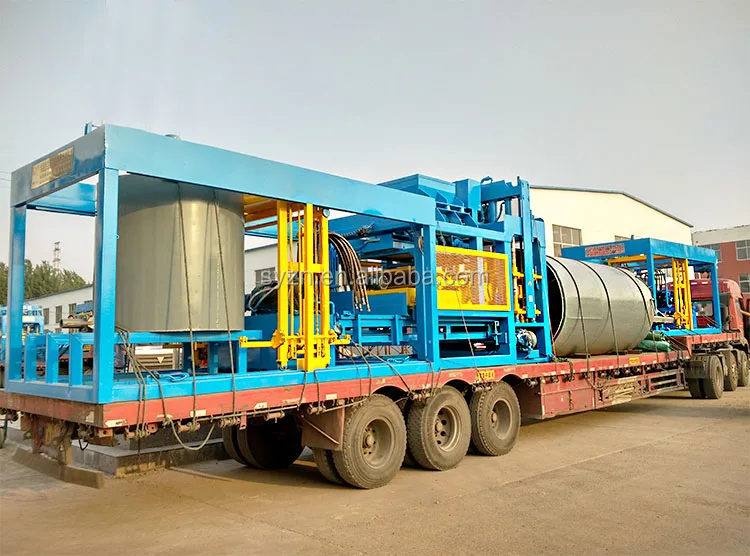
Description
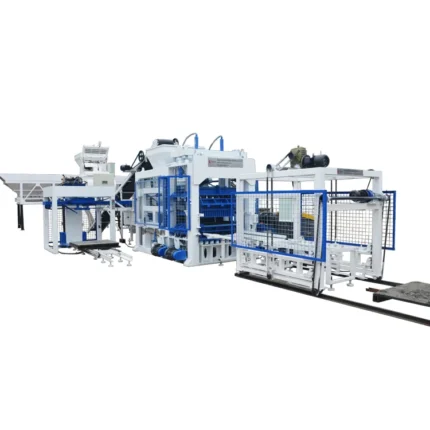
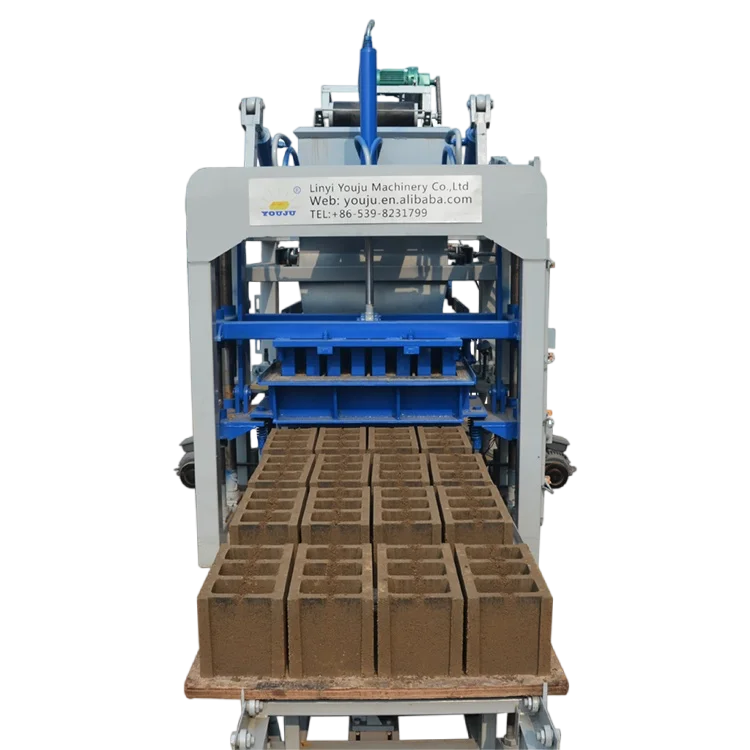
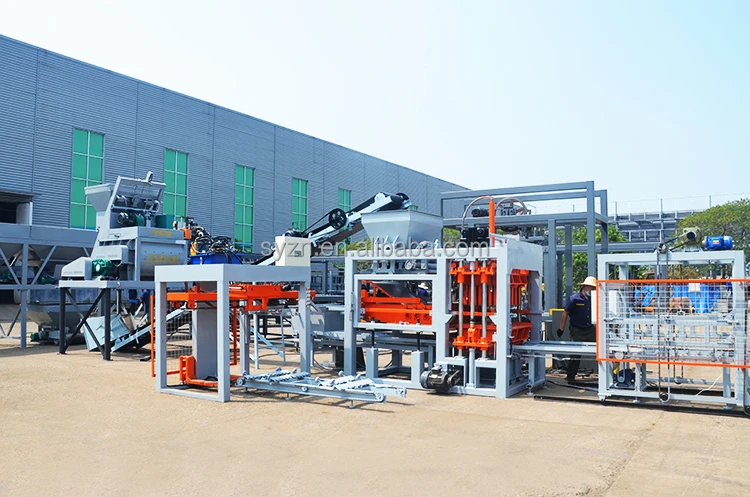
Integrated system logic — Every station from the pallet feeder to the block sweeper is timed against the QT6-15 press cycle so the automation loop closes without manual intervention.
Technical Specifications
| Parameter | Value |
|---|---|
| Model | QT6-15 |
| Product Type | Automatic Hydraulic Vibrating Block Making Machine |
| Overall Dimensions (L×W×H) | 7400×1900×2660 mm |
| Molding Cycle | 15-25s (basis not stated in source — confirm block format and material) |
| Vibration Frequency | 4600 r/min |
| Exciting Force | 40-50 kN |
| Rated Power | 31.25 kW |
| Mixer Model | JQ350 |
| Pallet Size | 850×550×25 mm |
| Total Weight | 7 T |
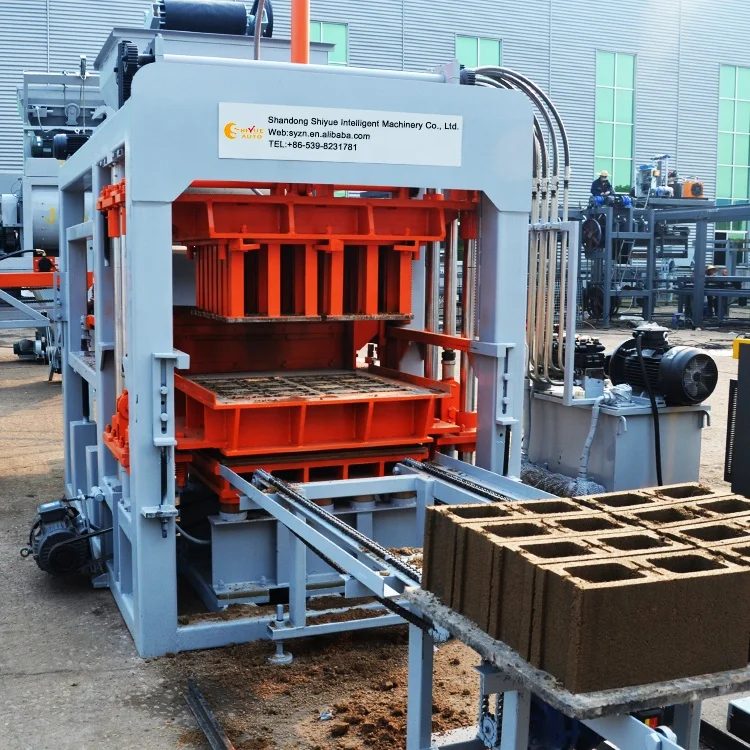
| Applied Products | Paver, solid block, hollow block, curbstone |
| Raw Materials | Crushed stones, sand, cement, dust, fly ash |
| Control System | PLC control system |
| Hydraulic Station | Included |
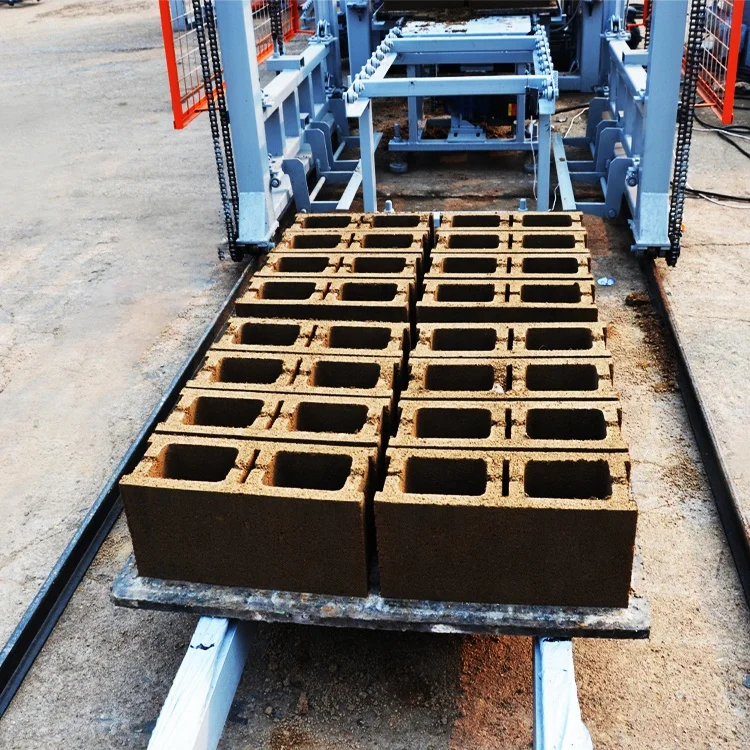
| Output Capacity (Hollow block 400×200×200 mm) | 1200-1680 pcs/hr based on 15-20s cycle |
| Output Capacity (Hollow block 400×150×200 mm) | 1800-2400 pcs/hr based on 15-20s cycle |
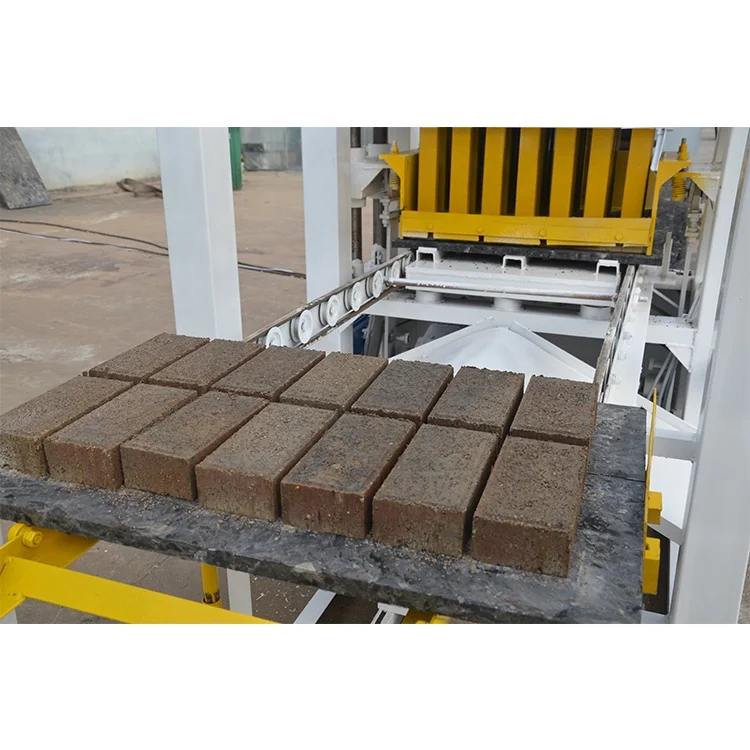
| Output Capacity (Solid brick 240×115×53 mm) | 3240 pcs/hr based on 15-20s cycle |
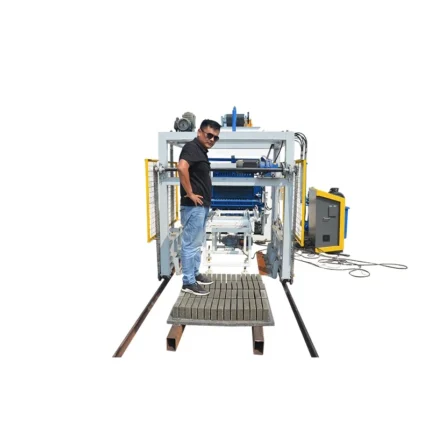
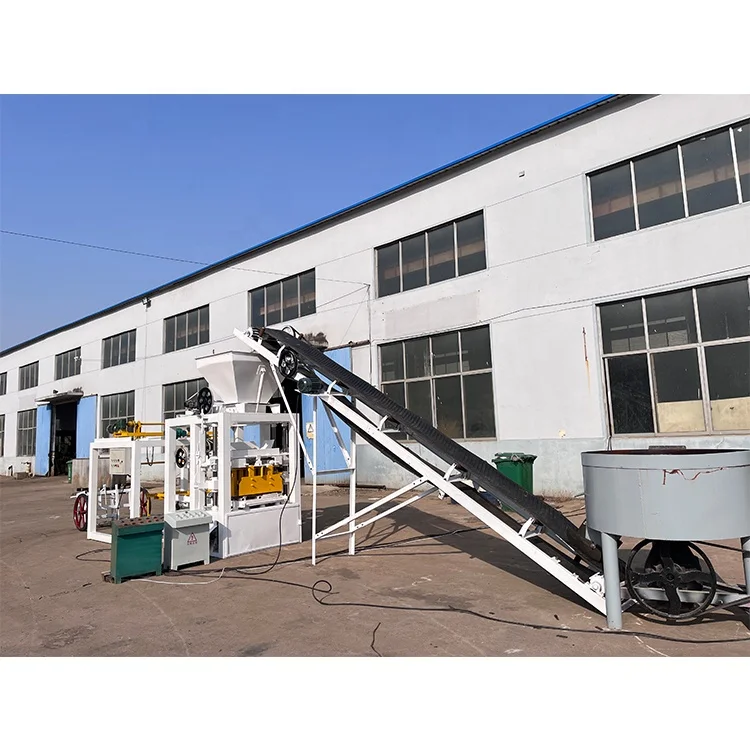
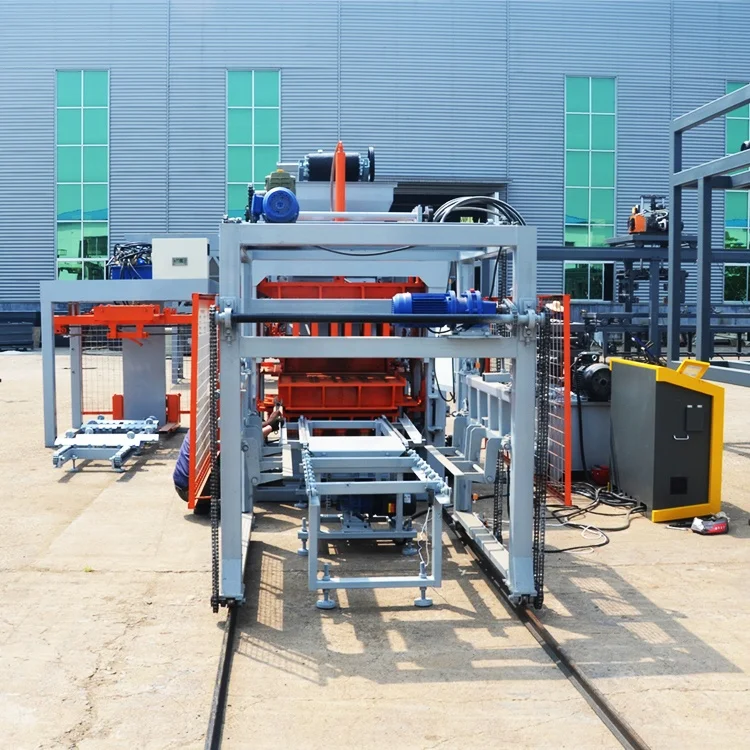
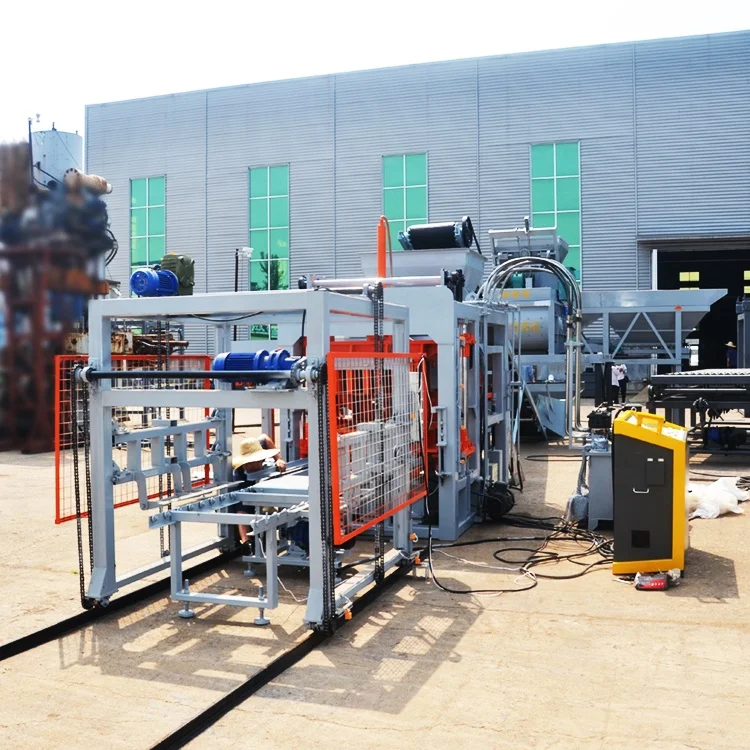
| Included Equipment | Block making machine, hydraulic station, PLC control system, pallet feeder, brick conveyor, block sweeper |
| Free Parts | Manual hydraulic trolley, spare parts and tools |
| Automation Level | Automatic |
| Standards | CE |
Application Suitability
| Application | Material or Output |
|---|---|
| Hollow block production for wall construction | Crushed stone, sand, cement, fly ash |
| Solid brick manufacturing for load-bearing structures | Cement, sand, stone dust |
| Paver production for roads and walkways | Crushed stones, cement, pigment |
| Curbstone forming for municipal projects | High-strength concrete mix with coarse aggregate |
Why the PLC Language Question Matters Before You Sign
An automatic QT6-15 block making machine PLC controlled arrives on site ready to run — but only if the operator can read the screen.
A few years ago, a Turkish client ordered a QT6-15 with a default English interface. The local operator could not follow the fault codes or adjust cycle parameters, and the commissioning team spent two full days translating menus before production started. That delay is avoidable. When the PLC display language is confirmed during the order stage and matched to the operator’s working language, the automatic QT6-15 block making machine PLC controlled powers on and begins its first molding cycle the same day the installation team finishes wiring [NEED_CITE: PLC interface language standards for industrial machinery exports].
The issue goes deeper than convenience. If an operator misreads a pressure alarm or skips a mould-change sequence because the prompt is unclear, block density becomes inconsistent across the shift. I now treat language confirmation as a hard milestone in the sales process, equal to voltage and frequency.
Coordinated Sequence from Feed to Sweep
The automatic QT6-15 block making machine PLC controlled manages pallet feeding, mould filling, hydraulic pressing, vibration, and brick conveying as one continuous loop. The PLC monitors each station and holds the press if the upstream mixer has not delivered or the downstream conveyor is blocked. This prevents half-formed blocks from piling up on the pallet when the next station is not ready.
The block sweeper cleans the pallet return path before the feeder sends it back under the mould. Without this station, residual concrete hardens on the pallet surface and causes the next block to stick or crack during demoulding. The sweeper is not an optional extra — it is what keeps the cycle repeatable over a full eight-hour shift.
Automation That Reduces Operator Decisions
Every parameter the operator needs to adjust — vibration duration, hydraulic pressure dwell, pallet feed speed — sits behind the PLC panel. The operator selects a recipe tied to the block format and the machine runs that recipe until someone changes it. This removes the guesswork that causes batch-to-batch variation when different shifts set the cycle differently.
For a plant moving from semi-automatic operation, the jump is significant. Manual pallet handling requires two workers just to move boards from the press to the curing area. With the pallet feeder and brick conveyor integrated into the QT6-15 package, those workers shift to quality checks and raw material loading instead [NEED_CITE: labour allocation in semi-automatic versus automatic block lines]. The press itself never pauses waiting for a pallet.
Reading the Numbers Behind the Cycle Time
The vibration frequency of 4600 r/min combined with an exciting force of 40-50 kN determines how tightly the aggregate packs inside the mould cavity. Higher frequency with insufficient force leaves air pockets in the block core; excessive force at low frequency fractures the surface. The QT6-15 pairs both values within a range that suits standard concrete mixes using crushed stone and sand, though buyers using lightweight aggregate or high fly-ash content should confirm the setting during factory testing.
The pallet size of 850×550×25 mm governs how many blocks fit per mould face and how the pallets stack in the curing area. If your existing curing racks are spaced for a different pallet dimension, the boards will not sit flush, and forklift handling becomes unstable. Always measure the curing zone before confirming pallet specification.
The rated power of 31.25 kW includes the hydraulic pump, vibration motors, and conveyor drives running simultaneously. The electrical supply must handle this continuous load plus starting current for the main vibration motor. Undersized breakers trip during the press stroke, halting the line mid-cycle and leaving partially compacted concrete in the mould.
When Automation Is Promised but Not Delivered
A quotation that lists the press alone, without the pallet feeder, brick conveyor, and block sweeper, is not an automatic line — it is a press that still needs workers to pull boards off the table by hand. The labour saving the buyer expected disappears, and output piles up on the factory floor waiting for someone to carry it to the curing racks. I have visited plants where the press ran at full speed but the curing area was twenty metres away with no conveyor, so blocks sat on pallets in the sun and cracked before reaching the racks [NEED_CITE: curing delay defects in concrete block production].
The other hidden cost is voltage mismatch. A machine wired for 380V/50Hz shipped to a 440V/60Hz market will overheat the hydraulic pump within the first week. The repair is not covered under standard warranty because the specification was not confirmed before production.
Why Buyers Specify Through This Channel
The QT6-15 is configured against the buyer’s actual mix design and target block format, not pulled from a catalogue default. Capacity calculations state which block size each output figure assumes, so there is no surprise when the line runs a different format.
Mould design covers the hollow blocks, pavers, and curbstones the local market demands, and custom drawings are accepted when the buyer needs a format outside the standard range.
Voltage, frequency, and PLC display language are confirmed as order milestones, not left for the installation team to sort out on arrival.
The automation level is selectable: a buyer can start with the semi-automatic configuration and add the stacking and cubing stations later as production volume grows.
Installation support includes operator training on the specific PLC interface, mould change procedure, and hydraulic maintenance schedule for the QT6-15 platform.
Documentation & Verification
- Factory test record using the buyer’s specified block format and cycle time before dispatch
- Hydraulic and electrical schematic matching the confirmed voltage and frequency configuration
- PLC display language confirmation sheet signed off during the order stage
- Operation and maintenance manual with illustrated mould change procedure for each format
- Wear parts and mould list with part numbers for reorder reference
Installation, Commissioning & Support
- Foundation must support the 7 T total weight with level tolerance across the 7400 mm machine length
- Dedicated 31.25 kW circuit with breaker sized for vibration motor starting current
- Machine arrives with hydraulic station pre-piped; on-site assembly covers conveyor and pallet feeder alignment
- First-run commissioning verifies PLC recipe against the buyer’s block format and local aggregate
- Operator training covers PLC fault codes, mould change sequence, and hydraulic filter replacement intervals
- Spare parts kit includes hydraulic seals and vibration motor brushes for initial operating period
What to Include in Your Inquiry
Send the block formats your market sells along with the daily volume you need per format. Confirm the voltage and frequency at your site, the PLC display language your operators read, and the dimensions of your existing curing area so the pallet size can be matched before the order goes into production.
Frequently Asked Questions
Q: How is the quoted output capacity verified for the QT6-15?
A: Each output figure in the specification is tied to a specific block format and cycle time. For example, the hollow block capacity of 1200-1680 pieces per hour assumes a 400×200×200 mm block at a 15-20 second cycle. When you request a quotation, the capacity calculation will state the format and cycle assumed so you can compare it against your actual production target.
Q: What PLC language options are available for the control panel?
A: The PLC display can be configured in multiple languages including English, Spanish, Arabic, Russian, and others based on the operator’s market. The language is confirmed during the order stage and verified at the factory test so the machine arrives ready to operate without translation delays on site.
Q: How does the pallet feeder match the press cycle to avoid bottlenecks?
A: The PLC monitors the press position and triggers the pallet feeder only when the mould has completed its cycle and the brick conveyor has cleared the previous board. This coordination prevents pallets from queuing at the press entrance and ensures the molding cycle runs without pause.
Q: What is the upgrade path from semi-automatic to full automation?
A: The QT6-15 platform supports adding automatic stacking and cubing stations after the initial installation. The conveyor output is designed to interface with a stacker, so the mechanical and electrical connection points are already in place. The upgrade involves adding the stacker module and updating the PLC recipe.
Q: When must voltage and frequency be confirmed in the order process?
A: Voltage and frequency must be confirmed before production begins, as the hydraulic pump motor, vibration motors, and PLC power supply are all wound and configured to the specified electrical standard. Changes after production starts require rewinding motors and replacing transformer components, adding significant lead time.