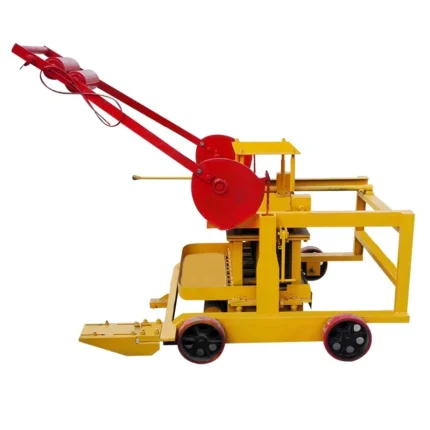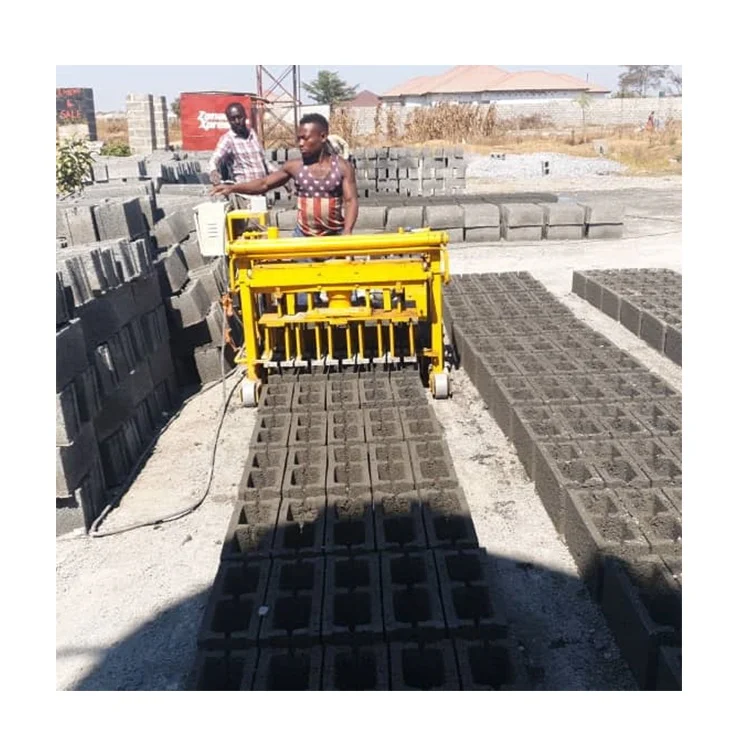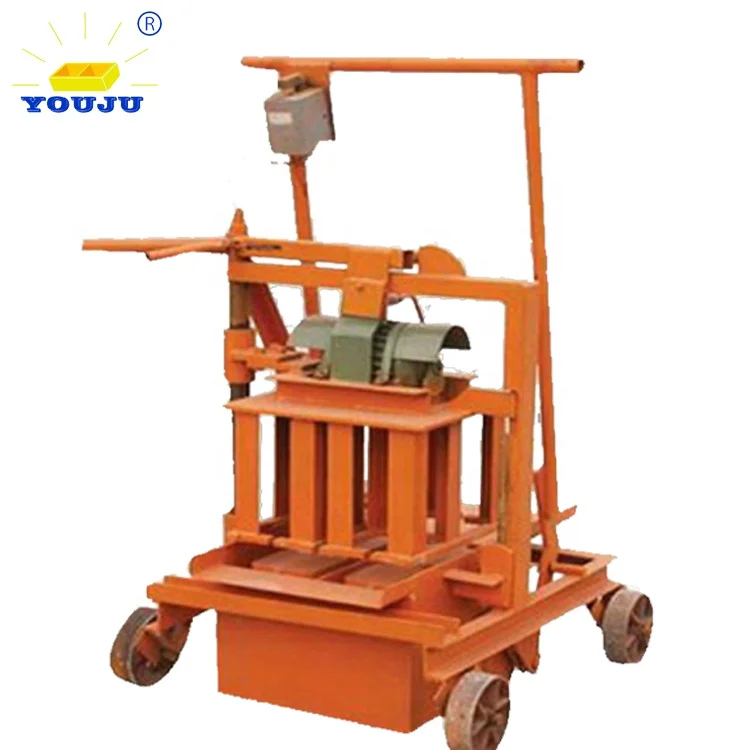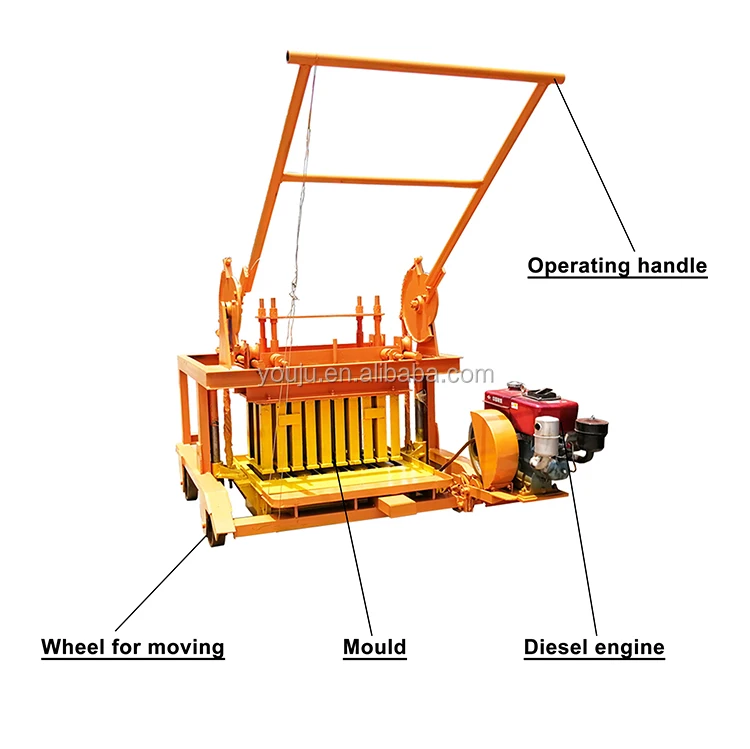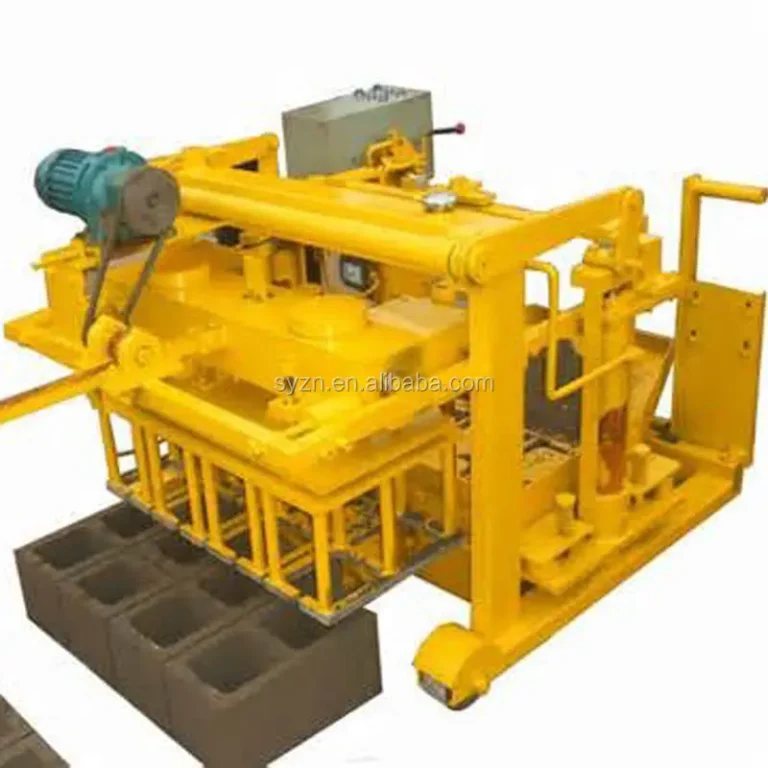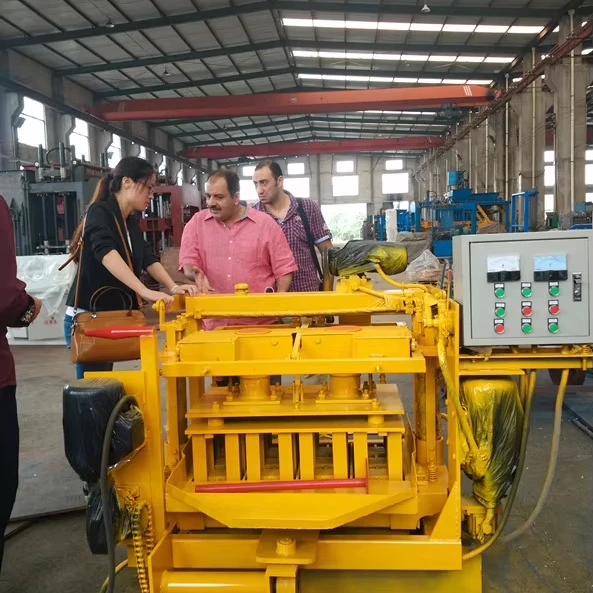


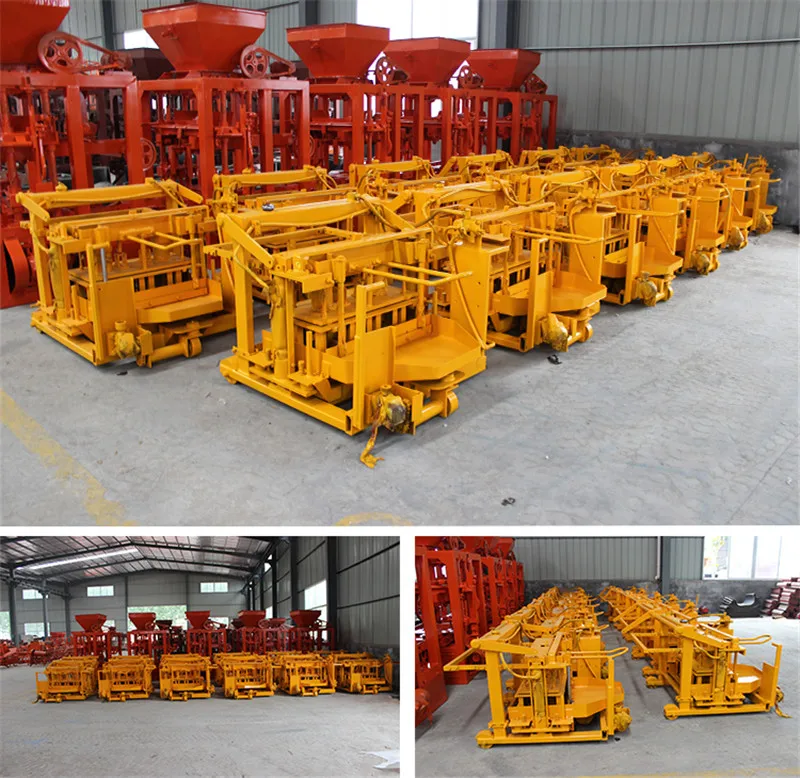
Description
Configuration built around your local mix — unlike catalogue defaults, the QMY4-30 mobile block making machine can be matched to your actual aggregate before dispatch, so cycle times and block strength hold up once you start production on-site.
Technical Specifications
| Parameter | Value |
|---|---|
| Model | QMY4-30 |
| Product Type | Mobile Concrete Block Making Machine |
| Rated Power | 5 kW |
| Voltage & Frequency | Configurable to site supply (basis to be confirmed) |
| Control System | Semi-automatic base; PLC control available as option |
| Overall Dimensions | 1200 × 1200 × 1100 mm |
| Net Weight | 950 kg |
| Cycle Time | 30 seconds per mould |
| Output Capacity | 480 pcs/hour based on 400×200×200 mm hollow block, 4 pcs/mould |
| Output Capacity | 600 pcs/hour based on 400×150×200 mm hollow block, 5 pcs/mould |
| Output Capacity | 840 pcs/hour based on 400×100×200 mm hollow block, 7 pcs/mould |
| Daily Output | 3,840 pcs/8 hours based on 400×200×200 mm hollow block |
| Daily Output | 4,800 pcs/8 hours based on 400×150×200 mm hollow block |
| Daily Output | 6,720 pcs/8 hours based on 400×100×200 mm hollow block |
| Mould Format | Hollow block, solid brick |
| Mould Change | Changeable (changeover time to be confirmed) |
| Raw Materials | Cement, sand, crushed stones, slag |
| Automation Level | Semi-automatic with PLC upgrade path |
| Assembly State | Mobile, no fixed plant required |
| Warranty | Five years |
Application Suitability
| Application | Material or Output |
|---|---|
| On-site hollow block production for building contractors | Crushed stone, sand, and cement mixes without a fixed batching plant |
| Start-up block yard producing solid bricks for local sale | River sand or crusher dust with ordinary Portland cement |
| Small-scale housing project block supply | Slag or quarry dust blended with cement on a compact footprint |
| Mobile production for remote construction sites | Local aggregate sourced near the build location |
Why the Voltage Question Must Come Before the Price
Confirming your site voltage and frequency before the machine leaves the factory prevents weeks of dead time on arrival.
I once stood on a commissioning site in West Africa watching an electrician rewire a control panel because the PLC was ordered for 380 V / 50 Hz while the local grid delivered 415 V / 60 Hz. The machine sat idle for days. With an automatic mobile block machine, the control system is the nerve centre — if the voltage does not match, nothing runs and the operator cannot even begin training. Specifying the exact supply at the quotation stage keeps the PLC, motor, and vibration timing aligned with what the buyer actually has on-site [NEED_CITE: voltage and frequency standards by export market].
How PLC Control Changes the Operator’s Day
A PLC controlled mobile block making machine removes the guesswork from cycle timing. Instead of an operator manually judging when to vibrate and when to release, the controller holds the 30-second cycle consistent across every mould. That consistency is what keeps block dimensions uniform from the first batch of the morning to the last batch before shutdown.
Batch-to-Batch Consistency Through Automation
When vibration duration and hydraulic pressure are set inside the PLC, the same programme runs regardless of which operator is on shift. This is critical when a block yard supplies a project that requires every batch to pass the same compressive strength test. Automation locks in the parameters that manual operation leaves to human judgement [NEED_CITE: concrete block compressive strength testing standards].
Reading the Specifications That Actually Matter
The 5 kW rated power must be matched to a dedicated circuit that can handle the starting current of the vibration motor without tripping a shared breaker. The 1,200 × 1,200 × 1,100 mm footprint means the machine can work inside a standard 20-foot container footprint, but the operator still needs clearance on three sides for mould changes and block ejection. The 950 kg net weight keeps the unit mobile on a site trailer, yet heavy enough that vibration force transfers into the mix rather than shaking the frame. Mould format flexibility between hollow block and solid brick lets a single machine serve two market segments, but the changeover procedure must be practised before a deadline-driven order arrives.
What Happens When the Automation Level Is Wrong
Buyers who select a semi-automatic base configuration without planning the upgrade path often find themselves stacking blocks by hand six months later when demand grows. Adding a pallet feeder and stacker after the fact means retrofitting sensors and wiring that the original control panel was never designed to accept. The result is a patched-together system where the PLC cannot synchronise the new modules, and the operator ends up overriding the automatic functions to keep production moving [NEED_CITE: PLC module compatibility in mobile block machinery].
Why Procurement Through This Channel Works
Block machinery is our single focus, so the QMY4-30 is specified as a matched system — machine, mould, and pallet — rather than assembled from separate suppliers. Configuration is set against the buyer’s actual mix design and local aggregate, not a catalogue default. Mould design covers the formats the buyer’s market sells, including custom drawings when a project calls for a non-standard bond pattern. Automation level is selectable, so a buyer can start semi-automatic and add PLC modules as volume grows. Installation support includes operator training on the specific PLC interface the machine ships with.
Documentation & Verification
- Line layout and capacity calculation stating the block format assumed
- Machine specification sheet with voltage and control language confirmed
- Mould drawing and format list for each hollow and solid profile ordered
- Electrical schematic showing PLC wiring and sensor positions
- Factory test record on the buyer’s target block format before dispatch
- Operation and maintenance manual covering PLC fault diagnostics
Installation, Commissioning & Support
- Dedicated 5 kW circuit with correct voltage and frequency confirmed before connection
- Level ground required within the 1,200 × 1,200 mm footprint for stable vibration transfer
- Machine arrives fully assembled; only the mould and power cable require fitting
- First-run calibration sets PLC cycle timing against the buyer’s local aggregate mix
- Operator training covers PLC parameter adjustment, mould change procedure, and fault reset
- Wear parts list and five-year warranty documentation provided at handover
What to Share With Your Enquiry
Send the exact block format and dimensions you intend to produce, the daily output target in pieces per shift, and a description of the aggregate available locally. Include your site voltage, frequency, and preferred PLC display language so the automatic mobile block machine can be configured before it leaves the factory.
Frequently Asked Questions
Q: What automation level does the QMY4-30 ship with, and what can be upgraded later?
A: The base configuration is semi-automatic with a manual mould change and operator-controlled cycle. A PLC control option is available that automates vibration timing and cycle counting. Future modules such as automatic pallet feeding or stacking can be added if the control panel is specified to accept those inputs at the time of order.
Q: How do I confirm voltage, frequency, and PLC display language before shipment?
A: Provide your exact site supply specifications and preferred operator language during the quotation stage. The electrical schematic is then drawn to match, and the PLC programme is loaded with the correct language file before the factory test, avoiding commissioning delays on arrival.
Q: How does the control system ensure batch-to-batch consistency?
A: The PLC holds vibration duration and cycle timing constant for every mould press. Once the parameters are set during commissioning using your local aggregate, the programme repeats them without operator intervention, keeping block dimensions and density uniform across shifts.
Q: What is the mould change procedure, and does automation reduce changeover time?
A: Mould changeover involves releasing the clamps, lifting the current mould, and seating the replacement. A PLC-controlled unit can store the vibration profile for each mould format, so the operator selects the programme rather than re-tuning timing manually, shortening the adjustment phase of the changeover.
Q: What operator training is provided during installation?
A: Commissioning includes hands-on training covering PLC parameter entry, fault code reading, mould change steps, and daily maintenance checks on the 5 kW drive and vibration assembly. The maintenance manual provided at handover documents all service intervals and spare part references.