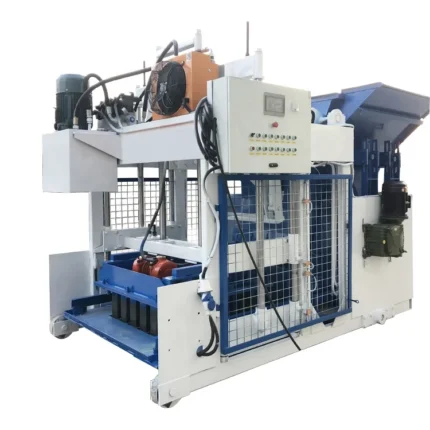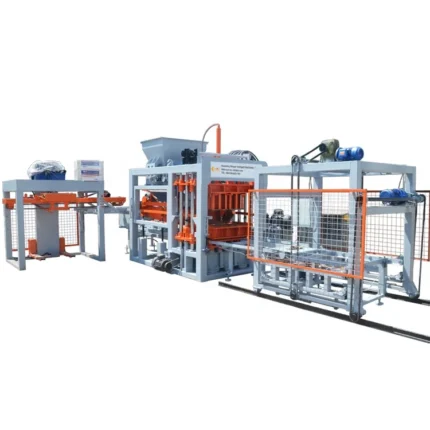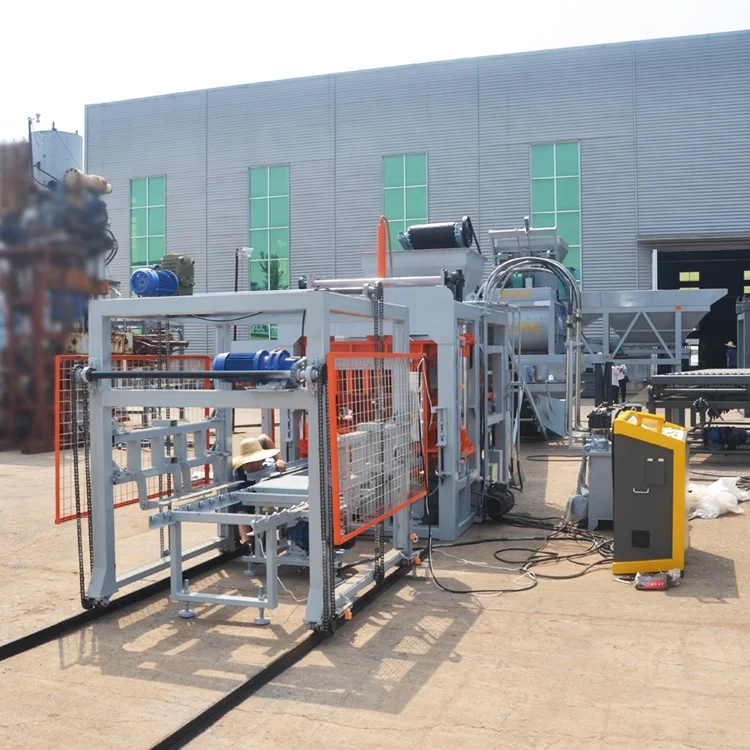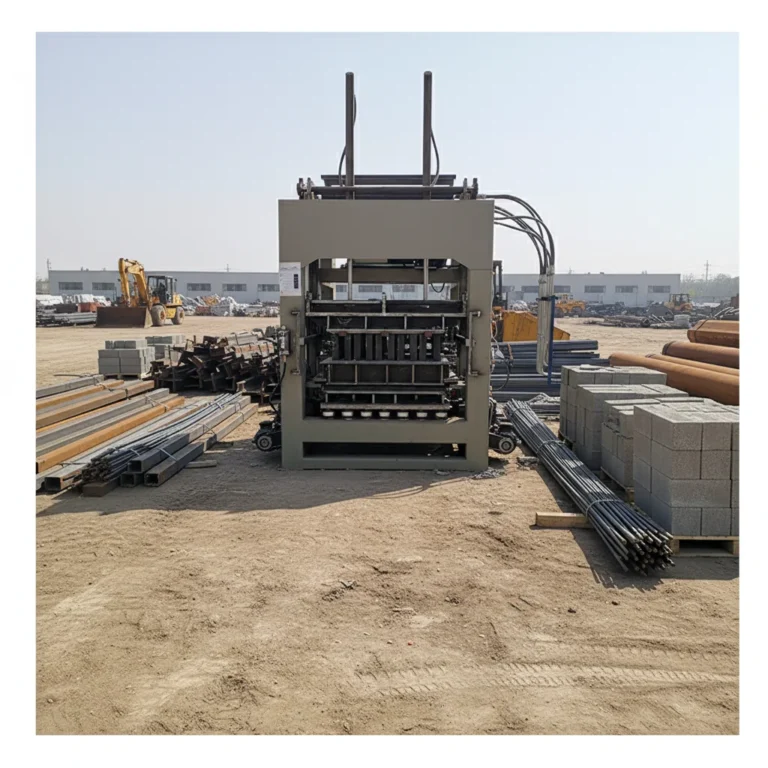


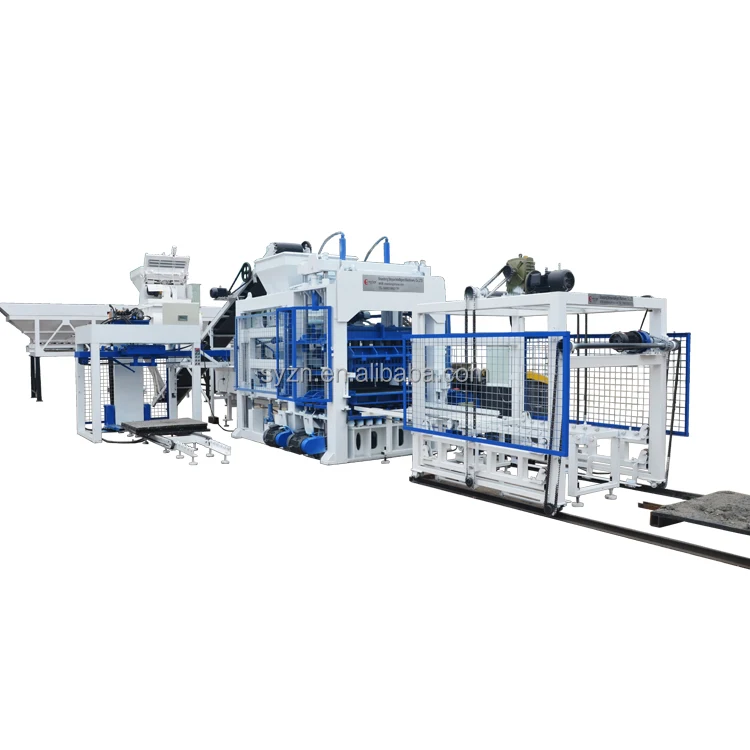
Description
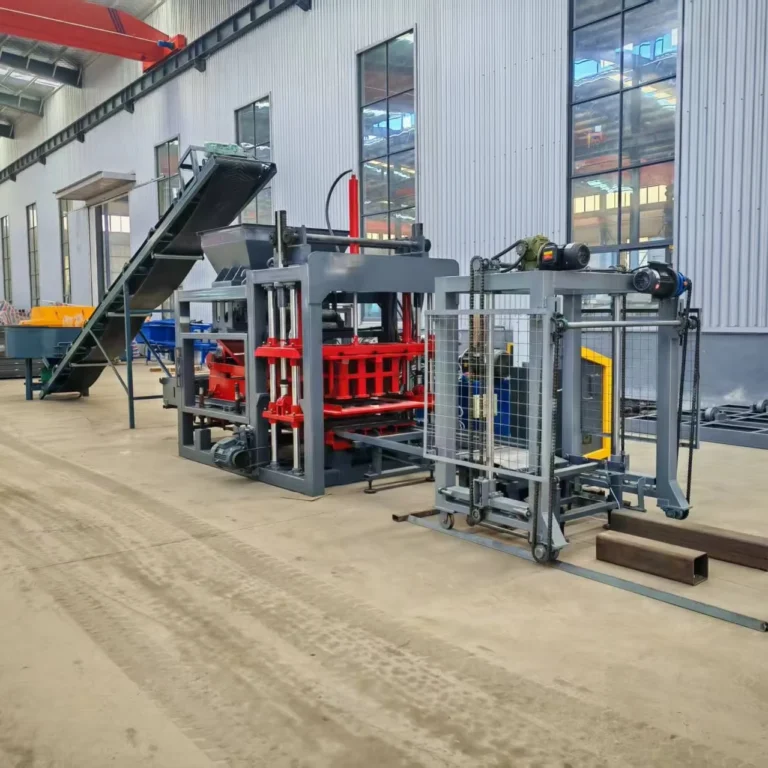
Integrated Handling System — the QT10-15 is specified with pallet feed, stacking logic, and curing rack dimensions confirmed before the machine leaves the factory, eliminating the on-site mismatch that costs days of production.
Technical Specifications
| Parameter | Value |
|---|---|
| Model | QT10-15 |
| Product Type | Automatic Concrete Block Making Machine |
| Control System | PLC control cabinet with configurable display language |
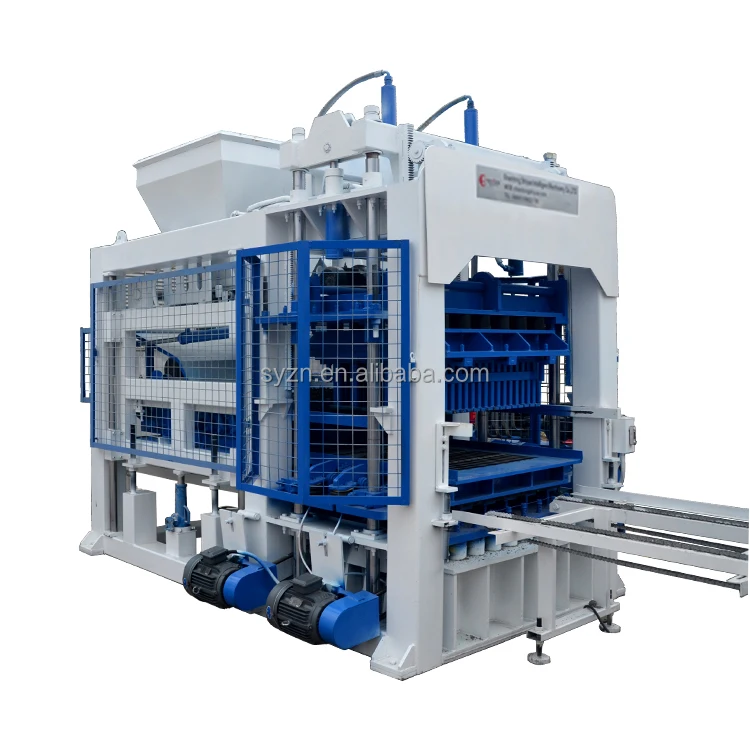
| Hydraulic System | Independent integrated hydraulic station |
| Vibration & Pressure | Matched to buyer’s mix design and local aggregate |
| Mould Change System | Quick replacement design for multi-function production |
| Automation Level | Automatic (PLC control, automatic pallet feeding) |
| Components Included | Pallet feed machine, block making machine, storage hopper, conveyor, hydraulic unit, PLC control cabinet |
| Mould Compatibility | Hollow block, solid brick, paving brick, interlocking brick, porous brick, kerbstone |
| Output (400×200×200mm hollow block) | 1,800–2,400 pcs/hour (basis: 10 pcs/mould, 15–20s cycle time) |
| Output (400×150×200mm hollow block) | 2,160–2,880 pcs/hour (basis: 12 pcs/mould, 15–20s cycle time) |
| Output (240×115×53mm solid brick) | 8,928–11,160 pcs/hour (basis: 62 pcs/mould, 15–20s cycle time) |
| Output (200×100×60mm paving block) | 5,184–6,480 pcs/hour (basis: 27 pcs/mould, 20–25s cycle time) |
| Output (225×112.5×60mm paving block) | 4,032–5,040 pcs/hour (basis: 24 pcs/mould, 20–25s cycle time) |
| Voltage & Frequency | Configurable to site supply (basis to be confirmed) |
| Warranty | 1 year for whole machine (excluding spare parts) |
Application Suitability
| Application | Material or Output |
|---|---|
| High-volume hollow block plants | Crushed stone, sand, and cement mixes for 400mm series hollow blocks |
| Paving and kerbstone production | Fine aggregate and pigment mixes for interlocking and permeable pavers |
| Housing project on-site supply | Multiple solid and hollow formats from a single PLC-controlled line |
| Concrete product manufacturers | Format expansion into porous brick and interlocking brick ranges |
| Building material distributors | Regional supply of standard and custom block formats |
What the Automation Spec Actually Removes From Your Operator
The automatic QT10-15 block machine PLC controlled system takes over pallet indexing, mix dosing, and press cycling so the operator monitors rather than drives the sequence.
In my time commissioning lines across Southeast Asia, the machines that stalled most often were not the ones with mechanical faults — they were the ones where the PLC language was wrong for the local crew, or where the pallet feeder expected a pallet weight the buyer’s supplier could not deliver. The intelligent side of block production is not just about having a screen; it is about every automated station talking to the press at the same cycle rhythm [NEED_CITE: PLC programming standards for industrial machinery]. When one station lags, the press sits idle and the quoted output becomes theoretical.
How the PLC Removes Batch-to-Batch Guesswork
The PLC control cabinet on the automatic QT10-15 block machine PLC controlled configuration stores cycle parameters per mould type. When the operator selects a format — say 200×100×60mm paving blocks — the press adjusts vibration duration and hydraulic dwell without manual recalibration. This consistency matters most when a plant runs two or three formats in a single shift, because the alternative is an operator relying on memory and feel, which introduces density variation across the day’s output.
Where Intelligent Control Meets the Rest of the Line
Automation only holds if every station around the press keeps pace. The pallet feed machine must place and retrieve pallets within the press cycle window, and the conveyor must deliver raw material to the storage hopper at a rate that prevents the mixer from becoming the bottleneck. I have watched a well-tuned press lose cycles simply because the automatic pallet feeder was set to a stroke speed that suited a different pallet weight [NEED_CITE: pallet handling synchronization in block plants]. Confirming pallet size, material, and weight before the line ships is the step that prevents this.
Reading the Specs That Decide Your Daily Reality
Hydraulic pressure and vibration force together determine block density and green strength. A higher vibration amplitude compacts coarse aggregate effectively, but if the hydraulic pressure is not matched, the block may crack on demoulding. The quick mould change design matters in hours saved per format switch — a change that takes most of a shift negates the flexibility the buyer paid for. Pallet size must align with the curing rack spacing and forklift tine width already on site; a mismatch here halts the line from day one. The independent integrated hydraulic station sits apart from the main frame vibration, which protects valve seals and extends service intervals in dusty environments.
The Cost of Specifying Automation in Isolation
A buyer who selects a PLC-controlled press but leaves pallet handling and stacking as manual additions will find that output piles up faster than workers can move it, creating a curing-area bottleneck that cancels the automation gain [NEED_CITE: common block plant bottlenecks]. The other recurring issue is voltage: a PLC and hydraulic pump designed for 380V/50Hz arriving at a 440V/60Hz site will either fail to start or burn out components within weeks. These are not defects — they are specification gaps that could have been closed before shipment.
Why This Configuration Approach Differs
Block machinery is our single focus, which means the automatic QT10-15 block machine PLC controlled package is specified as a matched system: press, mould, pallet, and handling stations sized to the same cycle target. We set the configuration against the buyer’s actual mix design and local aggregate, not a catalogue default. Mould design covers the formats the buyer’s market actually sells, including custom drawings where standard formats do not apply. The automation level is selectable, so a plant can start with automatic pallet feeding and add stacking and cubing as volume justifies the investment. Every handling dimension is confirmed against the buyer’s existing curing racks and forklifts before production begins.
Documentation & Verification
- Line layout and capacity calculation stating the exact block format assumed for quoted output
- Mould drawing and format list matched to buyer’s local market product range
- Voltage, frequency, and PLC display language confirmation sheet signed before production
- Hydraulic and electrical schematic with independent station isolation points marked
- Factory test record run on buyer’s specified block format before dispatch
- Wear parts and mould list with first replacement timeline included
Installation, Commissioning & Support
- Foundation plan accounts for the independent hydraulic station isolation and vibration dampening
- Power supply verified for PLC cabinet and hydraulic pump rated voltage before energization
- Pallet feeder stroke and timing calibrated to buyer’s confirmed pallet weight and dimensions
- PLC display language and cycle parameter library loaded per confirmed mould format list
- Operator training covers mould change sequence and quick replacement mechanism operation
- Wear parts inventory aligned with first scheduled replacement dates from factory test data
Before You Request a Quotation
To size the automatic QT10-15 block machine PLC controlled line correctly, we need your target block formats with dimensions, the daily output you plan to sustain, and the local aggregate and cement types available. Share your site voltage and frequency, the PLC display language your operators require, and the pallet dimensions and curing rack spacing already in use. If you are expanding an existing plant, tell us what upstream mixing and downstream handling equipment is already on the floor.
Frequently Asked Questions
Q: How is the QT10-15 capacity calculated per block format, and what cycle time is assumed?
A: Each output figure states the block dimension, pieces per mould, and cycle time range. For example, 400×200×200mm hollow blocks are rated at 1,800–2,400 pcs/hour based on 10 pcs/mould and a 15–20 second cycle. Actual daily throughput depends on your mix design, pallet handling speed, and curing logistics.
Q: What PLC control options and display languages are available for my region?
A: The PLC control cabinet display language is confirmed during the specification phase before production starts. We match the language to your operator team’s requirement so that cycle parameters, fault codes, and mould selection menus are readable from day one of commissioning.
Q: How long does a full mould change take, and what automation assists the process?
A: The quick replacement design allows the operator to swap moulds without extended press downtime. The exact changeover duration depends on the format being loaded and whether the plant has the optional mould handling aids installed. We state expected changeover time during the configuration proposal.
Q: Can the automation level be upgraded later, such as adding automatic stacking and cubing?
A: Yes. The automation level is selectable at purchase, and the line architecture allows stacking and cubing stations to be added as production volume grows. The PLC architecture supports these additions without replacing the existing control cabinet.