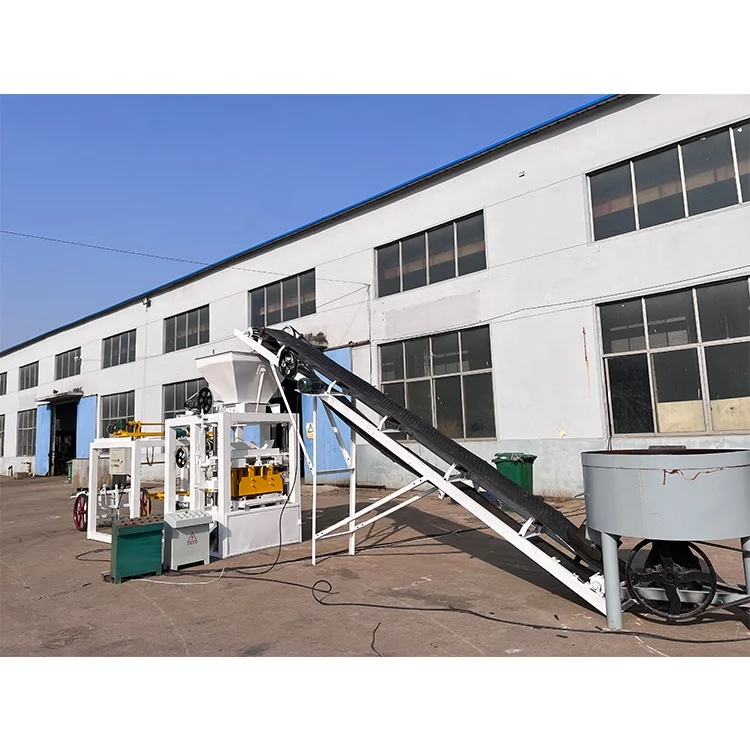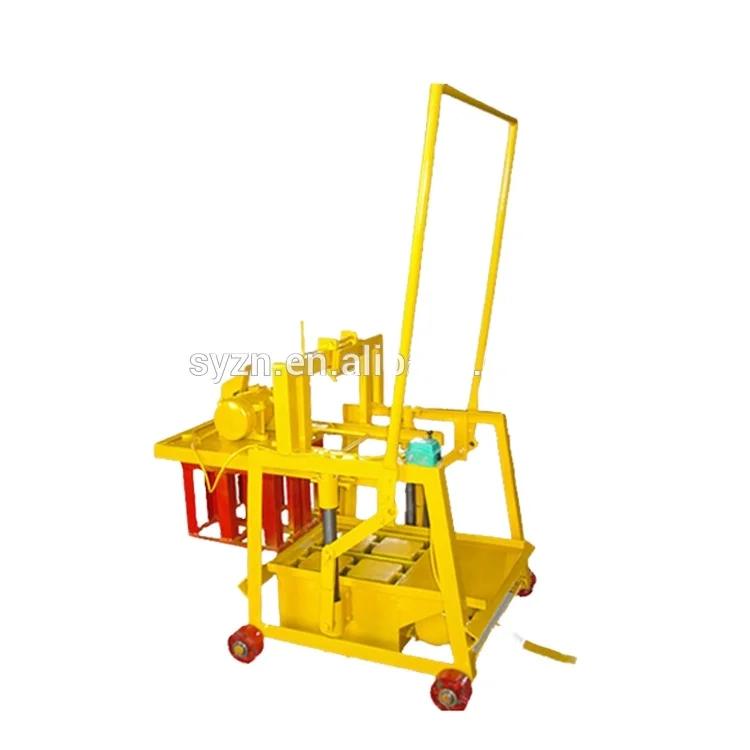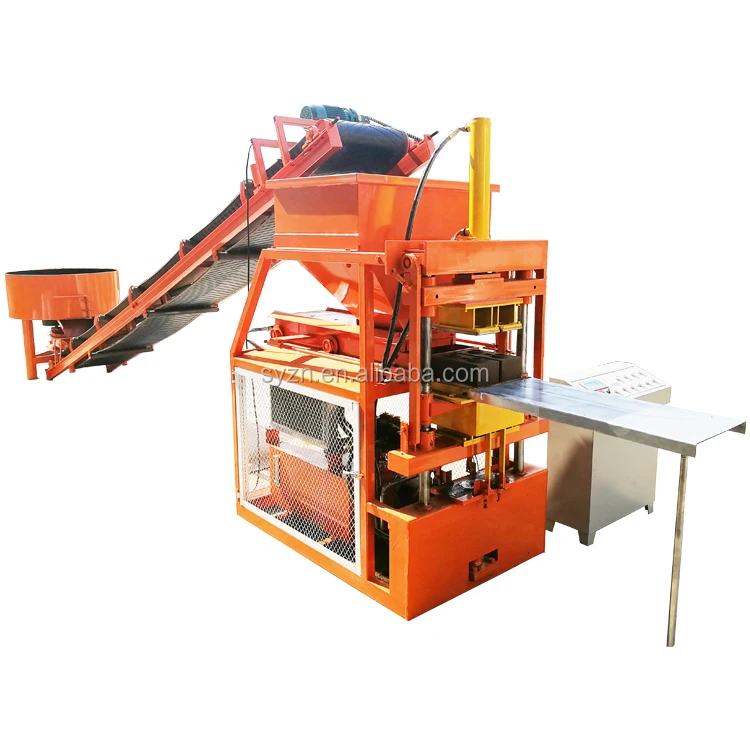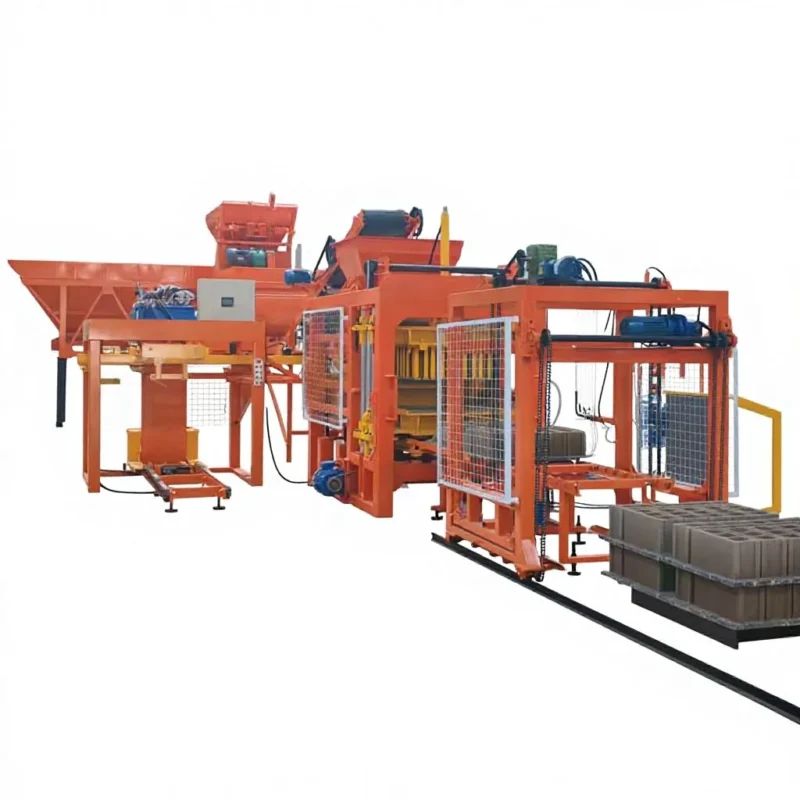


Description
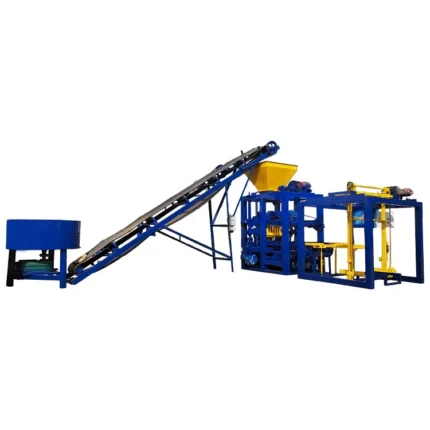
Intelligent Process Control — the QT6-15 automatic concrete block making machine PLC controlled system removes operator guesswork from vibration timing and hydraulic pressure, delivering batch-to-batch consistency that manual setups cannot replicate.
Technical Specifications
| Parameter | Value |
|---|---|
| Model | QT6-15 |
| Product Type | Automatic Concrete Block Making Machine |
| Overall Dimensions (L×W×H) | 8200×1700×2950 mm |
| Vibration Frequency | 0-60 Hz |
| Vibration Form | Platform Vibration |
| Moulding Mode | Automatic load, vibration moulding |
| Pallet Size | 880×850 mm |
| Molding Cycle | 15-25 s depending on block format and material |
| Overall Power | 37 kW |
| Vibration Force | 45 kN |
| Total Mass | 7 T |
| Demolding Method | Hydraulic |
| Factory Area Required | 1200 m² |
| Control System | PLC with touch screen HMI |
| Hydraulic System | Independent integrated hydraulic station |
| Compressive Strength of Blocks | More than 15 MPa |
| Output — Hollow Block 400×200×200 mm | 8640-11520 pcs per 8-hour shift (basis: stated format) |
| Output — Hollow Block 400×150×200 mm | 11520-15360 pcs per 8-hour shift (basis: stated format) |
| Output — Solid Brick 240×115×53 mm | 46080-61440 pcs per 8-hour shift (basis: stated format) |
| Output — Rectangular Paver 200×100×60 mm | 17280-23040 pcs per 8-hour shift at 20-25 s cycle (basis: stated format) |
| Output — Zigzag Paver 225×112.5×60 mm | 17280-23040 pcs per 8-hour shift at 20-25 s cycle (basis: stated format) |
| Voltage & Frequency | Configurable to site requirement (basis to be confirmed) |
| Warranty | 1 year for whole machine excluding spare parts |
| Certification | CE |
Application Suitability
| Application | Material or Output |
|---|---|
| Hollow block production | Crushed stone, river sand, cement with adjustable dosage |
| Solid brick production | Fly ash, slag, aggregate blends |
| Rectangular paving block | Crushed granite, quarry dust, cement |
| Zigzag interlocking paver | Graded aggregate with fine sand filler |
| Multi-cellular brick | Waste ash and slag with cement binder |
What "Cycles per Hour" Leaves Out About Real Output
A cycle time means nothing unless you know which block format, which mix, and which pallet it was measured on.
I have watched plant owners in West Africa unpack a new automatic concrete block making machine PLC controlled unit, fire it up with local river sand, and wonder why the stated hourly output never materialises. The problem is rarely the press itself. High clay content in the aggregate changes how the mix flows into the mould cavity, forcing longer fill times and reducing effective cycles. When vibration force and hydraulic pressure are not recalibrated to the actual mix design, the machine still cycles — but the blocks come off the pallet too weak to stack. [NEED_CITE: effect of aggregate clay content on concrete block compressive strength]
How PLC Logic Closes the Consistency Gap
The QT6-15 places a programmable controller at the centre of every production decision. The touch screen HMI lets the operator store parameter sets for each block format, so switching from a 400×200×200 mm hollow block to a 200×100×60 mm paver recalls the exact vibration frequency, hydraulic pressure and fill time that the mould requires. Safe logic interlock circuits prevent the press from cycling when a pallet is misaligned or the hopper gate has not fully closed, eliminating the half-formed blocks that manual operators often pass to the curing yard.
Step Vibration and the Mix Design Variable
Step vibration moulding technology on this automatic concrete block making machine PLC controlled unit allows the vibration profile to be adjusted in stages rather than applying a single fixed force throughout the cycle. This matters when the raw material shifts from clean crushed stone to a blend containing waste ash or slag, because each material settles differently under vibration. The adjustable parameters let the plant match the vibration envelope to the aggregate, maintaining block density above 15 MPa without over-compacting the face mix. [NEED_CITE: step vibration principles in concrete block forming]
Reading the Spec Sheet Against Your Actual Plant Floor
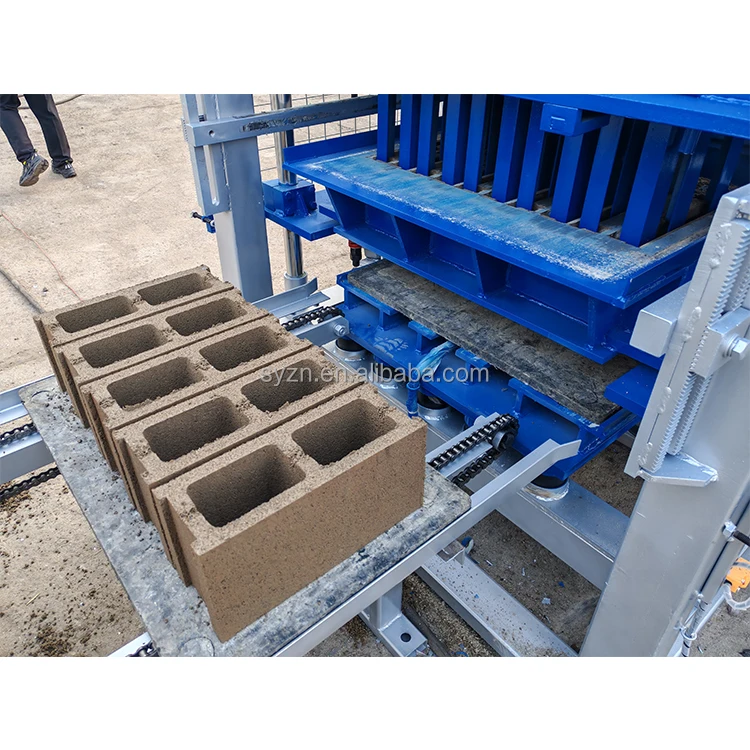
Vibration force rated at 45 kN combined with platform vibration means the energy is transferred through the pallet into the mould cavity from below, compacting the mix upward against the head plate. For hollow blocks this produces uniform wall density, but the result depends on pallet stiffness — a worn timber pallet absorbs energy that should reach the mix. The 880×850 mm pallet size must match the curing rack spacing and forklift tine width already in the plant, otherwise the buyer ends up replacing the entire pallet inventory. The independent integrated hydraulic station sits isolated from the main frame vibration, which keeps hydraulic seals and solenoid valves away from the dust and shock that shorten component life on direct-mounted systems. The 37 kW overall power draw requires a dedicated circuit with proper voltage regulation; fluctuating supply voltage at the site will alter motor speed and shift the vibration frequency away from the PLC set-point.
The Cost of Skipping the Automation Audit
Buyers moving from manual or semi-automatic production often underestimate how much output consistency depends on the operator rather than the press. When the QT6-15 is specified without confirming the pallet handling and stacking arrangement, the press may cycle at full speed while finished blocks pile up at the discharge end waiting for manual removal. The automation level is selectable, but the decision must be made before production starts — retrofitting automatic stacking and cubing after the line is running means downtime and re-engineering the discharge conveyor. [NEED_CITE: automation retrofit challenges in block production plants]
Why Sourcing the Control System Matters
The PLC and touch screen HMI on the QT6-15 are specified as a matched set with the hydraulic station and vibration motors, so parameter changes on screen translate directly to actuator response on the press. The block machinery focus means the machine, mould, pallet and handling equipment are configured as one system rather than assembled from separate suppliers. Configuration is set against the buyer’s actual mix design and local aggregate, not a catalogue default. Mould design covers the formats the buyer’s market sells, including custom drawings for non-standard block dimensions. Automation level is selectable, allowing a buyer to start with semi-automatic pallet handling and upgrade the stacking and cubing stations as output volume justifies the investment. Installation includes on-site commissioning with operator training so the PLC parameter sets are verified against the local material before the first production run.
Documentation & Verification
- Capacity calculation document stating the exact block format and cycle time assumed for each output figure
- PLC program backup and parameter set file delivered with the machine documentation package
- Voltage, frequency and touch screen display language confirmed in writing before production begins
- Factory test record on the buyer’s specified block format with compressive strength results
- Mould drawing, format list and hydraulic schematic for local maintenance reference
- Wear parts list identifying hydraulic seals, vibration springs and pallet guide components
Installation, Commissioning & Support
- Foundation must support 7 T static mass plus dynamic vibration load across the 8200×1700 mm footprint
- Dedicated 37 kW power circuit with voltage stabiliser to maintain PLC set-point accuracy
- Machine ships dismantled for container loading with reassembly supervised on site
- First production run verifies PLC parameters against local aggregate and cement dosage
- Operator training covers mould change procedure, fault diagnosis screen and daily maintenance checks
- Hydraulic seals and vibration wear parts list provided for first-year procurement planning
What We Need to Build Your Configuration
Send the target block format with dimensions, the daily output you need to meet market demand, and a sample or description of the aggregate available locally. Confirm the site voltage and frequency, the preferred touch screen language for operators, and whether the existing curing yard uses timber or bamboo pallets. Let us know if you plan to start semi-automatic and add stacking automation later, so the discharge end is prepared from the start.
Frequently Asked Questions
Q: How is the capacity figure calculated and which block format does each output number assume?
A: Each output figure in the specification table is calculated for a specific block format with its corresponding moulding cycle time. The hollow block capacity assumes a 400×200×200 mm format, while paver figures are based on a 20-25 second cycle. Actual throughput depends on mix design, pallet condition and operator workflow around the press.
Q: What PLC brand is used and can the touch screen language be set before shipment?
A: The PLC and HMI are specified as a matched control package for the QT6-15. Touch screen language is confirmed during the order stage and set before dispatch so operators can read fault codes and parameter screens in their working language from the first production day.
Q: Can I start the QT6-15 in semi-automatic mode and upgrade to full automatic stacking later?
A: The automation level is selectable at order stage. The press discharge end can be prepared with conveyor mounting points and sensor positions so that automatic stacking and cubing stations are added later without major re-engineering or extended production downtime.
Q: How does the machine adjust vibration and hydraulic parameters when I change raw material or block format?
A: The PLC stores separate parameter sets for each mould installed on the line. When the operator selects a different block format on the touch screen, the system recalls the vibration frequency, hydraulic pressure and fill time matched to that mould and mix design, maintaining consistent block density across format changes.
Q: What is the mould change procedure and how long does a full format switch take?
A: The mould is secured to the vibration platform with a clamping system designed for workshop-level tool changes. A trained operator can complete a full format switch including pallet size adjustment and PLC parameter recall within a standard shift, preserving production time for the remaining formats in the schedule.