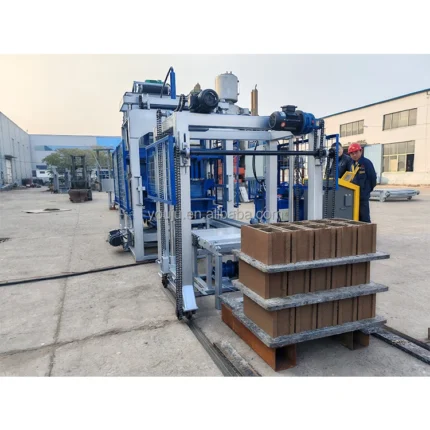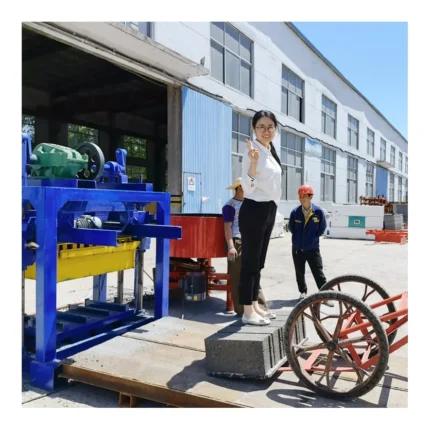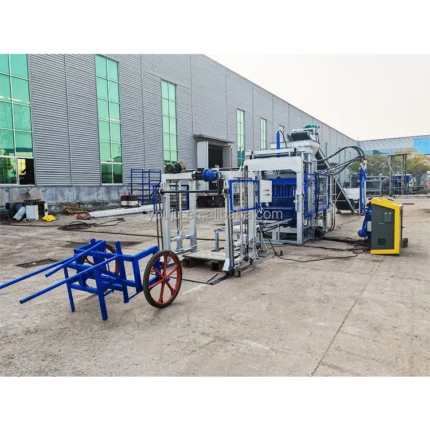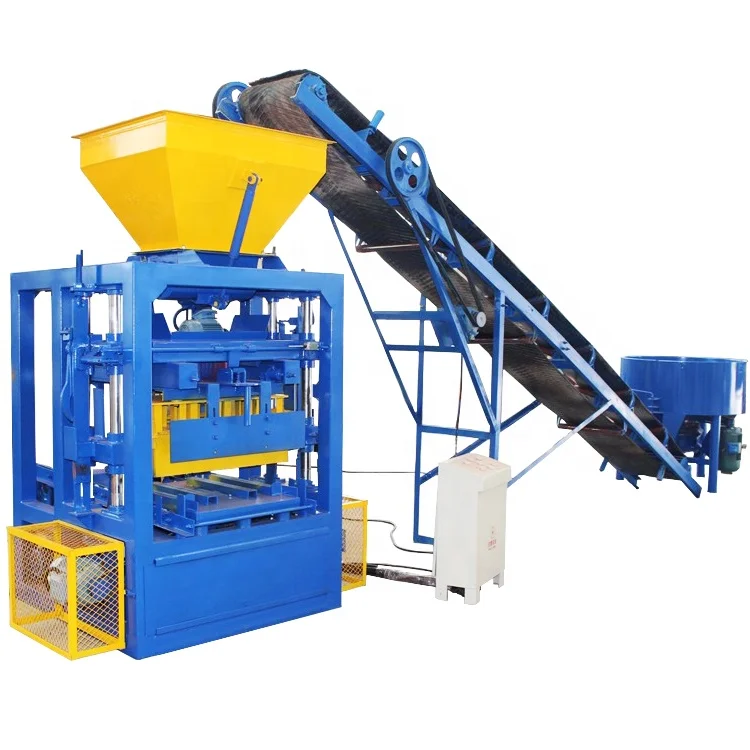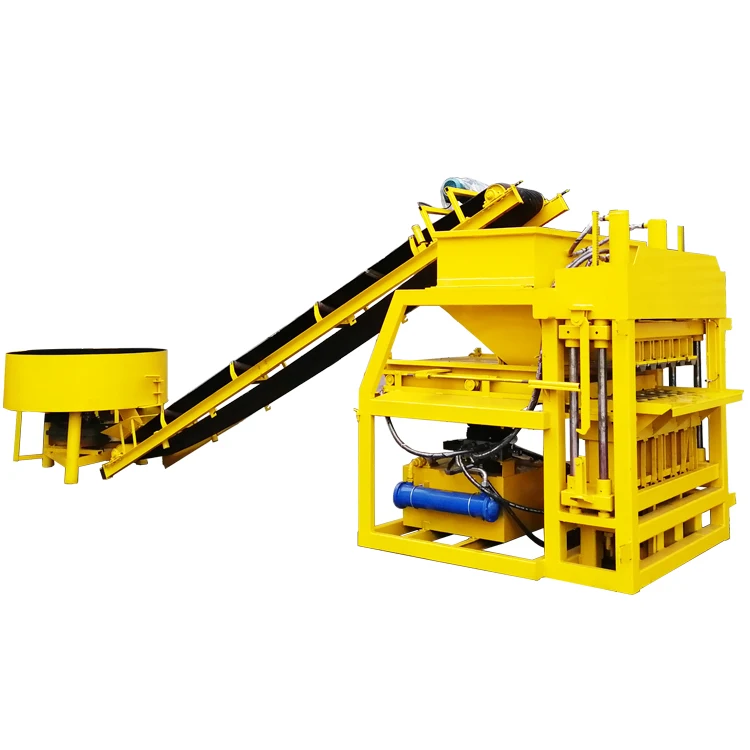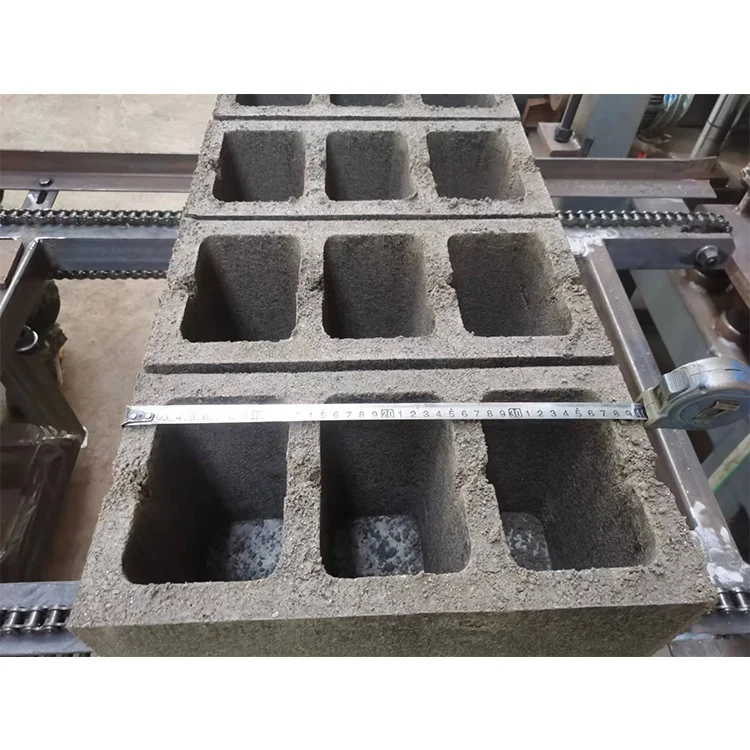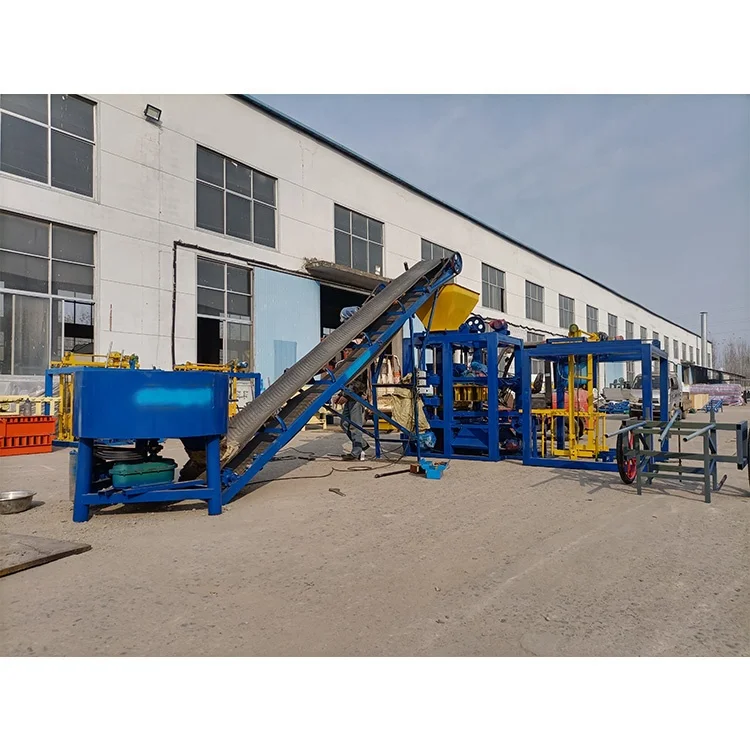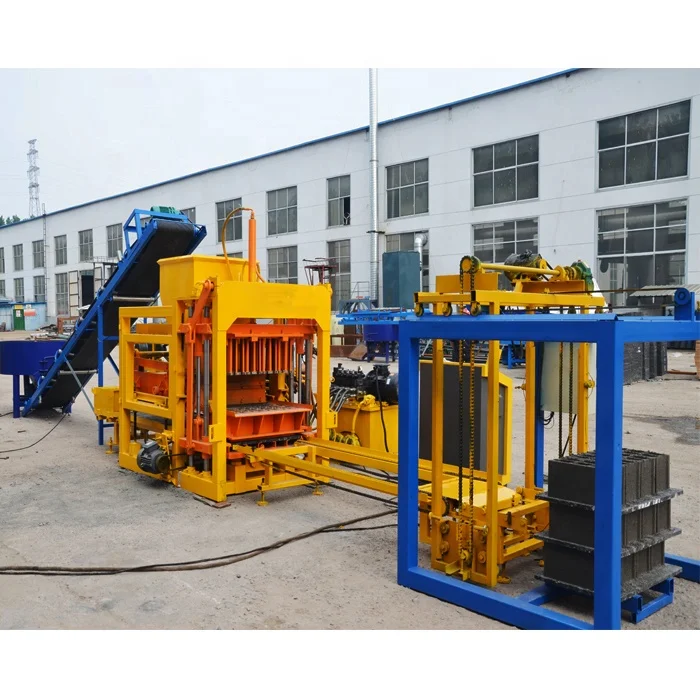

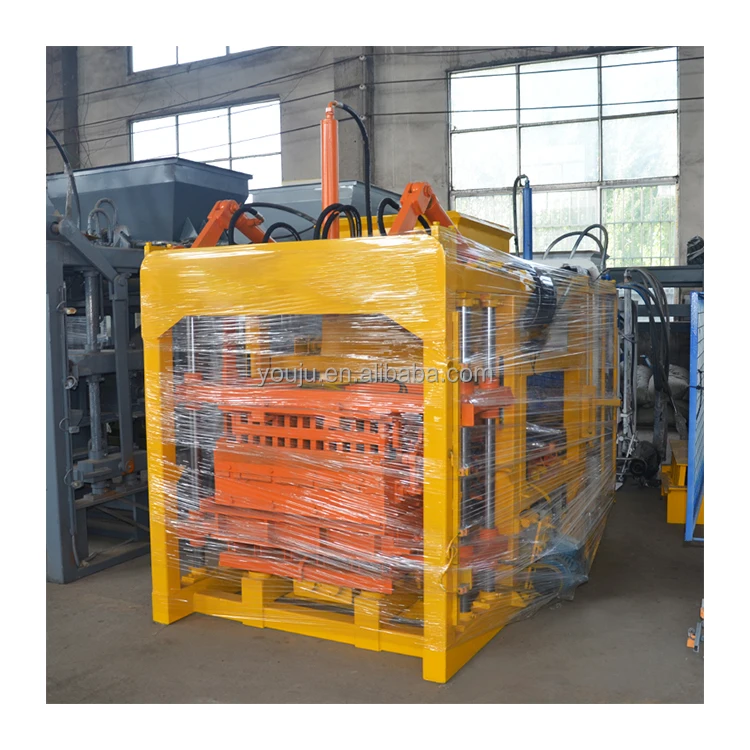


Description
Intelligent vibration control — frequency-adjustable directional vibration with electronic braking cancels residual energy cycle after cycle, so block density stays consistent regardless of operator skill level.
Technical Specifications
| Parameter | Value |
|---|---|
| Model | QT4-15 |
| Product Type | Hydraulic Concrete Block Making Machine |
| Rated Power | 27.5 kW |
| Voltage | 380V (frequency to be confirmed: 50/60 Hz) |
| Control System | Computer controlled PLC (brand and display language to be confirmed) |
| Overall Dimensions (L×W×H) | 7100 × 1600 × 2610 mm |
| Net Weight | 5 T |
| Pallet Size | 1020 × 570 mm |
| Vibration Force | 40 kN |
| Moulding Cycle | 15 s (basis not stated in source — confirm block format / material / thickness) |
| Mixer Model | JS500 |
| Motor Brand | Siemens |
| Hydraulic Pressure | To be confirmed (MPa rating) |
| Water Consumption | 4 T per day |
| Workers Required | 3–4 |
| Workshop Area | 150 m² |
Application Suitability
| Application | Material or Output |
|---|---|
| Hollow block production | Crushed stone, sand, cement and lightweight aggregate mixes |
| Solid block manufacturing | Dense aggregate blends for load-bearing masonry units |
| Paving block forming | Fine-graded sand and cement for interlocking or rectangular pavers |
| On-site contractor production | Locally sourced aggregate with JS500 mixer feeding the press directly |
What "15-Second Cycle Time" Leaves Out About the Automatic QT4-15 Block Machine PLC Controlled
A cycle time figure means nothing unless you know which block format, wall thickness and aggregate density it was measured on.
I have stood in block plants where the press cycled fast but the blocks crumbled at the stacking station because the vibration frequency was never matched to the local aggregate. In Kenya, a customer ran lightweight volcanic scoria through a press set for dense river gravel — the cycle was fast, but half the daily output failed the drop test. The automatic QT4-15 block machine PLC controlled configuration starts with your material sample, not a catalogue default. [NEED_CITE: aggregate density and vibration frequency matching in concrete block production]
How PLC Logic Removes Operator Guesswork
The automatic QT4-15 block machine PLC controlled system replaces manual timing decisions with programmed sequences. Feed duration, vibration ramp-up, pressure hold and demoulding speed are stored as recipes, so a shift change does not mean a different block. The photoelectric-controlled host material feeding prevents aftershock impact on freshly formed blocks — something an operator watching the hopper by eye will miss once fatigue sets in during the second half of a shift.
The Upgrade Path From Semi-Automatic Operation
Many buyers start with manual pallet handling and stacking, then add automation stations as volume grows. The QT4-15 platform supports this progression: the PLC can accept additional I/O modules for automatic pallet feeding, stacker integration and cubing without replacing the core press controller. This means the initial investment in the automatic QT4-15 block machine PLC controlled logic protects you when the line expands, rather than forcing a full control retrofit. [NEED_CITE: PLC I/O expansion for block line automation upgrades]
Reading the Specification Sheet Against Your Actual Plant Conditions
The 40 kN vibration force works in concert with hydraulic pressure to compact the mix — but the ratio between them must match your aggregate’s particle shape and moisture content. The 1020 × 570 mm pallet size determines how many blocks per cycle and how your curing racks must be spaced; if your existing forklift tines are narrower than the pallet width, every pallet move becomes a two-person job. The 27.5 kW rated power and 380V supply require a dedicated circuit with correct overcurrent protection, and the Siemens motor must be wound for your local frequency — a 50 Hz motor on a 60 Hz supply will overspeed and fail within weeks.
The Hidden Cost of Skipping Voltage and Frequency Confirmation
I have seen entire commissioning schedules collapse because the machine arrived wired for 380V/50Hz and the site ran 415V/60Hz. The motor overheats, the PLC power supply burns out, and the buyer spends days sourcing a step-down transformer locally. Voltage and frequency must be locked in writing before production begins, not assumed from the default listing. This applies to the automatic QT4-15 block machine PLC controlled cabinet as much as the main press motor. [NEED_CITE: voltage and frequency standards by export market]
Why the Line Around the Press Determines Real Output
The JS500 mixer must discharge a full batch before the press completes its current cycle, or the press sits idle waiting for material. Downstream, if pallet handling is manual while the press cycles automatically, fresh blocks pile up faster than they can be moved to the curing area. The line layout drawing must show every station’s cycle contribution so bottlenecks are visible before equipment is built, not discovered during installation.
Why Source the Machine and Intelligence Together
Block machinery is the single focus here, which means the press, mould, pallet and PLC are specified as one matched system rather than assembled from separate vendors. The control configuration is set against your actual mix design and target block format, not pulled from a generic programme. Mould design covers the formats your market sells, with custom drawings available. Automation level is selectable at order, so the upgrade path remains open without a controller swap. Installation support includes operator training on the specific PLC interface and recipe management your machine ships with.
Documentation & Verification
- Machine specification sheet listing confirmed PLC brand, programme version and display language
- Line layout drawing showing JS500 mixer, pallet feeder, press and stacking station cycle coordination
- Factory test record run on your target block format and confirmed aggregate sample
- Hydraulic and electrical schematic matching your site voltage and frequency
- Voltage, frequency and control language confirmation document signed before production release
Installation, Commissioning & Support
- Foundation plan sized to the 7100 × 1600 mm footprint with vibration isolation provisions
- Dedicated 380V circuit with overcurrent protection rated for the 27.5 kW load
- Assembly state confirmed before dispatch — dismantled for container loading or shipped as sub-assemblies
- On-site PLC parameter tuning using your local aggregate sample and target block format
- Operator training covering recipe selection, mould change procedure and fault code interpretation
- Wear parts list specifying hydraulic seals, vibration springs and mould liner replacement intervals
What We Need to Build Your Configuration
Send a sample of your local aggregate along with the target block formats you intend to produce and the daily volume each format must reach. Confirm your site voltage, frequency and the PLC display language your operators will read. If you already have a mixer, pallet system or curing racks in place, share their specifications so the line layout accounts for existing equipment rather than duplicating it.
Frequently Asked Questions
Q: What automation level does the QT4-15 ship with, and what is the upgrade path to full automatic stacking and cubing?
A: The base configuration includes PLC-controlled press cycling with photoelectric material feeding. Pallet feeding, stacking and cubing are configurable additions. The PLC accepts extra I/O modules so these stations integrate without replacing the controller, protecting your initial investment when you expand the line.
Q: How is the PLC control language and HMI interface confirmed before shipment?
A: The PLC brand, programme version and display language are confirmed in writing before production begins. The HMI interface is set to your operator’s preferred language, and this confirmation is documented alongside the voltage and frequency specification.
Q: How do vibration force and cycle time translate into realistic daily output for my block format?
A: The 40 kN vibration force and 15-second moulding cycle are rated values whose actual output depends on block format, wall thickness and aggregate density. A capacity calculation is prepared per format you intend to produce, stating the assumed block dimensions and mix design.
Q: What voltage and frequency options are available beyond the default 380V?
A: The motor and PLC power supply can be wound or configured for your local grid. The exact voltage, frequency and plug standard must be confirmed in writing before production so the machine arrives ready for your site electrical supply without adapter transformers.
Q: How does the QT4-15 integrate with upstream mixing and downstream pallet handling?
A: The line layout drawing maps how the JS500 mixer discharge, pallet feeder timing and stacking station speed align with the press cycle. Each station’s contribution is calculated so the press is never starved of material or blocked by slow pallet removal downstream.