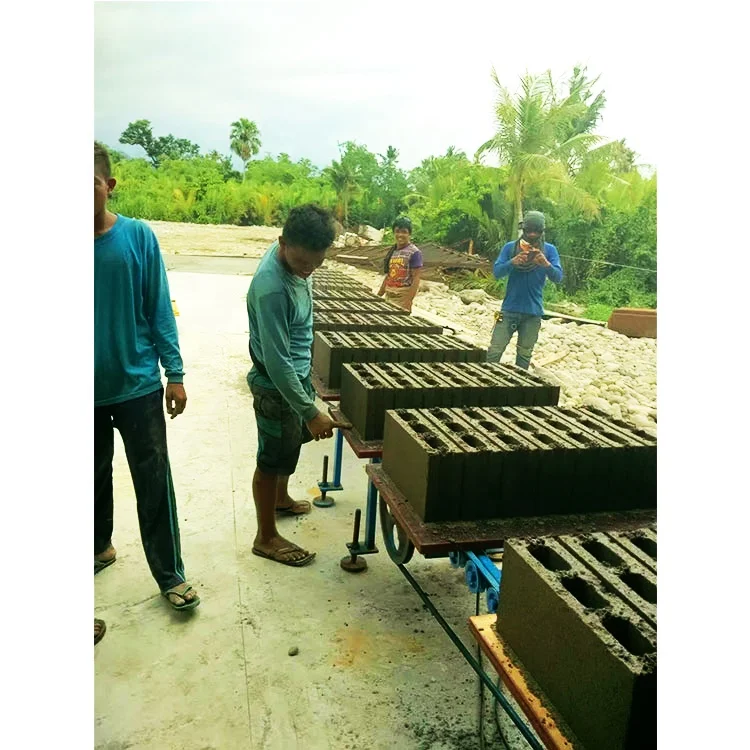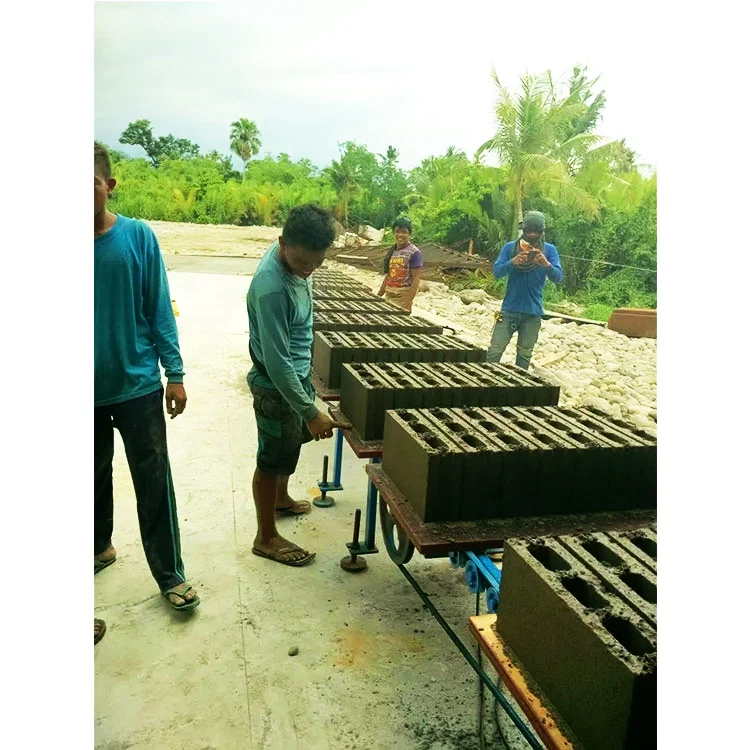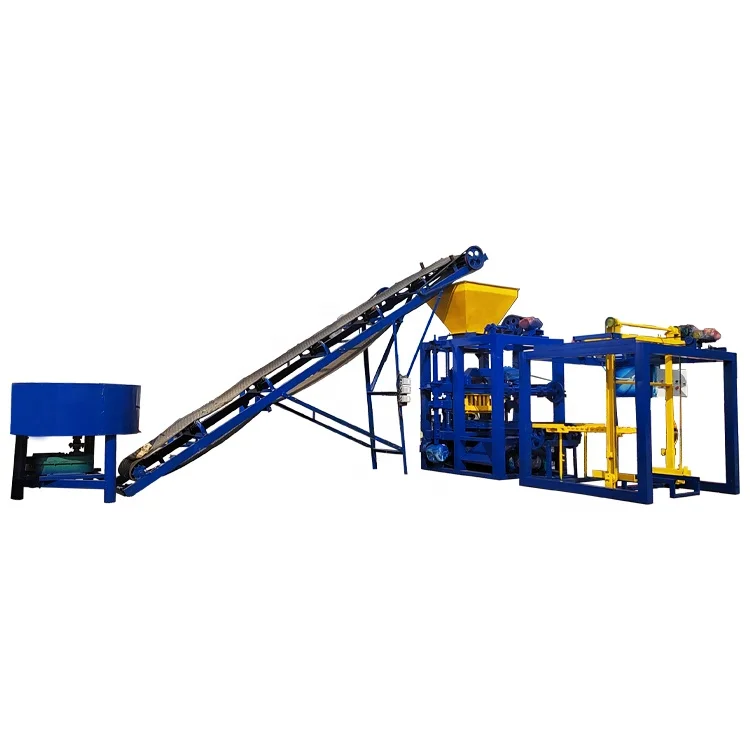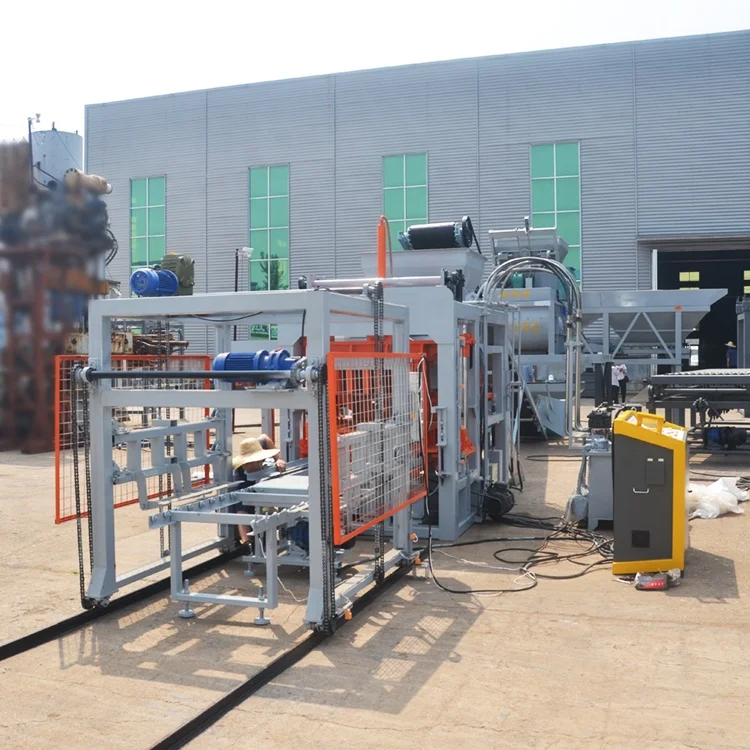
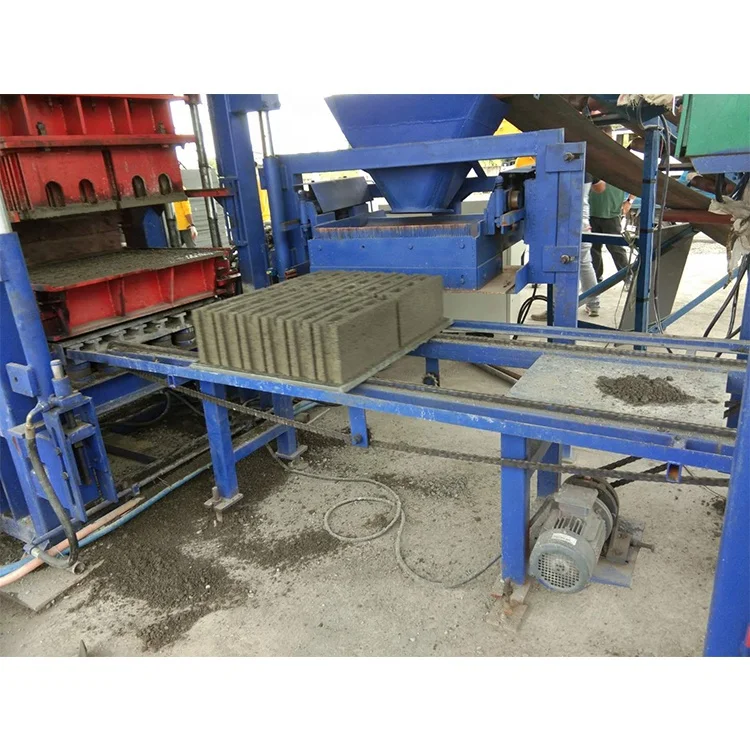
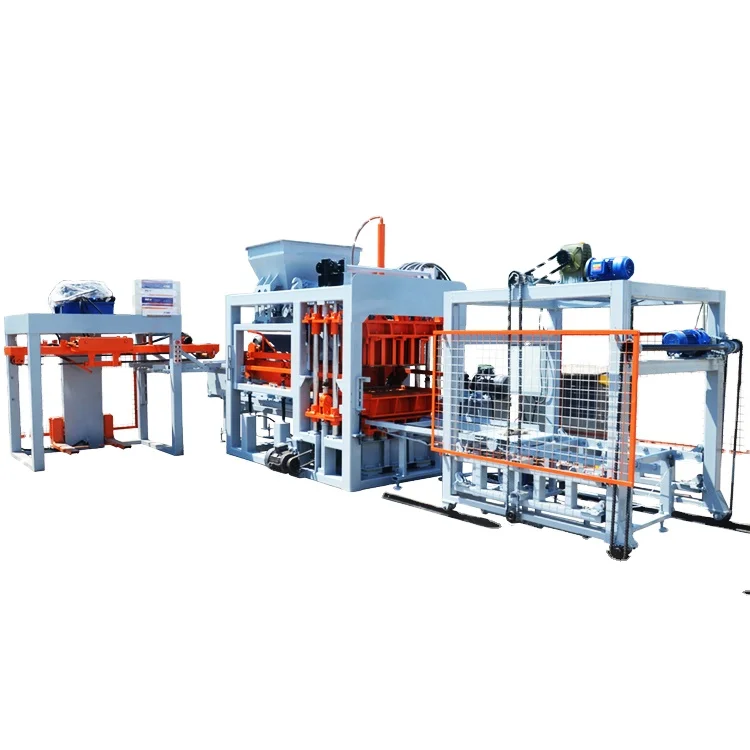
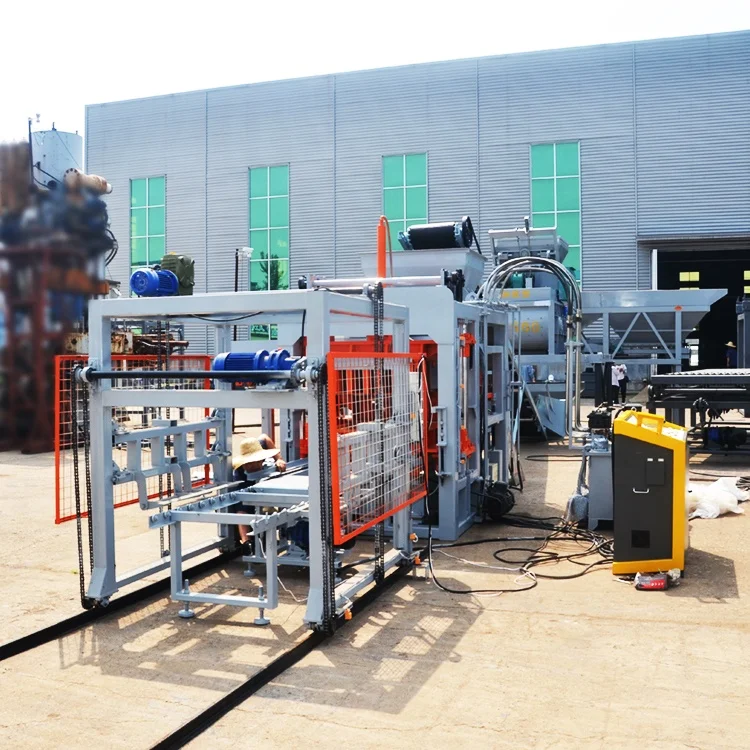
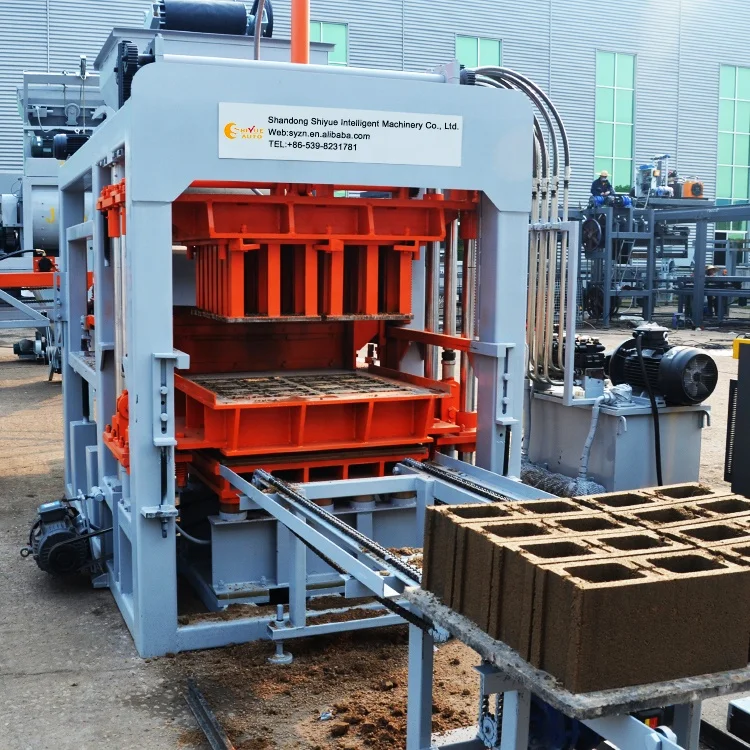
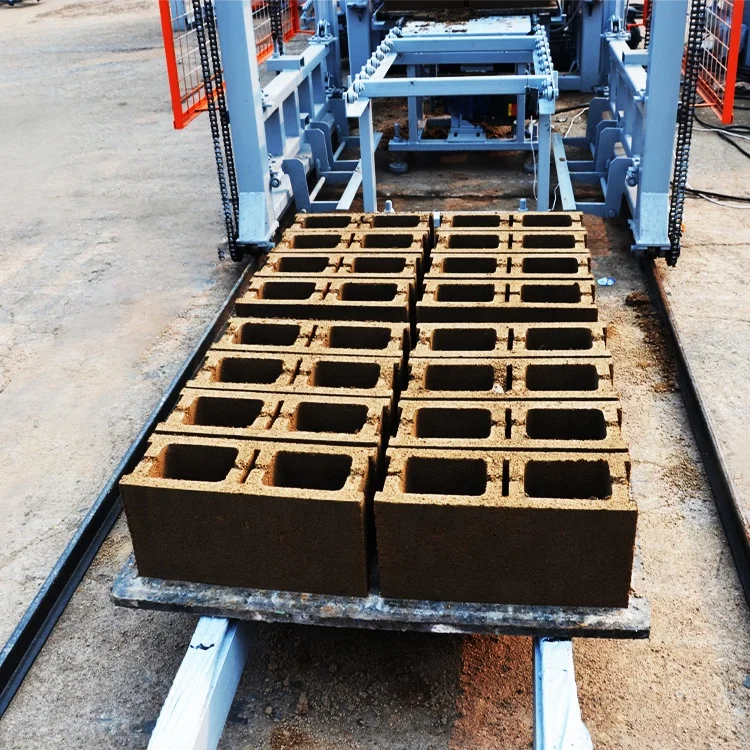
Description
Recipe-Locked Consistency — the automatic QT6-15 block machine stores vibration frequency, hydraulic pressure, and cycle time per block format inside its PLC, so operators cannot drift from the mix-to-mould parameters you validated at commissioning.
Technical Specifications
| Parameter | Value |
|---|---|
| Model | QT6-15 |
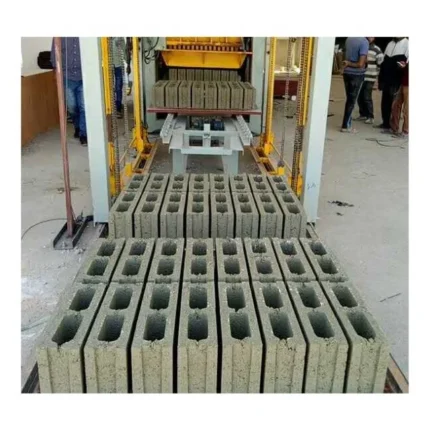
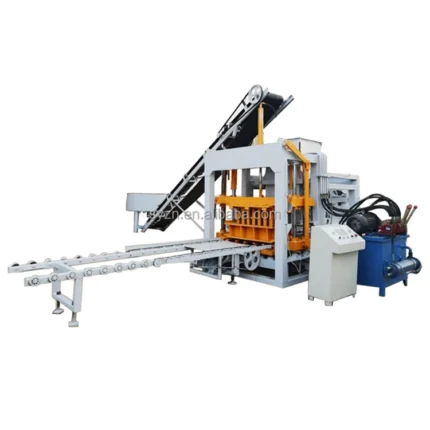
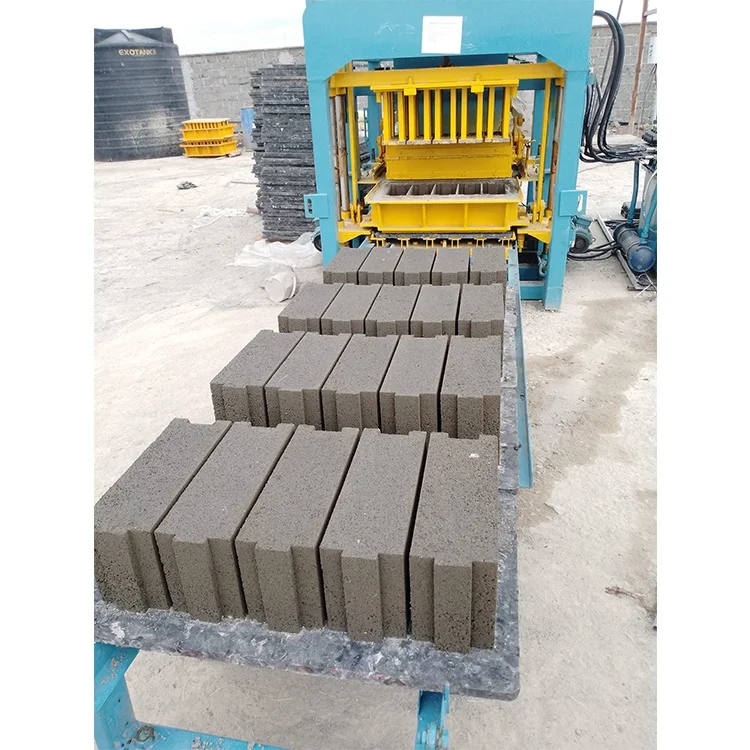
| Product Type | Concrete Hollow Block Making Machine |
| Overall Dimensions (L×W×H) | 8200×1700×2950 mm |
| Total Mass | 7 T |
| Overall Power | 37 kW |
| Vibration Form | Platform Vibration |
| Vibration Frequency | 0-60 Hz |
| Vibration Force | 45 kN |
| Moulding Mode | Load automatically, vibration moulding |
| Demolding Method | Hydraulic |
| Pallet Size | 880×850 mm |
| Molding Cycle | 15-20 s |
| Control System | PLC (Programmable Controller) with touch screen HMI |
| Hydraulic System | Independent integrated type hydraulic station |
| Fault Diagnosis | Built-in fault diagnosis system with safe logic circuit interlock |
| Block Compressive Strength | More than 15 MPa |
| Factory Area | 1200 m² |
| Output Capacity (Hollow block 400×200×200 mm) | 1080-1440 pcs/hour, 8640-11520 pcs/8hr (based on stated format and cycle) |
| Output Capacity (Hollow block 400×150×200 mm) | 1440-1920 pcs/hour, 11520-15360 pcs/8hr (based on stated format and cycle) |
| Output Capacity (Solid brick 240×115×53 mm) | 5760-7680 pcs/hour, 46080-61440 pcs/8hr (based on stated format and cycle) |
| Output Capacity (Rectangular brick 200×100×60 mm) | 2160-2880 pcs/hour, 17280-23040 pcs/8hr (based on 20-25s cycle) |
| Output Capacity (Zigzag brick 225×112.5×60 mm) | 2160-2880 pcs/hour, 17280-23040 pcs/8hr (based on 20-25s cycle) |
| Assembly State | Fully assembled main machine |
| Warranty | 1 year for whole machine (excluding spare parts) |
Application Suitability
| Application | Material or Output |
|---|---|
| Hollow block production | Waste ash, slag, cement, local aggregates — 400×200×200 mm and 400×150×200 mm formats |
| Solid brick production | Cement and crushed stone or sand — 240×115×53 mm format |
| Paving brick production | Cement and fine aggregate — 200×100×60 mm rectangular format |
| Interlocking brick production | Cement and graded aggregate — 225×112.5×60 mm zigzag format |
Why the PLC Screen Language Matters More Than You Think
If the operator cannot read the fault code on day one, the press sits idle until a translator arrives.
When I first shipped a hollow block machine to a site in Peru, I assumed Spanish HMI labels would be enough. The plant foreman spoke Quechua at home and functional Spanish on the shop floor, but the PLC error messages used technical terms he did not recognize. The automatic QT6-15 block machine was mechanically perfect, yet production stalled for days until we flew in a bilingual technician. That delay was entirely avoidable with a language confirmation step I now treat as non-negotiable before any crate leaves the factory. [NEED_CITE: PLC HMI language configuration standards for export machinery]
The risk goes beyond language. Voltage mismatch between the plant supply and the machine’s electrical configuration can destroy the PLC board on first energization, leaving the buyer waiting weeks for a replacement controller while the entire construction schedule slips.
Recipe Management That Takes Guesswork Off the Shop Floor
The PLC controlled hollow block making machine stores a dedicated process recipe for every mould format you run. Vibration frequency, hydraulic pressure, and cycle time are saved as named profiles, so a format change is a screen tap rather than a manual calibration session. This matters when you are switching between hollow blocks in the morning and paving bricks after lunch — the operator selects the recipe, and the control system enforces the parameters without relying on memory or handwritten notes.
Diagnostic Interlocks That Stop Errors Before They Cost You
The built-in fault diagnosis system with safe logic circuit interlock prevents the machine from executing an out-of-sequence action. If a pallet is misaligned or the hydraulic pressure has not reached the setpoint, the press will not cycle. This interlock layer removes the most common source of mould damage — an operator overriding a warning to keep production moving. On sites running two or three shifts, that discipline is difficult to enforce through training alone; the PLC enforces it automatically. [NEED_CITE: safety interlock requirements for hydraulic block presses]
What the Vibration and Hydraulic Numbers Mean in Practice
Platform vibration at 0-60 Hz with 45 kN of force is the compaction mechanism that determines whether your hollow block hits 15 MPa or falls short. The frequency range lets you dial in the resonance point for your specific aggregate — coarser crushed stone typically responds to lower frequencies, while finer sand-based mixes compact better at the upper end. The independent integrated hydraulic station sits apart from the main frame vibration, which keeps hydraulic seals and valve blocks from wearing prematurely. When hydraulic pressure and vibration force are tuned together and stored per recipe, block density stays consistent across the entire shift instead of drifting as the operator adjusts settings by eye. Pallet size at 880×850 mm dictates your curing rack layout and forklift handling pattern; if your existing racks were built for a different dimension, the mismatch will slow every downstream movement from press to curing yard.
The Downtime Cost of Skipping Electrical Confirmation
When voltage, frequency, and PLC display language are assumed rather than confirmed, the consequences are not small adjustments. A 380V/50Hz machine plugged into a 440V/60Hz supply will overheat motors and trip breakers within minutes. A control panel labeled in a language the maintenance team does not read turns a ten-minute sensor replacement into a multi-day diagnostic session. These are not edge cases; they are recurring patterns on export projects where the electrical verification step was rushed or skipped. The automatic QT6-15 block machine is fully assembled at the factory, meaning the electrical configuration must be right before it ships — rewiring on site is slow, expensive, and voids the logic board warranty. [NEED_CITE: voltage and frequency standards by export market]
What You Gain When Machine, Mould, and Control Are Specified Together
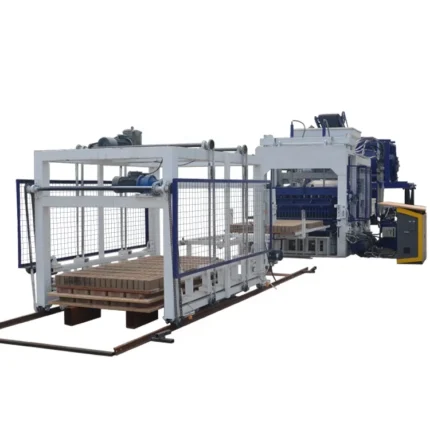
Block machinery is the single focus here, so the QT6-15 is not a standalone press bolted to third-party handling equipment. The mould, pallet, vibration settings, and PLC recipes are matched as one system for the block formats your market actually buys. The configuration is set against your local aggregate and mix design rather than a catalogue default, which means the compressive strength target is realistic for your raw materials. Automation is selectable — a buyer can start with the core press cycle automated and add automatic pallet feeding, stacking, and cubing as the plant grows. Installation support includes on-site commissioning with operator training so the team running the press on day one understands the recipe system, the interlock logic, and the maintenance intervals.
Documentation & Verification
- Line layout and capacity calculation stating each block format and its cycle time assumption
- PLC program backup file and HMI language confirmation record before dispatch
- Hydraulic and electrical schematic matching the as-built configuration of your automatic QT6-15 block machine
- Factory test record on your specified mould formats with block density and dimension measurements
- Wear parts and mould list with part numbers for local procurement planning
- Operation and maintenance manual in the confirmed operator language
Installation, Commissioning & Support
- Minimum 1200 m² factory area required with level concrete foundation to absorb platform vibration loads
- 37 kW overall power demand requires a dedicated circuit with confirmed voltage and frequency before connection
- Machine ships fully assembled; pallet feeding and stacking modules are installed and wired on site
- First-run commissioning includes PLC recipe setup for each mould format using your actual mix design
- Operator training covers recipe selection, interlock response procedures, and hydraulic station inspection points
- Wear parts list provided with recommended replacement intervals for vibration springs and hydraulic seals
What to Prepare Before Requesting a Quotation
Share the block formats your market demands along with the daily volume you need for each, so the capacity calculation reflects real product mix rather than a single best-case format. Confirm your site voltage, frequency, and the language your operators read on a screen. If you already have pallet racks, forklifts, or a curing yard in place, provide the dimensions so the pallet size and handling configuration fit what you own.
Frequently Asked Questions
Q: How is output capacity verified per block format and what cycle time does each assume?
A: Every capacity figure is tied to a specific mould and cycle range. For 400×200×200 mm hollow blocks, the QT6-15 is rated at 1080-1440 pieces per hour based on the 15-20 second molding cycle. Rectangular and zigzag paving bricks use a 20-25 second cycle. The quotation includes a capacity table listing each format you plan to produce with its individual output, not a single blanket number.
Q: What PLC language options and voltage configurations are confirmed before dispatch?
A: Voltage, frequency, and HMI display language are confirmed in writing during the order stage, not assumed. The PLC controlled hollow block making machine is factory-tested at the confirmed electrical specification, and the touch screen labels are set to the operator language you specify. A configuration confirmation document ships with the machine.
Q: How does the automation level compare to semi-automatic operation?
A: The QT6-15 automates material loading, vibration moulding, and hydraulic demolding through PLC control, removing timing and sequencing decisions from the operator. In a semi-automatic setup, pallet handling and process pacing still depend on manual coordination. This machine takes over those tasks, leaving the operator to monitor recipes and handle format changes.
Q: Can the QT6-15 be upgraded with automatic pallet feeding and stacking?
A: Yes. The automation level is selectable at order or later. The PLC architecture supports adding automatic pallet feeding, stacking, and cubing modules as your production volume grows. The upgrade path is defined during initial configuration so the control system is ready to accept additional modules without a full PLC replacement.
Q: How does the fault diagnosis system work and what support is available?
A: The built-in diagnosis system monitors sensor states and hydraulic pressure in real time, displaying fault codes on the touch screen when a parameter falls outside the safe range. Logic interlocks prevent the machine from cycling in a fault condition. Remote troubleshooting support is available when the PLC program backup and electrical schematic are on file from your confirmed configuration.