

Description
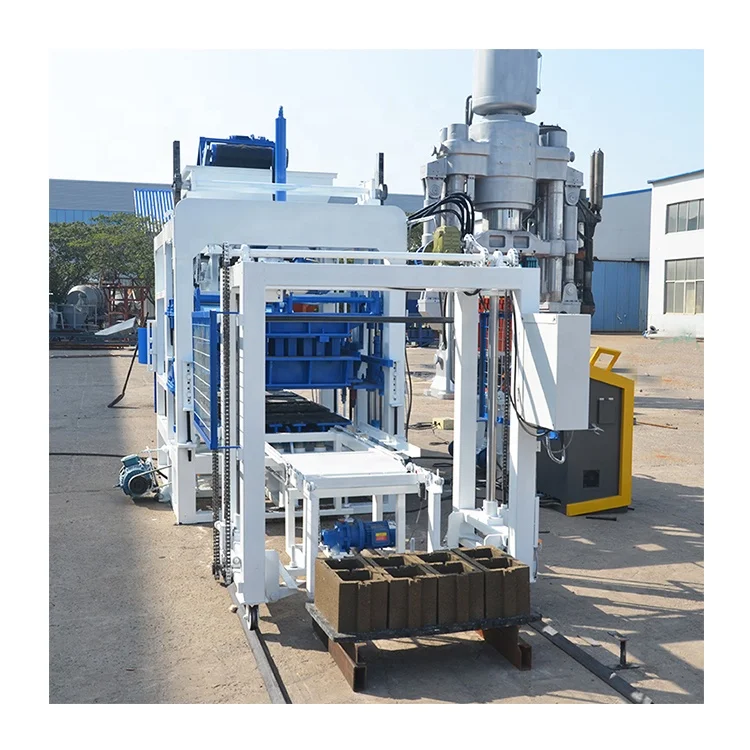
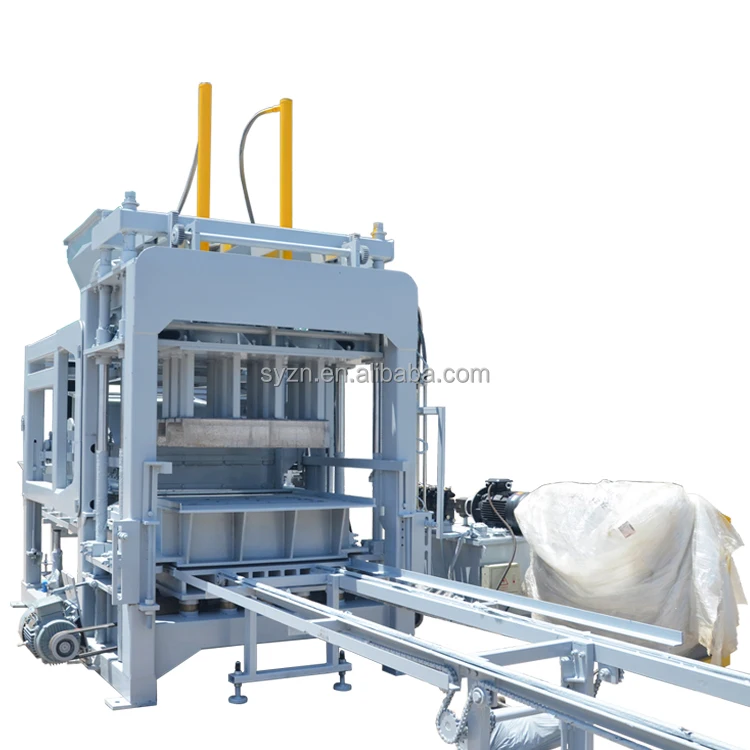
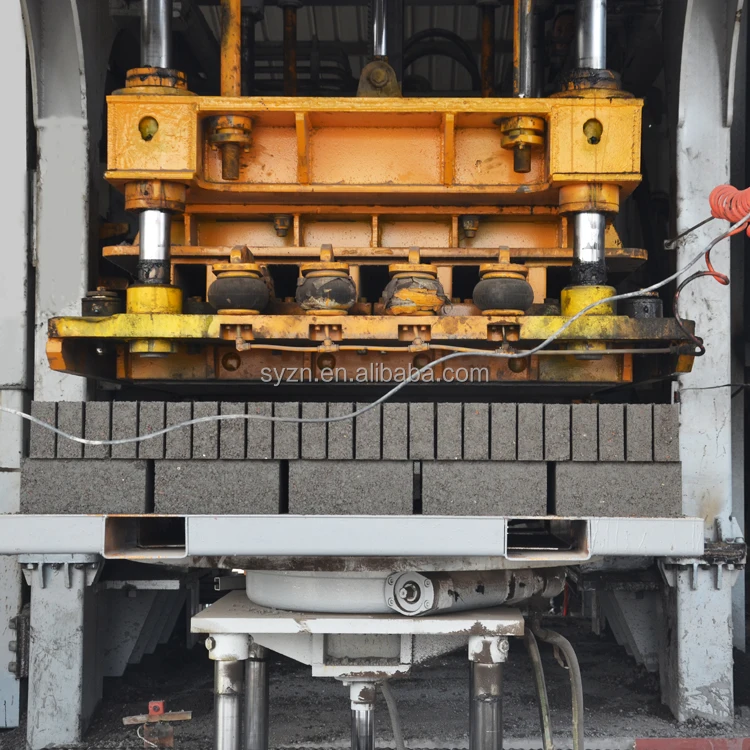
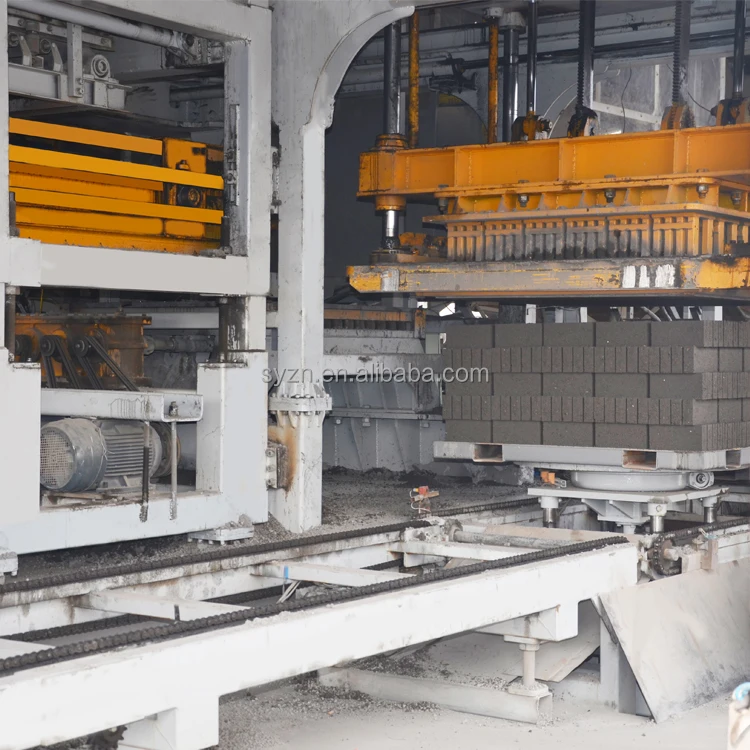
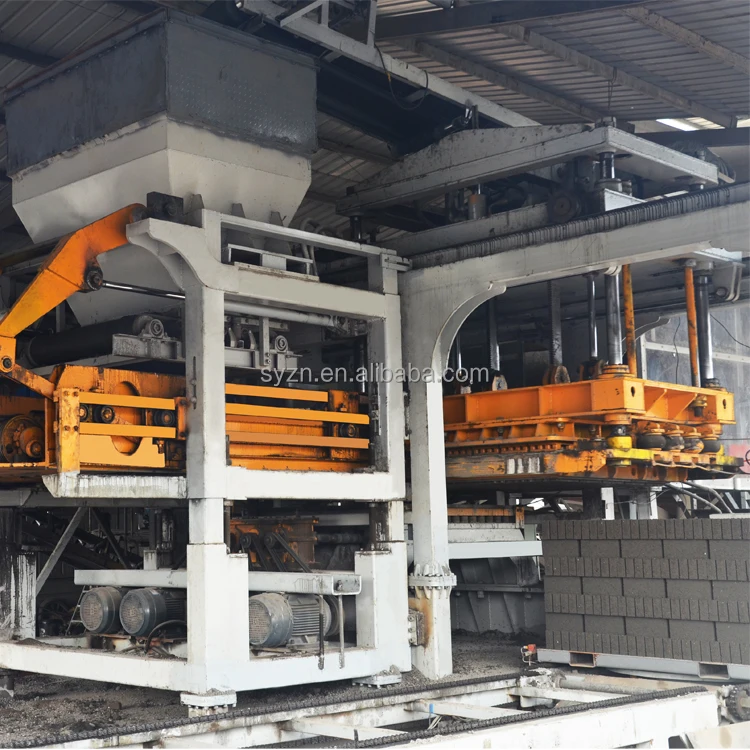
Pallet-Free System Integration — the QT18-25 is specified as one matched system where the press, direct stacking and PLC control are configured around your actual block format, eliminating pallet circulation from the line entirely.
Technical Specifications
| Parameter | Value |
|---|---|
| Model | QT18-25 |
| Product Type | Fully Automatic Pallet-Free Block Making Machine |
| Brick Height Range | 50–300 mm |
| Stacking Height | 0–1200 mm |
| Main Vibration Form | Platform Vibration |
| Vibration Frequency | 2800–4500 r/min |
| Vibration Power | 60 kW |
| Hydraulic System Power | 59 kW |
| Diving Method | Hydraulic |
| Demolding Method | Vibration and Hydraulic |
| Pallet Size | 1350×1350×120 mm (basis to be confirmed for pallet-free configuration) |
| Molding Cycle | 15–25 s (basis to be confirmed by block format, material and thickness) |
| General Water Consumption | 8 T/Day |
| Factory Area | 2000 m² |
| Control System | PLC with person-machine conversation interface |
| Automation Level | Fully automatic, pallet-free stacking directly after moulding |
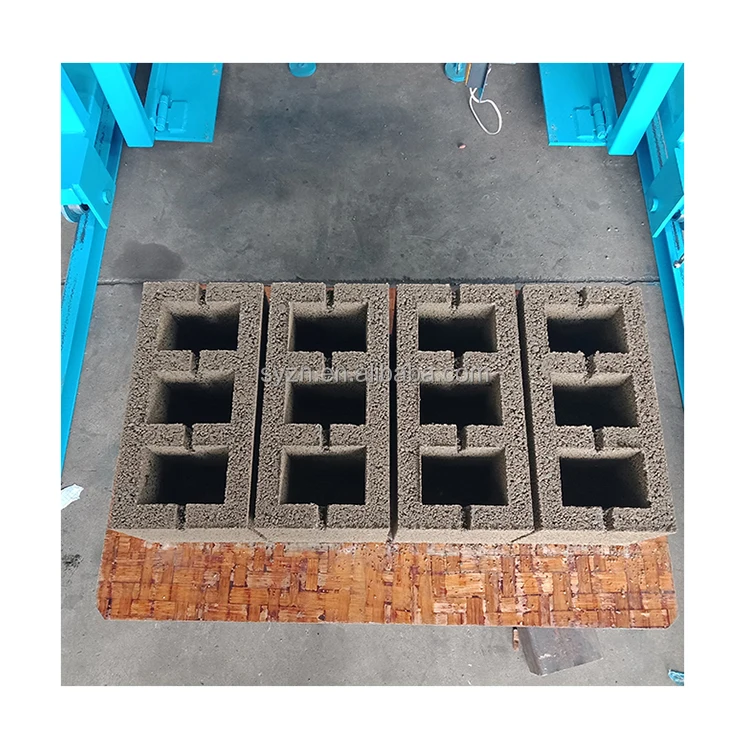
| Applied Products | Concrete blocks, hollow/solid blocks, pavers, interlocking blocks, curbstone, colored pavers |
| Raw Materials | Crushed stone, sand, cement, dust, fly ash, gravel, slag |
Application Suitability
| Application | Material or Output |
|---|---|
| High-capacity hollow block production | Crushed stone, sand, cement and fly ash mixes for structural walling |
| Solid block manufacturing for load-bearing walls | Dense aggregate blends requiring high compaction density |
| Interlocking paver and colored paver runs | Fine sand and cement with pigment addition for surface finish |
| Curbstone production for infrastructure projects | Coarse gravel and cement mixes at maximum brick height settings |
| On-site block production for large housing developments | Local aggregate and cement with direct stacking reducing site footprint |
Why the PLC Language Must Be Decided Before the Price
A control panel in the wrong language stops production before it starts.
I have watched commissioning stall for days because the operator screen displayed English while the local crew needed Arabic. The machine sat idle while we shipped a language patch overseas. When a buyer specifies an automatic pallet-free block making machine PLC controlled interface, the display language, voltage and frequency must be confirmed as part of the order, not discovered at start-up. [NEED_CITE: voltage and frequency standards by export market]
This is not a small detail buried in the manual. It governs whether the press can run on the first day the technician arrives. Every configuration sheet we produce now locks the PLC language, the electrical supply format and the operator training language before production begins.
How Direct Stacking Removes an Entire Material Flow
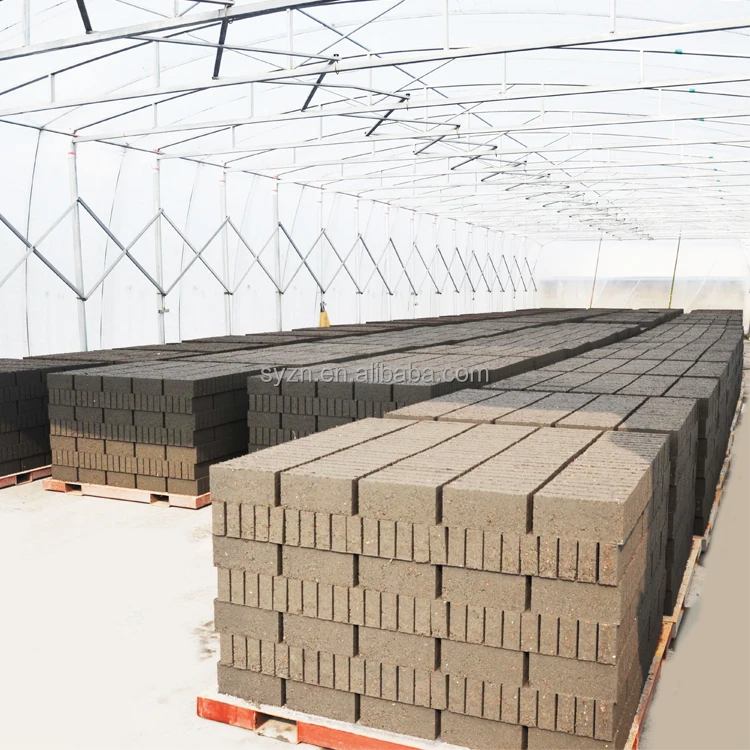
In a conventional line, pallets move through the press, carry the wet block to the curing rack, return to the press and repeat. That loop requires pallet purchase, storage space, cleaning stations and forklifts dedicated to pallet circulation. The QT18-25 collapses this loop by demoulding and stacking blocks directly under PLC coordination, with a stacking height reaching 1200 mm. The result is one fewer conveyor, one fewer material in the consumables budget, and a curing area that holds finished stacks instead of pallets spread across the floor.
Consistency That Lives in the Controller, Not the Operator
Batch-to-batch variation in block density and surface finish usually traces back to manual timing differences between cycles. The person-machine conversation interface on this automatic pallet-free block making machine PLC controlled unit stores the vibration duration, hydraulic pressure profile and feed timing for each block format. When the operator selects a recipe, the PLC executes the same sequence every cycle. This matters most when the same line runs hollow blocks in the morning and pavers in the afternoon — the transition is a screen selection rather than a judgement call. [NEED_CITE: CE machinery directive requirements for industrial equipment]
Reading the Vibration and Hydraulic Numbers Together
Platform vibration at 2800–4500 r/min with 60 kW of vibration power is only half the compaction story. The 59 kW hydraulic system drives the diving head into the mould box before vibration begins, pre-compressing the mix so vibration works on a dense charge rather than loose material. If the hydraulic pressure is set too low for a stiff fly ash mix, vibration alone cannot reach the target density and block strength drops. If it is set too high for a fine sand paver mix, the surface tears on demoulding. Both systems must be tuned against the buyer’s actual aggregate grading and cement ratio, which is why our factory test runs the buyer’s own mix design before dispatch.
The moulding cycle of 15–25 seconds is a range, not a single figure, because a tall hollow block requires a longer feed and compaction phase than a thin paver. Capacity calculations in the quotation state the block format assumed so the buyer can compare against daily output targets.
What Happens When Automation Levels Are Mismatched
A buyer who selects full automation without specifying the downstream stacking height may find that the cured stacks exceed the reach of the site forklift. Conversely, choosing a semi-automatic line to save on initial cost and then running three shifts to meet volume targets multiplies labour beyond what a fully automatic pallet-free block making machine PLC controlled setup would have required. These are not machine faults — they are configuration gaps that surface only after installation. [NEED_CITE: typical automation upgrade paths for concrete block plants]
Configuration Discipline That Shows Up in the Paperwork
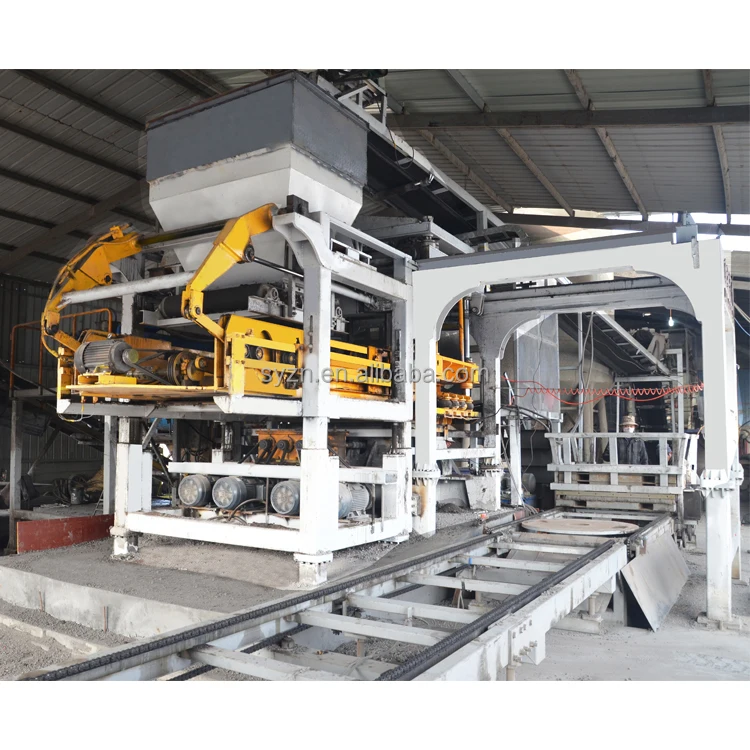
Our single focus on block machinery means the press, mould, stacking mechanism and PLC are specified together rather than sourced from separate vendors and bolted on site. We set the vibration profile and hydraulic timing against the buyer’s local aggregate and target block strength, not against a catalogue default. Mould design covers the formats the buyer’s market actually sells, with custom drawings where standard moulds do not fit. Automation level is selectable so a buyer can start at one tier and add pallet-free stacking or cubing later. Installation includes operator training on the exact PLC interface the crew will use daily.
Documentation & Verification
- Line layout with capacity calculation stating the block format assumed for cycle time
- Machine specification sheet matching the confirmed pallet-free stacking configuration
- Hydraulic and electrical schematic with PLC input/output addressing
- Voltage, frequency and PLC display language confirmation record before production
- Factory test record on the buyer’s mix design showing stacking stability and block strength
- Mould drawing and format list covering every product in the buyer’s range
Installation, Commissioning & Support
- Foundation plan sized to the QT18-25 vibration load and 2000 m² factory area requirement
- Electrical supply matched to confirmed voltage and frequency with dedicated circuit for 60 kW vibration and 59 kW hydraulic loads
- PLC display language verified on the control panel before the machine leaves the factory
- Commissioning includes tuning hydraulic pressure and vibration frequency to the local aggregate and mix design
- Operator training covers recipe selection, mould change procedure and first-line fault diagnosis on the person-machine interface
- Wear parts list with recommended first-year stock for hydraulic seals and vibration motor bearings
What We Need to Size Your Line
To prepare a configuration proposal, we need your target block formats with dimensions, the daily output required per format, your local aggregate type and cement supply, and the available site area. Please also confirm your electrical supply voltage and frequency, the preferred PLC display language, and whether existing mixers or feeders will be retained upstream of the press.
Frequently Asked Questions
Q: How is daily output calculated and which block format does the 15–25 s cycle time assume?
A: The moulding cycle range depends on block height and material density. A quotation states the specific block format and mix assumed for the cycle time used in the capacity calculation. We provide a per-format output table so you can match the machine to your actual production schedule rather than a single best-case number.
Q: What does pallet-free mean in practice for different block formats?
A: Blocks are demoulded and stacked directly by the machine up to 1200 mm without intermediate pallets. Some very large or thin formats may still benefit from pallet support depending on the mix design and green strength. We confirm format-by-format during the configuration stage based on your specific product range.
Q: How is PLC language and voltage confirmed before shipment?
A: Both are locked on the configuration sheet before production begins. We record the buyer’s required display language, supply voltage and frequency, then verify them on the assembled panel during the factory test. This prevents the commissioning delays that arise when these details are left until the machine arrives on site.
Q: Can the QT18-25 integrate with existing mixers and feeders on a semi-automatic line?
A: Yes. The raw material feeding interface can be matched to your current mixer discharge height and conveyor layout. We specify the connection point and feed timing so the press does not idle between cycles. The PLC can accept start-stop signals from upstream equipment to synchronize the full line.
Q: Which wear parts should be stocked for the first year?
A: The first-year stock list typically covers hydraulic seals for the diving and demoulding cylinders, vibration motor bearings, and mould liner plates most exposed to aggregate abrasion. We provide a complete wear parts list with part numbers matched to your specific mould and hydraulic configuration at the time of shipment.