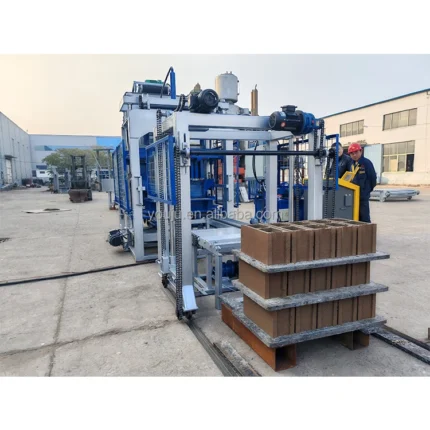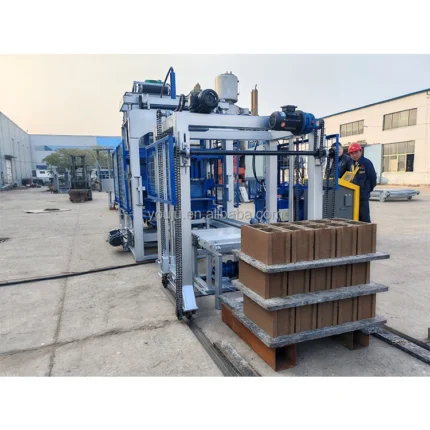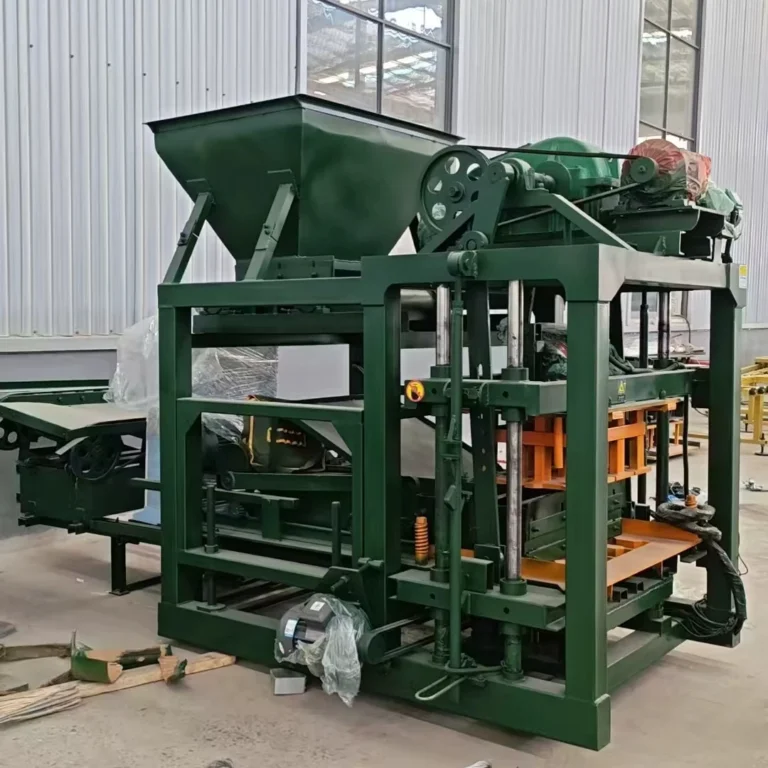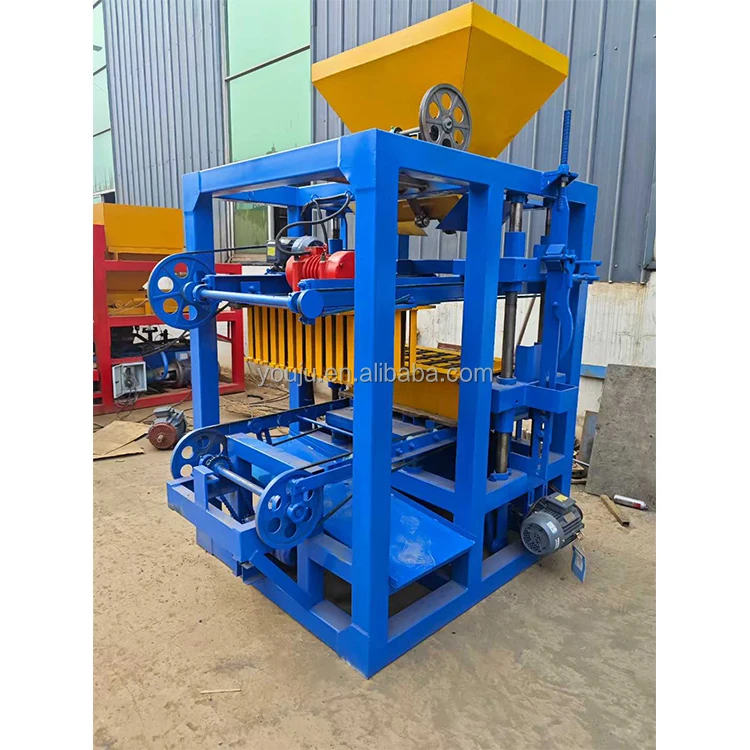


Description
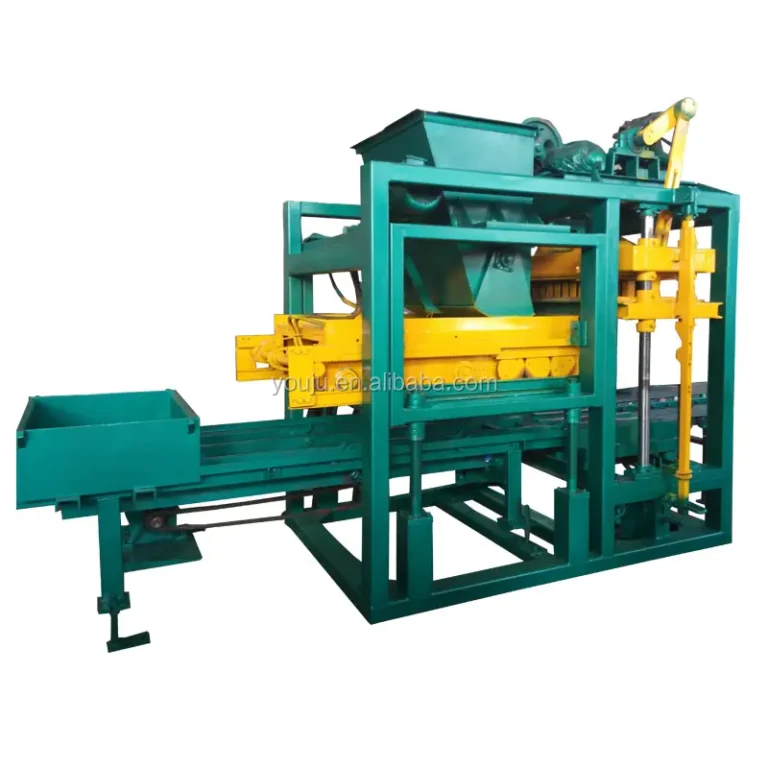
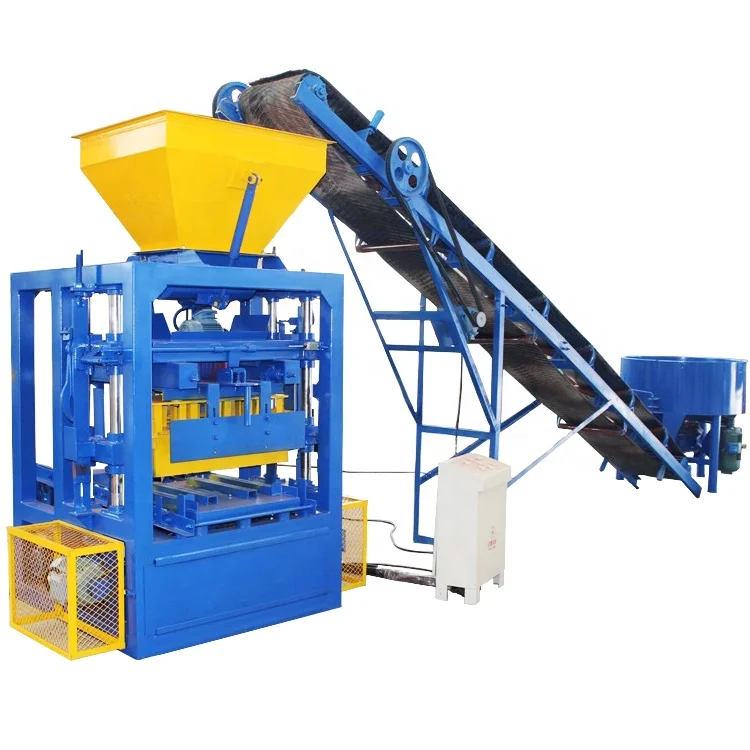
Configuration matched to your raw material profile — every QT4-15 dispatch requires buyer-supplied aggregate samples so vibration frequency and hydraulic pressure are tuned before the machine leaves the factory.
Technical Specifications
| Parameter | Value |
|---|---|
| Model | QT4-15 |
| Product Type | Hydraulic Solid Block Making Machine |
| Molding Cycle | 15–30s |
| Pallet Size | 900 × 500 mm |
| Vibration Type | Platform vibration |
| Vibration Frequency | 50–70 Hz |
| Product Height Range | 50–220 mm |
| Overall Power | 24.5 kW |
| Demolding Method | Hydraulic |
| Control System | PLC |
| Block Compressive Strength | > 15 MPa |
| Automation Level | Automatic (pallet feeding, material feeding, vibrating, demoulding) |
| Electrical & Hydraulic Components | Original imported or China famous brand |
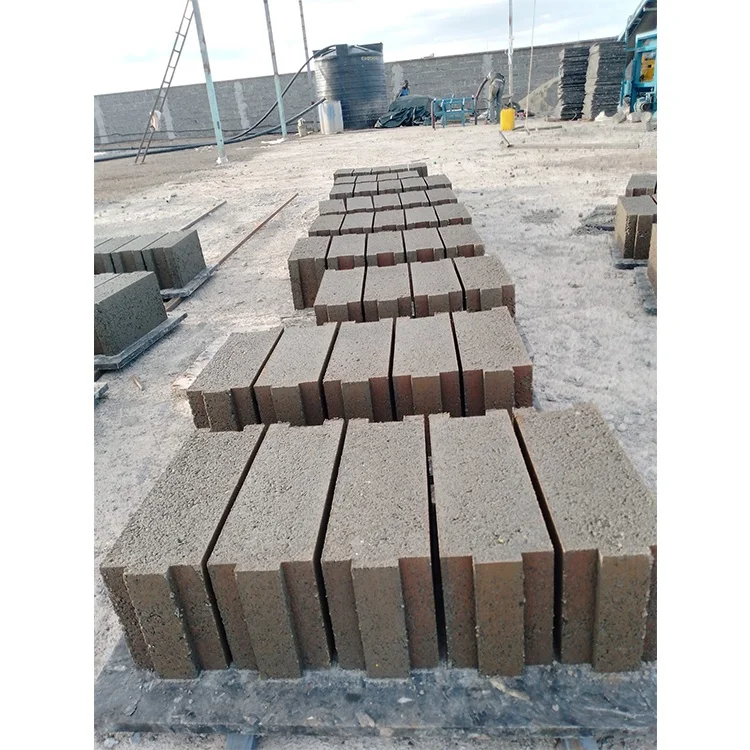
| Hollow Block 400×200×200mm Capacity | 900–1200 pcs/h (basis: 4 pcs/mould, 15–20s cycle) |
| Hollow Block 400×150×200mm Capacity | 1080–1440 pcs/h (basis: 5 pcs/mould, 15–20s cycle) |
| Hollow Block 400×100×200mm Capacity | 1440–1920 pcs/h (basis: 8 pcs/mould, 15–20s cycle) |
| Paver 200×100×60mm Capacity | 2880–3840 pcs/h (basis: 16 pcs/mould, 15–20s cycle) |
| Solid Brick 240×115×53mm Capacity | 5930–6720 pcs/h (basis: 28 pcs/mould, 15–20s cycle) |
| Mould Formats | Hollow block, paver brick, solid brick (changeable) |
| CE Declaration | Available where applicable |
Application Suitability
| Application | Material or Output |
|---|---|
| Hollow block manufacturing for masonry walls | Fly ash, slag, crushed stone, sand mixed with cement and water |
| Paver brick production for walkways and yards | Aggregate-cement mixes requiring high surface density |
| Solid brick manufacturing for load-bearing structures | Local sand and stone blends with Portland cement |
| Mid-scale block plants replacing manual pallet operations | Continuous 8-hour shift operation with PLC cycle control |
| On-site production for housing and infrastructure projects | Raw materials sourced within short haul distance |
Why "Cycle Time" Means Nothing Without the Block Format Attached
The mould cavity count and block dimensions decide what the press actually delivers per shift, not the motor rating on the nameplate.
I have watched buyers take delivery of a block machine quoting a 15-second cycle, only to realize the number was based on a thin solid brick they never intended to make. When they loaded the 400×200×200mm hollow block mould — their actual market product — the cycle stretched past 20 seconds and daily output fell well below the figure used to justify the investment. The automatic QT4-15 block making machine capacity figures published above each state the exact block format, cavity count, and cycle window they assume, so the number you plan around matches the product you sell [NEED_CITE: block machine capacity calculation methodology by format].
What the PLC Actually Takes Off the Operator’s Shoulders
On a manual or semi-automatic line, the operator times the pallet feed, judges the material fill depth by eye, and triggers the vibration cycle. Every one of those decisions introduces variation between the first block of the morning and the last block before shutdown. The PLC controlled block machine sequence links pallet feeding, material dosing, vibration duration, and hydraulic demolding into a single timed loop, so cycle-to-cycle drift is removed from human judgment. The operator’s role shifts from timing each step to monitoring the HMI for fault codes and keeping the hopper charged.
Tuning Vibration and Pressure to the Aggregate You Actually Source
Vibration frequency and hydraulic press force are not one-setting-fits-all parameters. High-clay material absorbs vibration differently from clean crushed stone, and applying the same force profile to both yields either under-compacted blocks or over-pressed blocks with surface cracking. The QT4-15 platform allows vibration frequency adjustment within its 50–70 Hz range and independent hydraulic pressure staging so the settings can be matched to a lab-tested mix [NEED_CITE: effect of aggregate clay content on block compaction]. Before I sign off on a shipment, I need to see the buyer’s raw material sieve analysis and a trial batch result — a habit formed after spending four days on-site in West Africa re-tuning a machine that had been shipped with default settings to a clay-heavy sand source.
Reading the Numbers That Actually Matter
The 900 × 500 mm pallet size dictates how many blocks cure per rack and what forklift fork length can handle the loaded pallets — mismatch it with your existing curing yard and you end up buying new handling equipment you did not budget for. The 50–220 mm product height range covers most structural and paving formats, but tall kerbstones fall outside it, so confirm your full product list before locking the order. Platform vibration at 50–70 Hz works with the hydraulic press to compact the mix from below while the press head applies downward force; this dual action is what achieves compressive strength above 15 MPa consistently across the pallet surface. Total connected load of 24.5 kW determines the dedicated circuit rating your electrician must prepare before the container arrives.
The Cost of Skipping the Voltage Confirmation
Every export season I see machines arrive at destination ports with a 380 V / 50 Hz motor wired for a market running 440 V / 60 Hz. The PLC board may survive the overvoltage, but the vibration motor burns out within the first week, and the buyer loses an entire commissioning window waiting for a replacement [NEED_CITE: motor winding failure rates under voltage mismatch in tropical climates]. The PLC display language is another small detail that becomes a large problem when the operator cannot read the fault messages. These two confirmations — voltage with frequency and control language — cost nothing to get right before production and cost weeks to fix after arrival.
Why Buyers Source This Machine Through Us
Block machinery is our single product focus, which means the QT4-15 is never assembled from mismatched sub-suppliers — the press, mould, pallet, and handling stations are specified as one coordinated line. We set the vibration and hydraulic parameters against the buyer’s actual mix design and aggregate sieve data, not a catalogue default table. Mould design covers the formats the buyer’s local market actually purchases, with custom drawings available when standard cavities do not match. The automation level is selectable, so a plant can start with automatic cycle control and add stacking or cubing modules later without replacing the press. Installation support includes on-site commissioning and operator training so the first production shift runs under supervision.
Documentation & Verification
- Machine specification sheet listing pallet size, power rating, and automation level for your order
- Mould drawing and format list confirming cavity count for each block type you purchase
- Capacity calculation document stating the block format and cycle time assumed for your target output
- Voltage, frequency, and PLC display language confirmation signed before production begins
- Hydraulic and electrical schematic matching the as-built configuration
- Factory test record with your mould installed, photographed before crating
Installation, Commissioning & Support
- Foundation pad must be level and rated for the 24.5 kW vibration load without resonance transfer
- Dedicated three-phase circuit matching confirmed voltage and frequency, isolated from welding equipment
- Machine ships partially dismantled; reassembly requires overhead clearance for the hydraulic press frame
- First-run commissioning includes vibration frequency and hydraulic staging set to your mix sample results
- Operator training covers PLC fault codes, mould change procedure, and daily lubrication points
- Wear parts list with mould liner and hydraulic seal part numbers provided at handover
What to Send With Your Inquiry
Tell us the block formats your market actually buys, the daily volume you plan to run per format, and the raw materials available locally with a recent sieve analysis if you have one. Share your site voltage and frequency, preferred PLC display language, and the pallet handling equipment you already operate so the pallet specification matches. If you are replacing an existing press, let us know the current cycle bottleneck so the line layout addresses it directly.
Frequently Asked Questions
Q: How is the capacity figure verified for my specific block format?
A: Every capacity number we publish states the exact block dimensions, mould cavity count, and cycle time it assumes. When you send us your target format, we return a capacity calculation document that matches your product, not a generic brochure figure. If your format falls outside our standard mould range, a custom cavity design is quoted with its own verified cycle time.
Q: What PLC language options and electrical configurations are available?
A: The PLC display can be configured to the operator’s preferred language before the machine enters production. Voltage and frequency are matched to your site supply — confirm these values during the quotation stage, not after shipment. A signed electrical confirmation sheet is required before assembly begins to prevent commissioning delays.
Q: Can vibration and pressure settings be adjusted to my local raw material?
A: Yes. The vibration frequency range and hydraulic pressure staging are both adjustable. We request a sample of your aggregate and a sieve analysis so trial batches can be run at the factory. Settings are then locked into the PLC as the baseline recipe, and the operator can fine-tune within safe limits on site.
Q: What automation level is included, and what can be added later?
A: The base configuration covers automatic pallet feeding, material dosing, vibration, and hydraulic demolding under PLC control. Stacking and cubing modules are available as add-on stations and can be integrated to the existing PLC without replacing the press, giving a clear upgrade path as production volume grows.