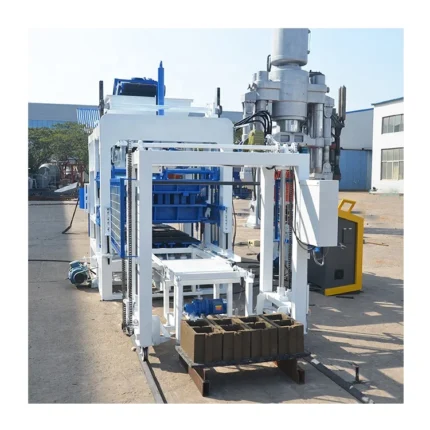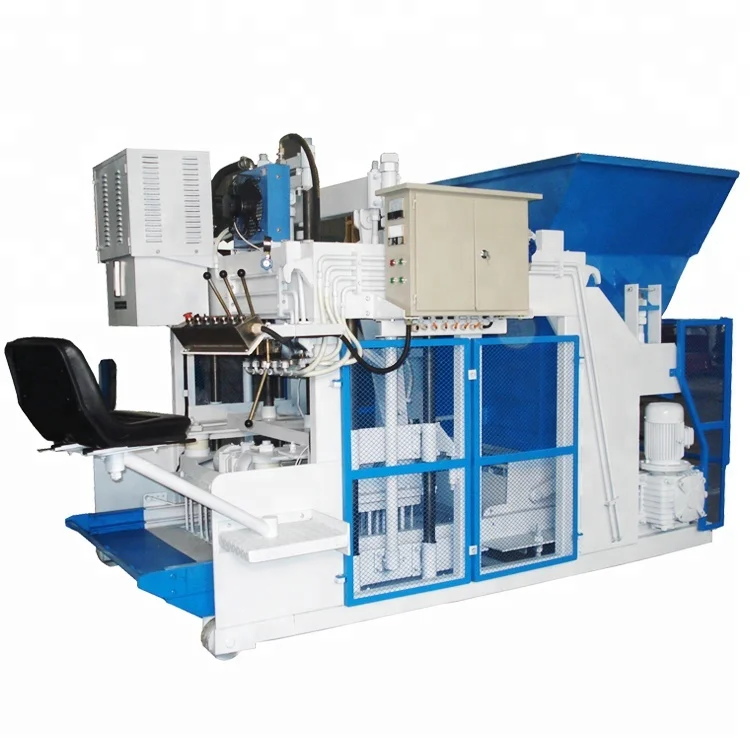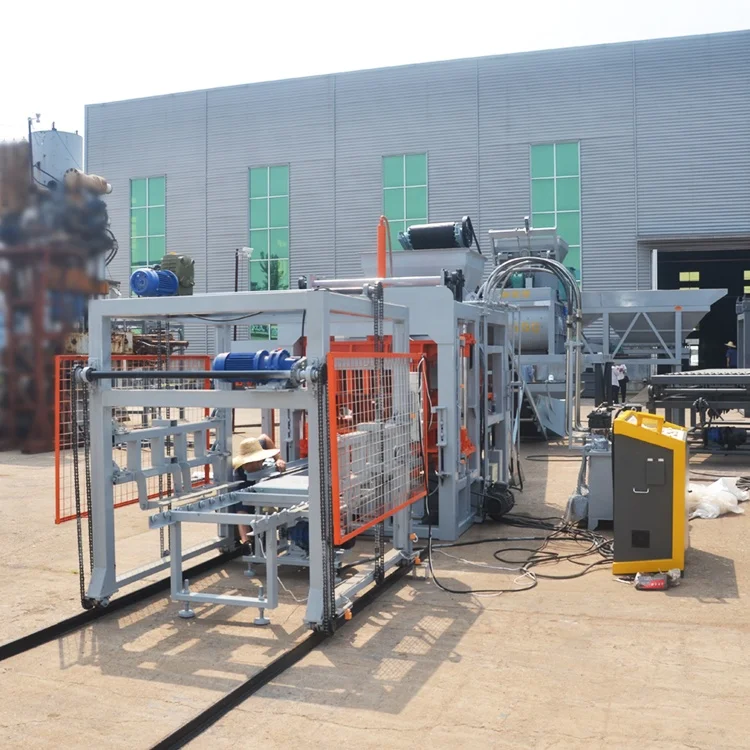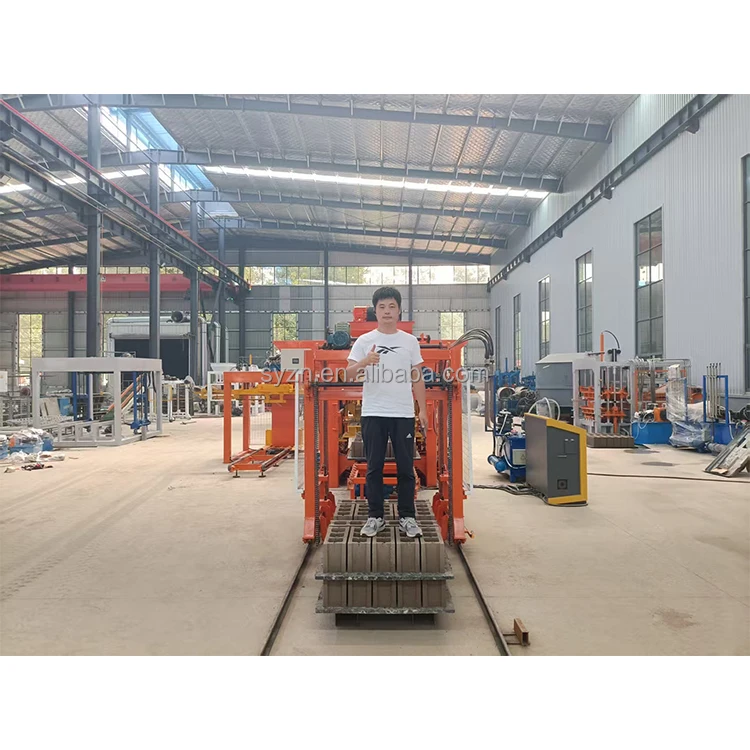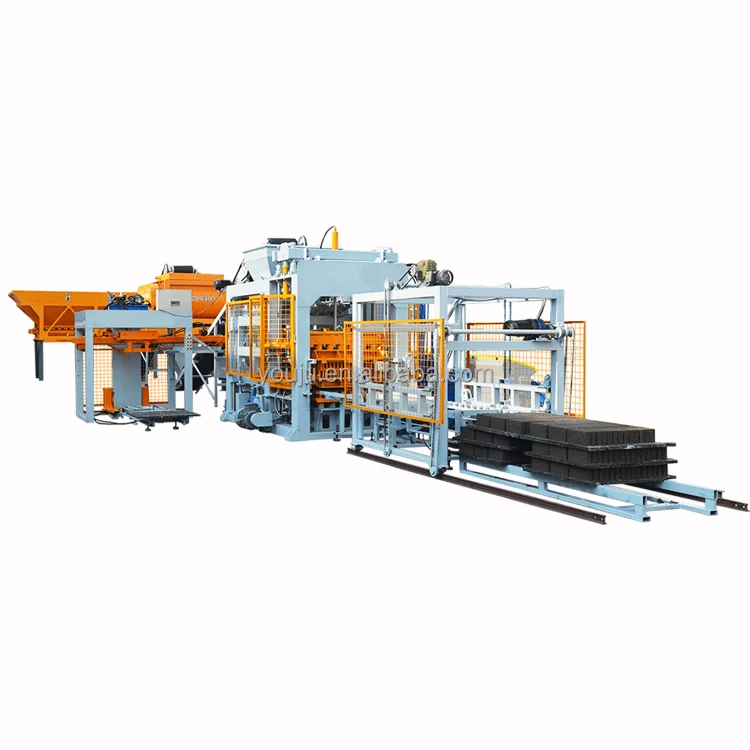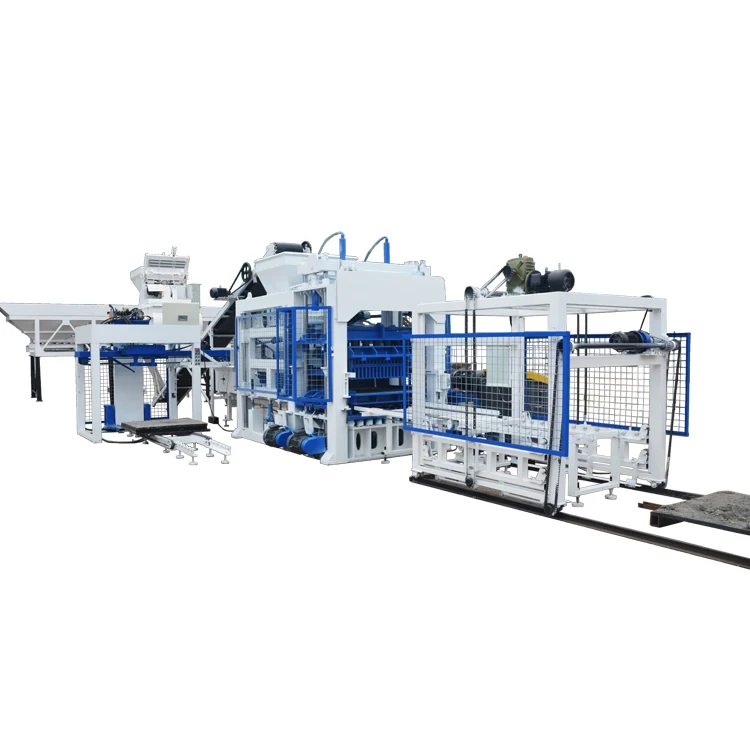
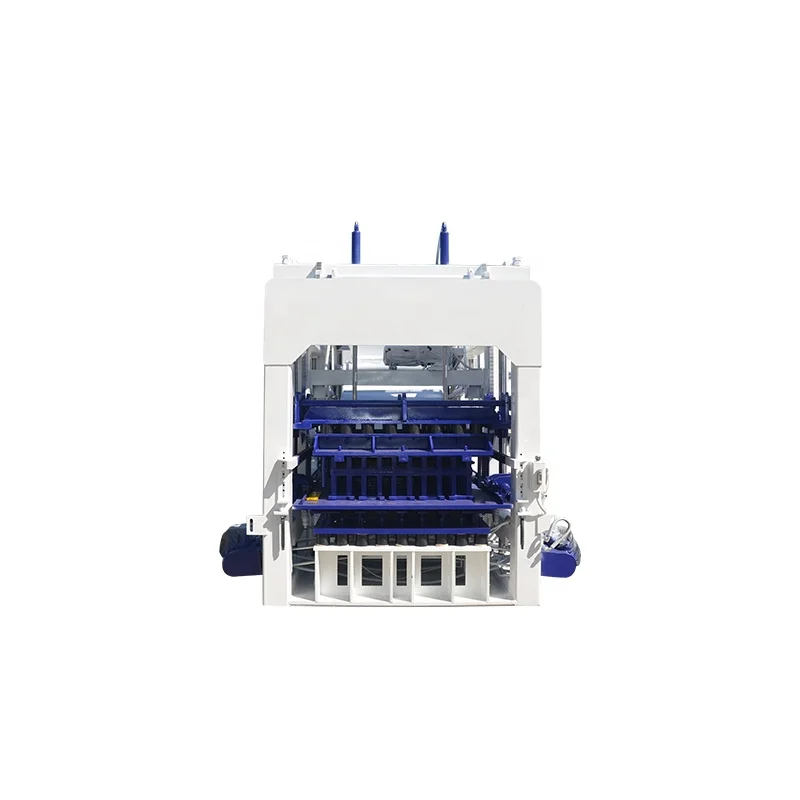
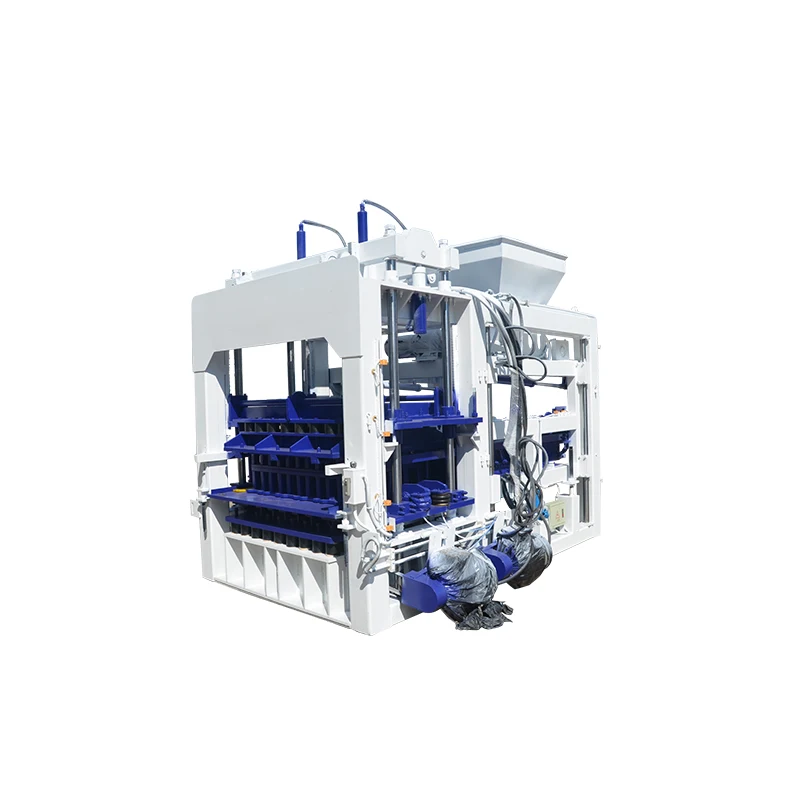

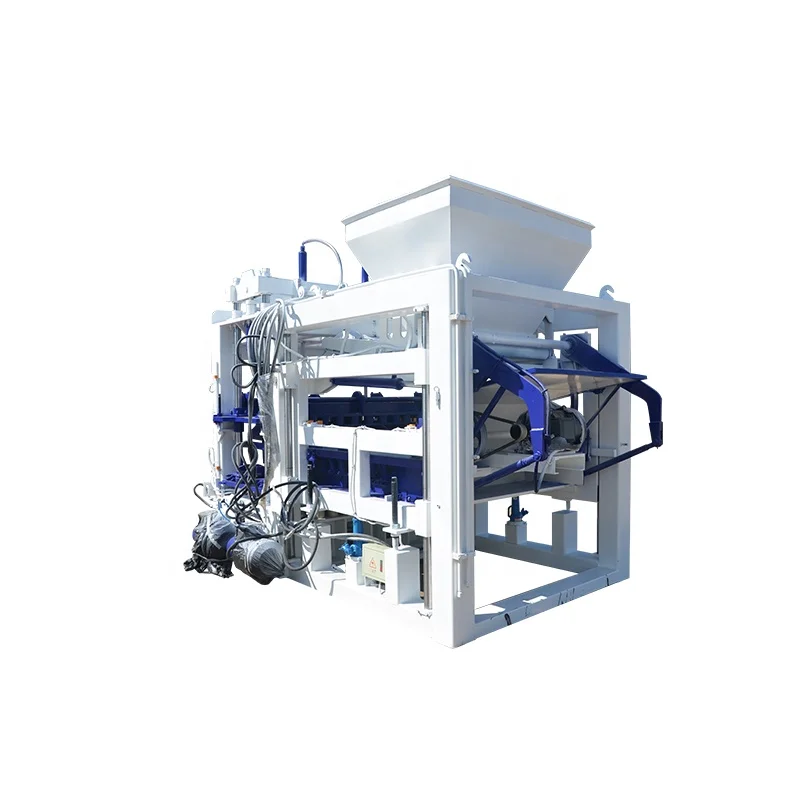
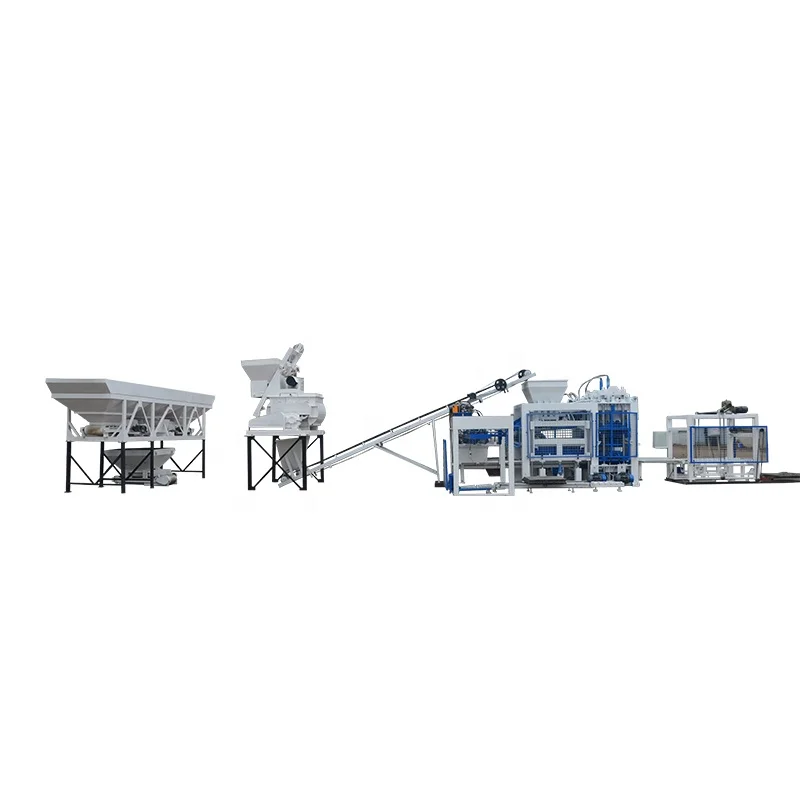
Description
Technical Specifications
| Parameter | Value |
|---|---|
| Model | QT10-15 |
| Product Type | Automatic Concrete Block Making Machine |
| Vibration Technology | Four-axis vibration with forced synchronization gear shaft |
| Vibration Acceleration | 20g |
| Control System | PLC with frequency conversion control (basis to be confirmed) |
| Material Feeding | Press-in arch breaker with 360° rotation |
| Vibration Damping | Flexible reduction on pressure head; adjustable air bag in mold box |
| Mould Compatibility | Wall blocks, porous bricks, pavement bricks, slope protection bricks |
| Output Capacity | (basis not stated in source — verify against manufacturer catalog) |
| Cycle Time | (basis not be confirmed) |
| Hydraulic Pressure | (source value not stated — verify against manufacturer catalog) |
| Pallet Size | (source value not stated — verify against manufacturer catalog) |
Application Suitability
| Application | Material or Output |
|---|---|
| Concrete Hollow Block Production | Crushed stone, cement, sand, and water mixtures for structural masonry |
| Solid Block Manufacturing | Dense aggregate blends for load-bearing construction projects |
| Paving Brick Production | Fine aggregate and pigment combinations for interlocking pavement systems |
| Porous Brick Fabrication | Permeable concrete mixes for drainage applications and eco-friendly construction |
| Slope Protection Brick Making | Heavy-duty concrete formulations for erosion control and retaining wall systems |
Why the Voltage Question Should Come Before the Price
The control system language and voltage frequency must be locked in writing before production begins.
I once saw a fully automatic block machine sit idle for three weeks after arrival because the HMI displayed in Chinese and the local electrician couldn’t read the fault codes. The buyer had focused on cycle time and output figures, assuming the electrical specs would sort themselves out. When the QT10-15 automatic block making machine PLC controlled system arrives with the wrong frequency or an unreadable interface, commissioning stops until new components ship. That delay costs more than any price negotiation ever saved [NEED_CITE: voltage and frequency standards by export market].
What the Control System Actually Manages
The PLC coordinates vibration frequency, material feed timing, and pressure head descent as a single sequence. On the QT10-15, this means the four-axis vibration reaches 20g acceleration at the exact moment the press-in arch breaker completes its 360° rotation. The automatic block making machine PLC controlled logic removes the operator from guessing when to trigger each station.
Synchronization Across the Entire Line
When stacking and curing stations connect to the same control architecture, the press never waits for a pallet. The PLC tracks which mold is loaded and recalls the corresponding cycle parameters, so switching from hollow blocks to pavers doesn’t require manual timer adjustments. This is what separates a true automatic block making machine PLC controlled setup from a press with a basic relay panel [NEED_CITE: PLC integration standards for block production lines].
Vibration Force and Hydraulic Pressure Must Match Your Mix
The 20g vibration acceleration only delivers consistent density if the hydraulic pressure and mix design are balanced against it. A high-clay aggregate absorbs vibration differently than clean crushed stone. The adjustable air bag damping on the mold box lets you fine-tune how that excitation force transfers, but the starting point must come from your actual material test, not a default setting.
What Happens When Pallet Size Is Chosen Without Checking Your Curing Area
A pallet that’s too large for your existing forklift means every rack transfer requires manual repositioning. The QT10-15 pallet size must align with your curing rack dimensions and the aisle width your equipment can navigate. Buyers who skip this verification end up handling wet blocks by hand, negating the automation they paid for [NEED_CITE: pallet handling integration in block plants].
Why Configuration Must Be Verified Against Your Local Aggregate
The press-in arch breaker distributes material based on a specific flow characteristic. If your sand contains high clay content or your aggregate is oversized, the feed timing needs adjustment before the machine ships. Confirming these details during the proposal stage prevents the situation where the automatic block making machine PLC controlled system runs, but output quality falls short because the material behavior wasn’t accounted for.
Documentation You Should Receive Before Shipment
- Factory test record running your specified block format and mix design
- PLC brand confirmation and HMI language set to your operator’s preference
- Hydraulic and electrical schematics for integration with existing plant infrastructure
- Mould list with format-specific cycle times and changeover duration
- Voltage and frequency confirmation matching your site supply
- CE declaration and compliance documentation where applicable
Installation, Commissioning & Support
- Foundation plan showing load points for the QT10-15 vibration table and hydraulic station
- Dedicated circuit requirements based on confirmed voltage and total connected load
- On-site assembly sequence for press, pallet feeder, and stacking stations
- First-run parameter tuning against your delivered aggregate and cement type
- Operator training covering mold change procedure and fault code interpretation
- Wear parts inventory list with hydraulic seal and vibration motor specifications
What to Provide With Your Inquiry
Share your target block format with dimensions, the daily output you need to justify the investment, and your local aggregate source with a sieve analysis if available. Confirm your site voltage and frequency, the language your operators read, and whether you have existing pallets or curing racks the line must match.
Frequently Asked Questions
Q: How is the output capacity of the QT10-15 verified, and which block format is it based on?
A: Output capacity depends on the block format, wall thickness, and your specific mix design. The capacity calculation sheet should state the exact format and cycle time assumed, not a generic figure. Request documentation showing the test conditions before comparing machines.
Q: What PLC system is used, and can the HMI language be set to my operator’s language before shipment?
A: The PLC brand and HMI language must be confirmed in writing during the proposal stage. Specify your preferred language early so the interface is configured before factory testing, not after arrival when changes require additional programming.
Q: How do I upgrade from a semi-automatic line to full automation — what is retained and what is added?
A: Upgrading typically involves adding automatic pallet feeding, stacking, and cubing stations while retaining the existing press. The control system must be expanded to synchronize these new stations. Confirm whether your current press supports this integration or requires replacement.
Q: How are vibration and hydraulic parameters matched to my local aggregate and mix design?
A: Parameters are adjusted based on your material test report, including aggregate size distribution and clay content. The vibration frequency, hydraulic pressure, and feed timing are configured together, not independently. Provide your mix design before final machine configuration.