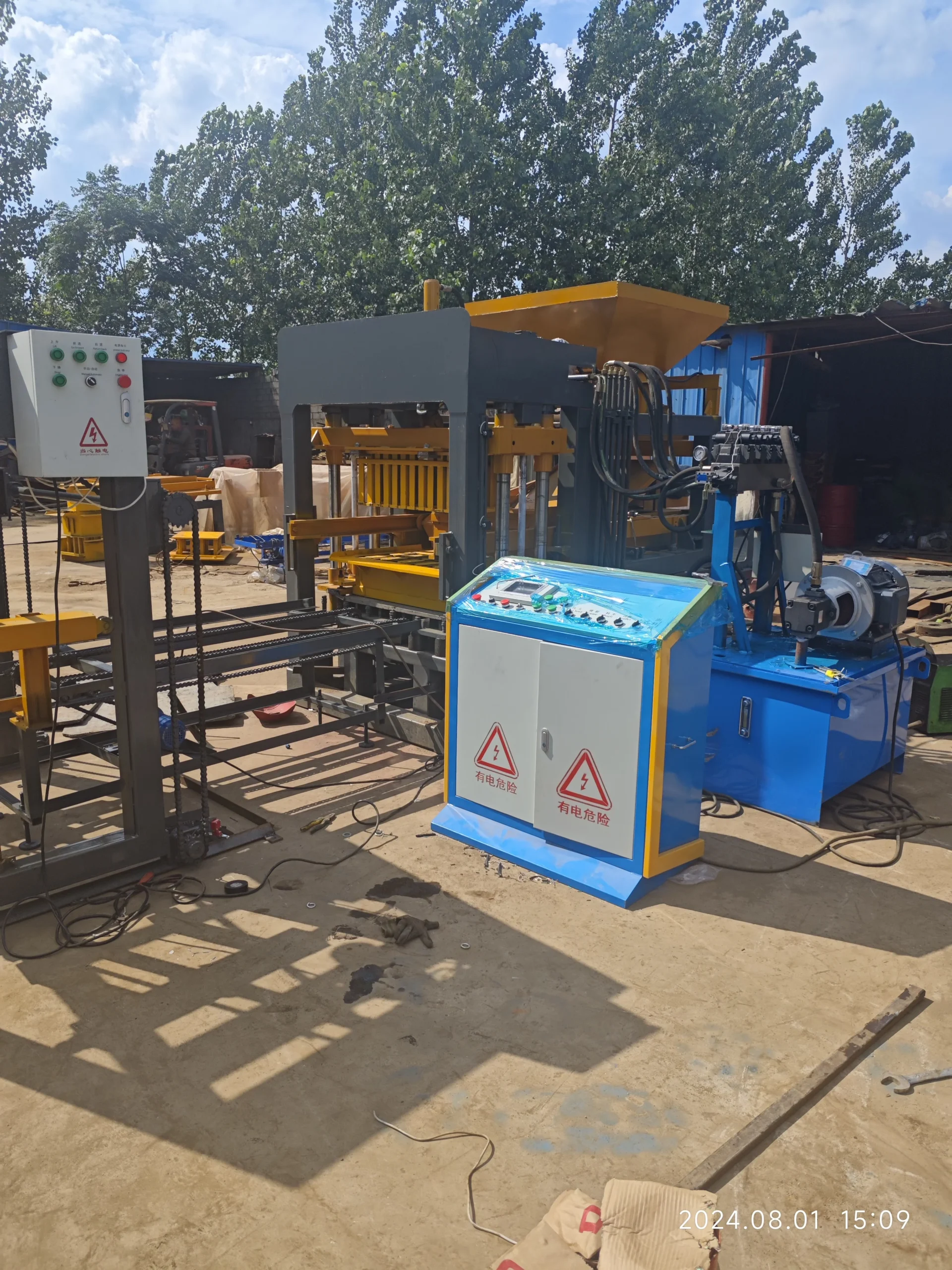
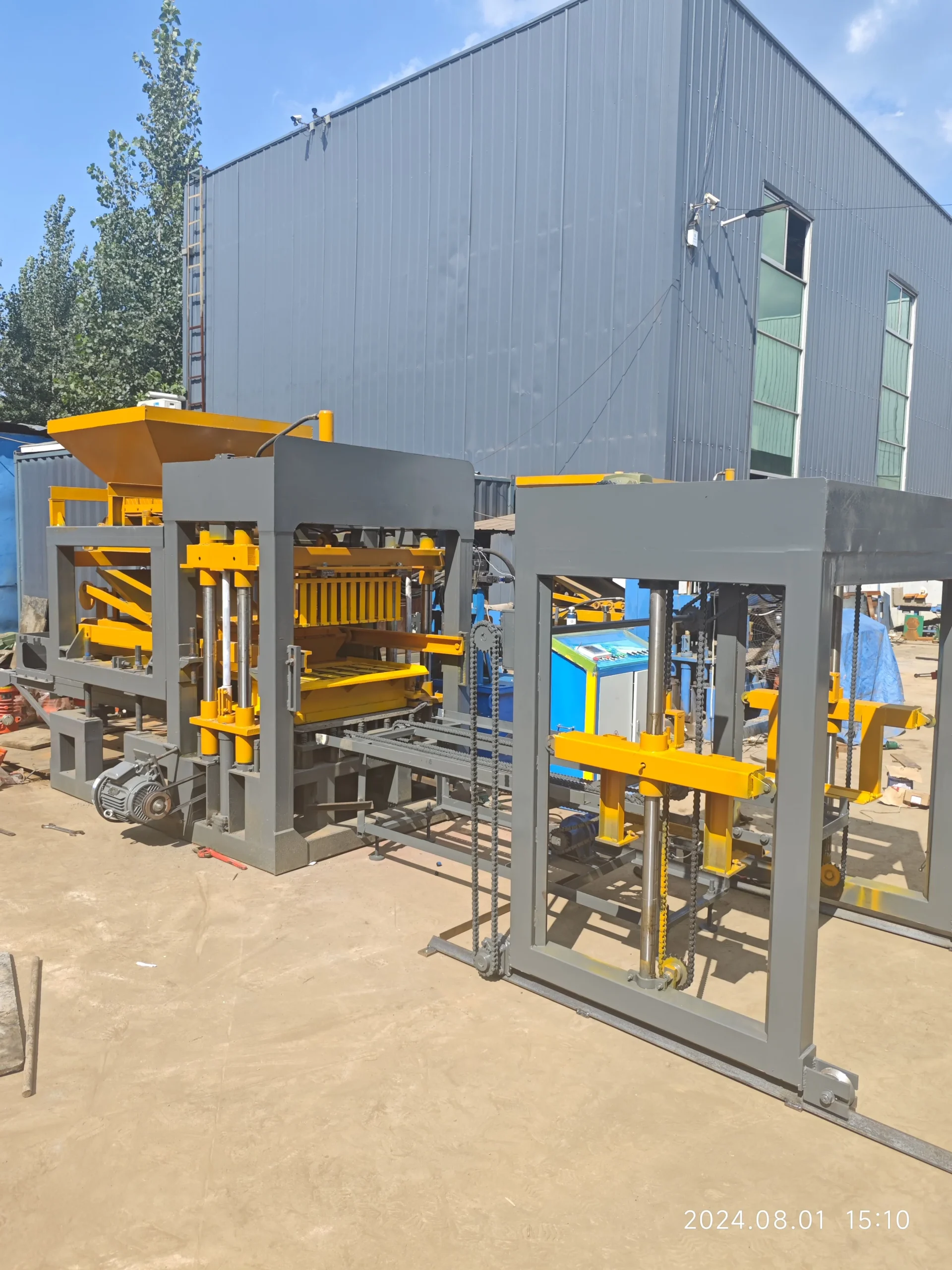
Description
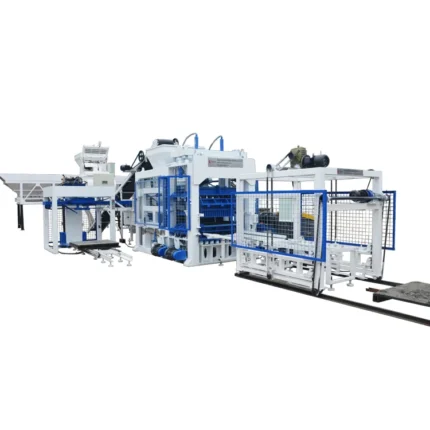
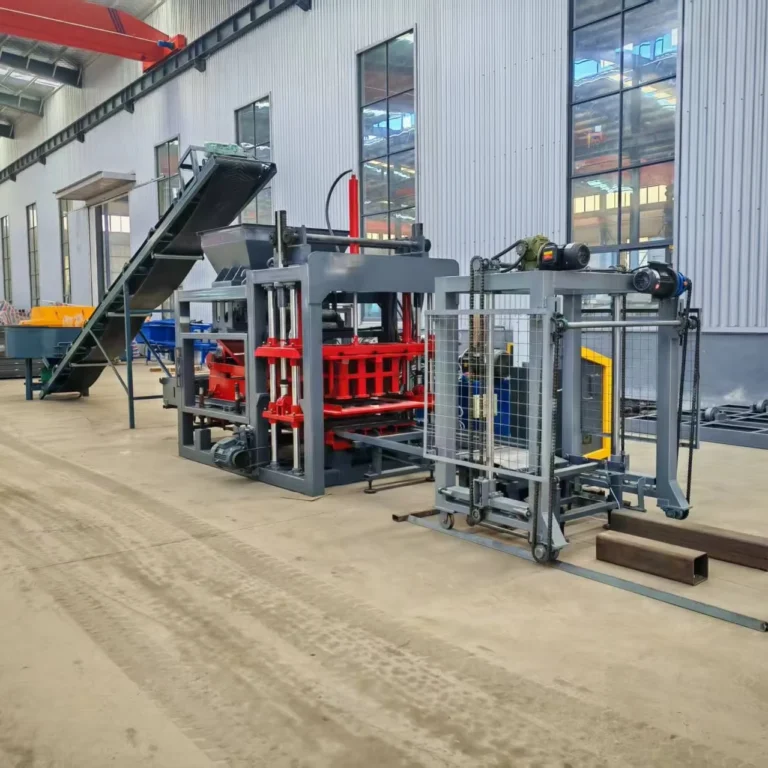
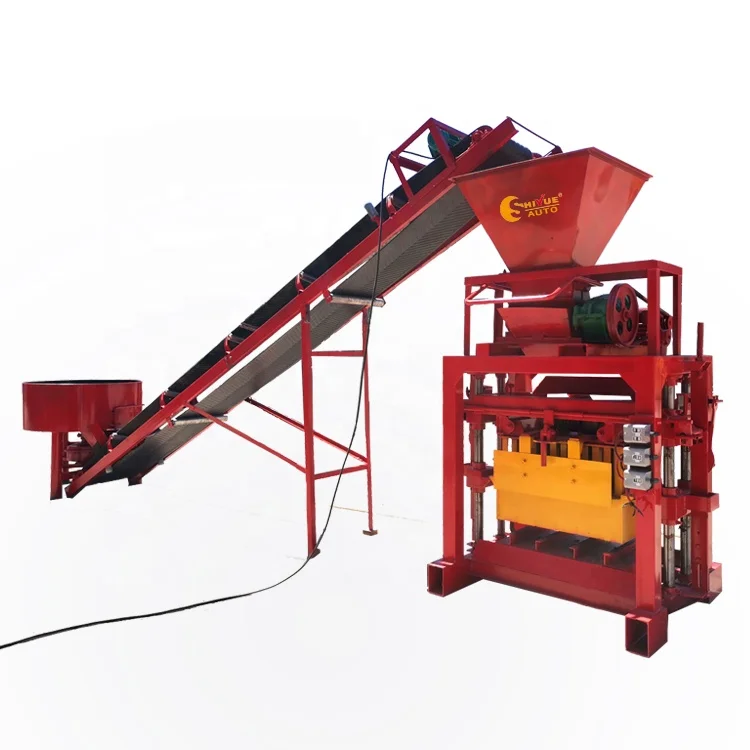
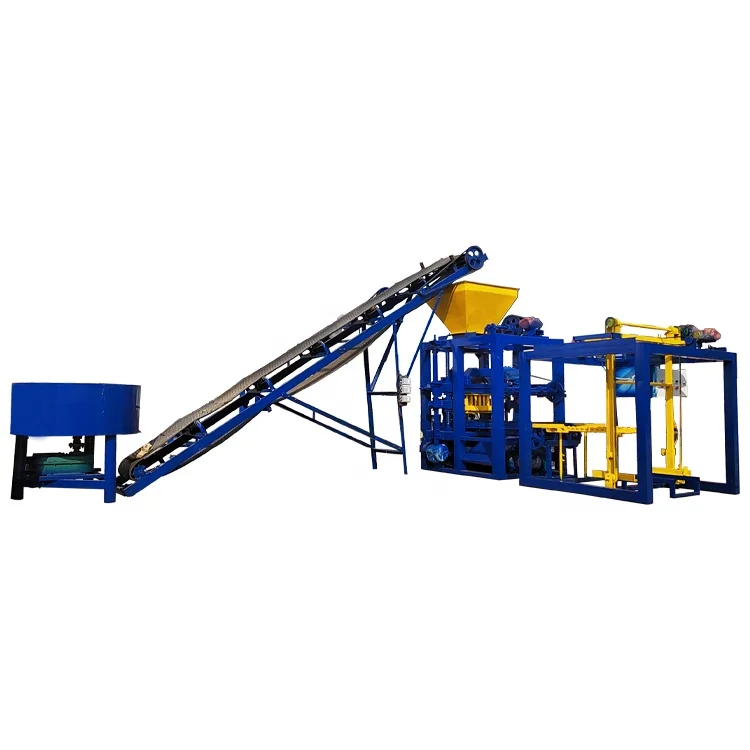
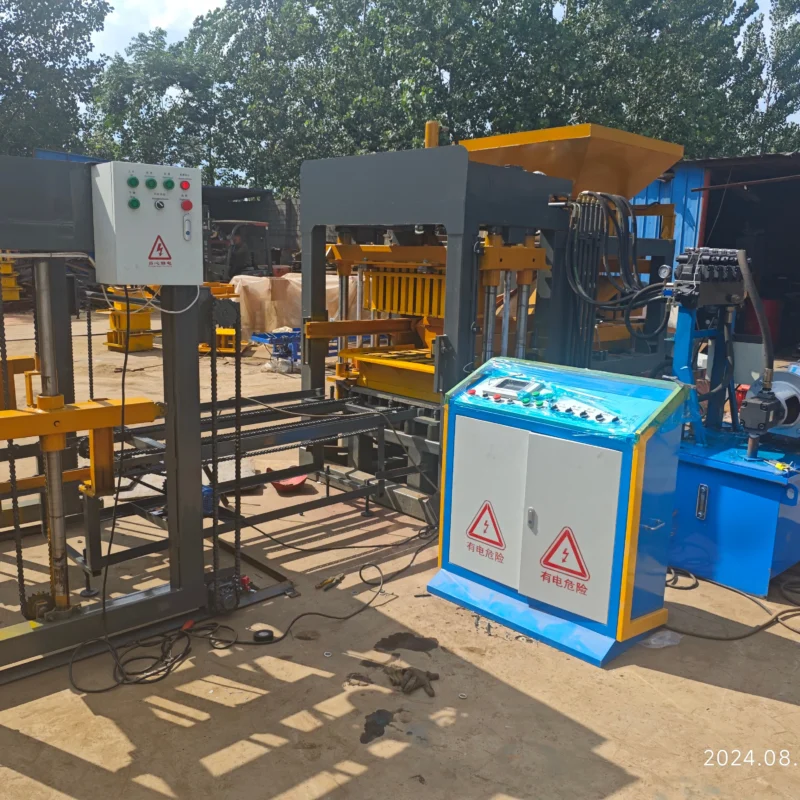
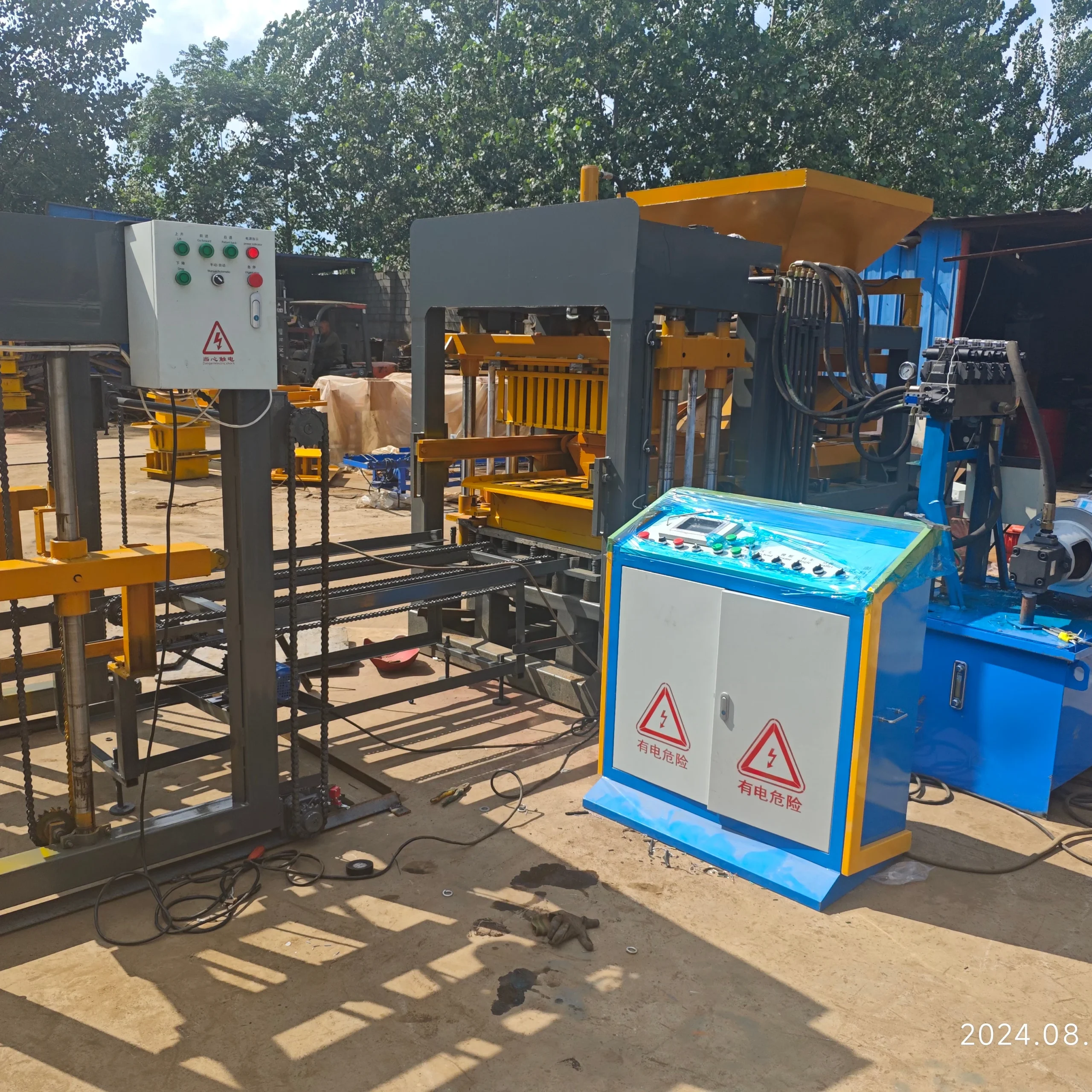
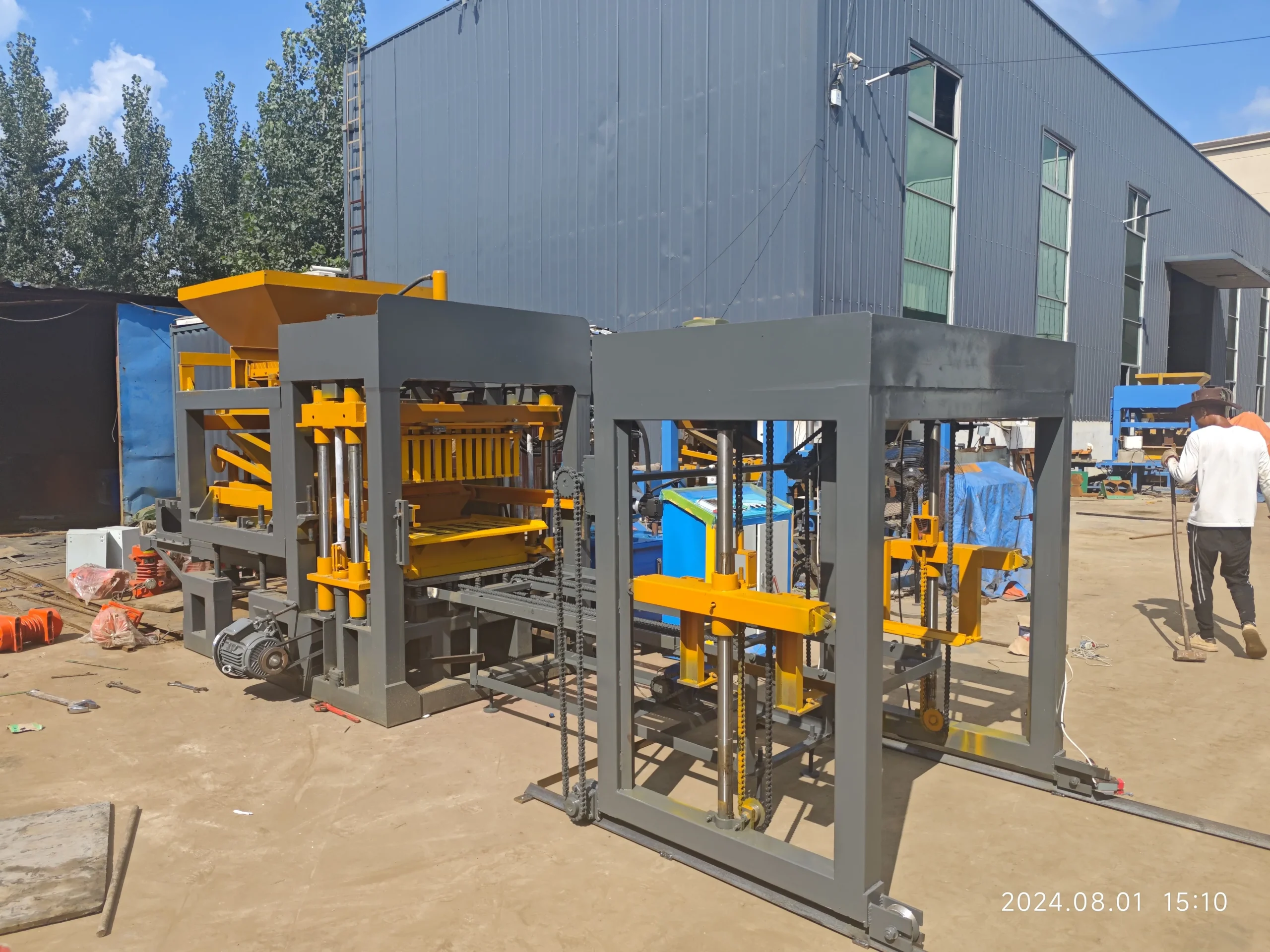
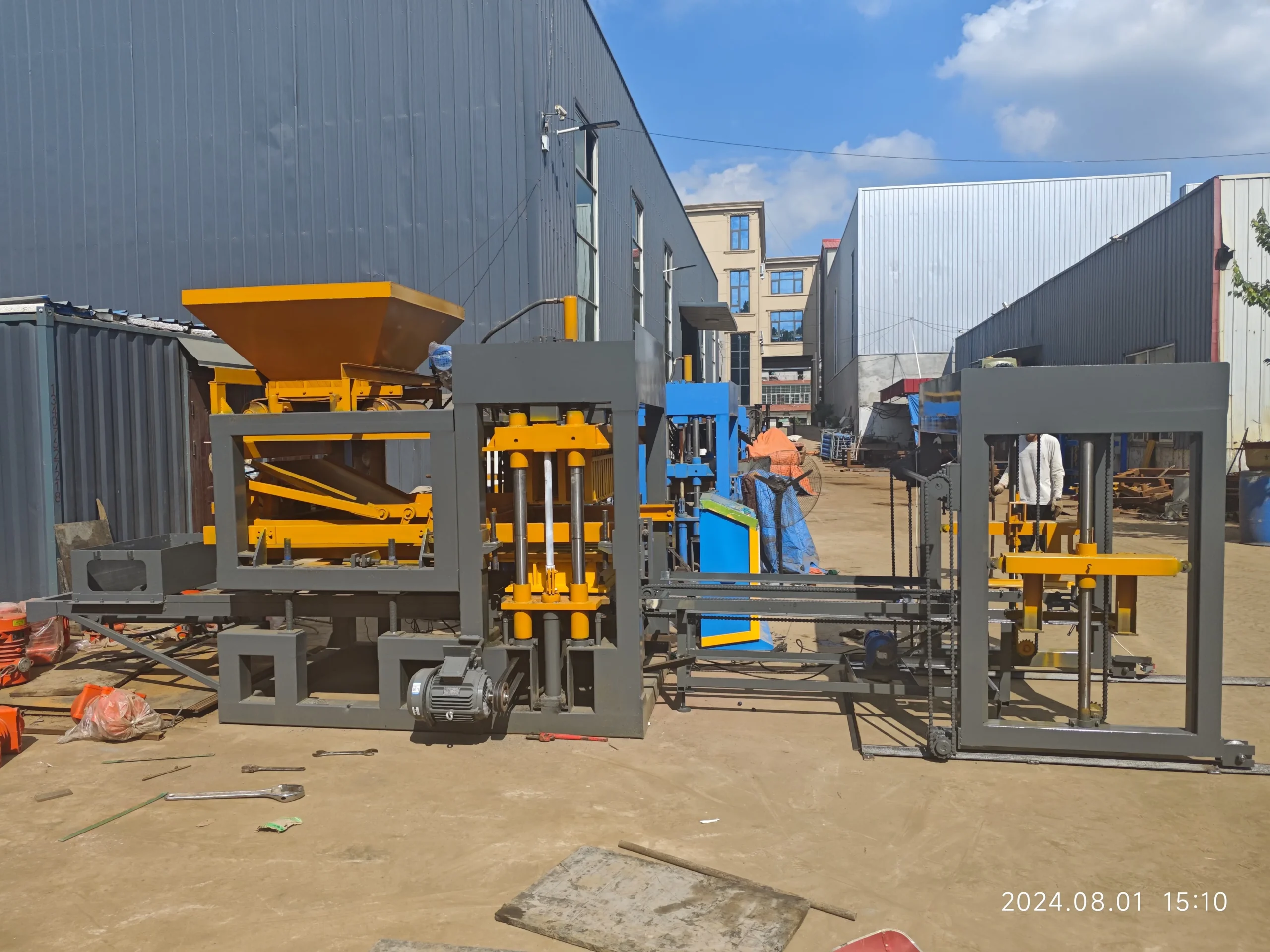
Integrated system control — the QT4-18 is specified as a coordinated line where the PLC manages press cycling, pallet indexing, and automatic stacking as one sequence rather than isolated stations.
Technical Specifications
| Parameter | Value |
|---|---|
| Model | QT4-18 |
| Product Type | Full Automatic Concrete Block Making Machine |
| Overall Dimensions (L×W×H) | 3900×1600×2300 mm |
| Rated Power | 23.45 kW |
| Vibration Force | 40–50 kN |
| Molding Cycle | 15–25 s (varies by block format) |
| Pallet Size | 850×550×25 mm |
| Net Weight | 3 T |
| Mixer Model | JQ350 |
| Control System | PLC with configurable display language |
| Automation Level | Full automatic with stacker included |
| Output Capacity | 1200–1680 pcs/hr based on 400×200×200mm hollow block (basis to be confirmed) |
Application Suitability
| Application | Material or Output |
|---|---|
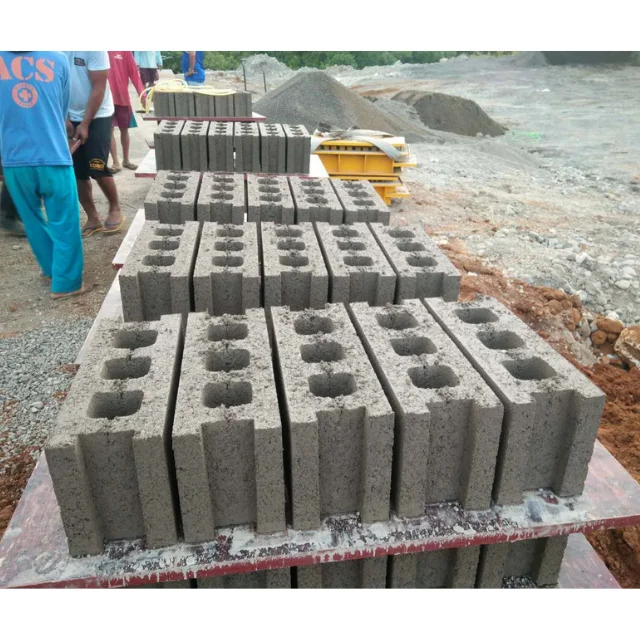
| Hollow block production | Crushed stone, sand, cement, fly ash |
| Solid brick production | Cement, sand, stone dust |
| Paver production | Aggregates with cement binder |
| Curbstone production | Coarse aggregates with high cement content |
Why Your Last Machine Quoted 1200 Blocks Per Hour But Delivered 600
The output figure means nothing without the block format attached to it.
I remember a buyer in West Africa who received a quotation promising strong daily throughput. The machine arrived, ran well mechanically, but produced far fewer blocks than expected — because the quoted figure assumed a thin paver format while the buyer’s market demanded large hollow blocks with longer cycle times and slower handling. The gap between quotation and reality erases the business plan before the first month ends [NEED_CITE: common block machine quotation practices in export markets].
PLC Control That Manages the Full Line, Not Just the Press
The PLC on this automatic concrete block making machine PLC controlled system coordinates press cycling with upstream mixer discharge and downstream pallet indexing. When the press completes a vibration and compression cycle, the PLC triggers pallet ejection and feeds the next empty pallet without operator intervention. This coordination eliminates the dead time where a manual operator scrambles to move pallets between stations, which is where most production loss actually occurs in semi-automatic setups.
Automation That Stacks While You Monitor
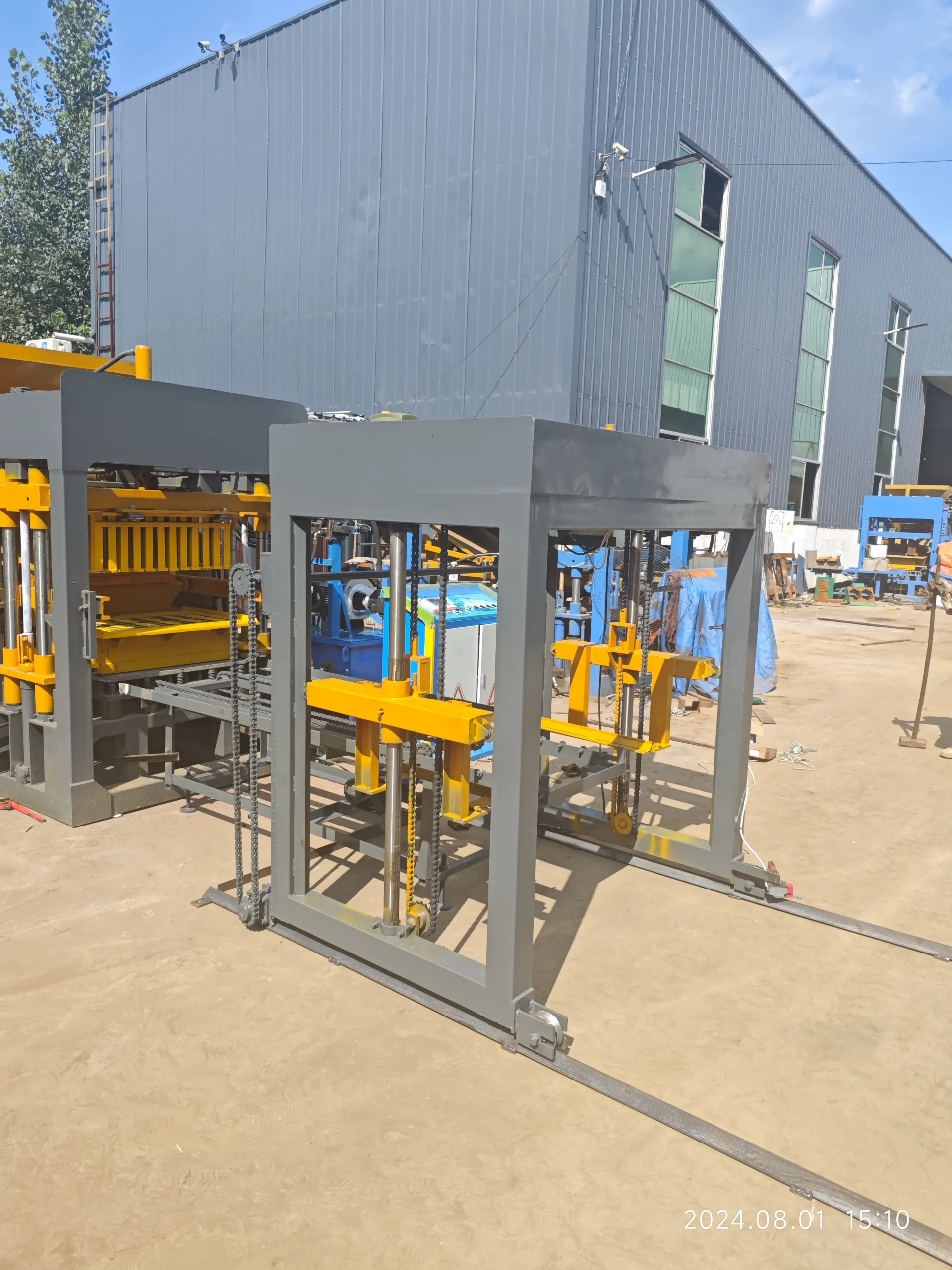
The included automatic stacker receives cured blocks from the pallet return line and groups them for forklift transport. Without this station, every pallet must be unloaded by hand — a task that pulls workers away from quality inspection and mix consistency checks. The stacker keeps the output moving during shift changes and breaks, maintaining throughput consistency that manual operations cannot match [NEED_CITE: labor allocation in semi-automatic versus automatic block plants].
How Vibration Force and Pallet Size Shape Your Daily Reality
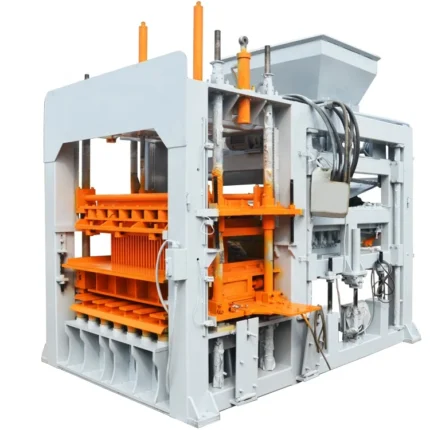
The 40–50 kN vibration force works against the hydraulic compression to compact the mix into the mould cavity. Higher vibration ensures aggregate particles settle densely, which directly affects block compressive strength — critical when local building codes require specific load ratings. The 850×550 mm pallet size determines how many blocks form per cycle and must match your curing rack dimensions and forklift fork width. A mismatch here means pallets pile on the floor because your existing infrastructure cannot handle them. The 15–25 second molding cycle range reflects that thinner formats like pavers complete faster than tall hollow blocks requiring longer vibration dwell.
The Hidden Cost of Leaving Stacking Out of the Quotation
When a quotation covers only the press and mixer, the buyer discovers after arrival that pallets must be carried manually to curing areas, stacked by hand, and returned empty by workers rather than by conveyor. This gap doubles the labor requirement and creates a bottleneck that no amount of press speed can overcome [NEED_CITE: hidden costs in block machine procurement]. The production line runs only as fast as its slowest station — and manual pallet handling is almost always the slowest.
Why Buyers Specify Here Rather Than Assemble From Catalogues
This machine ships as a matched system where the mixer capacity, conveyor rate, press cycle, and stacker speed are balanced to each other rather than sourced independently. The PLC language and voltage are confirmed before production begins, preventing commissioning delays when the machine arrives in markets with 415V three-phase or 60Hz supply standards. The mould options — hollow, solid, paver, curbstone — are documented with drawings so the buyer verifies block dimensions before steel is cut. The configuration accounts for local aggregate characteristics; a mix with high fines content requires different vibration tuning than one using washed crushed stone [NEED_CITE: aggregate influence on block machine configuration]. Capacity calculations state which block format each figure assumes, so the buyer’s investment decision rests on actual product output rather than theoretical maximums.
Documentation & Verification
- Line layout drawing showing press, mixer, conveyor, and stacker positions with pallet flow direction
- Capacity calculation sheet stating output per hour for each block format in your product range
- PLC display language and voltage specification confirmed in writing before production starts
- Mould drawing set with dimensional details for every block format included in the order
- Factory test record showing cycle times measured on your specified block format and mix
- Hydraulic and electrical schematic for local maintenance team reference
Installation, Commissioning & Support
- Foundation must support 3 T machine weight plus dynamic vibration loads across the 3900 mm frame length
- Power supply requires dedicated circuit matching confirmed voltage and frequency for the 23.45 kW total load
- Machine ships as host unit, mixer JQ350, conveyor, and stacker — assembled on site per line layout
- Commissioning includes cycle time verification against your block format and mix design
- Operator training covers PLC operation, mould change procedure, and daily maintenance intervals
- Wear parts list provided with mould components and hydraulic seals identified by part number
What to Prepare Before Requesting a Quotation
Send the block formats your market sells, including dimensions and daily volume targets for each. Confirm the local voltage, frequency, and preferred PLC display language. Share your raw material source — whether river sand, crushed stone, fly ash, or a blend — and any block strength requirements from local building standards. If you have existing curing racks or forklifts, provide pallet dimensions and fork spacing so the system integrates with equipment already on site.
Frequently Asked Questions
Q: How is the output capacity calculated and which block format does it assume?
A: The quoted figures reference a specific block format — typically 400×200×200mm hollow block at 1200–1680 pieces per hour. Different formats have different cycle times and mould cavity counts, so your actual output depends on which blocks you produce. The capacity sheet provided with your quotation states the assumption for every figure.
Q: What PLC language and voltage configuration is confirmed before shipment?
A: Voltage, frequency, and PLC display language are confirmed in writing before production begins. Standard options include 380V/50Hz, 415V/50Hz, and 440V/60Hz configurations, with PLC interfaces available in English and other languages based on your operator requirements.
Q: How long does a mould change take and what tools are needed?
A: Mould change involves releasing the clamping mechanism, lifting the current mould, and securing the replacement. The procedure requires standard hand tools and typically completes within a shift break. Mould drawings are supplied so your team can verify block dimensions before ordering additional formats.
Q: Does the quotation cover automatic pallet feeding and stacking?
A: Yes. The QT4-18 configuration includes the automatic stacker and pallet handling system as part of the line. The quotation documents the automation level and stacking method explicitly so there is no manual handling gap discovered after commissioning.
Q: Can the machine be upgraded from semi-automatic to fully automatic later?
A: The platform supports upgrade paths where additional automation stations — such as automatic pallet feeding or cubing — can be integrated after initial installation. The PLC architecture accommodates these additions without requiring a full control system replacement.