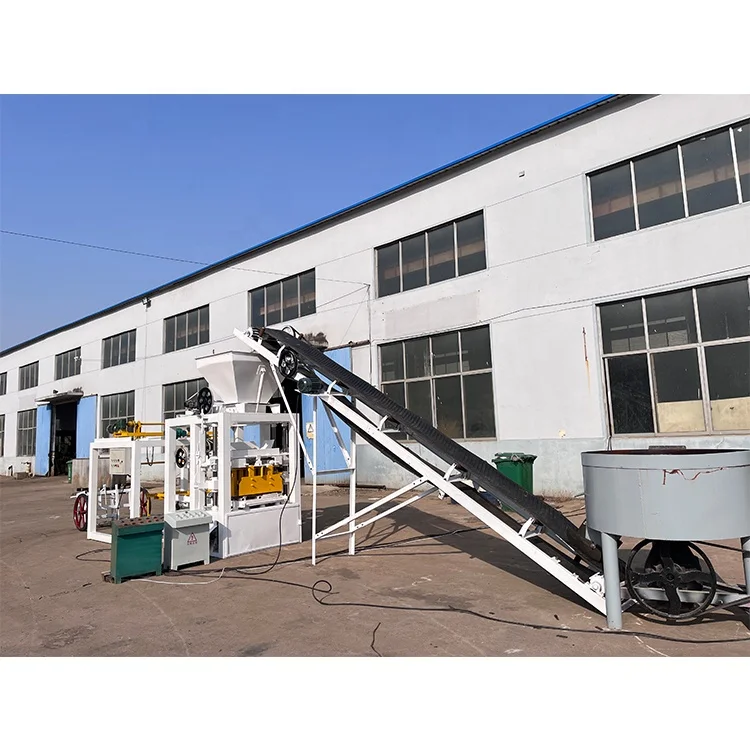
Description
Vibration-Pressure Tuning — The QTJ4-24 hydraulic station and 35.5 kN exciter are matched to the buyer’s mix design and local aggregate rather than set to a catalogue default.
Technical Specifications
| Parameter | Value |
|---|---|
| Model | QTJ4-24 |
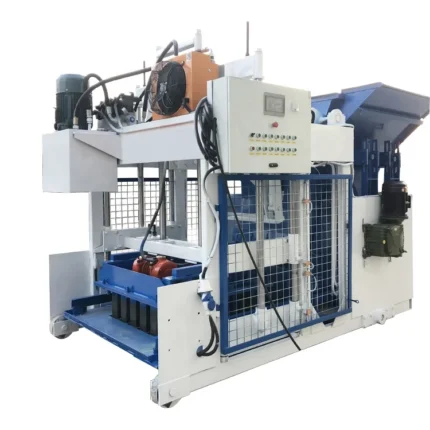
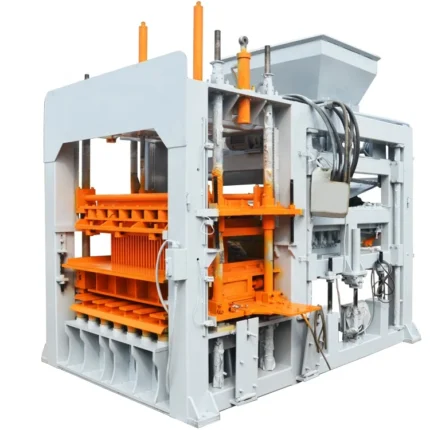
| Product Type | Semi-Automatic Concrete Block Making Machine |
| Overall Dimensions (L×W×H) | 2060×1730×2580 mm |
| Molding Cycle | 24 s |
| Vibration Frequency | 4200 r/min |
| Vibration Force (Exciting Power) | 35.5 kN |
| Total Power | 14.25 kW |
| Mixer Model | JQ350 |
| Pallet Size | 850×450×20 mm |
| Net Weight | 1800 kg |
| Automation Level | Semi-automatic |
| Hydraulic System | High-pressure, integrated |
| Output Capacity | 480 pcs/hr (basis: 390×190×190 mm hollow block, 4 pcs/mould) |
| Output Capacity | 600 pcs/hr (basis: 400×150×200 mm hollow block, 5 pcs/mould) |
| Output Capacity | 2100 pcs/hr (basis: 240×115×53 mm solid brick, 18 pcs/mould) |
| Daily Output (8 hr) | 3800 pcs (basis: 390×190×190 mm hollow block) |
| Daily Output (8 hr) | 4800 pcs (basis: 400×150×200 mm hollow block) |
| Daily Output (8 hr) | 17000 pcs (basis: 240×115×53 mm solid brick) |
| Applied Products | Hollow blocks (8 in, 6 in), solid bricks, pavers |
| Raw Materials | Crushed stone, sand, cement, fly ash, dust |
| Control System / PLC | Configuration to be confirmed with buyer |
| Voltage & Frequency | To be confirmed with buyer’s local grid |
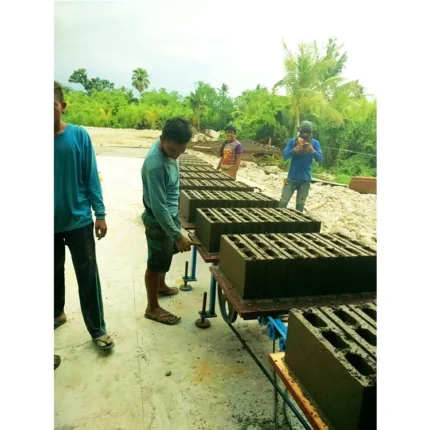
| Stacking Method | Manual pallet handling with trolley |
| Standards | CE |
Application Suitability
| Application | Material or Output |
|---|---|
| Small to medium-scale block plant | Crushed stone, sand, cement, fly ash mixes for hollow and solid formats |
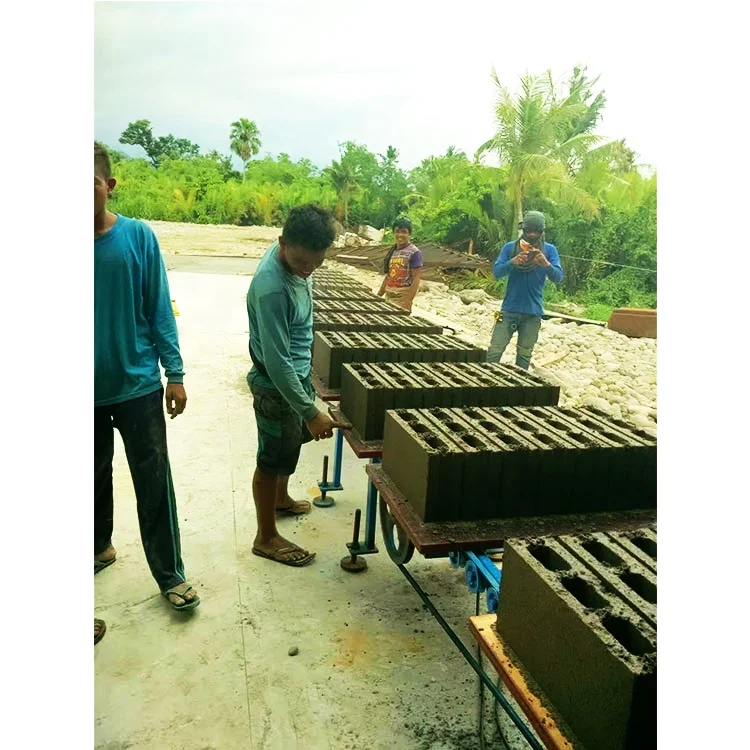
| On-site production for housing or development projects | Hollow blocks (8 in, 6 in) produced near the construction area |
| Format expansion for existing producers | Pavers and solid bricks added by changing the mould on the same platform |
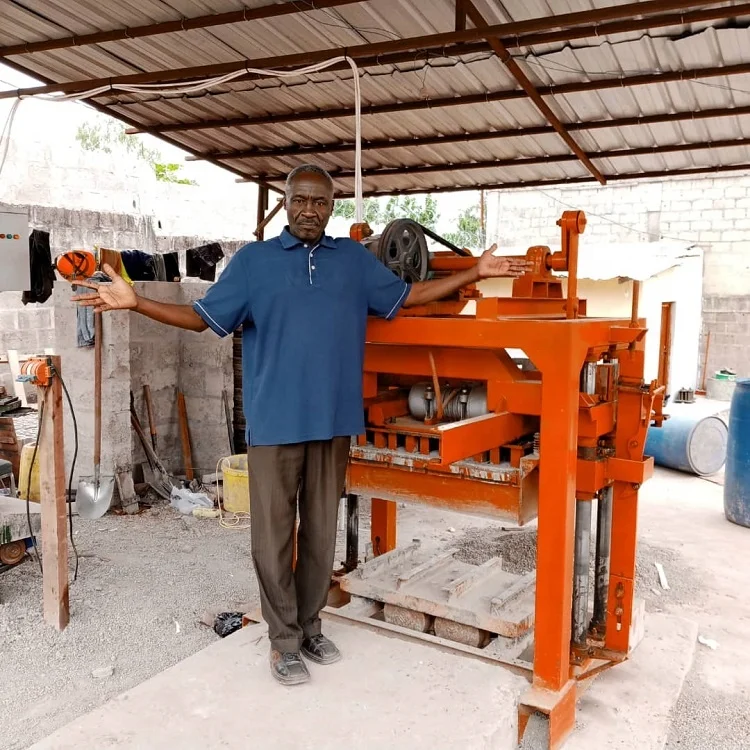
| First plant for entrepreneurs entering block production | Lower initial investment with semi-automatic operation and manual pallet handling |
Why the Control Language Must Be Settled Before the Machine Ships
Confirming PLC display language, voltage, and frequency upfront eliminates the most common commissioning delays once the PLC controlled QTJ4-24 block machine arrives on site.
I have watched entire crews stand idle at a freshly unloaded block line because the control panel displayed characters no operator could read, and the local electrician had no documentation for the frequency the motor was wound for. The automatic block machine upgrade conversation should happen before production starts, not after the first week of trial runs reveals mismatched voltage or an unreadable HMI [NEED_CITE: voltage and frequency standards by export market]. When the control system and the electrical supply are aligned from the beginning, the first shift becomes a calibration exercise instead of a troubleshooting session.
From Manual Handling to Automated Pallet Flow
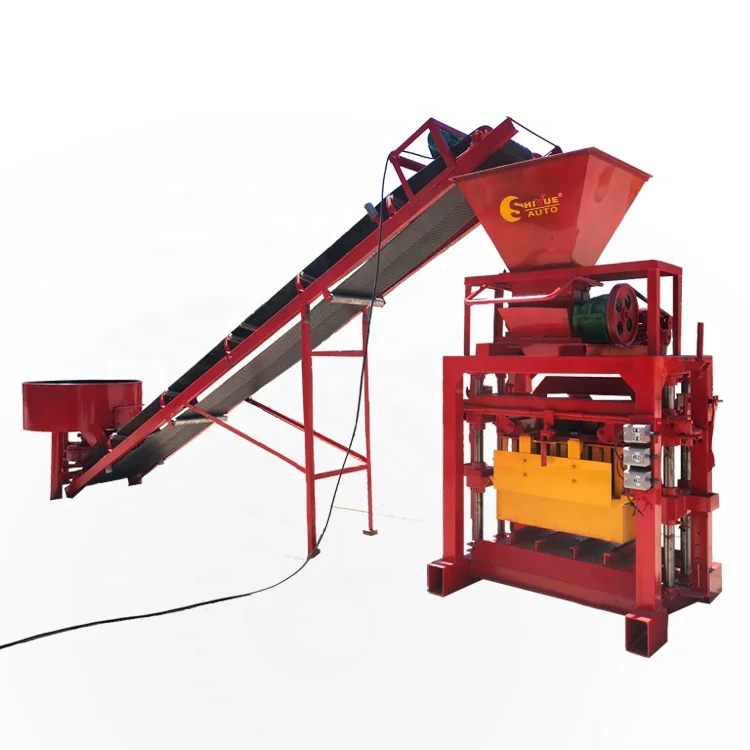
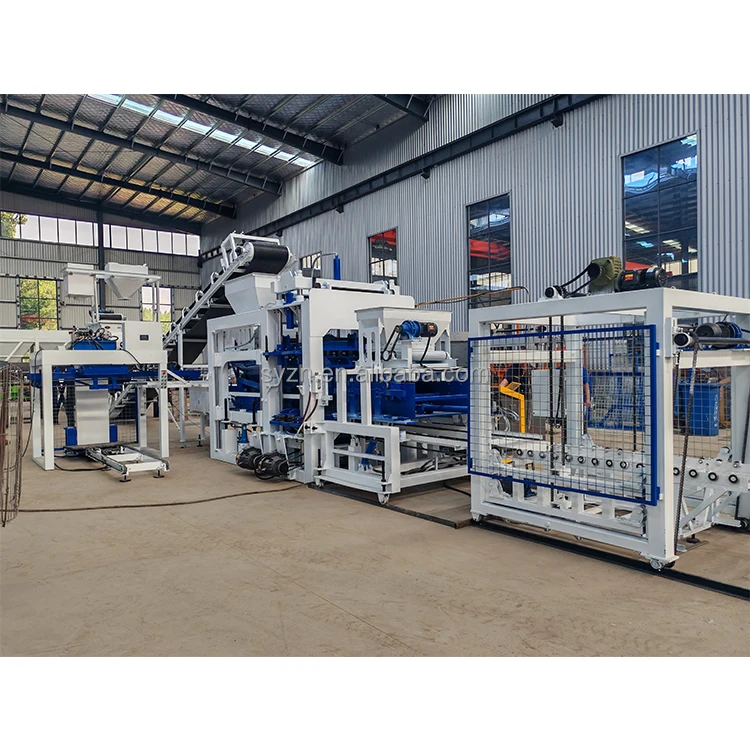
The QTJ4-24 ships as a semi-automatic press with manual pallet loading and trolley transport to the curing area. This configuration keeps the initial investment accessible for a first plant or a contractor producing blocks on a project site. The platform is designed so that automatic pallet feeding, stacking, and cubing modules can be added later, converting the line into a continuous loop without replacing the press itself. Buyers who know their volume will grow typically spec the PLC controlled QTJ4-24 block machine with conduit runs and junction boxes pre-positioned for future sensors and actuators.
Matching Vibration and Pressure to Local Aggregate
Block strength inconsistency almost always traces back to a vibration force and hydraulic pressure setting that was calibrated for a reference mix the buyer cannot source locally. The QTJ4-24 addresses this by combining bed-mould vertical vibration at 4200 r/min with upper-mould compression vibration, delivering 35.5 kN of exciting force into the material bed. The hydraulic station maintains steady pressure throughout the compaction stroke, reducing mechanical shock on the frame. Before production is scheduled, a sample of the buyer’s aggregate and cement is tested in the laboratory so the vibration amplitude and hydraulic pressure can be dialled in for that specific mix [NEED_CITE: CE machinery directive requirements for industrial equipment].
Reading the Numbers That Actually Matter
The 24-second molding cycle governs how fast the press completes one press-and-release sequence, but the real output depends on how many cavities the chosen mould carries. A 390×190×190 mm hollow block mould has four cavities, yielding 480 pieces per hour, while a solid brick mould with eighteen cavities pushes the rate to 2100 pieces per hour. The 850×450 mm pallet size determines how many blocks sit on each board and must match the curing rack spacing and the forklift tine width already on site. Total installed power of 14.25 kW covers the vibration motors, hydraulic pump, and the JQ350 mixer, so the electrical feed must account for starting current on all three loads simultaneously. Semi-automatic operation means pallet insertion and removal remain manual tasks, keeping labour on the line but removing the heaviest physical work from the operator.
The Cost of Skipping the Configuration Conversation
When a buyer accepts a catalogue-default machine without verifying the hydraulic pressure against local aggregate hardness, the first production run often delivers blocks that crumble at the edges or fail compressive strength tests. Mould changeovers that should take minutes stretch into hours because the quick-release mechanism was never specified for the formats the buyer actually sells. Pallet handling bottlenecks appear when the curing area is too far from the press and no trolley or conveyor was included in the scope. Commissioning delays cascade into missed project deadlines, and the blame lands on the machine rather than on the specification gap [NEED_CITE: common commissioning delays in exported block making equipment].
What This Supplier Brings to the Table
Block machinery is the single focus here, so the QTJ4-24 press, mould, pallet, and handling equipment are specified as one matched system instead of being assembled from separate vendors. The configuration is set against the buyer’s actual mix design, local aggregate, and target block format rather than pulled from a catalogue default. Mould design covers the formats the buyer’s market sells, including custom drawings when standard cavity layouts do not fit. The automation level is selectable, letting a buyer start semi-automatic and add pallet feeding, stacking, and cubing later without replacing the press. Installation and commissioning support includes operator training so the crew can run the PLC controlled QTJ4-24 block machine independently from the first week.
Documentation & Verification
- Line layout and capacity calculation stating the block format assumed for each output figure
- Machine specification sheet with hydraulic pressure and vibration force ratings confirmed for buyer’s mix
- Mould drawing and format list covering hollow block, solid brick, and paver cavities
- Voltage, frequency, and control language confirmation signed off before production
- Factory test record on buyer’s specified pallet size and block format before dispatch
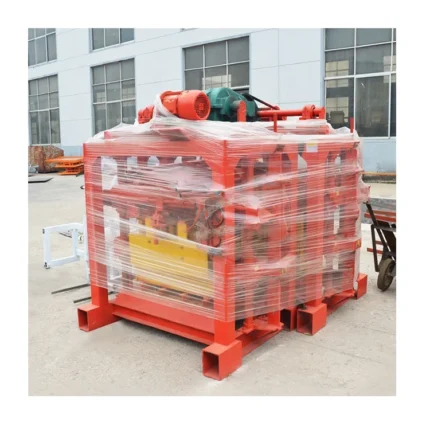
- Packing photographs and customs documentation support for smooth clearance
Installation, Commissioning & Support
- Foundation pad sized to 2060×1730 mm footprint with anchor bolt plan provided before machine arrival
- Dedicated electrical circuit rated for 14.25 kW total load plus starting current margin for vibration motors and hydraulic pump
- Machine ships as a single skid with mixer and pallets; on-site assembly limited to electrical connection and trolley placement
- First-run calibration of hydraulic pressure and vibration amplitude using buyer’s local aggregate sample
- Operator training covers mould change procedure, pallet loading rhythm, and daily greasing points on the vibration shaft
- Wear parts list identifies hydraulic seals, vibration springs, and mould liner plates with reorder part numbers
Before You Send the Inquiry
Share the exact block formats your market moves, the daily volume you need for each, and the raw materials available within hauling distance of your site. Confirm your local voltage, frequency, and preferred control panel language so the automatic block machine upgrade path can be wired correctly from day one. If you already have curing racks, forklifts, or a mixer on site, send the pallet dimensions and rack spacing so the 850×450 mm pallet configuration can be verified or adjusted before the quotation is finalised.
Frequently Asked Questions
Q: How do I verify the real daily output for my block format?
A: Every capacity figure for the QTJ4-24 is tied to a specific block size and cavity count. Request the capacity calculation document that states the exact format assumed — for example, 480 pieces per hour based on a 390×190×190 mm hollow block with four cavities. Compare that figure against your target format before signing the order.
Q: Can the QTJ4-24 be upgraded to automatic pallet feeding and stacking later?
A: Yes. The semi-automatic platform accepts add-on modules for automatic pallet feeding, stacking, and cubing. Conduit runs and sensor mounting points can be pre-positioned during initial build so the upgrade does not require structural modification to the press frame.
Q: What voltage and control language options are available?
A: Voltage and frequency are configured to match the buyer’s local grid, and the control panel language is confirmed before production. Provide your site electrical specification at inquiry stage so the motor winding and transformer rating are correct for your supply.
Q: How is the vibration force matched to my local raw material?
A: A sample of the buyer’s aggregate and cement is tested in the laboratory before production. Vibration amplitude and hydraulic pressure are then adjusted so the 35.5 kN exciting force and compaction stroke produce uniform density with that specific mix design.