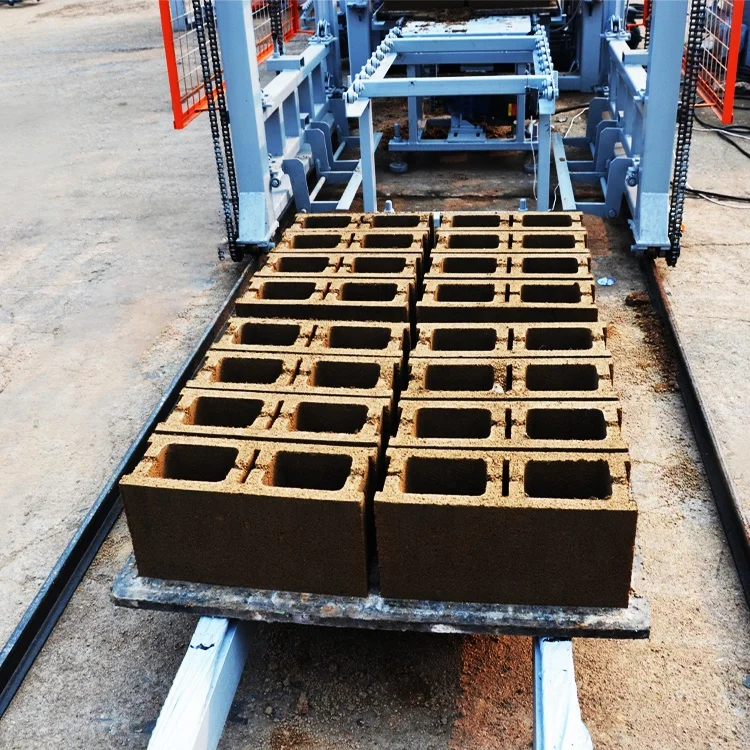


Description
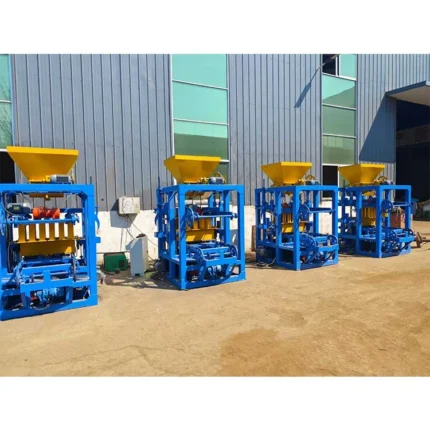
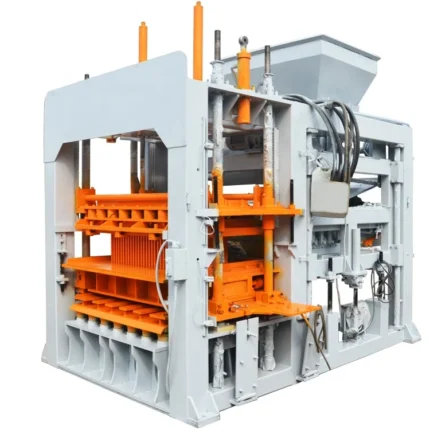
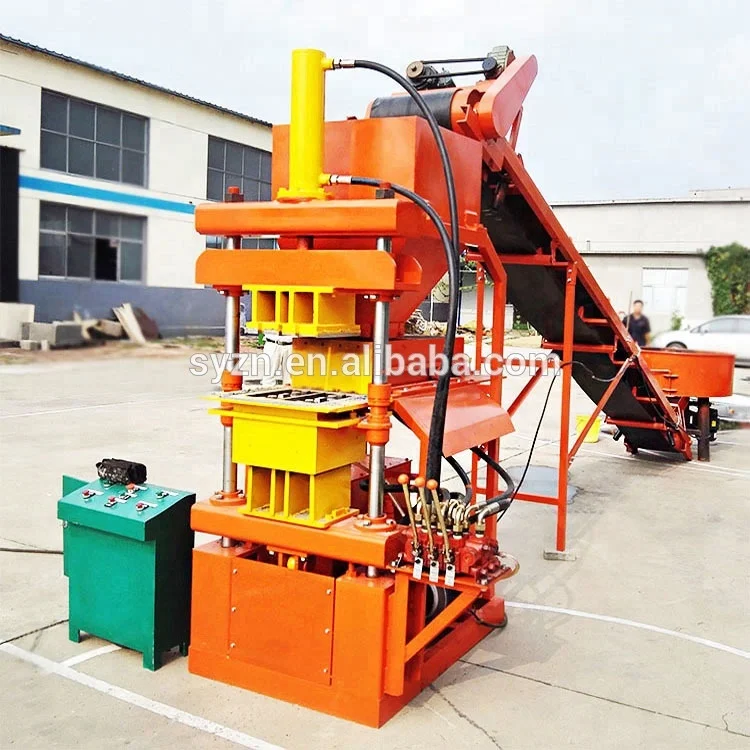
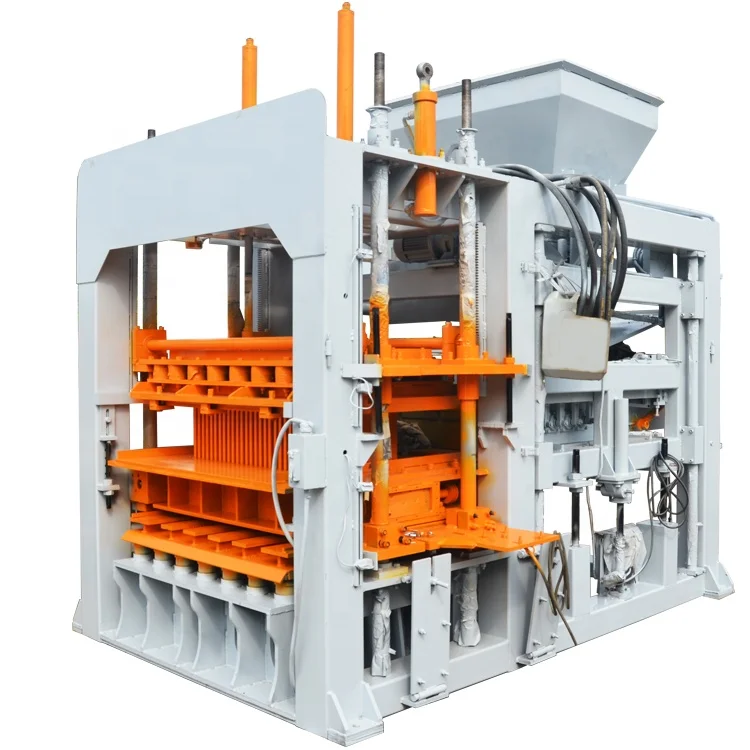
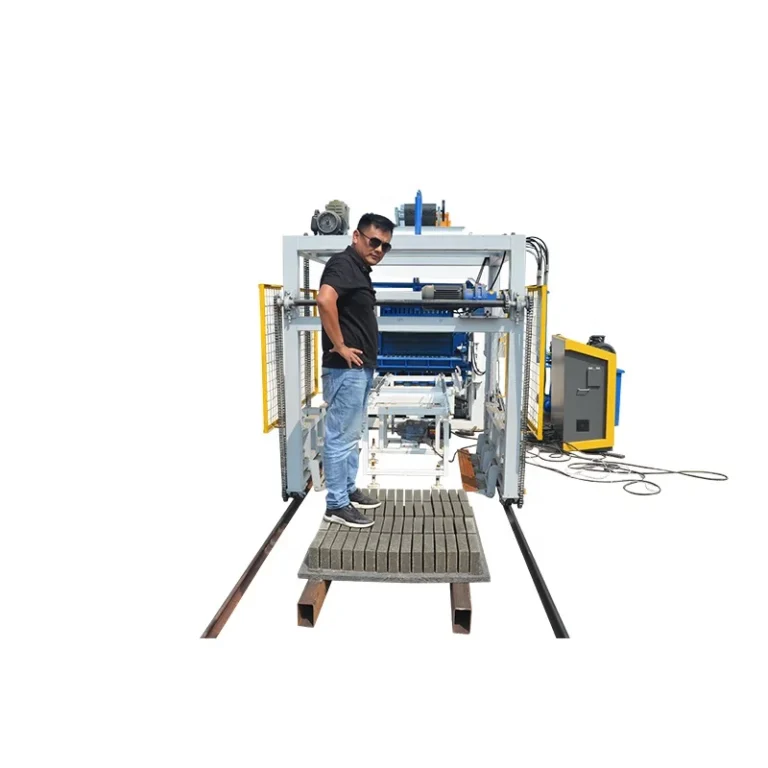
Integrated control logic — The QT6-15 pairs PLC sequencing with an independent hydraulic station so vibration, pressure, and pallet feed stay synchronized without operator intervention.
Technical Specifications
| Parameter | Value |
|---|---|
| Product Type | Concrete Block Making Machine |
| Model | QT6-15 |
| Overall Dimensions (L×W×H) | 8200 × 1700 × 2950 mm |
| Vibration Frequency | 0–60 Hz |
| Vibration Form | Platform Vibration |
| Vibration Force | 45 kN |
| Moulding Mode | Automatic load, vibration moulding |
| Pallet Size | 880 × 850 mm |
| Molding Cycle | 15–20 s (hollow/solid); 20–25 s (paving) |
| Overall Power | 37 kW |
| Total Mass | 7 T |
| Demolding Method | Hydraulic |
| Control System | PLC with touch screen HMI |
| Compressive Strength of Blocks | ≥ 15 MPa |
| Factory Area Required | 1200 m² |
| Assembly State | Independent integrated hydraulic station |
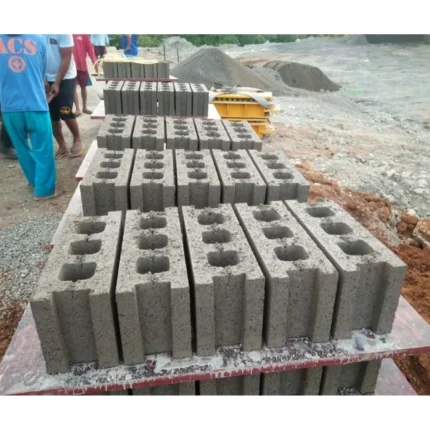
| Output – Hollow Block 400×200×200 mm | 1,080–1,440 pcs/hour; 8,640–11,520 pcs/8 hr |
| Output – Hollow Block 400×150×200 mm | 1,440–1,920 pcs/hour; 11,520–15,360 pcs/8 hr |
| Output – Solid Brick 240×115×53 mm | 5,760–7,680 pcs/hour; 46,080–61,440 pcs/8 hr |
| Output – Rectangular Paver 200×100×60 mm | 2,160–2,880 pcs/hour; 17,280–23,040 pcs/8 hr (basis not stated in source) |
Application Suitability
| Application | Material or Output |
|---|---|
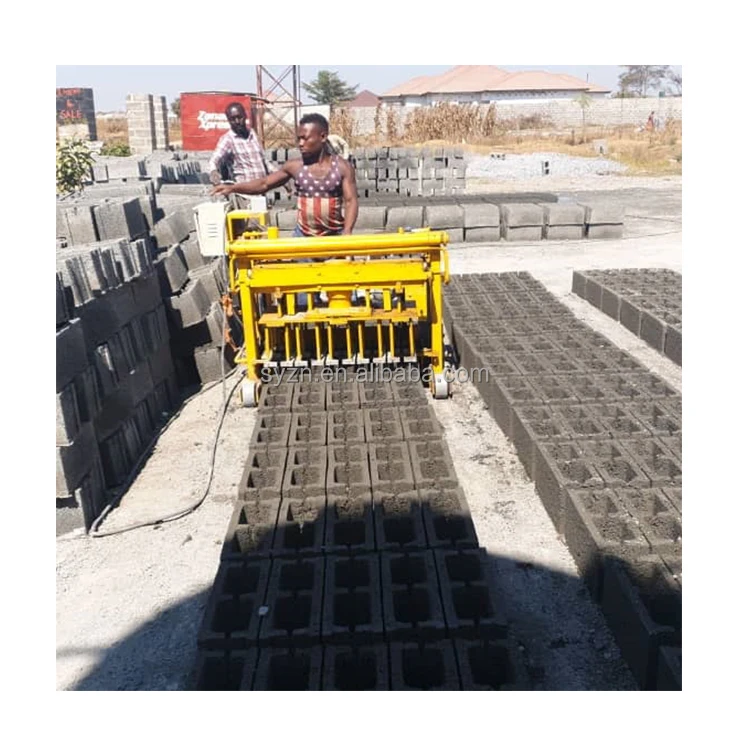
| Load-bearing hollow block production | Crushed stone, cement, and graded aggregate blends |
| Non-bearing multicellular brick | Fly ash, slag, and waste ash mixes |
| Interlocking and paving brick | Fine aggregate with cement for high-density pavers |
| Solid standard brick | River sand or manufactured sand with cement |
| Zigzag and kerbstone formats | Coarse aggregate blends requiring high vibration force |
Why PLC Logic Matters More Than Quoted Cycle Times
Consistent block strength comes from the controller enforcing every step, not from the operator remembering them.
I have watched a plant owner celebrate a fast molding cycle on day one, only to find strength readings scattered across a wide band by week three. The reason is almost always the same: a semi-automatic sequence leaves pallet placement, feed timing, and vibration duration to human judgment, and that judgment drifts as shifts change [NEED_CITE: causes of compressive strength variation in concrete masonry units]. An automatic concrete block making machine removes that drift by locking each variable inside the PLC, so the hundredth block of the shift matches the first.
Sequencing That Removes Operator Guesswork
The QT6-15 runs its entire moulding cycle through a programmable logic controller tied to a touch screen interface. Process data — vibration duration, hydraulic pressure hold, feed box travel — can be entered, stored, and recalled per mould format. When the operator selects a recipe, the PLC automatic concrete block making machine executes the same sequence every cycle, eliminating the manual timing errors that cause density variation across a production run.
Fault Diagnosis and Safe Logic Interlocks
Beyond running the cycle, the PLC monitors sensor inputs and triggers fault diagnosis routines when a value falls outside its window. Safe logic circuit interlocks prevent the hydraulic demold from firing while the feed box is still traversing, guarding both the mould and the press frame. This layer of protection is what separates a PLC controlled block machine from a relay-logic press that simply repeats a timer [NEED_CITE: PLC safety interlock standards for hydraulic presses].
Reading the Specs Behind the Press
What Vibration Force and Hydraulic Pressure Actually Do Together
The 45 kN vibration force and the independent hydraulic station work as a matched pair. Vibration liquefies the mix so particles settle into voids, while hydraulic pressure then compresses the settled mass to its target density. If the vibration frequency band of 0–60 Hz is not tuned to the local aggregate size, the mix will not fully fluidize and the resulting block will show low compressive strength at the core. The QT6-15 platform vibration system, combined with hydraulic demolding, ensures that once the press reaches peak compaction, the block is stripped cleanly without edge damage. Pallet size at 880 × 850 mm must also align with the curing rack spacing and the forklift tines already on site, or blocks will be double-handled before they even reach the yard.
The Hidden Cost of Skipping the Automation Audit
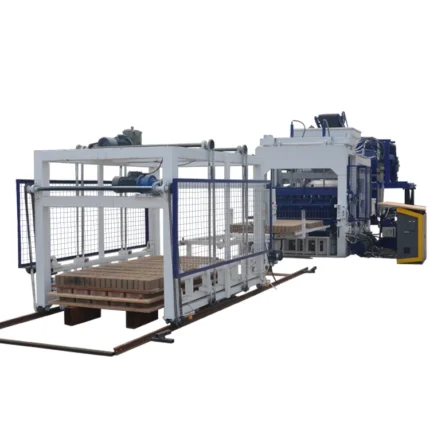
Plant owners who add an automatic press to a line that still relies on manual pallet stacking soon find the bottleneck has simply moved downstream. The QT6-15 molding cycle of 15–20 seconds can fill a curing rack faster than two workers can wheel it away, leaving wet blocks sitting on the press table. Matching the press output to an automated pallet feeder and stacker prevents that queue and keeps the 37 kW drive running at its intended duty cycle rather than idling [NEED_CITE: line balancing principles in concrete block production]. Skipping this audit often leads to overtime labor costs that erase the savings the automatic concrete block making machine was supposed to deliver.
Why Source This Configuration Here
Block machinery is the single focus of our production floor, so the PLC, hydraulic station, and pallet handling are specified as one matched system rather than assembled from separate suppliers. We set the vibration and pressure parameters against the buyer’s actual mix design and local aggregate, not a catalogue default. The touch screen HMI language and voltage are confirmed before the control cabinet is wired, preventing commissioning delays after arrival. Mould design covers the formats the buyer’s market actually sells, including custom drawings when standard cavities do not fit. Installation support includes on-site operator training so the PLC recipes are populated correctly from day one.
Documentation & Verification
- PLC logic diagram showing all interlock conditions for the QT6-15 press cycle
- Factory test record running buyer-specified block format and local aggregate sample
- Electrical schematic with confirmed voltage, frequency, and HMI display language
- Capacity calculation sheet stating molding cycle per block format and pallet size
- Mould drawing and format list including cavity count and demolding clearance
Installation, Commissioning & Support
- Foundation plan sized to the 8200 × 1700 mm footprint and 7 T operating mass
- Dedicated power circuit rated for the 37 kW total draw at confirmed local voltage
- Independent hydraulic station isolated from main frame vibration during assembly
- PLC parameter set loaded and verified against buyer block format during commissioning
- Touch screen HMI configured in operator language before first production run
- Wear parts and mould list provided for first replacement planning
Preparing Your Inquiry
To move from general interest to a firm configuration, share the block formats your market moves fastest, the daily volume you need per format, and the raw materials you can source locally. Include your site voltage, frequency, and preferred PLC display language so the control cabinet can be wired correctly before dispatch. If you are replacing a semi-automatic press, note the existing pallet size and curing rack layout so the new line ties in without a handling gap.
Frequently Asked Questions
Q: How does the PLC system ensure batch-to-batch consistency and reduce operator error?
A: The controller stores a recipe for each mould format, locking vibration duration, hydraulic pressure hold, and feed timing. When the operator selects the recipe, the automatic concrete block making machine runs the identical sequence every cycle, removing the manual timing drift that causes density variation between shifts.
Q: What is the exact cycle time per block format, and how does automation affect throughput?
A: Hollow blocks at 400×200×200 mm run a 15–20 second molding cycle, while pavers at 200×100×60 mm run 20–25 seconds. Automation keeps these times stable across a shift, but actual line throughput depends on how well pallet feeding and stacking are matched to the press output.
Q: Can the control system be upgraded for remote diagnostics and data logging?
A: The PLC architecture on the QT6-15 supports fault diagnosis and parameter logging. Remote diagnostics capability depends on the specific PLC brand and communication module selected during configuration. Request the electrical schematic to confirm available interfaces before ordering.
Q: How are voltage, frequency, and HMI language configured for different markets?
A: These values are confirmed during the quotation stage and locked into the electrical schematic before the cabinet is wired. The touch screen HMI is loaded with the buyer’s preferred language so operators can read alarms and recipe names from the first day of production.
Q: What automated pallet feeding and stacking options are available to eliminate manual handling?
A: The QT6-15 pallet size of 880 × 850 mm is compatible with automatic pallet feeders and stackers sized to the same dimension. The exact automation level — from semi-automatic pallet return through to fully automatic stacking and cubing — is selected based on your daily output target and available curing yard layout.