

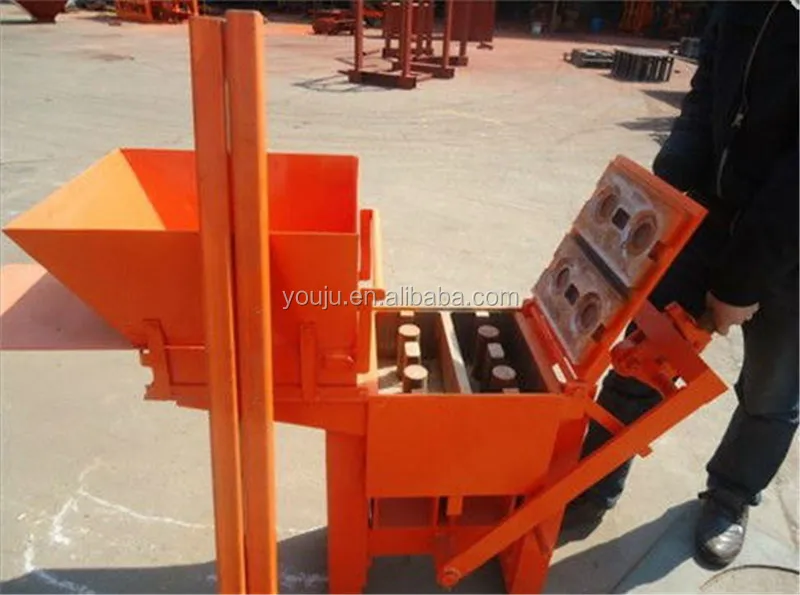
Description
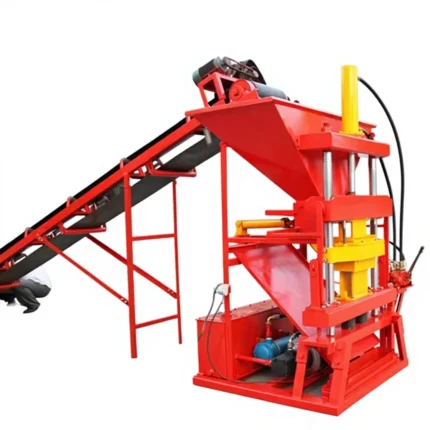
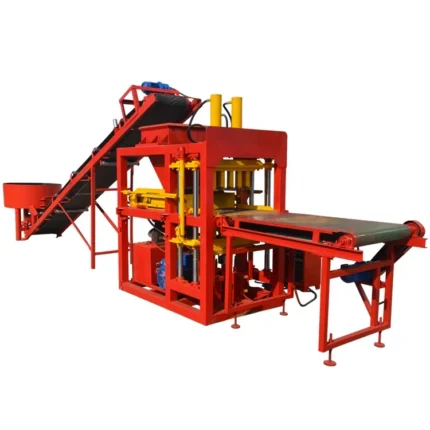
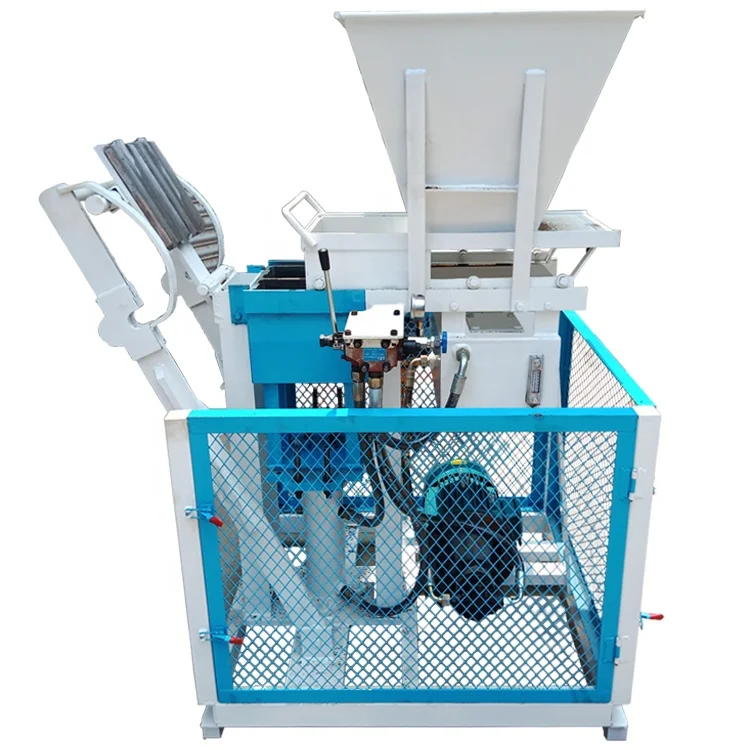
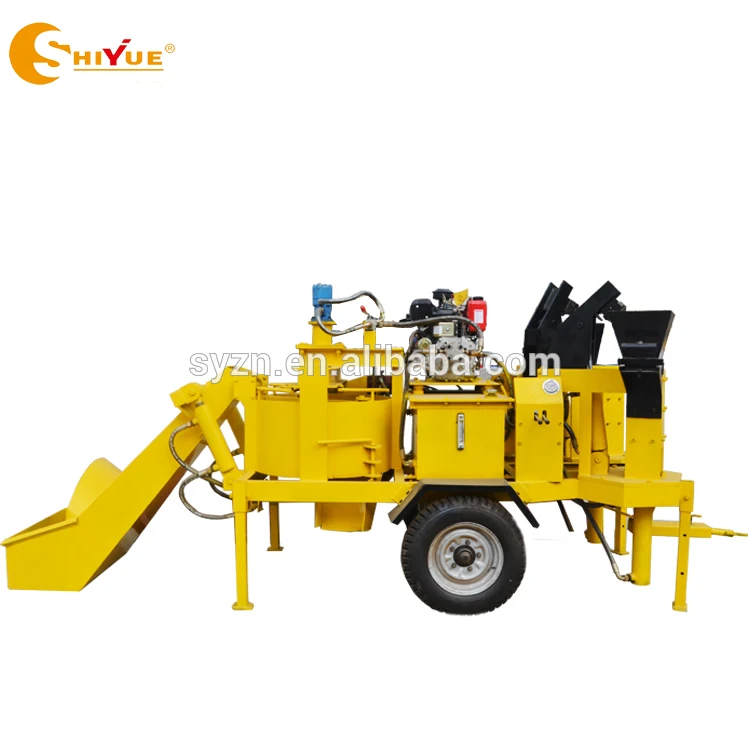
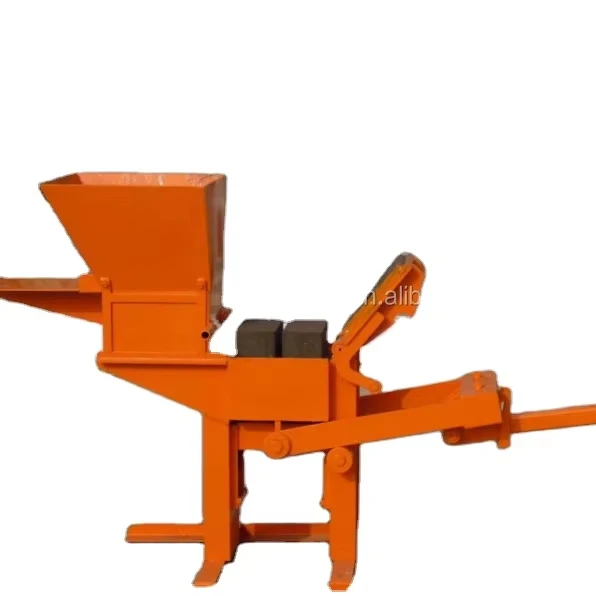
Manual baseline mapped to your upgrade path — we treat the LY2-40 as a reference point so you can see exactly where PLC control, automatic pallet feeding and stacking begin to replace manual effort in interlocking brick production.
Technical Specifications
| Parameter | Value |
|---|---|
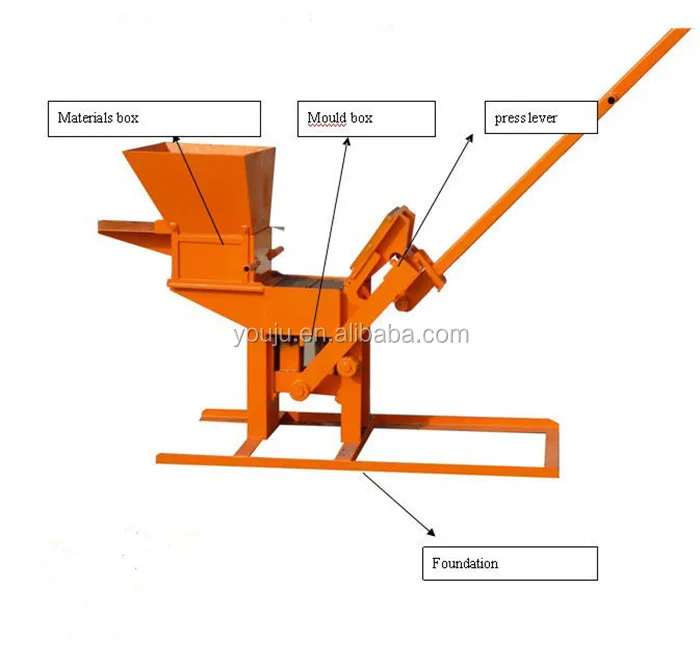
| Product Type | Manual Clay Interlocking Brick Making Machine |
| Model | LY2-40 |
| Total Power | No Power, Completely Manual |
| Overall Dimensions | 1600 x 700 x 1200 mm |
| Total Mass | 200-240 kgs |
| Molding Cycle | 30-40s |
| Daily Capacity | 400-1000 pcs/day (basis not stated in source — confirm block format / material / thickness) |
| Lifting System | Manual |
| Mobility | Steel wheels |
| Basic Equipment | JFA-1 Mixer, or JQ350 Mixer |
| Automation Level | Completely Manual |
| Warranty | 1 Year |
Application Suitability
| Application | Material or Output |
|---|---|
| Interlocking brick production | Local clay soil, often stabilized with a small cement fraction |
| Earth brick production for rural housing | Unstabilized or lightly stabilized earth on remote sites |
| On-site block making without grid power | Clay and manual labor where electricity is unavailable |
| Small-scale pilot production | Testing local soil suitability before committing to a PLC controlled block machine line |
What Manual Operation Reveals Before You Automate
Understanding the manual baseline is how you calculate the real value of an automatic interlocking brick making machine.
When a contractor starts with a hand-operated press, the bottleneck is rarely the molding cycle itself. It is the pallet handling, the stacking, the curing rack movement, and the consistency of every single press stroke that a human operator cannot hold constant for eight hours straight. I have watched a crew produce well within the expected range in the first hour, then watch quality drift as fatigue sets in and the rhythm breaks. A PLC controlled block machine removes that variable by holding pressure, vibration, and cycle timing to the same setpoint every time [NEED_CITE: operator fatigue impact on manual block consistency].
Where the PLC Controlled Block Machine Takes Over
The LY2-40 operates without any electrical input, which makes it a practical entry point for remote sites and a useful benchmark for buyers planning a future transition to an automatic interlocking brick making machine. Once daily demand exceeds what a manual crew can sustain, the question shifts from whether to automate to which stations to automate first. Pallet feeding is typically the first bottleneck to address, followed by stacking and cubing, and finally raw material batching.
Consistency That Manual Pressing Cannot Hold
Batch-to-batch consistency in block density and compressive strength depends on repeatable compaction force. In manual operation, that force is whatever the operator delivers on that stroke. A PLC controlled block machine holds hydraulic pressure and vibration duration within tight tolerances cycle after cycle, which is why the upgrade path from this manual tier is where the real quality gains appear [NEED_CITE: PLC tolerance on hydraulic pressure and vibration timing].
Reading the Specs That Matter
The 30-40 second molding cycle applies to the LY2-40 under manual operation; on a PLC controlled block machine, the cycle is governed by programmable timers that remove operator pace from the equation. The steel wheel mobility is a clear advantage for on-site, off-grid production, but it also signals that this machine is designed to be moved rather than integrated into a fixed line with conveyors and stackers. The total mass of 200-240 kgs means the frame does not carry the counterweight or hydraulic mass of an automatic interlocking brick making machine, so the compaction energy available per stroke is inherently lower. Mixer pairing — JFA-1 or JQ350 — determines whether the clay is blended uniformly before it reaches the mold, which directly affects surface finish and interlock fit.
What the Wrong Automation Level Costs You
Skipping the intermediate step and jumping straight to full automation without confirming your clay mix, pallet size, and curing yard layout leads to a line that is technically complete but operationally mismatched. Pallets that do not fit the curing racks you already own, a PLC language your operators cannot read, and a stacking system configured for a block format your market does not buy are all problems that surface after the machine arrives, not before [NEED_CITE: automation mismatch costs in block plants].
Why Sourcing the Upgrade Path Here Matters
Block machinery is our single focus, which means the LY2-40 and every automatic interlocking brick making machine in the range share a common pallet and mold logic, so a buyer who starts manual can move into semi-automatic and full PLC control without scrapping the tooling already in use. Configuration is set against the buyer’s actual clay mix and target brick format, not a catalogue default. Molds are designed for the interlocking profiles the buyer’s market actually sells, and the automation level is selectable so investment follows demand rather than preceding it. Factory testing is conducted on the buyer’s confirmed format before dispatch, and operator training covers the specific PLC interface and language agreed during the order process.
Documentation & Verification
- Line layout showing where manual stations end and PLC-controlled stations begin
- Machine specification sheet confirming LY2-40 dimensions and manual cycle timing
- Mold drawing listing interlocking brick profiles available for this machine
- Voltage and control language confirmation form for any future automation upgrade
- Factory test record on your confirmed clay mix and target brick format
Installation, Commissioning & Support
- Flat, level ground required; the 1600 x 700 mm footprint fits inside a standard site compound
- No electrical connection needed for the LY2-40 itself; mixer requires local power confirmation
- Arrives assembled on steel wheels; no heavy lifting equipment needed for placement
- First-run calibration of molding cycle and mix moisture conducted with your operator present
- Wear parts list provided with mold liner and spring replacements specific to this machine
- Manual operation training covers mold change procedure and daily maintenance checkpoints
What to Prepare Before You Send an Inquiry
Tell us the interlocking brick profile your market sells, the daily volume you are targeting now and where you expect it to be in twelve months, and whether your site has reliable grid power or will depend on a generator. Include the local clay characteristics if you have a soil test, or arrange to send a sample so the mix can be verified against the mold before any automation tier is specified.
Frequently Asked Questions
Q: How is daily capacity verified and what block format does the figure assume?
A: The 400-1000 pcs/day figure for the LY2-40 requires confirmation against your specific interlocking brick dimensions and wall thickness. We state capacity per format with the cycle time and mold assumed, so you see the real number for the brick you actually produce, not a generic maximum.
Q: What automation level should I choose for interlocking brick production?
A: The LY2-40 is the fully manual starting point. If your daily volume justifies it, moving to semi-automatic pallet feeding first, then adding stacking and cubing, lets you match investment to actual demand without over-building the line from day one.
Q: How does PLC control improve batch-to-batch consistency compared to manual pressing?
A: A PLC controlled block machine holds compaction pressure, vibration duration, and cycle timing to fixed setpoints every cycle, removing operator fatigue and pace variation. The result is uniform block density and strength across a full production shift.
Q: Can I start with the LY2-40 and upgrade to an automatic interlocking brick making machine later?
A: Yes. The mold and pallet systems across the range share common logic, so tooling from the LY2-40 can carry forward. Automation stations like pallet feeding, stacking, and cubing can be added incrementally as your output grows.
Q: What voltage, frequency, and PLC language options are confirmed before shipment?
A: For any PLC controlled block machine in the line, we confirm voltage, frequency, and HMI display language in writing before production begins. The PLC interface arrives set to your operator’s language so commissioning is not delayed by translation gaps.