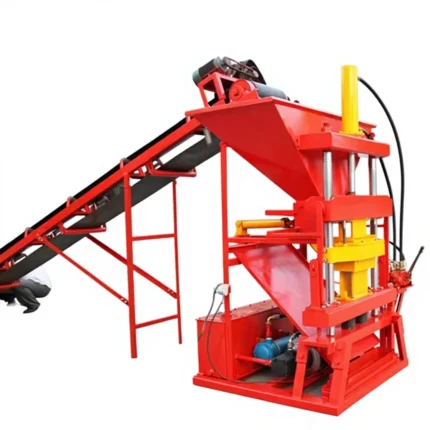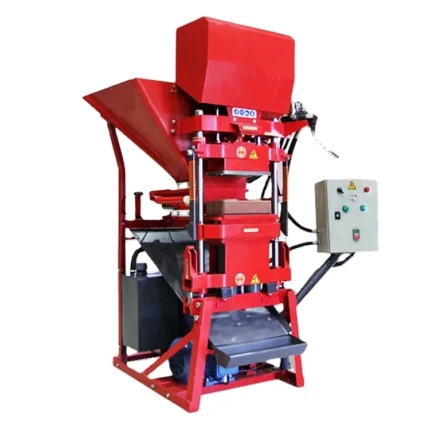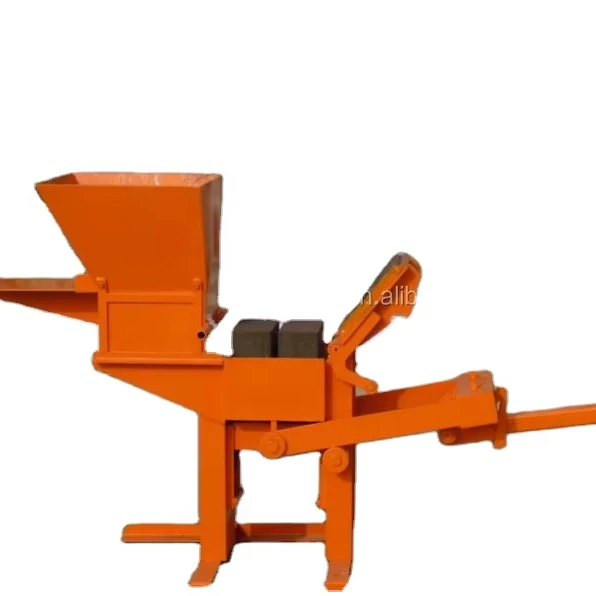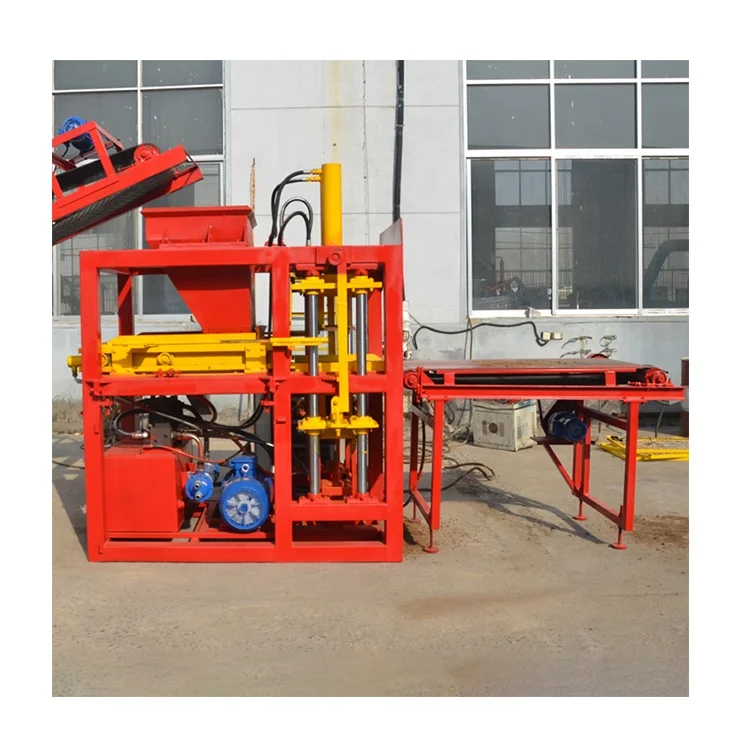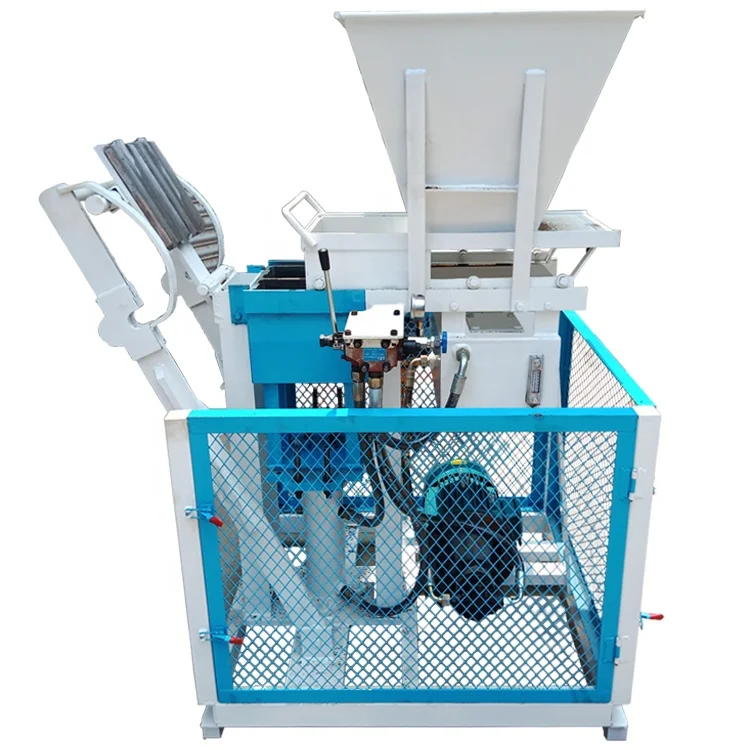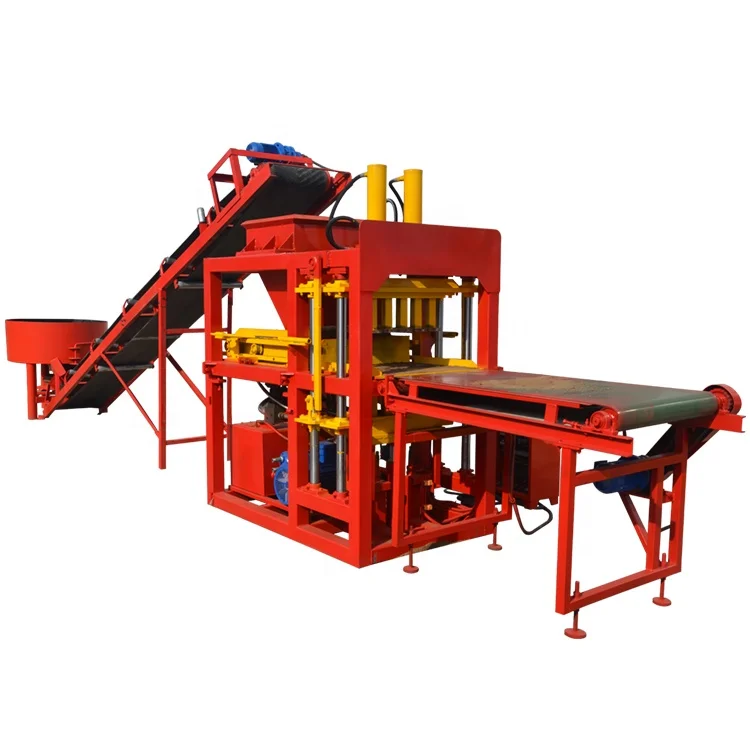
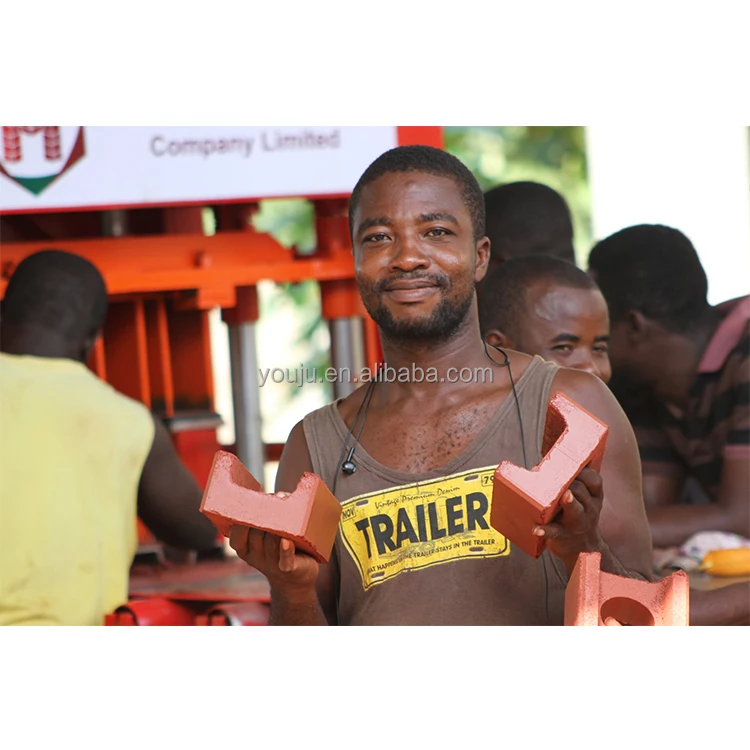
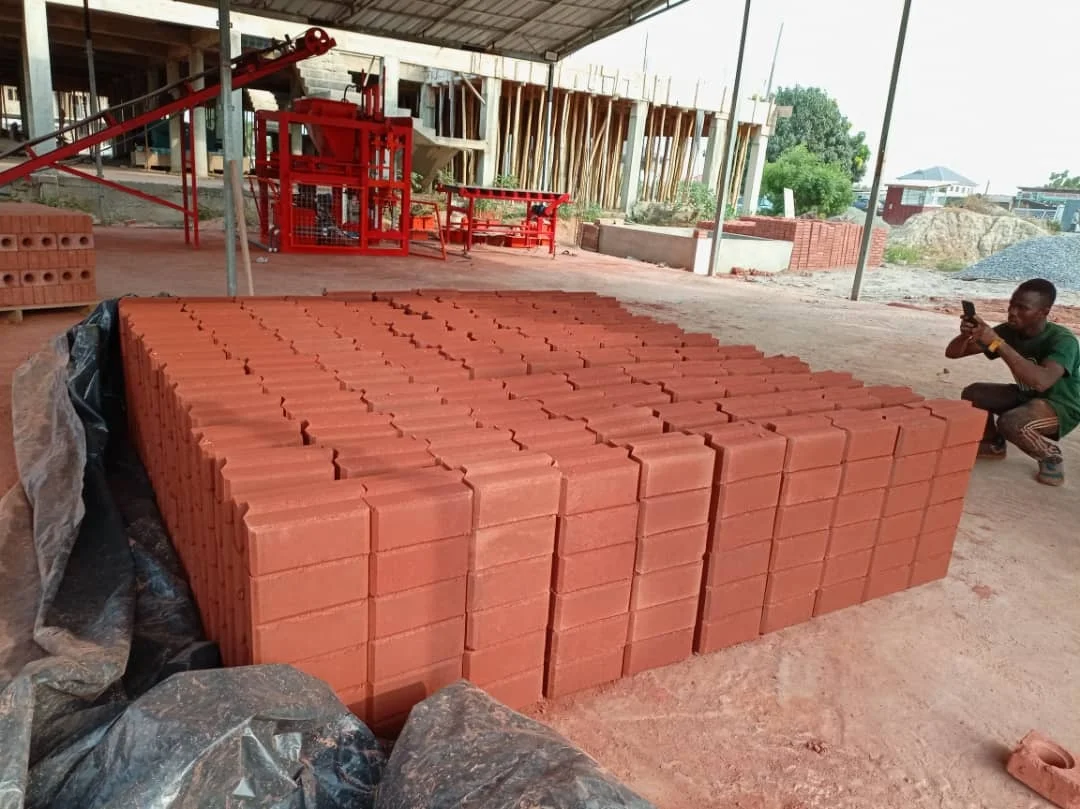
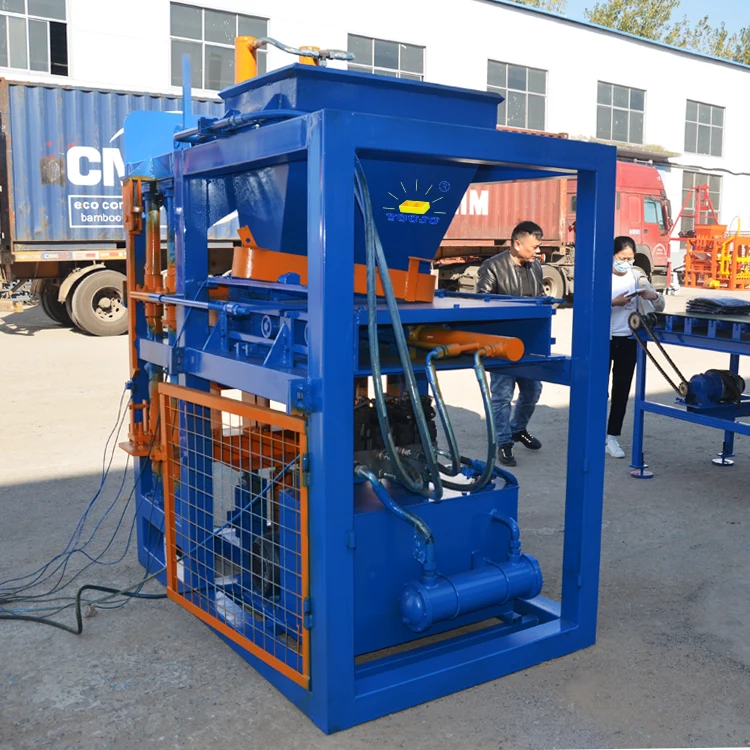
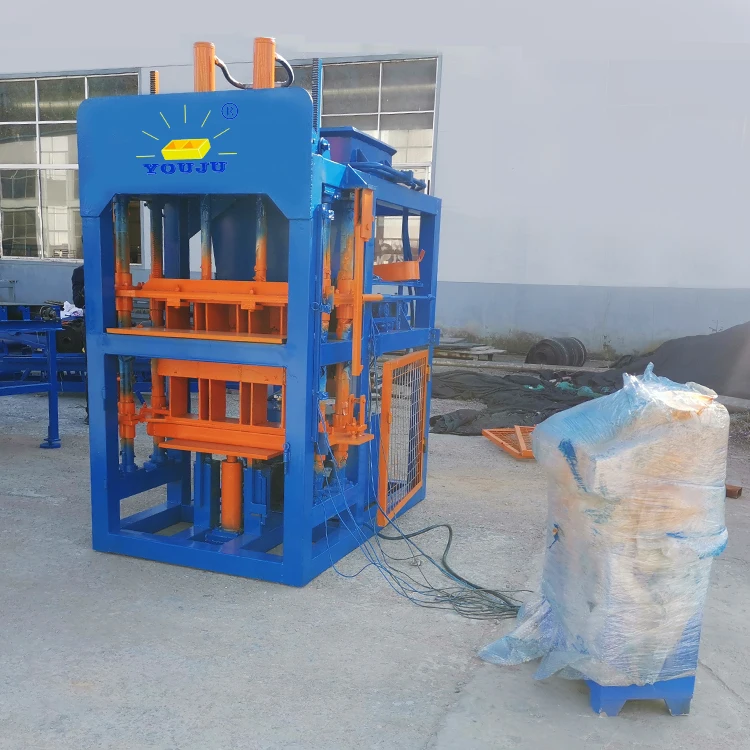

Description
System-Matched Automation — The LY4-10 control logic, hydraulic pressure and mould cycle are tuned to your local clay-cement mix, not left at catalogue defaults.
Technical Specifications
| Parameter | Value |
|---|---|
| Model | LY4-10 |
| Product Type | Clay Interlocking Brick Making Machine |
| Rated Power | 11 kW |
| Hydraulic Pressure | 16 MPa |
| Moulding Cycle | 10–15 s (basis not stated in source — confirm block format and material) |
| Output Capacity | 1,440 pcs/hour based on 300×150×100 mm interlocking brick, 4 pcs/mould (basis to be confirmed) |
| Daily Output | 14,400 pcs/day based on 300×150×100 mm interlocking brick, 4 pcs/mould (basis to be confirmed) |
| Block Size per Mould | 300×150×100 mm |
| Pieces per Mould | 4 |
| Overall Dimensions (L×W×H) | 2260×1500×2380 mm |
| Net Weight | 1,600 kg |
| Control System | Automatic PLC operation (material feeding, mould pressing, mould lifting) |
| Automation Level | Automatic (feeding, pressing, lifting) |
| Worker Requirement | 1–2 workers |
| Raw Materials | Laterite, yellow or red soil, sand, cement, water |
| Mix Option 1 | Cement-stabilised clay: Water 3%, Cement 6–8%, Clay 80–90% |
| Mix Option 2 | Full clay: Water 3%, Clay 90–95% |
| Voltage & Frequency | Configurable to site supply (confirm before ordering) |
| PLC Display Language | Configurable (confirm before ordering) |
| Standards | CE, ISO 9001 |
Application Suitability
| Application | Material or Output |
|---|---|
| Interlocking brick for low-cost housing | Laterite or red soil stabilised with 6–8% cement |
| Ecological brick for landscaping and gardens | Full clay mix (90–95% clay, 3–5% water) |
| On-site production for development projects | Locally sourced yellow soil and sand with cement |
| Road paving and square construction | Cement-clay interlocking profiles for load-bearing surfaces |
| City construction and public works | High-density interlocking blocks from laterite-clay blends |
Why the Voltage and Language Question Must Come First
An automatic clay interlocking brick machine that cannot power on is not a machine — it is 1,600 kg of stranded steel.
I spent years on Latin American job sites watching brand-new brick presses sit idle because the local supply was 220V/60Hz and the control cabinet was built for 380V/50Hz. The PLC handshake fails, the hydraulic pump motor overheats within minutes, and the operator stares at error messages in a language nobody on site reads. Three weeks pass before someone sources a frequency converter and rewires the panel [NEED_CITE: voltage and frequency standards by export market]. With the LY4-10, we confirm your site voltage, frequency and preferred PLC display language in writing before production begins — because an automatic clay interlocking brick machine should start producing on day one, not day twenty-two.
What Automation Actually Removes from the Operator
The LY4-10 handles material feeding, mould pressing and mould lifting in a single automatic sequence controlled by the PLC. This means the operator is no longer shoveling clay into the hopper by hand, pulling the press lever, and then wrestling the mould off the block stack. The cycle runs continuously through the PLC logic, and the one or two workers on the line focus on material supply to the feeder and moving finished blocks to the curing area. For an entrepreneur setting up a first interlocking brick plant, this automation level removes the heaviest physical tasks that typically cause fatigue-related slowdowns by mid-shift.
Where Consistency Comes From in Every Cycle
Manual and semi-automatic clay brick machines depend entirely on the operator’s rhythm — how hard they tamp, how long they hold the press, when they decide the block is ready. The LY4-10 hydraulic system delivers a consistent 16 MPa across every pressing stroke, and the PLC holds the moulding cycle between 10 and 15 seconds regardless of who is running the line. This batch-to-batch consistency matters when your blocks must meet a compressive strength specification for a housing contract [NEED_CITE: block compressive strength testing standards for clay interlocking bricks]. Plant owners upgrading from manual operation typically see the biggest improvement not in speed, but in the uniformity of block density and dimensional tolerance from the first brick of the morning to the last.
Reading the Specs That Matter for Clay Brick Production
Hydraulic pressure at 16 MPa is the force that compacts the clay-cement mix into a dense interlocking profile — too low and the block crumbles at the interlocking teeth, too high and the mould wear accelerates. The dual mix flexibility (cement-stabilised at 6–8% cement or full clay at 90–95%) means the machine can be configured around the raw material you can actually source near your site, rather than forcing you to import specific aggregates. The moulding cycle of 10–15 seconds produces 4 blocks per cycle at 300×150×100 mm, and the rated power of 11 kW must be matched to a dedicated circuit with the correct voltage and frequency for your region. Pallet size and mould change time are not listed in standard specifications — both must be confirmed against your curing area layout and the range of block formats your market demands before the machine ships.
The Hidden Cost of Skipping the Configuration Conversation
When voltage, PLC language and pallet specifications are treated as afterthoughts, the consequences arrive on site and they are expensive. A control panel built for the wrong frequency burns out the motor starter within the first week. An operator who cannot read the PLC display calls for remote support across time zones, losing entire shifts to miscommunication. Pallets that do not match the curing rack spacing force workers to restack every block by hand before it enters the curing area [NEED_CITE: common causes of commissioning delays in block making equipment imports]. These are not manufacturing defects — they are specification gaps that could have been closed with a three-email conversation before production started.
Why Buyers Source This Machine Here
Block machinery is the single focus of this operation, which means the LY4-10 press, mould, pallet and handling requirements are specified as one matched system rather than assembled from unrelated suppliers. The machine configuration is set against your actual mix design and local aggregate, not a generic catalogue default. Mould design and supply cover the interlocking profiles your market actually sells, with custom drawings available if your project requires a non-standard format. The automation level is selectable — you can start with the LY4-10 automatic feeding and pressing, then add pallet handling or stacking modules later as production volume grows. Installation support includes on-site commissioning and operator training so the crew running the line understands the PLC interface and maintenance schedule from the first day.
Documentation & Verification
- Line layout and capacity calculation stating the 300×150×100 mm interlocking brick format and 4-piece mould assumption
- Machine specification sheet with confirmed voltage, frequency and PLC display language for your site
- Mould drawing and interlocking profile diagram for format verification against your market requirements
- Hydraulic and electrical schematic for on-site troubleshooting and future automation upgrades
- Factory test record on your specified clay-cement mix before dispatch
- Operation and maintenance manual with wear parts list and recommended replacement intervals
Installation, Commissioning & Support
- Foundation pad sized for 2260×1500 mm footprint with level tolerance for hydraulic alignment
- Dedicated electrical circuit rated for 11 kW at your confirmed voltage and frequency
- Machine shipped dismantled for container loading, reassembled on site with alignment verification
- First-run commissioning includes PLC parameter tuning to your clay-cement mix proportions
- Operator training on automatic cycle sequence, mould change procedure and daily maintenance checks
- Wear parts list with hydraulic seal and mould liner replacement schedule provided at handover
What to Prepare Before Requesting a Quotation
To configure the LY4-10 for your site, share your local clay or laterite type and whether you plan to use cement stabilisation or a full clay mix. Confirm your site voltage, frequency and the PLC display language your operators need. If you have existing curing racks or pallets, provide their dimensions so the machine can be matched to your handling infrastructure rather than arriving with incompatible assumptions.
Frequently Asked Questions
Q: How is the 14,400 pcs/day capacity verified, and which block format does it assume?
A: The 14,400 pcs/day figure is based on the 300×150×100 mm interlocking brick at 4 pieces per mould, with a moulding cycle of 10–15 seconds and continuous operation. If your target block format differs in size or profile, the cycle time and pieces per mould change, and the daily output must be recalculated. We provide a capacity breakdown per format with every quotation.
Q: Can the PLC control system be configured to my site voltage and display language before shipment?
A: Yes. Voltage, frequency and PLC display language are confirmed in writing before production begins. The control cabinet is built and tested at your specified electrical standard, and the PLC interface is loaded with your preferred language so the operator can read all prompts and diagnostics from the first power-on.
Q: What automation upgrades are available if I start with the LY4-10 and later want automatic stacking or pallet feeding?
A: The LY4-10 automation covers material feeding, mould pressing and mould lifting. Automatic pallet feeding, stacking and cubing modules can be added as separate stations connected to the existing PLC logic. The upgrade path is planned at the initial quotation stage so the machine frame and control architecture accommodate future expansion without a full replacement.
Q: How is hydraulic pressure matched to my local clay type and cement proportion?
A: The 16 MPa hydraulic pressure is calibrated against your specific clay-cement mix design during factory testing. Laterite, red soil and yellow soil each compact differently, and the cement proportion affects the required pressing force. We request a sample of your local material or a detailed mix description so the pressure and cycle time are set to produce consistent block density before the machine leaves the factory.