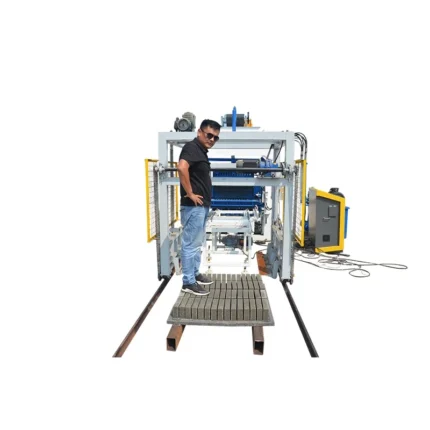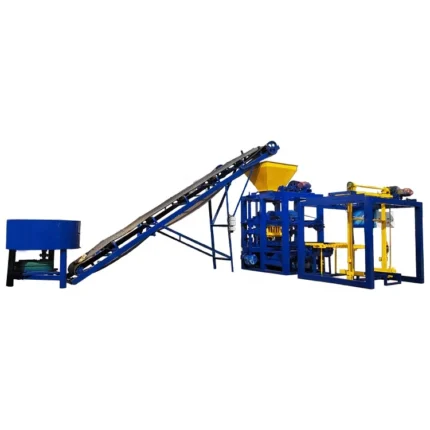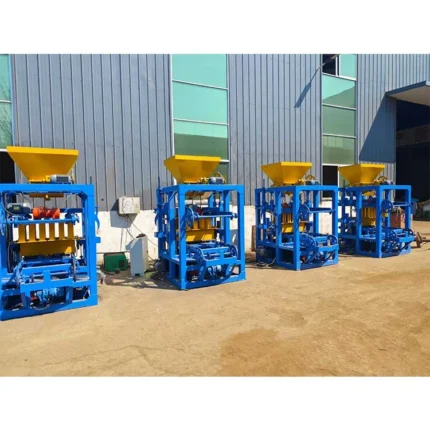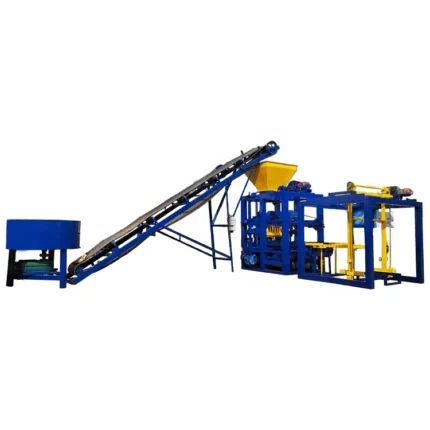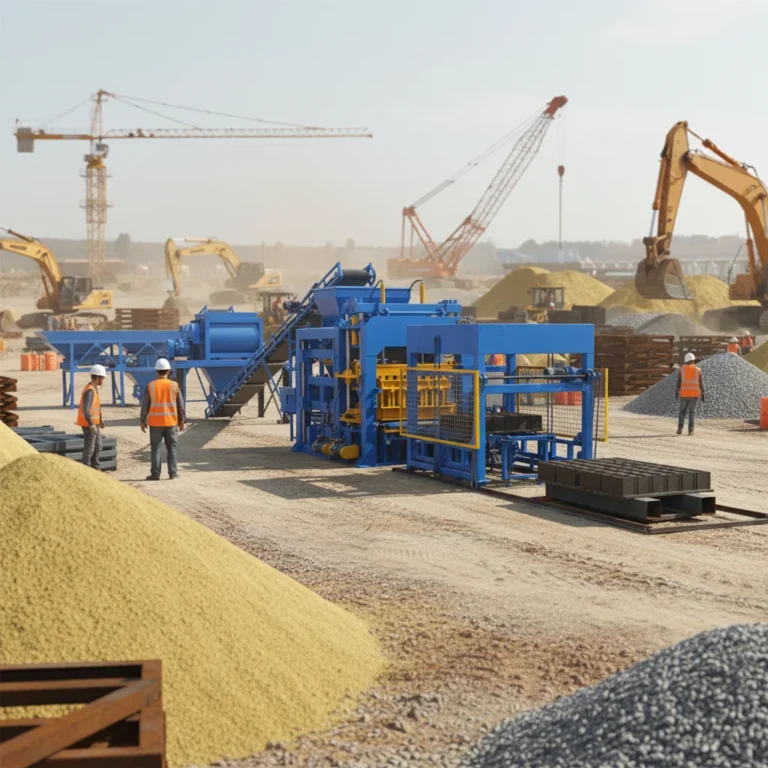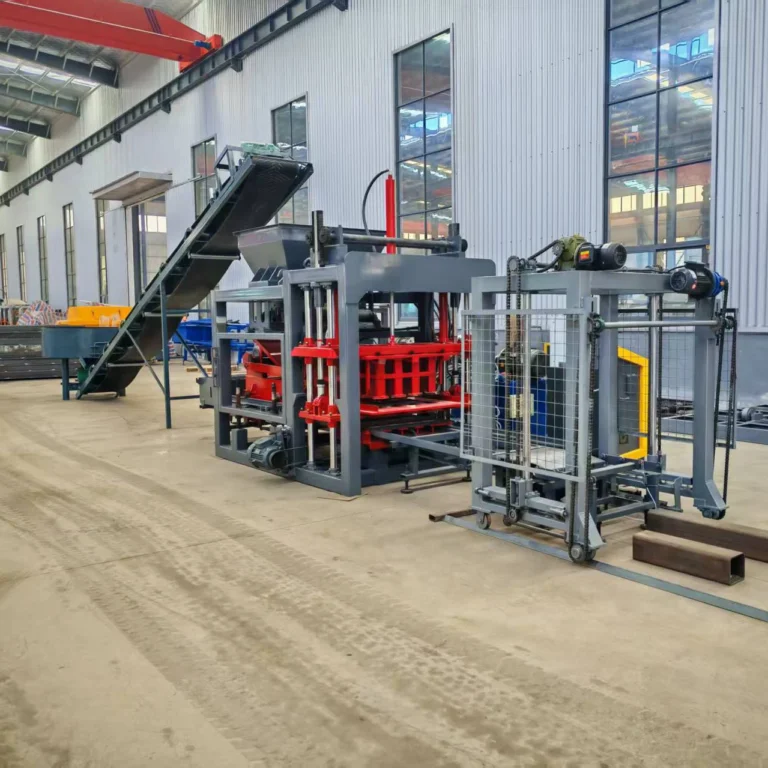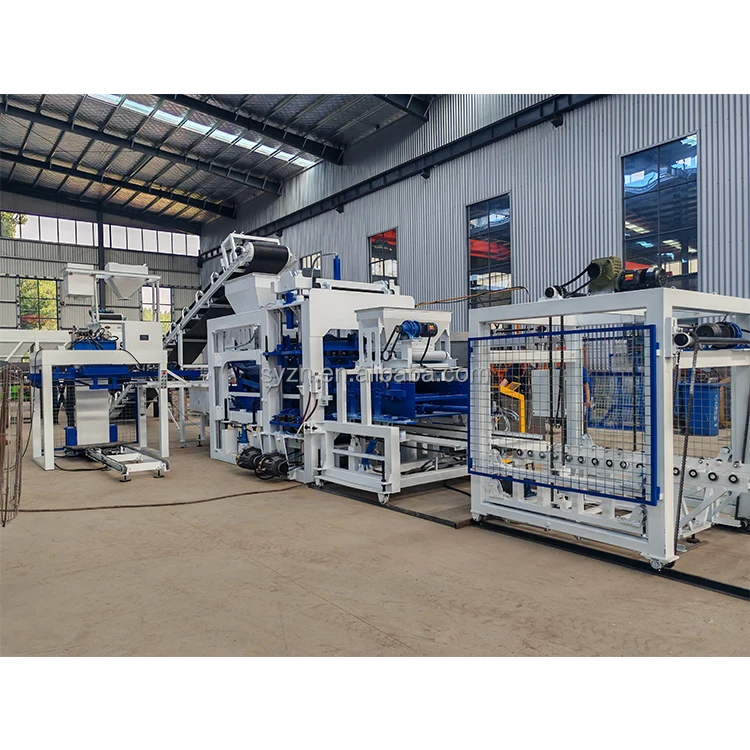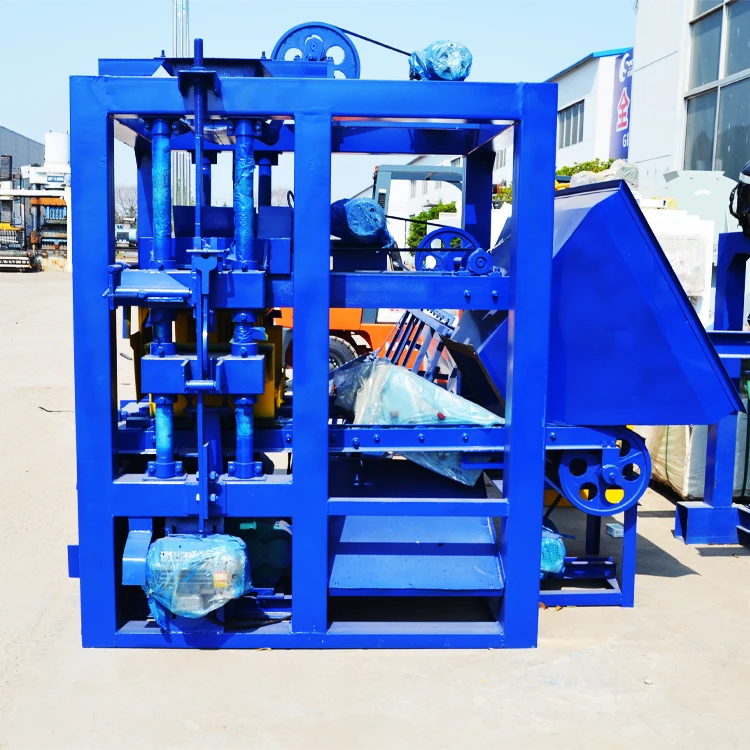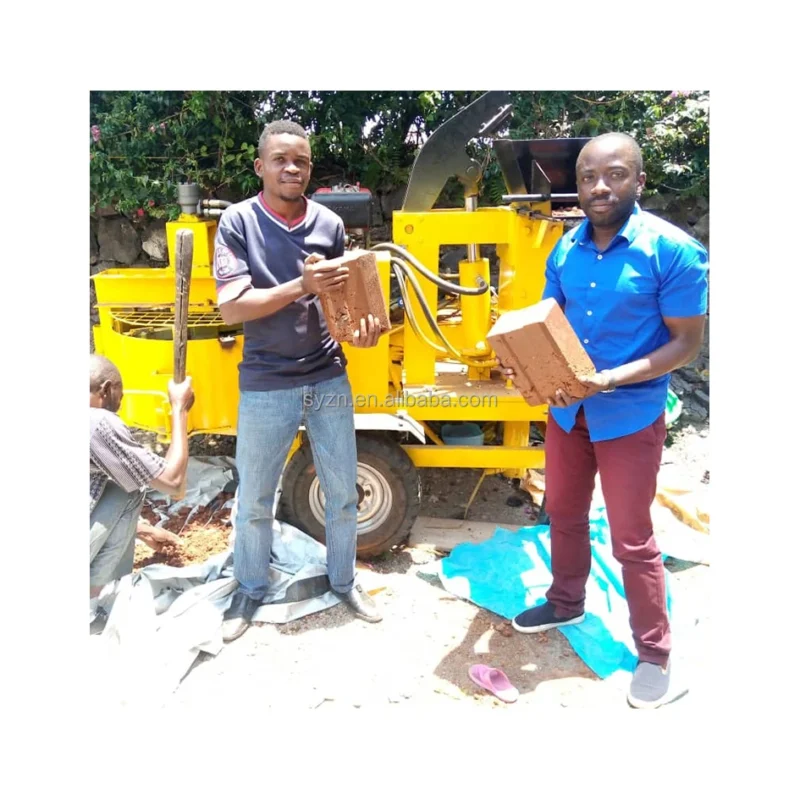
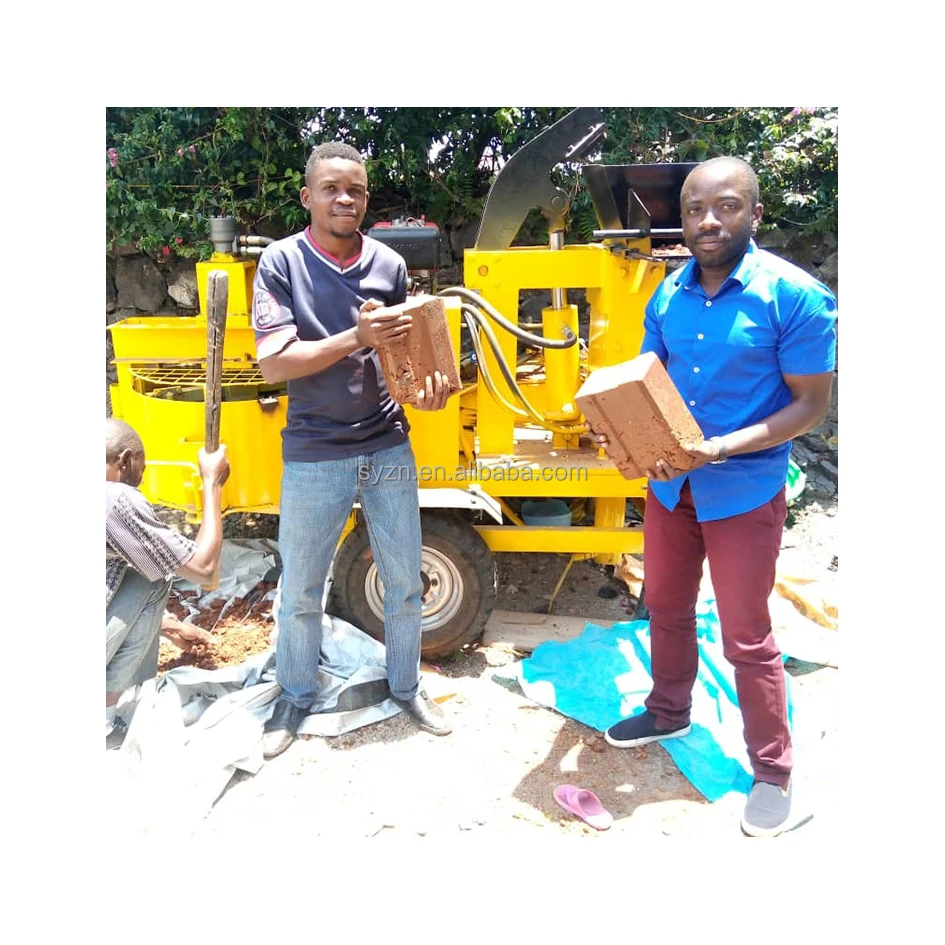
Description
Consistent Batch Output — every M7MI hydraulic cycle is set against the buyer’s own clay or soil sample, not a catalogue default, so interlocking blocks leave the press at uniform density from the first piece to the last.
Technical Specifications
| Parameter | Value |
|---|---|
| Model | M7MI |
| Product Type | Hydraulic Clay Interlocking Block Making Machine |
| Engine | Diesel Engine |
| Hydraulic Pressure | 16 MPa |
| Molding Cycle | 15–20 s |
| Output Capacity | 2200 pcs/day (8 hours) (basis not stated in source — confirm block format / material / thickness) |
| Block Size | 300×150×100 mm (interlocking format) |
| Qty/Mould | 1 pc |
| Qty/hour | 200 pcs (based on 300×150×100 mm interlocking block, 20 s cycle) |
| Qty/8hr | 1600 pcs (based on 300×150×100 mm interlocking block, 20 s cycle) |
| Overall Dimensions (L×W×H) | 3200×1100×1500 mm |
| Total Mass | 1100 kg |
| Raw Materials | Clay, soil, concrete |
| Mould Change | Supported (multiple interlocking block formats via mould change) |
| Automation Level | Semi-automatic / mobile, with PLC upgrade path |
| Power Source | Diesel (suitable for sites without electricity) |
Application Suitability
| Application | Material or Output |
|---|---|
| On-site interlocking block production | Clay or soil with local aggregate |
| Off-grid housing and development projects | Diesel-powered operation without grid connection |
| Small-scale block plants | Concrete and soil mixes in 300×150×100 mm interlocking format |
| First-plant entrepreneurs | Low-footprint setup with mobile capability |
| Contractors adding in-house block output | Locally sourced clay, reducing material transport |
Why the Control Language Matters Before the Machine Arrives
A PLC screen is only intelligent if the operator can read it.
I have seen commissioning stall on day one because the alarm messages came up in a language the local crew could not follow. The automatic M7MI clay interlocking block machine PLC controlled interface can display in multiple languages, but the choice has to be locked in before the program is loaded. When it is not, you spend the first week swapping text tables instead of running blocks [NEED_CITE: PLC HMI language standards for export machinery].
Automation That Removes Guesswork, Not the Operator
The M7MI starts as a semi-automatic mobile press, which keeps the initial investment accessible for a first plant. Where it diverges from a purely manual machine is the upgrade path: PLC logic can be introduced to govern the hydraulic cycle timing and pressure hold, so the press does not rely on an operator counting seconds. This matters most when the clay moisture content drifts during a long shift — the automatic M7MI clay interlocking block machine PLC controlled sequence holds the pressure phase consistent regardless of operator fatigue.
Matching Pressure to Your Actual Mix
The 16 MPa hydraulic system on the M7MI is not a fixed setting; it is adjusted during factory testing against the buyer’s submitted soil or clay sample. Interlocking blocks need enough compressive force to lock together on a wall without mortar, and that threshold varies with local aggregate grain size [NEED_CITE: soil block compressive strength requirements for load-bearing walls]. The diesel engine delivers the hydraulic flow independently of grid voltage, which keeps the pressure curve stable even on remote sites where a generator would otherwise introduce voltage sag.
Reading the Specs That Actually Shape Output
Hydraulic pressure and molding cycle are the two numbers that determine block density on this machine. At 16 MPa, the M7MI compresses clay and fine aggregate into a 300×150×100 mm interlocking format at a rate governed by the 15–20 second cycle. Shorter cycles push more pieces through but reduce dwell time, which can leave the block core under-compacted. The mould change system allows the press to produce different interlocking profiles, yet every format change requires a re-check of hydraulic hold time — a profile with deeper interlock teeth needs a longer pressure phase to fill completely. Total mass at 1100 kg keeps the machine mobile enough to relocate between project sites while still providing the frame rigidity needed for uniform vibration transfer.
The Cost of Skipping the Mix Test
When a machine is configured for a clay mix the buyer cannot source locally, the first production run produces blocks that crumble at the interlock edges. The fix is never quick: new material sourcing, new testing, sometimes a new mould altogether. I have watched projects lose an entire curing cycle — several days of output — because the soil-to-cement ratio was guessed rather than tested [NEED_CITE: effect of clay-cement ratio on interlocking block durability]. The M7MI factory test record exists to prevent exactly that scenario.
Why Source the M7MI Through This Channel
Block machinery is a single-focus operation here, which means the M7MI press, mould, pallet and handling are specified as one matched system rather than assembled from separate suppliers. Configuration is set against the buyer’s actual mix design and target block format before the machine enters production. Mould design covers the interlocking profiles that sell in the buyer’s local market, including custom drawings when the standard range does not match. The automation level is selectable — a buyer can start with the semi-automatic diesel setup and add PLC-controlled cycle logic later without replacing the press. Installation support includes operator training on mould change procedure and hydraulic pressure adjustment.
Documentation & Verification
- Line layout showing M7MI footprint and material flow sequence
- Capacity calculation stating 300×150×100 mm format and cycle time basis
- Mould drawing and interlocking format list for buyer’s market
- Hydraulic and electrical schematic with diesel engine specification
- Factory test record on buyer’s submitted clay or soil sample
Installation, Commissioning & Support
- Diesel engine eliminates grid dependency; confirm fuel grade on arrival
- 3200×1100 mm footprint requires level compacted ground, no fixed foundation
- Mould change procedure trained on-site with buyer’s selected interlock profiles
- Hydraulic pressure set against local clay sample during commissioning
- Wear parts list covers hydraulic seals and mould liner replacements
- PLC language and alarm text confirmed before program loading
What to Include in Your Inquiry
Tell us the interlocking block format your market sells, the type of clay or soil available on your project site, and whether grid electricity is planned for later phases. We will return a configuration proposal that states daily output against your exact block dimensions and a factory test schedule matched to your raw material.
Frequently Asked Questions
Q: How is the daily output of the M7MI verified, and which block format is assumed?
A: Output figures are stated per block format. The 1600 pieces per eight-hour shift is based on the 300×150×100 mm interlocking block at a 20-second cycle. Different interlock profiles change the mould fill time, so we provide a capacity table listing each available format with its corresponding cycle and daily total before you confirm the order.
Q: Can the M7MI be upgraded from diesel to electric or hybrid power for future grid connection?
A: The hydraulic pump can be re-driven by an electric motor once grid power reaches the site. The conversion requires swapping the diesel engine for a motor matched to the pump flow rate and confirming local voltage and frequency. We provide the conversion specification at initial purchase so the upgrade is a planned swap, not a retrofit.
Q: What PLC control options and display languages are available for the automatic M7MI clay interlocking block machine PLC controlled system?
A: The PLC governs hydraulic cycle timing, pressure hold duration and mould vibration sequence. Display language is confirmed during the order process — options cover major project languages — and alarm text is loaded before dispatch so the operator reads messages in their working language from day one.
Q: How long does a mould change take, and what interlocking formats can be produced?
A: A trained operator completes the mould change within a single shift segment, including re-alignment of the hydraulic press head. Available formats depend on the mould set ordered; we supply a format list and profile drawing for each mould so you know the exact interlock geometry before production starts.
Q: What automation upgrades can be added to the M7MI line?
A: Starting from the semi-automatic diesel configuration, you can add PLC-controlled cycle automation, pallet feeding systems and stacking assistance as your output grows. Each upgrade connects to the existing press frame and hydraulic circuit, so the M7MI grows with your plant without a full machine replacement.