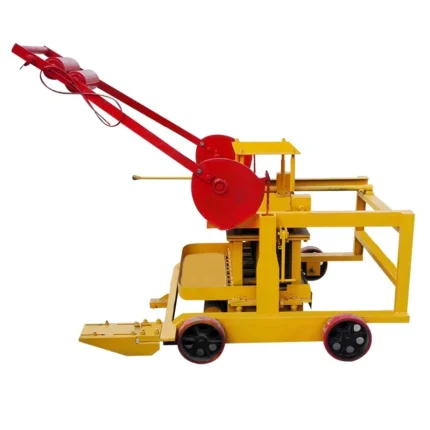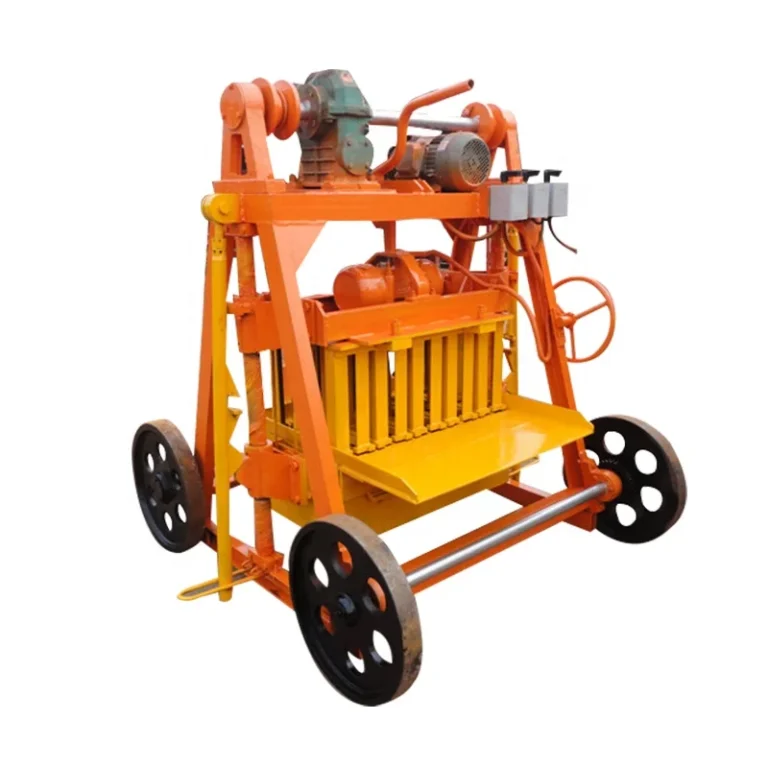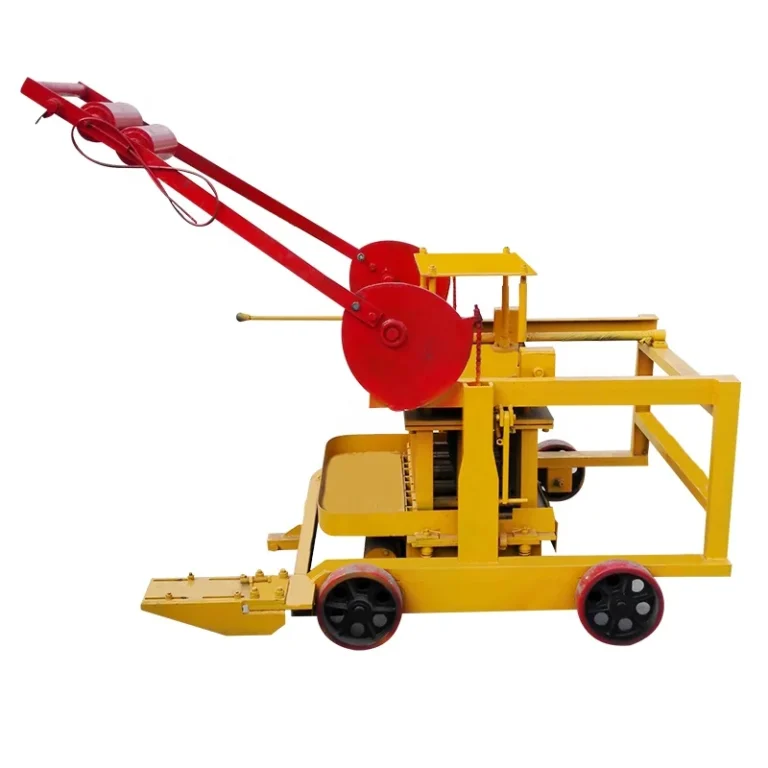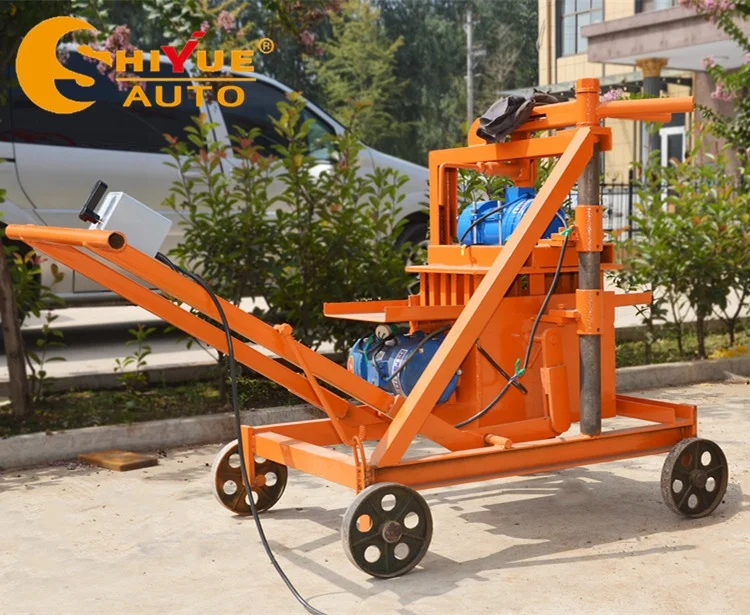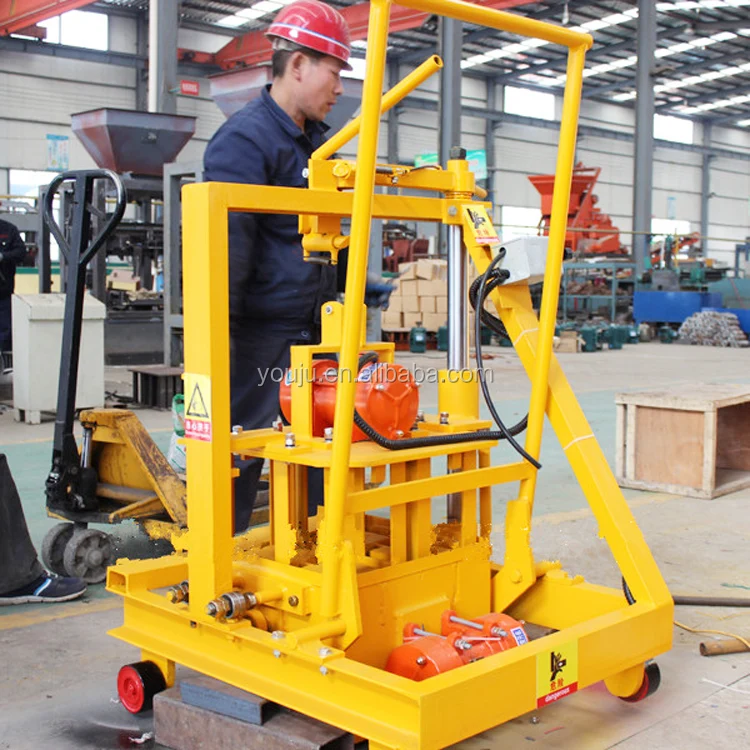
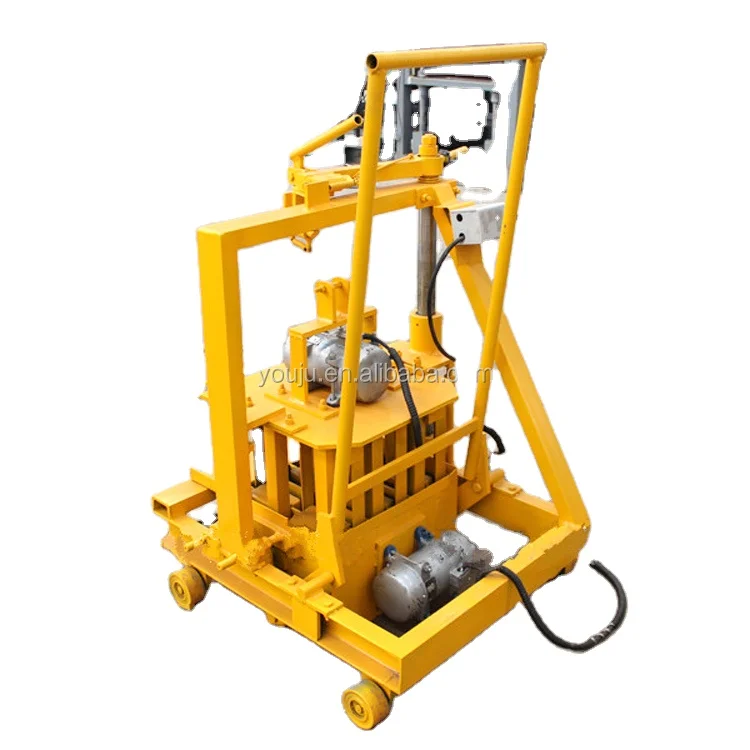
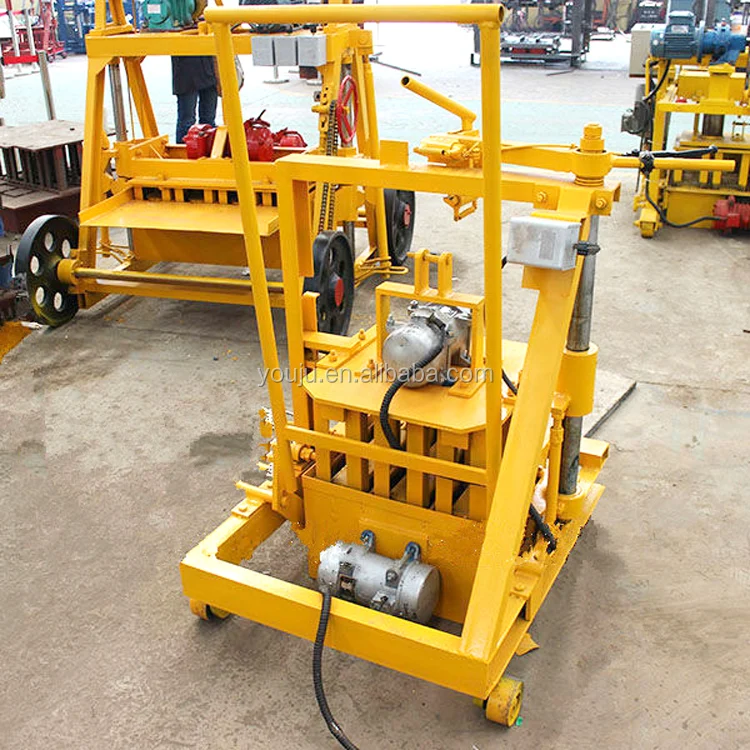
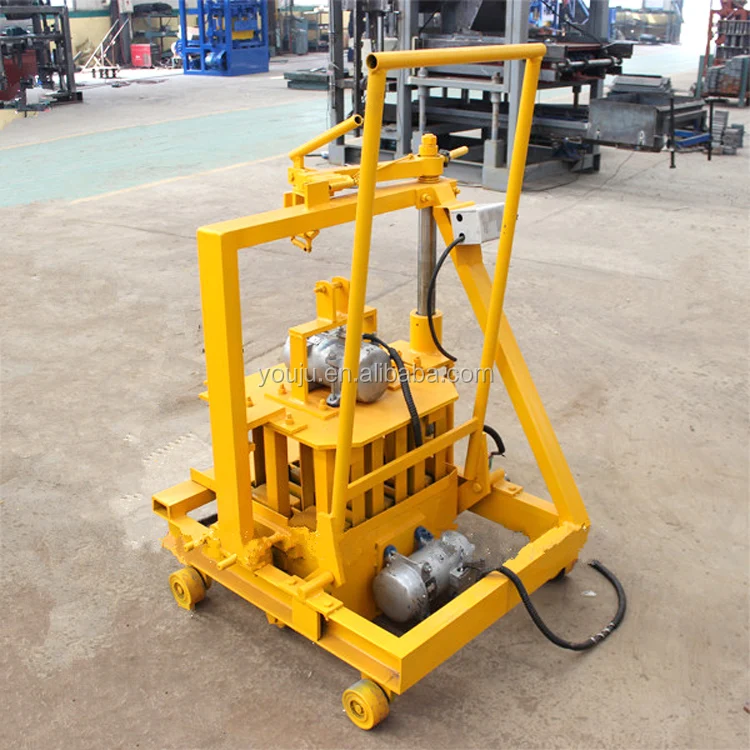
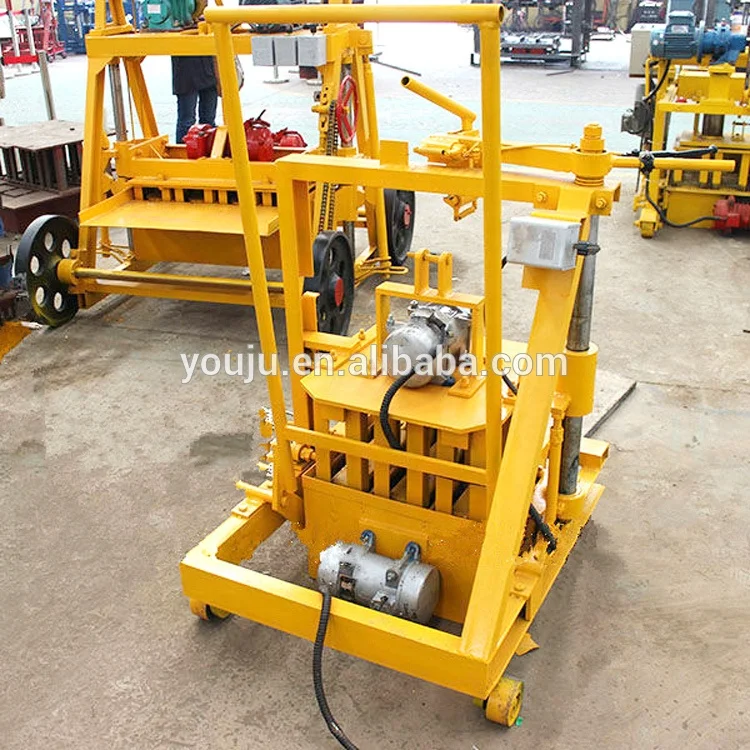
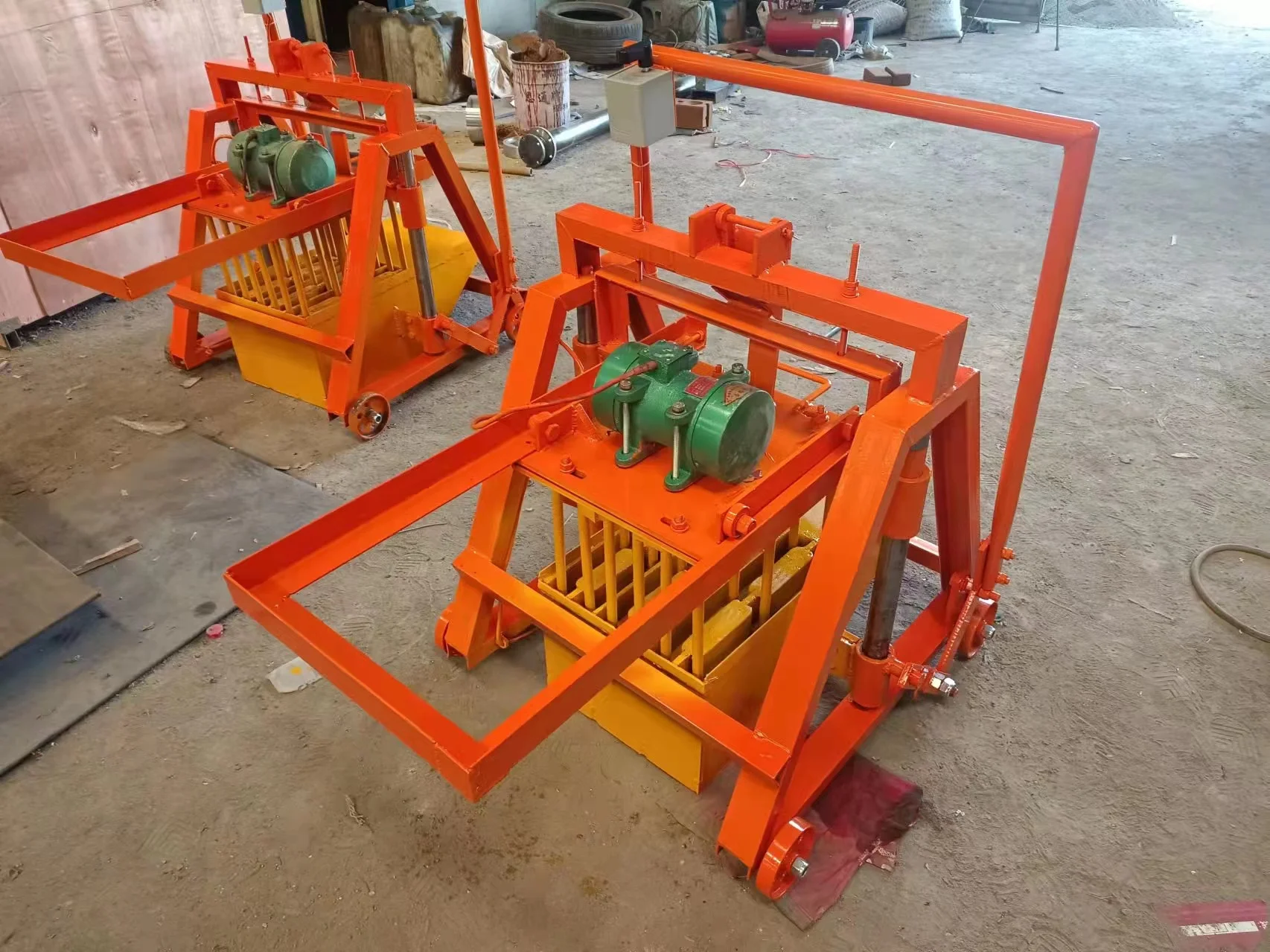
Description
Automation Upgrade Path — the QMJ2-45 manual mobile block machine provides a low-investment entry point, designed to accept PLC control and automatic handling add-ons as production scales up.
Technical Specifications
| Parameter | Value |
|---|---|
| Model | QMJ2-45 |
| Product Type | Mobile Concrete Block Making Machine |
| Machine Type | Mobile / egg-laying block machine |
| Automation Level | Manual (with upgrade path available) |
| Pallet Requirement | No pallets required |
| Labor Requirement | 1 to 3 workers |
| Mould Change | Interchangeable moulds for different hollow brick formats |
| Cycle Time | 25–30s (basis not stated in source — confirm block format / material / thickness) |
| Output Capacity (Hollow brick 400×200×200mm) | 2 pcs/mould, 160 pcs/hour, 1280 pcs/8hr |
| Output Capacity (Hollow brick 400×150×200mm) | 3 pcs/mould, 240 pcs/hour, 4800 pcs/8hr (source value — verify against manufacturer catalog) |
| Output Capacity (Hollow brick 400×100×200mm) | 4 pcs/mould, 320 pcs/hour, 2560 pcs/8hr |
| Mobility | Free-moving on-site, compact footprint |
| Rated Power (kW) | Not stated in source |
| Voltage & Frequency | Not stated in source |
| Control System | Manual operation |
| Overall Dimensions (L×W×H) | Not stated in source |
| Net Weight | Not stated in source |
| Hydraulic Pressure (MPa) | Not applicable (manual machine) |
| Certification | ISO9001:2000, CE |
Application Suitability
| Application | Material or Output |
|---|---|
| On-site hollow concrete block production | Concrete mix with crushed stone, sand, and cement |
| Small-scale block plants | Standard aggregate blends for hollow brick formats |
| Construction contractors producing blocks at project locations | Local aggregate and cement mixes for 400×200×200, 400×150×200, 400×100×200 hollow bricks |
| Entrepreneurs setting up a first block plant | Minimal investment with no fixed production line required |
What "1280 Pieces per Shift" Actually Means for Your Site
Capacity figures only matter when tied to a specific block format and your local mix design.
The QMJ2-45 is rated at 160 pieces per hour based on a 400×200×200mm hollow block. Switch to a 400×100×200mm format and the theoretical output changes. But catalogue numbers assume optimal conditions — your local aggregate gradation, moisture content, and cement ratio will determine what the machine actually delivers on your site. I once worked with a contractor in Southeast Asia who ordered a mobile unit based on a quoted output figure, only to find that his local river sand required a longer cycle time to achieve adequate block strength. The daily output fell noticeably short of expectations because the capacity calculation had never been matched to his actual material. [NEED_CITE: block strength requirements vary by regional building code]
When evaluating any automatic mobile block machine, always request a capacity calculation stated per block format with your specific mix design, not a catalogue default.
No-Pallet Design Eliminates Curing-Area Constraints
The egg-laying design means blocks are deposited directly onto the ground as the machine moves forward. No pallets required, which removes a significant capital outlay and eliminates the need for pallet storage, pallet handling equipment, and a dedicated curing rack system. For contractors working on constrained project sites, this simplifies the production footprint considerably. The trade-off is that ground curing requires a prepared, level surface and adequate space for blocks to remain undisturbed during initial set. This configuration works well for buyers planning to start manual and add an automatic mobile block machine with pallet handling later as volume grows.
Interchangeable Mould System for Format Diversification
A single QMJ2-45 press accepts moulds for 400×200×200mm, 400×150×200mm, and 400×100×200mm hollow bricks. Mould change is manual, and the time required depends on operator familiarity with the procedure. Before ordering, confirm the mould change procedure with the supplier and verify that it does not consume a full shift. For buyers planning to scale, the mould system should accept future upgrades — including semi-automatic or PLC-controlled mould change mechanisms — without requiring a complete press replacement. [NEED_CITE: typical mould change procedures for manual egg-laying block machines]
Understanding the PLC-Controlled Block Machine Upgrade Path
Starting with a manual mobile unit does not lock you into manual operation permanently. The QMJ2-45 platform can serve as the entry point in a phased automation strategy. As output demand grows, buyers add PLC-controlled batching for consistent mix quality, automatic pallet feeding systems, and stacking equipment. The key is confirming upgrade compatibility before the initial purchase — voltage, frequency, and control system architecture must be specified to accommodate future automation add-ons. An automatic mobile block machine configured without considering the upgrade path may require rewiring or control panel replacement when PLC control is introduced later.
What the Specification Sheet Does Not Tell You
Hydraulic pressure and vibration force determine whether your block achieves the required strength.
The QMJ2-45 is a manual machine without a hydraulic pressure rating, relying on mechanical vibration for compaction. The vibration force value is not stated in source documentation, which means block density will depend heavily on your mix design, moisture control, and operator technique. [NEED_CITE: vibration force requirements for hollow block compaction] For buyers targeting markets with strict block strength standards, this is a critical gap. Confirm with the supplier whether the vibration system can be adjusted or upgraded, and whether the machine’s vibration characteristics are compatible with your aggregate type. A machine configured for a mix you cannot source locally will force a costly material change.
Why Procurement Details Matter More Than Price
Block machinery as a single focus means the QMJ2-45 is specified alongside its moulds and future handling equipment as one matched system, rather than assembled from separate suppliers. Configuration is set against your actual mix design, local aggregate, and target block format. Mould design covers the formats your market sells, including custom drawings when standard options do not match. The automation level is selectable — start manual and upgrade when production volume justifies the investment. Installation and commissioning support includes operator training, and documentation covers the upgrade-path specification for automation add-ons.
Documentation & Verification
- Factory test record on your specific hollow brick format before dispatch
- Mould drawing and format list for 400×200, 400×150, and 400×100mm blocks
- Voltage and control language confirmation for your export market
- Wear parts list with mould and vibration component specifications
- Upgrade-path specification detailing compatible PLC and automation add-ons
Installation, Commissioning & Support
- Level concrete or compacted ground surface required for egg-laying operation
- Voltage and frequency confirmed before shipment to match site electrical supply
- Mould change procedure trained on-site during commissioning visit
- Operator training covers cycle time management and block quality checks
- Wear parts list provided with first-order shipment for immediate replacement availability
What We Need From Your Inquiry
Provide your target block format and daily output requirement so the capacity calculation reflects your actual production plan rather than a catalogue default. Specify your local aggregate type, cement source, and any available mix design data. Confirm your site voltage, frequency, and preferred control language to avoid commissioning delays. If you plan to automate within 12–24 months, indicate which PLC-controlled block machine upgrade features you anticipate adding so the initial configuration accommodates them.
Frequently Asked Questions
Q: How do I verify the realistic daily output for my specific block format and mix design?
A: Request a capacity calculation from the supplier that states output per block format — not a single aggregate figure. The calculation must use your local aggregate gradation and cement ratio, not catalogue defaults. For the QMJ2-45, output varies between 400×200×200mm and 400×100×200mm formats. Ask for a factory test record demonstrating cycle time and block strength on your specified mix before shipment.
Q: What is the upgrade path from manual mobile operation to PLC-controlled automatic stacking?
A: The QMJ2-45 platform accepts PLC control add-ons, automatic pallet feeding, and stacking systems as production volume grows. Confirm voltage, frequency, and control architecture compatibility before the initial purchase so future automation does not require rewiring. The supplier should provide an upgrade-path specification detailing which components are compatible and when the transition becomes cost-effective.
Q: Which voltage, frequency, and control language must be confirmed before shipment?
A: Voltage and frequency must match your site electrical supply exactly — mismatches delay commissioning and can damage motors. For PLC-controlled upgrades, specify the display and programming language your operators will use. Confirm these details during the quotation stage, not after production begins. The supplier should document these specifications on the machine specification sheet and electrical schematic.
Q: How does batch-to-batch consistency improve when adding automatic batching and PLC control?
A: Manual batching relies on operator judgment for water and cement ratios, introducing variability that affects block strength and density. PLC-controlled batching meters materials by weight or volume with repeatable precision, reducing variation between batches. For the QMJ2-45, adding automatic batching upstream of the press improves consistency without modifying the egg-laying mechanism itself. [NEED_CITE: PLC batching accuracy standards for concrete block production]
Q: What automation add-ons are compatible with the QMJ2-45 platform?
A: Compatible add-ons include PLC-controlled batching systems, automatic pallet feeding where ground curing is replaced, stacking equipment, and remote diagnostics modules. Confirm compatibility with the supplier during initial procurement — some add-ons require specific motor specifications or control panel configurations. The upgrade-path specification should list each compatible component and the installation sequence.