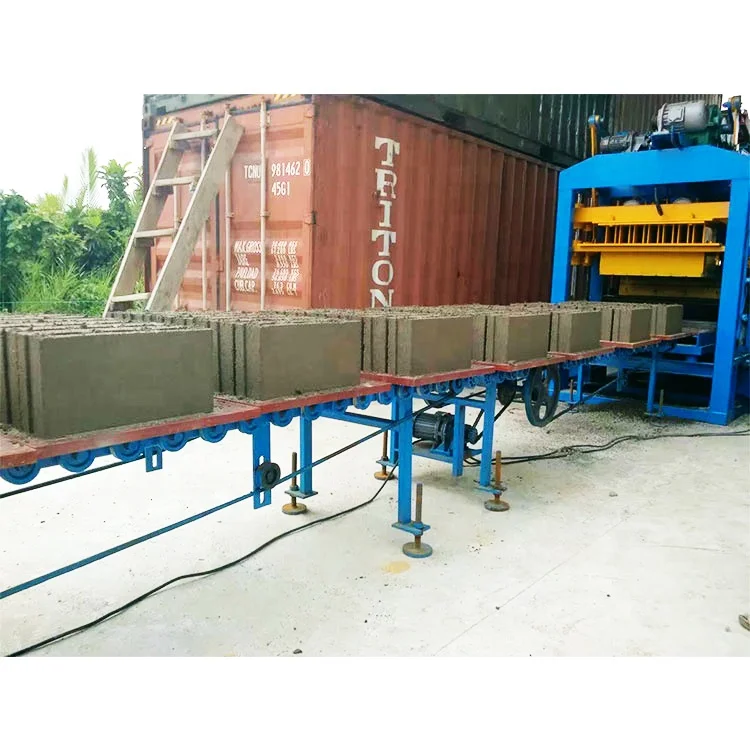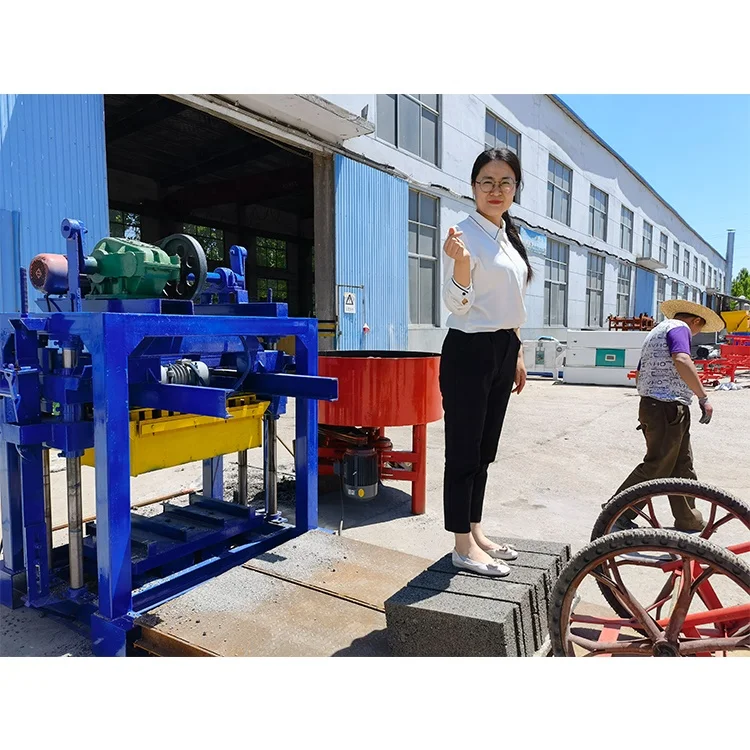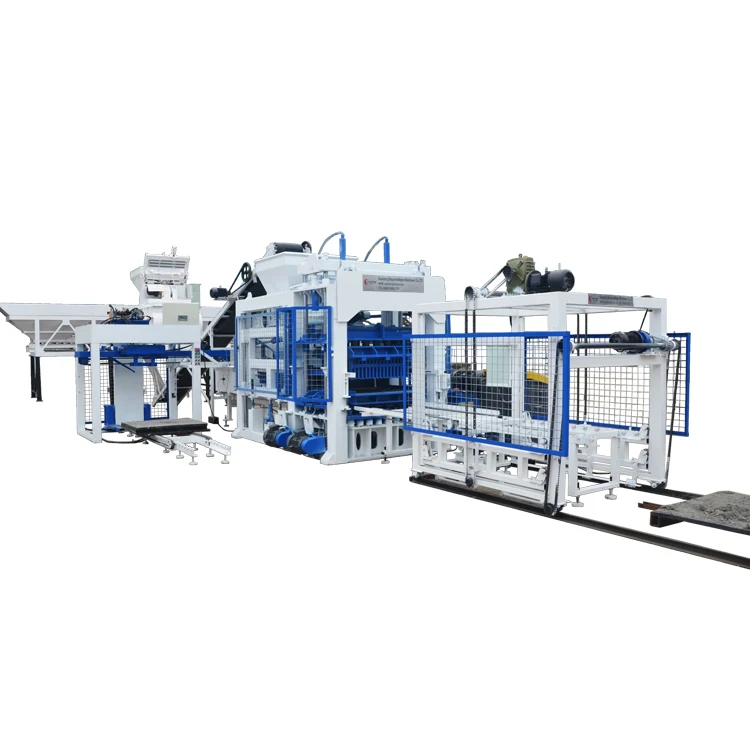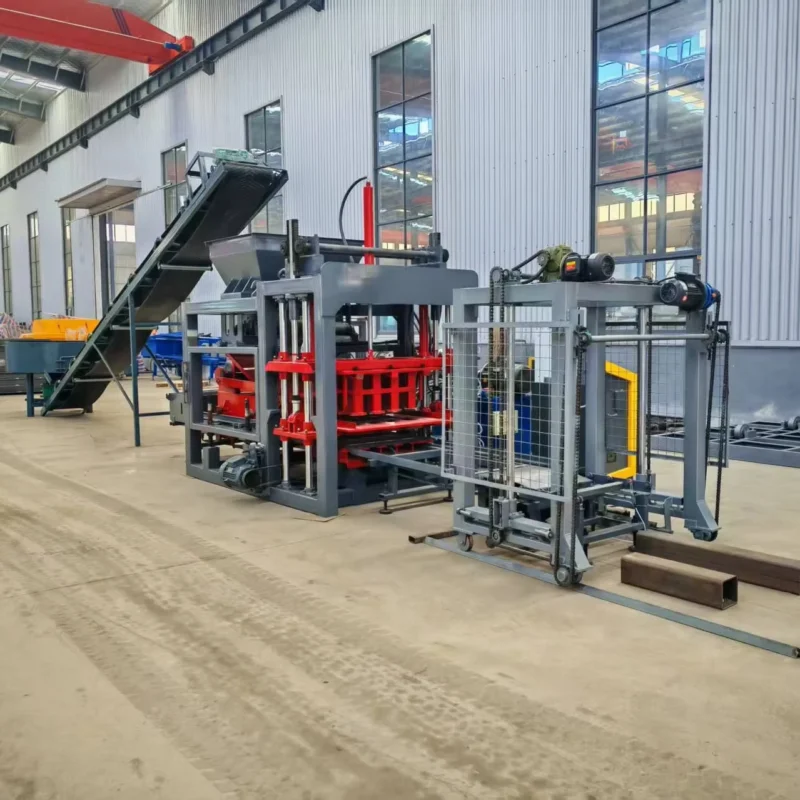
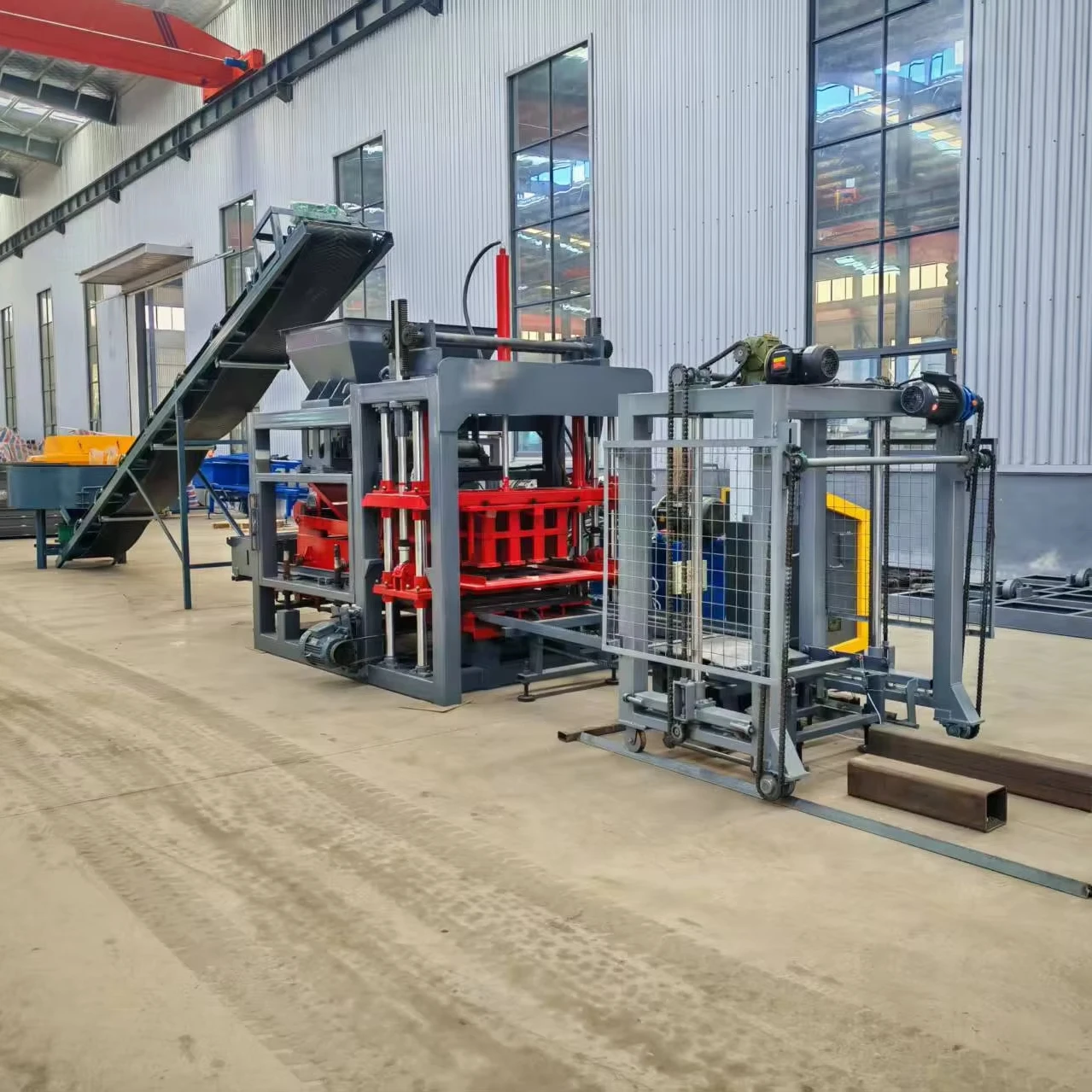
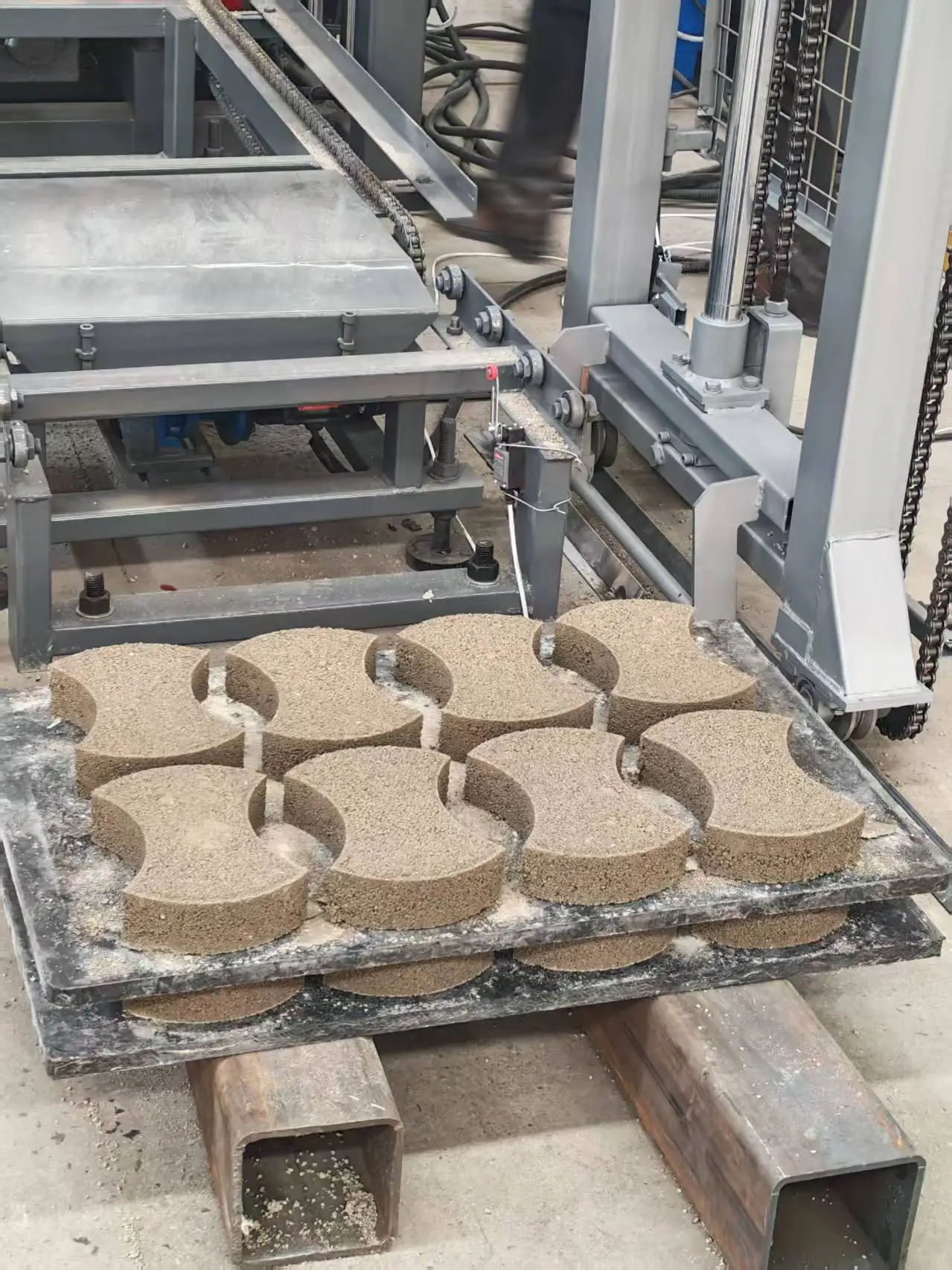
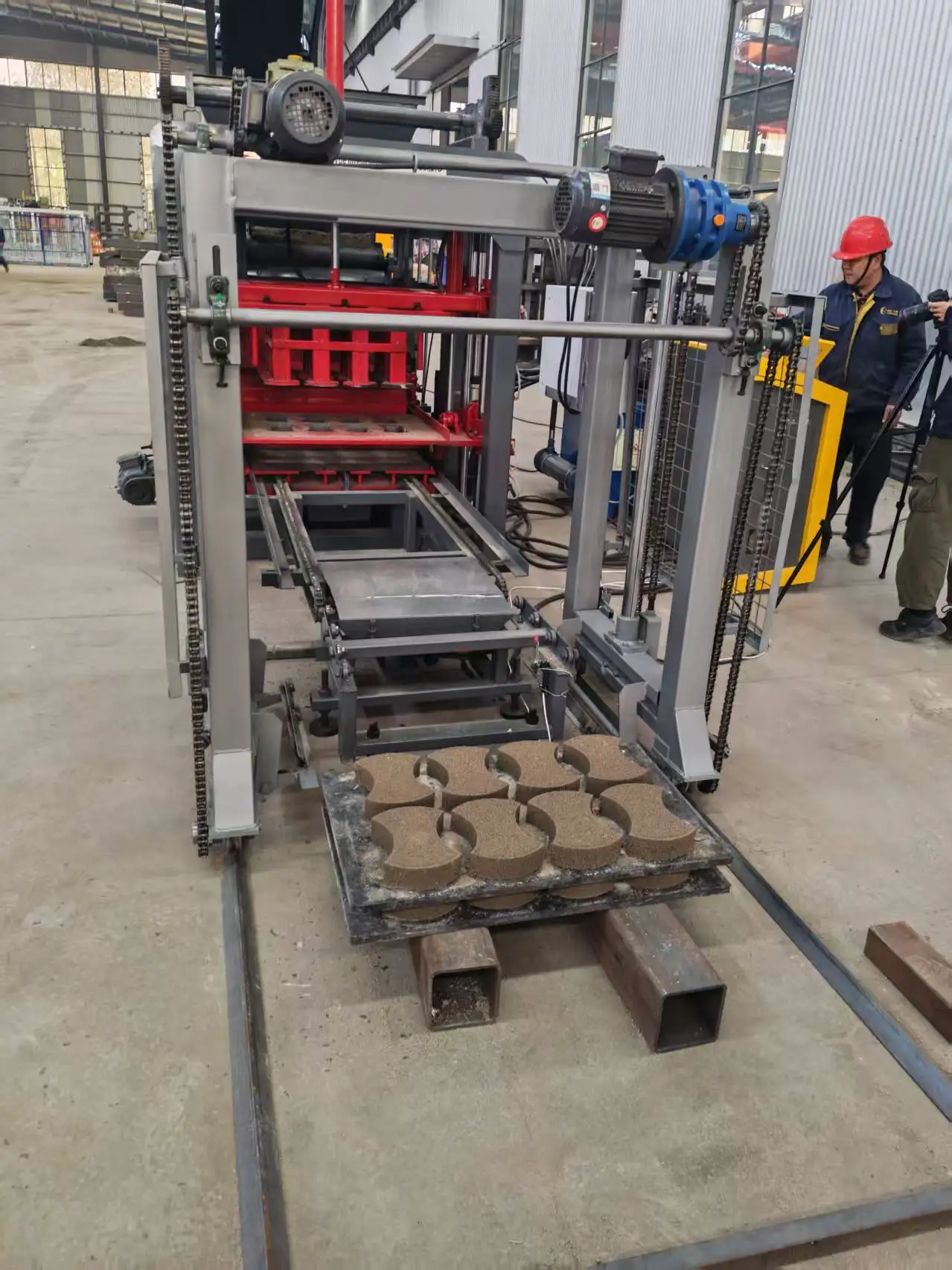
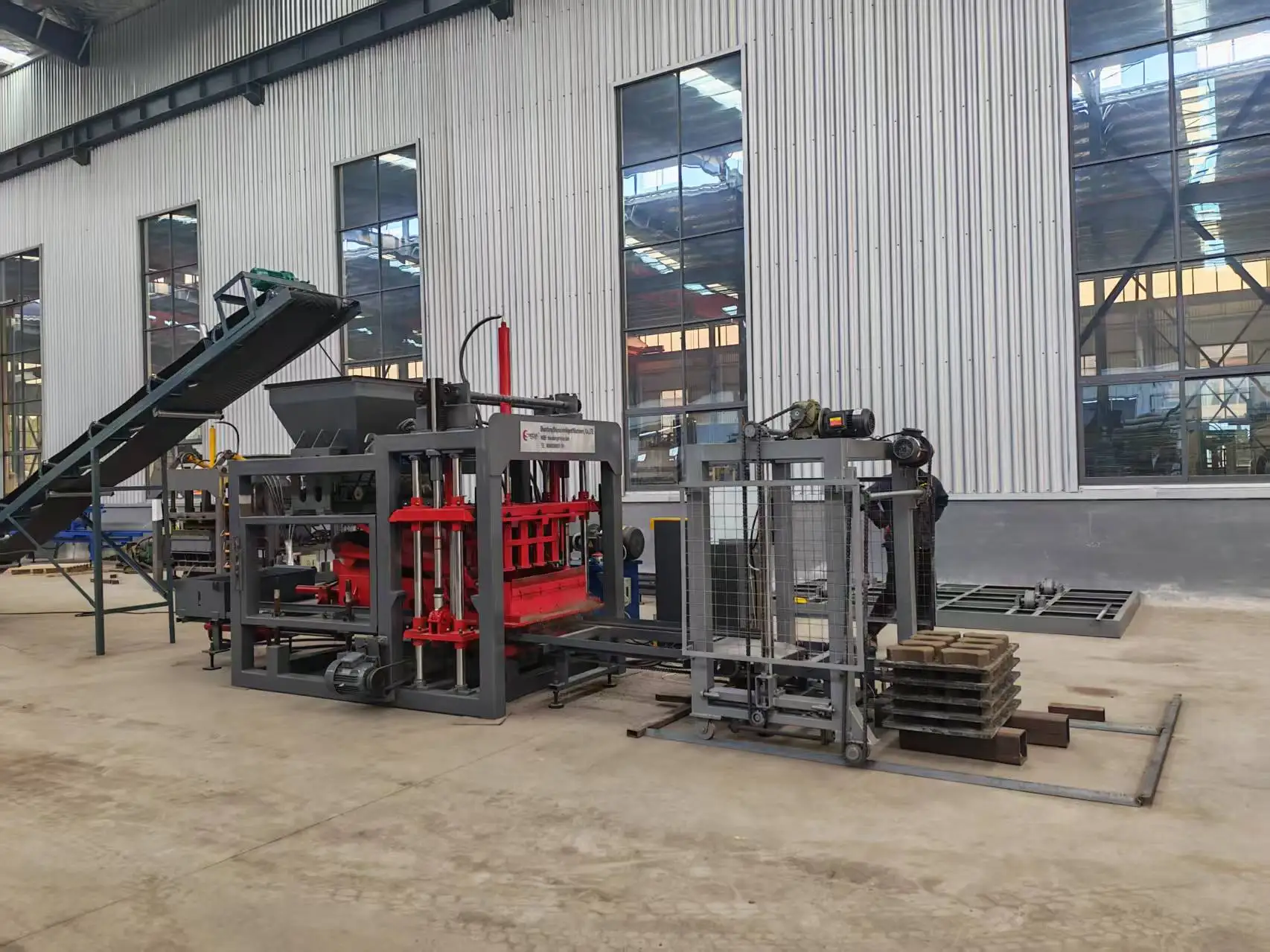
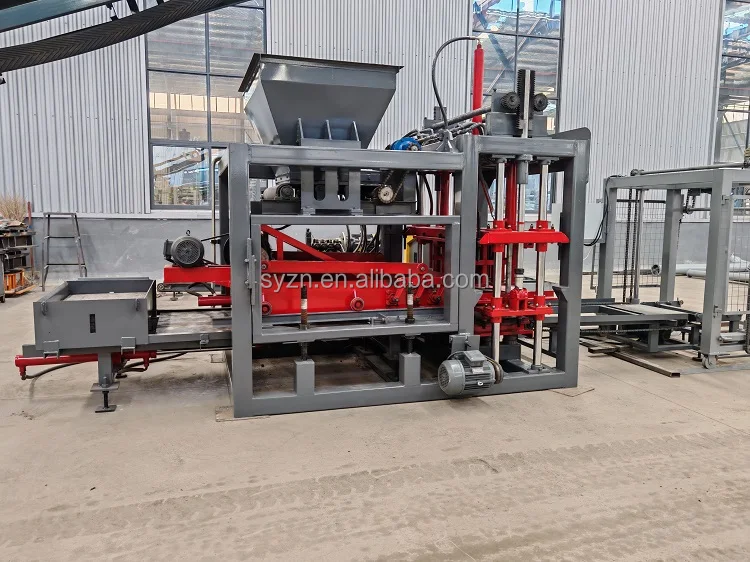
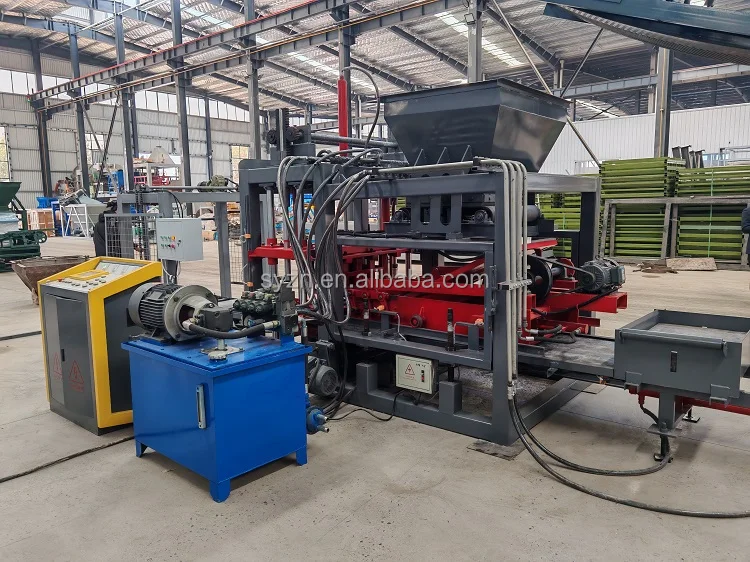
Description
Technical Specifications
| Parameter | Value |
|---|---|
| Model | QT4-18 |
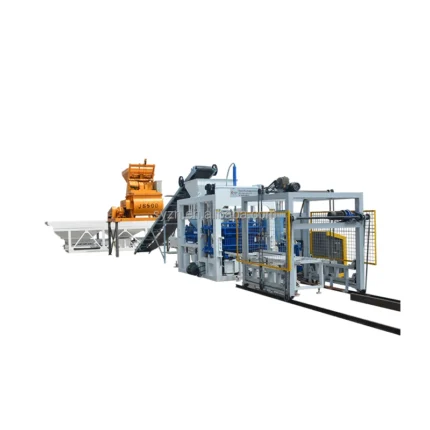
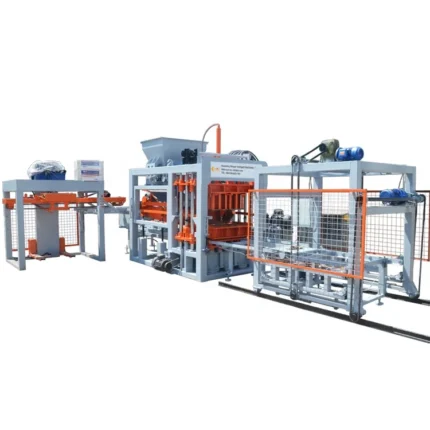
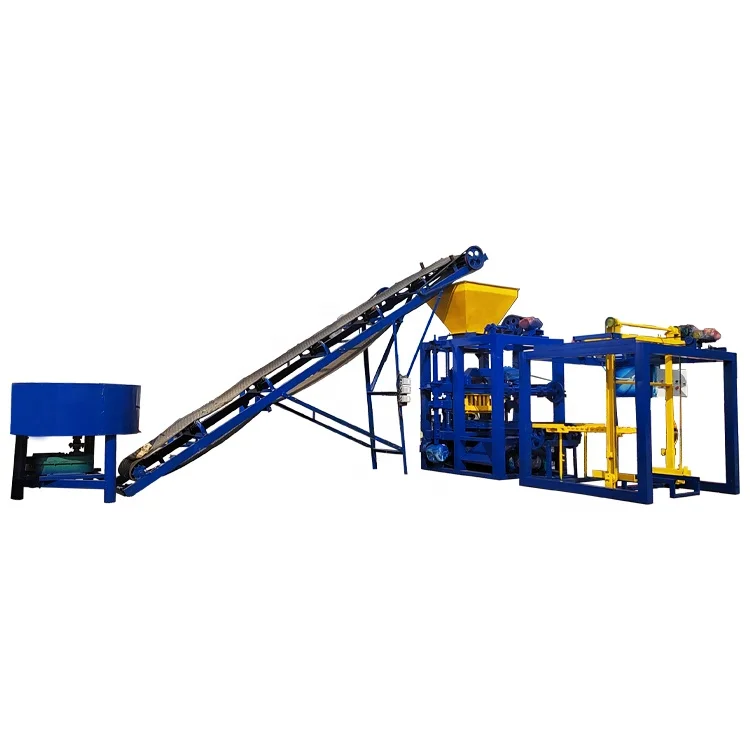
| Product Type | Semi-Automatic Hydraulic Concrete Block Making Machine |
| Overall Dimensions (L×W×H) | 3900 × 1600 × 2300 mm |
| Total Weight | 3 T |
| Rated Power | 24 kW |
| Vibration Force (Exciting Power) | 40–50 kN |
| Molding Cycle | 15–25 s |
| Mixer Model | JQ350 |
| Pallet Size | 850 × 550 × 25 mm |
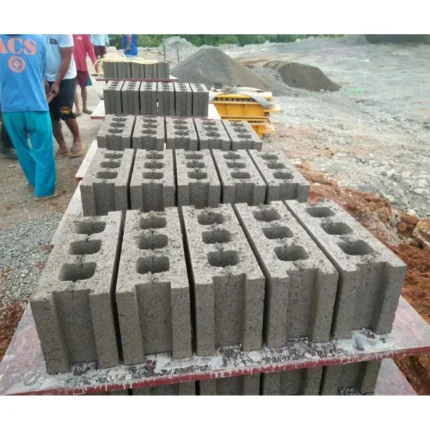
| Applied Products | Paver, solid block, hollow block, curbstone |
| Raw Materials | Crushed stones, sand, cement, dust, fly ash |
| Output Capacity (Hollow Block 400×200×200 mm) | 1200–1680 pcs/hr (9600–13440 pcs per 8-hour shift, basis: 400×200×200mm hollow block, cycle time 15–20s) |
| Output Capacity (Hollow Block 400×150×200 mm) | 1800–2400 pcs/hr (14400–19200 pcs per 8-hour shift, basis: 400×150×200mm hollow block, cycle time 15–20s) |
| Output Capacity (Solid Brick 240×115×53 mm) | 3240 pcs/hr (16200–19440 pcs per 8-hour shift, basis: 240×115×53mm solid brick, cycle time 15–20s) |
| Hydraulic System | Hydraulic station integrated |
| Automation Level | Semi-automatic |
| Control System | PLC (brand and language configurable, basis to be confirmed) |
| Voltage & Frequency | Configurable for target market (basis to be confirmed) |
| Standards | CE (verify applicability) |
Application Suitability
| Application | Material or Output |
|---|---|
| Hollow block production for building walls | Crushed stone, sand, cement, fly ash; 400×200×200 mm and 400×150×200 mm formats |
| Solid brick manufacturing for masonry | Cement, sand, crushed stone dust; 240×115×53 mm standard brick format |
| Paver and curbstone production for roads and landscaping | Aggregate-cement mixes; various mould-dependent paver and kerb dimensions |
| On-site block production for housing projects | Locally sourced aggregates including fly ash and quarry dust |
| Small to medium-scale fixed-plant operations | Multi-format output via mould change within a single shift |
Why Cycle Time Claims Without Format Context Lead to Disappointment
Capacity numbers mean nothing unless tied to a specific block format and cycle assumption.
I have seen buyers in West Africa sign for machines quoted at a certain hourly output, only to discover the figure assumed a solid brick they never intended to produce. When they switched to the 400×200×200 mm hollow block their market actually demanded, the real throughput dropped considerably. The automatic QT4-18 block making machine PLC controlled system addresses this by allowing the operator to set and monitor cycle parameters per format, but the quotation stage is where the mismatch usually originates. Always demand that output figures come with the exact block dimensions, cycle time, and shift length stated beside them [NEED_CITE: capacity calculation standards for concrete block equipment].
How PLC Control Changes Operator Dependency
The semi-automatic baseline of the QT4-18 means an operator initiates key actions, but the PLC governs the timing, pressure duration, and vibration sequence once triggered. This removes the variation that comes from different operators running the same cycle at different speeds. On sites where I have commissioned these machines, the consistency gap between a morning shift and a night shift narrowed noticeably once the PLC held the parameters fixed. The automatic QT4-18 block making machine PLC controlled interface can be configured in the buyer’s preferred language before dispatch, which matters more than most purchasers expect until their operator is staring at an unfamiliar script on day one.
The Upgrade Path From Semi-Automatic to Full Line Automation
Starting with a semi-automatic press does not lock a plant into manual pallet handling forever. The QT4-18 is designed so that automatic pallet feeding, stacking, and cubing modules can be added as production volume justifies the investment. I have worked with block producers in South Asia who began with two operators per press and later reduced floor labour by integrating upstream and downstream automation. The key is specifying the electrical and control interface for future expansion at the initial order stage. Retrofitting an automatic stacker onto a press that was never wired for one costs more in downtime than planning for it upfront [NEED_CITE: automation retrofit considerations in block plants].
Vibration Force and Hydraulic Pressure: Why Both Matter Together
The 40–50 kN vibration force on the QT4-18 works in concert with the integrated hydraulic station to compact the mix into the mould. Vibration alone settles the aggregate, but hydraulic pressure applied simultaneously from above squeezes out air voids and locks the particles into a dense matrix. If your local sand has high clay content, the vibration frequency may need adjustment to prevent the mix from clinging to the mould walls rather than filling them. The 850 × 550 × 25 mm pallet size determines the total block area per cycle, so a larger pallet is not automatically better if your curing racks are sized for a smaller dimension. The 15–25 s molding cycle range gives the operator room to extend hold time for denser formats like pavers without changing the base machine configuration.
What Happens When Voltage and Language Are Left Until Arrival
I once arrived at a site in East Africa to find a brand-new block press sitting idle because the local supply was a different voltage than what the factory wired. The control panel displayed text in a language the operators could not read, and commissioning stalled while new labels and a transformer were sourced. These are entirely avoidable delays. Confirming the target market’s voltage, frequency, and PLC display language before production begins keeps the installation timeline intact. It is a small conversation at the quotation stage that prevents a large problem at the site [NEED_CITE: voltage and frequency standards by export market].
Why the QT4-18 Is Configured Around Your Actual Mix, Not a Catalogue Default
- Machine, mould, pallet, and handling equipment are specified as one matched system, reducing integration gaps between separate suppliers.
- Configuration is set against the buyer’s actual mix design and local aggregate test results, so the vibration and pressure settings correspond to the material you will actually feed.
- Mould design covers the block formats your market sells, including custom drawings when standard catalogue moulds do not match local building codes.
- Automation level is selectable and expandable, allowing a buyer to begin with the semi-automatic QT4-18 and add automatic pallet feeding or stacking later without replacing the press.
- Installation includes on-site commissioning and operator training, so the crew running the machine on day one is the same crew that was shown how to change moulds, clear blockages, and read the PLC fault codes.
Documentation & Verification
- Line layout and capacity calculation stating the block format, cycle time, and shift hours assumed for each output figure
- Machine specification sheet with confirmed voltage, frequency, and PLC language for your market
- Mould drawing and format list showing which products share the 850 × 550 mm pallet
- Hydraulic and electrical schematic for local maintenance teams
- Factory test record on your specified block format before dispatch
Installation, Commissioning & Support
- Foundation pad must accommodate the 3900 × 1600 mm footprint and 3 T static weight with vibration isolation
- Dedicated 24 kW power circuit at the confirmed voltage and frequency, isolated from welding loads
- Machine ships dismantled for container loading; reassembly and level check performed on-site during commissioning
- First-run parameter tuning on your actual aggregate mix to verify block density against the target strength
- Operator training covers PLC navigation, mould changeover procedure, and daily hydraulic fluid inspection
- Wear parts and mould list provided with recommended replacement intervals for the first production cycle
What to Include in Your Inquiry
To receive a configuration that matches your site rather than a generic catalogue line, share the block formats you currently sell or plan to sell, the daily volume you need per format, and the raw materials available locally including their gradation and clay content. State your existing curing area dimensions and forklift capacity so the pallet size can be cross-checked. Confirm the voltage and frequency at your site and the language you need on the PLC display.
Frequently Asked Questions
Q: How is the QT4-18’s output capacity verified per block format?
A: Each capacity figure is tied to a specific block dimension, cycle time range, and shift length. For example, 1200–1680 hollow blocks per hour assumes the 400×200×200 mm format at a 15–20 s cycle. We provide a written capacity calculation sheet with your quotation so the numbers match the product you will actually manufacture.
Q: Can I upgrade the automation level of the QT4-18 after installation?
A: Yes. The semi-automatic QT4-18 can be fitted with automatic pallet feeding, stacking, and cubing modules as your production volume grows. Specifying the electrical interface for future automation at the initial order stage avoids costly rewiring later.
Q: How do I match vibration force to my local aggregate?
A: Send a sample of your local sand, crushed stone, or fly ash for a trial press at the factory. The 40–50 kN vibration force and hydraulic pressure are then adjusted to the sample’s actual behaviour, and the verified settings are recorded in your commissioning file.
Q: What is the realistic mould change time on the QT4-18?
A: Mould changeover depends on the format jump and whether the new mould shares the same pallet size. We state the expected changeover duration in the proposal and train your operators during commissioning so the format flexibility is practical, not theoretical.
Q: What voltage configurations are supported for the QT4-18?
A: The machine is built to the voltage and frequency you confirm before production. The PLC display language is also set at this stage. We verify these details in writing to prevent commissioning delays when the equipment arrives at your site.