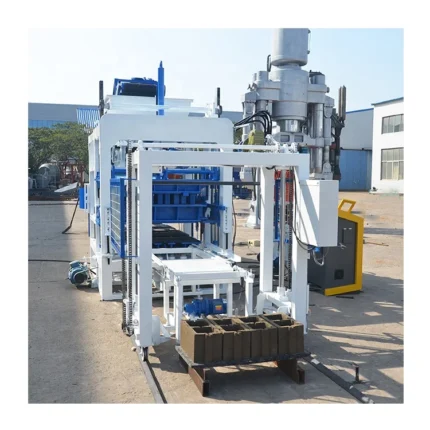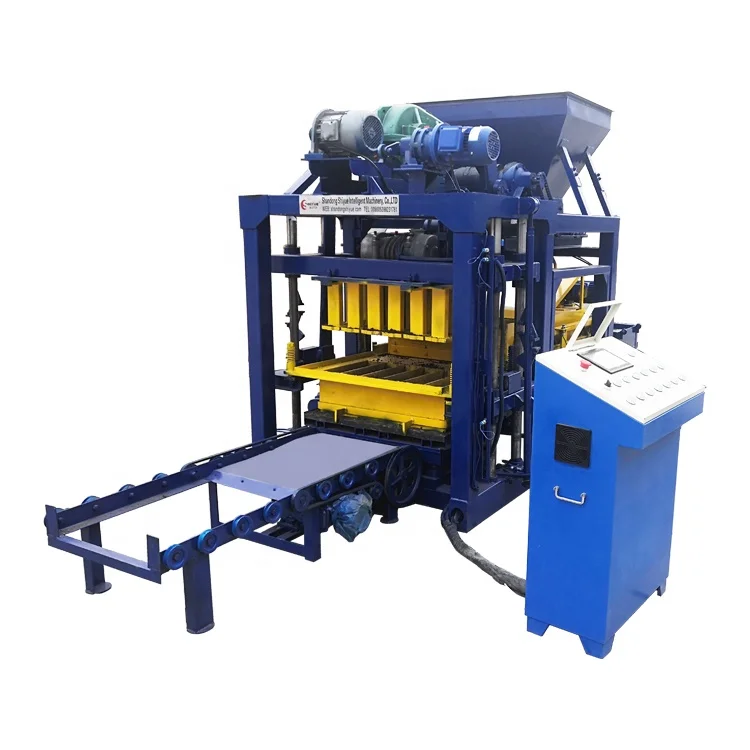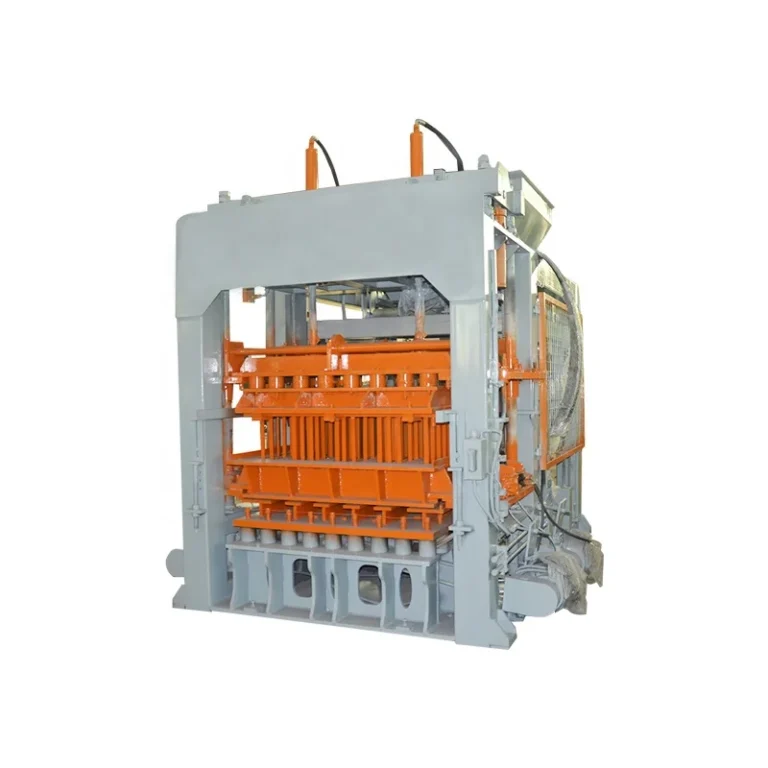


Description
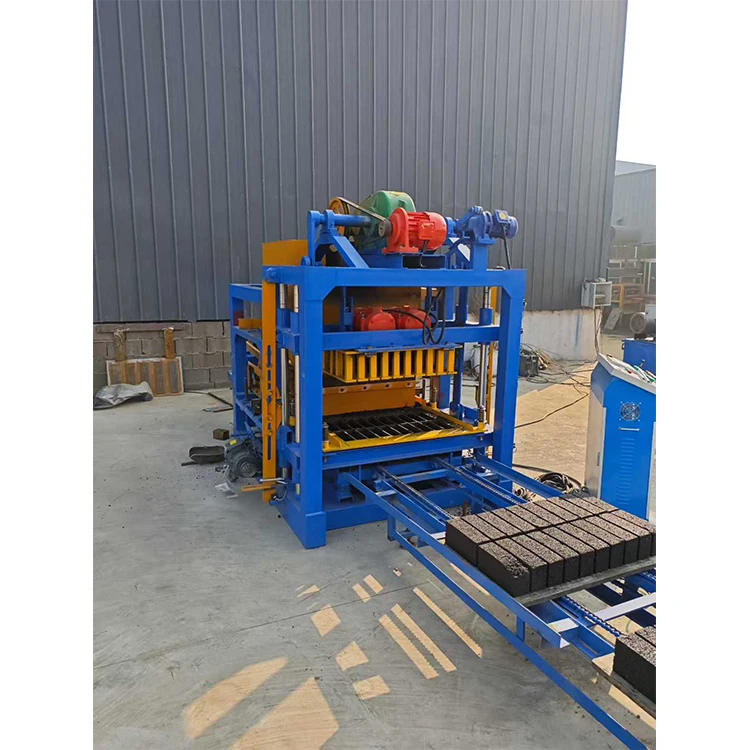
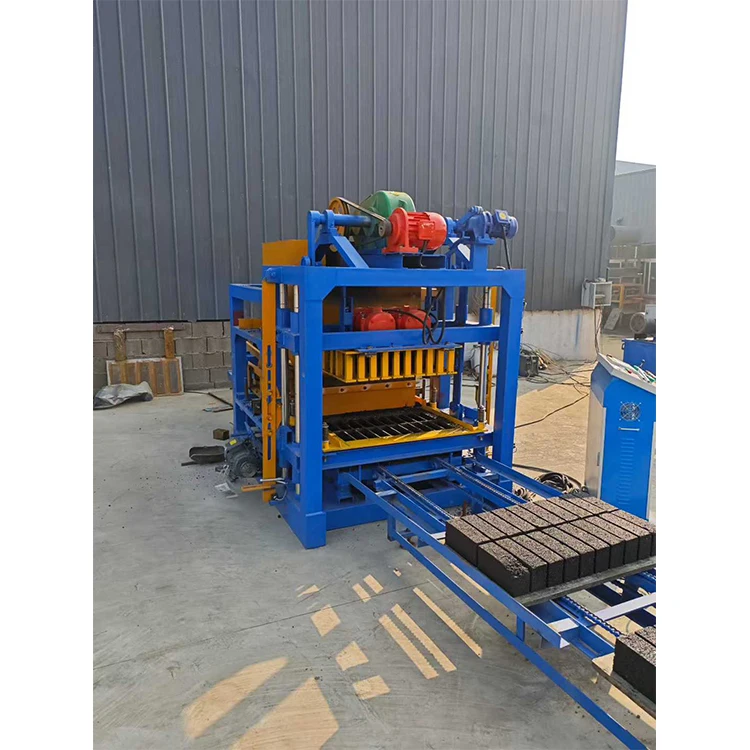
Matched Automation Levels — the QTJ4-25 block machine aligns pallet feeding, material distribution, and stacking so that no downstream station interrupts the press cycle, eliminating the manual bottlenecks that typically cap semi-automatic output.
Technical Specifications
| Parameter | Value |
|---|---|
| Model | QTJ4-25 |
| Product Type | Automatic Concrete Block Making Machine |
| Machine Power | 16.58 kW |
| Molding Cycle | 25 seconds |
| Capacity | 4600 pcs/8hours (basis not stated in source — confirm block format / material / thickness) |
| Machine Weight | 5000 kgs |
| Overall Size | 6400×1500×2700 mm |
| Pallet Size | 850×480 mm |
| Control System | PLC controlled fully automatic |
| Vibration System | Vibration motor with dedicated vibration box (non-hydraulic) |
| Motor Brand | Siemens motor |
| Frame Construction | Thick steel |
| Raw Material | Concrete, sand, cement, fly ash, crushed stone, lime, water |
| Automation Level | Full automatic (pallet feeding, material feeding and scraping, block stacker) |
| Voltage | Configurable according to local voltage standards |
Application Suitability
| Application | Material or Output |
|---|---|
| Hollow block production for commercial and residential construction | Concrete, sand, cement, crushed stone |
| Solid cement brick manufacturing for load-bearing walls | Cement, sand, fly ash, lime |
| Paver stone brick production for walkways and driveways | Concrete mix with fine aggregate |
| Medium-sized block factory mass production | Continuous operation across multiple block formats |
Why the Control Language Must Be Set Before the Machine Leaves the Factory
An automatic concrete block making machine PLC controlled in the wrong language is essentially a manual machine on its first day.
I have stood on installation sites in West Africa watching operators stare at a fault code they could not read, while the plant manager waited for a translator to arrive. The downtime from that single misalignment often exceeds the time it takes to confirm the display language and voltage frequency before production begins. When a QTJ4-25 arrives with an English-only interface in a region where operators read French or Portuguese, the PLC automation advantage is lost until someone reconfigures the system. [NEED_CITE: PLC interface language configuration for industrial machinery exports]
How Full Automation Removes the Operator from the Cycle
The primary advantage of this automatic concrete block making machine PLC controlled system is that it takes the operator out of the repetitive cycle steps. Pallet feeding, material distribution, and block stacking all run on programmed sequences, which means the operator monitors the line rather than physically moving material between stations. This reduces the chance that a delayed manual pallet feed will force the press to wait, keeping the 25-second molding cycle intact across a full shift.
Consistency Across Batches Without Manual Intervention
When material feeding and scraping are handled automatically, the volume of concrete delivered to each mould cavity stays uniform from the first block to the last. In semi-automatic setups, the operator’s pacing determines how evenly the material spreads, which directly affects block density and strength. The PLC on the QTJ4-25 maintains the same feed sequence regardless of shift length, so batch-to-batch consistency becomes a function of the mix design rather than operator fatigue. [NEED_CITE: automation impact on concrete block density consistency]
Reading the Specs That Actually Matter on Site
The 16.58 kW total machine power covers the vibration motor, material feed system, and pallet handling, so the electrical supply must support continuous draw at that level without voltage sag. The 850×480 mm pallet size dictates the curing rack dimensions and the forklift capacity needed to move stacked blocks to the yard. The non-hydraulic vibration system uses a dedicated vibration box driven by a Siemens motor, which simplifies maintenance since there are no hydraulic hoses, pumps, or seals to replace on the vibration circuit.
The Cost of Skipping the Automation Audit
A buyer who assumes "full automatic" covers every station in the line can arrive at commissioning to find that pallet return or block curing transport was never included in the scope. That gap forces manual handling right at the point where the press output is highest, turning the automatic stacker into an island of efficiency surrounded by manual labor. [NEED_CITE: block production line automation scope verification]
Why Buyers Source the QTJ4-25 Through This Channel
Block machinery is the single focus here, so the QTJ4-25 is specified as part of a matched system that includes moulds, pallets, and handling equipment rather than assembled from disconnected suppliers. The configuration is set against the buyer’s actual mix design and local aggregate, not pulled from a default catalog. Mould design covers the formats the buyer’s market actually sells, with custom drawings available. The automation level is selectable, so a buyer can start with partial automation and expand. Installation support includes on-site commissioning and operator training to ensure the PLC parameters match the production environment.
Documentation & Verification
- Line layout showing pallet flow from feeder through stacker for the QTJ4-25 footprint
- Capacity calculation stating which block format the output figure assumes
- PLC display language and voltage confirmation recorded before production
- Factory test record on buyer’s specified mould format before dispatch
- Hydraulic and electrical schematic for the non-hydraulic vibration circuit
Installation, Commissioning & Support
- Foundation pad sized for 6400×1500 mm footprint with vibration isolation considerations
- Dedicated electrical circuit rated for 16.58 kW continuous draw at confirmed local voltage
- PLC parameter configuration on site to match buyer’s mix design and cycle preferences
- Operator training on fault code reading and mould change procedures in confirmed display language
- Wear parts list covering vibration box components and pallet feed mechanisms
- Maintenance schedule aligned with Siemens motor service intervals
What to Include in Your Inquiry
Specify the block formats your market requires and the daily output target so the capacity calculation reflects your actual production plan. Confirm your local voltage, frequency, and the language your operators read on a control screen. Provide details on your existing pallet size and curing yard setup so the 850×480 mm pallet configuration integrates without modification.
Frequently Asked Questions
Q: How is the 4600 pcs/8hours capacity calculated — which block format does it assume?
A: The capacity figure requires confirmation of the specific block format, material mix, and wall thickness used in the calculation. Request a capacity sheet that states the exact mould and cycle assumptions so you can compare the quoted output against your own production targets for the formats your market actually sells.
Q: What automation level is included — are all stations automatic?
A: The QTJ4-25 includes automatic pallet feeding, material feeding and scraping, and block stacking. Confirm with the supplier whether pallet return, curing rack transport, and cubing are part of the package, since those downstream steps can otherwise require manual handling that interrupts the press cycle.
Q: Can the PLC display language be configured before delivery?
A: Yes, the PLC language should be confirmed during the ordering stage so the interface arrives in the language your operators read. This prevents commissioning delays caused by operators unable to read fault codes or adjust parameters on the control screen during initial startup.
Q: Is there an upgrade path from semi-automatic to full automatic?
A: The automation level is selectable, meaning a buyer can begin with semi-automatic operation and add automatic stations later. Discuss the upgrade sequence with the supplier to ensure the machine frame, PLC, and wiring harness support future additions like automatic stacking or pallet return systems.