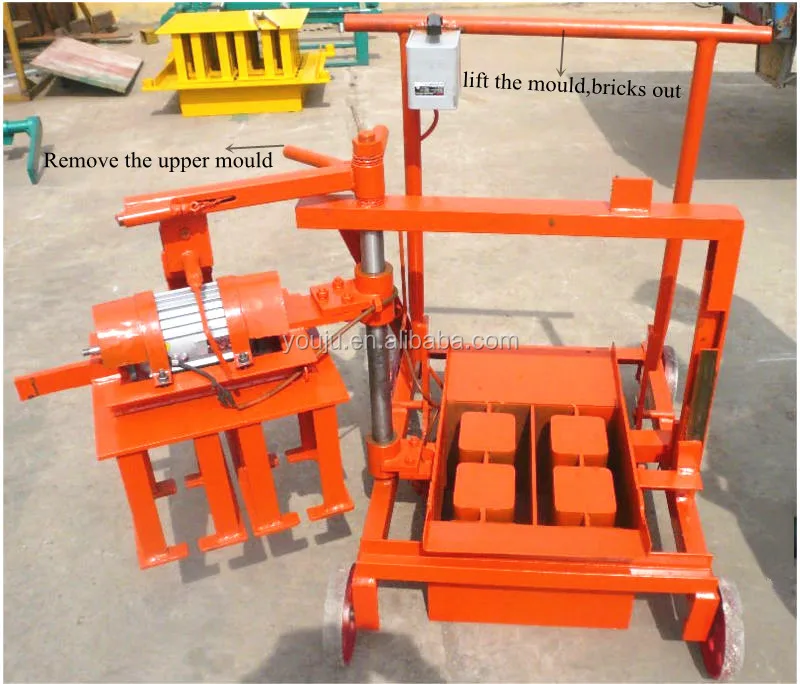
Description
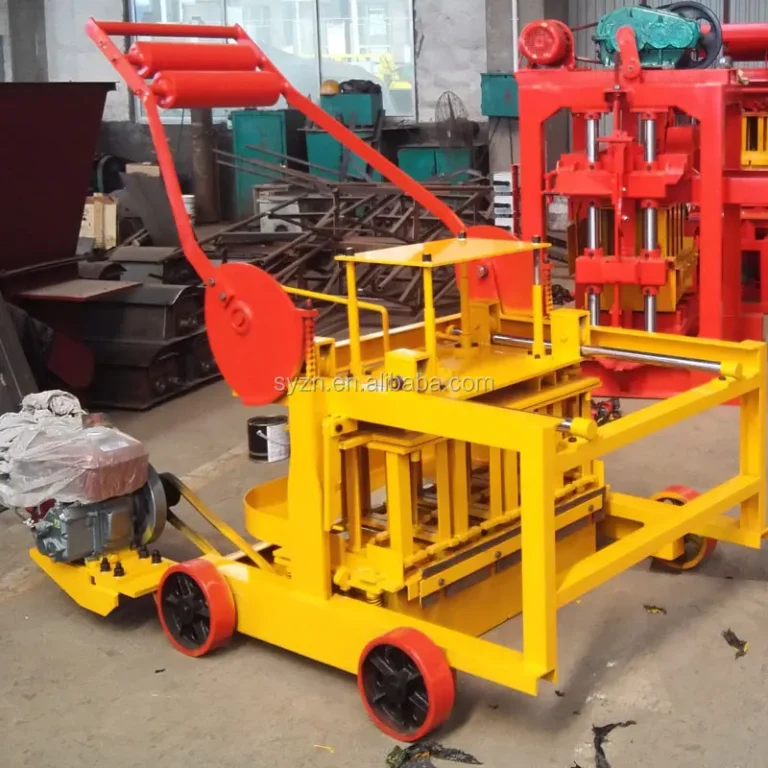
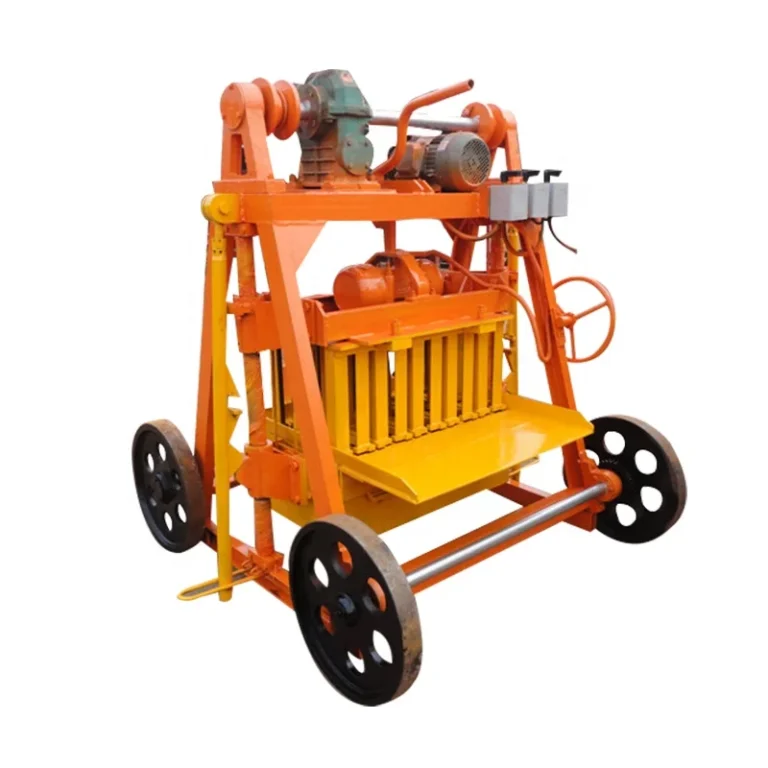
Configuration set against the buyer’s actual mix design — the QMJ2-45 mobile block machine ships with PLC language, voltage, and mould formats aligned to your local aggregate and site conditions before dispatch.
Technical Specifications
| Parameter | Value |
|---|---|
| Model | QMJ2-45 |
| Product Type | Mobile Concrete Block Making Machine |
| Machine Type | Manual mobile egg-laying block machine |
| Automation Level | Manual (no pallets required, egg-laying type) |
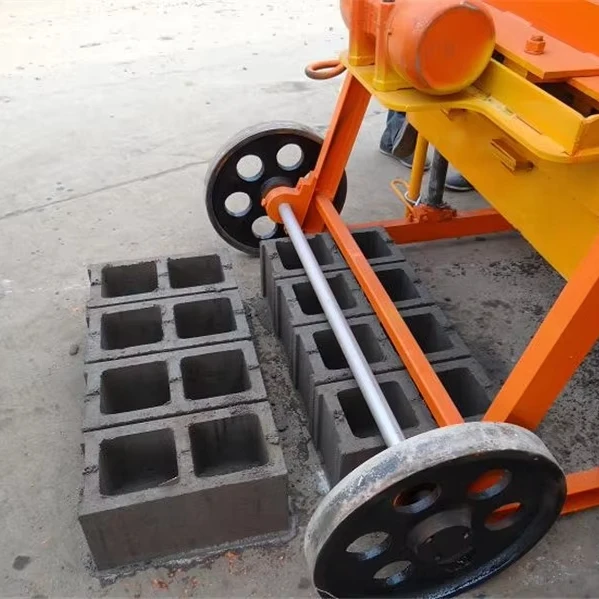
| Mould Format | Hollow brick (multiple sizes via mould change) |
| Cycle Time per Format | 25–30s |
| Output Capacity | 160 pcs/h (basis: 400×200×200mm hollow brick, 2 pcs/mould) |
| Output Capacity | 240 pcs/h (basis: 400×150×200mm hollow brick, 3 pcs/mould) |
| Output Capacity | 320 pcs/h (basis: 400×100×200mm hollow brick, 4 pcs/mould) |
| Daily Output (8hr) | 1280 pcs (basis: 400×200×200mm hollow brick) |
| Daily Output (8hr) | 2560 pcs (basis: 400×100×200mm hollow brick) |
| Pallet Requirement | None (egg-laying / mobile type) |
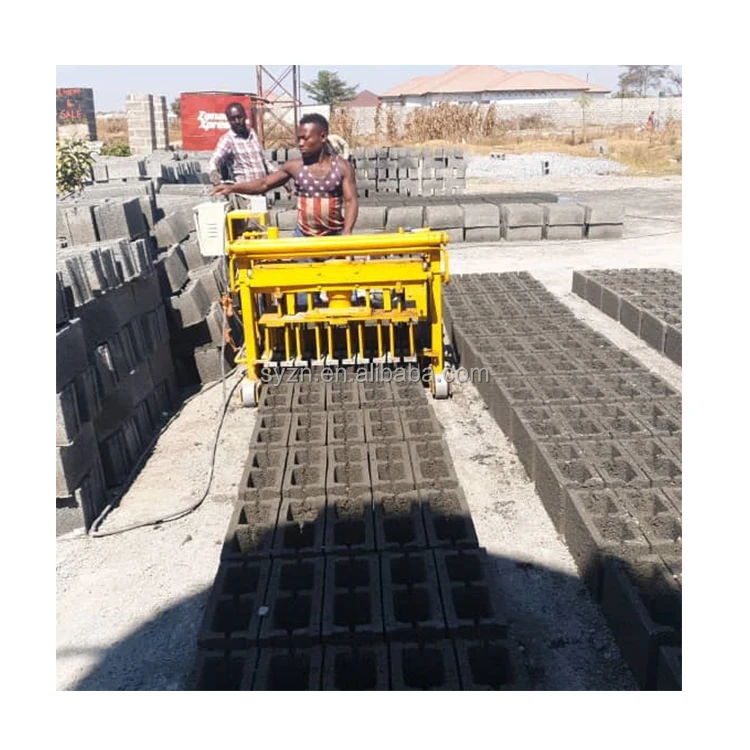
| Labour Requirement | 1–3 workers |
| Mould Change | Supported (produces different hollow brick formats by changing moulds) |
| Mobility | Free-moving on-site, no fixed plant required |
| Standards | ISO 9001:2000, CE |
Application Suitability
| Application | Material or Output |
|---|---|
| On-site hollow block production for small-scale construction projects | Crushed stone, sand, cement, and water mixed to local aggregate specifications |
| Low-investment block production without fixed plant infrastructure | Hollow blocks in multiple formats laid directly on the ground or concrete floor |
| Entrepreneur-led first block plant setups | Entry-level volume with manual operation, scalable to automated pallet systems |
| Building contractors producing blocks directly at project sites | Mobile operation across different areas of a construction site |
| Small-space production environments with no pallet handling system | Egg-laying production eliminating pallet storage and handling requirements |
Why Mould Change Time Cancels Out the Flexibility You Paid For
A mobile block machine is only as flexible as the time it takes to swap its mould.
Buyers frequently invest in format versatility, expecting to produce hollow blocks in several sizes throughout the day, only to find that the physical mould change and recalibration consume hours of a shift. The QMJ2-45 supports multiple hollow brick formats — 400×200×200mm, 400×150×200mm, and 400×100×200mm — but the actual cycle time of 25–30 seconds per format does not include the minutes required to unbolt, lift, align, and secure a new mould. When an operator must change formats twice a day, that downtime accumulates and eats into what the capacity calculation promised. I have watched crews on Middle Eastern sites lose half a shift because the mould bolts seized in dusty conditions and no dedicated tools were staged nearby. [NEED_CITE: practical mould change durations in field conditions for mobile egg-laying machines]
What Manual Operation Actually Requires From Your Crew
The QMJ2-45 ships as a manual egg-laying machine, meaning one to three workers handle material feeding, machine advancement, and block curing logistics without pallet intervention. This keeps the initial investment contained and eliminates pallet procurement entirely. However, manual operation places the consistency burden directly on the crew. Feed volume, water ratio in the mix, and the speed at which the operator advances the machine all affect block density from one cycle to the next. An automatic mobile block making machine with PLC-controlled batching removes these variables from the operator’s hands, delivering batch-to-batch consistency that manual feeding cannot sustain across a full shift.
Where the Automation Upgrade Boundary Sits
This machine serves as a manual starting point with a defined upgrade path toward automatic pallet feeding, stacking, and PLC-controlled batching as volume grows. The transition is not a simple bolt-on. Moving from egg-laying to pallet-based production requires a flat, level curing area sized for the pallet dimensions you choose, plus a forklift or handling system to move racks through the curing cycle. The control system can be upgraded from manual switches to PLC control with automatic batching accuracy, but the core press mechanics remain the same. Buyers planning to scale should confirm which components are field-retrofittable and which require a different base machine before committing to the manual configuration. [NEED_CITE: field retrofit feasibility for manual to semi-automatic block machine conversion]
How Pressure and Vibration Interact With Your Mix Design
Block strength depends on how hydraulic pressure and vibration force work together against the specific aggregate in your mix. The QMJ2-45 specifications do not publish hydraulic pressure or vibration force ratings, which means these values must be confirmed against your local crushed stone gradation and cement ratio before the machine ships. A mix with coarse, angular aggregate requires different vibration characteristics than one using fine river sand, and setting the machine to a catalogue default rather than your actual material profile leads to blocks that crumble at the edges or fail compression tests. The control system, once upgraded to PLC, can store mix-specific recipes so that operators select the correct vibration duration and pressure profile for each format rather than guessing.
The Cost of Arriving on Site to Find the Wrong Language on the Panel
A control panel in the wrong language turns a two-day commissioning into a two-week delay. I configured a small mobile machine for a project where the default English interface met an Arabic-speaking crew, and the first three days were spent translating every button label by hand while the project schedule slipped. Voltage and frequency mismatches create a different problem: the motor runs, but at the wrong speed, producing blocks with insufficient compaction that appear sound until they are stacked and the bottom course cracks under load. Confirming voltage, frequency, and PLC display language before the QMJ2-45 leaves the factory is not paperwork — it is the difference between starting production on arrival and spending weeks troubleshooting. [NEED_CITE: commissioning delays caused by unconfirmed electrical and control specifications]
What Makes This Source Different From Catalogue Dealers
Configuration here is set against your actual mix design, local aggregate, and target block format rather than pulled from a standard price list. The mould design covers the formats your market actually sells, including custom drawings if your local construction standards specify dimensions outside the common range. Machine, mould, and handling are specified as one matched system from a single focus on block machinery, so the pallet size — if you upgrade to pallet-based operation — is chosen with your existing curing area and forklift capacity in mind. Automation level is selectable, meaning you can start with the QMJ2-45 in its manual egg-laying configuration and transition toward PLC batching and automatic stacking without replacing the press. Documentation includes line layout and capacity calculations that state which block format the output figure assumes.
Documentation & Verification
- Line layout showing QMJ2-45 placement relative to future automation stations
- Capacity calculation sheet stating output per hollow brick format with cycle time basis
- Mould drawing and format list confirming block dimensions the included moulds produce
- Voltage, frequency, and PLC display language confirmation sheet before dispatch
- Factory test record on your specified mix design and target block format
- Operation and maintenance manual with mould change procedure and tool list
Installation, Commissioning & Support
- Site must provide a level concrete floor for egg-laying block production with the QMJ2-45
- Power supply must match confirmed voltage and frequency for the motor rating before machine arrival
- Machine ships dismantled for container loading with on-site reassembly and alignment included
- First-run commissioning includes parameter setting for your local aggregate and cement mix ratio
- Operator training covers mould change procedure, cycle timing, and daily maintenance checkpoints
- Wear parts and mould replacement list provided with recommended reorder intervals
What We Need From You to Configure This Machine Correctly
Provide the specific hollow block dimensions your market requires, including any non-standard sizes, along with your local aggregate type and typical cement-to-sand ratio. Share your site’s available voltage and frequency so the motor and control panel are built to match, and specify the PLC display language your operators read. If you plan to transition from egg-laying to pallet-based automatic stacking in the future, tell us your available curing area dimensions and the forklift capacity you already have on site.
Frequently Asked Questions
Q: What automation level does the QMJ2-45 ship with, and what can be added later?
A: The machine ships as a manual egg-laying unit requiring one to three workers. PLC control with automatic batching accuracy and pallet-based stacking can be added as volume grows, but the upgrade path depends on your curing area layout. Confirm which components are field-retrofittable before ordering.
Q: How is cycle time measured per block format, and does it include mould change time?
A: The 25–30 second cycle time applies to continuous production of a single hollow brick format once the mould is installed and the mix is flowing. It does not include the time required to unbolt, remove, and align a replacement mould between formats.
Q: What voltage, frequency, and control language options are available?
A: Voltage and frequency are configured to your site’s power supply before production. The PLC display language and button labels are set to match your operators’ requirements. Confirm these specifications during the order stage to avoid commissioning delays.
Q: How does upgrading from egg-laying to pallet-based stacking work in practice?
A: The transition requires adding pallets, a pallet feeder, and a stacking system, plus a level curing area sized for your chosen pallet dimensions. The core press can remain, but the line layout changes significantly and should be planned before the initial purchase.
Q: What remote diagnostics are available on the upgraded PLC configuration?
A: PLC-controlled versions support parameter monitoring and fault logging on the display panel. Remote diagnostics capability depends on the specific PLC model selected during configuration and the communication infrastructure available at your site.