Description
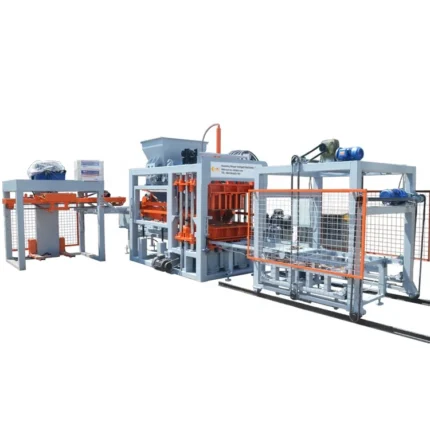
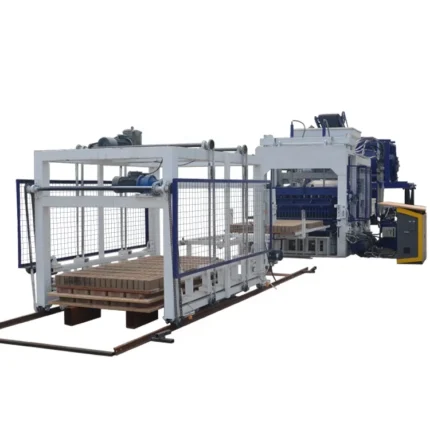
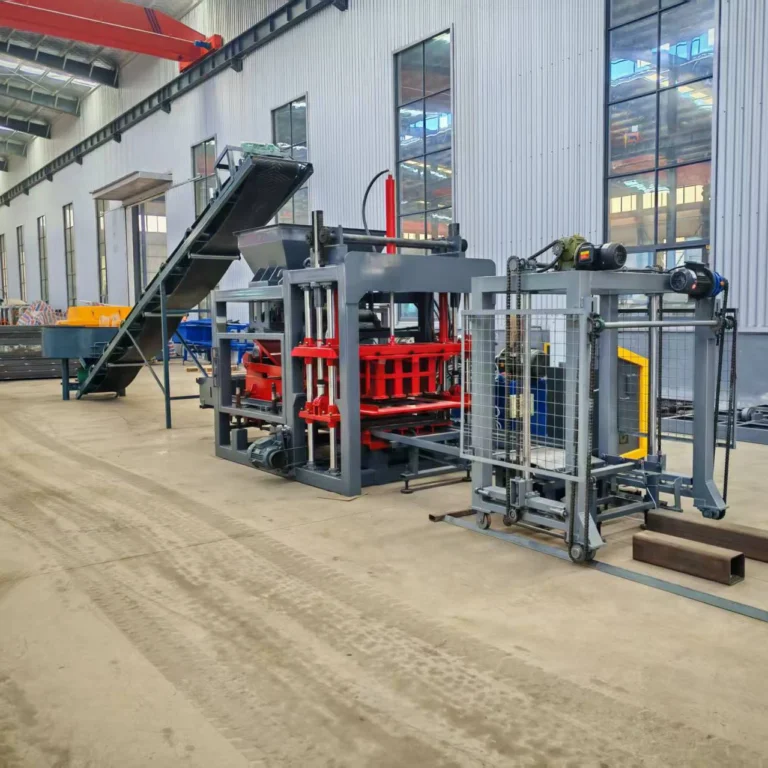
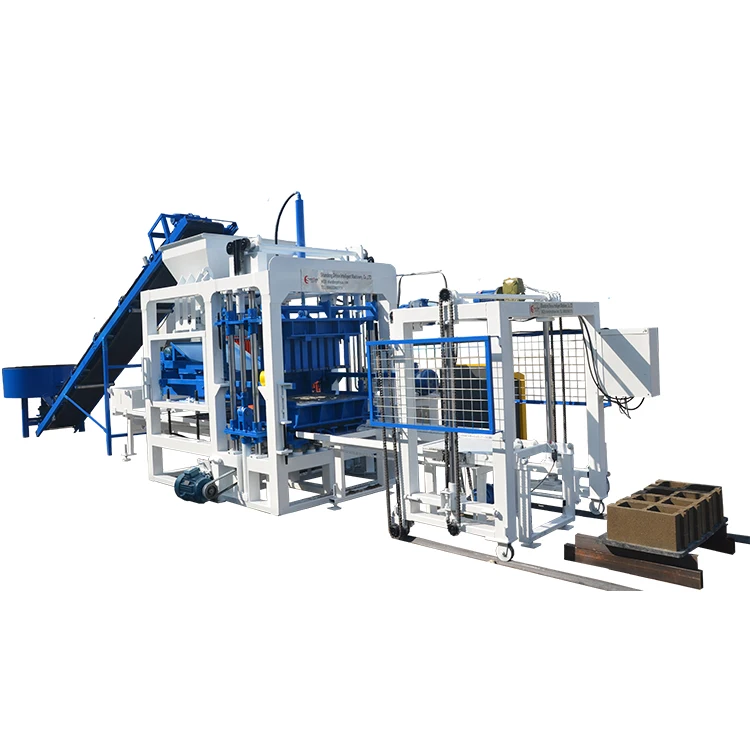
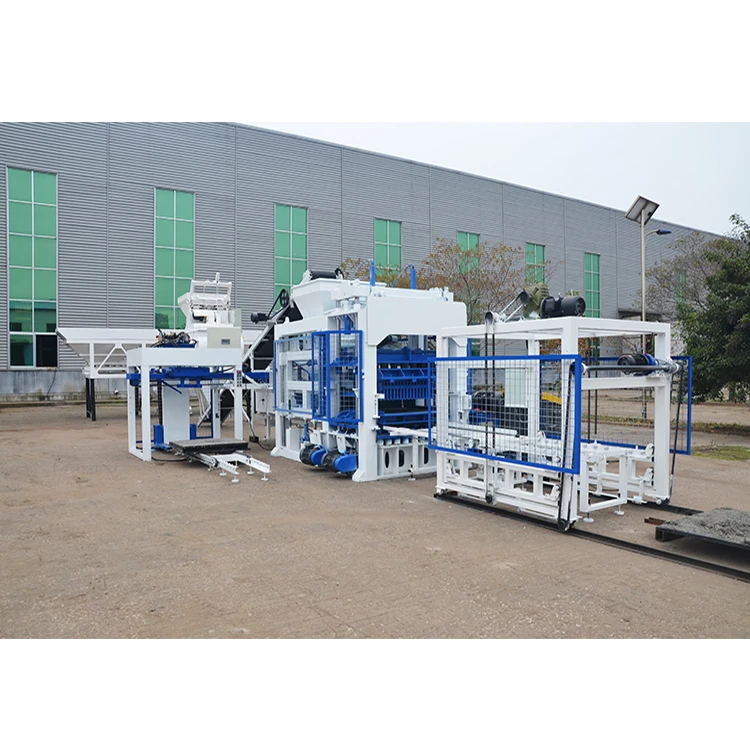
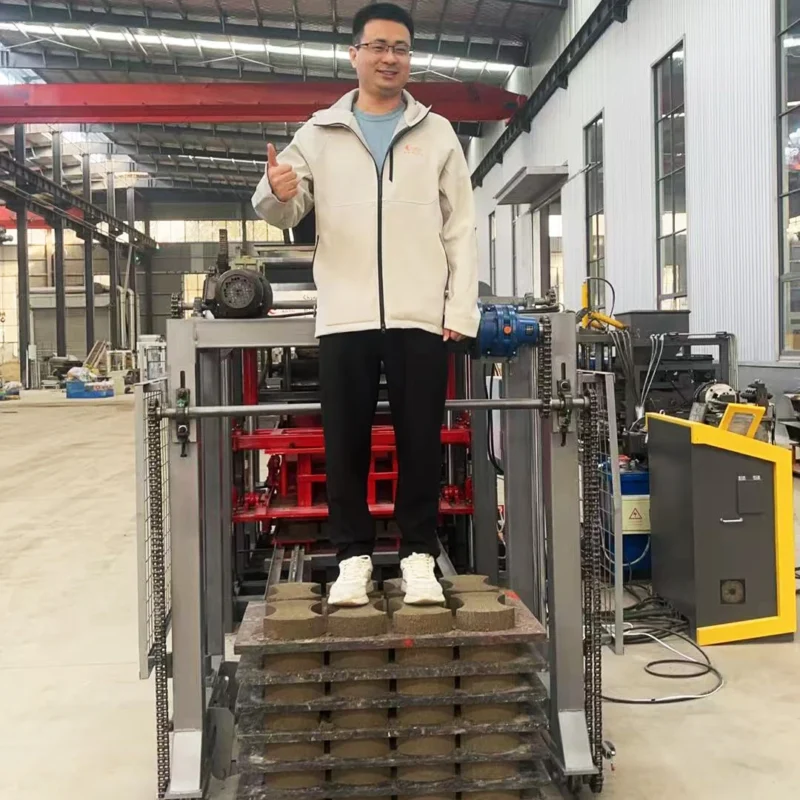
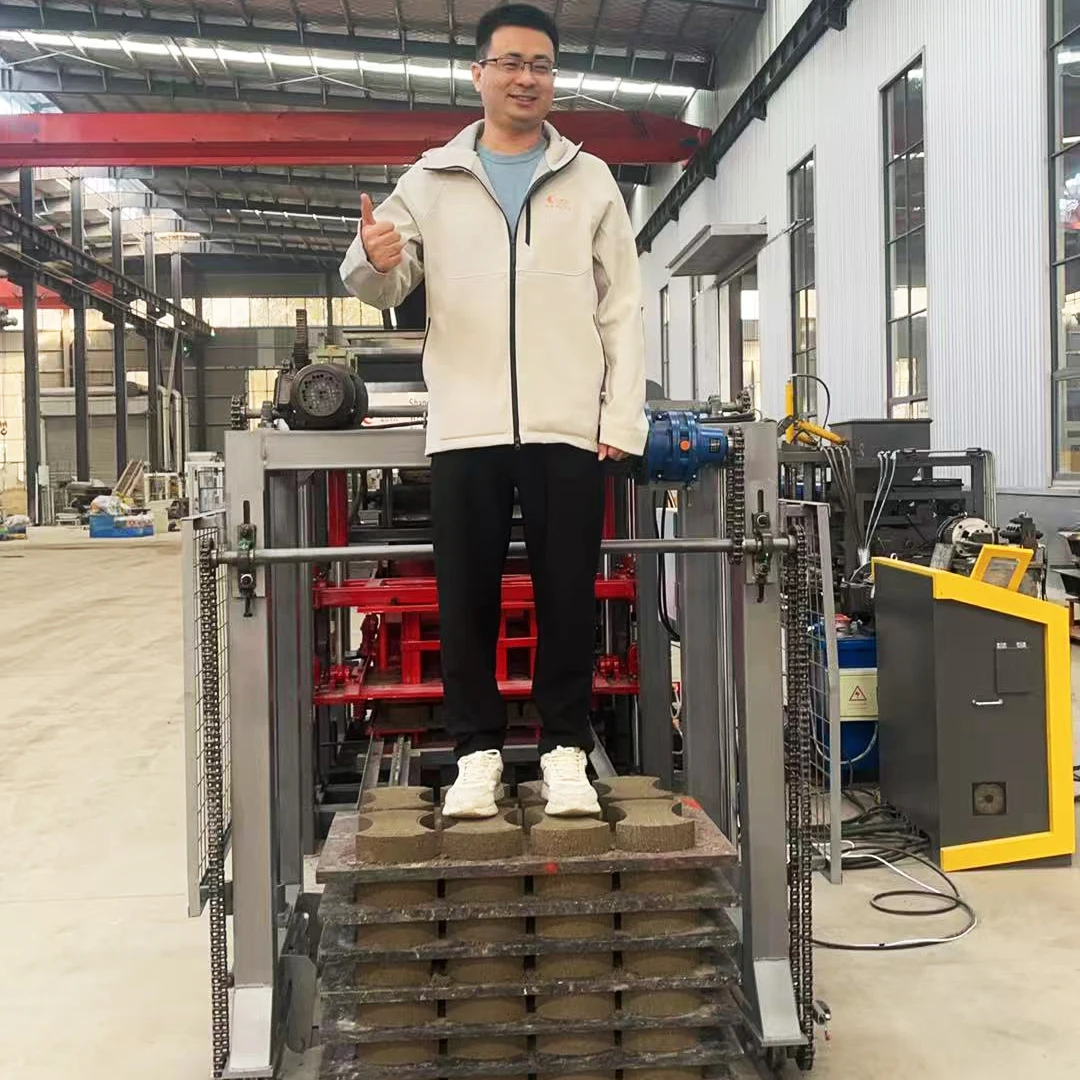
Integrated Line Logic — the QT4-15A is specified as a complete automation cell where PLC cycles, pallet feed timing, and hydraulic demolding are matched so the press never waits on upstream or downstream stations.
Technical Specifications
| Parameter | Value |
|---|---|
| Model | QT4-15A |
| Product Type | Fully Automatic Concrete Block Making Machine |
| Overall Dimensions (L×W×H) | 4100 × 1600 × 2600 mm |
| Rated Hydraulic Pressure | 16–21 MPa |
| Main Vibration Form | Platform Vibration |
| Vibration Frequency | 4200 r/min |
| Vibration Force | 55 kN |
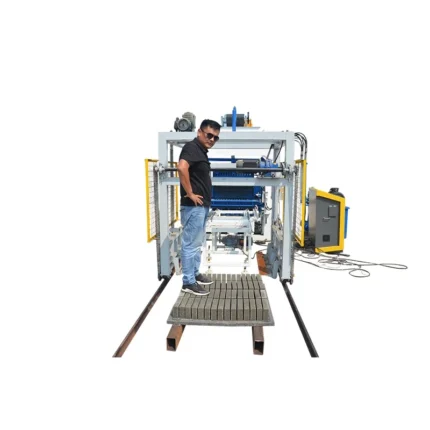
| Pallet Size | 880 × 550 mm |
| Molding Cycle | 25–30 s (basis not stated in source — confirm block format and material) |
| Overall Power | 18.45 kW |
| Total Mass | 4 T |
| Demolding Method | Hydraulic |
| Control System | PLC |
| Automation Level | Fully Automatic |
| Factory Area Required | 300 m² |
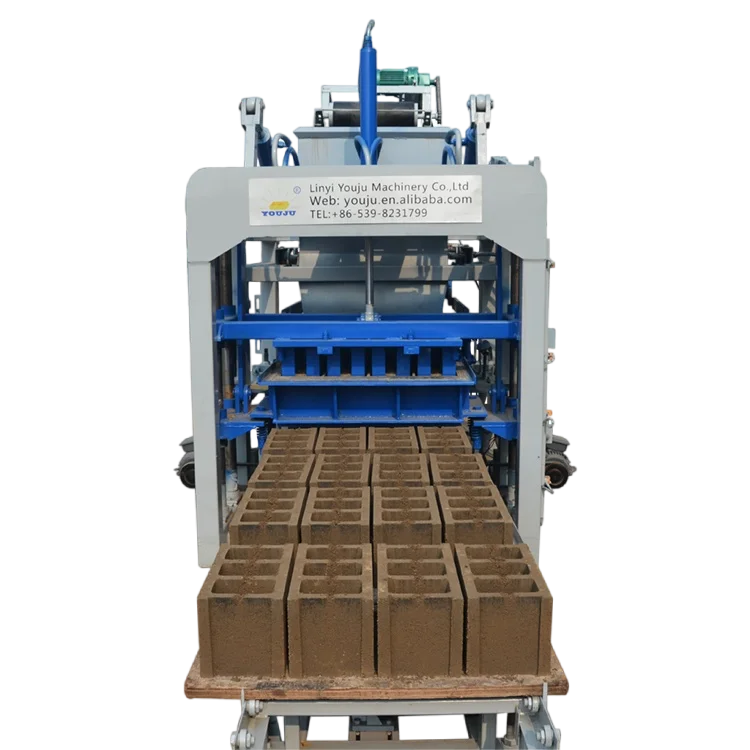
| Applied Products | Hollow blocks, solid blocks, pavers, interlocking blocks, curbstone, colored pavers |
| Raw Materials | Crushed stone, sand, cement, fly ash, gravel, slag |
| Warranty | 1 year (whole machine, excluding spare parts) |
Application Suitability
| Application | Material or Output |
|---|---|
| Hollow block production for residential and commercial walls | Crushed stone, sand, cement, fly ash |
| Solid block manufacturing for load-bearing structures | Gravel, sand, cement blends |
| Paving and interlocking brick runs for roads and walkways | Fine aggregate, cement, pigment for colored pavers |
| Curbstone and kerb production for municipal projects | Coarse aggregate with high-cement mixes |
| On-site block production for housing developments | Locally sourced sand, stone dust, and cement |
Why Automation Must Start With Your Mix, Not the PLC Screen
A fully automatic cycle only delivers consistency when the vibration force, hydraulic pressure, and molding time are tuned to the actual aggregate and moisture profile arriving at the hopper. The QT4-15A PLC controls the sequence, but the physical match between 55 kN platform vibration and 16–21 MPa hydraulic pressure must be set against your local material first. I have stood on plant floors in West Africa where operators watched a brand-new automatic line push out blocks that crumbled at the edges. The PLC was running perfectly — the problem was that the local laterite sand carried clay levels the original configuration never accounted for, and the vibration frequency compacted air pockets instead of driving them out. Once we re-tuned the pressure curve and adjusted the feed moisture, the same automatic concrete block making machine PLC controlled produced blocks that passed compression tests consistently [NEED_CITE: aggregate clay content thresholds for concrete block strength].
Closing the Loop Between PLC Commands and Physical Output
Every command the PLC sends — pallet advance, feed box traverse, vibration start, hydraulic press, demold lift — depends on the station before it finishing on time. When the pallet feeder lags or the raw material batch varies in moisture, the press cycle drifts and block density shifts. The QT4-15A automation logic monitors cycle completion at each stage, holding the next step until sensors confirm position, which keeps batch-to-batch dimensions stable even when material flow is uneven.
What Full Automation Actually Removes From the Operator
In a semi-automatic setup, one worker feeds pallets by hand while another stacks wet blocks onto curing racks. The QT4-15A takes pallet feeding, block ejection, and the transfer sequence out of manual control entirely. This means the operator’s role shifts from physical handling to monitoring PLC screens and checking block quality at intervals, which is where consistent output actually comes from on a twelve-hour shift [NEED_CITE: labour allocation in fully automatic versus semi-automatic block plants].
Reading the Specs That Decide Your Daily Output
The 4200 r/min vibration frequency and 55 kN force work together to compact the mix inside the mould cavity. Higher frequency alone does not guarantee denser blocks — the hydraulic pressure of 16–21 MPa must clamp the mould firmly during vibration so the energy transfers into the material rather than shaking the frame. The 880 × 550 mm pallet size determines how many blocks fit per cycle; a standard 400 × 200 × 200 mm hollow block typically fits multiple units per pallet, but the exact count depends on the mould layout you choose. The 25–30 second molding cycle is a starting point that shifts with block height and mix stiffness — taller hollow blocks with drier mixes need longer vibration to achieve full compaction. Factory floor space of 300 m² covers the press, mixer, and pallet circulation but does not include curing yard area, which must be planned separately based on your climate and turnover schedule.
The Hidden Cost of Specifying Automation in Isolation
A buyer who selects full automation but skips confirming the pallet handling and stacking configuration ends up with a press that produces blocks faster than workers can move them off the line. Wet blocks sitting on pallets too long before reaching the curing rack develop surface cracks in dry climates or slump in humid ones. The automation level must be decided as a package — press, pallet return, stacking method — or the bottleneck simply shifts downstream and the cycle time advantage disappears [NEED_CITE: curing rack turnaround requirements for automatic block lines].
Why Sourcing This Machine Through a Line-Focused Supplier Matters
Block machinery as a single focus means the QT4-15A press, moulds, pallets, and handling equipment are specified as one matched system rather than assembled from unrelated vendors. Configuration is set against your actual mix design and target block format, not pulled from a catalogue default. Mould design covers the formats your market sells, with custom drawings supported when standard options do not fit. The automation level is selectable, so a plant can start with the QT4-15A fully automatic setup and adjust the pallet handling or stacking arrangement later as production volume grows. Installation and commissioning support includes operator training on the PLC interface so your team can run the line independently from the first week.
Documentation & Verification
- Line layout drawing showing QT4-15A station spacing and pallet flow path
- Capacity calculation sheet stating output per block format, not a single hourly figure
- PLC program backup and electrical schematic matching your confirmed voltage and frequency
- Hydraulic circuit diagram with valve settings recorded at factory test
- Mould drawing and format list for every block type in your order
- Factory test record run on material samples matching your local aggregate profile
Installation, Commissioning & Support
- 300 m² factory floor with level concrete slab rated for the QT4-15A 4-tonne operating weight plus dynamic vibration load
- Dedicated electrical circuit sized for 18.45 kW total draw with voltage and frequency confirmed before panel build
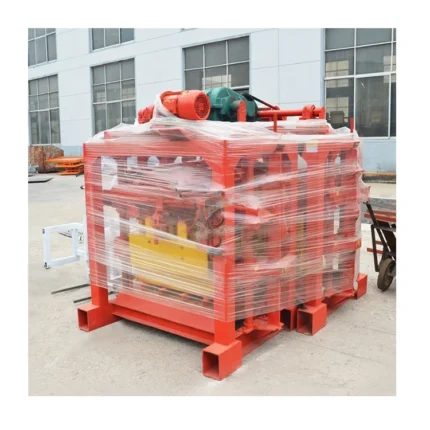
- Machine arrives dismantled for container loading; reassembly on-site with alignment checks on the platform vibration frame
- PLC interface language and display parameters loaded and verified during commissioning before production runs begin
- Operator training covers mould change procedure, PLC fault reading, and daily hydraulic system inspection
- Wear parts list and replacement mould ordering process documented before shipment for short-lead reorders
What to Prepare Before Requesting a Quote
To size the QT4-15A correctly, share your target block formats with dimensions, the daily volume you need per format, and a sample or analysis of your local aggregate including sand type and moisture range. Confirm the voltage and frequency at your site along with the PLC display language your operators will use. If you have existing pallets, mixers, or curing racks, provide their dimensions so the line layout accounts for equipment already in place.
Frequently Asked Questions
Q: How is the molding cycle time verified per block format, and what is the realistic daily output?
A: The 25–30 second cycle is a baseline that shifts with block height, mix stiffness, and pallet format. We run a factory test using your target block mould and a material sample close to your local aggregate, then document the actual cycle time and calculate daily output based on your confirmed shift length. This figure is stated per format, not as a single machine-wide number.
Q: What PLC brand and display language options are available, and can the system be upgraded later?
A: The PLC brand and interface language are confirmed during the quotation stage to match your operators and local service availability. The control architecture supports adding sensors or integrating upstream batching and downstream stacking modules as your plant expands, so the system can grow without a full panel replacement.
Q: How is vibration force and hydraulic pressure matched to my local aggregate?
A: We review your aggregate type, gradation, and typical moisture content before setting the 55 kN vibration force and 16–21 MPa hydraulic pressure parameters. A factory test on representative material confirms block density and edge integrity. If your aggregate source changes seasonally, we document the parameter adjustments your operator can make through the PLC.
Q: What automation components are included by default with the QT4-15A?
A: The QT4-15A ships as a fully automatic press with PLC-controlled pallet feeding, vibration, hydraulic pressing, and demolding. Stacking method and pallet return configuration are specified separately based on your curing area layout and available forklift equipment, so the complete handling loop matches your site conditions rather than a standard package.
Q: What is the mould change procedure and are replacement moulds available quickly?
A: Mould change involves releasing the clamp bolts, lifting the mould cassette off the vibration platform, and seating the new unit — a procedure documented with photos in your operation manual. Replacement moulds and hydraulic wear parts are listed in your delivery documentation, and reorder lead times are confirmed at the time of purchase so spares arrive before the first changeout is due.