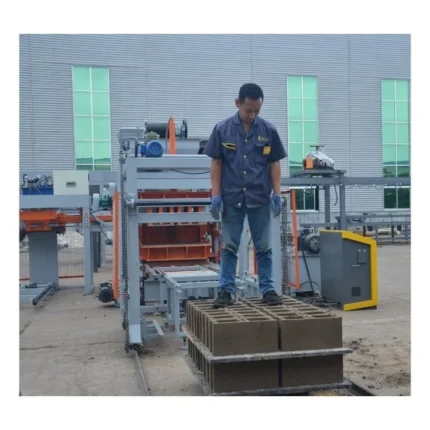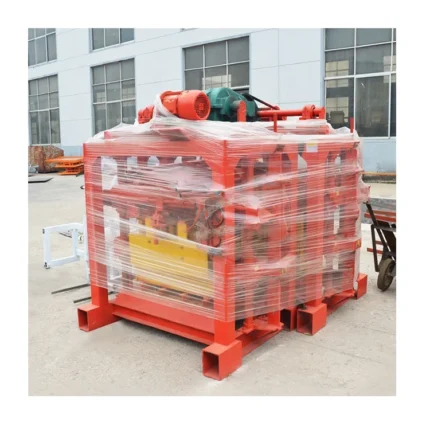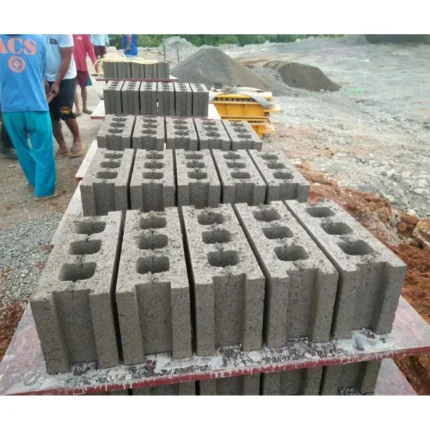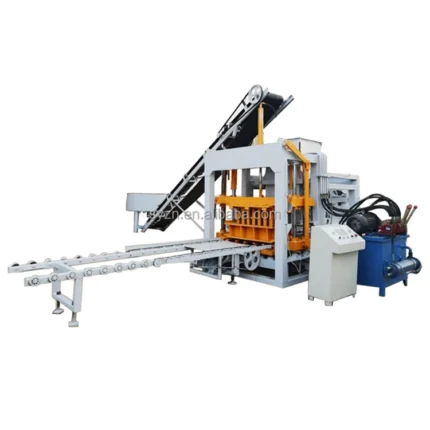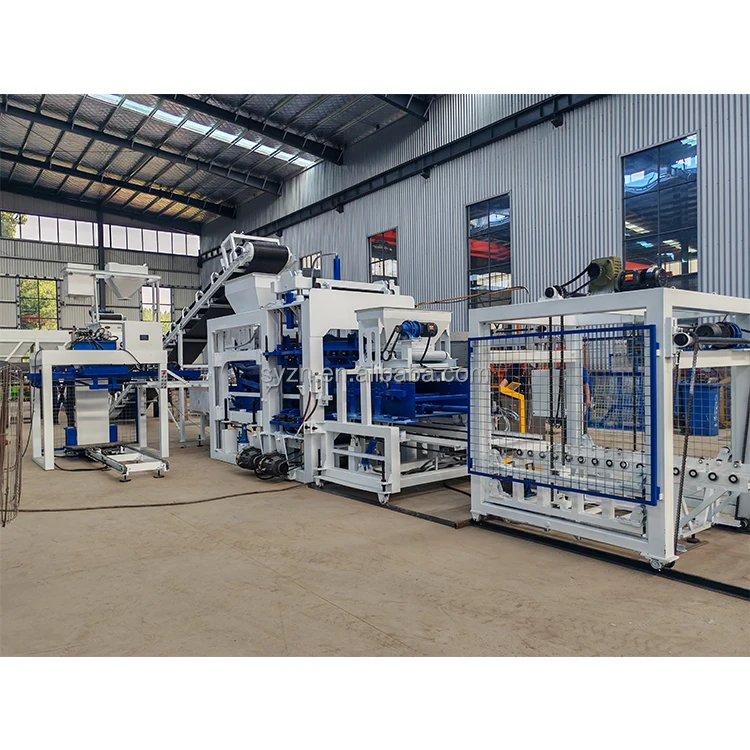
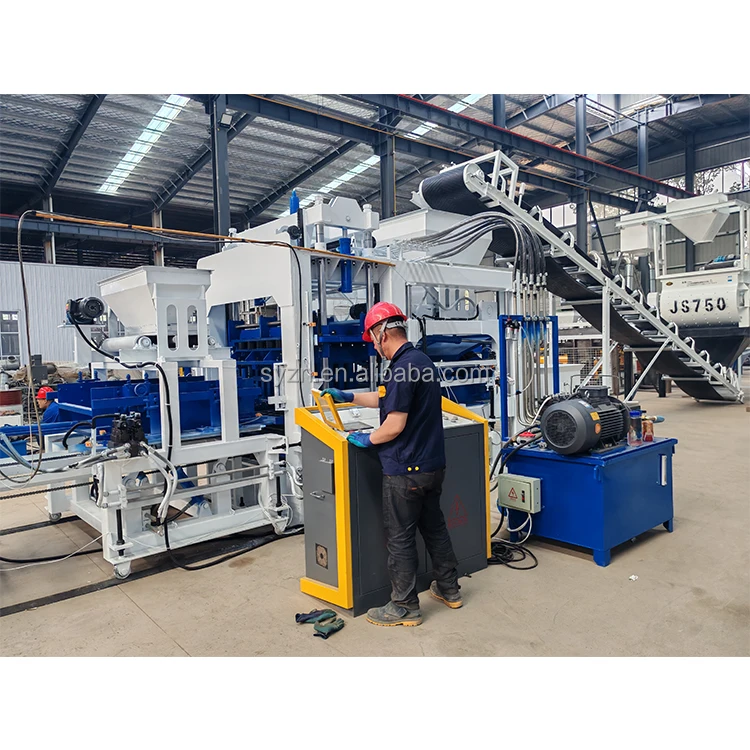
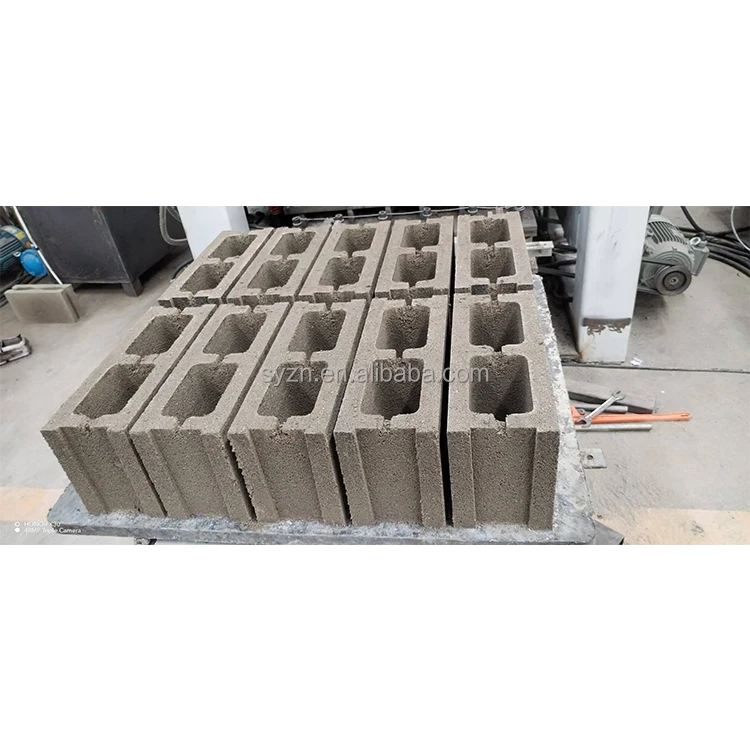
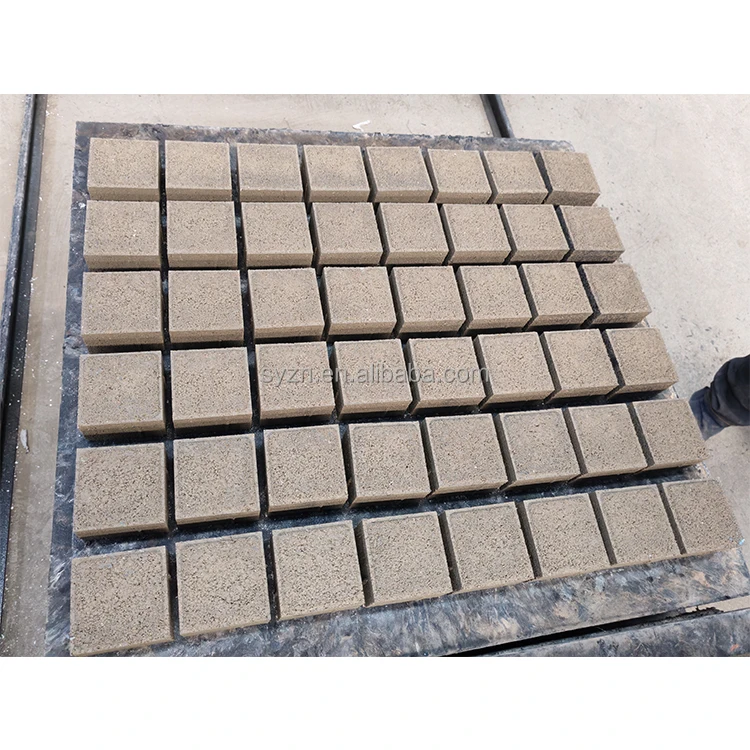
Description
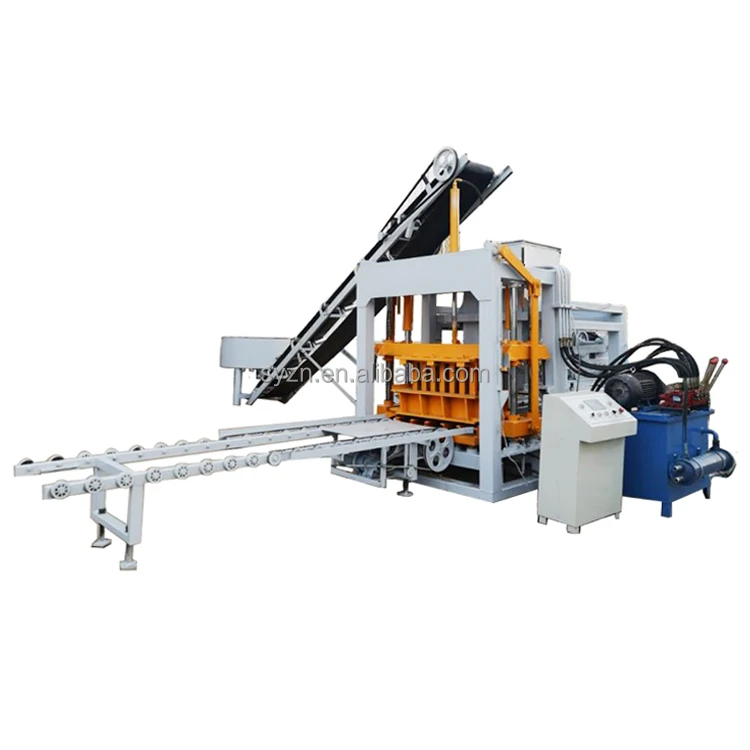
Matched Control Logic — Every PLC parameter on the QT8-15 is verified against your mix design and target format before the control program is finalized, so the machine you receive runs your product from day one.
Technical Specifications
| Parameter | Value |
|---|---|
| Model | QT8-15 |
| Product Type | Hydraulic Block Making Machine |
| Overall Dimensions (L×W×H) | 8300×1860×3000 mm |
| Rated Pressure | 21 MPa |
| Main Vibration Form | Platform Vibration |
| Vibration Frequency | 2800–4500 r/min |
| Vibration Force | 45 kN |
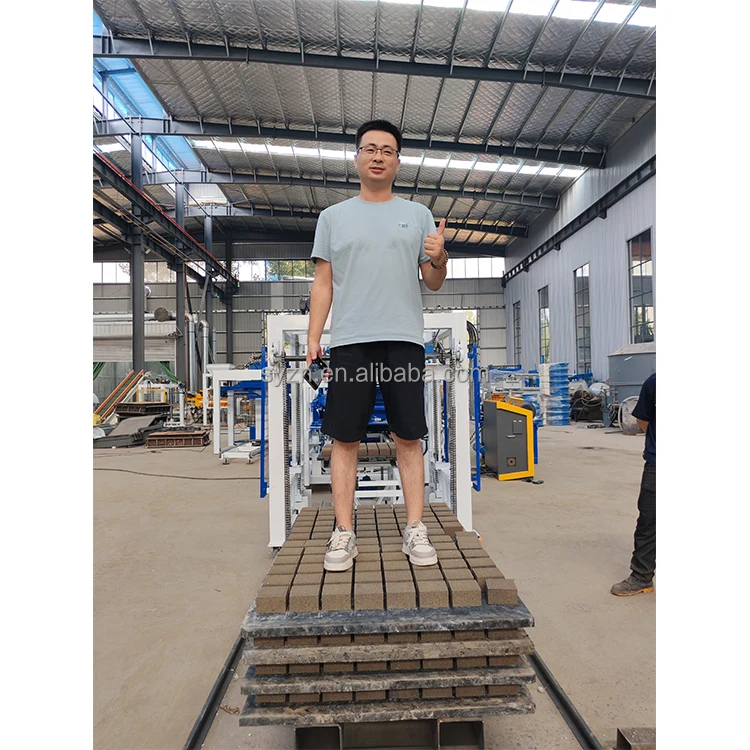
| Pallet Size | 950×900 mm |
| Molding Cycle | 15–20 s (basis not stated in source — confirm block format / material / thickness) |
| Overall Power | 55.5 kW |
| Total Mass | 8 T |
| Demolding Method | Hydraulic |
| Factory Area Required | 300 m² |
| Control System | PLC (programmable logic controller) |
| Warranty | 1 year (whole machine, excluding spare parts) |
| Loading | 1×40HQ container (basic equipment) |
Application Suitability
| Application | Material or Output |
|---|---|
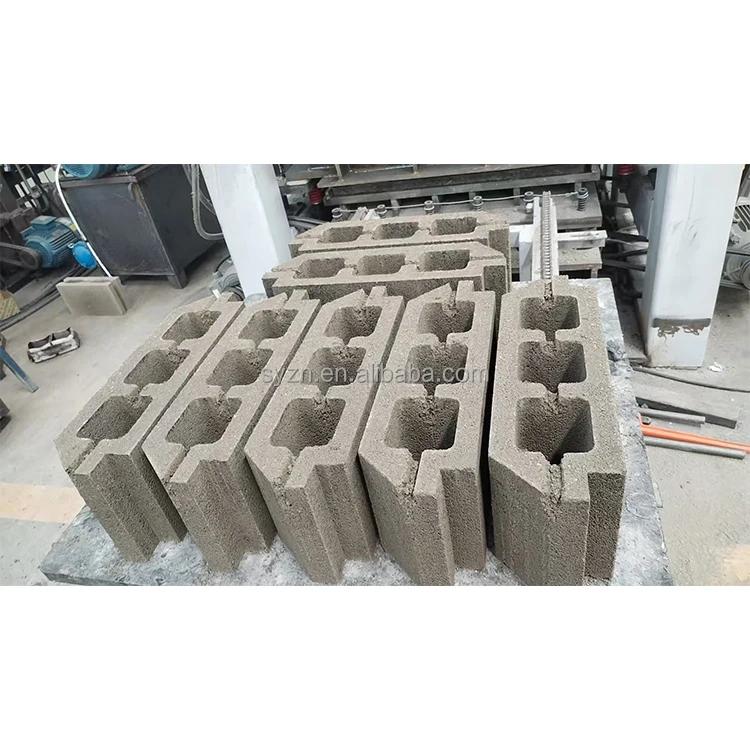
| Hollow block production | Crushed stone, sand, cement, fly ash |
| Solid block manufacturing | Gravel, slag, cement blends |
| Paving block and colored paver lines | Fine aggregate, cement, pigment additives |
| Interlocking brick and kerbstone | Local aggregate with hydraulic densification |
What the PLC Screen Hides Until Commissioning Day
When a block machine arrives on site and the operator cannot read the control language, the entire line sits idle while firmware is rewritten remotely — a delay that has nothing to do with the press itself. The automatic QT8-15 block making machine must have its PLC display language, voltage, and frequency confirmed in writing before production begins.
I have watched lines in West Africa lose an entire week because the default English interface was unusable for French-speaking crews, and the local electrician wired a 380V/50Hz machine into a 440V/60Hz grid without a transformer discussion during the order phase [NEED_CITE: voltage and frequency standards by export market]. The QT8-15 control system is configurable, but only if these points are locked down during the quotation stage rather than discovered at the container door.
Programmable Cycle Repeatability Over Operator Guesswork
The PLC-controlled block making machine removes the variability that comes from manual timing of vibration, pressure, and demolding. Each cycle follows the same sequence: platform vibration ramps to the set frequency, hydraulic pressure reaches 21 MPa, and the mold releases at a programmed point. This consistency is what separates a batch of blocks with uniform density from one where the first pallet differs from the last.
Scaling Automation From Semi-Automatic to Full Line Integration
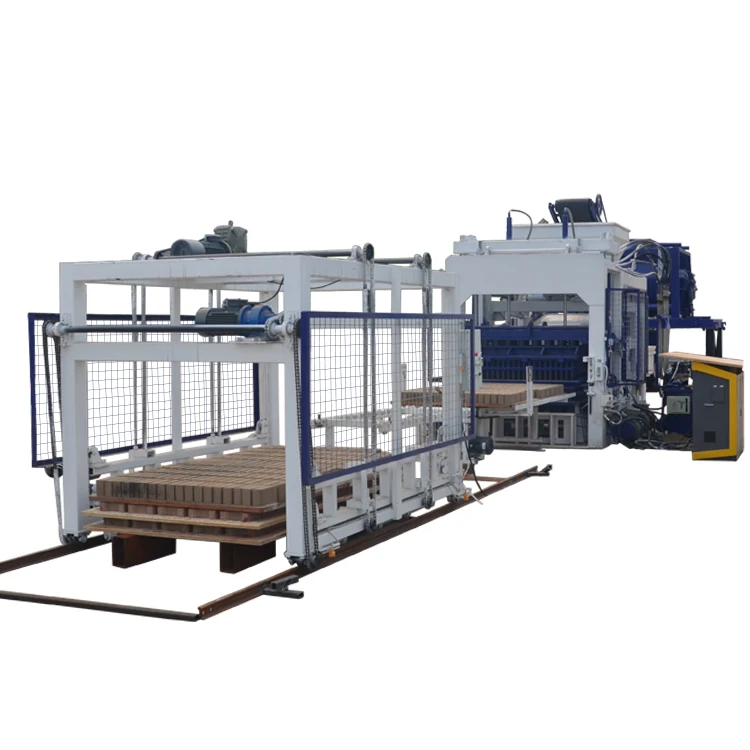
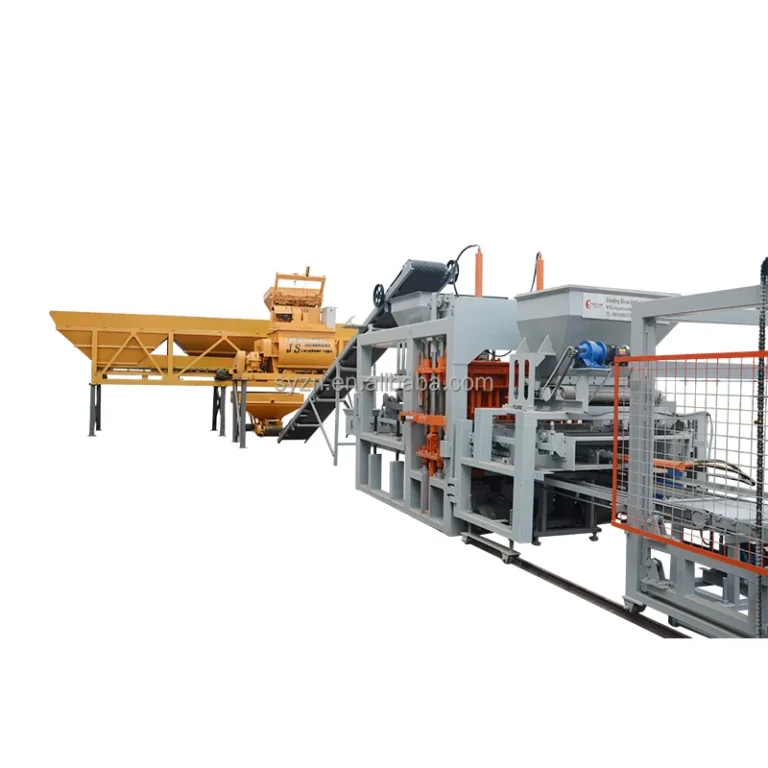
The QT8-15 can be supplied with manual pallet handling for buyers starting with a smaller crew, or integrated with automatic pallet feeding and stacking systems for higher-throughput plants. The control architecture supports this progression — the PLC program expands to manage additional stations as they are added, rather than requiring a full controller replacement. This upgrade path means the initial investment in the press is preserved as the plant grows [NEED_CITE: PLC expansion modules for block line automation].
Reading the Numbers That Actually Shape Your Output
The platform vibration system delivers 45 kN of force across a frequency range of 2800–4500 r/min. In practice, this range allows the operator to tune vibration intensity for different block formats — hollow blocks require a different frequency profile than dense paving blocks. The 21 MPa hydraulic pressure works in combination with this vibration to compact the mix; neither parameter alone determines block density. The 950×900 mm pallet size must match the curing racks and forklift dimensions already in the buyer’s facility, otherwise pallets cannot be transferred from the press to the curing zone without manual rehandling. The 55.5 kW overall power draw requires a dedicated circuit sized for motor starting current, not just running load. The 15–20 s molding cycle figure depends entirely on block format and material — a thick kerbstone will cycle slower than a standard hollow block, and this must be calculated per product before capacity is quoted.
When the Wrong Automation Level Costs More Than the Machine
A buyer who selects a fully automatic stacking system without confirming pallet size against their existing curing racks will find the stacker depositing pallets that the forklift cannot retrieve from the rack — forcing manual restacking every shift [NEED_CITE: pallet handling mismatches in block production]. Similarly, a PLC configured for a mix design the buyer cannot source locally will produce blocks that fail compression testing, because the control parameters were set for a different aggregate density. These are not machine defects; they are specification gaps that surface only after installation.
Why This Configuration Approach Matters
Block machinery as a single focus means the QT8-15 press, mold, pallet, and handling equipment are specified as one matched system rather than assembled from separate suppliers who do not coordinate. Configuration is set against the buyer’s actual mix design and local aggregate, not a catalog default that assumes materials unavailable in the target market. The PLC program is written for the formats the buyer’s market actually sells, with mold changeover sequences programmed in advance. Automation level is selectable at order and expandable later, so a buyer can start semi-automatic and add pallet feeding or stacking without replacing the controller. Installation support includes operator training on the specific PLC interface language confirmed before shipment.
Documentation & Verification
- Line layout and capacity calculation stating which block format the 15–20 s cycle assumes
- PLC program documentation with control logic matching your confirmed automation level
- Hydraulic and electrical schematic showing circuit protection and motor starter ratings
- Voltage, frequency, and PLC display language confirmation sheet signed before production
- Factory test record covering cycle repeatability across multiple block formats
- Wear parts and mold list with part numbers for first replacement order
Installation, Commissioning & Support
- Foundation pad sized for 8300×1860 mm footprint with leveling points per hydraulic schematic
- Dedicated power circuit rated for 55.5 kW running load plus motor starting surge current
- Machine shipped dismantled in one 40HQ container with reassembly on site during commissioning
- PLC parameters loaded and verified against your confirmed block format and mix design
- Operator training conducted in the PLC display language specified in your contract
- Hydraulic and vibration wear parts list provided with part numbers for local stocking
Before You Request a Quote
To size the QT8-15 to your actual production needs, we need your target block formats with dimensions, your daily output requirement per format, and the raw materials available locally including aggregate type and cement grade. Confirm your site voltage and frequency, the language your operators read on a control screen, and whether you already have curing racks and forklifts that the pallet size must match.
Frequently Asked Questions
Q: How is the 15–20 s molding cycle verified per block format, and what capacity calculation should I expect?
A: The cycle time depends on block thickness, material density, and vibration profile. We provide a capacity calculation sheet that states which block format the cycle time assumes, so you can project realistic daily output for each product you plan to run rather than relying on a single generic number.
Q: What PLC control language options are available, and can the interface be set to my operator’s language before shipment?
A: The PLC display language is confirmed during the order phase and programmed before factory testing. You specify the language your operators read, and the interface is set accordingly — this avoids the commissioning delay that occurs when a default language is unusable on site.
Q: How does the automation level on the QT8-15 scale from semi-automatic to full automatic?
A: The PLC control architecture supports adding automatic pallet feeding, stacking, and cubing modules after initial installation. You can start with semi-automatic operation and expand later without replacing the controller, preserving your initial press investment as plant throughput grows.
Q: What voltage and frequency configurations are confirmed before production?
A: Voltage and frequency are documented in writing before production begins, matched to your local grid. The electrical schematic reflects this configuration, and the factory test is conducted at the specified voltage so there are no surprises during on-site commissioning.
Q: How does the mold change system work under PLC control, and what changeover time should I plan?
A: Mold changeover sequences are programmed into the PLC for each confirmed format. The hydraulic demolding system adjusts to the new mold geometry, and the changeover time depends on mold size and operator familiarity — we state expected changeover duration per format in the documentation.