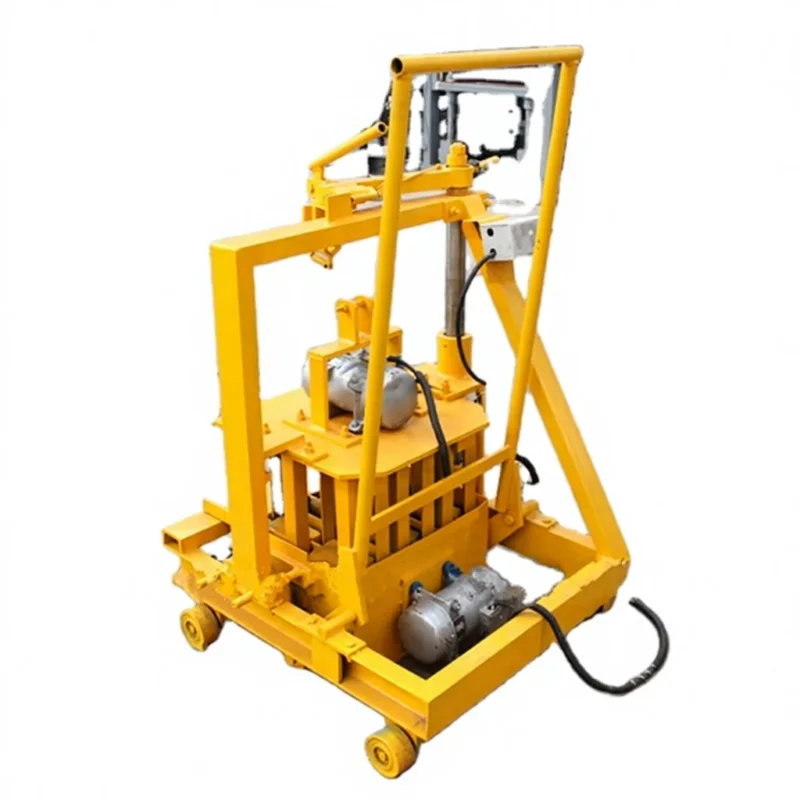


Description
Specification matched to your site conditions — we configure the QMJ2-45 against your actual local aggregate and mix design rather than shipping a catalogue default, so the vibration and pressure settings produce consistent block strength from day one.
Technical Specifications
| Parameter | Value |
|---|---|
| Model | QMJ2-45 |
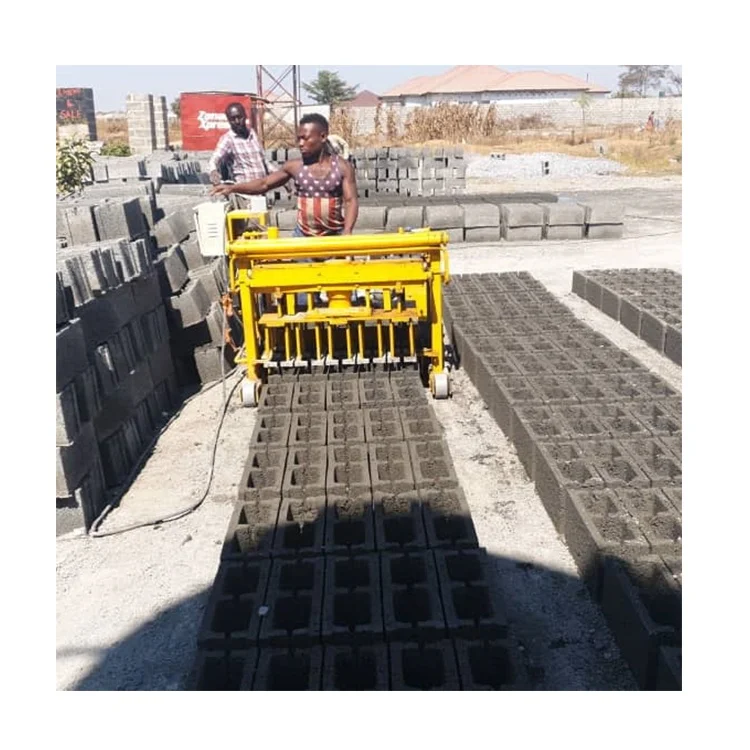
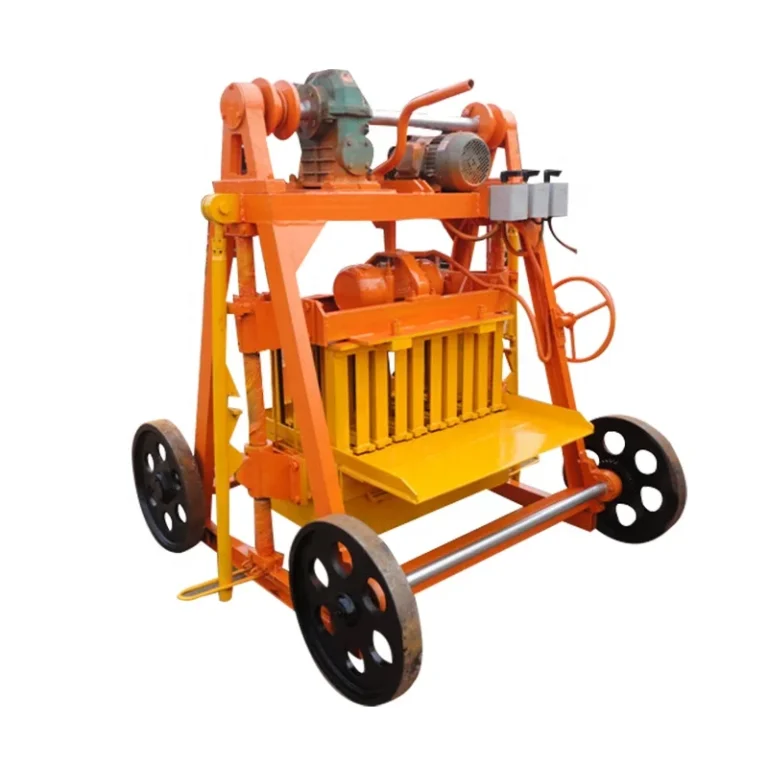
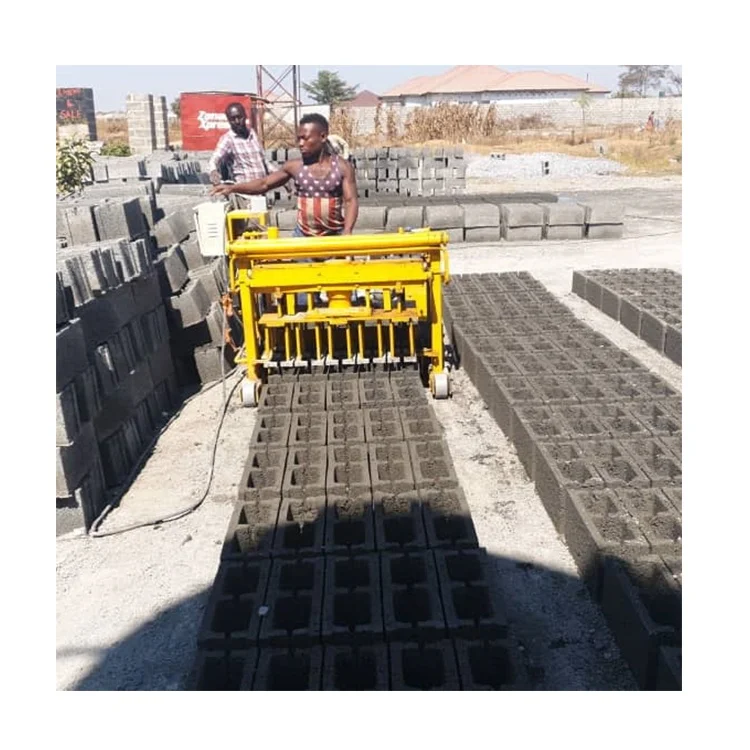
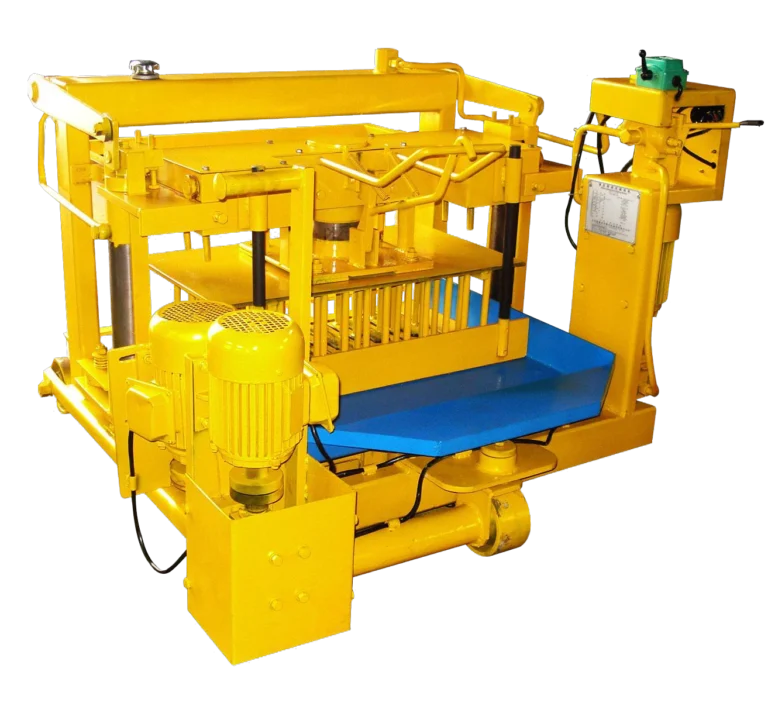
| Product Type | Mobile Egg-Laying Block Making Machine |
| Machine Type | Mobile / egg-laying (no pallets required) |
| Power Source | Electric |
| Operation Mode | Semi-automatic / manual |
| Workers Required | 1 to 3 |
| Mould Change | Interchangeable moulds for different hollow brick formats |
| Cycle Time | 25–30 s (basis not stated in source — confirm block format / material / thickness) |
| Output Capacity | 160 pcs/h for 400×200×200 mm hollow brick (2 pcs/mould); 240 pcs/h for 400×150×200 mm (3 pcs/mould); 320 pcs/h for 400×100×200 mm (4 pcs/mould) |
| Daily Output (8 hr) | 1280 pcs for 400×200×200 mm; 2560 pcs for 400×100×200 mm; 4800 pcs for 400×150×200 mm (source value — verify against manufacturer catalog) |
| Pallet Requirement | None (egg-laying design) |
| Mobility | Free-moving on site, no fixed plant required |
| Voltage & Frequency | Configurable — confirm before order |
| Control System | PLC controlled mobile egg-laying block machine options available |
| Automation Level | Semi-automatic with manual pallet handling; upgrade path available |
| Stacking Method | Manual (no automatic stacking included) |
| Certification | ISO 9001:2000, CE |
Application Suitability
| Application | Material or Output |
|---|---|
| On-site hollow block production for housing projects | Crushed stone, sand, cement and local aggregate mixes |
| Remote or space-constrained construction sites | Low-slump concrete without pallet infrastructure |
| First block plant for entrepreneurs | Standard hollow brick formats with minimal fixed investment |
| Supplementary mobile capacity for existing producers | Project-specific formats produced directly at the job site |
Why "Output per Hour" Means Nothing Without the Block Format Attached
Every capacity figure for the automatic QMJ2-45 mobile block machine is tied to a specific hollow brick dimension so you can calculate real daily throughput before committing.
Most quotations for mobile block machines quote a single cycles-per-hour number without stating which block format or wall thickness that figure assumes. The result is predictable: the machine arrives, the operator runs the format the local market actually buys, and daily output lands well below the promised figure. With the QMJ2-45 we state capacity per format — 400×200×200 mm, 400×150×200 mm, and 400×100×200 mm — so there is no gap between the proposal and the production floor [NEED_CITE: capacity calculation methods for concrete block machines].
Control Logic That Removes Guesswork from Every Cycle
The PLC controlled mobile egg-laying block machine configuration places the cycle timing, vibration duration and pressure sequence under programmable control rather than leaving them to operator judgment. Once the parameters are set for a given mix and block format, the system repeats them identically across every mould drop, which is what keeps block density consistent from the first piece of the shift to the last.
Scaling Automation Without Replacing the Press
Starting with semi-automatic operation on the QMJ2-45 does not lock the buyer into manual labour permanently. The control architecture supports adding automatic batching accuracy, pallet-free stacking assists and remote diagnostics as production volume grows, so the same press can serve a small start-up phase and later handle a higher-throughput operation without a full machine swap [NEED_CITE: PLC upgrade paths for mobile block equipment].
Reading the Specs That Actually Shape Block Quality
Vibration force and hydraulic pressure must be matched to the buyer’s specific mix design; too little vibration leaves voids in a stiff mix, while excessive force pushes fines out of a wetter blend and weakens the block wall. The QMJ2-45’s interchangeable mould system means cycle time shifts depending on cavity count — a four-cavity 100 mm mould completes faster per piece than a two-cavity 200 mm mould, which is why capacity is always stated per format. Voltage and frequency must be confirmed in writing before production, because a motor wound for the wrong supply will overheat within the first week. The egg-laying design removes pallet cost and pallet-handling labour entirely, but it also means the curing area must be flat, level ground prepared in advance [NEED_CITE: ground preparation standards for egg-laying block machines]. Mould change time on the QMJ2-45 depends on the format set supplied; a buyer producing two formats daily should confirm the changeover procedure against the shift schedule before ordering.
The Hidden Cost of Skipping the Configuration Step
When a mobile block machine is ordered on catalogue defaults, the most common failure is not mechanical — it is a mismatch between the vibration setting and the local aggregate the buyer actually sources. Blocks leave the mould looking acceptable but crack under their own weight when stacked for curing. In my experience, a machine sent to a laterite-rich site without adjusting the pressure curve produced an entire batch that crumbled on handling, because the red clay absorbed water differently from the standard sand mix. That kind of loss is entirely avoidable when the mix design and vibration parameters are matched before the machine ships [NEED_CITE: aggregate variability effects on concrete block strength].
What You Get When the Line Is Specified as One System
Block machinery is our single focus, so the QMJ2-45, its moulds and the supporting handling steps are specified together rather than assembled from separate suppliers. Configuration is set against your actual mix design and target block format, not a catalogue default. Mould design covers the formats your market sells, including custom drawings where needed. Automation level is selectable — you can start semi-automatic and add PLC-controlled batching and stacking later. Installation support includes on-site commissioning and operator training so the first production run is not a learning exercise.
Documentation & Verification
- Line layout stating which hollow brick format each output figure assumes
- Machine specification sheet with vibration and pressure matched to your mix
- Mould drawing and format list covering every cavity supplied
- Voltage, frequency and PLC display language confirmed in writing
- Factory test record on your aggregate sample before dispatch
- Wear parts and mould availability list for the first replacement cycle
Installation, Commissioning & Support
- Flat, level curing ground prepared to match the QMJ2-45 egg-laying travel path
- Electrical supply confirmed for the ordered voltage and frequency before wiring
- Machine delivered with moulds fitted and test-run before container loading
- PLC parameters set to your confirmed mix during on-site commissioning
- Operator training covers cycle timing, mould change and daily maintenance routines
- Wear parts list supplied with reorder intervals for high-friction mould surfaces
What We Need to Quote the Right Configuration
Send us the hollow brick formats your market demands, your daily output target per format, and a sample description of the local aggregate you plan to use. We also need your site voltage and frequency, the preferred PLC display language, and the dimensions of the curing area you have available so the egg-laying travel path can be planned before the machine arrives.
Frequently Asked Questions
Q: How is output capacity verified and which block format does each figure assume?
A: Every capacity number we quote for the QMJ2-45 is tied to a specific hollow brick dimension — 400×200×200 mm, 400×150×200 mm or 400×100×200 mm — and the corresponding cavity count. The capacity calculation document supplied with your proposal states the assumed format so you can confirm daily throughput before the order is placed.
Q: What voltage, frequency and PLC language options are confirmed before shipment?
A: We confirm your local supply voltage, frequency and the required PLC display language in writing before production begins. This prevents commissioning delays caused by motor rewinding or control panel relabelling after the machine has already arrived on site.
Q: How does automation scale from this semi-automatic base?
A: The PLC controlled mobile egg-laying block machine architecture supports adding automatic batching, improved stacking assists and remote diagnostics as your output grows. You can begin with semi-automatic operation and layer in automation modules without replacing the QMJ2-45 press itself.
Q: How is the machine configured to match my local aggregate and mix design?
A: We request a sample description or lab analysis of your local aggregate and cement type, then set vibration force and pressure parameters to that specific blend. A factory test run on the matched mix is recorded and shared before dispatch.
Q: What is realistic mould change time and does it preserve daily format flexibility?
A: Mould change on the QMJ2-45 involves unbolting and swapping the mould box, a procedure we document with the format list. We recommend discussing your daily format rotation during the proposal stage so the changeover fits within your shift schedule without eroding output.