Description
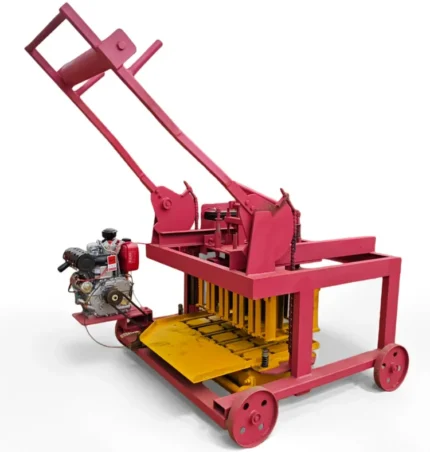
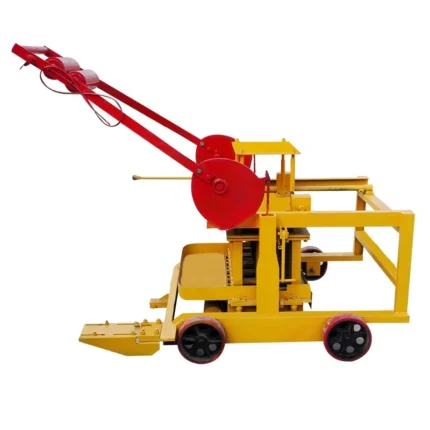
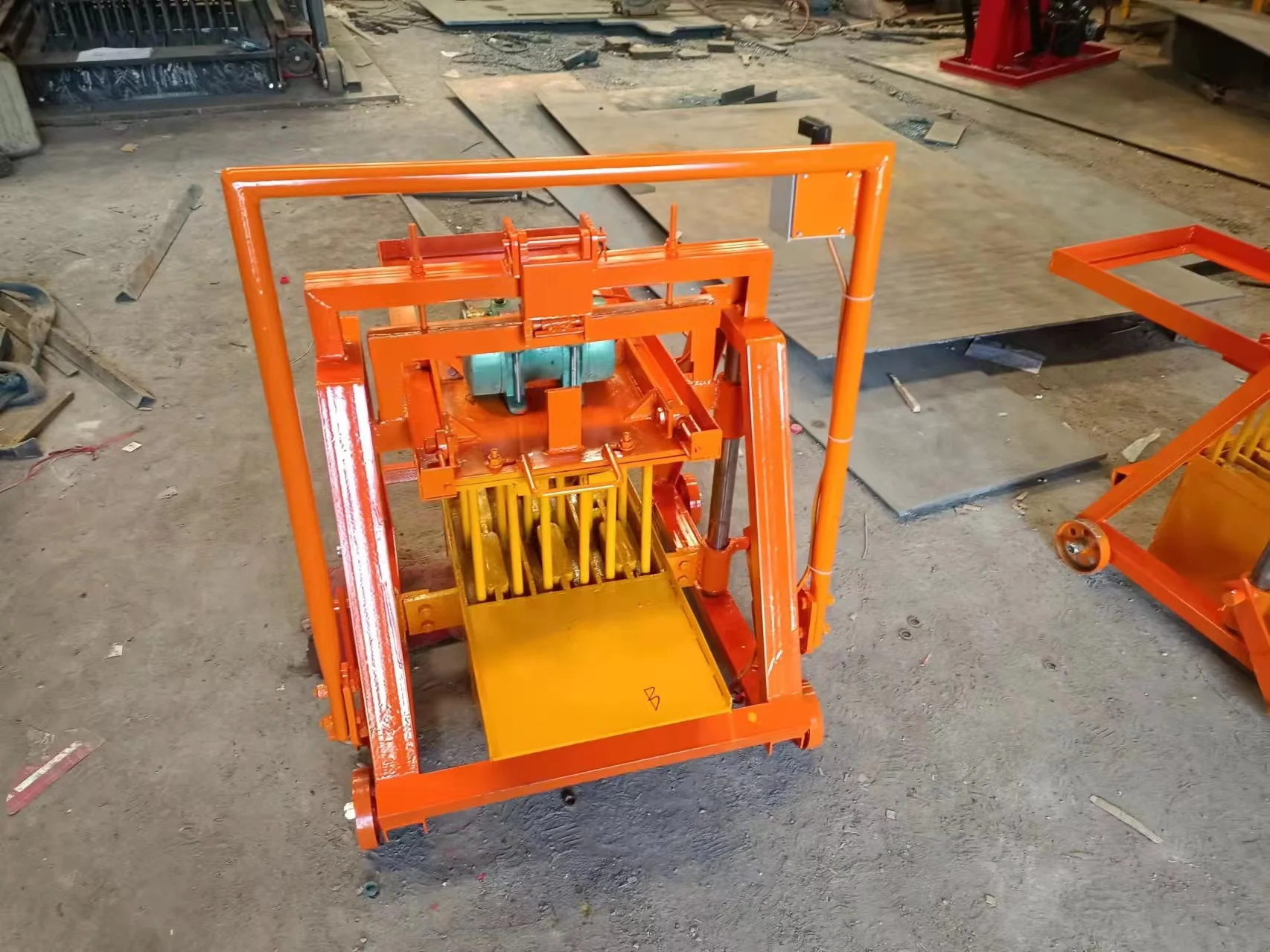
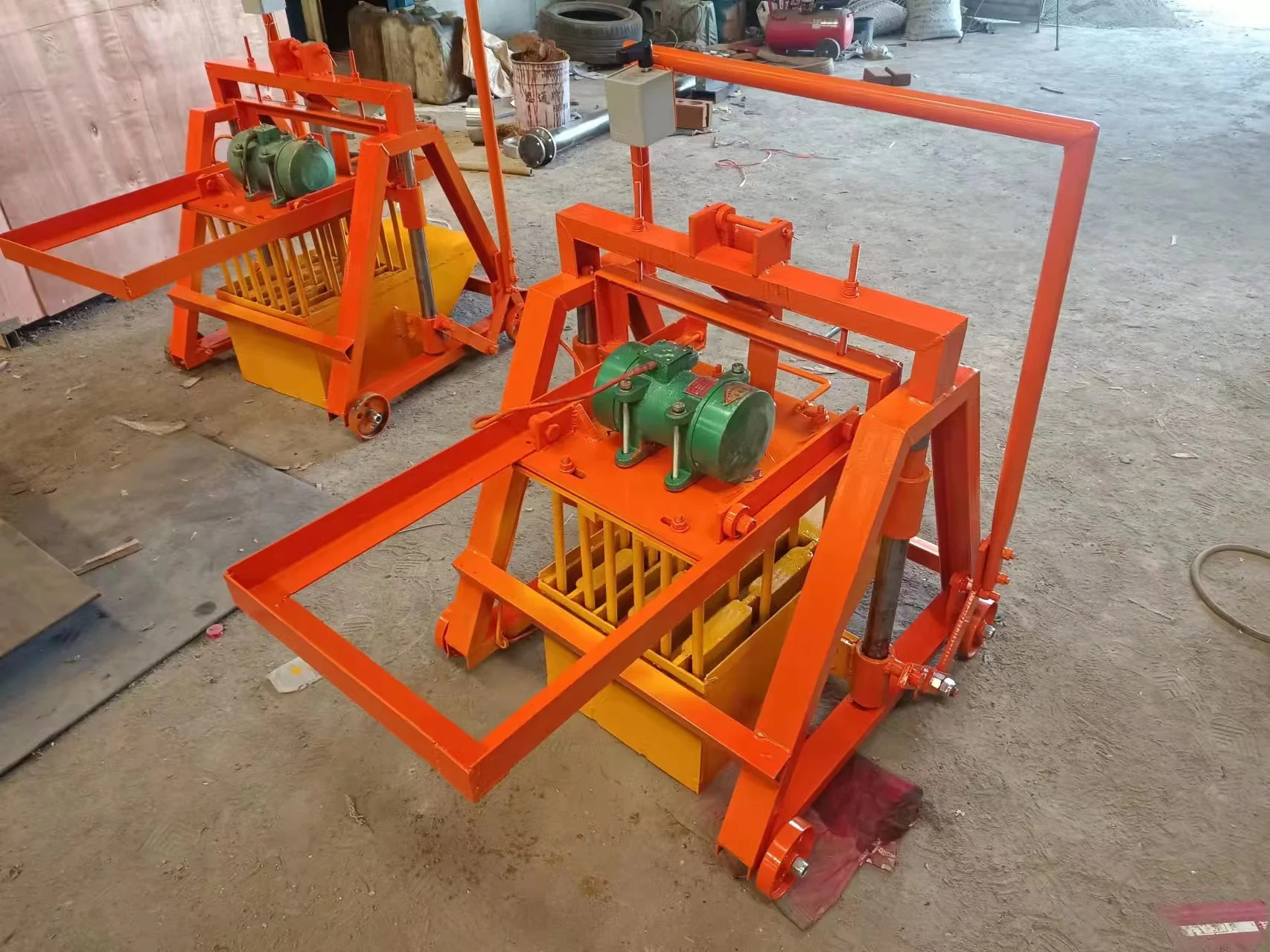
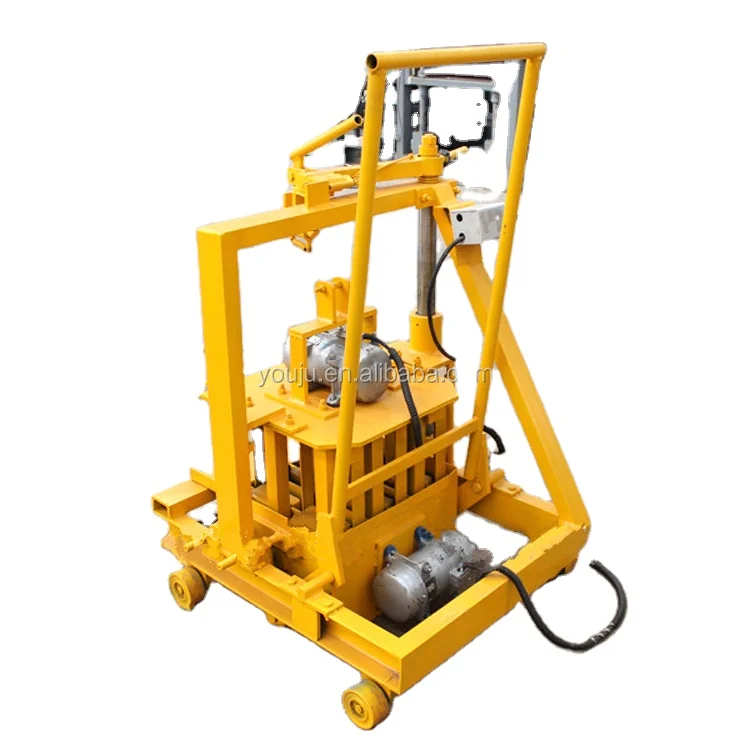
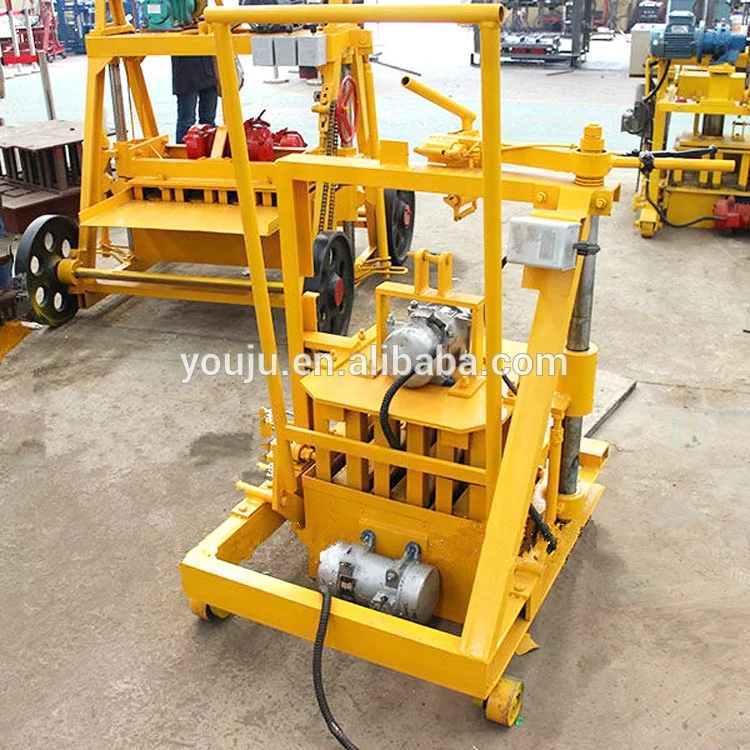
Configuration set against actual mix design — the QMJ2-45 mobile block machine is specified around your local aggregate, target block format, and planned automation path rather than a generic catalogue entry.
Technical Specifications
| Parameter | Value |
|---|---|
| Model | QMJ2-45 |
| Product Type | Mobile Block Making Machine |
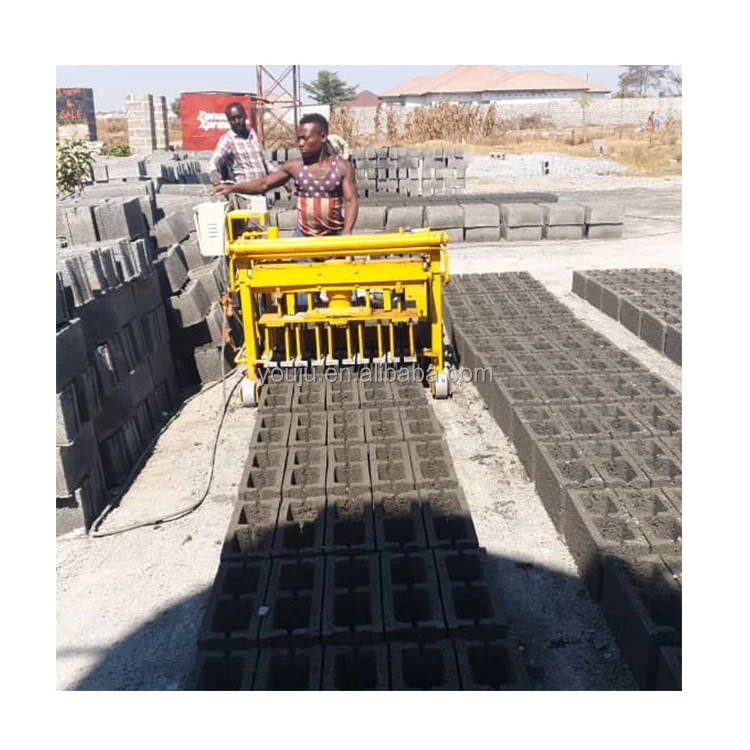
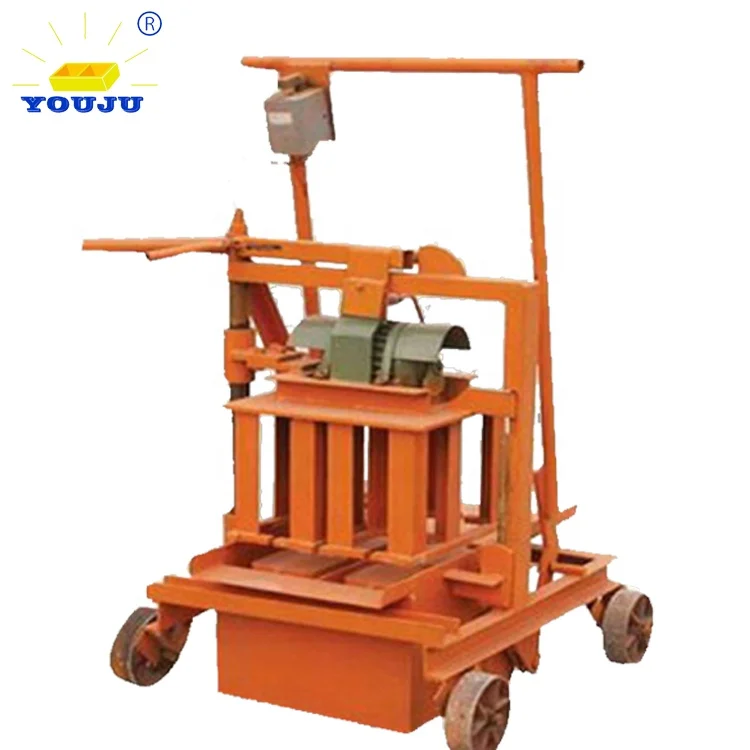
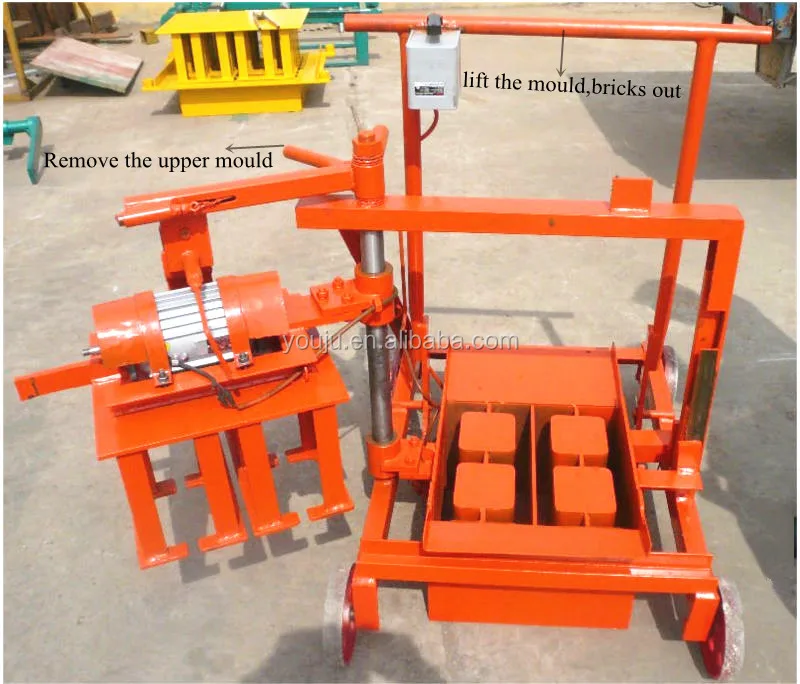
| Machine Type | Hand-pushed mobile egg-laying block machine |
| Automation Level | Manual operation, motorized vibration |
| Pallet Requirement | No pallets required (egg-laying / on-ground production) |
| Mould Format | Interchangeable moulds for hollow brick, paving block, interlock block |
| Cycle Time | 25–30s per mould |
| Output (400×200×200mm hollow block) | 2 pcs/mould, 160 pcs/h, 1280 pcs/8hr |
| Output (400×100×200mm hollow block) | 4 pcs/mould, 320 pcs/h, 2560 pcs/8hr |
| Labour Requirement | 1 to 3 workers |
| Control System | Manual push-button / motorized vibration (no PLC) |
| Mould Heat Treatment | Carburization technology |
| Mobility | Hand-pushed, free-moving on flat ground |
| Certification | ISO9001:2000, CE |
| Voltage & Frequency | Configurable — confirm before ordering |
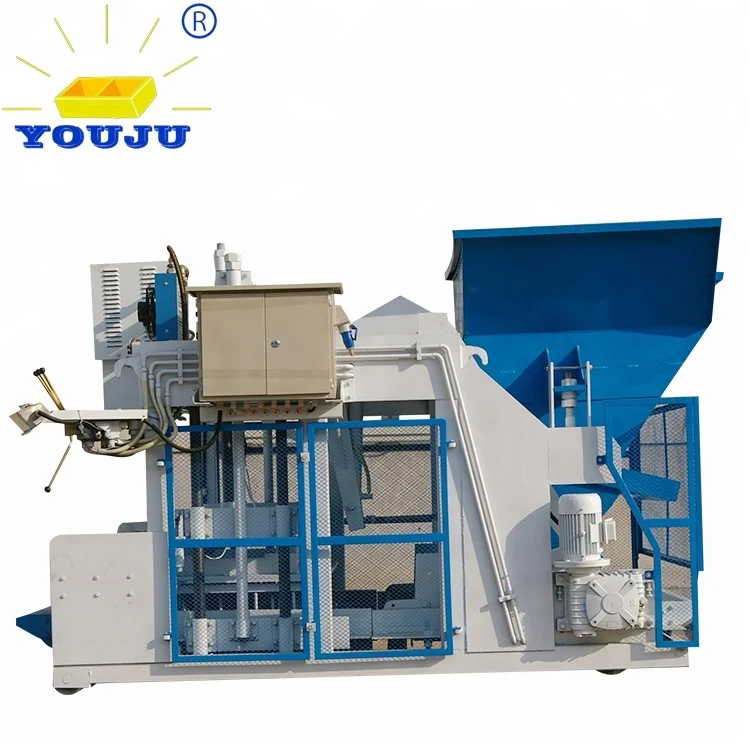
| PLC Upgrade Path | Available as future automation addition |
Application Suitability
| Application | Material or Output |
|---|---|
| Small-scale on-site hollow block production | Crushed stone, sand, cement mixes for construction contractors |
| Paving block and interlock block production | Local aggregate and cement for building material suppliers |
| Low-investment entry-level block plant | Standard concrete mixes for entrepreneurs starting production |
| Mobile production at housing project sites | On-ground egg-laying without a fixed factory footprint |
What "Cycles per Hour" Leaves Out About Mobile Block Output
Realistic daily capacity depends entirely on which block format you run and how your crew manages mould changes.
Sellers often quote a single cycles-per-hour figure for the QMJ2-45 without stating which hollow block size that number assumes. A 400×200×200mm block yields two pieces per mould while a 400×100×200mm block yields four — so the same cycle time produces very different daily totals. When buyers discover the gap between quoted capacity and actual output, it is usually because nobody matched the machine’s cycle to their specific product mix before shipment [NEED_CITE: capacity calculation standards for concrete block machinery]. This is where an automatic mobile block making machine PLC upgrade becomes relevant: consistent cycle timing removes operator variability from the equation.
From Manual Push-Button to Intelligent Cycle Control
The QMJ2-45 ships with manual push-button vibration control, meaning the operator decides when each cycle starts and stops. At this stage, block density varies with the operator’s timing judgment and fatigue level across a shift. Introducing an automatic mobile block making machine PLC upgrade replaces that human judgment with a fixed vibration duration and pressure sequence, so every block leaving the mould meets the same density target. The operator’s role shifts from timing cycles to feeding material and guiding the machine across the production floor.
Where Automation Removes Variables from the Operator
On a hand-pushed egg-laying machine, three variables sit entirely in the operator’s hands: vibration duration, forward movement speed, and mould filling consistency. Each one affects block strength and dimensional tolerance. A PLC-controlled configuration locks vibration time to a preset value matched to your mix design, so batch-to-batch consistency no longer depends on who is running the machine that day [NEED_CITE: PLC control impact on concrete block density consistency]. For buyers planning to scale from the QMJ2-45 into a semi-automatic line, this upgrade path means the control logic you learn at the mobile stage carries forward into larger equipment.
How Carburized Moulds and Cycle Time Shape Daily Output
The 25–30 second cycle time per mould sets the ceiling for what the QMJ2-45 can produce, but actual throughput depends on how quickly your crew refills the mould and repositions the machine. Carburization heat treatment on the moulds extends service life before the first replacement, which matters because worn moulds produce blocks with rounded edges and inconsistent dimensions. The no-pallet egg-laying design eliminates pallet investment entirely, but it also means your curing area must be flat, level ground that can bear the weight of wet blocks without settling. If your site soil is soft, the blocks will crack during curing regardless of how well the machine performs.
The Hidden Cost of Skipping Voltage and Language Confirmation
Shipping a block machine without confirming the destination voltage and frequency is one of the most common causes of delayed commissioning. I have seen machines arrive at sites where the local supply runs on a different frequency than the motor was wound for, causing the vibration force to drop and block density to fall below structural standards [NEED_CITE: voltage and frequency standards by export market]. On machines with PLC displays, an English-only interface in a non-English-speaking region means the operator cannot read error codes or adjust parameters without a translator present. These are not engineering failures — they are communication failures that a checklist before shipment would prevent entirely.
Why This Machine Fits a Defined Upgrade Path
The QMJ2-45 is built as an entry point, not a final destination. Its configuration is set against your actual mix design and local aggregate rather than pulled from a default catalogue, so the blocks it produces match your market’s strength requirements from the first day. Mould design covers the formats your buyers actually purchase, with custom drawings available when standard formats do not match. The automation level is selectable — you can start with manual push-button operation and add PLC control, automatic pallet feeding, or stacking when volume justifies it. Installation support includes operator training that covers the specific control language and voltage confirmed before dispatch. Documentation covers the full line layout with capacity calculated per block format, not a single misleading number.
Documentation & Verification
- Line layout with capacity stated per block format and assumed mix design
- Machine specification sheet confirming voltage, frequency, and control language
- Mould drawing and format list matching your target market products
- Factory test record on your specified block size before dispatch
- Hydraulic and electrical schematic for on-site troubleshooting
- Wear parts and mould availability list for first replacement planning
Installation, Commissioning & Support
- Flat, level ground required for egg-laying production without pallet support
- Voltage and frequency confirmed before motor winding to match local supply
- Manual push-button controls trained on-site with operator in local language
- Mould swap procedure covered during commissioning with your format set
- Carburized mould wear schedule provided so first replacement is planned
- Lubrication and vibration motor inspection intervals documented per shift count
What to Include in Your Inquiry
Tell us which block formats your market actually sells — hollow, paving, interlock — along with the daily volume you need per format. Share your local aggregate type and cement source so the mix design can be matched before configuration. Confirm your site voltage, frequency, and the language your operators read so the control panel arrives ready to run.
Frequently Asked Questions
Q: How is realistic daily output calculated per block format on this mobile machine?
A: Output is calculated by multiplying pieces per mould by completed cycles per hour, then by working hours. For the QMJ2-45, a 400×200×200mm hollow block yields two pieces per mould at a 25–30 second cycle, while a 400×100×200mm block yields four. The calculation must state the exact block format assumed, not a generic cycles-per-hour figure.
Q: What does upgrading from manual to PLC-controlled operation remove from the operator?
A: An automatic mobile block making machine PLC upgrade removes vibration timing judgment from the operator. Instead of deciding when to start and stop vibration by feel, the PLC holds a fixed duration matched to your mix. This means block density stays consistent across shifts regardless of operator experience or fatigue level.
Q: Which voltage and frequency configurations are available for export markets?
A: The QMJ2-45 motor and control system are configured to your site’s voltage and frequency before production. This must be confirmed during the inquiry stage because motor winding cannot be changed after assembly. Buyers should provide their local supply specification, not assume a default.
Q: What is the path from this mobile machine to a semi-automatic line?
A: The QMJ2-45 serves as a low-investment starting point. When daily volume and labour cost justify it, buyers can move to a semi-automatic line with pallet feeding and fixed-station production. The PLC logic and mould formats from the mobile stage carry forward, so operators are already familiar with the control environment.
Q: How does mould change time affect daily production flexibility?
A: On the manual QMJ2-45, mould changes are performed by hand and take the operator away from production for a period that depends on experience and tool availability. When upgraded with a quick-change system on larger machines, format switching drops to a fraction of the manual time, making multi-format daily runs practical.