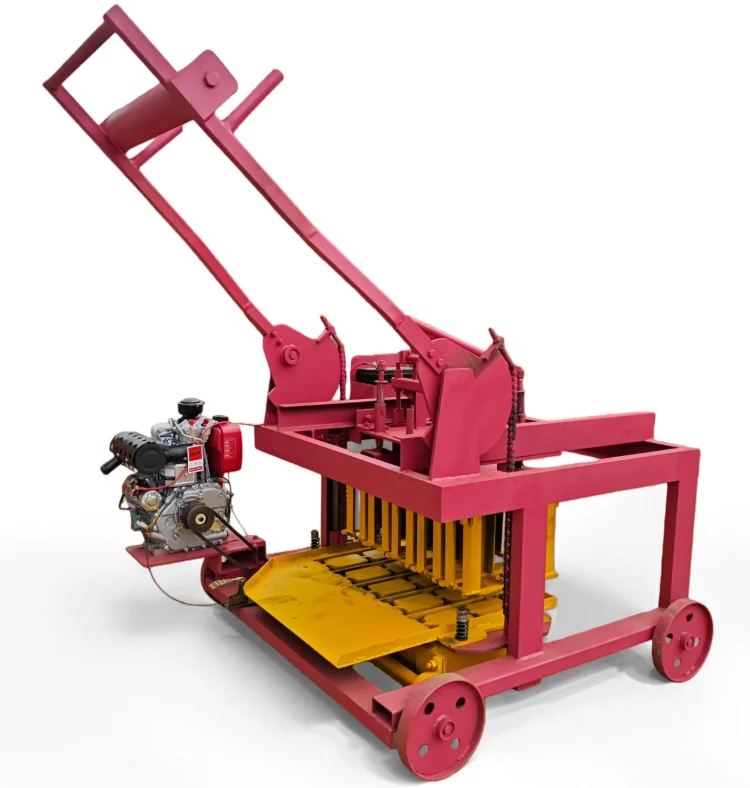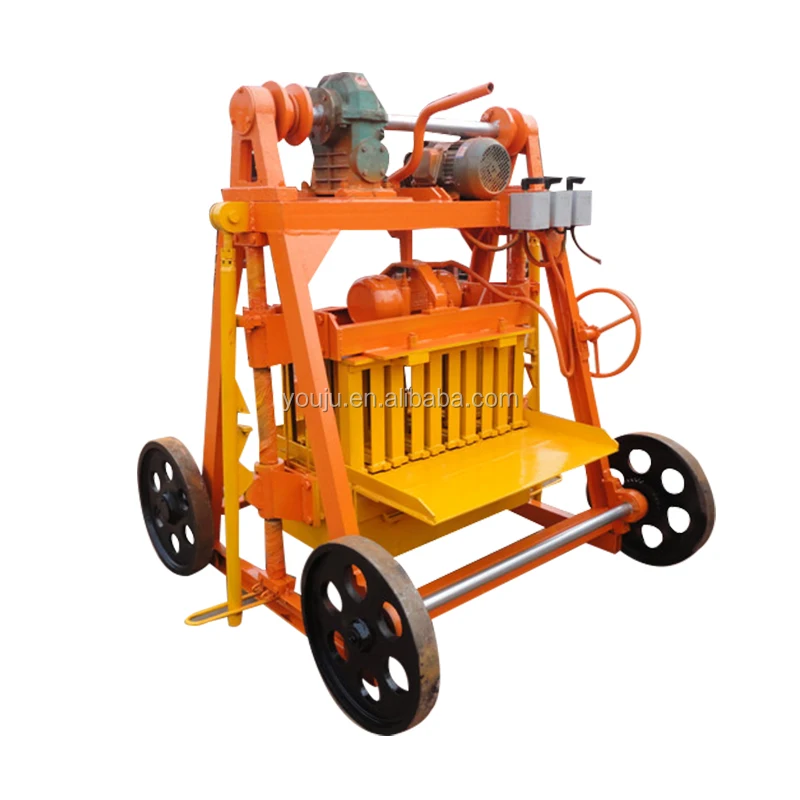
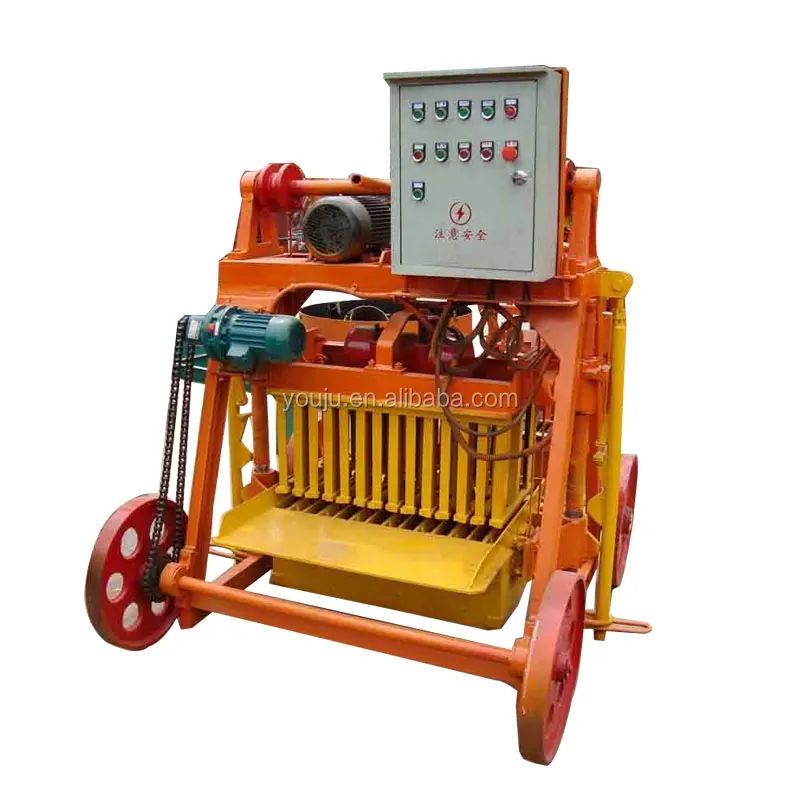
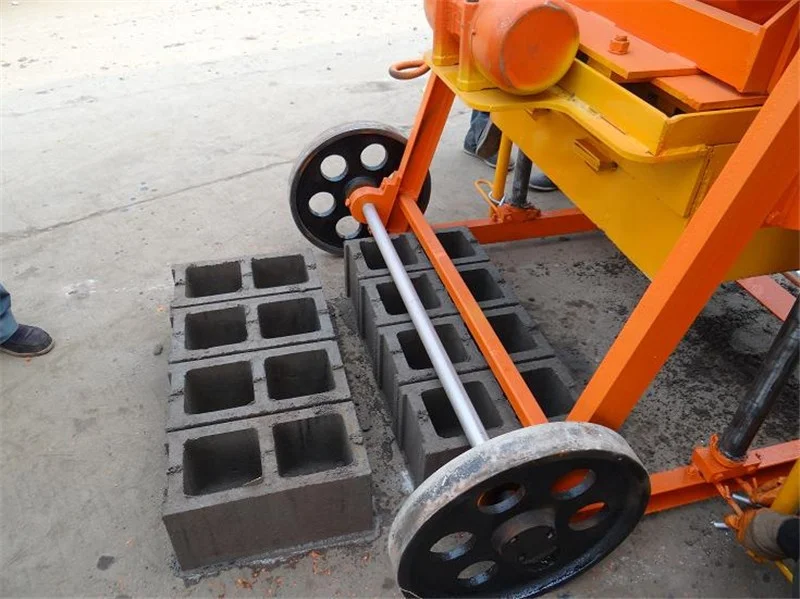
Description
Configuration matched to your mix — Every QMJ4-45 egg laying block machine is set against the buyer’s actual local aggregate and target block format before dispatch, not shipped on catalogue defaults.
Technical Specifications
| Parameter | Value |
|---|---|
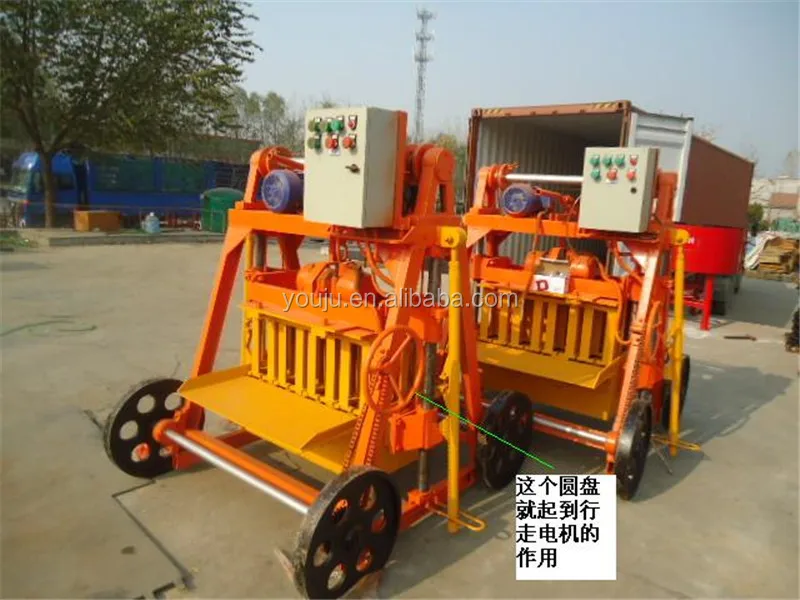
| Model | QMJ4-45 |
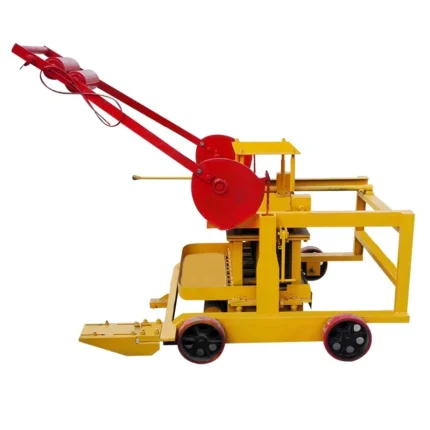
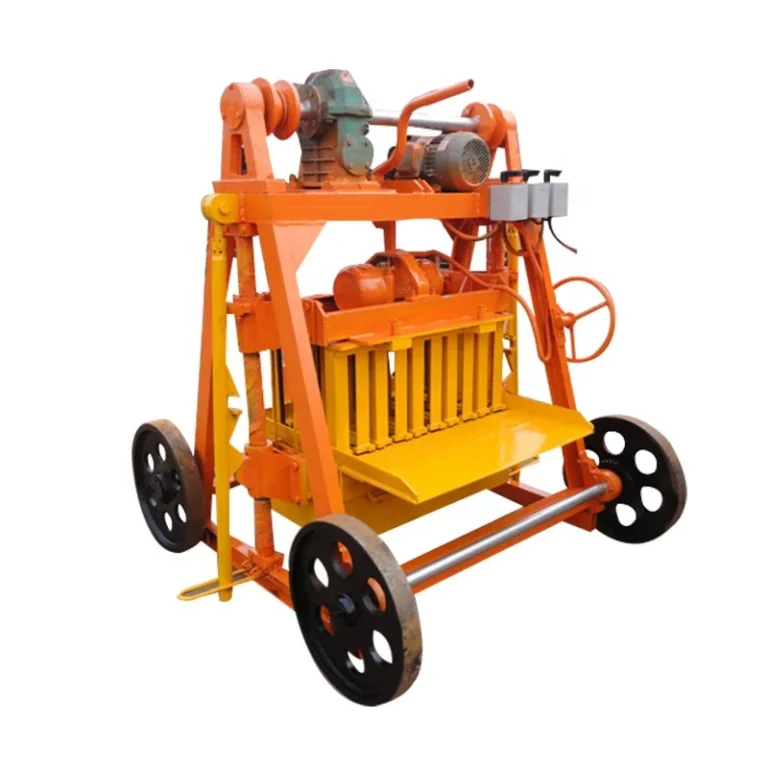
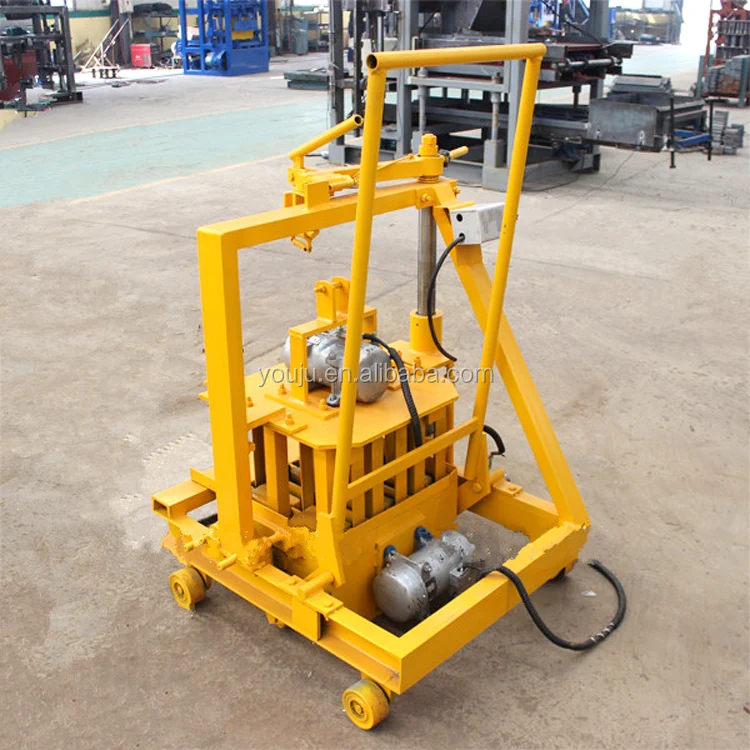
| Product Type | Mobile Egg Laying Block Making Machine |
| Molding Capacity | 4 pcs/mold (basis not stated in source — confirm block format) |
| Vibration Frequency | 2400 r/m |
| Output Capacity | 2600–4000 pcs/day (basis not stated in source — confirm block format) |
| Forming Method | Mold vibration |
| Demold Method | Manual |
| Turning Method | Manual |
| Total Power | 6 kW |
| Power Source | Diesel/Petrol engine |
| Molding Cycle | 45 s |
| Automation Level | Manual / egg laying |
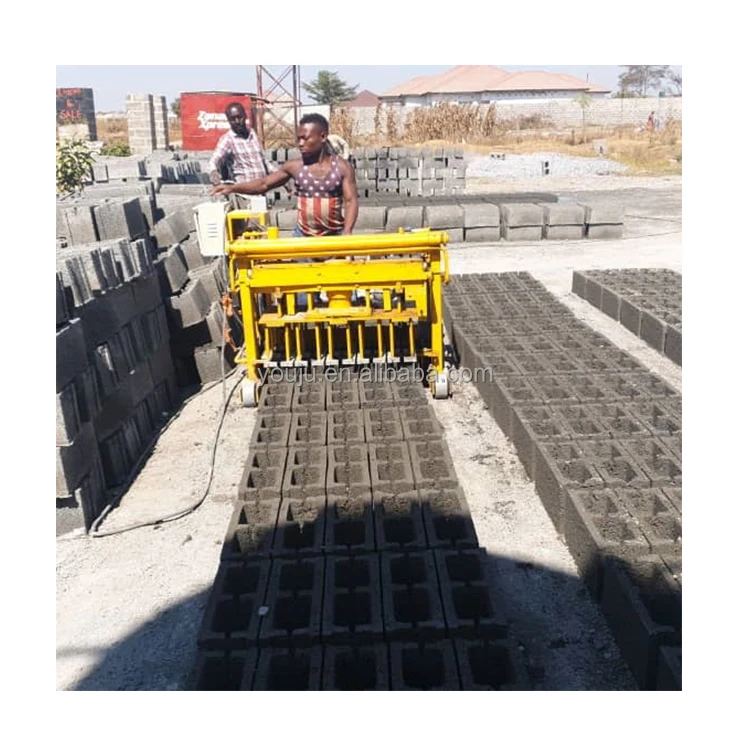
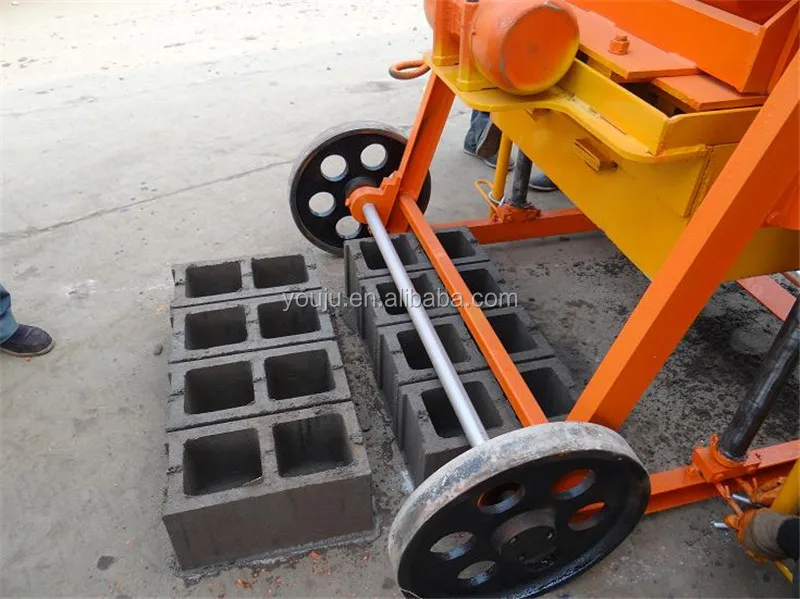
| Pallet Requirement | None (blocks produced directly on ground) |
| Voltage & Frequency | Not applicable (engine driven) |
| Warranty | One year |
Application Suitability
| Application | Material or Output |
|---|---|
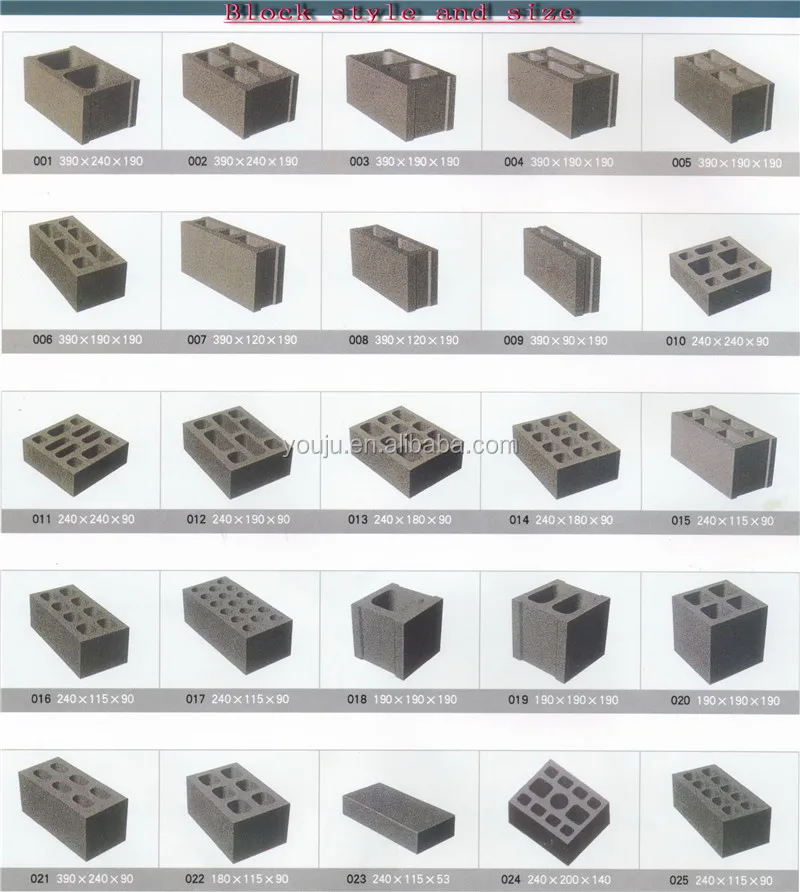
| Housing project site production | Hollow blocks in 400×200×200 mm, 400×150×200 mm, 400×120×200 mm using local crushed stone and cement |
| Entrepreneur first plant | Low-investment manual block production with room to add automation later |
| Supplementary on-site output | Mobile hollow block runs for existing plants needing extra volume at remote locations |
Why Cycle Time Tells the Truth About Daily Volume
A 45-second molding cycle only holds if your raw material flows and consolidates exactly as the machine was tuned.
When I first started setting up mobile units around the Pearl River Delta, buyers would quote the sample output and assume that number would follow the machine to their site. The problem surfaces quickly when local aggregate density and moisture content differ from the test material. An automatic mobile block machine is only as automatic as the consistency of what you feed it. Vibration frequency at 2400 r/m must match the particle size of your sand or crushed stone, otherwise each cycle extends as the operator compensates, and the daily count drops. [NEED_CITE: effect of aggregate grading on vibration compaction time]
Engine-Driven Independence for Remote Sites
The QMJ4-45 runs on a diesel or petrol engine, which removes the need for a three-phase grid connection at the production site. This matters for housing contractors working on plots where electrical infrastructure has not yet been installed. An egg laying block machine with engine drive can start producing hollow blocks the same week the foundation is poured. The trade-off is that no PLC or electrical control panel is present, so all automation decisions center on mechanical feeding and manual handling routines around the press.
Where the Automation Path Actually Begins
Because the press itself is manual, the PLC controlled egg laying block machine conversation starts upstream and downstream. A semi-automatic batch feeder can be positioned to deliver consistent material to the mold hopper, removing the operator’s shovel work. Downstream, the blocks are left on the ground to cure, so the question becomes whether a small loader or conveyor will later move them to a stacking area. The 45-second cycle sets the tempo that any added feeder or handler must match, otherwise the press stands idle waiting. [NEED_CITE: typical upgrade modules for manual egg laying presses]
Reading the Numbers That Matter
The 4-piece mold capacity and 2600–4000 piece daily range depend entirely on which hollow block format is being produced and how fast the operator can reposition the machine. A 400×200×200 mm block takes more material per cycle than a 400×120×200 mm unit, changing the effective daily count. Vibration at 2400 r/m delivers adequate compaction for standard cement-to-aggregate ratios, but if your local stone is porous volcanic rock rather than dense river gravel, the vibration energy absorbs differently and the operator must hold the cycle longer to achieve acceptable block strength. Total power of 6 kW from the engine covers both vibration and the mechanical lifting of the mold box, leaving no electrical load to manage.
The Cost of Skipping the Raw Material Conversation
Buyers who order an automatic mobile block machine based only on the sample output often discover that their local aggregate requires a different vibration amplitude or a longer cycle. The machine arrives, the first test run produces weak blocks, and production stops while the mix is adjusted. By then, the contractor has already promised delivery dates to the building site. [NEED_CITE: aggregate mismatch as a cause of commissioning delays]
Why Sourcing Through This Channel
Single-focus block machinery supply means the QMJ4-45, its mold, and any future feeder module are specified together rather than pulled from separate vendors. The machine is configured against the buyer’s actual mix design and target block format before it leaves the factory. Molds for the hollow block sizes that sell in the buyer’s market are included in the scope, and custom mold drawings are available. Automation modules can be added later without replacing the press. Installation guidance covers engine servicing intervals and mold change procedure.
Documentation & Verification
- Factory test record on buyer’s specified hollow block format before dispatch
- Machine specification sheet with engine model and vibration frequency confirmed
- Mold drawing and format list for all quoted hollow block sizes
- Operation and maintenance manual covering engine, vibration system, and mold change
- Packing photographs showing dismantling method for container loading
Installation, Commissioning & Support
- Level concrete floor required; the QMJ4-45 lays blocks directly on ground with no pallet system to install
- No electrical connection needed; confirm diesel or petrol engine choice before dispatch
- Machine ships partially assembled; engine and mold box mounted on arrival
- First-run commissioning includes setting vibration duration to match local aggregate density
- Operator training covers manual mold lifting, turning method, and engine maintenance schedule
- One-year warranty on the complete machine; wear parts list provided at delivery
What to Prepare Before Your Inquiry
Share the hollow block sizes you plan to produce, the source and type of your local sand or crushed stone, and whether you intend to add a batch feeder or conveyor later. Confirm the ambient temperature range and altitude of your site, as these affect engine performance. [NEED_CITE: engine derating factors at high altitude]
Frequently Asked Questions
Q: What automation level does the QMJ4-45 ship with, and what can be added later?
A: The press ships fully manual with engine drive, no PLC, and no pallet system. Buyers can later add a semi-automatic batch feeder upstream to replace manual shoveling, and a small loader downstream for block movement. The 45-second molding cycle remains the pacing constraint that any added module must respect.
Q: How does the engine-driven power source affect control options?
A: Engine operation removes the need for grid power and eliminates PLC commissioning delays. There is no electrical control panel, so all process control is mechanical and manual. This simplifies site setup but means remote diagnostics and automated cycle counting are not available on this model.
Q: What is the realistic daily output per block format?
A: The 2600–4000 piece range applies across formats, but the actual count depends on which hollow block size is in the mold and how your local aggregate responds to vibration. A 400×200×200 mm block consumes more material per cycle than a narrower format, reducing the daily total accordingly.
Q: How do I match the 45-second cycle to upstream feeding?
A: The operator must deliver enough mixed material to fill the mold hopper within each 45-second window. If adding a batch feeder later, its discharge rate must fill the hopper in under ten seconds so the press is never waiting. Confirm feeder capacity against your mold volume.
Q: What is the upgrade path from manual egg laying to semi-automatic production?
A: Start with the QMJ4-45 as a manual press, then add a mechanical batch feeder to automate material delivery. The next step is introducing a pallet-based system with a stacking module, which converts the operation from egg laying to stationary press output. The original mold set carries over if the block formats remain the same.