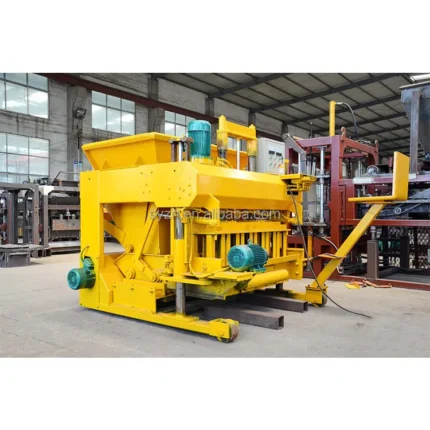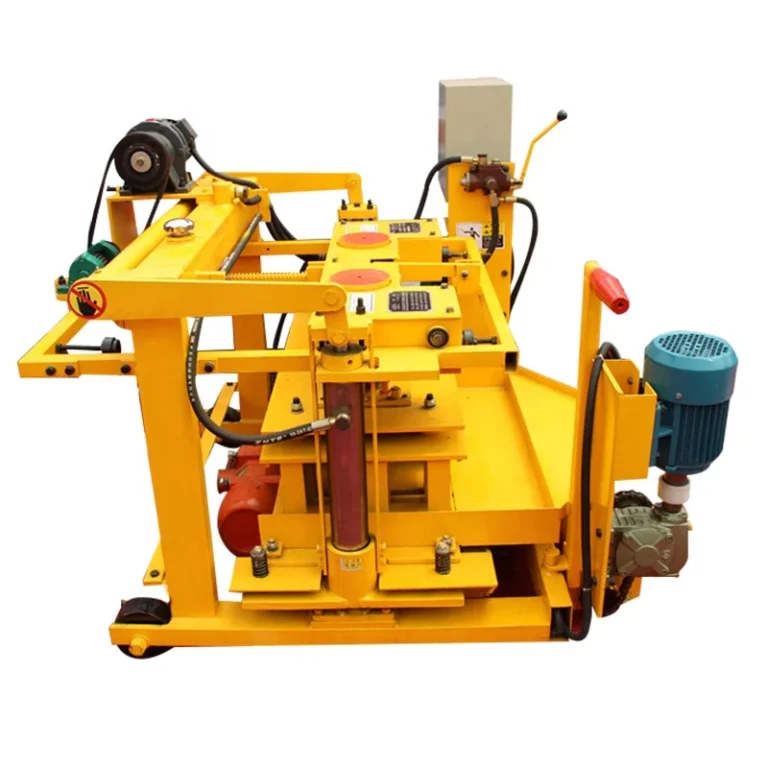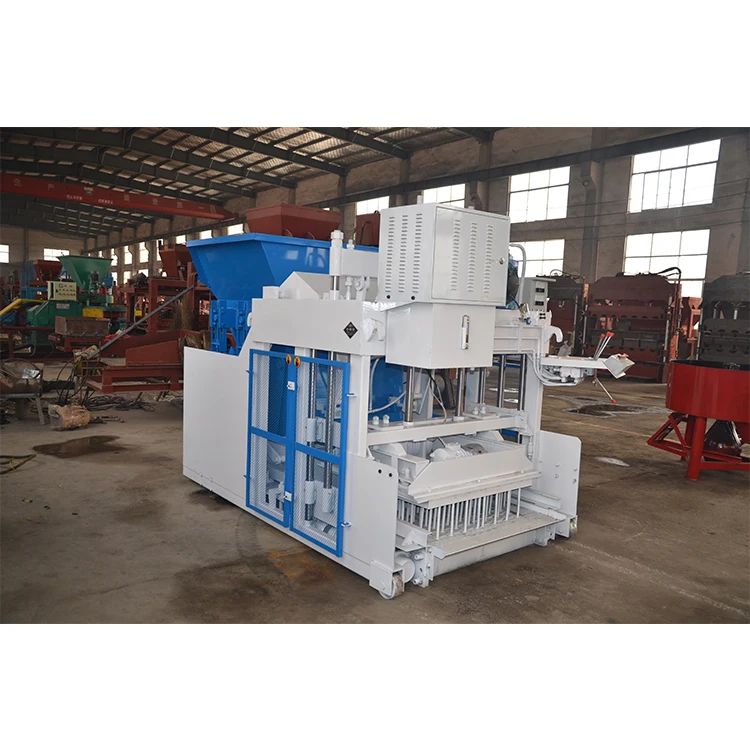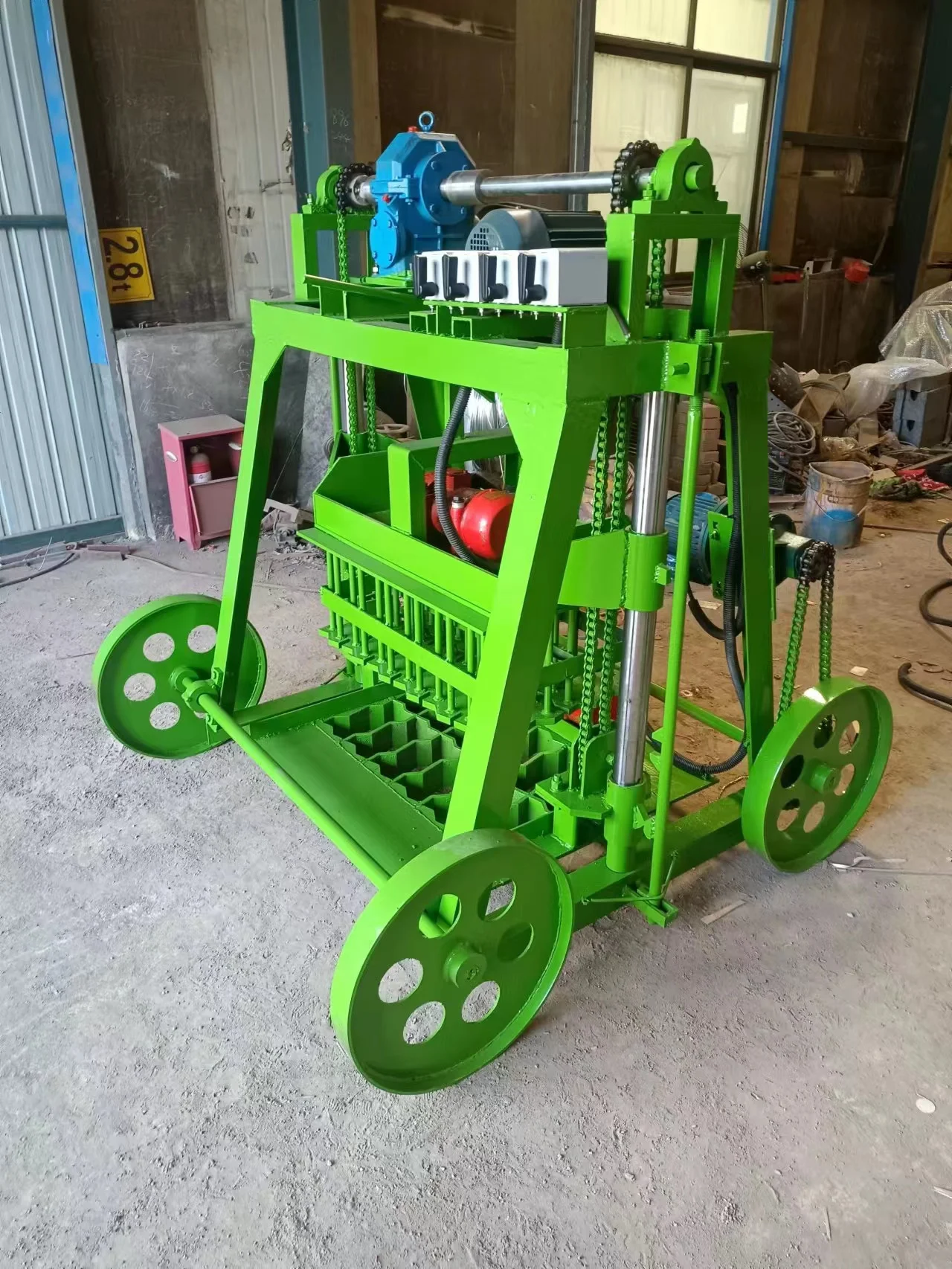
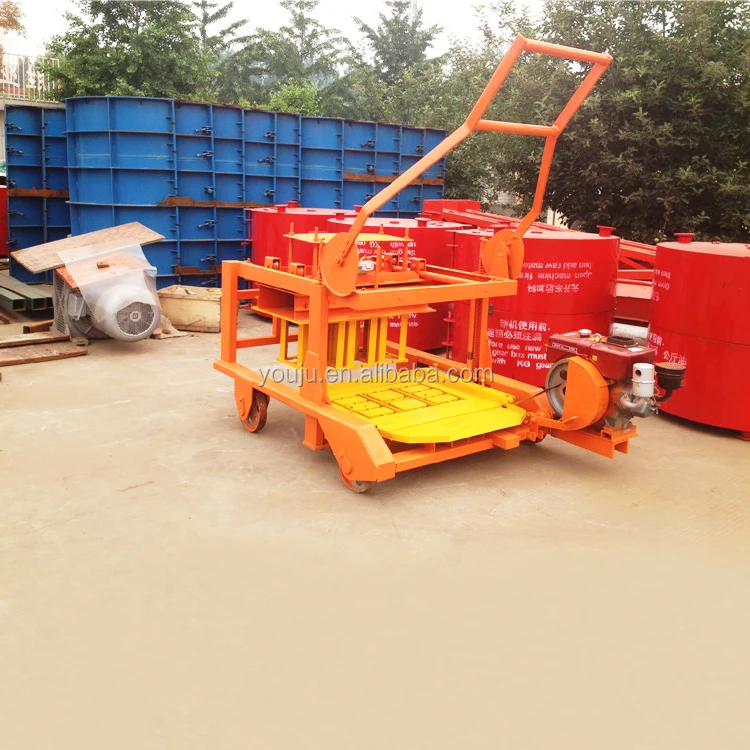

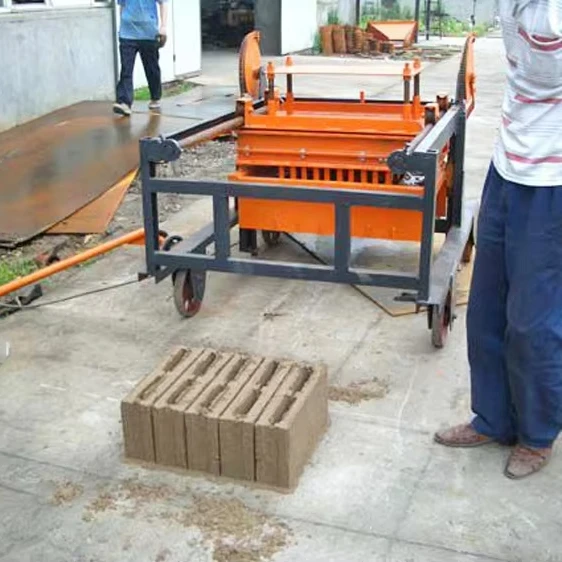
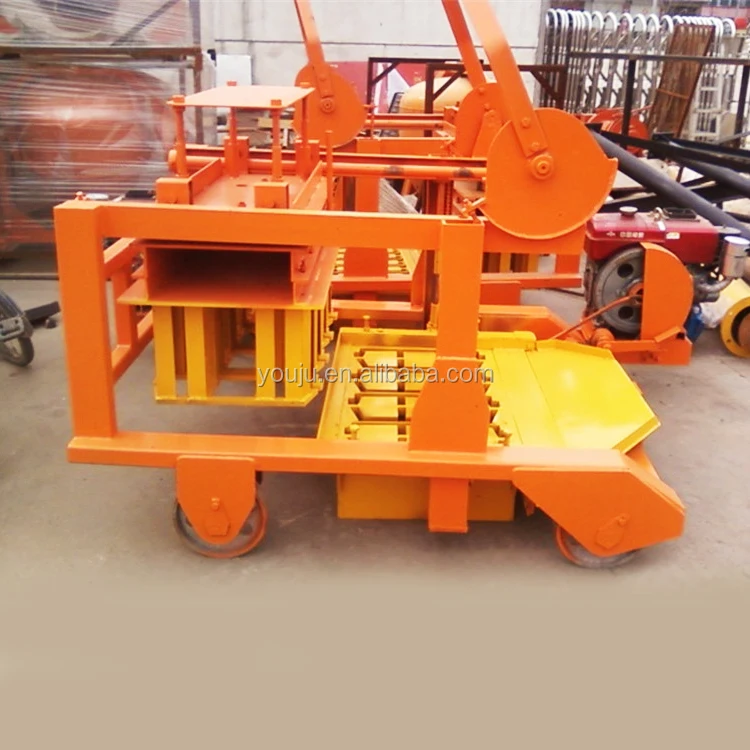

Description
Matched System Specification — Every QMR4-45 diesel egg laying block machine is configured against your actual mix design and target block format, not pulled from a generic catalogue default, so hydraulic pressure, vibration force, and mould selection work as one cohesive unit from the first production day.
Technical Specifications
| Parameter | Value |
|---|---|
| Model | QMR4-45 |
| Product Type | Diesel Egg Laying Block Making Machine |
| Overall Dimensions (L×W×H) | 2420×1320×1650mm |
| Net Weight | 810kg |
| Rated Power | 6kW |
| Diesel Engine | 6kW or 6-8HP |
| Voltage & Frequency | 220V or 380V (frequency to be confirmed with buyer) |
| Moulding Cycle | 40-45s |
| Pallet Size | No pallet required (egg laying type) |
| Automation Level | Manual operation with diesel hydraulic assist |
| Stacking Method | On-site ground laying (no pallet, no stacking system) |
| Output Capacity | 3000 pcs/day based on 400×200×200mm hollow block, 4 pcs/mould, 8-hour shift |
| Output Capacity (alt 1) | 3500 pcs/day based on 400×150×200mm hollow block, 5 pcs/mould, 8-hour shift |
| Output Capacity (alt 2) | 4500 pcs/day based on 400×120×200mm hollow block, 6 pcs/mould, 8-hour shift |
| Mould Format | Hollow block (400×200×200 / 400×150×200 / 400×120×200mm) |
| Assembly State | Fully assembled, mobile unit |
| Warranty | 1 year |
| Standards | CE |
Application Suitability
| Application | Material or Output |
|---|---|
| Remote construction site block production | Crushed stone, sand, and cement mixes without grid electricity |
| On-site housing project block manufacturing | Local aggregate and cement for hollow wall blocks |
| Startup block plant with minimal capital | Standard concrete mixes for 400×200×200mm, 400×150×200mm, and 400×120×200mm formats |
| Contractor self-production avoiding transport | Site-sourced aggregate blended to structural hollow block requirements |
What "3000 Blocks a Day" Actually Means on a Remote Site
Capacity claims without format context leave contractors short on the day they need to hit a pour deadline.
I once worked with a project team that ordered a mobile block machine based on a sample output number. When their local aggregate turned out to have high clay content, daily production fell to less than half of what was quoted. The QMR4-45 automatic diesel egg laying block machine PLC controlled configuration process starts by asking what block format you actually sell, what your local aggregate looks like, and whether your site has any electrical supply at all for the vibration motors. A machine that performs well on clean river sand may struggle with the crushed limestone available in your region, and no amount of hydraulic pressure can compensate for a mix that does not flow properly into the mould cavity [NEED_CITE: impact of aggregate gradation on block density and cycle time].
Control System Configuration for Diesel-Powered Production
The QMR4-45 automatic diesel egg laying block machine PLC controlled setup addresses a gap that catches many first-time buyers. Even though the diesel engine drives the hydraulic pressure supply, the vibration motors and any control logic still require an electrical connection. Confirming your site voltage and frequency before production begins prevents the machine from arriving with motor windings configured for a supply that does not exist. The control system is configurable, and the PLC display language should match your operator team before the machine leaves the factory rather than after it sits on your site waiting for a technician.
Matching Automation Level to Site Reality
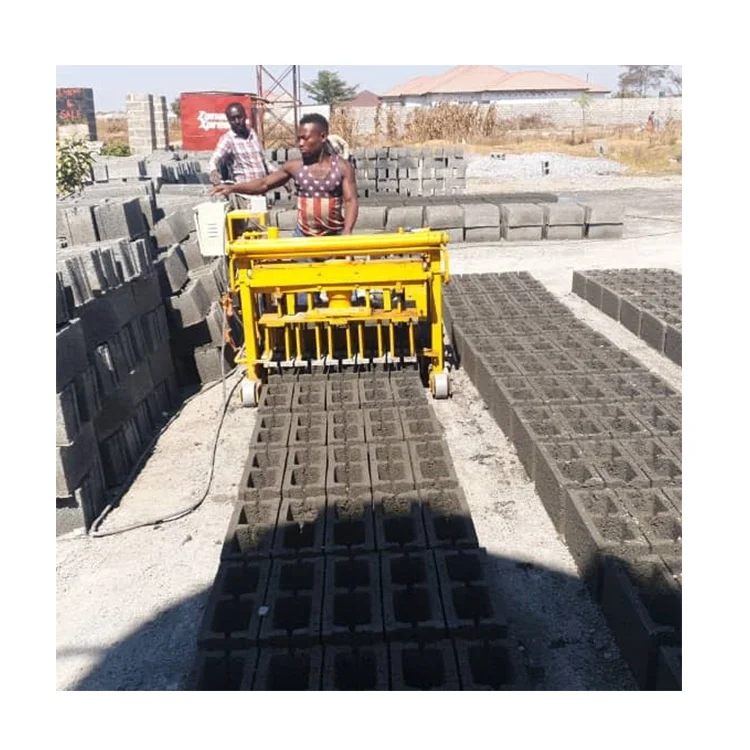
Starting with manual operation and diesel hydraulic assist keeps capital outlay low for entrepreneurs and contractors who need blocks on a project site without a fixed factory footprint. The egg laying design removes pallet handling entirely — blocks are formed and released directly onto a prepared ground surface, which eliminates both pallet cost and the labour of moving pallets through a curing area. When production scales up or site conditions change, the automation level can be upgraded to include automatic pallet feeding or stacking systems. This upgrade path means the QMR4-45 automatic diesel egg laying block machine PLC controlled investment does not become obsolete as your operation grows [NEED_CITE: automation upgrade paths for mobile block production equipment].
Reading the Specs That Actually Affect Block Strength
The 40-45 second moulding cycle is tied to each specific block format, not an abstract per-hour claim. A 400×200×200mm hollow block at 4 pieces per mould yields 3000 pieces over an 8-hour shift, while switching to a 400×120×200mm format at 6 pieces per mould pushes that figure to 4500 pieces in the same window. The hydraulic pressure supply from the diesel engine must be matched to your mix design — too little pressure and the block crumbles before curing, too much and the vibration cannot settle the material into the mould corners. The net weight of 810kg provides the machine mass needed to transmit vibration force into the mix rather than letting the machine itself bounce on the ground surface. Mould change time and required tools are critical for sites that need to produce multiple formats across a single week, and this figure should be confirmed before the machine ships [NEED_CITE: relationship between hydraulic pressure, vibration force, and block compressive strength].
The Cost of Skipping Voltage and Frequency Confirmation
A diesel-powered machine still requires electrical supply for vibration motors, and arriving with motors wound for 380V 50Hz when your site generator outputs 220V 60Hz means the machine does not run until rewinding is completed. Control panel language set to a default that your operators cannot read delays commissioning further. These are not theoretical problems — they happen regularly when the voltage and control confirmation step is skipped in favour of faster dispatch. The QMR4-45 automatic diesel egg laying block machine PLC controlled quotation process includes explicit confirmation of these parameters because a machine that cannot run on arrival costs more in project delays than any production speed advantage [NEED_CITE: voltage and frequency standards by export market].
Why This Configuration Approach Works for Mobile Production
Block machinery as a single focus means the machine, mould, and hydraulic system are specified as one matched unit rather than assembled from separate suppliers. The QMR4-45 configuration is set against your actual mix design and local aggregate, not a catalogue default that assumes clean sand and ideal conditions. Mould design covers the hollow block formats your market actually sells — 400×200×200mm, 400×150×200mm, and 400×120×200mm — with custom mould drawings available when your project requires a format outside the standard range. The automation level is selectable so you can start with manual pallet-free operation and add stacking or feeding automation later without replacing the press itself. Installation and commissioning support includes operator training so your team knows mould change procedures and diesel engine servicing from the first week of production.
Documentation & Verification
- Capacity calculation document stating the block format assumed for each output figure, not a single blended number
- Voltage and control language confirmation record before production begins
- Mould drawing and format list showing which hollow block sizes are included and which are optional add-ons
- Operation and maintenance manual covering diesel engine servicing alongside the block press hydraulic system
- Factory test record on your specified block format before dispatch
- CE declaration documentation for customs and site compliance
Installation, Commissioning & Support
- Ground surface preparation for egg laying operation requires a level, compacted area matching the 2420×1320mm machine footprint
- Electrical supply for vibration motors must match confirmed voltage and frequency even with diesel engine primary power
- Fully assembled mobile unit arrives ready for immediate production without on-site mechanical assembly
- First-day commissioning includes moulding cycle verification at 40-45s on your specific hollow block format
- Operator training covers diesel engine maintenance intervals and hydraulic system daily checks
- Mould change procedure and required tools demonstrated on all included hollow block formats
What We Need to Configure Your Machine Correctly
Provide your target block format and daily output requirement so we can calculate capacity against each specific mould rather than quoting a blended number. Confirm your site voltage, frequency, and generator capacity since the vibration motors require electrical supply even on a diesel-powered machine. Share your local aggregate source and any available material test data so the hydraulic pressure and vibration force can be matched to what you can actually source rather than what a test laboratory uses.
Frequently Asked Questions
Q: How is daily output calculated for the QMR4-45, and which block format is each figure based on?
A: Output is calculated per format, not as a single blended number. The 3000 pieces per day figure assumes 400×200×200mm hollow blocks at 4 pieces per mould over an 8-hour shift. The 3500 piece figure applies to 400×150×200mm at 5 per mould, and 4500 pieces applies to 400×120×200mm at 6 per mould. All figures assume a 40-45 second moulding cycle.
Q: What electrical supply does the QMR4-45 require if it runs on a diesel engine?
A: The diesel engine drives the hydraulic pressure system, but the vibration motors still require electrical supply. Voltage and frequency must be confirmed before production — typically 220V or 380V depending on your site generator or grid connection. Operating the machine without matching electrical supply damages motor windings and delays commissioning.
Q: Can the QMR4-45 be upgraded with automatic systems as production scales up?
A: Yes. The machine starts with manual operation and diesel hydraulic assist, which keeps initial investment low for site-based production. As your operation grows, automation upgrades including automatic pallet feeding and stacking systems can be added. This upgrade path means the press investment remains useful even as your production volume and labour configuration change.
Q: What ground surface preparation is needed for egg laying operation without pallets?
A: The egg laying design forms and releases blocks directly onto a prepared ground surface, eliminating pallet cost and pallet handling labour. The surface must be level and compacted to support block weight during the curing period. The machine footprint is 2420×1320mm, and the working area around it must accommodate operator movement and block curing space.