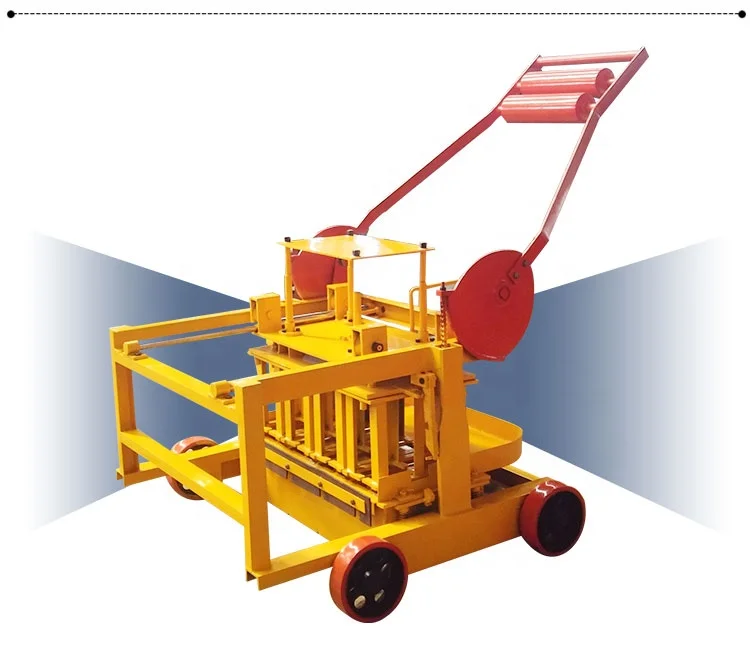

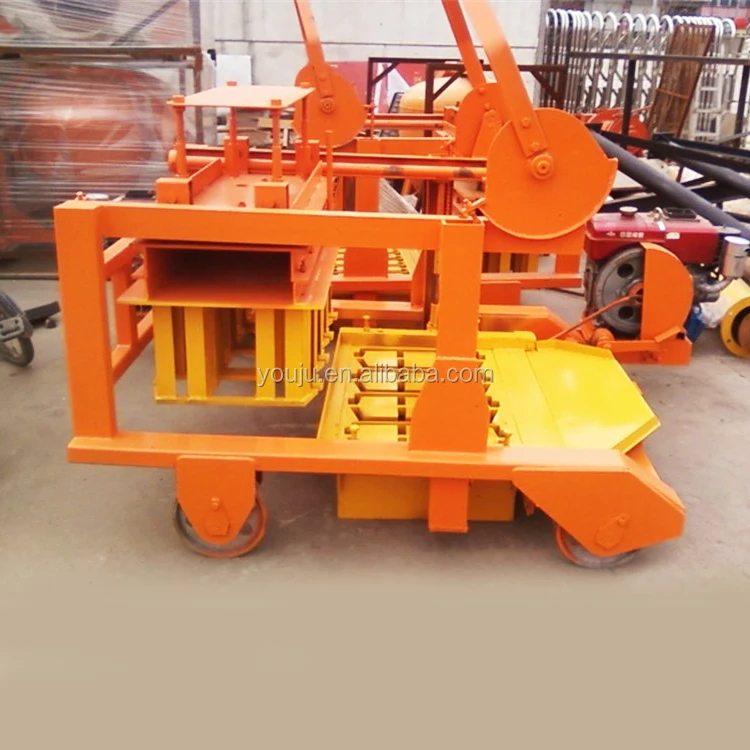
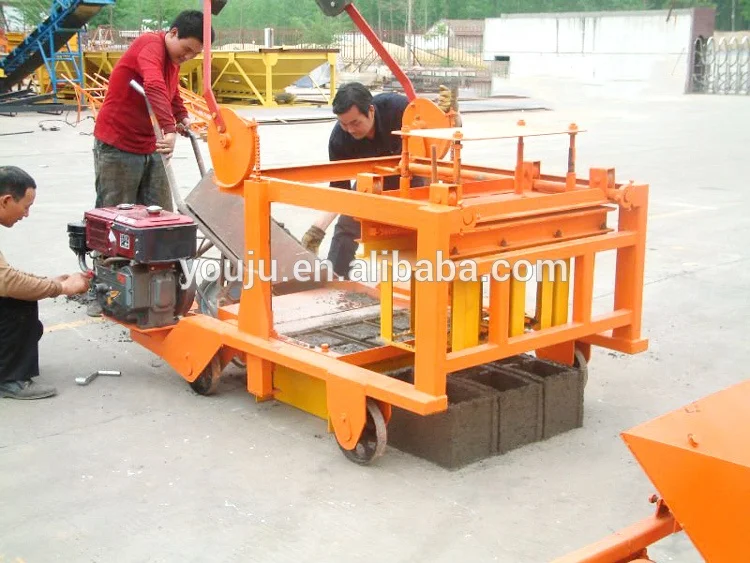
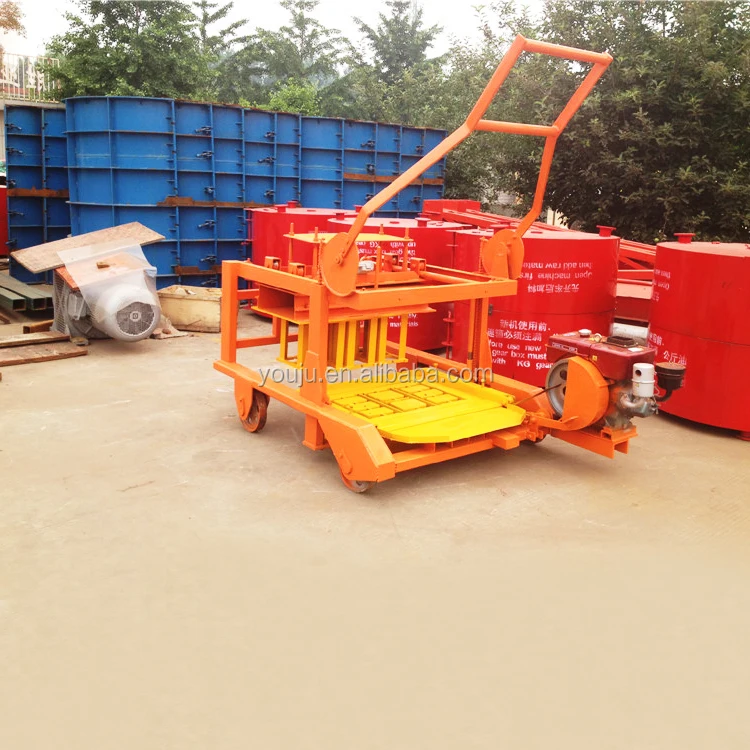
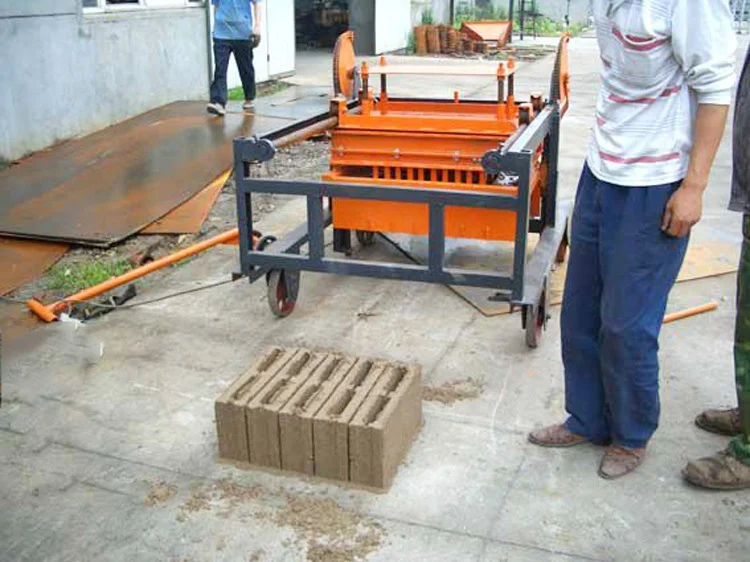
Description
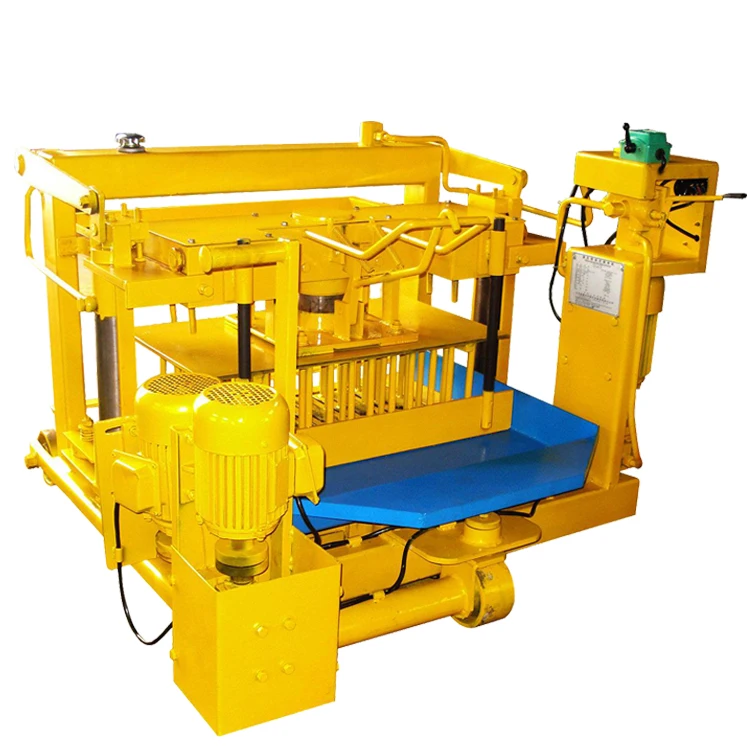
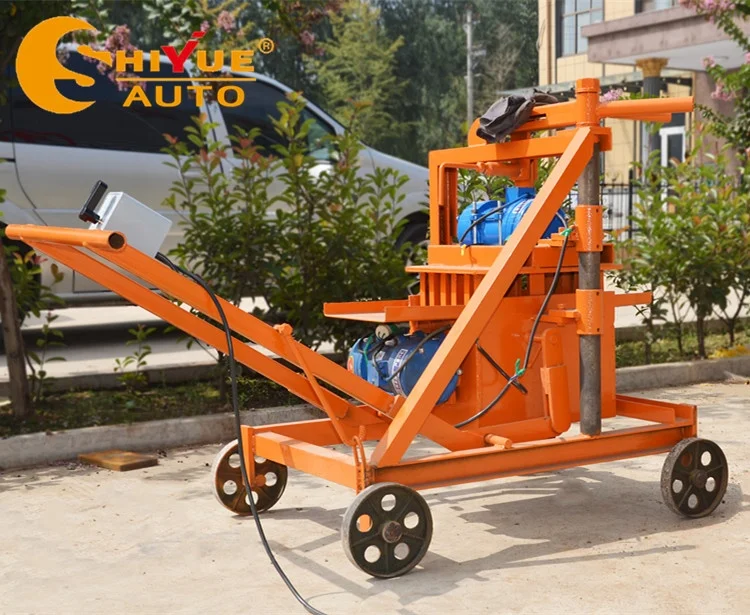
Automation readiness — the QMR4-45 mobile egg laying block machine is configured with clear electrical and control interfaces that allow a future transition from manual operation to PLC-controlled batching without replacing the press.
Technical Specifications
| Parameter | Value |
|---|---|
| Model | QMR4-45 |
| Product Type | Mobile Egg Laying Block Making Machine |
| Rated Power | 6 kW (electric motor variant) |
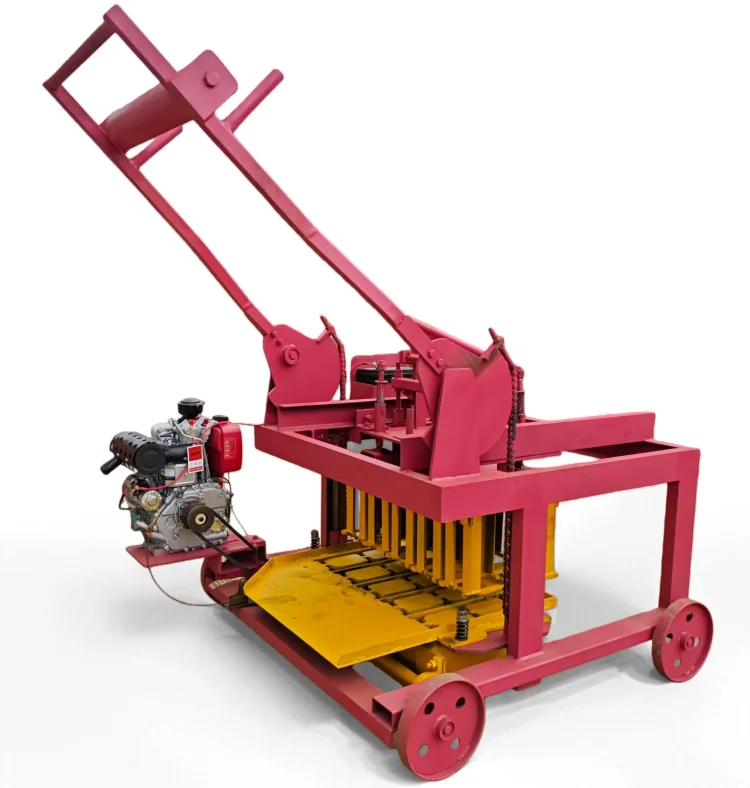
| Diesel Engine Option | 6 kW / 6-8 HP |
| Voltage & Frequency | 220V or 380V, frequency to be confirmed per market |
| Control System | Manual / mechanical operation, optional PLC upgrade path |
| Overall Dimensions (L×W×H) | 2420 × 1320 × 1650 mm |
| Net Weight | 810 kg |
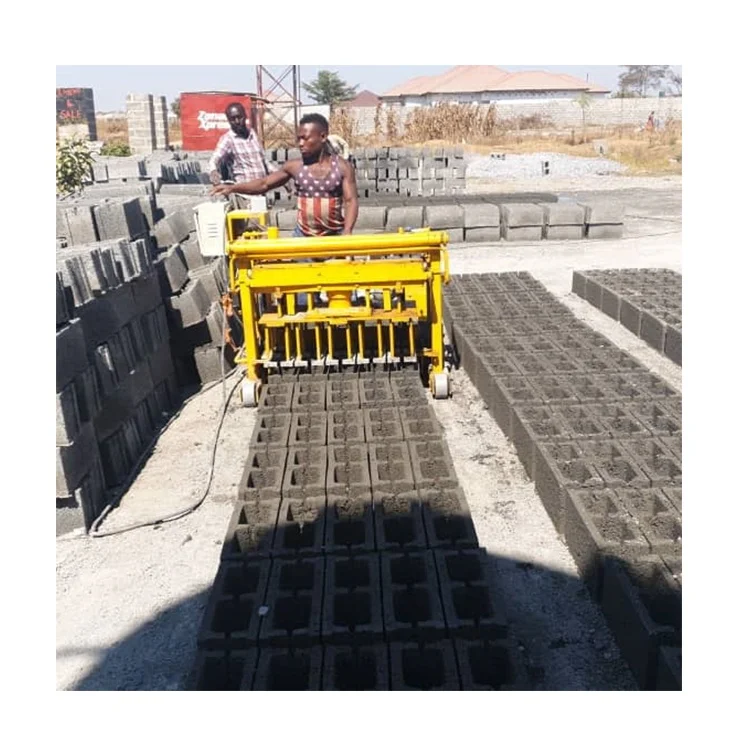
| Pallet Requirement | None (egg laying type) |
| Moulding Cycle | 40-45 s |
| Output Capacity | 3000 pcs/day based on 400×200×200 mm hollow block, 4 pcs/mould (basis to be confirmed for other formats) |
| Mould Formats | Hollow block: 400×200×200, 400×150×200, 400×120×200 mm; other formats via mould change |
| Automation Level | Manual / semi-manual |
| Stacking Method | Manual (blocks laid directly on ground) |
| Operating Environment | Remote sites without reliable grid electricity (diesel option); no fixed concrete floor required |
| Warranty | One year for the whole machine |
| Certification | CE |
Application Suitability
| Application | Material or Output |
|---|---|
| On-site hollow block production for building contractors | Crushed stone, sand, cement, water |
| Small-scale block plant for first-time entrepreneurs | Local aggregate blended with cement at site-specific ratios |
| Remote construction projects without grid power | Diesel-powered operation on unprepared ground |
| Multi-format production from a single press | Hollow blocks in 120 mm, 150 mm and 200 mm wall thicknesses via mould change |
Why the Voltage Question Must Come Before the Machine Order
Electrical mismatch is the single most common cause of commissioning failure for mobile block machines shipped across borders.
When an automatic mobile block making machine arrives on site with a motor wound for 380V/50Hz and the local grid delivers 415V or an unstable frequency, the first start-up can burn the motor winding before the operator even loads the hopper. I have stood on project sites in East Africa where twenty workers sat idle for weeks because the voltage and frequency were never confirmed against the local utility standard [NEED_CITE: voltage and frequency standards by export market]. The QMR4-45 is available with 220V or 380V motor configurations, and a diesel engine variant removes the grid dependency entirely — but only if the buyer specifies the correct option before production begins.
Control Options Across the Automation Spectrum
The QMR4-45 ships from the factory as a manual mechanical press. The operator controls the feed, vibration cycle and forward movement by hand. For buyers who want consistent cycle timing without full automation, a PLC-controlled egg laying block machine configuration can be specified, adding batch counting, timed vibration sequences and fault display to the control panel. This intermediate step removes the variability introduced by different operators working different shifts.
Planning the Upgrade Path Before You Buy
A buyer starting with manual operation today may want automatic batching, stacking or remote diagnostics within a few production seasons. The key question is whether the machine’s electrical architecture and mechanical interfaces allow that transition without a full press replacement. On the QMR4-45, the motor mount, vibration assembly and mould carriage are designed so that adding a PLC panel and sensor package later does not require structural modification [NEED_CITE: PLC retrofit compatibility on mechanical block presses]. Specifying conduit routes and sensor-ready mounting points at the initial order stage keeps the upgrade path open.
What the Specs Mean on the Ground
The 40-45 second moulding cycle across hollow block formats sets the production rhythm for the entire site. Because this is an egg laying machine, no pallets are needed — blocks are deposited directly on the ground and the machine moves forward, which eliminates pallet purchase, storage and handling as a recurring cost and labour item. The 6 kW rated power or 6-8 HP diesel engine must deliver consistent torque through each vibration cycle; any power drop mid-cycle produces a block with lower density on one side. The overall footprint of 2420 × 1320 mm means the machine can work inside a standard building plot or on a section of road base without a dedicated factory floor.
The Cost of Skipping the Configuration Conversation
Choosing a mobile block machine on price alone and leaving electrical parameters, control language and automation level to be sorted on arrival is a pattern that delays projects and inflates budgets. When the PLC display arrives in a language the local operator cannot read, commissioning stalls until new HMI screens are sourced. When the control panel is wired for a voltage the site does not have, a transformer must be rented or purchased locally at a premium [NEED_CITE: CE machinery directive requirements for industrial equipment]. Every one of these issues is avoidable with a configuration sheet confirmed before the machine enters production.
Why Source This Machine Through Our Process
Block machinery is our single focus, which means the QMR4-45 is specified as part of a matched system — motor, mould, vibration assembly and future control upgrade are evaluated together against your target block format and local aggregate. Configuration is set against your actual mix design and site power conditions, not a catalogue default. Mould design covers the hollow block dimensions your market actually sells, with custom drawings available for non-standard formats. Automation level is selectable at order or upgradeable later, so capital outlay matches your current production stage. Factory testing on your specified block format is completed before dispatch, with the test record included in the documentation package.
Documentation & Verification
- Capacity calculation sheet stating block format and moulding cycle assumptions for the QMR4-45
- Electrical schematic confirming voltage, frequency and motor winding specification per destination market
- Factory test record on your specified hollow block format before dispatch
- Mould drawing and format list for all supplied moulds including changeover procedure
- Operation and maintenance manual with wear parts schedule for vibration and hydraulic components
Installation, Commissioning & Support
- Site preparation requires level compacted ground; no fixed concrete slab needed for the 2420 × 1320 mm footprint
- Dedicated electrical circuit matching confirmed voltage and frequency before the 6 kW motor is energised
- Machine arrives fully assembled; diesel engine variant requires fuel line and coolant check on site
- First-run commissioning includes vibration timing calibration for the buyer’s specific mix design
- Operator training covers mould change procedure across 120 mm, 150 mm and 200 mm hollow block formats
- Wear parts list supplied with recommended replacement intervals for vibration motor bearings and mould liners
What to Include in Your Inquiry
To configure the QMR4-45 correctly for your site, share your target hollow block dimensions and daily volume, the local grid voltage and frequency at your project location, and whether you plan to start with manual operation or specify PLC control from the outset. If your site has no reliable electricity, confirm the diesel engine option and the ambient temperature range the engine will operate in.
Frequently Asked Questions
Q: How is the 3000 pcs/day output calculated for the QMR4-45?
A: This figure is based on the 400×200×200 mm hollow block format at four pieces per mould with a 40-45 second cycle. Actual daily output varies with block format, operator pace, material feed continuity and curing logistics. Request a capacity calculation that states your specific target block dimensions and the cycle time assumed for that format.
Q: Can this machine be upgraded to PLC control after running manually?
A: The QMR4-45 electrical architecture allows a PLC panel and sensor package to be added later without replacing the press. Specifying sensor-ready mounting points and conduit routes at the initial order stage keeps the upgrade straightforward. The transition adds batch counting, timed vibration and fault display to your operation.
Q: What voltage and frequency options are available for my country?
A: The QMR4-45 is available with 220V or 380V motor windings, and frequency must be confirmed against your local utility standard before production. The diesel engine variant removes grid dependency entirely. Voltage, frequency and any future PLC display language are confirmed on the configuration sheet before the machine enters build.
Q: How does the diesel engine option affect cycle consistency?
A: The 6-8 HP diesel engine delivers the torque needed for each vibration cycle independently of grid stability. On remote sites where voltage fluctuation would cause inconsistent block density, the diesel variant provides a steady power source. Fuel quality and ambient temperature affect engine performance and should be factored into your daily production planning.
Q: What automation level should I choose if I plan to add stacking later?
A: Start with the control level that matches your current labour and volume. The QMR4-45 egg laying design eliminates pallets, so the next automation step is typically PLC-controlled batching and cycle timing, followed by mechanical stacking aids. Confirm your upgrade timeline at order so the electrical interfaces are prepared accordingly.