Description
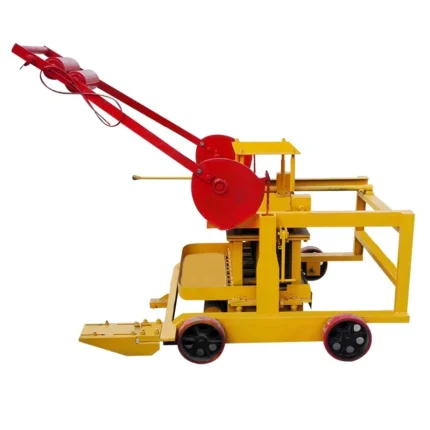
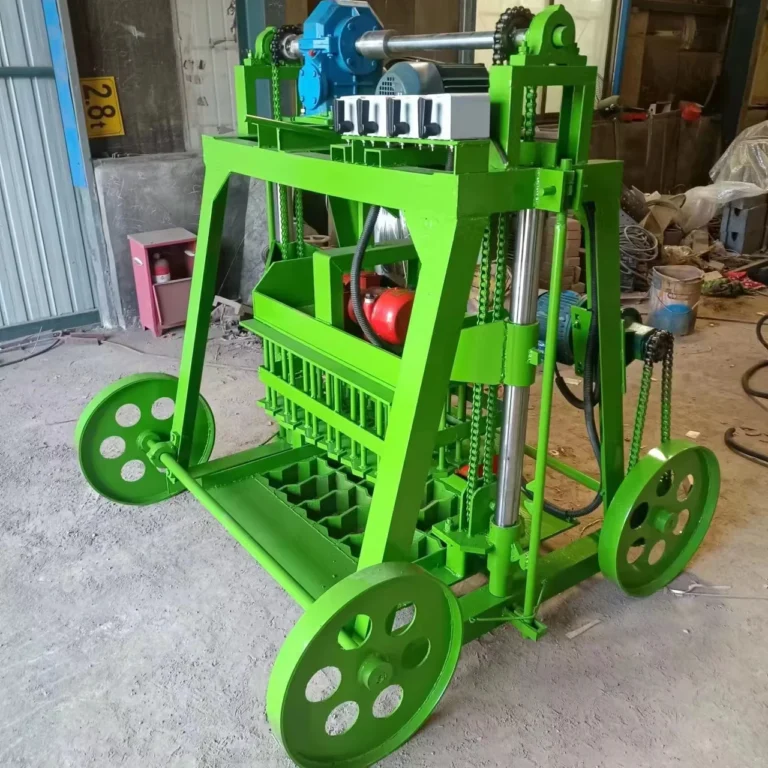
Configuration matched to your local mix — the QMY4-30 mobile block machine is set up around the aggregate and cement ratio you actually source on-site, not a generic factory default.
Technical Specifications
| Parameter | Value |
|---|---|
| Model | QMY4-30 |
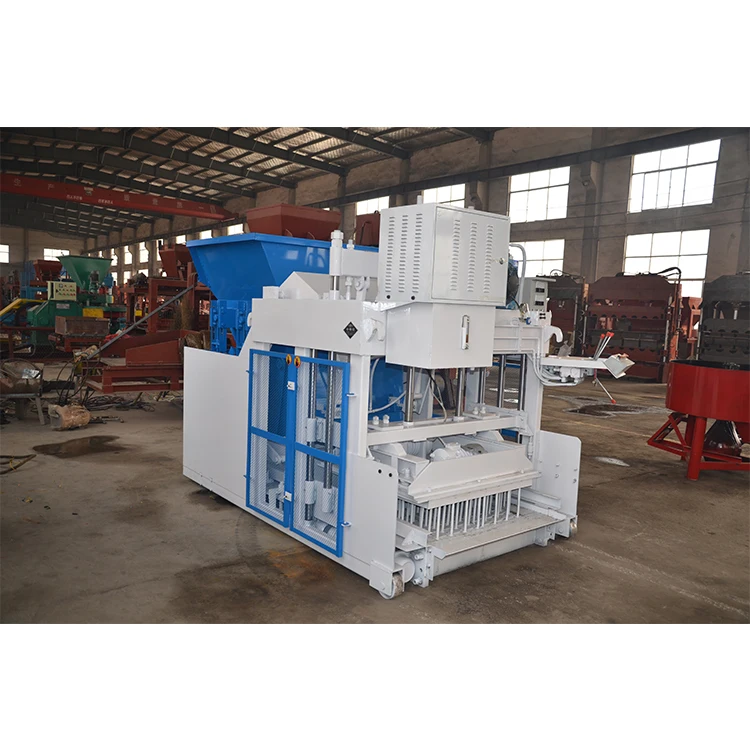
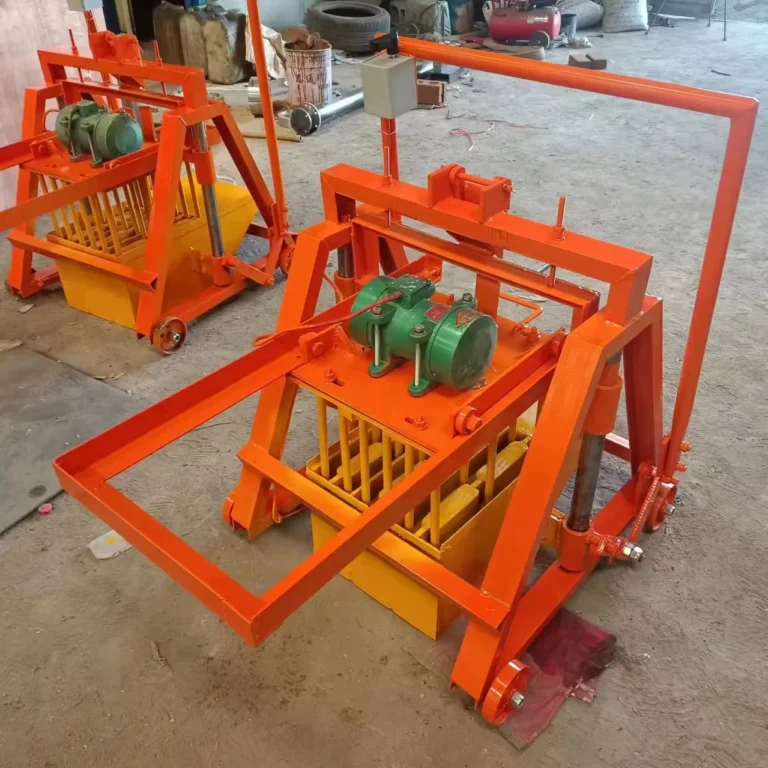
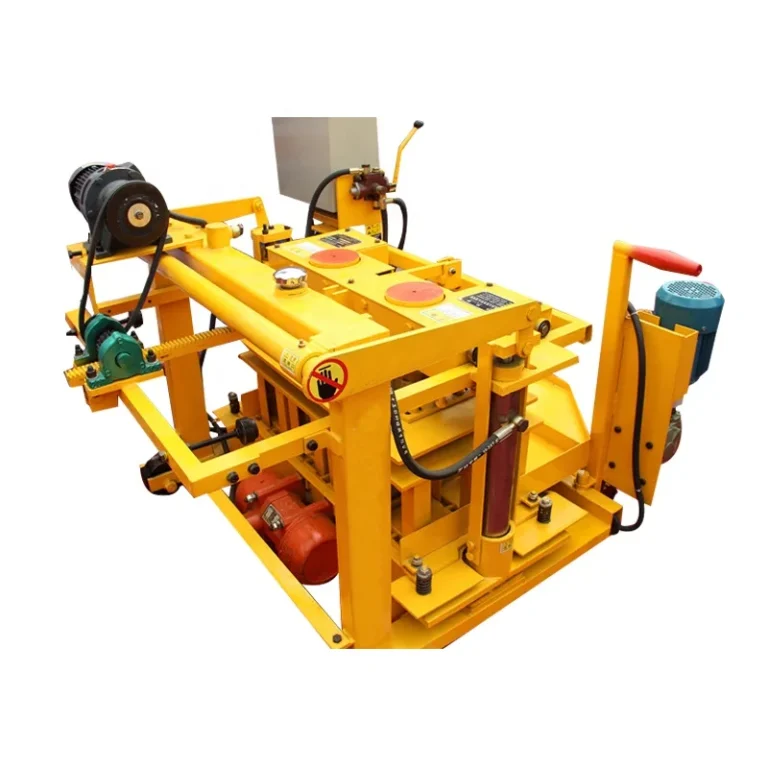
| Product Type | Mobile Concrete Block Making Machine |
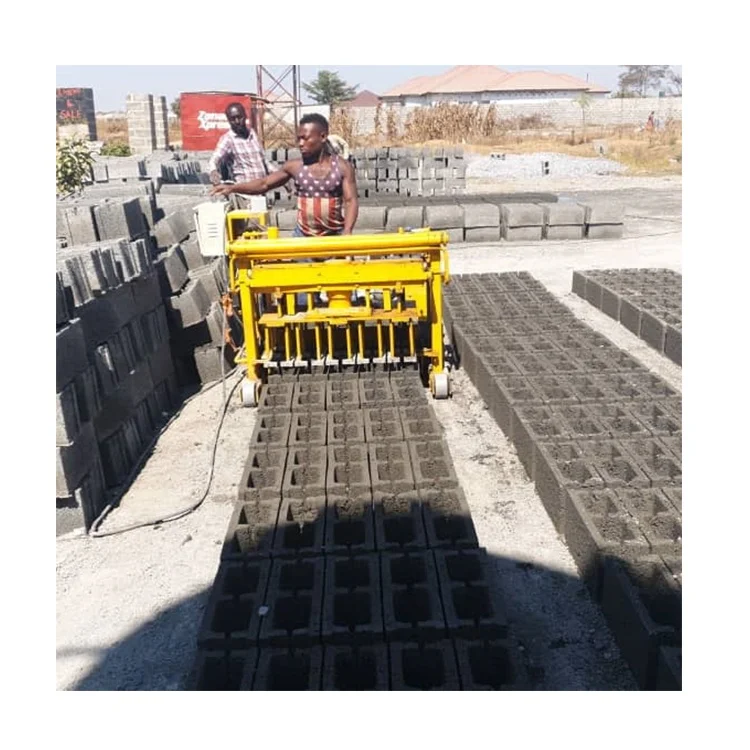
| Machine Type | Mobile / egg-laying (on-site production without fixed plant) |
| Rated Power | 5 kW |
| Overall Dimensions | 1200 × 1200 × 1100 mm |
| Net Weight | 950 kg |
| Molding Cycle Time | 30 seconds |
| Output Capacity | 480 pcs/h based on 400×200×200 mm hollow block, 4 pcs/mould; 600 pcs/h based on 400×150×200 mm hollow block, 5 pcs/mould; 840 pcs/h based on 400×100×200 mm hollow block, 7 pcs/mould |
| Daily Output (8 h) | 3,840 pcs (400×200×200 mm); 4,800 pcs (400×150×200 mm); 6,720 pcs (400×100×200 mm) |
| Raw Materials | Cement, sand, crushed stones, slag |
| Mould Format | Hollow block and solid brick (mould changeable) |
| Automation Level | Manual operation (basis not stated in source — confirm PLC or manual lever control) |
| Voltage & Frequency | Configurable (confirm before ordering) |
| Control System | PLC or relay logic (confirm before ordering) |
| Hydraulic Pressure | To be confirmed (MPa rating) |
| Vibration Force | To be confirmed (kN rating) |
| Pallet Requirement | Egg-laying type — confirm whether pallets are needed for your layout |
| Language Options | Confirm PLC display language if applicable |
| Assembly State | Confirm fully assembled or SKD before shipment |
Application Suitability
| Application | Material or Output |
|---|---|
| On-site housing project block production | Hollow blocks from crushed stone, sand, and cement |
| Small-scale block plant start-up | Solid bricks and hollow blocks in changeable mould formats |
| Contractor self-supply on remote development sites | Egg-laying production without fixed plant infrastructure |
| Entrepreneur first block plant with upgrade path | Manual start, PLC-controlled mobile block making machine upgrade available |
What "840 Pieces per Hour" Actually Means on a Real Job Site
Cycle time only matters when you know which block size it was measured on.
Most mobile block machines advertise a single output number without naming the format behind it. A buyer sees 840 pieces per hour and plans a contract around that figure — until the first week on site shows the real daily tally is closer to 4,800 blocks because the market actually demands 400×150×200 mm hollow blocks, not the smaller 100 mm wall thickness the quoted number assumed. That gap between catalogue capacity and job-site reality is the reason we break every QMY4-30 output figure down by exact block dimension [NEED_CITE: block format assumptions in capacity quotations]. When you request a quotation, ask for a capacity calculation sheet that names the format line by line.
From Manual Lever to PLC Control — the Upgrade Path That Matters
The QMY4-30 ships as a manual egg-laying machine, but the control architecture can accommodate a PLC-controlled mobile block making machine upgrade. For a first-time block producer, starting with manual operation keeps the initial outlay low and the learning curve manageable. When daily volume grows, adding PLC batching accuracy and automated stacking removes the two biggest sources of batch-to-batch inconsistency — operator guesswork on water content and uneven curing from hand-stacked pallets [NEED_CITE: PLC batching accuracy in small block plants].
Where Automation Removes the Operator — and Where It Adds Consistency
On a fully manual mobile line, the same worker who mixes the concrete also decides when the mould lifts and how fast the machine traverses. Every decision introduces variation. An automatic mobile block machine configured with PLC logic locks the vibration duration, hydraulic dwell time, and travel speed into repeatable parameters. The operator’s role shifts from making real-time judgement calls to monitoring the process and handling exceptions. That shift is what turns a workshop-level output into a predictable daily figure you can commit to a building contractor.
Reading the Numbers That Actually Shape Your Daily Output
The 5 kW rated power keeps the QMY4-30 within reach of a small diesel generator on a remote site, meaning you do not need grid three-phase supply before you can start producing. The 1200 × 1200 × 1100 mm footprint and 950 kg net weight allow the machine to be relocated by a standard site forklift as the project area shifts. Mould changeability between hollow block and solid brick formats means a single machine can serve two product lines — but the time that change takes determines whether format flexibility is real or only theoretical [NEED_CITE: mould change time impact on daily schedule]. The 30-second cycle time is the base figure; actual throughput also depends on how quickly the operator positions the machine for the next lay, which is where automation adds the most ground.
The Hidden Cost of Skipping the Voltage Confirmation Step
A mobile block machine arrives at a job site in East Africa with a 380 V / 50 Hz motor and a Chinese-language PLC display. The site generator outputs 415 V / 60 Hz. The machine will not start, the electrician spends two days rewiring, and the first week of production is lost before a single block is laid [NEED_CITE: voltage and frequency standards by export market]. This is not a rare edge case — it happens regularly when electrical specifications are left to a default rather than confirmed line by line. The QMY4-30 voltage and frequency are configurable, but only if the buyer states the local supply before production begins. We put voltage, frequency, and PLC display language on the contract confirmation sheet and verify each one before the machine leaves the factory.
Why Buyers Who Plan to Upgrade Choose This Route
Block machinery is our single focus, so the QMY4-30 machine, its moulds, and any supporting handling equipment are specified as one matched system rather than assembled from separate suppliers. Configuration is set against your actual mix design, local aggregate, and target block format — not pulled from a catalogue default. Mould design covers the formats your market sells, and custom drawings are available when standard formats do not match. Automation level is selectable, so you can begin with manual operation and add PLC control or stacking later without replacing the press. Installation support includes operator training so the crew running the machine on day one understands the parameter settings, not just the start button.
Documentation & Verification
- Line layout stating the exact block format assumed for each capacity figure
- Machine specification sheet with voltage, frequency, and PLC language confirmed
- Mould drawing and format list matching your local market requirements
- Hydraulic and electrical schematic for on-site troubleshooting
- Factory test record on your specified block format before dispatch
- Operation and maintenance manual in your chosen display language
Installation, Commissioning & Support
- Compact 1200 × 1200 mm footprint allows placement on a level concrete pad without deep foundation work
- 5 kW rated power requires a dedicated circuit sized for starting surge on the vibration motor
- Confirm whether the QMY4-30 ships fully assembled or SKD to plan your arrival-day labour
- First commissioning includes cycle parameter tuning for your local aggregate and cement ratio
- Operator training covers PLC navigation, mould change procedure, and daily maintenance checkpoints
- Wear parts and mould list provided so first replacements can be ordered before stock runs out
Before You Request a Quote
Tell us the block formats your market actually sells — including dimensions and daily volume target for each. Share your local raw material source and any aggregate sieve analysis you have. Confirm the site voltage, frequency, and the language your operators need on the PLC display. If you already own pallets, forklifts, or a curing area, give us those dimensions so the QMY4-30 configuration fits what you have rather than forcing new purchases.
Frequently Asked Questions
Q: How is the output capacity verified, and which block format does each figure assume?
A: Every capacity figure for the QMY4-30 is stated per block format — 480 pcs/h for 400×200×200 mm hollow block, 600 pcs/h for 400×150×200 mm, and 840 pcs/h for 400×100×200 mm. We provide a capacity calculation sheet naming the exact format, mould cavity count, and cycle time behind each number so you can match it against your actual product mix.
Q: What automation upgrades are available — can I add PLC control or stacking later?
A: The QMY4-30 control architecture supports a path from manual lever operation to PLC-controlled mobile block making machine status. Stations such as automatic pallet feeding, stacking, and batching accuracy can be added as your volume grows. We confirm the PLC platform at the time of first order so future upgrades use the same hardware family.
Q: What voltage, frequency, and PLC language options are supported for my market?
A: Voltage and frequency are configurable before production. We record your local supply standard and required PLC display language on the contract confirmation sheet and verify both before the QMY4-30 ships, preventing commissioning delays caused by mismatched electrical specifications or unreadable menus on site.
Q: How long does a mould change take, and is an automated change system available?
A: Mould change time on the QMY4-30 depends on the format and whether the change system is manual or automated. We confirm the expected change duration for your specific mould set during the proposal stage. If your production schedule requires multiple formats per shift, we discuss automated mould change options that keep downtime within acceptable limits.
Q: What raw material mix design and local aggregate is this machine configured for?
A: The QMY4-30 is configured against the buyer’s actual cement, sand, crushed stone, and slag availability rather than a default mix. We ask for your local aggregate sieve analysis and cement type so vibration force and hydraulic pressure are matched to produce consistent block strength with the materials you can actually source.