


Description
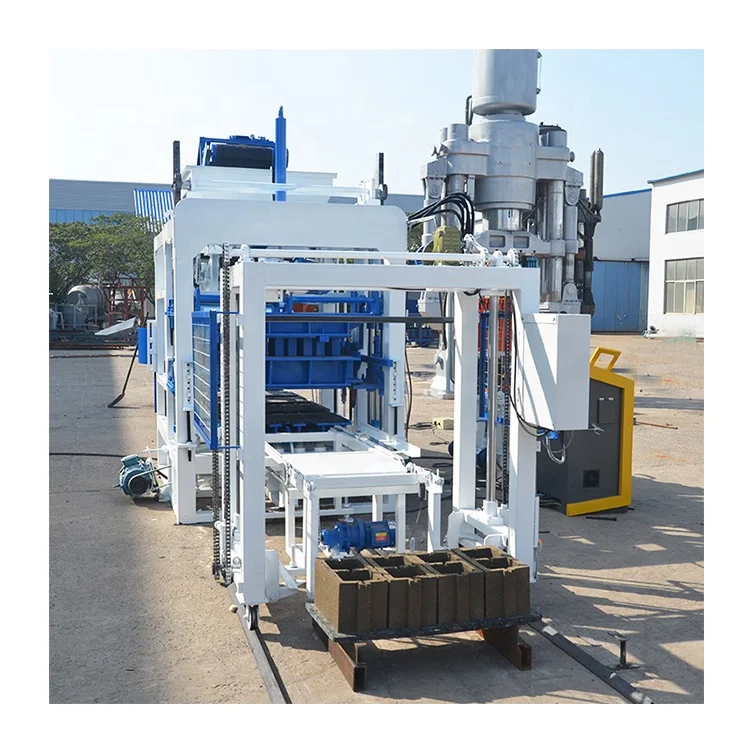
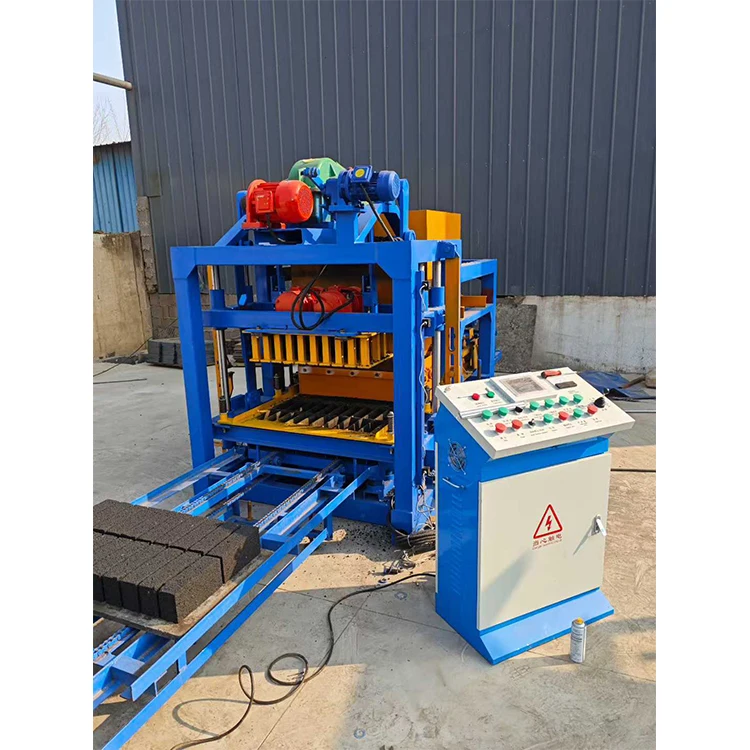
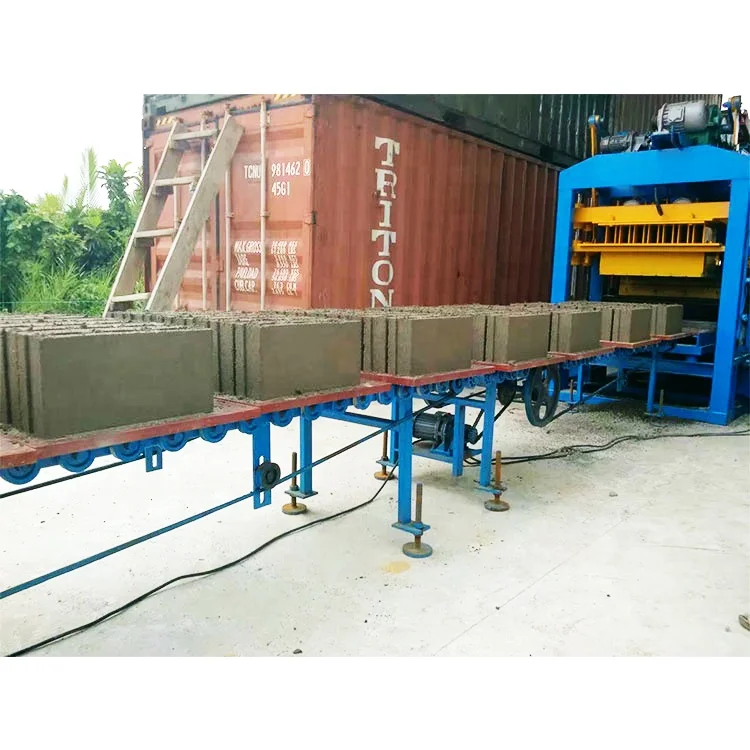
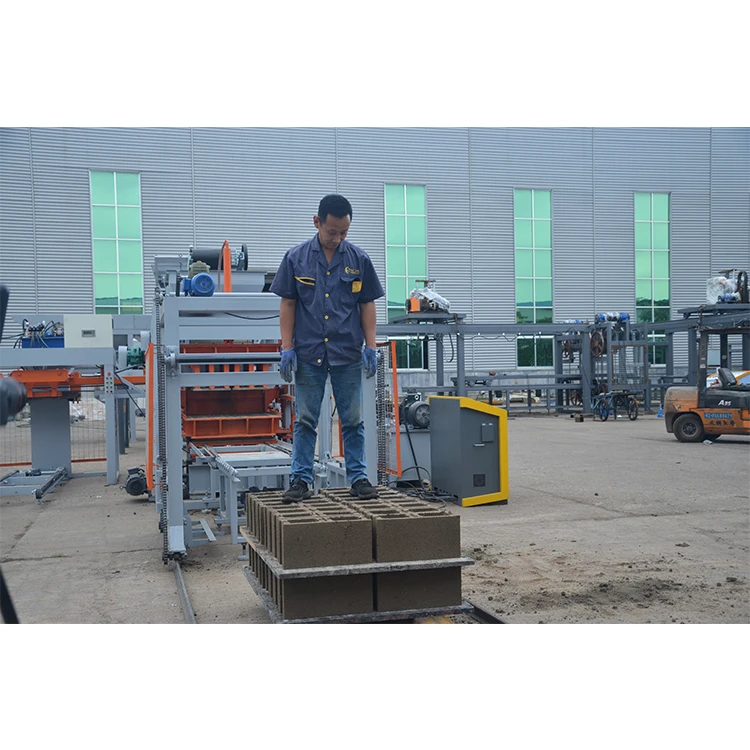
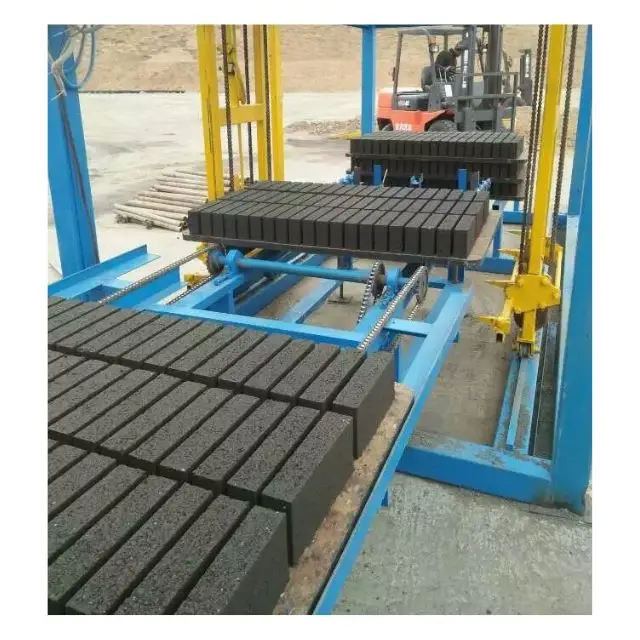
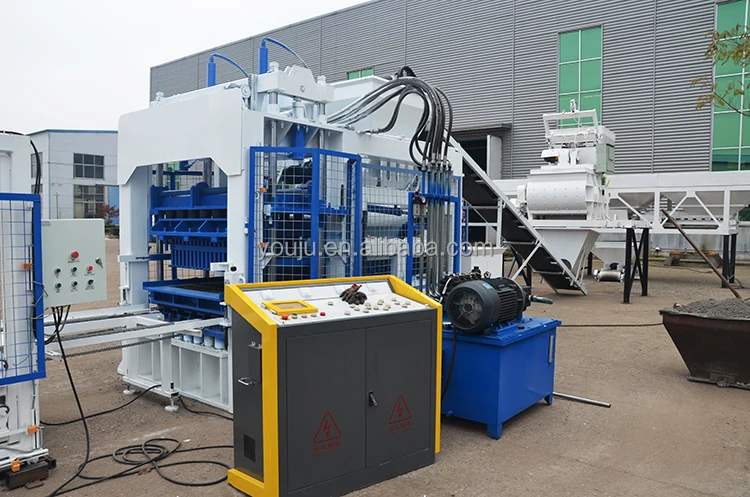
Automation Integration — The automatic QT10-15 block machine PLC controlled system coordinates pallet feed timing, mould sequencing, and stacking logic so operators manage exceptions rather than repeat cycles.
Technical Specifications
| Parameter | Value |
|---|---|
| Model | QT10-15 |
| Product Type | Fully Automatic Concrete Block Making Machine |
| Overall Dimensions (L×W×H) | 9350 × 2320 × 2950 mm |
| Moulding Area | 1025 × 810 mm |
| Forming Height Range | 40 – 250 mm |
| Pallet Size | 1100 × 900 mm |
| Main Vibration Form | Platform vibration |
| Vibration Frequency | 4,500 – 5,100 r/min |
| Rated Pressure | 21 MPa |
| Molding Cycle | 15 – 25 s |
| Overall Power | 44 kW |
| Mixer Model | JS750 |
| Control System | PLC (Japan Mitsubishi) |
| Hydraulic Unit | Taiwan Jiugang |
| Switches | Japan Omron |
| Electrical Elements | France Schneider |
| Motors (Host & Mixer) | Germany Siemens |
| Mould Treatment | High temperature carburizing heat treatment |
| Frame Construction | National standard steel, special welding technology |
| Voltage & Frequency | Customized to local request |
| Output (400×200×200 mm hollow, 10 pcs/mould) | 1,800–2,400 pcs/h (based on 15–25 s cycle) |
| Output (240×115×90 mm solid, 52 pcs/mould) | 9,360–12,480 pcs/h (based on 15–25 s cycle) |
| Key Features | Fully automatic, CE-referenced motors, PLC-controlled cycle logic |
Application Suitability
| Application | Material or Output |
|---|---|
| Hollow block production | Crushed stone, river sand, cement blends for 400×200×200 mm formats |
| Solid brick manufacturing | Fly ash or clay-aggregate mixes for 240×115×90 mm units |
| Paving block and kerbstone runs | High-density concrete mixes requiring 21 MPa compaction |
| Interlocking brick lines | Custom mould profiles within the 1025×810 mm forming area |
Why PLC Language Confirmation Must Happen Before Production
The automatic QT10-15 block machine PLC controlled interface ships in the language you confirm — if that confirmation comes after the panel is wired, rewiring delays commissioning by weeks.
I once arrived at a West African plant where the Mitsubishi PLC screen displayed error codes in a language the local operator could not read. The machine sat idle while we waited for a firmware update flown in from the regional distributor. The buyer had assumed English was the default; the factory had loaded a different regional preset. That single oversight cost the plant three full production shifts before the first saleable block left the line [NEED_CITE: PLC display language configuration practices for export machinery].
What the Control System Actually Removes from the Operator
On a semi-automatic line, the operator triggers the pallet feed, watches the mould fill, and signals the stacker by hand. With this automatic QT10-15 block machine PLC controlled architecture, the Mitsubishi unit sequences pallet indexing, vibration start-stop windows, and hydraulic press timing in a single loop. The operator’s role shifts from cycle trigger to exception handler — intervening only when a sensor flags a misaligned pallet or a mix consistency alarm.
Where Automation Pays Off Across the Shift
Manual lines lose cycle time in the last two hours of every shift as fatigue slows pallet handling and stacking decisions. The automatic QT10-15 block machine PLC controlled logic holds the same 15–25 second molding cycle at hour eight as it did at hour one. Batch-to-batch consistency in block density and dimensional tolerance is a direct result of removing human timing from the vibration and pressure sequence [NEED_CITE: shift-length productivity decay in manual versus automated block plants].
How Hydraulic Pressure and Vibration Frequency Interact
The 21 MPa rated pressure and the 4,500–5,100 r/min platform vibration do not work independently. Vibration fluidises the concrete mix inside the mould cavity; hydraulic pressure then locks the particles into a dense matrix. If vibration frequency is too low for a given aggregate size, pressure alone cannot close the voids — the block leaves the mould with weak edges. If pressure is insufficient, vibration scatters the mix rather than compacting it. The QT10-15 pairs these two forces within a matched range, but the exact setpoint must be tuned to the buyer’s local aggregate gradation and moisture content during commissioning.
The 1025×810 mm moulding area and the 40–250 mm forming height range mean a single pallet can produce anything from a 40 mm paving slab to a 250 mm hollow block. Mould changeover involves lifting the existing mould cassette and seating a replacement — the PLC stores cycle parameters per mould profile so the operator selects the format on screen rather than manually adjusting timers and pressure valves each time.
The Cost of Skipping a Site-Specific Configuration Check
A buyer in South Asia once specified the standard pallet size without measuring the curing racks already welded in the yard. Pallets arrived wider than the rack slots, forcing the plant to rebuild steel shelving before a single block could cure. On another project, the local grid ran 50 Hz while the buyer assumed 60 Hz — the mixer motor overheated within the first week. These are not manufacturing defects; they are gaps between the machine’s configuration and the site’s reality [NEED_CITE: common commissioning delays caused by unconfirmed site parameters in block machinery exports].
Why Buyers Source This Line Here
Block machinery is our single focus, so the press, moulds, pallets, and handling stations are specified as one matched system rather than sourced from separate suppliers. We set the QT10-15 configuration against the buyer’s actual mix design and local aggregate, not a catalogue default. Mould design covers the formats the buyer’s market actually sells, with custom drawings available. Automation level is selectable — a plant can start with automatic pressing and add stacking and cubing later. Installation support includes operator training on the Mitsubishi PLC interface and hydraulic maintenance routines.
Documentation & Verification
- Line layout drawing showing the QT10-15 footprint and pallet conveyor routing
- Capacity calculation sheet stating the exact block format behind every output figure
- Hydraulic and electrical schematics for the local maintenance team before arrival
- Mould drawing and format list matched to the buyer’s target market
- Voltage and PLC language confirmation record signed before production starts
- Factory test record run on the buyer’s specified block format prior to dispatch
Installation, Commissioning & Support
- Foundation plan matching the 9350×2320 mm machine footprint and vibration load
- Dedicated power circuit sized for the 44 kW overall draw and local voltage
- PLC display language and voltage verified before the control panel leaves the factory
- On-site parameter tuning to match local aggregate moisture and gradation
- Operator training on cycle logic, mould change procedure, and fault code response
- Wear parts list covering mould liners, hydraulic seals, and vibration springs
Before You Request a Quote
Send us the block format or formats your market actually buys, along with a sample of your local aggregate. Confirm the voltage and frequency at your site, the PLC display language your operators need, and whether your curing area constrains pallet dimensions. If you already run a mixer or batching station upstream, share its model and output rate so the line can be balanced around it.
Frequently Asked Questions
Q: How is output capacity verified per block format?
A: Each capacity figure is tied to a specific mould size and a 15–25 second molding cycle. We provide a written calculation showing the block format, pieces per mould, and cycle time assumed, so the buyer can cross-check against their shift schedule before committing.
Q: What PLC language options are available?
A: The Mitsubishi control unit can be configured to display in the language the buyer confirms before production. We record this choice on a signed configuration sheet so the firmware matches the operator’s working language on arrival.
Q: How does automation change labour requirements on the line?
A: Fully automatic pallet feeding and stacking remove manual handling at both ends of the press. The operator monitors the PLC screen and intervenes only when a sensor alarm appears, reducing headcount at the feed and stacking stations.
Q: Can the line be upgraded from semi-automatic later?
A: Yes. The press and PLC are designed to accept automatic pallet feed and stacking modules as add-on stations. Upgrading requires mechanical mounting points and a PLC program update rather than a full control replacement.
Q: What voltage and frequency details are confirmed before shipment?
A: We request the buyer’s site voltage, phase, and frequency before the electrical panel is assembled. A confirmation document records these values, and the motor wiring and transformer taps are set accordingly before the factory test.