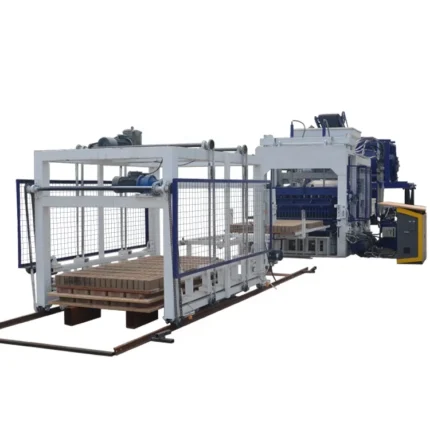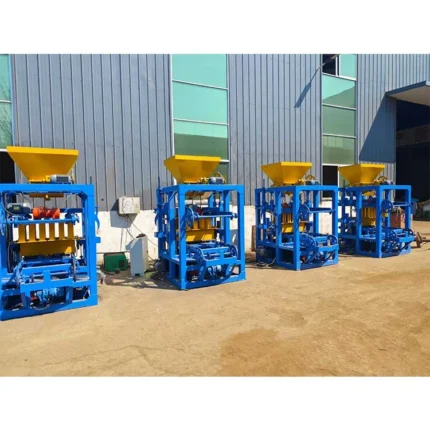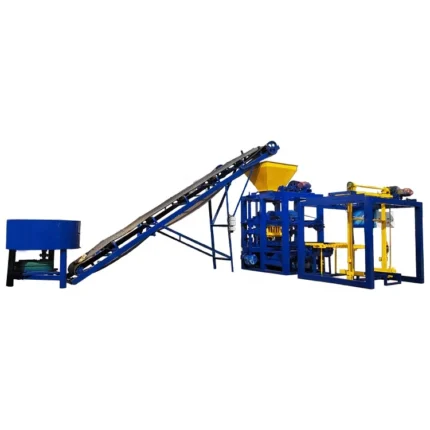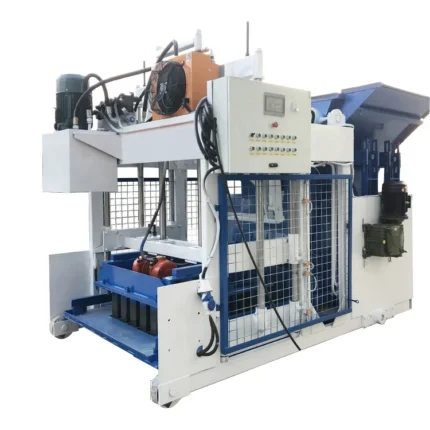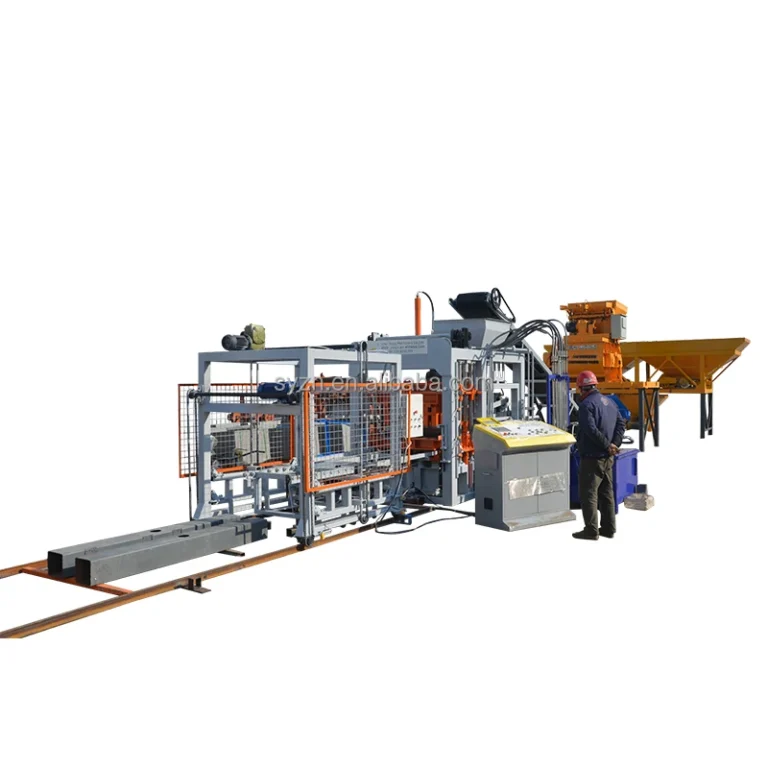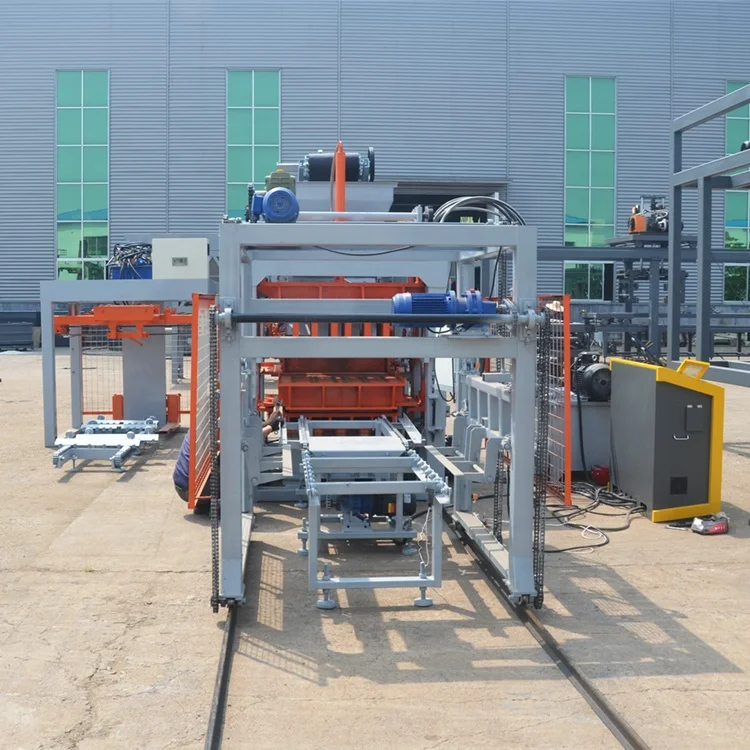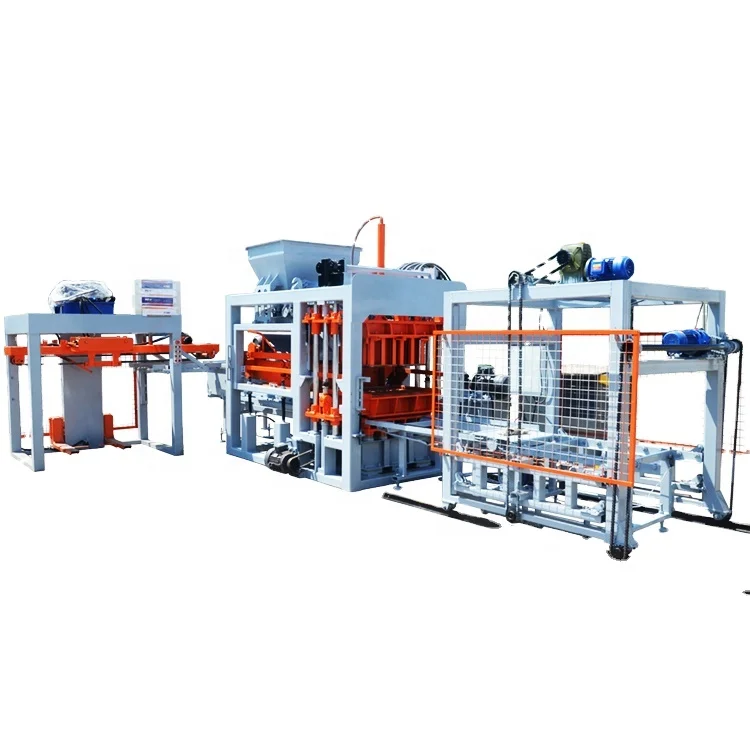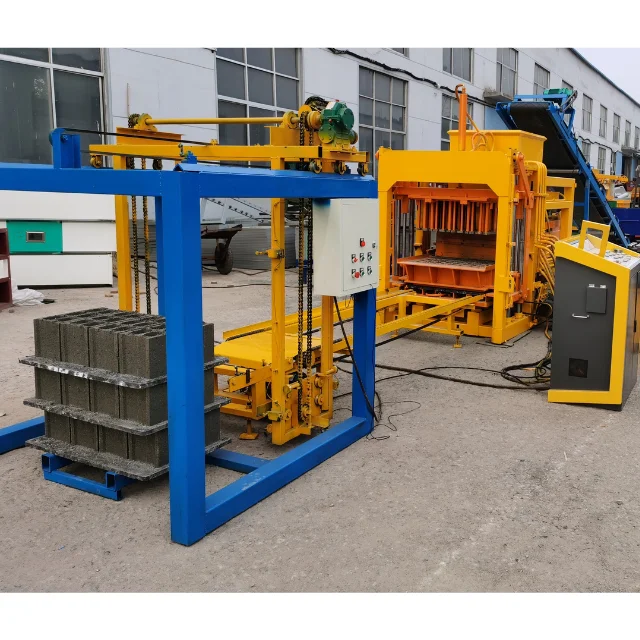



Description
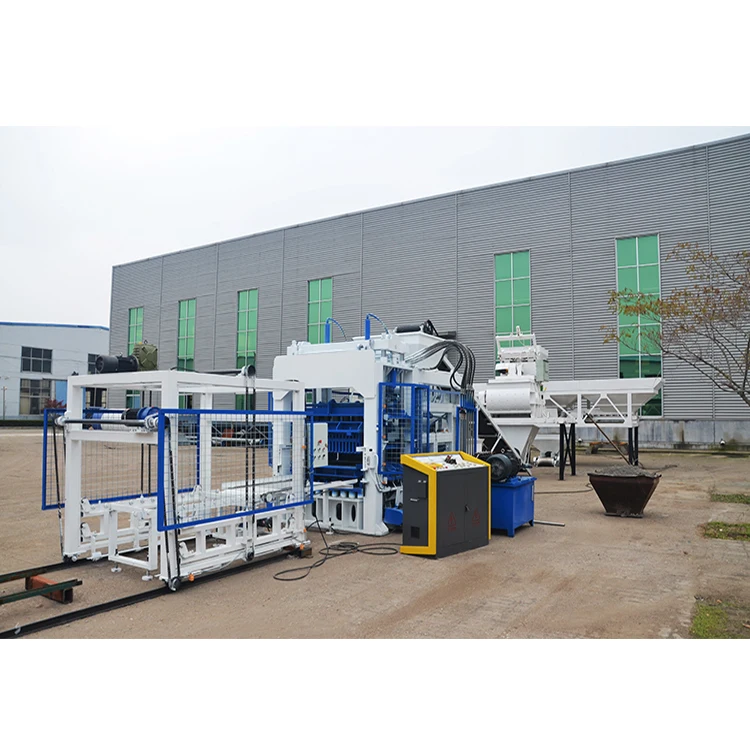
Integrated Line Control — The QT10-15 automatic block making machine synchronizes press, pallet feeder, and hydraulic station under a single PLC logic rather than relying on separate controllers that drift out of phase during long shifts.
Technical Specifications
| Parameter | Value |
|---|---|
| Model | QT10-15 |
| Product Type | Automatic Concrete Block Making Machine |
| Control System | PLC control cabinet |
| Hydraulic System | Independent integrated hydraulic station |
| Vibration Mode | Vertical station mode resonance, automatic FM-AM |
| Mould Change | Simple replacement (multi-function with one machine) |
| Components Included | Pallet feed machine, block making machine, storage hopper, conveyor, hydraulic unit, PLC control cabinet |
| Output Capacity (400×200×200mm hollow block) | 1800–2400 pcs/hour, 14400–19200 pcs/8hr (10 pcs/mould, 15–20s cycle) |
| Output Capacity (400×150×200mm hollow block) | 2160–2880 pcs/hour, 17280–23040 pcs/8hr (12 pcs/mould, 15–20s cycle) |
| Output Capacity (240×115×53mm solid brick) | 8928–11160 pcs/hour, 71424–89280 pcs/8hr (62 pcs/mould, 15–20s cycle) |
| Output Capacity (200×100×60mm paving block) | 5184–6480 pcs/hour, 41472–51840 pcs/8hr (27 pcs/mould, 20–25s cycle) |
| Output Capacity (225×112.5×60mm paving block) | 4032–5040 pcs/hour, 32256–40320 pcs/8hr (24 pcs/mould, 20–25s cycle) |
| Cycle Time | 15–25s depending on block format |
| Automation Level | Automatic |
| Warranty | 1 year for whole machine (excluding spare parts) |
| Assembly State | Factory assembled, on-site installation and commissioning supported |
Application Suitability
| Application | Material or Output |
|---|---|
| Hollow block production | Crushed stone, river sand, cement mixes for multi-cellular wall blocks |
| Standard solid brick production | Dense aggregate blends for load-bearing masonry units |
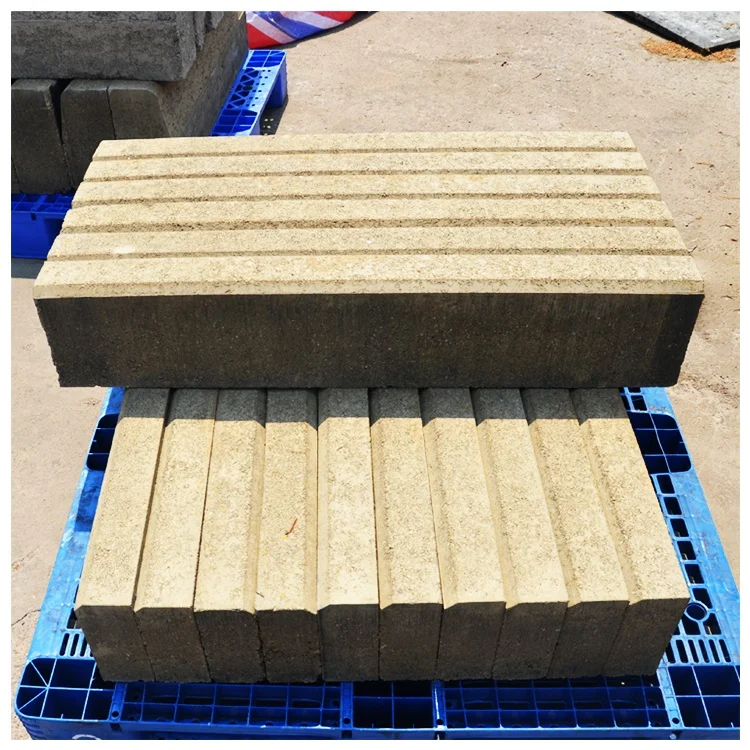
| Paving brick production | Fine aggregate and pigment mixes for interlocking and kerb formats |
| Ecological brick production | Fly ash, slag, or recycled aggregate blends for permeable and lightweight units |
Why "Pieces per Hour" Means Nothing Without the Block Format Attached
Capacity only matters when the exact block format and cycle time are written beside the number.
I have stood on sites in West Africa where the plant manager showed me a quotation promising a certain hourly output, but the figure assumed a small solid brick format. When the buyer switched to the 400×200×200mm hollow blocks his market actually demanded, the automatic QT10-15 block machine PLC controlled cycle stretched from 15 seconds to over 20, and daily throughput dropped noticeably. The machine was not at fault — the quotation simply omitted the format assumption. [NEED_CITE: block format and cycle time relationship in concrete block production]
How PLC Logic Eliminates Idle Press Time
On a block line, the press is only productive when a pallet is positioned, material is charged, and the discharge conveyor is clear. The QT10-15 keeps these stations under one PLC control cabinet so the pallet feed, pressing stroke, and block discharge are sequenced as a single loop. When one station finishes early, the controller holds the next step rather than letting the press fire into an empty space or stack blocks against a jammed pallet. This synchronization is the core reason an automatic QT10-15 block machine PLC controlled setup maintains consistent cycle timing across an eight-hour shift.
Vibration Tuning That Follows the Mould, Not the Operator
Different block formats demand different vibration profiles. A hollow block with thin webs needs high-frequency, low-amplitude vibration to consolidate the face without cracking the internal walls, while a dense paving block requires sustained force to drive out air pockets. The vertical station mode resonance system on the QT10-15 uses automatic FM-AM adjustment so the vibration signature shifts when the mould changes. The operator selects the format on the PLC display, and the system recalls the matching vibration parameters. [NEED_CITE: vibration frequency modulation in concrete block pressing]
Reading the Specs That Actually Shape Daily Output
The independent integrated hydraulic station sits apart from the host frame, isolated from the vibration and dust generated during pressing. On sites where I have seen hydraulic valves clogged with cement dust within the first month, this separation keeps the fluid clean and the pressure stable across long production runs. The cycle time range of 15–25 seconds reflects real format variation: hollow blocks at 15–20 seconds per cycle, paving blocks at 20–25 seconds. These figures come directly from the mould cavity count and the consolidation time each format requires, not from a single best-case test run. The pallet feed machine, storage hopper, and conveyor are included as standard line components, meaning the automation envelope covers material flow from hopper to discharge rather than stopping at the press itself.
The Hidden Cost of Specifying the Press Alone
Quoting only the block making machine without the pallet circulation and stacking equipment creates a bottleneck that no amount of press speed can fix. I have visited plants where the press cycled on schedule but operators hand-stacked wet blocks onto curing racks, slowing the entire line to a fraction of its rated pace. When the pallet feed and discharge are not part of the original specification, adding them later means retrofitting sensors and rewriting PLC logic that was never designed for upstream-downstream communication. [NEED_CITE: block plant automation bottleneck from incomplete line specification]
What Makes This Configuration Hold Up on Site
The machine, mould, pallet, and handling equipment are specified as one matched system, so the pallet size aligns with the curing rack dimensions the buyer already has. Configuration is set against the buyer’s actual mix design and local aggregate rather than a catalogue default, which prevents the common failure of a machine tuned for clean silica sand choking on high-clay river sand. Mould design covers the formats the buyer’s market actually sells, with custom drawings available when standard formats do not match local building codes. The automation level is selectable, so a buyer can commission the QT10-15 in semi-automatic mode and add automatic stacking and cubing later without replacing the PLC cabinet. Factory testing runs the complete cycle with the buyer’s specified block format before dispatch, and operator training covers both daily operation and mould changeover procedures.
Documentation & Verification
- Line layout and capacity calculation stating the exact block format assumed for each output figure
- Machine specification sheet with hydraulic and electrical schematics matching the shipped configuration
- Mould drawing and format list confirming cavity count and cycle time per block type
- Voltage, frequency, and PLC display language confirmation signed off before production begins
- Factory test record showing cycle times achieved on the buyer’s specified block format
- Operation and maintenance manual with wear parts and mould replacement intervals
Installation, Commissioning & Support
- Foundation plan accounts for the independent hydraulic station footprint separate from the press frame
- Dedicated power circuit sized for the hydraulic unit and vibration motor combined load
- Factory-assembled state with on-site alignment of pallet feed machine to the press feed height
- PLC parameter tuning on local aggregate mix during first production run with technician present
- Operator training covers PLC fault codes, mould change procedure, and daily vibration system checks
- Wear parts list with hydraulic seal and vibration spring replacement intervals specified
What to Include in Your Inquiry
Provide the exact block formats your market requires, along with the daily output target for each format. Confirm your local voltage, frequency, and preferred PLC display language so the control cabinet is configured before production starts. If you have existing curing racks or forklifts, share the pallet dimensions they accommodate so the pallet feed system is matched to your site from day one.
Frequently Asked Questions
Q: How is capacity verified per block format, and what cycle time does each format actually run at?
A: Each output figure is calculated from the mould cavity count and the cycle time specific to that block format. Hollow blocks at 400×200×200mm run at 15–20 seconds per cycle, while paving blocks require 20–25 seconds. The factory test record confirms these cycle times on your specified format before shipment, not on a generic test block.
Q: What automation level is included — does the quotation cover pallet feeding and stacking, or just the press?
A: The standard package includes the pallet feed machine, storage hopper, conveyor, and PLC control cabinet alongside the press. Automatic stacking and cubing are configurable additions. The quotation clearly separates what is included so manual handling does not become an unplanned bottleneck after installation.
Q: Can the PLC control system be upgraded from semi-automatic operation in an existing plant?
A: The QT10-15 control cabinet supports staged automation. A plant can start with semi-automatic pallet handling and later add automatic stacking, cubing, and remote diagnostics without replacing the PLC hardware. The upgrade path is planned during initial specification so wiring and sensor points are reserved.
Q: How is the hydraulic station protected from vibration and dust during long production shifts?
A: The independent integrated hydraulic station is mounted separately from the press frame, isolating it from the vertical vibration and cement dust generated during block forming. This separation maintains consistent hydraulic pressure and extends seal life across continuous eight-hour production runs.
Q: What voltage, frequency, and control language options are confirmed before shipment?
A: Voltage, frequency, and PLC display language are confirmed during the specification phase and documented in writing before production begins. This prevents the common delay of rewiring or reprogramming the control cabinet after the machine arrives on site.