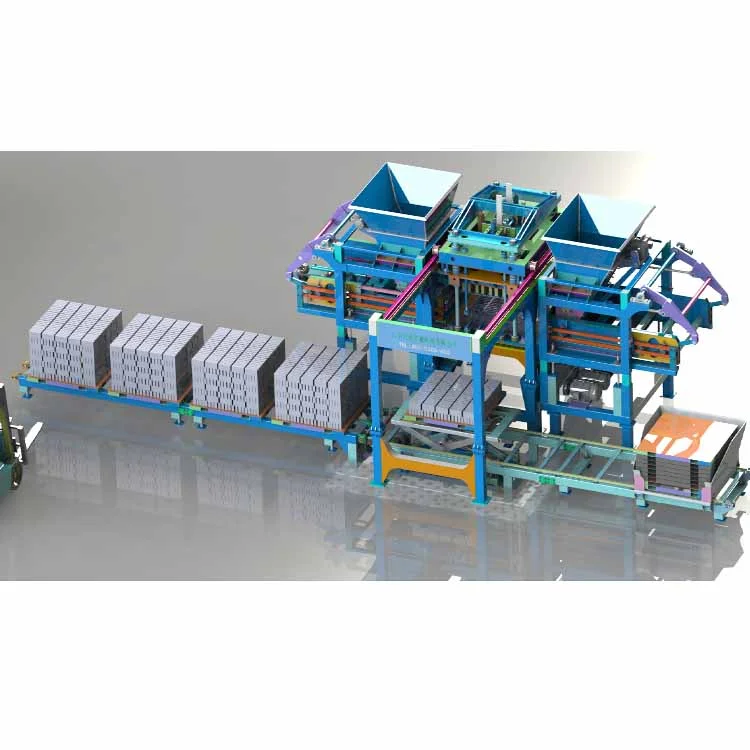
Description
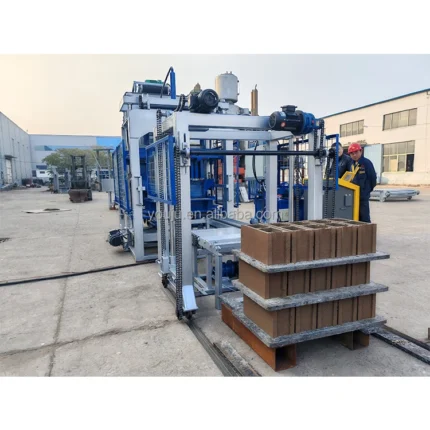
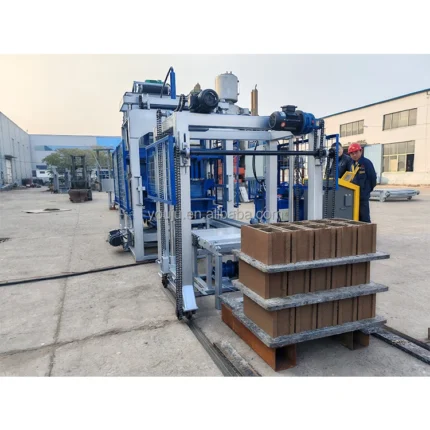
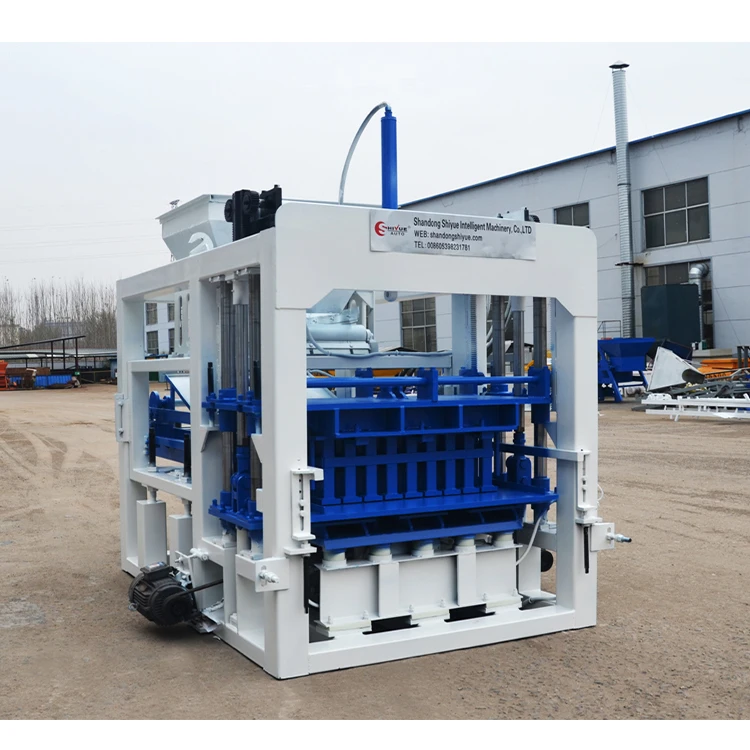
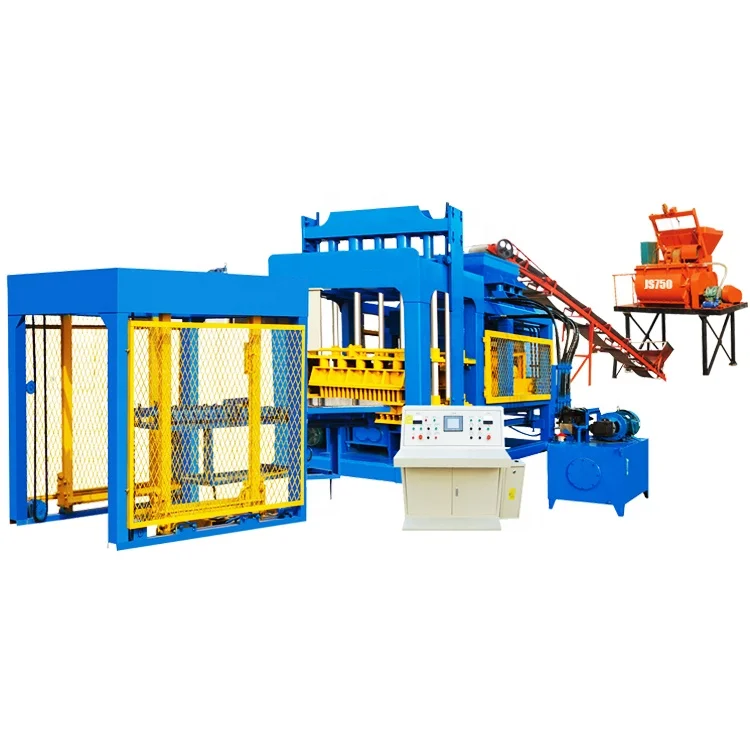
System Integration Expertise — The QT18-25 pallet-free block line is configured so PLC control, hydraulic pressure, and vibration frequency operate as one calibrated unit rather than isolated components.
Technical Specifications
| Parameter | Value |
|---|---|
| Model | QT18-25 |
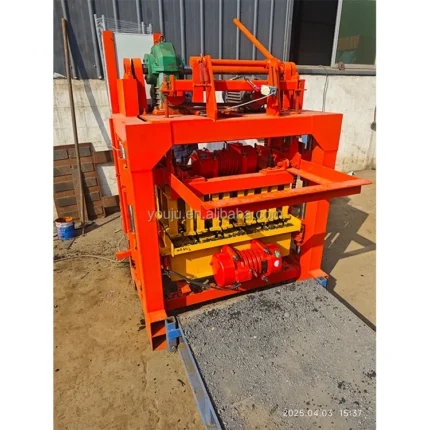
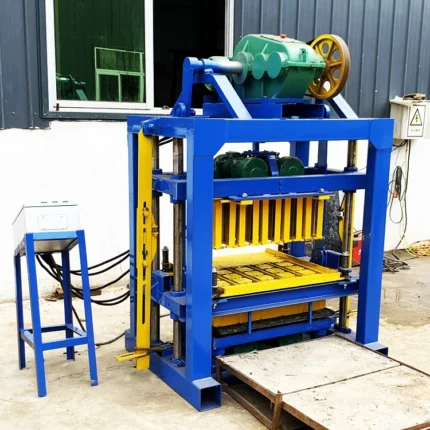
| Product Type | Fully Automatic Pallet-free Hydraulic Block Making Machine |
| Brick Height Range | 50–300 mm |
| Stacking Height | 0–1200 mm |
| Main Vibration Form | Platform Vibration |
| Vibration Frequency | 2800–4500 r/min |
| Vibration Power | 60 kW |
| Hydraulic System Power | 59 kW |
| Driving Method | Hydraulic |
| Demolding Method | Vibration and Hydraulic |
| Molding Cycle | 15–25 s (basis not stated in source) |
| Control System | PLC with person-machine conversation interface |
| Automation Level | Fully automatic, pallet-free stacking |
| General Water Consumption | 8 T/Day |
| Factory Area Requirement | 2000 m² |
| Applied Products | Hollow/solid blocks, pavers, interlocking blocks, curbstone, colored pavers |
| Raw Materials | Crushed stone, sand, cement, fly ash, gravel, slag |
| Warranty | 1 year |
Application Suitability
| Application | Material or Output |
|---|---|
| Hollow block production | Crushed stone, sand, cement, fly ash |
| Solid block manufacturing | Gravel, slag, cement blends |
| Paver and colored paver runs | Fine aggregates with cement and pigment |
| Interlocking block formation | Sand, crushed stone, cement |
| Kerbstone and curb production | Coarse aggregate mixes with cement |
Why the Control Language Must Be Locked Before the Price
A PLC interface the operator cannot read turns a fully automatic line into a very expensive manual one.
I have watched commissioning engineers stand in front of a newly installed block press while the local team stared at a Chinese-only HMI screen, unable to start a single cycle. The automatic pallet-free block machine PLC controlled system on the QT18-25 governs every station from material feed to stacking. When the display language is wrong, none of that automation matters. Voltage mismatches cause similar standoffs — a 50 Hz motor on a 60 Hz supply runs hotter and shorter, and the PLC may refuse to initialize [NEED_CITE: voltage and frequency standards by export market]. These are not minor punch-list items; they halt production before it begins.
How Full Automation Removes the Operator Variable
Semi-automatic lines depend on an operator’s timing for pallet feeding, block removal, and stacking. The QT18-25 eliminates those manual touchpoints. The PLC manages the molding cycle, controls the hydraulic pressure application, and triggers the vibration sequence in a repeatable pattern. Blocks are stacked directly after moulding to heights up to 1200 mm without any pallet entering the process. This means batch-to-batch consistency is governed by stored parameters, not shift-to-shift operator habits.
What Pallet-Free Stacking Changes on the Factory Floor
Removing pallets from the production loop does more than cut pallet purchasing costs. It eliminates the pallet return conveyor, the pallet cleaning station, and the pallet storage area. The curing yard layout simplifies because stacked blocks sit directly on the ground or on a flat slab. Forklift movements change too — the forklift picks up a cube of blocks rather than individual pallets. For plants upgrading from pallet-based systems, the floor space recovered from pallet circulation hardware can be redirected to additional curing capacity or raw material storage [NEED_CITE: curing area design for pallet-free block stacking].
Reading the Numbers That Actually Matter
The vibration frequency range of 2800–4500 r/min paired with 60 kW of vibration power determines how thoroughly the mix is compacted in the mould. Higher frequency suits finer aggregates like fly ash and sand, while the lower end handles coarser crushed stone. The 59 kW hydraulic system works in parallel — hydraulic pressure compresses from above while platform vibration consolidates from below. When these two forces are correctly matched to your mix design, block density and strength remain consistent across the run. The molding cycle of 15–25 s (basis not stated in source) will vary depending on block height, format complexity, and material characteristics. A 300 mm hollow block will sit at the longer end of that range, while a 60 mm paver completes faster. The brick height range of 50–300 mm defines the format envelope the machine can accommodate without major reconfiguration.
The Cost of Skipping Configuration Verification
Buyers who accept a standard configuration without confirming the details against their site conditions face predictable problems. A pallet size specified without regard to existing curing racks means blocks stack in a pattern the yard cannot accommodate. An automation package quoted without the stacking system forces manual handling of output that was supposed to be automatic. When the PLC parameter documentation does not arrive with the machine, the next operator cannot recall the settings that produced the last good batch [NEED_CITE: PLC parameter documentation requirements for automated machinery].
Why This Line Holds Up After Installation
Block machinery as a single focus means the press, stacking system, and control logic are developed together rather than sourced separately and bolted on. The QT18-25 configuration is set against your actual mix design and target block format, not pulled from a default catalog entry. Automation level is selectable — a buyer can begin with core automatic functions and add batching accuracy modules or remote diagnostics later as production volume grows. Mould design covers the specific formats your market demands, including custom profiles drawn to your specifications. Installation support includes operator training on the PLC interface in the confirmed display language, so the team running the machine on day one is the same team that was trained on it.
Documentation & Verification
- Line layout and capacity calculation stating the block format assumed for cycle time
- PLC parameter list with confirmed display language and all stored recipes
- Hydraulic and electrical schematics matching the as-built QT18-25 configuration
- Factory test record on your target block format before dispatch
- Mould drawing and format list for every profile included in the order
- Voltage and control language confirmation sheet signed before production
Installation, Commissioning & Support
- 2000 m² factory area requirement with level slab rated for 60 kW vibration loads
- Dedicated power circuit matching confirmed voltage and frequency for both 59 kW hydraulic and 60 kW vibration systems
- PLC interface loaded with confirmed language pack and tested before crating
- Stacking system calibrated to your curing area layout and forklift lift capacity
- Operator training covers PLC recipe recall, mould change procedure, and fault diagnosis
- Wear parts list identifies hydraulic seals and vibration components with reorder codes
What to Include in Your Inquiry
Tell us the block formats your market sells — hollow, solid, paver, interlocking, kerbstone — along with the specific dimensions for each. Provide your local aggregate type and the mix design you intend to run, or share sample material for testing. Confirm your site voltage, frequency, and the PLC display language your operators need. If you are replacing an existing line, share the current pallet size and curing area dimensions so the pallet-free stacking layout can be planned against what you already have.
Frequently Asked Questions
Q: How is realistic daily output calculated for the QT18-25?
A: Output depends on the block format, mix design, and actual cycle time achieved with your material. The 15–25 s cycle range is a starting point — we calculate capacity per format using your confirmed block dimensions and aggregate blend, then state the daily figure with those assumptions written into the proposal.
Q: What does the PLC control cover, and can it be expanded?
A: The PLC governs material feed, hydraulic pressure, vibration frequency, molding cycle timing, and pallet-free stacking sequence. The system supports parameter recall for different block formats. Additional modules for batching accuracy and remote diagnostics can be added as production requirements evolve.
Q: How does pallet-free stacking affect my curing area?
A: Blocks stack directly to heights up to 1200 mm without pallets, so the curing yard needs a flat slab rather than pallet racking. Your forklift must handle block cubes at that stacking height. We confirm your existing forklift specifications before finalizing the stacking configuration.
Q: How are voltage, frequency, and PLC language confirmed before shipment?
A: These are locked during the quotation stage and documented on a signed confirmation sheet. The PLC is loaded with the specified language and tested at the factory. Production does not begin until this sheet is returned, preventing commissioning delays caused by mismatched electrical or interface specifications.